“29 And do not seek what you are to eat and what you are to drink, nor be worried.30 For all the nations of the world seek after these things, and your Father knows that you need them.31 Instead, seek his kingdom, and these things will be added to you. 32 ‘Fear not, little flock, for it is your Father’s good pleasure to give you the kingdom.33 Sell your possessions, and give to the needy. Provide yourselves with moneybags that do not grow old, with a treasure in the heavens that does not fail, where no thief approaches and no moth destroys.34 For where your treasure is, there will your heart be also.’
You Must Be Ready
35 ‘Stay dressed for action and keep your lamps burning,36 and be like men who are waiting for their master to come home from the wedding feast, so that they may open the door to him at once when he comes and knocks.37 Blessed are those servants whom the master finds awake when he comes. Truly, I say to you, he will dress himself for service and have them recline at table, and he will come and serve them'” (Luke 12:29-37, ESV).
*******
“22 But you have come to Mount Zion and to the city of the living God, the heavenly Jerusalem, and to innumerable angels in festal gathering,23 and to the assembly of the firstborn who are enrolled in heaven, and to God, the judge of all, and to the spirits of the righteous made perfect,24 and to Jesus, the mediator of a new covenant, and to the sprinkled blood that speaks a better word than the blood of Abel” (Hebrews 12:22-24, ESV).
*******
“9 Then came one of the seven angels who had the seven bowls full of the seven last plagues and spoke to me, saying, “Come, I will show you the Bride, the wife of the Lamb.”10 And he carried me away in the Spirit to a great, high mountain, and showed me the holy city Jerusalem coming down out of heaven from God,11 having the glory of God, its radiance like a most rare jewel, like a jasper, clear as crystal.” (Revelation 21:9-11, ESV).
In relation to this hymn’s 3rd verse lyrics:
“25 For the foolishness of God is wiser than men, and the weakness of God is stronger than men. 26 For consider your calling, brothers: not many of you were wise according to worldly standards, not many were powerful, not many were of noble birth.27 But God chose what is foolish in the world to shame the wise; God chose what is weak in the world to shame the strong;28 God chose what is low and despised in the world, even things that are not, to bring to nothing things that are,29 so that no human being might boast in the presence of God.30 And because of him you are in Christ Jesus, who became to us wisdom from God, righteousness and sanctification and redemption,31 so that, as it is written, “Let the one who boasts, boast in the Lord” (1 Corinthians 1:25-31, ESV).
Lyrics
1.
A little flock, so calls he thee;
Who bought thee with his blood;
A little flock disowned of men,
But owned and loved of God.
2.
A little flock, so calls he thee;
Church of the Firstborn, hear!
Be not ashamed to own the name;
It is no name of fear.
3.
Not many rich or noble called,
Not many great or wise;
Those whom God makes his kings and priests
Are poor in human eyes.
4.
But the Chief Shepherd comes at length;
Her feeble days are o’er.
With glory crowned, and sceptre’s strength,
She reigns forevermore.
The History Of This Hymn
Author – Horatius Bonar (1808-1889)
Born and raised in Edinburgh, Scotland, Horatius Bonar became a pastor at Kelso in 1837 and six years later joining the Free Church of Scotland. His reputation as a religious writer was first gained on the publication of the “Kelso Tracts,” of which he was the author, yet he is no less favorably known as a religious poet and hymn-writer.
He became editor of the Quarterly Journal of Prophecy in 1848, to which he contributed a hymn for each number and the number of hymns contributed thereto is 101.
One of several hymns’ lyrics written by Horatius Bonar, which are most widely known today, is found in the Hymns of Dawn, No. 108 – titled “I Came To Jesus” with the opening words of the first verse: “I heard the Voice of Jesus say, ‘Come unto me and rest.'”
Composer – No information found in relation to the music score in the Hymns of Dawn for this hymn.
Br. Charles Russell—the founder of the Bible Students movement, who is the compiler of“Poems and Hymns of Millennial Dawn” which was published in Allegheny, Pa., in 1890. This Bible Students’ devotional originally contained a total of 151 poems and 333 hymns.
Later on, the hymns from this book formed a basis for the hymnal titled ““Hymns of Dawn” which was published by the Dawn Bible Students Association in East Rutherford, New Jersey (USA) and the 1999 edition contains a total of 361 hymns.
The Bride and the Bridegroom by Br. Carl Hagensick. A Verse-by-verse Study of Psalm 45. The Herald of Christ’s Kingdom. July/August 2004. http://www.heraldmag.org/2004/04ja_4.htm
New Testament Portrayals of the Church by Br. Michael Nekora. A Precious Treasure. The Herald of Christ’s Kingdom. July/August 2004. http://www.heraldmag.org/2004/04ja_5.htm
A Chaste Virgin. The Herald of Christ’s Kingdom. URL: http://www.heraldmag.org/literature/chliv_38.htm
“7 For one will scarcely die for a righteous person—though perhaps for a good person one would dare even to die—8 but God shows his love for us in that while we were still sinners, Christ died for us.9 Since, therefore, we have now beenjustified by his blood, much more shall we be saved by him from the wrath of God.10 For if while we were enemies we were reconciled to God by the death of his Son, much more, now that we are reconciled, shall we be saved by his life.11 More than that, we also rejoice in God through our Lord Jesus Christ, through whom we have now received reconciliation“ (Romans 5:7-8, ESV).
“But I am a worm and not a man, scorned by mankind and despised by the people” (Psalm 22:6, ESV).
“44 It was now about the sixth hour [12 noon], and there was darkness over the whole land until the ninth hour [3 p.m.],45 while the sun’s light failed. And the curtain of the temple was torn in two.46 Then Jesus, calling out with a loud voice, said, ‘Father, into your hands I commit my spirit!’ And having said this he breathed his last.47 Now when the centurion saw what had taken place, he praised God, saying, ‘Certainly this man was innocent!’48 And all the crowds that had assembled for this spectacle, when they saw what had taken place, returned home beating their breasts.49 And all his acquaintances and the women who had followed him from Galilee stood at a distance watching these things” (Luke 23:44-49, ESV).
“12 ‘This is my commandment, that you love one anotheras I have loved you.13 Greater love has no one than this, that someone lay down his life for his friends.14 You are my friends if you do what I command you.15 No longer do I call you servants, for the servant does not know what his master is doing; but I have called you friends, for all that I have heard from my Father I have made known to you.16 You did not choose me, but I chose you and appointed you that you should go and bear fruit and that your fruit should abide, so that whatever you ask the Father in my name, he may give it to you.17 These things I command you, so that you will love one another.’ 18 ‘If the world hates you, know that it has hated me before it hated you.19 If you were of the world, the world would love you as its own; but because you are not of the world, but I chose you out of the world, therefore the world hates you.20 Remember the word that I said to you: ‘A servant is not greater than his master.’ If they persecuted me, they will also persecute you. If they kept my word, they will also keep yours.21 But all these things they will do to you on account of my name, because they do not know him who sent me.22 If I had not come and spoken to them, they would not have been guilty of sin, but now they have no excusefor their sin.23 Whoever hates me hates my Father also.24 If I had not done among them the works that no one else did, they would not be guilty of sin, but now they have seen and hated both me and my Father.25 But the word that is written in their Law must be fulfilled: ‘They hated me without a cause.’”(John 15:12-25, ESV).
“For as in Adam all die, so also in Christ shall all be made alive” (1 Corinthians 15:22).
Lyric
1.
Alas! and did my Saviour bleed?
And did my Sovereign die?
Would he devote that sacred head
For such a worm as I?
Chorus
Jesus died for you,
And Jesus died for me;
Yes, Jesus died for all mankind;
Bless God, Salvation’s free!
2.
It was because we were undone
He groaned upon the tree.
Amazing pity! grace unknown!
And love beyond degree.
3.
Well might the sun in darkness hide,
And shut his glories in,
When Jesus, God’s Anointed, died,
For man, undone by sin.
4.
Thus might I hide my blushing face,
While his dear cross appears;
Dissolve my heart in thankfulness
And melt mine eyes to tears.
5.
But drops of grief can ne’er repay
The debt of love I owe;
Here, Lord, I give myself away,
‘Tis all that I can do.
The History Of This Hymn –
Author – Isaac Watts (1674-1748)
The father of Isaac Watts was a respected Nonconformist, and at the birth of the child, and during his infancy, twice suffered imprisonment for his religious convictions.
Isaac was the eldest of his nine children, who’s taste for verse showed itself in early childhood and he was taught Greek, Latin, and Hebrew by Mr. Pinhorn, rector of All Saints, and headmaster of the Grammar School, in Southampton. At the age of 16, he went to London to study in the Academy of the Rev. Thomas Rowe, an Independent minister.
Leaving the Academy at the age of 20, he spent 2 years at home; and it was then that the bulk of the Hymns and Spiritual Songs (published 1707-9) were written, and sung from manuscripts in the Southampton Chapel. At the age of 24 years, he became assistant minister of an Independent Church in London, and 4 years later, he became pastor. In 1712, he accepted an invitation to visit Sir Thomas Abney, at his residence of Abney Park, and at Sir Thomas’ pressing request, made it his home for the remainder of his life. It was a residence most favourable for his health, and for the prosecution of his literary labours. He did not retire from ministerial duties, but preached as often as his delicate health would permit. The number of Watts’ publications is very large and embrace sermons, treatises, poems and hymns. His published hymns number more than 800. It is as a writer of psalms and hymns that he is everywhere known. Some of his hymns were written to be sung after his sermons, giving expression to the meaning of the text upon which he had preached.
Composer – No information found.
Hymn Book Purchase
The Hymns Of Dawn(hymn book) can be purchased here:
Br. Charles Russell—the founder of the Bible Students movement, who is the compiler of“Poems and Hymns of Millennial Dawn” which was published in Allegheny, Pa., in 1890. This Bible Students’ devotional originally contained a total of 151 poems and 333 hymns.
Later on, the hymns from this book formed a basis for the hymnal titled ““Hymns of Dawn” which was published by the Dawn Bible Students Association in East Rutherford, New Jersey (USA) and the 1999 edition contains a total of 361 hymns.
“(7) In the days of his flesh, Jesus offered up prayers and supplications, with loud cries and tears, to him who was able to save him from death, and he was heard because of his reverence.(8) Although he was a son, he learned obedience through what he suffered.(9) And being made perfect, he became the source of eternal salvation to all who obey him,10 being designated by God a high priest after the order of Melchizedek” (Hebrews 5:7-9, ESV).
Beloved Brethren, dear friends:
This testimony sonnet is for you written, For praise to God, through Christ who was smitten, To comfort those mourning for righteousness sake— Suffer for Christ, your election sure to make!
Some still remain who need to hear, For ’tis not too late with Christ to share. With fortitude and strength divine from above, Present on the altar every labour of love.
Let us, begotten of Him, overcome the world, Layer upon layer of character, impearled. Should this cause many a tear to flow, It will be mingled with Christ-like joys, we know.
Often, when the head is bowed low, And tears in anguish like a waterfall flow, With no courage in self, nothing good within, “Depend on God for mercy and grace,” we sing.
Dead to the world, we feed the New Mind, Sharing God’s precious Truth with various kind. Could we keep the promises of the glorious Word, Only for self? Letting God’s Plan be unheard?
As we trumpet Christ’s Millennium soon to come, As ambassadors, sharing the hope now to some, Opposing us the world, flesh, and devil, these three, From these tempters let our conduct be free.
If told to stop sharing the Kingdom to come, Booklets or tracts dust-binned by some, Rejoice, dear pilgrim, keep carrying your cross, Even if those served count your words as but dross.
Why should we flee, terrified of man, when reviled? Is not this a test for those reconciled? All previous instruction through God’s Holy Scriptures, Helps us in such moments to be counted as victors!
Are not these trials the opportunities prayed for, Without them, what testimony of sonship, and more? The answer may follow through unbidden tears. How God’s mercy does strengthen us through these carnal years.
Are not tribulations what our Lord has forewarned? It would cost, the consecrated, all that we owned! To be worthy of belonging to Christ alone, Means sharing his sufferings, to the world unknown.
God understands the sum of your tears perfectly, Each drop in a jar labelled “shame,” mournfully, Others fallen to one labelled “ridicule and scorn,” But Christ’s name on our foreheads, will forever be worn!
Those who sow in tears for righteousness now, Shall reap fullness of joy when fulfilled is our vow. When, later, the Truth floods each heart and mind, Then your clay jar of tears, will Christ to them remind.
If your tears have been your meat, both day and night, Rejoice in afflictions, walking in Christ’s light. They prepare you for glory beyond all comparison, Patiently accept them, kindly, like a good Samaritan.
As we continue for Jesus, representing his cause, Man cannot stop us declaring, even through closed doors. As martyred for Truth’s sake were the apostles, but John, Through tears may your trumpeting “ALL FOR JESUS” go on!
Put your trust in Jehovah to overcome all fears, Our Master in Gethsemane, offered loud cries and tears! Jesus was heard for his reverence, by One above who all sees, Things misinterpreted by man — so please be at ease.
It is our Heavenly Father whom we are to please, If dimly considered by even friends, and trustees, Job’s friends gave him scorn, while he “poureth out … unto God,” So you, put your confidence, in the power of His rod.
Aaron’s rod reminds us, antitypical under-priests, Of our privilege of service, which our heavenly joys increase. Be productive, put on the fruits of Christ-likeness, To become heavenly “stars” in Christ’s brightness.
Recognizing in each experience a divine appointment, Changing from glory to glory since our sanctified anointment. Each labour to deaden all of self-will, Leads the heaven-bound follower, God’s will to fulfil.
Now hidden in a jar, our tears soon will be no more, When in glory and immortal, we are united with Christ. When the Day of Sacrifice soon is complete, Beyond the vail then gathered, all the Gospel’s true wheat.
Whom they once pierced, Israel shall finally recognize, Accepting Christ as Messiah, no more false surmise, Tears then of joy will stream down their face, For God’s Spirit shall be poured upon all by His grace.
Then God shall wipe away tears from all eyes, No longer Adamic sin will cause all to die. With minds then brightened with Godly righteousness, Mankind will learn, and then show, their own faithfulness.
When tears shall turn into JOY FOR ALL, Then tears no more shall ever again fall. Jehovah’s Universe shall eternally stand, God’s glory will then forever expand!
*******
The below words are from “Pilgrim Echoes” (page 326-328) by Br. Benjamin Barton:
Blessed are they that mourn; for they shall be comforted.” Jesus did not mean, Blessed are those that mourn from the worldly standpoint, any more than he meant, Blessed are those that are poor in spirit from a worldly standpoint. There are two ways of being poor in spirit; there is the world’s way and God’s way. For instance, somebody mistreats you and you do not stand up for your rights; the world says, That man is poor in spirit. But Jesus did not mean it that way. And so the same way with this word “mourning.”
Our Redeemer did not mean, Blessed are those that mourn because they cannot own a finer house. Blessed are those who mourn because they cannot buy an automobile. Blessed are those who mourn because they cannot buy the diamond they saw in the jeweler’s window. Blessed are they that mourn because their head aches so badly. No, no, He meant, blessed are those who mourned like He mourned. How different His mourning was from that of other people.
There was something so unselfish about His mourning. You remember when He went to the tomb of Lazarus it was not for himself He was weeping. When He wept over Jerusalem He was not mourning for himself but for them. He wept as He thought how unwilling they were to praise and glorify God as they should, and what they were bringing on themselves because of their disobedience.
Then there was another occasion when He mourned in the garden of Gethsemane. You remember His tears, His strong crying. There again there was something unselfish; it was not because He had to die that He wept; He came into the world for that very purpose. He wept because of that cup He was drinking then. What was that? The cup of expectation of death? No. The Lord Jesus was so desirous that the Father should be pleased in every little point, and He realized that His ability to accomplish the work the Father entrusted to Him, the redemption of the race, depended upon His actual perfection; He realized there was no advocate to make up for His deficiencies; and it was along this line He mourned. There was nothing selfish about it.
So we way, Blessed are we if we mourn like Jesus mourned, if our mourning is unselfish. Do you mourn because you want the Lord glorified to a larger degree than people seem to want you to glorify Him? Do you mourn because you want more of the joy and peace which comes from a closer acquaintance with God and a better understanding of His Plan? Oh, that is the right mourning!
I remember a good brother in the northeast said this to me a year or so ago: Many years ago I lost a child and I thought I never would
PE327 get over it. I cried and cried until I thought I would not have any sight left; and when it was all over I made up my mind I would never cry again. Another child died, but I did not weep. My wife died but I never cried. I had a great deal of trouble on various lines and I have always been able to restrain my feelings so it was not shown outwardly. But, he said, I go to bed at night and as I think of all my weaknesses and imperfections and my inability to serve God better that I do, I cry and cry until the pillow is wet with my tears.
Oh, that was mourning like Jesus wanted us to mourn. That is the right kind of mourning. That is more in imitation of Jesus. If you mourn because you say so many things you don’t want to say, you mourn like Him. If you mourn because your hands do so many things you do not want them to do, you mourn like Jesus. If you mourn because your feet go so many places you don’t want them to go, you are mourning like Jesus. That is the way with Him. He mourned as His tongue and lips said so many things He did not want them to say.
He mourned as His hands would engage in so many works He did not want them to do. He mourned as His feet would go so many places He did not want them to go. Yes, dear friends, Jesus was continually mourning because of those things.
Why, you say, that astounds me! Do you mean to tell me that Jesus was imperfect? I thought He was perfect, I thought He was holy, harmless, undefiled, and separate from sinners. I thought He never did anything wrong, and now you say His lips said so many things they ought not to have said, and His hands did so many things they ought not to have done, and His feet went so many places they ought not to have gone. Is that really so? Yes, friends, it is so. But Jesus was perfect in spite of all this. He was holy, harmless, undefiled, separate from sinners. He never sinned.
Then how do you account for that seemingly inconsistent statement you have made?
Well, here it is. You know we have trouble with our lips, hands and feet, but in our case it is with our physical members in this physical body. Jesus did not have any trouble with the physical members in His physical body, but it was with His spiritual members in His mystical body. These were the members that gave Him trouble. You remember that while the Body of Christ was not organized in a certain sense until the day of Pentecost, yet in a rather preparatory sense we might speak of the apostles as composing the Body of Christ during even our Lord’s lifetime. How much these members of His Body tried the Lord Jesus! You and I have only one tongue to give us trouble, and He used to have twelve tongues that gave him trouble. There was James’, and then Peter’s,
PE328 and Judas’, and then Andrew’s tongue—Oh, how much trouble He had with His twelve tongues! It is bad enough for us to have the one. We know how much trouble it gives us. I have sometimes thought of a verse that says, “O, for a thousand tongues, to sing my great Redeemer’s praise.!” I am so thankful in God’s providence He has not inflicted a thousand tongues on me; yet if they would all sing my great Redeemer’s praise it would be all right. I would not mind it; but I am afraid that while about three of them would be singing the praise, the other nine hundred and ninety-seven would be in some kind of mischief. But we see Jesus had twelve tongues to give Him trouble, and those twelve pairs of hands that would not always do His will, and those twelve pairs of feet that wandered so frequently.
Think what that must have meant to Him. You see in a certain sense He had a similar experience to ours, only with Him it was with members of His mystical body.
But we see this must be the character of our mourning. How are we mourning? Look back over your life. You made a consecration of yourself to the Lord and what worries you to the largest degree? Is it because you are not able to buy that new piece of furniture? Or is it because you cannot be more patient under the test? Are you troubled to a larger degree because you are not able to do financially what some other people can do from the worldly standpoint? Or is your greatest trouble because you want to glorify God better? If you can answer that and say, I know it is a thousand times easier for me to bear the ordinary trials of life from a natural standpoint, it is a thousand time easier for me to miss a natural meal than to have to miss a spiritual meal; it is a great deal easier for me to be deprived of some little worldly advantage than some spiritual advantage, then you have another one of the marks of the Lord Jesus, another one of the evidences that you are one of His bond slaves. “Blessed are they that mourn.”
O, how the Apostle bore the burden of the Church’s peace and tranquillity upon his heart as he languished in dungeon dampness, or spent the days in weary toil, making tents that he might continue spending and being spent in the service of the Church he loved so intensely, until he had been literally poured out as an offering on the sacrificial altar of devotion to them! And how sympathetically we may enter into his disappointments and anxieties as again and again he is reminded of the immaturity, carnality and contentiousness of so many for whom he would willingly die, as we see those burning tears of affection blinding his afflicted eyes as he laboriously pens his fervent entreaties to these bickering, factional brethren! Our tears must flow in unison with his and for the same reason that today as in his day the unity of the faith is so often marred or disrupted by the same things.
But there were bright and happy experiences mingled with St. Paul’s frequent disappointments, oases in the way, where the seeds of truth had fallen and germinated, producing the luxuriant greenness that shone out in pleasing contrast to all the barrenness around, where the Gospel of Christ had been permitted to exercise its grace and power and make manifest its sanctifying, ennobling, maturing effects. If in writing to the Corinthians he must reprove and lament and deplore much of what he found there, not so in writing to the Thessalonian brethren. To these dear brethren he could write with the strains of our text as a sweet melody in his heart, “I am not ashamed of the Gospel of Christ; for it is the power of God unto salvation to every one that believeth.” He could point to these faithful brethren who had always been loyal, responsive, and reciprocative as a living testimony of the Gospel’s fruitage. We may again share with him his joy as he remembers the operations of grace in his own life, of all that “seeing Jesus” had meant to him personally, and of his energetic enthusiasm to make Him known to others; and we can enter into his joy as he writes these precious sentiments of commendation and love, “And you followed the pattern set you by us and by the Master, after you had received the message amid severe persecution, and yet with the joy which the Holy Spirit gives, so that you became a pattern to all the believers throughout Macedonia and Greece. For it was not only from you that the Master’s message sounded forth through Macedonia and Greece; but everywhere your faith in God has become known so that it is unnecessary for us to say anything about it” (1 Thessalonians 1:6-8, Weymouth). “Remembering without ceasing your work of faith, and labor of love, and patience of hope in our Lord Jesus Christ, in the sight of God and our Father” (Verse 3).
“For what is our hope, or joy, or crown of rejoicing? Are not even ye in the presence of our Lord Jesus Christ at His coming?For ye are our glory and joy” (1 Thessalonians 2:19, 20).
“We are bound to thank God always for you, brethren, as it is meet, because that your faith groweth exceedingly, and the love of every one of you all toward each other aboundeth; so that we ourselves glory in you in the churches of God, for your patience and faith in all your persecutions and tribulations that ye endure” (2 Thessalonians 1:3, 4).
*******
“These prospective kings and priests are urged to look away from the afflictions and persecutions incidental to their sacrifice and loyalty to Christ; that they look to Jesus, the author of their faith, who is also to be its finisher; that they remember his example and what he endured and that everyone whom the Father accepts into the house of sons under this call must expect to have chastisings, disciplines and various testings of faith and obedience for the development and crystallization of character.” (Reprints of the Original Watchtower and Herald of Christ’s Presence, R4513).
“2 Set your minds on things that are above, not on things that are on earth.3 For you have died,and your life is hidden with Christ in God” (Colossians 3:2-3).
“8 We are afflicted in every way, but not crushed; perplexed, but not driven to despair;9 persecuted, but not forsaken; struck down, but not destroyed;10 always carrying in the body the death of Jesus, so that the life of Jesus may also be manifested in our bodies.11 For we who live are always being given over to death for Jesus’ sake, so that the life of Jesus also may be manifested in our mortal flesh” (2 Corinthians 4:8-11, ESV).
Lyrics
1.
Not to ourselves again,
Not to the flesh we live;
Not to the world henceforth shall we
Our strength, our being give.
2.
The time past of our lives,
Sufficeth to have wrought
The fleshly will, which only ill
Has to us ever brought.
3.
No truce with vanity,
Or this world’s idle show;
Lust of the flesh and eye, or pride
Of life, we shall not know.
4.
Dead to the world and all
Its gayety and pride
To its vain pomp and glory be
Forever crucified.
5.
When he who is our life
Appears to take the throne,
We, too, shall be revealed, and shine
In glory like his own.
6.
Shine as the sun shall we
In the bright kingdom then;
Our sky without a single cloud,
Ourselves without a stain.
7.
Like him we then shall be
Transformed and glorified;
For we shall see him as he is,
And in his light abide.
(1) If, therefore, ye have been raised together with the Christ, the things on high, be seeking, where, the Christ, is—on the right hand of God, sitting; (2) The things on high, hold in esteem, not the things upon the earth: (3) For ye have died, and, your life, is hid, together with the Christ, in God,— (4) As soon as, the Christ, shall be made manifest—our life, then, ye also, together with him, shall be made manifest in glory;
(5) Make dead, therefore, your members that are on the earth—as regardeth fornication, impurity, passion, base coveting, and greed, the which, is idolatry,— (6) On account of which things cometh the anger of God,— (7) Wherein, ye also, walked, at one time, when ye were living in these things; (8) But, now, do, ye also, put them all away,—anger, wrath, baseness, defamation, shameful talk out of your mouth: (9) Be not guilty of falsehood one to another: having stript off the old man, together with his practices,
(10) And having put on the new—who is being moulded afresh unto personal knowledge, after the image of him that hath created him,— (11) Wherein there cannot be Greek and Jew, circumcision and uncircumcision, foreigner, Scythian, bond, free,—but, all things and in all, Christ: (12) Put on, therefore, as men chosen of God, holy and beloved, tender affections of compassion, graciousness, lowliness of mind, meekness, long-suffering, (13) Bearing one with another, and in favour forgiving one another—if any, against any, have a complaint,—according as, the Lord, in favour forgave you, so also ye; (14) And, over all these things, love, which is a uniting-bond of completeness;
(15) And let, the peace of Christ, act as umpire in your hearts, unto which ye have been called in [one] body, and be thankful: (16) Let, the word of the Christ, dwell within you richly,—in all wisdom, teaching and admonishing one another, with psalms, hymns, spiritual songs, with gratitude, raising song with your hearts unto God: (17) And whatsoever ye may be doing, in word, or in work, all things, [do] in the name of the Lord Jesus, giving thanks unto the Divine Father through him:— (18) Ye wives! be submitting yourselves unto your husbands, as is becoming in the Lord; (19) Ye husbands! be loving your wives, and be not embittered against them;
(20) Ye children! be obedient unto your parents in all things, for, this, is, well pleasing, in the Lord; (21) Ye fathers! be not irritating your children, lest they be disheartened; (22) Ye servants! be obedient, in all things, unto them who, according to the flesh, are your masters,—not with eye-service, as man-pleasers, but with singleness of heart, revering the Lord,— (23) Whatsoever ye may be doing, from the soul, be working at it, as unto the Lord, and not unto men,- (24) Knowing that, from the Lord, ye shall duly receive the recompense of the inheritance,—unto the Lord Christ, are ye in service; (25) For, he that acteth unrighteously, shall get back what he had unrighteously done, and there is no respect of persons;
Acknowledgment & References
Br. Charles Taze Russell
Br. Charles Russell—the founder of the Bible Students movement, who is the compiler of“Poems and Hymns of Millennial Dawn” which was published in Allegheny, Pa., in 1890. This Bible Students’ devotional originally contained a total of 151 poems and 333 hymns.
Later on, the hymns from this book formed a basis for the hymnal titled ““Hymns of Dawn” which was published by the Dawn Bible Students Association in East Rutherford, New Jersey (USA) and the 1999 edition contains a total of 361 hymns.
The URL for this post: https://biblestudentsdaily.com/2017/09/26/dead-to-the-world-hymns-of-dawn-no-192/
“15See then that ye walk circumspectly, not as fools, but as wise, 16Redeeming the time, because the days are evil” (Ephesians 5:15,16, KJV).
Brethren, we have work to do!
We are living at the end of the age – at a time when knowledge is so widespread and bountiful, that the average person living in a Metropolitan area will be exposed to more knowledge and input in a week than an entire family of 100 years ago would be exposed to in a year.
Ours is a time when communicationis literally instant; we can see and hear someone on the other side of the world and fluently converse with them when 100 years ago that conversation would not even have been possible.
Ours is a time when travel is so fast and so luxurious that it has made the entire earth navigable by an average individual whereas 100 years ago such travel would have taken months and great risk.
Ours is a time when, for the 1st time in all of human history, leisure time is not only available to the masses, it is expected and it is often considered a human right.Entertainment is no longer an unattainable dream for many; it is now one of the world’s largest and most influential industries!
Thus, we live in a time of distraction, temptation and selfish ambition. A time when personal discipline only applies when we feel like it and a time when integrity and absolutes have all but gone the way of the dinosaur.
Yet, in such a time as this, we as followers of Christ are bound by the scriptural admonition:
“15Therefore be careful how you walk, not as unwise men but aswise,16making the most of your time, because the days are evil“ (Ephesians 5:15-16,NASB).
What does it mean tomake the most of our time?
One would think that redeeming the time would be easier in this day of technological genius than ever before, but that is not the case, for with knowledge and technology come choices – lots and lots of choices, embedded in various shades of grey, all designed to capture our hearts and imaginations.
So, my task today is clear – it is to suggest to you a practical plan and path to better serve our Lord and Master – at the expense of ourselves. We will suggest 6 basic principles to focus on and with each, attempt to relay some personal experiences of my own journey as I attempt to do what you are attempting to do – that is, to live selflessly, humbly and sacrificiallyunto death. This is based on my 14 year journey thus far, with Christian Questions.
The word for redeem is only used 4 times in the New Testament. Twice it is in the context of our personal responsibility towards managing our time – our theme text and Colossians 4:5 and twice in the context of Jesus redeeming us from the curse of the Law and bringing us into the adoption of sons.
Thus we can easily see the meaning as Christ nailed the Law to the cross and made it of none effect as it was now replaced with son-ship, we also are required to nail the world, the flesh and the devil and all their demands upon us to our cross and replace them with a clean slate of the only thing we have to offer our Lord in sacrifice – OUR WILLas expressed through how we spend our time.
VISION
“Where there is no vision, the people perish” (Proverbs 29:18, KJV).
Remember what we just spoke about? With knowledge and technology come choices – lots and lots of choices, embedded in various shades of grey, all designed to capture our hearts and imaginations.
So how do you find the vision that supersedes all these things?
Hence, the secret for redeeming the time relating to establishing a clear vision on the MOST IMPORTANT THING which is based on the 1st commandment:
Thou shalt have “NO other gods before ME“ (Exodus 20:1-17).
“A double minded man is unstable in all his ways”(James 1:8, KJV).
This 1st commandment is one of internal application—it happens inside you. You decide in your heart and mind who or what your God is, and the result of that decision is played out in several of the other commandments.
Focus hard on this! Be brutally honest with the mirror! Who is, what is my God.
“No man can serve two masters: for either he will hate the one, and love the other; or else he will hold to the one, and despise the other. Ye cannot serve God and mammon”(Matthew 6:24, KJV).
Imagine the quality of your thoughts when the Almighty is “true north”!
“2Then the LORD answered me and said: Write the vision; make it plain on tablets, so that a runner may read it. 3For there is still a vision for the appointed time; it speaks of the end, and does not lie. If it seems to tarry,wait for it; it will surely come, it will not delay. 4Look at the proud! Their spirit is not right in them, but the righteous live by their faith” (Habakkuk 2:2-4, NRSV).
KNOW YOUR VISION! You must HAVE Vision!
Here is Jesus’ vision:
“1Therefore, since we are surrounded by so great a cloud of witnesses, let us also lay aside every weight and the sin that clings so closely, and let us run with perseverance the race that is set before us, 2looking to Jesus the pioneer and perfecter of our faith, who for the sake of the joy that was set before him endured the cross, disregarding its shame, and has taken his seat at the right hand of the throne of God. 3Consider him who endured such hostility against himself from sinners, so that you may not grow weary or lose heart” (Hebrews 12:1-3, NRSV).
My mission: Honor God…
Fifteen years ago I came upon a personal crossroad with this, for I knew that I was not using specific talents directly in the Lord’s service. Troubled, I prayed for opportunity– I prayed for months…
Our vision is the big, panoramic picture of our passion and purpose.
Our vision is like the compass that gets us focused in the right direction, and our priorities are what help us determine which roads to take to get us to our “true north.”
PRIORITIES
Priorities are the necessary ordering of the details of our life.
The secret for redeeming the time relates to establishing precise priorities. Here are some principles:
“Husbands, love your wives” (Ephesians 5:25, NASB).
“Fathers… bring them up in the discipline and instruction of the Lord“ (Ephesians 6:4, NASB).
“But if anyone does not provide for his own, and especially for those of his household, he has denied the faith and is worse than an unbeliever” (1 Timothy 5:8, NASB).
“… let us do good to all people” (Galatians 6:10, NASB).
“Be diligent to present yourself approved to God as a workman who does not need to be ashamed, accurately handling the word of truth“ (2 Timothy 2:15, NASB).
KNOW THE TRUTH!
“This is My commandment, that you love one another, just as I have loved you” (Job 15:12, NASB).
“Bear one another’s burdens, and thereby fulfill the law of Christ“ (Galatians 6:2, NASB).
All of these and more, must, of necessity be melded together into a harmonious recipe for humble and focused service to the Glory of God!
There is always another road to choose and there is always another internal battle to be fought. Armed with vision and priorities, we are able to choose rightly, even if our humanness would rather not.
“For the flesh sets its desire against the Spirit, and the Spirit against the flesh; for these are in opposition to one another, so that you may not do the things that you please” (Galatians 5:17, NASB).
Here are Jesus’ priorities:
At the beginning:
“And He said to them, ‘Why is it that you were looking for Me? Did you not know that I had to be in My Father’s house?'” (Luke 2:49, NASB)
During:
“Meanwhile the disciples were urging Him, saying, “Rabbi, eat.”… 34Jesus said to them, “My food [my nourishment] is to do the will of Him who sent Me and to accomplish“ (John 4:31,34, NASB).
His work At the End:
“Pilate therefore said unto him, Art thou a king then? Jesus answered, Thou sayest that I am a king. To this end was I born, and for this cause came I into the world, that I should bear witness unto the truth. Every one that is of the truth heareth my voice“ (John 18:37, KJV).
KNOW YOUR PRIORITIES – you MUST HAVE Priorities!!
Sometimes we look at those in a particular service and think how naturally suited they are for that experience and this is often true… BUT:
The appearance of effortless service comes ONLY
as a result of
practice, painandperseverance,
all of which must result from the right focusand activity!
Br. Rick Suraci mentioned in his discourse that each radio broadcast hour represents about 8-10 hours of effort… two hours of radio per week… approximately 719 programs per year and counting… Generally, no weeks off… There is a priority to GET THE JOB DONE because the Lord has GIVEN US this opportunity, [a gift from the Heavenly Father].
We may not always get our priorities right the 1st time, but as long as our vision is strong we can reset!
When we have truly established our priorities based on the big picture, there will naturally develop a deep sense of urgency, for nothing will be more important than following through on that which has proven to be most important!
URGENCY
The secret for redeeming the time (which really is no secret at all) is to maintain urgency, and it is based on the 10th Commandment: Thou shalt NOT Covet.
“You shall not covet your neighbor’s house; you shall not covet your neighbor’s wife, or his male servant, or his female servant, or his ox, or his donkey, or anything that is your neighbor’s” (Exodus 20:17, ESV).
The 10th Commandment like the 1st is an internal commandment – no one can really know if you are living a covetous life because this takes place in the heart and mind. Coveting is expressed on the outside only when it is firmly rooted on the inside!
Bottom line – if you have a covetous heart for what others have, you do NOT have an urgent heart towards the vision – you can’t have both…
Listen to the urgency in the following Scriptures [as shared earlier]:
“2Then the LORD answered me and said: Write the vision; make it plain on tablets, so that a runner may read it. 3For there is still a vision for the appointed time; it speaks of the end, and does not lie. If it seems to tarry, wait for it; it will surely come, it will not delay. 4Look at the proud! Their spirit is not right in them, but the righteous live by their faith (Habakkuk 2:2-4, NRSV).
Urgently strain forward towards that which is most valuable!
“12NOTthat I have already obtained itor have already become perfect, but I PRESS ON so that I may lay hold of that for which also I was laid hold of by Christ Jesus. 13Brethren,I do not regard myself as having laid hold of it yet; but one thing I do:forgetting what lies behindand reaching forward to what lies ahead,14I press on toward the goalfor the prize of the upward call of God in Christ Jesus. 15Let us therefore, as many as are perfect, have this attitude; and if in anything you have a different attitude, God will reveal that also to you; 16however, let us keep living by that same standard to which we have attained“ (Philippians 3:12-16, NASB).
Here we can see the vision and priorities in place and the deep urgency to fulfill them. Without urgency, vision and priorities are merely theoretical – kind of like New Year’s resolutions…
Here is Jesus’ urgency:
“49I have come to cast fire upon the earth; and how I wish it were already kindled! 50But I have a baptism to undergo, and how distressed I am until it is accomplished!” (Luke 12:49-50, NASB).
Success in sacrifice is most often born out of failure. To fail with great intention, over and over again is to live in the hand of God’s mercy – and that is success!
Over years of Christian Questions Radio Program there were (and are) many, many times that the stress and strain of the responsibility are overwhelming – Not knowing what topic to work on next, not having time to develop a topic, Sunday night anxiety when expansion started and the format changed… What kept it always moving forward was the deadline– the urgency that the only thing that mattered was the next broadcast!
What deadline do you have???
[“BIBLE Students DAILY’s” answer: Likewise it is our DEADLINES — the “deadline” of each sharing of Scriptural encouragement to those around us which is like “THE URGENCY METRONOME” of each week with each tick of the “Metronome” marking another sharing of the Gospel message day by day, no matter if hospitalization, household/personal sickness, answering readers’ correspondence, computer/power failures, personal Bible Study or the attacks of the Adversary to have this sharing of God’s Word stopped or through any other 24/7 valleys of experience are encountered, just as our brethren all throughout the world do experience so as to bring—even if it were only one dear reader’s heart and mind as close as possible to GOD through Christ in order to bring the Heavenly Father GLORY, HONOR, PRAISE and JOY—a joy above all joys if only we could, because just to feel GOD’s PERFECT RIGHTEOUS LOVE—IT IS BETTER THAN LIFE ITSELF!!! To feel GOD’s PERFECT (in justice, wisdom and power) LOVE, comes through GREATPAIN,GREAT REJECTION by those around for righteousness sake, GREAT PERSEVERANCE and MUCH joyful in the Lord WORK in the Heavenly Father’s service as our HOPE IN CHRIST, drives the desire of belonging to no other than Christ and by GOD’s grace, reaching the summit of the mountain—OVERCOMING that which the Heavenly Father desires, and having given up ALL THINGS of the FLESH – to GAIN CHRIST – AND GAIN HIM FOREVER!]
The 1st three steps are the necessary elements we must have in place to truly redeem our time. These next three things are the “how to” part of the equation. They represent what must be in place in our hearts and minds to back up and execute the vision, priorities and urgency we have chosen. Next comes inspiration.
INSPIRATION
Inspiration is that which feeds and lifts the heartso that it may overcome.
The secret for redeeming the time related to living an inspired life is to find those things which inspire your spiritual growth– drink them in!
Inspiration works best when we have someone whose struggle can be observed.
“7 So to keep me from becoming conceited because of the surpassing greatness of the revelations, a thorn was given me in the flesh, a messenger of Satan to harass me, to keep me from becoming conceited.8 Three times I pleaded with the Lord about this, that it should leave me.9 But he said to me, “My grace is sufficient for you, for my power is made perfectin weakness.” Therefore I will boast all the more gladly of my weaknesses, so that the power of Christ may rest upon me.10 For the sake of Christ, then, I am content with weaknesses,insults, hardships,persecutions, and calamities.
For when I am weak, then I am strong”
(2 Corinthians 12:7-10, ESV).
There are hundreds, perhaps thousands of Biblical accounts, promises and prophecies that we are at liberty to make our own, for the sake of inspiring us to redeem the time. And what about the lives of our own brethren? Look at who inspired the Apostle Paul.
“For who is our hope or joy or crown of exultation? Is it not even YOU, in the presence of our Lord Jesus at His coming?” (1 Thessalonians 2:19, NASB).
The Apostle Paul drew strength from his brethren – Can we not do the same Brethren?!
Here is Jesus’ inspiration:
“41So they removed the stone. Then Jesus raised His eyes, and said, “Father, I thank You that You have heard Me. 42“I knew that You always hear Me; but because of the people standing around I said it, so that they may believe that You sent Me” (John 11:41-42, NASB).
Jesus exemplified to everyone there that his strength came from our Heavenly Father!
We can only imagine the depth of Jesus’ inspiration, for he knew the Father, he knew the angels, he knew the prophecies and he knew his mission.
Inspiration is not necessarily delivered in exhilaration and victory. On the contrary, it is often found in those lonely and desperate times of struggle, doubt and fear and it quietly carries you through your present tempest to where you can again find secure footing.
Over these 14 years, inspiration has come in many ways:
Simply proving the Truth through Scripture to others;
Effecting someone’s life by talking to and affecting a specific listener on a specific topic;
Teaching the Kingdom;
Watching the incredible sacrifices of so many other brethren—who sacrifice quietly and tirelessly to do the job for the glory of the Heavenly Father
Being touched countless times by God’s grace in the struggle to prepare for the programs, talks, etc…
Prayers, support and accountability of the brethren.
In somehow or other GOD BLESSES YOUR EFFORTS after you have prayed and talked to the FATHER asking Him to “PLEASE HELP ME.”
Inspiration provides us with the desire to rekindle our vision, reset our priorities and restart our urgency. But inspiration alone cannot keep us there! For inspiration to truly play its part, it must be accompanied by its lesser known and certainly less attractive “younger brother,” “perspiration.“
PERSPIRATION
Perspiration is the result of the continuous exertion that stems from being fully engaged.
“6Therefore humble yourselves under the mighty hand of God, that He may exalt you at the proper time, 7casting all your anxiety on Him, because He cares for you” (1 Peter 5:6-7, NASB).
So there is rest in the spirit, yet…
“8Be of sober spirit, be on thealert. Your adversary, the devil, prowls around like a roaring lion, seeking someone to devour. 9But resist him, firm in your faith, knowing that the same experiences of suffering are being accomplished by your brethren who are in the world” (1 Peter 5:6-7, NASB).
Nothing replaces hard work.
We hear the adage – work smarter not harder and this is true, yet for the New Creation we are to work smarter that is through the spirit – and therefore be able to work harder and more productively at those things of greatest importance.
Why would we be willing to sweat?
“7But whatever things were gain to me, those things I have counted asloss for the sake of Christ.8More than that, I count all things to be loss in view of the surpassing value of knowing Christ Jesus my Lord, for whom I have suffered the loss of all things, and count them but rubbish so that I may gain Christ, 9and may be found in Him, not having a righteousnessof my own derived from the Law, but that which is through faith in Christ, the righteousness which comes from God on the basis of faith, 10that I may know Him and the power of His resurrection and the fellowship of His sufferings, being conformed to His death; 11in order that I may attain to the resurrection from the dead“(Philippians 3:7-11, NASB).
Now, here is an example of a Jesus’ “perspiration” experience:
“41And He withdrew from them about a stone’s throw, and He knelt down and began to pray, 42saying, ‘Father, if You are willing,remove this cup from Me; yet not My will, but Yours be done.’43Now an angel from heaven appeared to Him, strengthening Him. 44And being in agonyHe was praying very fervently; and His sweat became like drops of blood, falling down upon the ground. 45When He rose from prayer, He came to the disciples and found them sleeping from sorrow, 46and said to them, ‘Why are you sleeping? Get up and pray that you may not enter into temptation’” (Luke 22:41-46, NASB).
The more fully engaged we are in the work, the more we find that the greatest effort is often not the work itself, rather it is the effort to position and condition ourselves for that work.
One of my greatest personal lessons from the radio work is this:
We all have perceived limits of what we are capable of giving in service. IF we lay those limits at the feet of the Lord,He may, IF WE ARE WILLING, stretch our perceived capacity a little at a time so we can stretch our perceived limits to be more in line with our actual potential. BE ENGAGED!
With the perspiration of complete engagement in place, there remains but one thing to give a complete picture of redeeming our time. It is a simple thing, yet often overlooked when we set our minds to a service. It is consistency.
CONSISTENCY
Consistency is the continual long term application of all those things necessary towards faithfulness.
Hence another secret for redeeming the time:
Never give in, never give in, never, never, never, never give in!!!
“Do not fear what you are about to suffer. Behold, the devil is about to cast some of you into prison, so that you will be tested, and you will have tribulation for ten days. Be faithful until death, and I will give you the crownof life” (Revelation 2:10, NASB).
How do we check ourselves to be sure that we are consistently following the right path, the right thoughts, the right attitudes and the right actions?
“4Rejoice IN the Lord always; again I will say, rejoice! 5Let your gentle spirit be known to all men. The Lord is near. 6Be anxious for nothing, but in everything by prayer and supplication with thanksgiving let your requests be made known to God. 7And the peace of God, which surpasses all comprehension, will guard your hearts and your minds in Christ Jesus. 8Finally, brethren, whatever is true, whatever is honorable, whatever is right, whatever is pure, whatever is lovely, whatever is of good repute, if there is any excellence and if anything worthy of praise,dwell on these things” (Philippians 4:4-8, NASB).
Now, here is Jesus’ inspiration:
“28And one of the scribes came, and having heard them reasoning together, and perceiving that he had answered them well, asked him, Which is the first commandment of all? 29And Jesus answered him, The first of all the commandments is, Hear, O Israel; The Lord our God is one Lord: 30And thou shalt love the Lord thy God with all thy heart, and with all thy soul, and with all thy mind, and with all thy strength: this is the first commandment. 31And the second is like, namely this, Thou shalt love thy neighbour as thyself. There is none other commandment greater than these” (Mark 12:28-31, KJV).
Consistency in an effort, is perhaps the least glamorous of all its elements. There is no excitement of an idea, no newness of a project, no giddy anticipation of a beginning. Consistency shines in the quiet times of monotony, in the bruised moments of failure and in the darkness, when the unknown and unsung perseverance of will beckons us to get up one more time and press onby the GRACE [unmerited favor, undeserved kindness]of GOD!
Now see if you can identify your vision, priorities, urgency, inspiration, perspiration and consistency in the following Scriptures:
Psalms 37:1-8 (NASB):
“1 Do not fret because of evildoers, be not envious toward wrongdoers.2 For they will wither quickly like the grass and fade like the green herb. 3Trust in the LORD and do good; Dwell in the land and cultivate faithfulness. 4Delight yourself IN the LORD; And HE WILL give you the desires of your heart. 5Commit your way to the LORD, trust also in Him, and HE WILL do it. 6 He will bring forth your righteousness as the light and your judgment as the noonday. 7Rest IN the LORD and waitpatiently for Him; Do not fret because of him who prospers in his way, because of the man who carries out wicked schemes. 8Cease from anger and forsake wrath; Do not fret; it leads only to evildoing
Ephesians 5:1-21 (NASB):
1Therefore be imitators of God, as beloved children; 2and walk in love,just as Christ also loved you and gave Himself up for us, an offering and a sacrifice to God as a fragrant aroma. 3But immoralityor any impurity or greed must not even be named among you, as is proper among saints; 4and there must be no filthiness and silly talk, or coarse jesting, which are not fitting, but rather giving of thanks.5For this you know with certainty, that no immoral or impure person or covetous man, who is an idolater, has an inheritance in the kingdom of Christ and God.6Let no one deceive you with empty words, for because of these things the wrath of God comes upon the sons of disobedience. 7Therefore do not be partakers with them; 8for you were formerly darkness, but now you are Light in the Lord; walk as children of Light9(for the fruit of the Light consists in all goodness and righteousness and truth), 10trying to learn what is pleasing to the Lord. 11Do not participate in the unfruitful deeds of darkness, but instead even expose them; 12for it is disgraceful even to speak of the things which are done by them in secret. 13But all things become visible when they are exposed by the light, for everything that becomes visible is light. 14For this reason it says, “Awake, sleeper, And arise from the dead, And Christ will shine on you.” 15Therefore be careful how you walk, not as unwise men but as wise, 16making the most of your time, because the days are evil.17So then do not be foolish, but understand what the will of the Lord is. 18And do not get drunk with wine, for that is dissipation, but be filled with the Spirit, 19speaking to one another in psalms and hymns and spiritual songs,singing and making melody with your heart to the Lord; 20always giving thanks for all things in the name of our Lord Jesus Christ to God, even the Father; 21and be subject to one another in the fear of Christ.”
Luke 12:31-34(NASB):
“31But seek [PRIORITIES] [“ye first” [URGENCY] – added in Matthew 6:33] His kingdom [VISION], and these things will be added to you. 32“Do not be afraid, little flock, for your Father has chosen gladly to give you the kingdom [INSPIRATION]. 33“Sell your possessions and give to charity [PERSPIRATION]; make yourselves money belts which do not wear out, an unfailing treasure in heaven, where no thief comes near nor moth destroys. 34“For where your treasure is, [CONSISTENCY] there your heart will be also.”
OPPORTUNITY
Opportunity can present themselves to us when we mentally make room for them.
“18But someone may will say, ‘You have faith and I have works; show me your faith without the works, and I will show you my faith by my works.’ 19You believe that God is one. You do well; the demons also believe, and shudder. 20But are you willing to recognize, you foolish fellow, that faith without works is useless?'” (James 2:18-20, NASB).
“(20) Though the Lord may give you the bread of adversity and the water of affliction, yet your Teacher will not hide himself any more, but your eyes shall see your Teacher. (21) And when you turn to the right or when you turn to the left, your ears shall hear a word behind you, saying, ‘This is the way; walk in it'” (Isaiah 30:20-21, NRSV).
Opportunities can be accepted when we spiritually make room for them.
“4For the weapons of our warfare are not of the flesh, but divinely powerful for the destruction of fortresses. 5We are destroying speculations and every lofty thing raised up against the knowledge of God, and we are taking every thought captive to the obedience of Christ” (2 Corinthians 10:4-5, NASB).
Opportunities can flourish when we prayerfully feed and nurture them.
“16Rejoice always; 17pray without ceasing; 18in everything give thanks; for this is God’s will for you in Christ Jesus. 19Do not quench the Spirit; 20do not despise prophetic utterances.21But examine everything carefully; hold fast to that which is good;22abstain from every form of evil” (1 Thessalonians 5:16-22, NASB).
Reference and Acknowledgment
This post is thanks to the words on the words of great, great inspiration and encouragement IN CHRIST shared by Br. Rick Suraci at the Bible Students’ General Convention in 2012 in his discourse titled “Redeeming the Time” which can be viewed at the following link (and/or YOUTUBE video presentation below) : https://youtu.be/FWKHN8go1o4
The “CHRISTIAN QUESTIONS” team of Brothers and Sisters IN CHRIST are to be commended for their inspiring work in the Heavenly Father’s service, shining the light of the Gospel message to the world of viewers and listeners who’s faith IN CHRIST can be edified and built up through each program they share, which is jam-packed with questions and Scripturally supported answers to provide aid to each follower of Christ, and bring glory, honor and praise to the Heavenly Father through CHRIST Jesus—the Captain of our Salvation. The Christian Questions website: http://christianquestions.com/
A transcription of the below video from a willing, Beloved IN CHRIST, volunteer contributor (which helped to form this post) is another reason for this post and so may it be said “Thank YOU Beloved Brothers and Sisters IN CHRIST for YOUR labours of LOVE IN CHRIST.” May our Heavenly Father’s bless and keep you HIS, according to HIS perfect WILL, until by GOD’s GRACE, we are with our Heavenly Father, Jehovah, and His Son—our Head, Christ Jesus.
The URL of this post is: https://biblestudentsdaily.com/2017/09/20/redeeming-the-time/
“Come to me, all who labor and are heavy laden, and I will give you rest. 29 Take my yoke upon you, and learn from me, for I am gentle and lowly in heart, and you will find rest for your souls. 30 For my yoke is easy, and my burden is light” (Matthew 11:28-30, ESV).
Lyrics
1.
Ah! my heart is heavy laden,
Weary and oppressed.
Come to me, saith One, and coming,
Be at rest.
2.
Hath he marks to lead me to him,
If he be my guide?
In his feet and hands are wound-prints,
And his side.
3.
Is there diadem, as monarch,
That his brow adorns?
Yes, a crown in very surety,
But of thorns!
4.
If I find him, if I follow,
What’s my portion here?
Many a sorrow, many a conflict,
Many a tear.
5.
If I still hold closely to him,
What have I at last?
Sorrow vanquished, labor ended,
Jordan past!
6.
If I ask him to receive me,
Will he say me nay?
Not till earth and not till heaven
Pass away!
Original Author – Stephen of Mar Sabas (725-794); also titled as Stephen the Sabaite.
Br. Charles Taze Russell—the founder of the Bible Students movement, who is the compiler of“Poems and Hymns of Millennial Dawn” which was published in Allegheny, Pa., U.S.A. in 1890. This Bible Students’ devotional contained a total of 151 poems and 333 hymns.
Later on, the hymns from this book formed a basis for the hymnal titled “Hymns of Dawn” which was published by the Dawn Bible Students Association in East Rutherford, New Jersey (USA) and the 1999 edition contains a total of 361 hymns.
1.
According to thy gracious word,
In meek humility,
This will I do, my dying Lord,
I will remember thee.
2.
Thy body, broken for my sake,
My bread from heav’n shall be;
Thy testamental cup I take
And thus remember thee.
3.
When to the cross I turn mine eyes
And rest on Calvary,
O Lamb of God, my Sacrifice,
I must remember thee.
4.
Remember thee and all thy pains
And all thy love to me;
Yea, while a breath, a pulse remains,
I will remember thee.
5.
Then of thy grace I’ll know the sum,
And in thy likeness be,
When thou hast in thy kingdom come
And dost remember me.
Author
James Montgomery (1771-1854)
James Montgomery was the oldest son of John Montgomery, an Irish minister of the Moravian Church, and was born in Irvine, Ayrshire, Scotland, on November 4, 1771. At the age of seven he was sent to school at Fulneck in Yorkshire to prepare for the ministry.
It was during his years at Fulneck that his parents were sent to the West Indies as missionaries. Both of his parents died there. He left Fulneck in 1787 and received work as a merchant in Mirfield. Despite his great dislike for the work, Montgomery worked in Mirfield for a year and a half. Then he took a similar position at Wath only to find it quite as unsuited to his taste as the former. He finally set out for London with a copy of his poems in the hope of finding a publisher for them. In this he failed. He did, however, get in touch with Mr. Robert Gales of Sheffield, the owner and editor of the Radical Sheffield Register. Since Montgomery soon shared the views of Mr. Gales, he became co-editor.
When Mr. Gales was forced to leave England to avoid prosecution, in 1794, Montgomery took over the paper and became its owner and editor. Montgomery changed the name of the paper to the Sheffield Iris. During the first two years of his editorship Montgomery was imprisoned twice in the Castle of York and fined, once for three months for commemorating the fall of the Bastille and again for six months for reporting a riot in Sheffield. But Montgomery did not remain a strict radical all his life. At the age of forty-three he returned to the Moravian congregation at Fulneck and became an active member.
He was a zealous worker for missions and was an active member of the Bible Society. Montgomery was also a bitter opponent of slavery. He could not forget that his parents had given their lives as missionaries to the wretched blacks of the West Indies. His father’s grave was at Barbados, and his mother was sleeping on the island of Tobago.
Besides contributing poetry and hymns to the world for a period of fifty years, Montgomery lectured on poetry and literature. In 1833 he received a royal pension of $1,000.00 per year. James Montgomery never married. He reached the ripe old age of 83. He died at Sheffield, April 30, 1854, and was honored with a public burial.
He wrote 400 hymns, of which 100 are still in common use. A perusal of almost any English evangelical hymn-book will probably reveal more hymns by this gifted and consecrated man than by any other author, excepting only Isaac Watts and Charles Wesley. Among his longer poems are The West Indies, a poem in honor of the abolition of the African slave trade by the British Legislature in 1807; The World before the Flood, 1813; The Pelican Island, 1828.
Composer
Henry W Greaorex (1816 – 1858)
Henry W Greaorex was an English-American musician. He was born in Burton upon Trent, England. He received a thorough musical education from his father, Thomas Greatorex, who was for many years organist of Westminster Abbey, and conductor of the London “concerts of ancient music.” He came to the United States in 1839. In 1849, he married the artist Eliza Pratt. Prior to settling in New York City as a teacher of music and organist at Calvary Church, he played at churches in Hartford, Connecticut, including Center Church and St. John’s Episcopal Church in the adjacent city of West Hartford, Connecticut. Greatorex frequently sang in concerts and oratorios. For some years he was organist and conductor of the choir at St. Paul’s chapel. He died in Charleston, South Carolina, aged 42 years.
Greatorex published a Collection of Psalm and Hymn Tunes, Chants, Anthems, and Sentences (Boston, 1851). One of Greatorex’s best-known compositions is a setting of the Gloria Patri, widely used in Protestant denominations for the singing of the doxology in services to this day. The words of “Gloria Patri” are:
Glory to the Father, and to the Son, and to the Holy Spirit, Both now and always, and unto the ages of ages. Amen.
The Bible Students’ fellowship does not agree with the false teaching of the Trinity—introduced by the anti-Christ Roman Catholic Church system—that is reflected as the “Beast” in the Book of Revelation. This false teaching that God, Jesus and the holy Spirit are one and the same personification, is not what the Bible teaches. Here is what the Bible teaches about the Heavenly Father—Jehovah, his Son—Christ Jesus and the holy Spirit—the understanding of God—:
Wikipedia was used to access the above information about the Composer, Henry W Greaorex.
Acknowledgment
Br. Charles Taze Russell
Br. Charles Russell—the founder of the Bible Students movement, who is the compiler of“Poems and Hymns of Millennial Dawn” which was published in Allegheny, Pa., in 1890. This Bible Students’ devotional originally contained a total of 151 poems and 333 hymns.
Later on, the hymns from this book formed a basis for the hymnal titled ““Hymns of Dawn” which was published by the Dawn Bible Students Association in East Rutherford, New Jersey (USA) and the 1999 edition contains a total of 361 hymns.
The authors of the non-denominational articles listed above.
The URL of this post: biblestudentsdaily.com/2017/09/09/remember-me-hymns-of-dawn-no-2/
Here is an overview of the written content from the video “After Armageddon, God’s Kingdom” which can be viewed at the link provided at the end of this post.
In recent times Television and Radio news commentators, have filled our consciousness almost daily with catastrophic events happening throughout the world. Who can forget the tragic collapse of the twin towers on November 9th, 2001, when thousands of innocent people lost their lives because of a hand full of terrorists. Earthquakes are increasing at an alarming rate all around the world, which in turn, often produce the heart wrenching scenes of Tsunamis, wiping away entire cities with tens of thousands of lives lost in Indonesia, and the more recent one in Japan. The world is plagued with terrorist attacks. Wars in Iraq and Afghanistan being fought not against conventional armies, but suicidal terrorists. Throughout the Middle East we see people uprising in revolt against their nations leaders. The masses in Egypt, Syria, Libya, Bahrain, Yemen, Iran and many other countries, are held down in poverty and oppression of rights. As a result, they demanded the removal of all their corrupt leaders, and governments. Other countries are worried that terrorists or radical governments might acquire a nuclear weapon to destroy their enemies resulting in a nuclear holocaust.
Armageddon In The News
These catastrophic events and increasing threats are resulting in the Medias News anchors using the term Armageddon ever more frequently. People are wondering if all this trouble is an indicator that we are approaching Armageddon mentioned in the book of Revelation?
In Revelation 16:13-20 (ESV) we read:
“(13) And I saw three unclean spirits like frogs come out of the mouth of the dragon [Political power under the influence of Satan], and out of the mouth of the beast [Papacy – the Roman Catholic Church], and out of the mouth of the false prophet [the Church of England and their Protestant allies]. (14) For they are the spirits of devils, working miracles, which go forth unto the kings of the earth and of the whole world, to gather them to the battle of that great day of God Almighty. (15) Behold, I come as a thief. Blessed is he that watcheth, and keepeth his garments, lest he walk naked, and they see his shame. (16) And he gathered them together into a place called in the Hebrew tongue Armageddon [Strongs 717 – “the hill or city of Megiddo”]. (17) And the seventh angel poured out his vial into the air; and there came a great voice out of the temple of heaven, from the throne, saying, It is done. (18) And there were voices, and thunders, and lightnings; and there was a great earthquake, such as was not since men were upon the earth, so mighty an earthquake, and so great. (19) And the great city was divided into three parts, and the cities of the nations fell: and great Babylon came in remembrance before God, to give unto her the cup of the wine of the fierceness of his wrath. (20) And every island fled away, and the mountains were not found.”
The destruction in Armageddon is highly symbolic picture language. By many, the word Armageddon has come to be misunderstood as a final great cataclysmic event that will destroy by fire the heavens and our literal planet earth, together with all remaining unbelievers. Let us explain in relation to the words of 2 Peter 3:10.
This scripture is using figurative symbolic language, and should not be taken literally.
The Heavens and The Earth
The heavens being destroyed couldn’t possibly be referring to the literal heaven of God’s abode or the billions upon billions of stars in the starry heavens above as in this NASA deep space shot, in which each speck of light is not a star, but a galaxy.
Nor could the destruction of the earth be referring to our literal planet earth on which we live, for notice God’s Word in Ecclesiastes 1:4.
This scripture is a plain easy to understand literal statement. The earth will abide forever!
How then, can 2 Peter 3:10 be understood which says the earth will be destroyed by fire?
Since the Bible was inspired by God, we realize it must be harmonious with itself. Hence, the heavens and earth that are to be destroyed can only be understood in a symbolic sense.
We are told in 2 Corinthians 4:4 that Satan is the god of this present evil world.
“In their case the god of this [evil] world [the Adversary] has blinded the minds of the unbelievers, to keep them from seeing the light of the gospel of the glory of Christ, who is the image of God.”
Thus, the symbolic heavens and earth that will be burnt up with fire, refers to the destruction and removal of all the works of injustice and iniquity of Satan’s evil empire.
All these elements of Satan’s empire will be destroyed or removed inArmageddon.
The Apostle Peter furthermore, explains what will replace Satan’s empire.
God will replace the present evil order of society with a new righteousone. This new heavens and earth refers tothe kingdom of God that Jesus taught us to pray for.
We notice God’s kingdom for which we pray for, is going to be right here on earth.
Thus the new heavens isn’t referring to a new literal heaven, but to the new spiritual ruling power of “The Christ,”that will govern over a new earthly society. Not a new planet, but to a new holy righteous kingdom here on earth.
A Great Time of Trouble
A great time of trouble will remove this present evil order. Yet, let us take note what immediately follows after—a great time of blessingto mankindhere on planet earth! The kingdom of God!
Psalm 46 speaks of the time of trouble that will melt the earth at the end of the age. It begins with giving comfort to his faithful people as the trouble time approaches.
This is the same end time trouble referred to in Revelation and in 2 Peter chapter 3. The elements melt as he brings desolation or destruction to earths evil social structure. But now notice what immediately follows in the very next verse after the symbolic earth melts from the heat of trouble.
After the symbolic melting of earth, the earth is still here!
God makes wars to cease to the ends of the earth. It’s God’s kingdom time, the time God will be exalted among the nations.
And where are the nations? God says, “I will be exalted in the EARTH!”
Yes, the EARTH will abide forever.
The previous melting, was only symbolic of the destruction of Satan’s evil empire that will be removed, and replaced with God’s kingdom. Similarly we read about this in Zephaniah 3: 8,9.
Again, we read of the destruction of symbolic earth with the FIRE of God’s jealousy. But in the very next verse we read:
After the removal of the present evil order of society, the kingdom of blessings will immediately follow.
All mankind will be gradually raised from the tomb of death, and will be instructed with a pure language, that is a pure and true understanding of God’s word, his plans and His will for mankind to follow in order to go on to receive everlasting life.
Now we come to our theme text of Haggai 2:6-8 (KJV).
“(6) For thus saith the Lord of hosts; Yet once, it is a little while, and I will shake the heavens, and the earth, and the sea, and the dry land; (7) And I will shake all nations, and the desire of all nations shall come: and I will fill this house with glory,saith the Lord of hosts. (8) The silver is mine, and the gold is mine, saith the Lord of hosts.
This is prophetic of the same shaking of Armageddon and the end time of trouble that will remove Satan’s empire—the present symbolic heavens and earth. But again, let us notice what immediately follows in the very next verse!
“‘(9) The glory of this latter house shall be greater than of the former, saith the Lord of hosts: and in this place will I give peace, saith the Lord of hosts.’”
What a glorious precious promise!
After the trouble, the blessings of the kingdom of God on earth will come. A time when THE DESIRE OF ALL NATIONS WILL COME when they are raised from the tomb in God’s kingdom.
What is the desire of all nations, of all people?
→ peace → health → freedom from all fear and anxieties, → EVERLASTING LIFE!
The opportunity for all these and more is what God has promised for all mankind in God’s promised Kingdom on earth.
WHY
One might ask, then, if God intends “the desire of all nations” to pass, then:
WHY did God not do this from the very beginning of Creation?
WHY has God allowed man to suffer pain, sickness and death for thousands of years?
In order to find the answer to this universal question, may we suggest that for a few moments we try to imagine ourselves being God! That’s rather difficult but let us give it a try! Imagine having just finished creating the Angelic host and all the stars, galaxies and planets.
Let us try to envision our beginning to contemplate creating a new human race of intelligent beings. Our first thought might be that of creating him in such a way that it was impossible for him to ever do anything wrong, for in this way, humanity will live forever never having any pain or sickness.
But upon further thought, we may realize no, this would not be good because then humans would be mere robots, programmed to love God rather than truly desiring from their own hearts to love God.
We would want our children to love and obey us because they want to, not because they have to without any choice.
We would want them to have a mind of their own, to have freedom to make their own decisions.
As we consider various possibilities, we gradually develop a fantastic plan. A plan that:
is kind andloving!
provides for freedom of choice!
teaches our children to learn by experiencing right from wrong!
provides an opportunity to live forever in perfect happiness.
allows our children to love and serve us, not because they have to with no choice, but because they love us for what we are, and for what we provide for them.
This is the plan of God that he provided for his new human family. As we further consider that plan, we will see that it is the most loving, most just, most reasonable plan for mankind that you could ever imagine.
Adam and Eve in Eden
When God created Adam in the Garden of Eden, he gave him a simple test:
Obey and live, or disobey and die.
God knew Adam would fail his test, because of a lack of experience, but Godpermitted it as an act of love for man’s ultimate greatest eternal blessing.
Man was to learn from experience to discern right from wrong and also to experience the disastrous effects of disobedience so that…
after evil is eradicated, for eternity the lessons of the past will serve as a reminder of what JOYS REMAIN ETERNALLY for all who OBEY the Heavenly Father’s principles.
The Scriptures promise, that very soon every single one who has ever lived will gradually be raised from the sleep of death in God’s promised kingdom.
In 1 Corinthians 15:22 we read, “For asin Adamalldie, even so in Christshallall be made alive.”Notice ALLwill be made alive. This includes every man, woman and child that has ever lived on the face of the earth… Jew, Arab, Christian, Atheist, Hindu, Buddhist, good or bad… ALL are promised to be made alive in God’s kingdom!
Because the one perfect man Adam sinned, the death penalty came upon him and all of us as his children. But God’s love provided for another perfect man Christ Jesus, to give his life as a ransom to redeem father Adam. Thus, it was Jesus’ ransom merit that provided the legal basis for justice to be satisfied, and allow everyone that has ever lived to be resurrected from the dead.
Two Salvations
The KEY to understand God’s ultimate plan for his human creation is to recognize that the scriptures teach that there are two salvations for mankind:
A heavenly salvation.
An earthly salvation.
Our Lord refers to this heavenly class as but a “little flock,” that is relatively few in number.
But note:
It is to this earthly kingdom that ALL the remainder of mankind (the good and the bad) will be raised in the 1000-year Millennial kingdomof God. As each one will be raised from the dead in this kingdom, they will be guided and instructed in the laws of the kingdom. They will be given every opportunity to gradually change their ways to develop Christ -like qualities.
By that time, all mankind will have experienced the great contrast between disobedience (prison) and obedience (joyful life). Thus, with experience being the best teacher, this vast contrast will enable most of mankind to pass their individual test and go on to live forever in perfect happiness.
A Foretaste of the Future
We can see that the plan God has adopted for his new human creation will result in most all of mankind loving and obeying their Creator for all eternity, not because they have to with no choice, but because they want to with all their being. It will be then that words of the Apostle Paul in Philippians 2:10,11 shall be fulfilled.
Kingdom Blessings
With this brief summary of why God permitted evil for man’s ultimate good, let us note a few of the many Scriptures that describe the blessings of what the kingdom of God will be like.
In Isaiah 35:1-10 we are promised:
“The desert shall rejoice, and blossom as the rose… Then the eyes of the blind shall be opened, and the ears of the deaf shall be unstopped… Then will the lame leap like a deer, and the mute tongue will shout for joy. Water will gush forth in the wilderness and streams in the desert… and the ransomed of the LORD will return. They will enter Zion with singing; everlasting joy will crown their heads. Gladness and joy will overtake them, and sorrow and sighing will flee away.”
“The wolf will live with the lamb, the leopard will lie down with the goat, the calfand the lion and the yearling together; and a little child will lead them”(Isaiah 11:6, NIV).
“They will neither harm nor destroy on all my holy mountain (Kingdom), for the earth will be full of the knowledge of the LORD as the waters cover the sea”(Isaiah 11:9).
“He will destroy in this mountain [kingdom,] the covering that is cast over all peoples, the veil that is spread over all nations. He will swallow up death for ever, and the Lord GOD will wipe away tears from all faces, and the reproach of his people he will take away from all the earth; for the LORD has spoken.It will be said on that day, “Lo, this is our God; we have waited for him, that he might save us. This is the LORD; we have waited for him; let us be glad and rejoice in his salvation” (Isaiah 25:7-9, RSV).
After the shaking trouble of Armageddon, truly “the desire of all nations shall come” in God’s glorious kingdom!
Signs of The Time of the End
Since Jesus died so long ago, one might wonder when will this resurrection take place and the kingdom of God be established? The disciples asked Jesus this very same question in the 24th chapter of Matthew:
Jesus proceeded to outline evidences that would enable those who were watching to recognize when this time would be.
Matthew 24:21,22—“For then shall be great tribulation,such as was not since the beginning of the world to this time, no, nor ever shall be. And except those days should be shortened, there should no flesh be saved.”
But someone might say, there has always been trouble, and people often feel it is worse than ever before. What makes our present day trouble, a special sign? What makes it a special sign is the last phrase,
“And except those days should be shortened, there should be no flesh saved.”
Recall for a moment the devastation that took place in Hiroshima Japan on August 5th1945. The next day the United States dropped one Atomic Bomb over Hiroshima and the city was completely destroyed.
Over 200,000 people died and countless others were injured with radiation burns.
By today’s standards that bomb was relatively small. Its destructive power was the equivalent of exploding only 13,000 tons of TNT explosive.
On October 30, 1961 Russia exploded a test hydrogen bomb, that had the equivalent of 50 million tons of TNT—3,846 times greater explosive powerthan the one bomb on Hiroshima!
Today there are eight countries that have nuclear warheads: China, England, France, India, Israel, Pakistan, Russia, and the United States. There are currently about 31,000 nuclear warheads owned by these eight countries. The combined explosive yield of these weapons is approximately 5000 million tons of TNT. That’s 200,000 times the explosive power of the bomb dropped on Hiroshima!
We can see the fulfillment of Jesus’ sign of the end of the age when he said:
“And except those days should be shortened, there should no flesh be saved” (Matthew 24:22).
Never before in the history of man would it have been possible to destroy all life on earth. Today there are enough nuclear warheads to destroy all flesh on earth many times over. But how thankful we are God has promised the trouble will be shortened. And when Satan’s present evil heavens and earth are removed, they will be replaced with the new righteous heavens and earth of God’s kingdom.
In the book of Daniel, God gave us additional signs to know where we are in the stream of time.
“And at that time shall Michael [Jesus] stand up, … and there shall bea time of trouble, such as never wassince there was a nation even to that same time” (Daniel 12:1-4, KJV).
Again a great time of trouble like never before, but note what will come after the trouble in the next verse… THE KINGDOM TIME!
“And at that time thy people shall be delivered, (2) Multitudes who sleep in the dust of the earth will awake…” (Daniel 12:1,2).
The resurrection of the dead will begin!
Then in verse 4, God gives us two more signs to help us know when this time of trouble followed by the kingdom would be. It wasn’t going to be in Daniel’s day, but in “the time of the end.”
We have witnessed both of these signs. Think for a moment how fast knowledge is increasing. The accumulated knowledge of mankind since his first appearance on earth up to 1750 had doubled by 1900, a period of 150 years, redoubled again in just 50 years by 1950, redoubled again in 10 years to 1960, and again in 8 years to 1968.
The telephone, electric light, automobiles, sound recording, radio, television, jet airplanes, modern appliances, computers, space travel, trips to the moon, cell/mobile phones have been changing so rapidly we can’t keep up. And now with the internet—via a press of a button—information about any topic from around the globe can be accessed.
The “increase of knowledge” was one of the signs Daniel gave us of the nearness of the kingdom of God and it made possible the next sign Daniel gave us: “…many shall run to and fro!” (Daniel 12:4, KJV).
Are we not running to and fro today?
Think for a moment how just a little more than 100 years ago, man’s common transportation for thousands of years was a horse and buggy. Sir Isaac Newton was scorned by his peers when he predicted man would someday travel at speeds of 50 miles per hour. Little did he realize that man would fly across the ocean at 1300 mph and travel through space at 25,000 mph.
“Many shall run to and fro”—this is certainly our day! Another evidence that we are on the very brink of the establishment of God’s Kingdom!
The Fig Tree
Returning to Matthew 24, Jesus gave another very important sign that would indicate the time of his 2nd presence and the end of the age in Matthew 24:32-34.
“32 Now learn a parable ofthe fig tree; When his branch is yet tender, and putteth forth leaves, ye know that summer is nigh: 33 So likewise ye, when ye shall see all these things, know that it is near, even at the doors. 34 Verily I say unto you, This generation shall not pass, till all these things be fulfilled.”
From many Scriptures throughout the Bible we realize the fig treealways represents the nation of Israel. Leaves sprouting on a tree is a sign that the tree has sprung to life after a dormant winter. Thus, what Jesus was actually telling us, is that when we see Israel come alive as a nation after being without a homeland for thousands of years, then we will know that God’s kingdom is right at the door.
Has Israel put forth leaves? Yes!
As we recall the past, we see how Israel as a people were dispersed among all nations, persecuted bitterly, having to live in Ghettos, hunted and exterminated as undesirables. Yet Israel’s hope was strong in God’s promises of a return to their homeland.
We recall the words uttered so often by Jewish people, “next year in Jerusalem.”
This hope was fulfilled in an historic miracle of our day, after thousands of years without a homeland.
By all military standards, Israel should not be in existence.
In war after war, outnumbered 100 to one, the tiny Israeli forces could not be overpowered.
And so it has continued to this day because God’s time clock has struck, for Israel to return to their land!
The Fig tree has blossomed!
Remember this was a sign Jesus gave to show the nearness of his kingdom. The Apostle Luke adds something in his account that makes our faith even stronger, writing the following words:
If the Fig Tree pictures Israel, “all the trees” would refer to other nations.
So Luke is telling us that together with Israel putting forth leaves (springing into life), many other nations would be putting forth leaves—sprouting into existence. And when we see this happen we would know the kingdom of God was near at hand. What does history tell us? It ties in exactly with Israel becoming a nation.
Up until 1945 the number of independent nations in the world remained relatively constant for centuries. A total of 70 were in existence in 1945. But since the ending of the 2nd World War in 1945 notice what’s happened! Today, there are 196 nations! More than 125 new independent nations have sprung into being which previously were held as colonies. Yes, Israel simultaneously with other nations has put forth leaves, sprouting into existence! We are the ones who have witnessed the fulfillment of this!
Let us recall what Luke and Matthew told us:
“When ye see these things come to pass, know ye the Kingdom of God is nigh at hand” (Luke 21:31).
“When ye shall see all these things know that it is near, even at the doors. Verily, I say unto you, This generation shall not pass, till all these things be fulfilled” (Matthew 24:34).
What a thrill to our hearts to realize this means we are on the very brink of the greatest event in all human history—the establishment of God’s Kingdom!
If this is so, then why all the continued trouble?
This is again in fulfillment of prophecy. For just as a contractor must remove an old structure from a building site, before he can build a new skyscraper, so with God. He must first remove Satan’s present corrupt systems of society, before they can be replaced with Jehovah’s kingdom of blessings.
Notice how this was portrayed in the book of Daniel. In Daniel 2:31-45 Daniel interprets a prophetic dream of King Nebuchadnezzar of Babylon, that pictured the four Universal World Empires,and their removal. Here are three images to explain the image according to Bible prophecy:
Image 1Image 2Image 3
The stone that struck the image—pictures how God’s kingdom will grow and fill the whole earth. This prophetic dream is in essence, another symbol of the removal of the present corrupt heavens and earth being replaced by the new heavens and earth of God’s kingdom, which will fill the earth with blessings.
Then in verse 44 of Daniel 2, we are given another prophetic corroboration of 1914 as the time when the stone of God’s power initially strike the image beginning the “time of trouble” which will be culminated in Armageddon.
We realize that the kings of Europe virtually passed away after the first World War of 1914.
Thus this Scripture is telling us, that when the kings still existed in 1914, it was God’s initial kingdom power that struck a blow which startedthe time of trouble.It started to break in pieces the monarchies and colonies of the kingdoms, and the breaking down process will continue until it ultimately removes all the kingdoms in Armageddon.
God’s plan is truly the most kind, the most loving, the most just, the most blessed and reasonable plan for mankind, that you could ever imagine.
We leave you with one of the most precious closing verses of the book of Revelation. Earlier we consider Revelations reference to Armageddon. But now notice how Revelation’s closing promises show us that Armageddon is not the end, but in reality it’s the prelude to the beginning of the new heavens and earth, the most glorious time period awaiting you and me and everyone that has ever lived—God’s Kingdom!
Truly, the desire of ALL nations will have come, and it will LAST FOREVER!
Acknowledgment:
Br. George Tabac—The content for this post is based on Br. George Tabac’s script of his video titled “After Armageddon, God’s Kingdom” which can be viewed on the BibleTruth411 YouTube channel, at the following link: https://www.youtube.com/watch?v=LzAnPWMXrW0
When down hearted and discouraged At the trend of life’s affairs, Seek,alone, the quiet places; Give yourself to earnest prayers.
There’s a hint for us, emphatic, In the way our Savior walked; In the open, solitary, Oh, how oft with God he talked.
For all troubles that infest the Pilgrim’s tortuous, earthly way, Holy Writ sets forth the antidote— Importunately pray.
I rejoice that God has told us Always, how to overcome; How the victory is realized, The finished fight is won.
We may often feel dejected, But we never need despair, If we seek, with Christ, the mountain, There to wrestle long in prayer.
Pray until the heavens’ open, And the earth recedes from view; Till in all our fiery trials, God’s grand purposes shine through.
L. Hatcher
THE PRAYERS OF THE NEW CREATION
PRAYER TO GOD, communion with Him, is a great privilege and an evidence of His favor. God does not grant us this privilege, however, in order that He might be informed of our desires, for since we are imperfect ourselves our desires cannot be perfect: “We know not what things to ask for as we ought;” and He does for us better than we know how to ask or think. Nor does God permit us to pray to Him that we may inform Him regarding matters here; for He knoweth the end from the beginning, as well as every intervening step. But He has instituted prayer for our benefit and comfort and instruction.
The object of prayer is to bring the heart and the mind of the child of God into contact with the heart of God, that he may be enabled thus most fully to realize the Fatherhood of God, His love and His deep interest in every item of our welfare; that in deep affliction we may unburden our hearts to God and thus have forcibly brought to our attention His love and care and wisdom—for our encouragement, not His; for ourstrengthening, not His, and for our joy.
This opportunity is not for us to instruct Jehovah how to arrange matters for the best, but to bring our hearts to realize Him as the Center of wisdom and power, that having unburdened our hearts, we may be prepared to listen for His answer and advice through His Word. And he whose knowledge of prayer is confined to the meager information he has imparted to God with “much speaking,” and who has never learned to listen for the answer to his prayer from the Word of God, has, as yet, measurably failed to appreciate the object of prayer.
Earnestness in God’s service will bring His children to Him frequently, to realize at His feet His sympathy with them in the difficulties, discouragements and trials of life, as well as to ask His guidance and overruling of every affair of life, and through His Word to hearken to His wisdom, which will enable them to serve Himacceptably.
The province of prayer is to ask for only such things as God has already declared Himself well pleased to grant. And while we may freely speak to Him as a Father, and tell Him how we understand His Word, and the confidence and trust we have in its ultimate fulfilment, yet we must not only avoid telling the Lord of our will and our plans, and what we would like, but we must avoid and put far from us any such spirit, and must recognize, and bring ourselves into full accord with His will and His plan for accomplishing it. If this thought were appreciated, it would cut short some of the “long prayers,” “much speaking,” and “vain repetitions” by which some endeavor to instruct the Lord in their wishes regarding every matter under heaven. It would send them speedily to the Word of God to search diligently the Plan of God that they might labor as well as pray in harmony with it.
While assuring us that the Father cares for us, and is well pleased to have us come to Him with sincere hearts, the Master informs us of the conditions upon which we may expect an answer. He says, “If ye abide in Me, and My words abide in you, ye shall ask what ye will, and it shall be done unto you.”—John 15:7.
“ABIDE IN ME”
The conditions of the above statement, or promise, are two; the first is, abiding in Christ. But what is it to abide in Christ? Only those can abide in Christ who are in Christ, who have come into Him by faith, repentance andconsecration; and to abide in Him means that the faith will abide, the repentance for sin and the opposition to it will abide, and the consecration to the Lord and His service will abide, and it will be manifest that our will has been wholly consecrated—swallowed up in the will of Christ.
The other condition is also a weighty one: “If My Word abide in you.” Ah! how evident it is that our Lord meant to associate Himself and His Word, the Scriptures, in the minds, in the hearts, in the lives of all who are truly His! They must search the Scriptures to know the will of the Lord; to know what He has promised and what He has not promised; to know what they may ask and what they may not ask; and, ascertaining these, one fully consecrated—one controlled entirely by the will of God—will not want to be, to have, or to do anything except that which will be pleasing to the Lord in respect to himself.
When this position has been reached, the will of Christ governing him, the words of Christ abiding in him, we can readily see that whatever would be asked by one thus well informed with respect to the Divine promises and fully submissive to the Divine will would be things which the Father would be pleased to grant in answer to his requests.
These requests would probably be as simple as was the Master’s petition when He prayed, “Not My will, but Thine, be done!” (Luke 22:42.) In such a condition prayers are always answered; but in such a condition the prayers would be very modest. One’s prayers under such circumstances would be more a thanksgiving for blessings, an expression of confidence and trust, and the committal of his way unto the Lord, confidently realizing the promise that to him under such conditions, all things (even seeming disasters and troubles) shall work together for good. Hence, whatever came, such a one could realize his prayer answered. He could rejoice evermore because he is prepared to rejoice in tribulation as well as in prosperity, in the path of service. He has no will to oppose whatever God permits, knowing that it will work out good.
Such, amongst the Lord’s people, could not pray that their own will be done; for they have no will except God’s. Those who abide in Christ, and in whom His Word abides, can pray for their enemies and those who despitefully use them and persecute them, though they cannot pray God to open the blinded eyes of their enemies at once, nor in their way. Realizing from the indwelling Word of God’s promise that the blinded eyes shall all be opened to the Truth, they can abide His time. Going to God in prayer they may express their forgiveness of their persecutor, their interest in him, and their patient waiting for the day when “the knowledge of the Lord shall fill the whole earth as the waters cover the sea”—ocean deep—and His will shall be done on earth even as it is done in heaven.—Isaiah 11:9.
ANSWERS OFTEN DELAYED
The answer to our prayer is not always granted immediately; but after we have made sure that our requests are in accord with the promises, those things which lie very close to our hearts become our continual prayer, associating in our minds with all of life’s duties and interests, the heart gravitating continually toward the thing we have desired of the Lord, and on suitable opportunities repeating to Him the request. This is the kind of prayer which the Lord commended, saying, “Men ought always to pray and not to faint.” (Luke 18:1.) The Lord’s people ought to continue asking for the right things with some degree of persistency, and should not grow weary, hopeless, faithless, faint in their hearts.
Doubtless there are many reasons why the Lord does not promptly grant all of our requests which are in accordance with His will, in harmony with His Word. We may not know all of these reasons; but some of them are apparent. Undoubtedly one reason for the Lord’s delay in answering us is often to test the strength and the depth of our desires for the good things that we request of Him.
For instance, He informs us that He is more willing to give His Holy Spirit to us who ask than are earthly parents to give good things to their children. Yet the giving of His Holy Spirit is a gradual process; and we are enabled to receive it only in proportion as we are emptied of the worldly or selfish spirit. It requires time to become thus emptied of self and prepared for the mind of Christ; in some it requires longer for this than in others; but all need emptying in order to receive the refilling.
He that seeketh findeth, but the more he seeketh the more he findeth; to him that knocketh it shall be opened, but his continual knocking and his increasing interest in the knocking means his increasing desire to enter, so that as the door of privilege, of opportunity, swings slowly open before him, his courage and his strength increase as he seeks to avail himself of the opening. Thus every way the blessing is greater than if the Lord were to answer the petitions hastily.
We are to think of our Heavenly Father as rich and benevolent, kind and generous, yet wise as well as loving. We are to suppose that He will have pleasure in giving us the desires of our hearts if those desires are in harmony with His plan, which He has already framed on such lines as to include not only our very highest and best interests, but the highest and best interests of all His creatures. Then, whatever comes, His well-informed children can have all the desires of their hearts, because their hearts are in full accord with the Lord; and they desire nothing of the Lord except the good things of His purpose and promise.
“DESIRE, UTTERED OR UNEXPRESSED”
When thus considered, not as a begging arrangement, nor as an occasion of instructing the Lord as to our wills, but as a season of union and communion of heart withthe Father, in which we may relieve our burdened or perplexed hearts and realize Divine sympathy, calling to mind Divine promises, reviewing Divine care, and expressing our confidence in God’s many promises, thus bringing those promises afresh and close to our hearts, as though God now audibly uttered them in our hearing—thus considered, how proper, yea, how necessary is prayer to the true child of God! He cannot live without it. To break off this communion would be like stripping a tree of its leaves; their removal would stunt and hinder its development.
But to suppose that Christian life depends solely upon prayer without earnest study of God’s Word, is like supposing that a tree could flourish from its leaves only, without roots and soil. Both are needful. As good soil and roots will produce leaves and fruitage, so, likewise, the promises of God’s Word absorbed by us will naturally lead to good works and to communion with God in prayer, without which the fruits of the Spirit would soon wither and disappear.
No wonder, then, that Jesus both by precept and by example said, “Watch and pray”(Matthew 26:41), uniting the conditions necessary to our development. Some prayand neglect to watch; others watch and neglect to pray. Both these errors are serious; and it is not possible for us to decide which is the more serious neglect, since either would work disastrous loss of the great “prize” for which we are running.
Nowhere is prayer defined as a duty, though its necessity is stated. The Father desireth such to worship Him as worship Him in spirit and in truth (John 4:23); and it would be contrary to this principle to define prayer as a duty, and to stipulate a set time or place or a formal manner. The earnestness of the service and the peculiarity of the circumstance will regulate the frequency and the subject matter of prayer.
No form of prayer is furnished in the Scriptures. Even the Master, when asked by the disciples for instruction on the subject, gave them, not a form to repeat, but merely an idea or example of how to arrange their prayers to God. He did not say, Pray this prayer, but, “After this manner pray ye.” Our prayers, then, should be after this manner—not an assortment of extravagant demands, but the simple expression of the earnest heart: first, acknowledging and paying homage to God as our Father, the Almighty and Hallowed One; second, expressing our expectation and trust that His Kingdom is coming according to promise, and our eagerness for it, and for the time when His will shall be done on earth as in Heaven; third, our reliance upon Him for “daily bread,” which He has promised us; fourth, our acknowledgment that our ways are not perfect and of our reliance upon His favor (granted through Christ Jesus) for forgiveness; and our willingness to exercise forgiveness toward our debtors, toward those who trespass against us.
“Israel—A Prince With God.” Reprints of the Original Watchtower & Herald of Christ’s Presence: R.2864. http://www.htdbv8.com/1901/r2864.htm Here is a passage from this Reprint article (R.2864):-
Israel—A Prince With God
Golden Text:—“Men ought always to pray and not to faint.”—Luke 18:1 .
FLEEING from his father’s home, Jacob traveled a distance of nearly five hundred miles to Chaldea, the original home of his grandfather Abraham, where his uncle Laban still lived. His esteem for the promise of God had made him a pilgrim and a stranger, a wanderer from home, just as Abraham’s faithfulness to the call had taken him from home in the opposite direction. While the blessings God had promised to Jacob were earthly and temporal, and in these respects differed from the promises which are made to spiritual Israelites, nevertheless, in order to prove Jacob’s worthiness of the blessings—in order to test his faith in God’s promises, he was permitted to pass through various trying experiences and disappointments. One of these was a love-affair with Rachel, his cousin, for whom he served his uncle in all fourteen years, seven before he got her as a wife, and seven years afterward; his uncle taking a dishonest advantage of him in the arrangement. Nevertheless, we see Jacob’s patience and persistency, and note with pleasure that he never for a moment seems to have doubted the promises of God that he should be blessed as the inheritor of the Abrahamic promise.
“Not slothful in business, fervent in spirit, serving the Lord,” would seem to apply well to Jacob’s career. So energetic was he in Laban’s service, so successful in all that he undertook, so persevering, that his uncle soon considered his service indispensable, and was glad to make favorable terms with him to have him remain and take chief charge of his property. Shrewdly Jacob bargained for an interest in the increase of the flocks and herds, etc., as his salary, and practically became a partner. There was nothing dishonest in his making a bargain with Laban that all the brown sheep and streaked and speckled goats should be his; nor was there anything wrong in his scientifically increasing the proportionate numbers of these colored and speckled animals. Laban became aware, before long, that he had a very capable and shrewd son-in-law, and, moreover, that the Lord’s blessing was with him. He fain would have had him remain permanently in Chaldea, but Jacob’s mind was full of the Abrahamic promise and of the reiteration of that promise to himself in the vision at Bethel, and he desired to return to the land of promise. He surmised, however, not without good cause, that his uncle would use force to restrain him from leaving, or to take from him some of the cattle, etc., which were properly his under the contract, and hence he chose an opportunity for leaving when Laban was absent.
Laban was evidently a powerful sheik, having many servants, and indeed Jacob had become so by this time, as the narrative shows that he was able, shortly after, to give away as a present to his brother Esau, 220 goats, 220 sheep, 30 camels, 50 head of cattle and 20 asses. But when Laban pursued, with the full intention of bringing back Jacob, his family and servants and flocks and herds, God interfered, warning Laban in a dream, saying, “Take heed that thou speak not to Jacob from good to bad”—margin. In consequence of this dream, and Jacob’s subsequent fair statement of his side of the case, showing clearly that he had not wronged Laban, but that Laban had repeatedly dealt hardly with him, he was let go on his way in peace.
If we draw a lesson from these incidents respecting ourselves, as heirs of the promises of God, spiritual Israelites, it would be that while our hearts are full of rejoicing in God’s promises we should not expect these to come to us wholly without our effort to secure them. If God has promised us spiritual blessings, we should put forth the effort to attain these, just as Jacob had put forth his efforts to attain the temporal blessings promised him. If adversity seems to go with us, and we meet with disappointments and more or less fraudulent conspiracy to take away from us our spiritual blessings, as Jacob met with disappointment which seemed for the time to interfere with his temporal blessings, we, like him, should patiently wait for the Lord,and trust and hope and labor on, knowing that the Lord will bring out the promised results in the end;knowing that he is on our part, and greater than all they that be against us.
We noticed in previous lessons the peaceabledisposition of Abraham, and also of Isaac, and now we note that Jacob not only left home and abandoned his share in the father’s house, and family property belonging to the birthright he had purchased, rather than quarrel with his brother, but that similarly in dealing with his uncle he refused to quarrel; he submitted himself; he trusted to the Lord to bring out the results rather than to his own strength for a conflict, either mental or physical. The Lord apparently would have the spiritual Israelites learn this lesson: “Seek peace and pursue it;” “Patiently wait for the Lord, and he will bring it to pass.” It is not of God’s arrangement that the spiritual Israelites shouldcontend with carnal weapons; but rather that they should submit themselves to the powers that be, learning the lessons which accompany such submission; and have developed in them the faith, the trust,the hope in God, necessary to a maintenance of their relationship to him, and growth in his grace.
As Jacob and his caravan approached Palestine his confidence in God, and his reliance upon the Lord’s promise to bless him, did not hinder him from taking a wise, generous, reasonable course for the conciliation of his brother. He did not stand upon his rights, and say: I purchased the inheritance, and was obliged to flee from it, and now I am differently situated, and will seek my first opportunity to take from Esau the cattle and substance which he received of my father’s estate which are rightfully mine, and should there be any quarrel in the matter, let him look to his own side, for right is on my side and I may exert as much force as is necessary to obtain it. Quite to the contrary of this, Jacob said to himself: I care nothing for the earthly inheritance, I abandoned that all when I left home, and I do not intend to lay any claim to it, now or ever. I merely got what Esau did not appreciate, and now, if he can come to realize that I am not after the property, it will assuage his wrath, his malice, his envy. On the contrary, I will be generous to him; I will send him a valuable present, thus showing him that so far from wishing to take from him earthly goods I am disposed to give him more. Moreover, I will send such a message by my servants as will show him that I treat him as my superior—my lord, and that I rank myself as his inferior. He shall see that I am neither wishing to take the honors of his birthright nor its earthly emoluments, though all of these were purchased—I resign freely all of these temporal good things and honors, that I may have the Lord’s favor, as represented in the original covenant with grandfather Abraham. He carried out his program successfully, and Esau became his friend. The lesson for spiritual Israelites along this line is,—We should not be sticklers for full justice and the last penny in earthly matters. Rather we may use the earthly mammon generously to make and keep the peace, and to forward our spiritual interests. Our readiness to do this will measure or gauge our appreciation of the spiritual interests, in comparison to which earthly blessings, “Mammon” should be esteemed as loss and dross.
A MODEL PRAYER.
Jacob’s prayerat the time he was anticipating a meeting with Esau is recorded in this lesson, and may be considered one of the best examples of prayer to be found in God’s Word. It is so full ofconfidence and trust in God. It recounts the original promise to Abraham, its renewal to Isaac, and its second repetition to Jacob at Bethel, and the Lord’s promise there given him, that he would bring him again to his home country. It shows the humilityof Jacob’s mind, which cried out, “I am not worthy of the least of all the mercies and of all the truth which thou hast shown unto thy servant; for with my staff [only] I passed over this Jordan [when fleeing from home], and now I am become two bands [great companies].” He tells the Lord of his fear of Esau, yet shows that his fear is offset by his confidence in the Almighty. It was at this time, and doubtless in answer to this prayer, that the angel of the Lord appeared to Jacob, and so full of faith in the power of God, and in the promise of God was Jacob that he laid physical hold upon the angel, declaring that he would never let go until he got a blessing.
Here, the lesson proper, relating to Jacob’s struggle with the angel, comes in. The angel appeared as a man, as was frequently the case in olden times; Jacob had recognized him, nevertheless, and laying hold of him urged that he as God’s representative, sent to meet him, should give him a blessing. We cannot suppose for a moment that the angel was not powerful enough to release himself from the grasp of Jacob, and hence that the wrestling and struggle between them kept up until the morning light, the angel vainly pleading, “Let me go,” and Jacob as persistently holding on and declaring, “I will not let thee go unless thou bless me.” We must suppose, on the contrary, that the Lord was well pleased to bless Jacob, and had sent the angel for this very purpose; and that the circumstances were intended as an opportunity to draw out Jacob’s longing desires in this respect; to demonstrate to himself how much he really desired the Lord’s favor, the Lord’s blessing. And when the desired result had been obtained—when Jacob had evidenced the intensity of his desire for harmony with God and such blessing as God alone could give—then the blessing came—Jacob’s victory. Not that Jacob prevailed to get from God, through his angel, something the Lord was not pleased to grant; but that he prevailed to obtain the coveted blessing by manifesting thezeal, the energy,thepatience, and thefaith which God was pleased to see and reward.
The lesson of the spiritual Israelite in this circumstance is in harmony with our Lord’s words, “Men ought continuously to pray and not to faint.”God wishes us to be persistent, and our persistence measures and indicates the depth of our desires.
If the blessing in answer to our prayer does not come in the moment of asking we are to continue “instant in prayer,”—patiently waiting for the Lord’s due time, faithfully trusting him that he is willing to give the blessing which he promised, even though he may for a time withhold it with a view to our becoming the more earnest in seeking it.
Although Jacob was a natural man, not a “new creature in Christ Jesus,” nevertheless his prayer is a model one, in that he did not specify even the earthly things which had been promised him. All he asked was a blessing, in whatever manner the Lord might be pleased to give it. Alas, how many spiritual Israelites seem to have a much less keen appreciation of proprieties in such matters than had Jacob! Many ask and receive not because they ask amiss, for things to be consumed upon their earthly desires—wealth or fame or temporal good things. (James. 4:3.) How many forget that the Lord has already promised to take care of the temporal necessitiesof his spirit-begotten children, and to do for them better than they would know how to ask or to think. How few seem to remember that as new creatures our conditions and desires should be specially for the things that pertainto the new creature, and that it is this class of blessing the Lord invites us to ask for and to wrestle to obtain, assuring us that as earthly parents are pleased to give good gifts to their children, so our Heavenly Father is pleased to give the holy spirit to those who ask him. (Luke 11:13.)
If the Lord’s consecrated people could all be brought to the point where the chief aim in life, the burden of all their prayers, would be that they might have a larger measure ofthe spirit of the Lord, the spirit of holiness, the spirit of the truth, the spirit of Christ, the spirit of a sound mind, what a blessing it would mean!
If, then, they should wrestle with the Lord until the breaking of the day their hold upon him would be sure to bring the desired blessing. The Lord has revealed himself to his people for the very purpose of giving them this blessing; nevertheless, he withholds it until they learn to appreciate and earnestly desire it.
Jacob got the blessing and with it a change of name. He was thenceforth called Israel,which signifies “Mighty with God.” This new name would thenceforth be continually a source of encouragement to him, an incentive to fresh zeal and trust in the one whose blessing he had secured. All of Jacob’s posterity adopted this name. They were all known as children of Israel, or Israelites; for God acknowledged the name as applicable to all of the nation. Similarly, in antitype, we have Christ Jesus our Lord, the true, the antitypical Israel, the one who, through faith and obedience to the Father, has prevailed, has overcome the world and the flesh and the Adversary, and has received the divine blessing as the result of his struggle. He has been highly exalted and is declared now to be prince or ruler of the kings of the earth. He has sat down with the Father in his throne.—Revelation 1:5.
Nor does the analogy end here; for, as Jacob had twelve sons, so our Lord Jesus had twelve apostles; and these, and all who come into Christ through their ministry of the gospel, are accepted as the true, the spiritual, Israel. The same name belongs to all of these that belongs to the Head. As with fleshly Israel there were some who were “Israelites indeed,” and others who were not, but of the synagogue of Satan, in the spiritual Israel there are nominal and real Israelites; and only the latter will ultimately obtain the blessing and be joint-heirs with Jesus Christ their Lord. And the name, “Victor,” or “Mighty with God,” will be a name which will apply to everyone of the Lord’s faithful ones in the same manner that it applied to Jesus himself. Each one will be required to manifest his loyalty to the Lord, his faith, his trust, and only those who love the Lord and the promise he has made that they will hold on to his promise, and will not let him go without a blessing—only such will receive the great blessing, only such will be able to overcome the world, the flesh and the Adversary. “This is the victory that overcometh the world, even your faith”—in God and in his promises.
Have you ever watched a bird sleeping on its perch and never falling off? How does it manage to do this?
The secret is the tendons of the bird’s legs. They are so constructed that when the leg is bent at the knee, the claws contract and grip like a steel trap. The claws refuse to let go until the knees are unbent again. The bended knee gives the bird the ability to hold on to his perch so tightly.
From sleeping birds we can learn the secret of holding things which are most precious to us—honesty, purity, thoughtfulness, honor, character. That secret is the knee bentin prayer, seeking to get a firmer grip on those values which make life worth living. When we hold firmly to God in prayer, we can rest assured he will hold tightly to us.
“Seek the Lord, and his strength: seek his face evermore.”—Psalm 105:4
“The Prayer of the New Creature.”Reprints of the Original Watchtower & Herald of Christ’s Presence: R.4983.http://www.htdbv8.com/1912/r4983.htm
Here is a section from this Reprint article (R.4983):-
The URL for this post is: https://biblestudentsdaily.com/2017/08/23/importunate-prayer/
In Genesis 1:1‑5 (KJV) we are first introduced to the “light” of the sun.
“(1) In the beginning God created the heaven and the earth. (2) And the earth was without form, and void; and darkness was upon the face of the deep. And the Spirit of God moved upon the face of the waters. (3) And God said, Let there be light: and there was light. (4) And God saw the light, that it was good: and God divided the light from the darkness. (5) And God called the light Day, and the darkness he called Night. And the evening and the morning were the first day.“
The Sun
“Let there be light” (Genesis 1:3) evidently refers to the light of the sun, which was sufficient for general illumination, but not sufficient to break through the mists to become an identifiable object in the heavens, until the fourth day when it was “appointed” (as the word there can mean), together with the moon and stars (Genesis 1:16). Genesis 1:11 shows that there were already plants and trees on day three, which required sunlight to grow. The sun was in place and burning before the earth was suitable for life.
The Length of Each Day of Creation
The days of creation recorded in Genesis chapters 1and 2 were epoch days of creative activity, of undefined length.
The word “day” customarily describes a normal day of 24 hours, but very often has a broader usage for any defined period of whatever length. For example, Genesis 2:4 says “These are the generations of the heavens and of the earth when they were created, in the day that the LORD God made the earth and the heavens.” Here “day” is a period that includes all of the seven days reported earlier.
In Hebrews 3:8, Paul refers to the “provocation, in the day of temptation in the wilderness” — which refers to a period of years, not a single day.
When we speak of Jesus’ day, we mean a period of history long ago, not a single day.
The work involved in these “days” of creation required lengthy periods of time for the natural processes to reach maturity, or completion.
Zechariah 14:7-9 provides another example, this time from prophecy, of the greater use of the term “day.”
“(7) It shall be one day which shall be known to the LORD, not day, nor night: but it shall come to pass, that at evening time [at the close of the Millennial day that spans 1000 years] it shall be light. (8) And it shall be in that day, that living waters shall go out from Jerusalem; half of them toward the former sea, and half of them toward the hinder sea: in summer and in winter shall it be. (9) And the LORD shall be king over all the earth: in that day shall there be one LORD, and his name one.”
The metaphorical use of the word “day” is usually apparent from the context.
The Third Day
In John 2:19-22 we read about Jesus being raised on the literal thirdday:
“(19) Jesus answered and said unto them, Destroy this temple, and in three days I will raise it up. (20) Then said the Jews, Forty and six years was this temple in building, and wilt thou rear it up in three days? (21) But he spake of the temple of his body. (22) When therefore he was risen from the dead, his disciples remembered that he had said this unto them; and they believed the scripture, and the word which Jesus had said.”
However, if we take the above passage to refer to the metaphorical body of Christ, that is, the body of believers in Jesus, then it is apparent that any application of the three days would be on a larger time frame. In this case the saints are raised on the third millenniumfrom the time of Christ.
In Hosea 6:1-3 (KJV) we read about this “third day.”
“(1) Come, and let us return unto the Lord: for he hath torn, and he will heal us; he hath smitten, and he will bind us up. (2)After two dayswill he revive us:in the third day he will raise us up, and we shall live in his sight. (3) Then shall we know, if we follow on to know the Lord: his going forth is prepared as the morning; and he shall come unto us as the rain, as the latter and former rain unto the earth.”
In both of these cases — John chapter two and Hosea chapter six — the three days involved are evidently millennial days 4, 5, and 6 as counted from Adam. On the sixth millennium, which includes our day, Israel has been under process of restoration. Jesus’ first advent was in the fourth Millennial day, counting from Adam. Here are those “days” —
(1) 3958 B.C. to 2958 B.C. (2) 2958 B.C. to 1958 B.C. (3) 1958 B.C. to 958 B.C. (4) 958 B.C. to 43 A.D. (5) 43 A.D. to 1043 A.D. (6) 1043 A.D. to 2043 A.D.
The words of Hosea 6:1-3 is thus about natural Israel (not about Spiritual Israel — the Bride of Christ) because in verse one, we read that God has “smitten” them. God has not smitten the Church. But Israel was “smitten” following their rejection of Christ. God did smite Israel during the Roman wars that closed the Jewish Age. They were cast off in 33 A.D., in day “four” from Adam. After the close of day four, and the close of day five, thus “after two days,” they began to be restored in 1878 and forward, on day “six” from Adam.
Hence Israel is now being restored — presently as a nation, and later, in the Kingdom, to individual life after they recognize Jesus as their Redeemer.
Three Dispensations in the Divine Plan
There are three large periods of time in the Divine Plan. Sometimes these are termed “Dispensations,” because the administration of these three periods varied. Sometimes they are called three “worlds,” drawing from these three scriptures —
World that Was — 2 Peter 3:6 — Whereby the world that then was, being overflowed with water [the Flood], perished.
Present Evil World — Galatians 1:4 — “Who gave himself for our sins, that he might deliver us from this present evil world, according to the will of God and our Father.”
World to Come— Hebrews 2:5 — “For unto the angels hath he not put in subjection the world to come, whereof we speak.”
Epoch 1 – The World That Was
This epoch lasted from the time of Adam and Eve until the flood. In this period some of the angels were allowed to exercise influence in a way that was later restrained. It was not subdivided into ages because God’s method of dealing with men did not vary from Adam’s fall to the flood. God had given man his law, the law of conscience written into his nature. However, after he sinned God left him measurably to his own downward course, that man might learn through experience the wisdom of God in requiring obedience. The disastrous effects of sin were manifested showing that the tendency of sin is downward to greater degradation and misery, showing the necessity of Jehovah’s interposition, if the recovery of “that which was lost” — man’s first estate — would ever be accomplished.
Epoch 2 – The Present Evil World
The second great epoch (Galatians 1:4, 2 Peter 3:7) spans from the flood to the establishment of the kingdom of God. It is under the limited control of Satan, the usurper, “the prince of this world,” who has no interest in Christ’ followers except to oppose, tempt, annoy, and buffet them (John 14:30, 2 Corinthians 12:7, Malachi 3:15).
In this present evil world, or epoch, whoever will live godly shall suffer persecution, while the wicked flourish like a green bay tree (2 Timothy 3:12, Psalm 37:35).
Jesus said, “My kingdom is not of this world,”and until the era or “world to come” does come, Christ’s kingdom will not control the earth. For this we are taught to hope and pray, “Thy kingdom come, thy will be done on earth.” Satan is the “ruler of the darkness of this world,”and therefore “darkness covers the earth and gross darkness the people.”Satan now rules and works in the hearts of the children of disobedience (Ephesians 2:2, 6:12).
The current epoch is divided into three “ages.”
(a) The Patriarchal Age.God’s dealings and favors were with various patriarchs, such as Noah, Abraham, Isaac, and Jacob. At Jacob’s death his descendants were called “the twelve tribes of Israel.” They were together recognized of God as his “peculiar people,” and through typical sacrifices they were typically “a holy nation,” separated from other nations for a particular purpose, and therefore to enjoy certain special favors.
(b) The Jewish Age (or the Law dispensation). God specially blessed the nation of Israel during this age from Jacob’s death until Christ’s death, as evidenced in the following:
Giving the Israelites His law,
Making a special covenant with them,
Giving them the Tabernacle, whose shekinah glory in the Most Holy represented Jehovah’s presence with them as their Leader and King,
Sending them prophets,
Sending them His Son, Jesus, who performed his miracles and taught in their midst. Jesus ministered to the Israelites, and instructed his disciples the same during the time that he was with them. “Go not into the way of the Gentiles, and into any city of the Samaritans enter ye not; but go rather to the lost sheep of the house of Israel”(Matthew 10:5,6). Jesus explained, “I am not sent but unto the lost sheep of the house of Israel”(Matthew 15:24).
This national favor ended with their rejection and crucifixion of Jesus, as shown by Jesus’ words five days before his crucifixion, “Your house is left unto you desolate”(Matthew 23:38).
(c) The Gospel Age.From Jesus’ death, the good tidings of justification have been heralded for nearly 2000 years not only to the Jewish people, but to all nations; for Jesus Christ, by the grace of God, tasted death for every man. During this Gospel age there is a class called to special favor, to whom special promises are made. Namely, to those who by faith accept Christ Jesus as their Redeemer and Lord and follow in his footsteps.
The aim of this age is not to convert nations, but to call out a “little flock” as Jesus foretold (Luke 12:32), to whom it is the Father’s good pleasure to give the Kingdom in an age to follow this.
Epoch 3 – The World to Come
The third epoch is to be a “world without end” (Isaiah 45:17) under divine administration, the kingdom of God. It is called “The World to Come, wherein dwelleth righteousness,” and during this period, all the families of the earth shall be blessed (Hebrews 2:5, 2 Peter 3:13, 2 Corinthians 12:2‑4, Revelation 21:1).
The thousand years of Christ’s reign is the first age in the “world to come” (Revelation 20:4). During the Millennial age, there will be a restoration of all things lost by the fall of Adam (Acts 3:19‑21). Then, all tears, sorrow, pain, and death resulting from the fall of Adam in Eden shall have been wiped away (Revelation 21:4). Following this 1000 year Millennium, there will be “a little season”of final testing time for the world of mankind (Revelation 20:3,7-10).
Revelation 11:15 says that when the seventhangel sounds his trumpet, “the kingdom of this world has become the kingdom of our Lord [Jehovah] and His Christ [Jesus].”Thereafter our Lord Jesus exercises his power to remove present powers, and establish his Millennial Kingdom in order to bless the world in righteousness.
There are seventrumpet periods in Revelation. The seventh of these commenced in 1874 with the return of Christ and his subsequentparousia, or presence. Acts 3:21 connects this to the beginning of the “times of restoration.”There the process of restoring Israel commenced.
At the end of the Millennium will come the close of the seventh millennial“day,” introducing day number eight. At this time there will be “alittle season” for the testing of mankind. Those found unfaithful and rebellious, disobedient to God and His principles, will not continue further. Thus the world is cleansed, purged, “circumcised” as it were, on the eighth day — evidently represented by circumcision of old being on the eighth day (Genesis 17:12).
Revelation 11:18, part of the description of the seventh trumpet, refer to the raising of the sleeping saints. “The time … that thou shouldest give reward unto thy servants the prophets [Jesus’ New Testament spokesmen, compare Ephesians 3:5], and to the saints [holy ones of the Gospel Age].” The Millennium will be introduced subsequent, at the close of 6000 years, which we anticipate about a generation future, with the year 2043.
When that kingdom is established, all of the Bride class will have been gathered to glory, ready to serve as priests and kings with Christ to uplift the world (Revelation 20:6). Gradually all will be raised to life again, and have an opportunity to gain life everlasting.
Revelation 11:18,19 shows that the transition period into the Kingdom involves a general time of trouble. Evidently this commenced in 1914 with World War I. Jesus said, “No man can enter into a strong man’s house and spoil [plunder] his goods, except he will first bind the strong man, and then he will spoil his house”(Mark 3:22‑27). Jesus has entered the house of the strong man, Satan, and is in process of disrupting his affairs, incident to removing the influence of Satan altogether.
Satan is the “strong man” of the Present Evil World. The disruption of his “house,”and the binding of that strong usurper, is the necessary predicate for the establishment of the Millennial Kingdom. Satan will remain bound for “a thousand years,” allowing the world to grow and learn without the adversary’s deceptions.
“2 And he seized the dragon, that ancient serpent, who is the devil and Satan, and bound him for a thousand years,3 and threw him into the pit, and shut it and sealed it over him, so that he might not deceive the nations any longer, until the thousand years were ended. After that he must be released for a little while.”
The blotting out of evil will be gradual, requiring all of the first thousand years. Evil will not rule then. It will not prosper; it will no longer be the wicked that will flourish; but “the righteous shall flourish”(Psalm 72:7). Then the“obedient shall eat the good of the land”(Isaiah 1:19), and “the evil doer shall be cut off” (Psalm 37:9).
Heavens and Earth – Not Literally Destroyed
This earth is the basis of all these “worlds” and dispensations. Though ages pass and dispensations change, still the earth continues — “The earth abideth forever“ (Ecclesiastes 1:4).
In 2 Peter 3:12, Peter refers to the dissolution of the present heavens and earth. “Looking for and hasting unto the coming of the day of God, wherein the heavens being on fire shall be dissolved, and the elements shall melt with fervent heat.”Here “the heavens” symbolize the higher or spiritual controlling powers, and “earth”(verse 10) symbolizes human government and social arrangements.
The first heavens and earth, or social arrangement, ended at the flood, “being overflowed with water” (2 Peter 3:6). “But the heavens and the earth, which are now, by the same word are kept in store, reserved unto fire against the day of judgment and perdition of ungodly men” (2 Peter 3:7). The order and arrangement of things then existing ended at the flood. But the physical heavens (sky and atmosphere), and the physical earth, did not pass away.
Likewise, the present social structure, political and ecclesiastical, will pass away in deference to the Kingdom of Christ. The beginning of this work occurs in the “Day of the Lord”which “shall burn as an oven” (Malachi 4:1). But the complete integration of mankind into the new arrangement, the “new heavens” and “new earth”(2 Peter 3:13) will require time, as the work of the Kingdom proceeds.
Society will become reorganized in harmony with earth’s new Prince, Christ Jesus. Righteousness, peace, and love will rule among men when present arrangements give place to the new and better kingdom, based on justice and equity. The more we examine God’s plan of the Ages, the more we will find in it perfect harmony, beauty and order.
“Each age has its part to accomplish, necessary to the complete development of God’s plan as a whole. The plan is a progressive one, gradually unfolding from age to age, upward and onward to the grand consummation of the original design of the Divine Architect, “who worketh all things after the counsel of his own will”(Ephesians 1:11). Not one of these great periods is an hour too long or too short for the accomplishment of its object. God is a wise economist of both time and means, though his resources are infinite; and no power, however malicious, for a moment retards or thwarts his purposes. All things, evil as well as good, under divine supervision and overruling, are working together for the accomplishment of his will” (Br. Charles T. Russell, The Divine Plan of the Ages, page 74).
Acknowledgement
Br. Charles Russell — for content shared from his book titled “The Divine Plan of the Ages,” which is Volume One (of six) of “Studies in the Scriptures.” This can be read from the Harvest Truth Data Base website. Here is the direct link: http://www.htdb.one
Br. David Rice — for content & editing assistance.


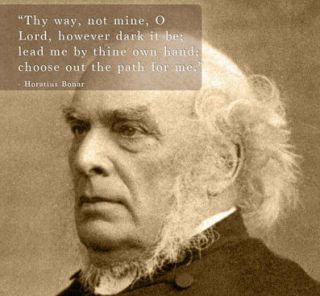 Born and raised in Edinburgh, Scotland, Horatius Bonar became a pastor at Kelso in 1837 and six years later joining the Free Church of Scotland. His reputation as a religious writer was first gained on the publication of the “Kelso Tracts,” of which he was the author, yet he is no less favorably known as a religious poet and hymn-writer.

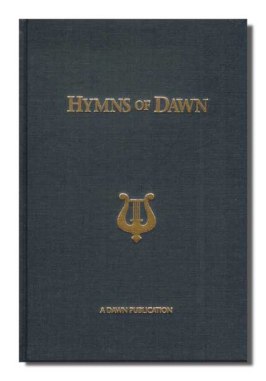

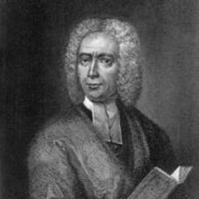
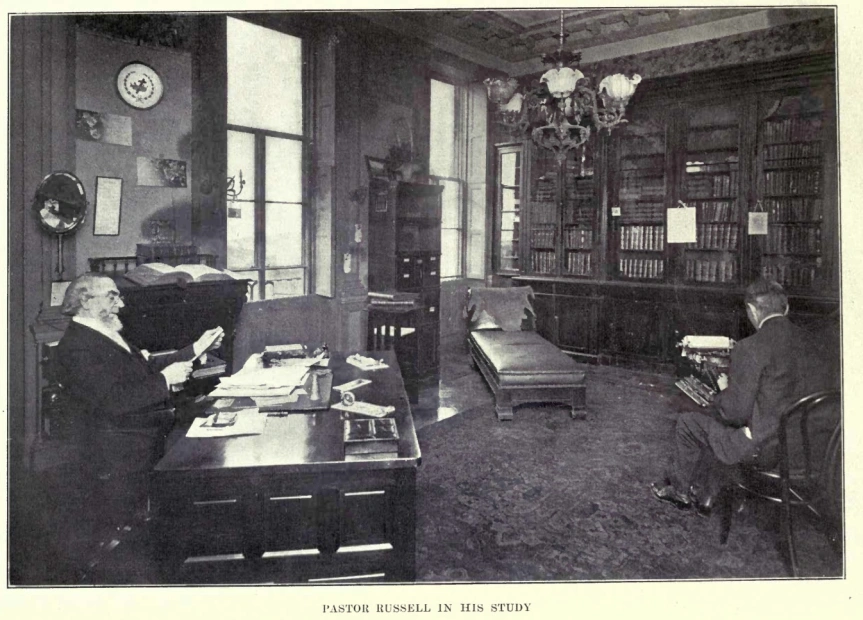



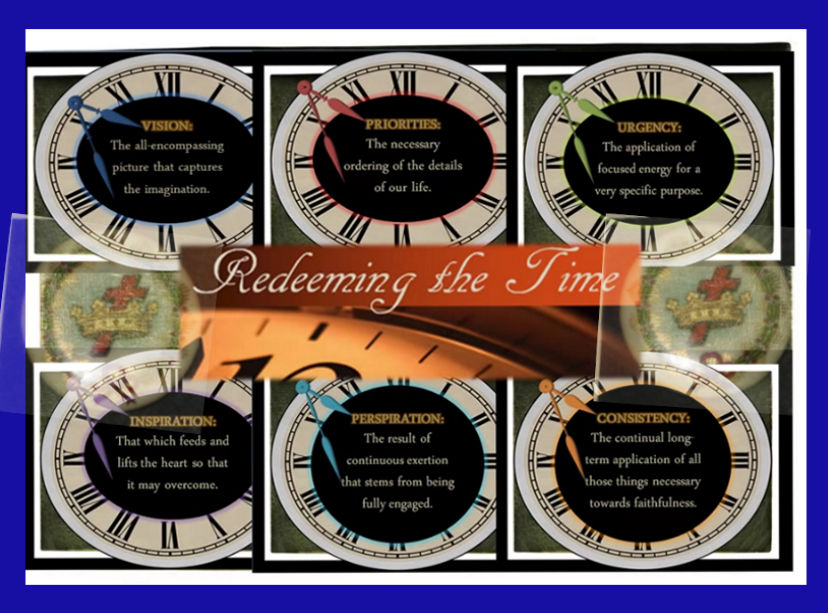

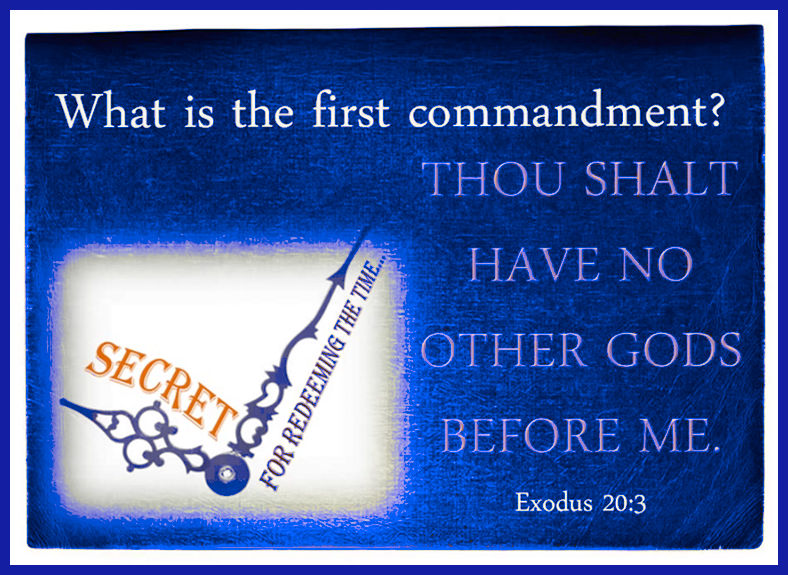



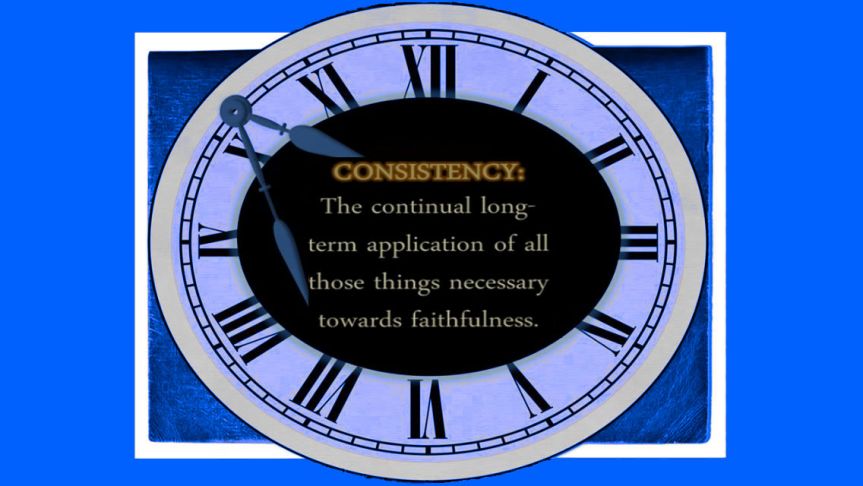


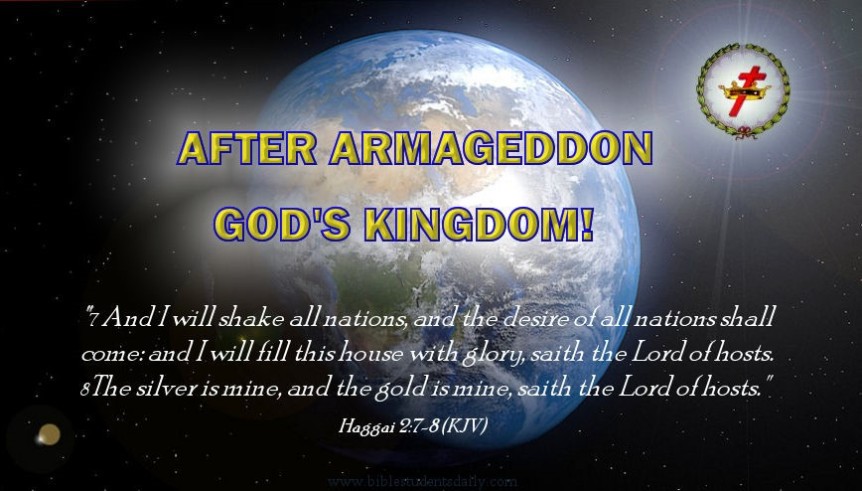
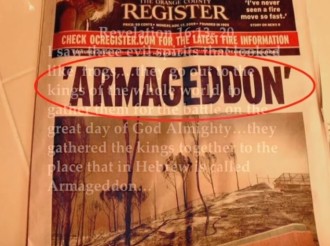
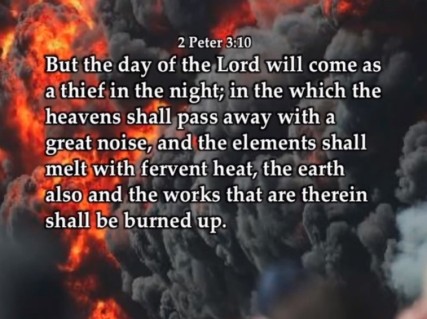



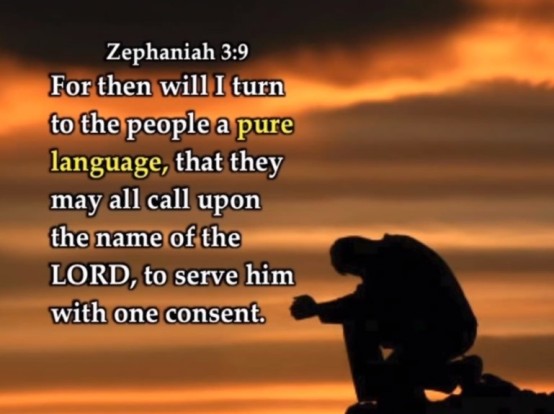









 Jesus proceeded to outline evidences that would enable those who were watching to recognize when this time would be.
 Over 200,000 people died and countless others were injured with radiation burns.


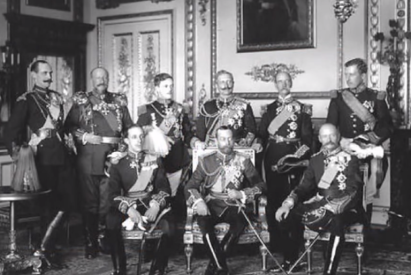



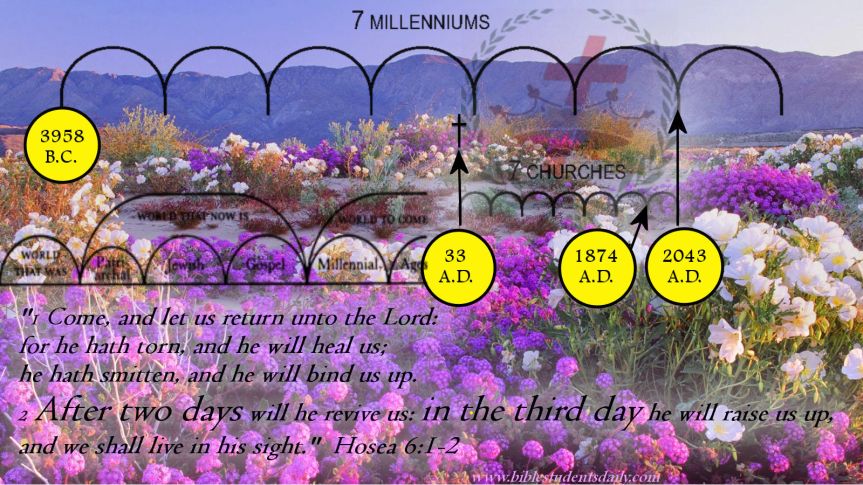

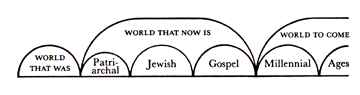

 BIBLE Students DAILY