Gratitude & Courage

IMG_7192

 Our hearts o’erflow in prayer and praise
To thee most gracious Lord,
That thou hast opened up our eyes
To understand thy Word.
That thou hast sought us out to run
This narrow heavenly way.
O lead us by thy Spirit, Lord,
For this we daily pray.

We’re thankful for our blessings too.
We never should complain,
For even trials are stepping stones
That bring us lasting gain.
Sometimes discouragement comes in
To hide our face from thee.
“Tis then, we pray, grasp tight our hand
That we may closer be.

Give us fresh courage to go on,
For in OUR strength, we’re weak.
We “need thee every hour,” dear Lord,
Thy will alone we seek.
With gratitude and courage then,
O let us follow on.
By faith we see the prize in sight
As we behold the dawn.

 (from “Poems of the Way” – compiled by Br. Martin Mitchell)

I Need Thee Every Hour

https://biblestudentsdaily.com/2016/07/21/gratitude-courage/

Enter your email address to subscribe to this blog and receive notifications of new posts by email.

Save

Save

Save

Save

Why Eternal Life?

with address.jpg

Life eternal? For what reason
Will God grant it in His time?
He’s preparing in due season
Wondrous blessings, joy sublime!

Now He’s training caring teachers
To instruct in righteousness
Life and peace for all God’s creatures
He designs to guide and bless!

Soon Christ’s Kingdom will be bringing
Understanding of God’s Plan.
Then they’ll all His praise be singing,
As they see His love toward man.

Justice, Wisdom, Love and Power
Of God’s character the base;
Through all ages, like a flower
He’ll unfold His glorious grace.

Sr. Margie Hagensick

IMG_7152.JPG

THE LAMB’S WIFE

 Jesus, the Lamb of God, delighted to do His Father’s will. The course marked out for Him was a remarkable one. He “made Himself of no reputation, and took upon Him the form of a servant, and was made in the likeness of men: and being found in fashion as a man, He humbled Himself, and became obedient unto death, even the death of the cross. Wherefore God also hath highly exalted Him, and given Him a name which is above every name.” “Let this mind be in you, which was also in Christ Jesus,” for God has predestinated that the Bride of Christ must first be conformed to His image (Romans 8:29).

Those who demonstrate their loyalty to their heavenly Bridegroom under the various tests now upon us, filling up of the afflictions left behind of Christ for the Body’s sake will be counted worthy to form the Bride, the second Eve.

O glorious prospect drawing near—the Marriage of the Lamb!

“And while they went to buy, the bridegroom came; and they that were ready went in with him to the marriage: and the door was shut” (Matthew 25:10).

When the marriage is consummated, and the virgins, the Bride’s companions that follow her, are brought into the King’s palace, with gladness and rejoicing, then the regeneration of Adam’s race, for whom atonement will have been made, will begin, and “the fathers shall become the children” of the Bride and Bridegroom, and they shall be made princes in all the earth, as co-labourers in the glorious work—the restitution of all things made possible through the sacrifice of the man Christ Jesus.

Reference: “What Pastor Russell Taught”


The URL of this post:
https://biblestudentsdaily.com/2016/07/10/why-eternal-life/

Enter your email address to subscribe to this blog and receive notifications of new posts by email.

Save

Save

What Does It Mean To Be Baptized Into Christ?

matt-16-25

What types of baptism are practiced in the Churches?

There is more than one type of baptism practiced in the Christian world. There is:

  • Sprinkling or Pouring on the Head
  • Infant Baptism
  • Submersion under water.

Sprinkling or pouring water on the head

There are no Scriptures in the Bible that describe baptism as the sprinkling or pouring of water on the head.

The first instances in the Bible where individuals were baptized was accomplished by John the Baptist.

Did John the Baptist sprinkle water or submerse the person under water?

“Now John also was baptizing in Aenon near Salim, because there was much water there. And they came and were baptized” (John 3:23, NKJ).

And He [Jesus] went away again beyond the Jordan to the place where John was baptizing at first” (John 10:40, NKJ).

If all John was doing was sprinkling water to baptize, he did not need to worry about being near the “much water” of the Jordan River. Clearly, John was doing more than just sprinkling those he baptized.

Infant Baptism

Is infant baptism scriptural?

Nowhere in the Bible do we find infant baptism mentioned. Although at times the Scriptures do mention the baptism of households, they never specifically mention children or infants.

For example, in Acts 8, Philip preached to the people of Samaria.

“But when they believed Philip as he preached the things concerning the kingdom of God and the name of Jesus Christ, both men and women were baptized” (Acts 8:12, NKJ).

Notice, there is no mention of Philip baptizing infants in Samaria; just men and women.

In Mark 16:16, Jesus said, “He who believes and is baptized will be saved.”

It would not be possible for a newborn infant to understand who Christ is, let alone believe in him.

Remember the question Jesus asked James and John in Mark 10:38,

Are you able to be baptized with the baptism I am baptized with?”

A newborn infant would not be capable of answering Jesus’ question, let alone responsibly making such a commitment.

Submersion (Dunking) into Water

Now we do find examples in the New Testament of adult baptism and in every case we believe the baptism was a submersion into water. For example:

“When He [John] had been baptized, Jesus came up immediately from the water; and behold, the heavens were opened to Him, and He saw the Spirit of God descending like a dove and alighting upon Him” (Matthew 3:16).

” (38) So he [Philip] commanded the chariot to stand still. And both Philip and the eunuch went down into the water, and he baptized him. (39) Now when they came up out of the water, the Spirit of the LORD caught Philip away, so that the eunuch saw him no more; and he went on his way rejoicing” (Acts 8:38-39).

The only way Jesus and the Ethiopian eunuch could have “come up” out of the water is if they have been submersed under it.

Greek Definition Of Baptism:

In support of this conclusion that baptism is submersion, let us looks at some definitions.

STRONGS: 907 baptizo (bap-tid’-zo); to immerse, submerge; to make overwhelmed (i.e. fully wet).

VINES: baptism, baptist, baptize.

A. Nouns.

1. baptisma (908), “baptism,” consisting of the processes of immersion, submersion and emergence (from bapto, “to dip”).

B. Verb.

baptizo (907), “to baptize,” primarily a frequentative form of bapto, “to dip,” was used among the Greeks to signify the dyeing of a garment, or the drawing of water by dipping a vessel into another.

So this word has the meaning of complete submersion under water. Certainly when dying, the garment must be totally submerged in the dye.

There is a variation of this word.

2. baptismos (909), as distinct from baptisma (the ordinance), is used of the “ceremonial washing of articles,” in some texts; once in a general sense.

This word is only found four times in the New Testament and refers to ceremonial washings.

John’s Baptism & Its Purpose

Let us talk about John’s (the Baptist’s) baptism. John’s work was not for the Gentiles. His work of baptism was intended to reveal Jesus to the Israelites only, but John did not baptize believers into Christ. That would come later, after Pentecost. His work was not for the Gentiles.

In John 1:29-31 we read, “(29) The next day John saw Jesus coming toward him, and said, ‘Behold! The Lamb of God who takes away the sin of the world! (30) This is He of whom I said, After me comes a Man who is preferred before me, for He was before me. (31) I did not know Him; but that He should be revealed to Israel, therefore I came baptizing with water.‘”

So John the Baptist was baptizing in order to reveal Jesus to Israel only, not yet to the Gentiles.

Bearing fruit was an evidence of those who had sincerely baptized. As John the Baptist said, “Therefore bear fruits worthy of repentance” (Matthew 3:8, NKJ).

John’s baptism required a personal confession of sins. “And all the land of Judea, and those from Jerusalem, went out to him and were all baptized by him in the Jordan River, confessing their sins” (Mark 1:5, NKJ).

Repentance and typical cleansing restored repentant Jews back to the condition of harmony with God as enjoyed under the Law Covenant and through the tabernacle arrangement.

“John came baptizing in the wilderness and preaching a baptism of repentance for the remission of sins” (Mark 1:4, NKJ).

The Jews had not previously practiced individual baptism. The whole nation was recognized as “baptized into Moses in the sea and in the cloud” (1 Corinthians 10:1-2).

In what sense were the Israelites “baptized into Moses in the sea and in the cloud”? 
We answer: When the Israelites passed through the Red Sea they were surrounded by water, and Paul mentions that this is a picture of them being baptized. The cloud is mentioned in Exodus 13:22, “He took not away the pillar of the cloud by day, nor the pillar of fire by night, from before the people.” We think that that was the cloud Paul referred to as over the Israelites — so that in that sense they were surrounded from above by water as well.

The Jews were already children of God and heirs of the covenants and promises, and their washing away of their sins meant their coming near again to God, and into closer touch with all the promises and the blessings thereof (Harvest Gleanings I, 1HG255).

John the Baptist’s baptism, was “for the remission of avoidable sins, gross sins. The godly Jews were not intended, nor expected, to come to John to be baptized. He said, ‘Now come, if you want to get ready for Messiah’s kingdom, and try to keep the law the best you are able and take this water immersion, accepting this as a sign of your putting away sin and starting a new course of life.’ This is all that baptism meant to the Jews. That was not a regular institution. It was a peculiar thing that belonged just to the end of the [Jewish] age, and John tried there to especially prepare a people by this preaching of holiness and putting away of sin for the Messiah; for the testimony is that if they had believed John they would have believed Jesus. If they disbelieved John and disregarded what he said, and were not careful to come back into harmony with God, and become as holy as they were able to do, then they were not in a condition to receive the message God had to give” (What Pastor Russell Said – Question Book, Q34:3).

This typical cleansing available to the Jews is discussed in Leviticus & Hebrews.

“For on that day [of Atonement] the priest shall make atonement for you, to cleanse you, that you may be clean from all your sins before the LORD” (Leviticus 16:30).

“And every priest stands ministering daily and offering repeatedly the same sacrifices, which can never take away sins” (Hebrews 10:11).

So John baptized the Jews for repentance and remission of sins similar to the typical cleansing as was accomplished in the tabernacle by the sacrifice of bulls and goats on the Day of Atonement. Every Jew under the Law Covenant was a member of the house of Moses (Hebrews 3:5). As mentioned above, the Jews were baptized unto Moses in the sea and in the cloud (1 Corinthians 10:12). As natural branches of the olive tree the Jews did not need en-grafting into Christ (Romans 11:16-21). John could not baptize Gentiles since they could not by repentance be restored back to a position they had never occupied.

After Pentecost, John’s baptism was replaced by Christian baptism into Christ.

In the book of Acts we have an incident where some of John’s disciples, after hearing the gospel, were baptized again, this time into Christ; after which they received the holy Spirit.

Acts 19:1-6 – “(1)… Paul, having passed through the upper regions, came to Ephesus. And finding some disciples (2) he said to them, ‘Did you receive the holy Spirit when you believed?’ So they said to him, ‘We have not so much as heard whether there is a holy Spirit.’ (3) And he said to them, ‘Into what then were you baptized?’ So they said, ‘Into John’s baptism.’ (4) Then Paul said, ‘John indeed baptized with a baptism of repentance, saying to the people that they should believe on Him who would come after him, that is, on Christ Jesus.’ (5) When they heard this, they were baptized in the name of the Lord Jesus. (6) And when Paul had laid hands on them, the holy Spirit came upon them, and they spoke with tongues and prophesied. (7) Now the men were about twelve in all.”

These disciples were baptized twice (John’s & Christ’s). Bro. Charles T. Russell teaches, “The Apostle instructed them more fully, assuring them that John’s baptism was all right in its time and place, but that they should be baptized in the name of Jesus, baptized into Christ” (Harvest Gleanings I, HG732:6).

In Acts 2:41 three thousand people were baptized and among these, there may have also been some that had been baptized by John earlier.

‘Never is it said of any Gentile that he was baptized unto repentance and remission of sins, that he got back into Moses and in accord with the law. On the contrary, the apostle shows that we and all spiritual Israelites coming from among the Gentiles, come into Christ in a different way from that in which the Jews became related to him. I call your attention to the apostle’s argument in Rom. 11:17-24, where he uses an olive-tree as a symbol or picture. He tells us that that olive-tree was primarily the Jewish nation; that its root was the Abrahamic promise; its branches were the individual Jews. It was to those branches that John preached the baptism of repentance. Many of them were defiled, living in sin, and he urged them to repent and be washed, cleansed; that otherwise they would be broken off. And so it was when Messiah was manifest; the prepared ones, Israelites indeed, in whom was no guile, were ready for him, received him and he received them, and they continued to be branches of that olive, tree. But the great mass of the branches, as the apostle goes on to explain, were broken off because they did not receive our Lord, because they were not in the right condition of heart, not “Israelites indeed, without guile” (Harvest Gleanings I, HG).

Christian Baptism and Its Meaning

Christian baptism has many elements that are similar to John’s baptism and some elements that are different. As with the Jews baptized by John’s baptism, Christians are to confess and repent from their sins.

“And many who had believed came confessing and telling their deeds” (Acts 19:18).

“(46) Then he said to them, ‘Thus it is written, and thus it was necessary for the Christ to suffer and to rise from the dead the third day, (47) and that repentance and remission of sins should be preached in His name to all nations, beginning at Jerusalem'” (Luke 24:46-47).

“Then Peter said to them, ‘Repent, and let every one of you be baptized in the name of Jesus Christ for the remission of sins; and you shall receive the gift of the Holy Spirit'” (Acts 2:38).

Br. Charles Russell teaches, “This baptism was for Jews only, who had already been baptized into Moses in the sea and the cloud. Sins thus figuratively washed away did not include original sin, but merely minor transgressions against the Mosaic law.” (Reprints of the Original Watchtower 4308:5, 6th Volume of Studies in the Scriptures p.428, Harvest Gleanings I, 600:1,2)

John the Baptist could only provide typical remission. The Christian receives a real remission of sins through actual justification by Jesus’ blood.

John’s baptism pointed the Jews to Christ, but the Christian is to actually believe in Christ and accept Him as their Savior. Let’s see how this is shown in the Scriptures.

“(36) Now as they went down the road, they came to some water. And the eunuch said, ‘See, here is water. What hinders me from being baptized?’ (37) Then Philip said, ‘If you believe with all your heart, you may.’ And he answered and said, ‘I believe that Jesus Christ is the Son of God’” (Acts 8:36-37).

Then Crispus, the ruler of the synagogue, believed on the Lord with all his household. And many of the Corinthians, hearing, believed and were baptized” (Acts 18:8).

So faith in Jesus Christ is a requirement for the Christian baptism.

Baptism Into Christ – Not Into An Organization

Although those baptized into John’s baptism were to bear fruit, the Christian’s death to sin, walking in newness of life and drinking of the cup is a far deeper action. Christian baptism is more than the pursuit of righteousness. It is the total death of self will and a total commitment to sacrifice ALL — one’s time, talent and possessions to the Lord, often at the cost of suffering and persecution.

“Yes, and all who desire to live godly in Christ Jesus will suffer persecution” (2 Timothy 3:12).

“(3) Or do you not know that as many of us as were baptized into Christ Jesus were baptized into His death? (4) Therefore we were buried with Him through baptism into death, that just as Christ was raised from the dead by the glory of the Father, even so we also should walk in newness of life. (11) Likewise you also, reckon yourselves to be dead indeed to sin, but alive to God in Christ Jesus our Lord. (12) Therefore do not let sin reign in your mortal body, that you should obey it in its lusts. (13) And do not present your members as instruments of unrighteousness to sin, but present yourselves to God as being alive from the dead, and your members as instruments of righteousness to God” (Romans 6:3-13).

So we see from the 6th chapter of Romans and lowering the candidate into the water represents the death of the Old Man with his sinful ways and the raising up of the candidate shows our walk in newness of life as New Creatures in Christ Jesus. Notice how Romans 6:3 teaches that we are baptized into Christ’s death.

No scripture talks about being baptized into Jehovah’s organization. Also see how the following text show we are actually baptized into Christ.

For all of you who were baptized into Christ have clothed yourselves with Christ” (Galatians 3:27, NASV).

“Peter said to them, ‘Repent, and each of you be baptized in the name of Jesus Christ for the forgiveness of your sins; and you will receive the gift of the Holy Spirit'” (Acts 2:38, NASV).

Ultimate Purpose of Baptism

What is the ultimate purpose of Christian baptism? Certainly to lay down our lives in the Lord’s service is purpose enough, but the Bible shows a purpose even beyond that.

Just as going to medical school is of no benefit to humanity unless the student becomes a practicing doctor, so it is with the Christian.

Context:

“And the Scripture, foreseeing that God would justify the Gentiles by faith, preached the gospel to Abraham beforehand, saying, ‘In you all the nations shall be blessed'” (Galatians 3:8, NKJ).

“In your seed all the nations of the earth shall be blessed, because you have obeyed My voice” (Genesis 22:18).

“(27) For as many of you as were baptized into Christ have PUT ON Christ… (29) And if you are Christ’s, then you are Abraham’s seed, and heirs according to the promise” (Galatians 3:27,29).

Those who are baptized are Abraham’s seed through whom God’s purpose is to bless all the families of the earth. This is the ultimate purpose of baptism.

The same point is expressed in 1 Corinthians 15:29.

“Otherwise, what will they do who are baptized for the dead, if the dead do not rise at all? Why then are they baptized for the dead?”

This passage says that we are baptized for the dead,” not “into death.” The ultimate purpose of baptism is to bless all the families of the earth.

Many translations agree with this wording, “baptized for the dead.” The translators do not believe this. They would rather not translate this text. Peter puts it this way:

“receiving the end of your faith—the salvation of your souls” (1 Peter 1:9, NKJ).

The word “your” is in italics. The thought is that the outcome of our faith, THE ULTIMATE PURPOSE, will be the salvation of mankind.

Does water baptism cancel sins? 

The traditional view among Catholic and many Protestant denominations is that baptism is necessary for salvation, forgiveness and the cancellation of sins. Not only do they believe it necessary, but some feel it must be performed in a prescribed fashion in order to secure salvation.  Some of their supposed proof texts are:

“Then Peter said to them, ‘Repent, and let every one of you be baptized in the name of Jesus Christ for the remission of sins; and you shall receive the gift of the Holy Spirit’ ” (Acts 2:38).

“He who believes and is baptized will be saved; but he who does not believe will be condemned” (Mark 16:16).

“And now why are you waiting? Arise and be baptized, and wash away your sins, calling on the name of the Lord” (Acts 22:16).

“There is also an antitype which now saves us — baptism” (1 Peter 3:21).

These texts are telling us that those who are baptized will be saved and receive a remission or washing away, of sins. So are the Catholics and many Protestants correct in believing that the act of baptism is necessary for salvation?

No. Where these Christians are wrong is that it is NOT “water baptism” that saves us.  Rather, the true baptism saves us, that is, consecration and the resultant justification by Christ’s blood. Water baptism cannot save.  It is merely a symbol of the true baptism and the resultant justification that can save us.

Baptism is the outward sign of an invisible grace from our Heavenly Father through Jesus Christ.

“Since, therefore, we have now been justified by his blood, much more shall we be saved by him from the wrath of God” (Romans 5:9, ESV). 

We are saved by Jesus’ act of justification, not by our symbolic act of water baptism.

Water Baptism Is Symbolic

Many Scriptures establish that water baptism itself is merely a symbol and that it does not have intrinsic atoning qualities.

Luke 12:50 – “But I have a baptism to be baptized with, and how distressed I am till it is accomplished!”

Jesus had already received water baptism by John, so in this case the word “baptism” must be symbolic of more than the literal water baptism. This is also borne out in Mark 10:38-39 (see also Matthew 20:22-23):

“(38) Jesus said to them, ‘You do not know what you ask. Can you drink the cup that I drink, and be baptized with the baptism that I am baptized with?’ (39) They said to Him, ‘We are able.’ So Jesus said to them, ‘You will indeed drink the cup that I drink, and with the baptism I am baptized with you will be baptized.'” 

More evidence of the symbolic nature of water baptism is found in Colossians 2:11-12 (ESV):

“(11) In him also you were circumcised with a circumcision made without hands, by putting off the body of the flesh, by the circumcision of Christ, (12) having been buried with him in baptism, in which you were also raised with him through faith in the powerful working of God, who raised him from the dead.

Notice here that both circumcision & water baptism are symbolic of putting away sin.  Obviously “circumcision” here is not literal. The Christian is not literally required to be circumcised as were the Jews under the Law. This is the symbolic circumcision of the heart. So, just like circumcision is symbolic, likewise, water baptism here is also symbolic.

Next is another symbolic usage of baptism, although a much different one.

“(11) I baptize you with water for repentance, but he who is coming after me is mightier than I, whose sandals I am not worthy to carry. He will baptize you with the Holy Spirit and fire. (12) His winnowing fork is in his hand, and he will clear his threshing floor and gather his wheat into the barn, but the chaff he will burn with unquenchable fire” (Matthew 3:11-12, ESV). 

The baptism by “fire” is symbolic of the judgment and destruction upon the nation of Israel as stated in verse 12, “He will burn up the chaff with unquenchable fire.”

Just as the baptism by fire is symbolic, so is water baptism.

We are not saved by the symbol “water baptism,” but by the reality of it, the meaning of which we will get to shortly.

Born of Water – Spirit Begettal

Many believe John 3:5 teaches that unless you are baptized in water you cannot enter the kingdom of heaven. It says, “Jesus answered, ‘Most assuredly, I say to you, unless one is born of water and the Spirit, he cannot enter the kingdom of God.'”

The word “baptism” is no where to be found in this context. “Water here is symbolic of the Word of Truth. Without the Bible we would not have the necessary knowledge to grow in Christ and enter God’s Kingdom.

Our growth in Christ through his Word (the Holy Scriptures) is illustrated by the Greek word genno, that is Strongs #1080. Vines defines it as:

BEGET, BEAR (OF BEGETTING), BORN

gennao —“to beget,” in the passive voice, “to be born,” is chiefly used of men “begetting” children; more rarely of women “begetting” children (Vine’s Expository Dictionary of Biblical Words, 1985).

So in John 3:5 we are “begotten of water.” This means that we are spiritually begotten by Truth.

Br. Charles Russell writes “We see that symbolical water represents truth, and that our begetting of the holy Spirit is said to be also a begetting ‘through the Word of truth’” (James 1:18). (Reprints of the Original Watchtower: R.4124:6, R.3600:6, R.2422:1.)

In support of this we will quote four scriptures which relate begettal to the Word of God.

“Of his own will begat He us with the word of truth, that we should be a kind of firstfruits of his creatures” (James 1:18, KJV).

“For though you might have ten thousand instructors in Christ, yet you do not have many fathers; for in Christ Jesus I have begotten you through the gospel” (1 Corinthians 4:15, NKJ).

“…having been born again, not of corruptible seed but incorruptible, through the word of GOD which lives and abides forever” (1 Peter 1:23).

“…that He might sanctify and cleanse her with the washing of water by the word” (Ephesians 5:26).

So we see that John 3:5 does not teach that unless you are baptized in water you cannot enter the kingdom of heaven. It actually teaches that we are begotten as New Creatures in Christ by the Truth of God’s word. It is the guidance from God’s Word that develops the embryo New Creature in Christian growth, preparing us for our ultimate Spiritual birth, after the first resurrection.

Saved By Belief, Grace & Justification, Not Saved By Baptism

There are many more Scriptures that talk about us as being saved, but it’s not by water baptism, it is by belief in Jesus Christ and the resultant grace of God and justification to life.

“And it shall come to pass that whoever calls on the name of the Lord shall be saved” (Acts 2:21).

“Whoever calls on the name of the Lord shall be saved” (Romans 10:13).

“(30) And he [the jailer] brought them [Paul & Silas] out and said, ‘Sirs, what must I do to be saved?’ (31) So they said, ‘Believe on the Lord Jesus Christ, and you will be saved, you and your household'” (Acts 16:30-31).

“…that if you confess with your mouth the Lord Jesus and believe in your heart that God has raised Him from the dead, you will be saved” (Romans 10:9).

“Much more then, having now been justified by his blood, we shall be saved from wrath through him” (Romans 5:9).

“If anyone’s work is burned, he will suffer loss; but he himself will be saved, yet so as through fire” (1 Corinthians 3:15).

“(1) Moreover, brethren, I declare to you the gospel which I preached to you, which also you received and in which you stand, (2) by which also you are saved, if you hold fast that word which I preached to you– unless you believed in vain” (1 Corinthians 15:1-2).

“Even when we were dead in trespasses, made us alive together with Christ (by grace you have been saved.)” (Ephesians 2:5).

“For by grace you have been saved through faith, and that not of yourselves; it is the gift of God” (Ephesians 2:8).

The Jerusalem Counsel never addressed the issue of baptism when presenting minimum requirements expected of the Gentile brothers.

“(28) For it seemed good to the holy Spirit, and to us, to lay upon you no greater burden than these necessary things: (29) that you abstain from things offered to idols, from blood, from things strangled, and from sexual immorality. If you keep yourselves from these, you will do well. Farewell” (Acts 15:28-29).

Where is water baptism on this list? If it were necessary for salvation, certainly the Apostles would have required it of the Gentile brethren.

“And certain men came down from Judea and taught the brethren, ‘Unless you are circumcised according to the custom of Moses, you cannot be saved'” (Acts 15:1).

Some Christians today take the same approach with baptism as these Jews took of circumcision, that it is a requirement for salvation.

Saved By Baptism?

In 1 Peter we find scriptures used by many Christians to again attempt to prove that water baptism is necessary for salvation.

“(19) by whom also He [Jesus] went and preached to the spirits in prison, (20) who formerly were disobedient, when once the Divine long suffering waited in the days of Noah, while the ark was being prepared, in which a few, that is, eight souls, were saved through water. (21) There is also an antitype which now saves us—baptism (not the removal of the filth of the flesh, but the answer of a good conscience toward God), through the resurrection of Jesus Christ” (1 Peter 3:19-22).

Does this passage prove we are saved by literal water baptism? The simple answer here is that Peter is not talking about literal water baptism. In verse 21, He describes “baptism” as “a good conscience toward God.”  That word “conscience” is also used in the prior chapter.

“For this is thankworthy, if a man for conscience toward God endure grief, suffering wrongfully” (1 Peter 2:19, KJV).

So the word “conscience” connected with the word “baptism” refers to suffering for righteousness sake. Hence, the word “baptism” is talking about living our consecration.  Our consecration results in justification by the ransom to life. That is what saves us.

It is interesting to note from verse 21 that we are not saved by the “removal of the filth of the flesh,” that is, we are not saved simply by John’s baptism, the repentance from sin. But we must go beyond that to consecration INTO Christ’s death and this involves cheerful in the spirit, willing patient endurance and sacrifice of self-will and self-interest.

“I have been crucified with Christ. It is no longer I who live, but Christ who lives in me. And the life I now live in the flesh I live by faith in the Son of God, who loved me and gave himself for me” (Galatians 2:20).

Baptized In Who’s Name?

In whose name is the Christian baptized? Many quote the great commission of Matthew 28:19 to prove we are baptized into the Trinity, not into Jesus Christ alone.

“Go therefore and make disciples of all the nations, baptizing them in the name of the Father and of the Son and of the holy Spirit” (Matthew 28:19).

If we accept the translation as is, it does not prove that we are baptized into the Trinity, but merely the desperation of those who strive in vain to find support for this false doctrine, in Scripture. This passage does not state that these three are one person, nor anything of the kind.

In conflict with this, six other Scriptures refer baptism in the name of Jesus, not baptism in the name of the Father, Son and Holy Spirit of Matthew 28:19.

Let us look at these Scriptures that contradict Matthew 28:29. Notice that in none of these texts was anyone baptized in the name of the Father, Son and holy Spirit.

“Then Peter said to them, ‘Repent, and let every one of you be baptized in the name of Jesus Christ for the remission of sins; and you shall receive the gift of the Holy Spirit'” (Acts 2:38).

“But when they believed Philip as he preached the things concerning the kingdom of GOD and the name of Jesus Christ, both men and women were baptized” (Acts 8:12).

“For as yet He had fallen upon none of them. They had only been baptized in the name of the Lord Jesus(Acts 8:16).

“And he commanded them to be baptized in the name of the Lord. Then they asked him to stay a few days” (Acts 10:48).

“When they heard this, they were baptized in the name of the Lord Jesus” (Acts 19:5).

“Or do you not know that as many of us as were baptized into Christ Jesus were baptized into HIS DEATH ?” (Romans 6:3).

*******

How else are we “baptized into Christ’s death?

We need to surrender our wills to God, as Jesus did. He said, “Lo I come…to do thy will, O God. I delight to do thy will, O my God; thy law is written in my heart” (Psalm 40:7, 8; Hebrews 10:7).

We dedicate or consecrate our all to follow and obey the Lord with our minds, hearts, and our whole beings. This is a total dedication of service to do God’s will. When consecrated, we walk “in newness of life,” having a new, different direction or purpose. We pattern our lives after our dear Redeemer.

A few days before his crucifixion, Jesus stated, “But I have a baptism to undergo, and how distressed I am until it is accomplished!” (Luke 12:50) This shows that in Jesus’ baptism, water was a symbol of his real baptism in death. It was about to be accomplished at Calvary. Like Christ, we who dedicate our lives to the Lord make ourselves “dead” to the world’s pursuits. Instead, we pursue heavenly things, studying the scriptures to find out what God’s will is for us. Our desire is to prove faithful unto death and be resurrected with Christ in a divine and immortal body (Philippians 3:10, 11; Romans 2:7, Revelation 2:10).

Water baptism is a witness to others of what has taken place in our hearts with the Lord and our commitment to Him, as well as symbolizing that life of baptism. The individual places himself in the arms of another, and being fully immersed in the water, is dependent on that person to help him up. He comes out of the water into “newness of life.” This is the new life to which he has committed himself until he dies. Hence, we believe water baptism is necessary, not for salvation, but for a witness of that life of commitment.

SO WHAT NOW?

Are you interested to GIVE UP your life rights on earth to inherit what eye has not seen nor ear heard … to inherit a life with Jesus and those who have now given up the pride of life and disclaim all rights to themselves, to their soul, to their body, to their time, to their health, to their reputation, to their talents or to anything that they own?

 If you confess to be the property of Jesus Christ your Redeemer, then:

  DEDICATE YOURSELF

to belong entirely to Jesus now,

to serve, love and trust him as your life and salvation until your life’s end and show this through baptism.

“Present your bodies a living sacrifice, holy, acceptable unto God, which is your reasonable service” (Romans 12:1).

God is now selecting men and women of faith for special honors during the Millennium. Namely, to reign with Christ in heaven as spiritual rulers of the world, to lead the world to righteousness, godliness, and truth and raise all the dead of past Ages. Satan’s demons now lead the world into sin and ignorance. Then, Christ and his saints will lead the world into obedience and understanding (Revelation 20:1-6).

High Standards

When we understand the high honor to which the saints are called, we better appreciate the high standards that are expected of them.

(1) Godly conduct
(2) Character Development
(3) Study of the Truth
(4) Service and Sacrifice.

Consecration

We enter the race for the “prize of the High Calling of God in Christ Jesus” (Philippians 3:14) by consecrating our life to GOD.

This we do in personal prayer to God, committing our life and service and interests to God hereafter.

If this step is taken, then it is proper to symbolize that decision with water baptism, as a testimony to others.

(11) The saying is trustworthy, for: If we have died with him, we will also live with him; (12) if we endure, we will also reign with him; if we deny him, he also will deny us” (2 Timothy 2:11-12, ESV).

If you have not considered the matter of consecration, take time to do so.

Read our Lord’s words about this decision, thoughtfully, in Luke 14:27‑35.
Remember the blessings promised, and the conditions for them:

“by patient continuance in well doing seek for glory, honor, and immortality” (Romans 2:7).

Remember the privilege of being with Christ, in heaven, to bless “all the families of the earth” during the Millennium. God wishes us to respond favorably. “This is the will of God, even your sanctification” (1 Thessalonians 4:3).

So dear brethren, let us pursue our consecration with determination and great zeal, so that we may please our Father and be prepared for our future mission.

Click here to watch a baptism service video

References and Acknowledgement:

Br. Peter Karavas & our brethren in Christ at http://www.friendsofjehovahswitnesses.com/

Br. Charles Taze Russell: What Pastor Russell Said – Question Book, Q34:3; Harvest Gleanings I; Reprints of the Original Watch Tower and Herald of Christ’s Presence, Studies in the Scriptures – Volume 6.

Vine’s Expository Dictionary of Biblical Words, 1985.

STRONG’S Concordance.

This post’s URL:

What Does It Mean To Be Baptized Into Christ?

Enter your email address to subscribe to this blog and receive notifications of new posts by email.

Save

Save

Save

The Book of Revelation: A 2016 Perspective

John the Revelator  - 1 -crossFINAL

“The Revelation of Jesus Christ, which GOD gave unto him, to show unto his servants things which must shortly come to pass; and he sent and signified it by his angel unto his servant John.” — Revelation 1:1

The Book of Revelation is a prophetic picture of the experiences and purpose of the Christian Age. Its symbols illustrate what the true Church would suffer at the hands of the false church and the glorious outcome of patient endurance through agonizing trials of faith. As with many prophecies, these events would not be fully understood by the Church until their fulfillment. But now, at the end of the Christian Age, since many of these prophecies have been fulfilled, we should expect to have a clearer insight into what the signs and symbols of Revelation mean. Indeed, this book itself reveals that the complete prophetic picture written in symbolic code would be shown only to the end time Church.

The Unfolding of the Vision

While in prison on the Isle of Patmos, the Apostle John received the “Revelation of Jesus Christ to all of the Churches.” As its name implies, it is a revealing—an unfolding. In his vision, John was shown amazing scenes which were prophetic signs of things to come. Note the first verse: “…he sent and signified it by his angel…” Signified here means “to put into signs—symbolic depictions.” This book, therefore, is written in a kind of code language, and so, when it says “beast,” it does not mean a literal beast, and when it says “angel,” it may not refer to an actual spirit-being.

When symbols such as these are understood, the results are inspiring—as we might expect from a book given by Jesus to the Apostle John for the Church living in the last days. And, while some view these signs and symbols to be terrifying, the Christian who longs for a better day finds hope for everyone in its words, as the final chapters portray.

Time Frame One: THE CHRISTIAN / GOSPEL AGE

The Book of Revelation is neatly divided into three sections corresponding to the three major time periods of GOD’s dealings with the Church of Christ and their role in the ages to come.

The first time frame is from chapters 1 – 13, which primarily refer to the history of the Church from Christ’s death to his second advent (‘Parousia’, invisible presence, in 1874). This period of time was set apart for calling out from among mankind a group of people referred to by various scriptural names: the Church, the Bride, Christians, a people for His name, the 144,000, the little flock, saints, etc. (Acts 15:14; Acts 11:26; Philippians 1:1; Luke 12:32; Revelation 21:9)

This time frame tells of the suffering of Jesus’ true followers at the hands of the powerful apostate (false) church systems, of which the Apostle Paul warned. (2 Thessalonians 2:2-7). Jesus summed up this history in only a few words: “the beginning of sorrows…” Matthew 24:4-14

The history of the Church, as shown in Chapter 1, is divided into seven time periods which are each unique in both their doctrine and experiences. Jesus watches over these seven Churches as symbolized by his appearance “in the midst of seven candlesticks...the seven Churches.” (Revelation 1:13, 20)

Recall that Jesus told his disciples they were like candles on a candlestick—“the light of the world.” Matthew 5:14-16

In Revelation 1:16 Jesus holds seven stars in his right hand. Stars are used in Scripture to symbolize teachers—both good and bad. (Daniel 12:3; Jude 13; Revelation 12:1)

In Revelation 1:20, the seven stars are identified as the seven angels sent to the seven Churches described in Chapters 2 and 3. Note that the word angel has the meaning of messenger in the Greek, and GOD has sent a special Messenger to each of the seven time periods throughout the history of the Church. The Apostle John was one such messenger.

Between Chapters 2 -11, these seven periods of Church history are illustrated three times under different symbols.

The seven Churches are listed in Chapters 2 – 3:-

(1) EPHESUS             =     33 ad, Paul
(2) SMYRNA              =    73 ad, John
(3) PERGAMOS         =     325 ad, Arius
(4) THYATIRA           =    1157 ad, Waldo
(5) SARDIS                 =    1517 ad, Luther   
(6) PHILADELPHIA  =     1667 ad, Penn (he was baptized that year)
(7) LAODICEA           =    1874 ad, Russell

The 7 Messages to the Churches (for the godly) are as follows (each message corresponds to the same church number):

(1) Jesus surpasses Judaism
(2) Gnosticism is wrong
(3) Jesus was the son of GOD
(4) Christian discipleship
(5) Reform
(6) Brotherly love
(7) Harvest message

The Scroll of Revelation 5:

The scroll contains judgments against the ungodly. In particular, the judgments of the seven trumpets. That is why the seven angels blaring forth the seven trumpet judgments follow immediately upon the loosing of the last seal — for now the scroll can be unrolled and read and its judgments expressed.

Let us compare Zechariah 5:1-4 which is clear on this point with also Ezekiel 2:9,10 :-

Zechariah 5:1-4:- Then I turned, and lifted up mine eyes, and looked, and behold a flying roll.And he said unto me, What seest thou? And I answered, I see a flying roll; the length thereof is twenty cubits, and the breadth thereof ten cubits.Then said he unto me, This is the curse that goeth forth over the face of the whole earth: for every one that stealeth shall be cut off as on this side according to it; and every one that sweareth shall be cut off as on that side according to it.I will bring it forth, saith the Lord of hosts, and it shall enter into the house of the thief, and into the house of him that sweareth falsely by my name: and it shall remain in the midst of his house, and shall consume it with the timber thereof and the stones thereof.

Ezekiel 2:9-10:- And when I looked, behold, an hand was sent unto me; and, lo, a roll of a book was therein;10 And he spread it before me; and it was written within and without: and there was written therein lamentations, and mourning, and woe.

The scroll contents are the seven trumpets.

Those trumpets are judgments.

Note: The scroll in Hebrews 10:7 is a different scroll than the one in Revelation 5; Hebrews 10 refers to the Old Testament. The scroll of Revelation 5 is a series of judgments that form the seven trumpets.

While the seals are being loosed, we are not progressing through the Gospel Age. We are merely seeing a vision on each loosing, representing what will later occur in the development of the Gospel Age. They are foregleams of coming events. The entire scroll is opened before the first trumpet judgment. The scroll was opened at the beginning of the age, not the end of the age.

The seven seals are listed in Chapters 6 – 8;

We believe the seals were all broken when Jesus was given the scroll after his resurrection, and that the 1/2 hour of silence was the pause before the judgment followed on Judaism.

The seals describe events that would later develop during the Gospel Age. Let us remember that the visions of the seals do not reflect the contents of the scroll. They are merely visions of coming events. Not until the seventh seal is loosed do we actually get to the contents of the scroll itself. Those contents are the judgments of the Trumpets.

The visions revealed at the loosening of each seal are these (very briefly):-

SEAL 1.  Christianity spreading rapidly
SEAL 2 False doctrine coming in
SEAL 3.  Famine for the word of GOD
SEAL 4Spiritual death rampant during dark ages

SEAL5.   Reformation and the hope for release from oppression
SEAL 6.  French Revolution and Napoleonic Wars, followed by the second advent. The vision following the loosening of this seal includes events that pertain to periods six and seven of the Gospel Age. Thus when the 7th seal is loosened, we proceed to the judgments contained in the scroll.

The seven trumpets are found in Chapters 8 – 11.

The message of the trumpets contain judgments on Judaism, Pagan Rome, wayward Christendom, and the nations supporting Papacy.

Recall the text in Ezekiel 2:10, “it was written within and without: and there was written therein lamentations, and mourning, and woe.”

These judgments of the 7 trumpets and the 7 blasts under the 7th trumpet do not include original sin and the curse. The trumpets are against Gospel Age systems. The original curse was upon Adam and Eve and descended to others. Of course original sin is related to all other problems. But nothing in the trumpets speaks to Adam or Eve.

So, the trumpet judgments usually highlight a particular distress during the period of the church that corresponds to that trumpet period, and they are as follows:

JUDGMENT 1. The judgment against Judaism and the polity of Israel, that really fell hard from 66 to 73 ad with the seven years of the Roman Wars against Judea.

JUDGMENT 2. The overthrow of the Pagan Roman Empire. That would not pertain to the saints. (But it was a big relief for them.)

JUDGMENT 3. The third trumpet describes the pollution of the sweet waters of truth, which made the message “bitter” and caused the forfeiture of many spiritual hopes.

JUDGMENT 4. The fourth trumpet take us to the darkest part of the “dark ages”, when the Gospel Sun, the light of the Apostolic Stars, and the typical teachings of the Law were substantially darkened.

JUDGMENT 5. The Reformation.

JUDGMENT 6. The French Revolution (1789-1799) and subsequent Napoleonic Wars that ravaged Europe and broke up the hold of Papacy in 1799.

JUDGMENT 7. The Harvest in 1874 and its accompanying Time of Trouble from 1914 onward.

—————————————

1260, 539ad – Some Specifics about the 1260 years of Papal Power.

The date 539 ad is used as the time when Papacy came into temporal political authority. In 538 ad the Pope was left in control of Rome as Belisarius, general of Justinian the Roman Emperor from Constantinople, left Rome to pursue the Goths who had recently sieged the city. Thereafter, in 539 ad, Ravenna, the then capital of Italy, was taken by Belisarius, and he subsequently left Italy to return to Constantinople with his victory. In his wake the Pope was left as the political ally and figurehead in Italy — thus the beginning of his political authority.

This came to an end 1260 years later in 1798 when the Pope was taken out of Rome by the French General Berthier, and subsequently died in 1799 in France, Napoleon declaring that no new pontiff would be elected (though one was by other arrangements after a few months). One history of the poes throughout the age breaks for a new chapter at 1799.

1914 was the end of Gentile Times – representing the smiting of the image of Daniel chapter two, thus the end of the political assemblage that had governed Europe for so long, as the iron (political) and clay (imitation Christian church) system.

Babylon at first conquered the holy land from 607 to 603 bc — a four year period — the corresponding four year period 2520 years later is 1914 to 1918, World War I.

—————————————

Each period of the Church has its corresponding concurrent seal, vision and trumpet.

Here are four examples illustrate just a few of the many parallels between the Churches, seals and trumpets:

1.“Four angels” are mentioned in both the sixth seal (7:1) and the sixth trumpet (9:15).

2. An earthquake is shown in both the sixth seal (6:12) and in the sixth trumpet (11:13). An earthquake pictures, in symbol, the shaking up of earth’s society through discontent and revolution.

3. The return of Jesus is mentioned in both the seventh Church (3:20—he is “standing at the door”) and the seventh trumpet (11:15—his “reign” begins).

4. Increased enlightenment is shown in both the seventh Church (3:20—Jesus promises to serve the evening meal—“sup”) and in the seventh trumpet (10:7—enlightenment clears up “the mystery”).

One fascinating example of symbols related to the seals of Chapter 6 is the picture of the four horses.

Horsesin symbol, often represent doctrines, ideologies. (Isaiah 31:1-3, Deuteronomy 17:15-16).

Horsemenrepresent the teachers who bring forth those doctrines.

White horsethe 1st horse pictures the pureness of doctrine delivered to the early Church by the twelve Apostles. (Revelation 3:5, 15:6, 19:8,14)

Red horsethe 2nd horse, illustrates how the doctrine began to be polluted with sinful heresies by the developing apostate church. Red is the colour of war and speaks of spiritual warfare because of doctrinal changes. This horse represents the period of time in history from Nero (37-68 AD) until Diocletian (244-311 AD).

Black horse – the 3rd horse, represents a dark period in Church history brought about by dark age doctrines. Black is the colour of famine—Lamentations 5:10.

Pale (Greek-greenish)the 4th horse, symbolizes doctrine so sick and devoid of any life-giving qualities that the rider that sat upon him was even given the name “death.” The symbolism refers to spiritual pestilence.

This sad history portrays how the beautiful truth once given to the early Church was increasingly corrupted by the traditions of men.

But, as will be seen in Chapter 19, the white horse returns with a valiant rider—Christ in glory—who brings back life-giving truths to the end-time Church. These truths prepare the true Church for the final victory over the apostate systems.

Time Frame Two: HARVEST of the Christian Age

Chapters 14 -19 focus on the events which impact the close of the Christian Age—the Harvest.

A careful examination of Jesus’ parable of the wheat and tares helps in understanding this Harvest time. (Matthew 13:24-43)

During the Harvest, the world at large is experiencing troubles it cannot handle, and the Christian world in particular is faced with the kind of scrutiny that exposes false doctrines and practices.

“Yet once more I shake not the earth only, but also heaven [the Christian world] … that those things which cannot be shaken may remain.” Hebrews 12:27-29

In the Harvest, three works are progressing at the same time:

  1. The unseen presence of Jesus is actively manoeuvring the affairs of the true Church and the world in preparation for the peaceable Kingdom. 2 Peter 3:10; Revelation 16:15; 14:1
  2. False Christianity is being judged by GOD and also by man based on both doctrine and conduct. Revelation 14:8,15; 18:1-9
  1. A great increase in understanding Scripture is fed to sincere, truth-hungry Christians. Revelation 14:6; 17:1; Daniel 12:4, 9, 10

This Harvest parable first summarizes the Gospel Age by stating that Jesus sowed seeds of truth which, springing up in the hearts of his disciples, transformed them to newness of life, thus becoming true Christians — wheat.

Once the Apostles died — while men slept — Satan sowed seeds of error which created false Christians — tares. This tendency toward imitation Christianity was active in the Apostles Paul’s day and developed into what he called the mystery of iniquity and the man of sin. John refered to this as the developing Antichrist. (2 Thessalonians 2:7; 1 John 4:3)

Revelation calls this that great city, Babylon. Revelation 14:8

Jesus taught that this combination of true and false Christianity would exist together until the close of the Christian Age, at which time a separation—a Harvest—would occur. The work of destroying the errors of the false church systems would cause true Christians to come out of Babylon and gather together where truth is being served.

The central theme of Chapter 14, then, is the time for harvesting two groups:

  • The Harvest of the earth (wheat—verses 15-16) and
  • The Harvest of the vine of the earth (tares — verses 18-19). See also Luke 17:34-37.

The central theme of Chapters 15 and 16 deals with the plagues upon Babylon the false church system.

We believe we are currently in the sixth plague. It is a lengthy one, and we have not reached the deep part of it as yet — we may in another 13 years. The sixth plague is a withering of the economic vitality of the western world. We saw things relevant to this in the market declines of 2000 and 2008, with perhaps more impending.

Here is a list of all 10 judgments, and some suggested applications:

1 — Protestant Reformation
2 — French Revolution and Napoleonic Wars
3 — Advent movement
4 — Truth movement (1874) – bothersome difficulty for nominal Christians
5 — World War I – the deadly strife that began the Time of Trouble in 1914
6 — Western weakening in Depression
7 — Modernism consequent upon World War II
8 — Papal woes in the cold war era, perhaps until 1989

9 — Financial withering
10 – Armageddon, followed by a great “earthquake”, and subsequent “hail”

The seven plagues are seven judgements or troubles during the Harvest, as a consequence of things that have transpired during the seven church periods. These seven judgments constitute the overall judgment of the 7th trumpet, which is the 3rd “woe” of Revelation 8:13. The seven circlings of Jericho on the seventh day pictures this “sevenfold” judgment of the seventh trumpet.

In Chapter 18:4, GOD warns the wheat—my people—that if they do not come out from Babylon during the Harvest, they will be subject to the “death, and mourning, and famine” which bring Christendom down (Revelation 18:8).

In the midst of the plagues of Chapter 16 appear three symbolic characters unified in a final attempt to preserve control and stabilize society over the world – the beast, the dragon and the false prophet.

The beast = Papacy.

The dragon = Political power under the influence of Satan.

The false prophet = the Church of England and their protestant allies.

The Pope (as reflected in the beast) would like to retain influence. But his authority wanes. Revelation 10:1 shows that the power of Papacy to persecute as before, closed during the sixth trumpet (Revelation 9:13-11:14), the longest of all the trumpet descriptions. The “rainbow” of Revelation 10:1 symbolizes that the past distress of Papal persecution has ended and will not be repeated – just as the rainbow in the cloud after the Flood meant that the experience would not be repeated.

The Beast (Papacy), Dragon, and False Prophet will coalesce and croak like frogs endeavouring to support society. Their individual weakness is the motive for collaboration, but their efforts will prove abortive (Revelation 16:18,19).

(Note that the “four beasts” of Revelation 4:6-9, associated with GOD, are better rendered “living creatures,” distinguishing them from the dreadful beasts representing false religious systems. The four “living creatures” represent GOD’s attributes of justice, wisdom, love and power.)

In Scripture, the true Church is often represented by virgins (Matthew 25:1-13), and so, by contrast, we see in Chapter 17 that Babylon is pictured as a harlot.

The harlotry of the apostate church is due to her having a unification (adulterous marriage) with the governments of this world.

The true saints, on the other hand, strive to keep themselves separate from all entanglements with the world.

In highly symbolic language then, Chapter 17 shows how the apostate (catholic) church throughout history amassed political power to further her interests and rule the western world, Christendom.

This Chapter shows the steps by which both the harlot and the people and powers she ruled (the scarlet beast) meet their ends (as systems, not as people) in the Harvest period.

The “hour” of Revelation 17:12 is the time of demise of the Catholic Church when she is eaten by the horns (political powers) and peoples (body of the beast). Note: Revelation 17:16, where better versions say the whore is destroyed by the “ten horns… and the beast.”

Compare also Revelation 18:10, in “one hour” her demise comes. The “one day” and “one hour” of verse 8 and 10 both express the relatively brief climax during which Papacy succumbs.

Chapter 18 begins when Babylon is fallen from GOD’s favor, and it ends with her total overthrown as detailed in verse 21. The focus here is on the manner in which Babylon’s destruction will affect various segments of society which have become dependent upon her for their subsistence. These elements of society are symbolically called:

the kings of the earth (18:9);

the merchants (clergy) of the earth (18:11);

every shipmaster, all the company in ships, sailors (i.e. bishops), and as many as trade by sea (18:17)

This illustrates that the world, as we know it, functions on a political/commercial basis, and the weakening of that international economic system, according to this chapter, will soon cause it to fall apart.

Chapter 19 could well be two chapters. The first ten verses deal with “the marriage of the lamb,” and the remainder describes how the current social order will meet its end.

(Note that, for emphasis, the Revelator often jumps back to a point in time, re-telling the story from another point of view.)

This “marriage of the lamb” is a symbol for the time when Jesus’ Church, his Bride, is complete — when he has gathered all of the wheat into the (heavenly) barn.

Thus, Chapter 19 confirms what we saw in Chapter 14 that the Harvest has two worksharvesting the wheat to glory and harvesting the vine of the earth—the system of Babylon—for burning. Compare also 14:19, 20 with 19:15—depicting the same event.

Time Frame Three: The MESSIANIC AGE

Although most of the prophecies of Revelation focus on the Harvest of the Gospel Age, Chapters 20 through 22 relate to the grand and promising outcome of the previous nineteen chapters, which portray the end of the old world order and the beginning of the new. We are now living in that transition time. These last three chapters of Revelation basically refer to the Messianic or Millennial Age. This age is referred to in the Scriptures by various names: the Kingdom, the thousand years, the Day of the Lord, the Day of Judgment, the regeneration, the times of restitution of all things, etc. Matthew 26:29; Acts 1:6; Revelation 20:2-6; 2 Peter 3:7,8; Matthew 19:28; Acts 3:20,21

Revelation 20 illustrates several events of the thousand-year Messianic reign of Christ with his Church:

Verses 1-3 show that the actual devil will be bound as well as a symbolic devil—the systems built upon his lies. Thus, all stumbling blocks in the way of the peaceable Kingdom will be removed. This is the reason for not only binding the literal devil, but also binding the influences of the beastly governments which have made life so difficult for the human race.

Verses 4-11 show:

  1. The reward of the true Church who will reign with Christ;
  2. Satan’s little season of testing upon the world of mankind at the close of the thousand years— the end of mankind’s period of education; and
  1. The everlasting destruction of Satan, his followers and the corrupt civil and religious systems.

Verses 12-15 : show the final judgment of earth’s billions at the end of the Messianic reign. This will be the last judgment event of history where GOD will destroy in everlasting death all those not in full harmony with His perfect law of love. Both hell and death are consigned to fire — complete destruction, oblivion—this is the second death (20:14).

By contrast, everlasting life will be the reward for all who progress to perfection through the thousand years and who stand the test of the little season because of their faith and obedience.

The Left Behind series of novels promote an overly dramatic, literalistic and sadistic view of Revelation, telling of the horrors of a vindictive GOD destroying three billion people by literal fire and earthquakes. These fictional depictions of prophecy ignore the last three chapters of Revelation—the Good News of the Bible. They ignore that Jesus gave his Revelation to John in symbolic language.

The Scriptures do speak of a momentous time of trouble coinciding with the return of Christ and culminating in Armageddon, however, as we have seen, the true purpose of Armageddon is to cleanse the earth of the corrupt ecclesiastical and civil systems under the control of Satan and his servants.

These evil SYSTEMS will be destroyed—not the people misled by these systems.

GOD does not intend to burn in eternal flames billions of good-hearted people just because they have not known and accepted Jesus now. The conversion of these people—“the remainder of men” — will be after the cleansing work of Armageddon which prepares the way for the Righteous Kingdom of Christ and his Church. (See Zephaniah 3:8-9; Acts 15:14-17) Then, under their benevolent reign, “the inhabitants of the world will learn righteousness” without the fetters of devilish, selfish and oppressive powers. Isaiah 26:9

Chapters 21 and 22 describe the new heavensChrist’s righteous government—which will uplift and educate the new earth—the world of mankind—thereby bringing them back into harmony with GOD. What joy to know that Jesus’ return means the restitution of all things! (Acts 3:19-22) All of the loss suffered in the opening three chapters of Genesis is here undone in the last three chapters of Revelation. It is a glorious ending, worthy of a merciful GOD.

All that was lost when sin entered the world—life, health, happiness, freedom from fear and a loving relationship with GOD—will be restored to mankind. The healing of the nations occurs because of the fruitage of the trees. These trees are the Church glorified. (Isaiah 61:3)

Jesus and his Bride offer the water (truth) of life to all who thirst, without the deceptions of Satan to hinder them.

“And the Spirit and the bride say, Come. And let him that heareth say, Come. And let him that is athirst come. And whosoever will, let him TAKE the water of life FREELY.” Revelation 22:17

This is the true hope of the Gospel when it is finished.

Acknowledgment:

  • Bro. David Rice
  • The End Times Bible Report Quarterly – Summer 2013

Suggested Further Reading:

The Book of Revelation


The URL of this post: https://biblestudentsdaily.com/2016/06/30/the-book-of-revelation-a-2016-perspective/

Enter your email address to subscribe to this blog and receive notifications of new posts by email.

Save

Save

Save

Save
Hebrews 10:25 – Not Forsaking the Assembling of Ourselves Together


Heb 10, 25 with address

Dear friends,

“Not forsaking the assembling of ourselves together as the manner of some is, but exhorting one another, and so much more as ye see the day approaching. For if ye sin willfully after ye have received a knowledge of the truth, there remaineth no more sacrifice for sin” (Hebrews 10:25-26).

It seems to me that there is a most astounding connection between those two verses, as though the Apostle were explaining that a time would come when communion and fellowship with the people of GOD would be more essential than it had been before, and if we would ignore and neglect that PRIVILEGE there would be great danger that the final results might be the loss of everything.

You will notice, too, the Apostle uses the word “forsake” here. He did not say, “Do not ignore the assembling of yourselves together.” If you and I have never met with the people of GOD, and knew nothing of the blessing and benefits of that fellowship, the Lord would never have made the statement quite so strong; and you and I would not be quite so well able to discern the necessity or value of meeting with the people of GOD. And, the thought is, if you have once tasted of this blessing, if you have once enjoyed this fellowship, if you have once participated in this communion, now do not forsake it; NEVER GIVE IT UP; forsake not the assembling of yourselves together as the manner of some is.

Why is this made such an important matter to not forsake the assembling together ?

Why does the Apostle lay such stress on it?

Why should you and I be so careful about meeting with the children of God?

Here are some reasons:

1.

You and I should do this thing on the basis of FAITH, because the Lord says so, even if we could not see one single benefit to be derived, even if we could not see one single advantage to be gained; the very fact the Lord said so ought to settle the whole matter, and we should say, “Lord, I respect your Word; you have said it, and I am going to abide by that.”

I think there is not the confident faith in many of the statements of the Word of GOD, even among some of his children, that there ought to be.

Do you remember the faith that Abraham had? Do you remember the time when GOD came to Abraham and said to him, “Abraham, leave thine own house, and thy father’s house and come out into this land that I will show you?” Do you remember how Abraham never stopped to question the wisdom of GOD’s advice? He did not say, “Well, LORD, your desire is clear to me, but I cannot see why you want me to go out there? Don’t you think, LORD, this is a pretty good place where I am living? Why cannot I stay here and serve you? How is that land that you want me to go out into? Is it a pretty good land for farming purposes? Do you think I would be able to raise a crop to support myself and my family?  Abraham did not say one word. GOD told Abraham to go, and he was ready to go. Even when he got there he found nothing but a barren wilderness. Dear friends, that was faith, and that is the faith that you and I want to have.

When we find the advice in the Word of GOD that we should not forsake the assembling of ourselves together, then when we find the people that have GOD’s spirit, when we find the people who give evidence of living close to the LORD, then, whether you find the measure of profit in associating with them you expect or not, you should meet with them, because GOD has said so.

Some might say, “Well, but do not situations alter the matter?” I am sure if there is no one in your neighborhood who does give evidence of having love for GOD and his Truth, then of course matters would be altered, but even in that case you would have to hold fellowship in your mind and heart with the people of GOD, even though visible fellowship was impossible. But if you are located where there is a company of GOD’s children, then your course is clear from that statement.

I am afraid that there are some of the Lord’s people who say, “Well, I know the Scriptures say we should not forsake the assembling of ourselves together, but I have some trials and some obstacles in the way, now don’t you think I am justified in not attending ecclesia meetings?

“Sister, the LORD said forsake not the assembling of yourselves together.”

“But now wait, I want to show you from this standpoint: I live quite a ways from the meeting, and I have not the very best of health. Now don’t you think I would be justified in staying home and not assembling with the LORD’s people?”

“The LORD has said, Sister, forsake not the assembling of yourselves together. It does not matter how you view it, the matter is settled. ”

Let us not be of that class that are seeking some excuse that they may not have to act on what GOD has advised, but let us be of the class that are determined to overcome every obstacle in order to adhere to the advice and abide by the suggestions GOD has made. I think it is a dangerous thing when we get into the position where we want some excuse for ignoring the Word of GOD. I believe that Satan realizes our weaknesses along that line and he knows how to take advantage of them. It seems as if the devil has a big excuse department, and if anybody wants any excuse for anything-anything that would be contrary to the Word of GOD, he will get the excuse up for them. All you have to do is to have a half a wish in your heart that you do not have to go to the bible study meeting tomorrow, and he will send you a box of excuses right away. If he finds in your heart or in my heart the least inclination to ignore the admonition of the LORD, he will find some way of taking advantage of that inclination, and you and I are going to be trapped.

2.

Where GOD’s people are gathered, there GOD is, and where the church is, there the head (Jesus) of the church is. The Savior himself says, “Where two or three are met together in my name there will I be” (Matthew 18:20).

It would be absurd for any of GOD’s children to gather together without the Lord being present if they really are his children. How absurd to think of someone coming to these meetings and leaving their head at home? Indeed if they come they have to bring their head with them. If you are one of the children of GOD, and if Jesus is your head, if you have given up your own head, your own will, to do the will of your Master, then wherever you go your Master goes; and you will say, “Where there is a company under the control of the Spirit of the Master there I want to be; I want to be where he is, and I know he is there in a special and peculiar sense over and above what he is with me when I am alone in connection with my daily employment.”

3.

When we meet with the LORD’s people, we realize that these are the people who love to talk about the things that we love to talk about; they love to dwell on the topics that are dearest to our hearts. If we are amongst the people of the world, and if all our interests and all our desires are along worldly lines, then we would rather go where our neighbors go-we would rather go to places of amusement, we would rather go to places that would to some degree benefit us along worldly lines; and if your heart has been given to the LORD you want to go to the place where these things are talked about that you are most deeply interested in, the things of the LORD, where his will is in control.

And yet this does not mean that when the people of GOD meet together they always do confine their discussions and conversations to the subject that means the most to them. Let us be careful all along that line.

When we meet with the LORD’s people let us keep our minds focused on the things of the Lord; let us keep our hearts centered upon spiritual matters. And you might misuse the LORD’s time in talking about the things that do not profit you as respects the edification of the new creature.

I think it is very much like the Jewish Tabernacle. You know how when you went into the Holy if you would look up there on that curtain overhead you could see all of those figures of cherubim wrought in needle work. To me that illustrates the way you and I, when we are in that condition, begotten of GOD’s holy Spirit, as we look up we see GOD’s providences, we see his wisdom, his love, his power and his justice, and by the eye of faith we behold the very angels as ministering spirits sent forth to minister to the people of GOD.

Do you remember when the high priest, or the under priests either, were in the Holy, if they looked up they could see these angels, these cherubim, everywhere on that curtain wrought with needle work? But suppose instead of looking up, the priest just looked down, and kept his eyes on the earth, what would he see? Nothing but dirt, just ground. You remember there was no special floor made in that Tabernacle, it just stood on the earth. This gives us the thought that even though you and I have been begotten of GOD’s Holy Spirit, even though we have been brought to the place where we are new creatures in Christ Jesus, yet we have to keep our eyes up, as it were-lift up our heads. On the contrary, if we are looking down in the worldly direction we will see earthly things; we will just see dirt, nothing but dirt.

4.

When we meet together with the LORD’s people, we talk about the things that will help them toward the kingdom, help them to make their calling and election sure, things that will give them an abundant entrance into the everlasting kingdom of GOD.

In the 3rd chapter of the Book of Philippians, we read “Forgetting the things that are behind.” We want to learn to set our affections on the things above and forget those things that are behind. We want to seek the things that will edify, and especially let us beware of boastfulness along these lines. I find so often we are inclined to cultivate a little boastful spirit, we like to talk about the different people we have engaged in conversation, and how we have downed them in our argument, and how they could not answer us, how we were able to cover them with confusion, etc. Dear friends, I think it would be well for us if we would not talk quite so much along those lines. We do not want to have that boastful spirit that will go around boasting of the victories gained, or anything of that kind. We do not want to merely pull the faith of others down. Rather we want to build their faith up in the right direction. So I would suggest that we talk more along the line that would draw us towards the Lord, and less along the lines that would draw us away from the Lord.

5.

In meeting with the people of God we will find grace and strength to prepare us for the hard experiences that are coming.

In 2 Corinthians 12:9, the LORD, through the Apostle Paul, uttered these words:

“My GRACE is sufficient for you.”

By these words, our LORD did not mean that we would always have grace sufficient for every trial. It may be possible some of the LORD’s people have found themselves in trials sometimes, and they have had to confess that they did not have grace enough. They said, “Oh, I know if I had sufficiency of grace I could bear this trial better than I do. There is something wrong; the LORD said his grace would be sufficient, but it is not.” Has the LORD broken the promise? Not at all. Here is the thought:

The LORD promised he will supply sufficient grace, but you and I, in order to make use of that supply, we will have to go to the source of supply in the right way, as it were. Perhaps in going to a particular Bible Student Convention or an ecclesia meeting, GOD has arranged that you will obtain grace to prepare you for trials you are going to have, in the nearest future.

Now suppose you say to yourself, “Well, I know the LORD has told me I should not forsake the assembling of myself with you people, but it is a long distance to the meeting place, and I do not like the brethren altogether there. I think some of them have very peculiar and eccentric ways about them, and I just think I will stay at home instead”…

What about going to BE A BLESSING? Or going for the sake of even that ONE who may benefit? Ill health or lack of money may be the case but if one prays in faith about it, then GOD does indicate His will and often what seems impossible GOD makes possible if the desire is to DO HIS WILL (Luke 18:27).

What is the result of not going to that convention or that ecclesia meeting?

You are not obtaining the grace that you needed for the trial when it comes and the consequence is when the trial arises, you will be lacking, but not because GOD failed in the keeping of his word; GOD has done his part, he is supplying the grace, but you just as much as told him, “LORD, I know there is grace at that meeting, but I do not want it that way; you have just got to inject the grace into me; that is the way I want it.”

Dear friends, we cannot afford to miss one single opportunity for service, or one single opportunity that is reasonable and proper for us to make use of in connection with associating with those who love the Lord, without it being to our detriment spiritually, so that some trial will come and we will be unprepared for that trial.

So I say, we want to be ready for those trials coming; we want to have that preparation of heart and mind that will enable us to pass through trials victoriously, and that is the reason why we do not wish to forsake the assembling of ourselves together.

6.

We also want to meet with the people of GOD because we recognize these are the people we are going to spend eternity with; we want to get acquainted beforehand. If you are one of the faithful followers of the Lord Jesus Christ, and if I am one of those who may prove true to him, then we will be among those who will have to be associated through all the boundless ages of the future. I feel, therefore, that if I am at all unwilling to associate with you today, if I feel that I would rather live without physically meeting with the people of GOD, that I would rather spend my time dealing with business associations or ways of worldly pleasure, the consequence of that would be that I would be unfit to spend those ages of eternity in your company, and in the company of others that are making their calling and election sure.

7.

In assembling with the people of GOD, they help us, and we are able to help them. Do they help us? They certainly do if our heart is in the right attitude.

In going to a convention or ecclesia meeting, is your attitude such that you think you will get no benefit from going because you feel there will not be anything said which you did not know and you think you are pretty well informed and well up on the Scripture?

If that was the spirit in which you go to meeting or to a convention, then to the extent you entertained that inclination, that spirit, to that extent you have lost a blessing; but if on the other hand you go in a teachable attitude, with a desire to learn-not merely to learn something new, but to learn something that will draw you closer to the Lord, then I know you will go away spiritually enriched, you will go away feeling as though you were nearer to our Lord than you ever have been before.

If we are in the attitude where we simply want to hear only something new, where we come to the conventions not to hear about brotherly love, and not to hear about patience, and not to have our spirit of zeal encouraged, and not to be impressed with the glories of the kingdom so much, but we come to hear only something new, something that has never been said before, something that will just make our blood tingle to hear, because of its novelty, then we realize that we will also go away to some extent disappointed, because that is not the LORD’s purpose. It is not GOD’s intention that His people should be built up and strengthened by the amount of new things that should be said, but on the other hand it is the frequent reiteration of the old things that is likely to strengthen us and to enable us to make our calling and election sure.

So now when you go to your little home bible study meetings and you find that the brother who took the leading part in that meeting never has anything very original to say, and you find that the other friends in the class seem to have very little novelty in their statements, then, dear friends, the fault is not with the class, the fault is with you; you are not in the proper attitude. Just think, if we are one of those faithful ones who will be united with our Lord in the ages to come, what is going to be your work and my work? Will we have all of that thousand years for something new to say to the world every day? I think not. It seems to me that when the world comes up from the tomb in the near future, if we are one of that honored company associated with our Lord Jesus, we will have to repeat the plan just so many times that if you do not love it very dearly you will get tired of it then; and that is why the Lord is not going to have one in that class who does not love the “old, old story” so dearly that he can sing it from the heart; and “those who know it best seem hungering and thirsting to hear it like the rest.”

I have come across brethren and sisters who sometimes go to a Berean study and they only half listen. Brother so and so says something, and they think of something else because they know that brother never says anything new… then another brother speaks up, and they pay a little attention to what he is saying, because they know already what he is going to say. And consequently when the meeting is over they think it is strange they do not get much benefit from the meeting. But the fact is, that if we had paid attention to what that brother said, instead of allowing the spirit of pride to make us feel we knew it already and did not have anything to learn from him, it would have done us good and been refreshing. Then we listened to the next brother, and he made a statement and we would probably see a connection between what he said and what that other brother said that was especially helpful; and the third brother would follow with a little statement, and there would be some helpful point in what he said that would fit in with the statement made by the other, and when the meeting was all over we would say, “Gee… that was such a profitable meeting we had today! Oh, how much benefit I received; how much help I derived from this little Berean study!” Let us remember that frequently it is pride that causes us to be inattentive when another is speaking.

What did Apostle Paul mean from the following words:

“For though ye have ten thousand instructors in Christ, yet have ye not many fathers: for in Christ Jesus I have begotten you through the gospel” (1 Corinthians 4:15).

Well, possibly at that time, there may have been about ten thousand consecrated believers, as far as the Apostle Paul would judge, and he wanted this number to realize that every consecrated child of GOD was in a position to some extent to be an instructor. I will have to say that I have gotten an indescribable measure of benefit from just observing the conduct, the speech and the deportment of those I come in contact with in my travels.

May I also suggest that we cannot only learn from others, and instruct others by the words that are spoken, but by our example, by the deeds we perform. I think a great many must fail to appreciate what examples we ought to be.

We often say, “Well, you must not take me for an example.” But, dear friends, if you claim to be a consecrated Christian you ought to be an example-you must be an example.

To be a Christian means to be an example; not an example of perfection, but an example of what the grace of GOD can do.

Do you mean to say you have been under the influence of GOD’s grace for five years or ten years or fifteen years, and yet the LORD has done nothing in your life that ought to be an example, a benefit, a blessing to those who come in contact with you?

It would be something to be very much ashamed of, if we would have to say that we have resisted the influences of GOD’s spirit to such a degree that we are not an example of what our Heavenly Father can do at all-even though the LORD has thus been dealing with us so long.

If we are living epistles, as we ought to be in our homes, we will be careful there just as truly as anywhere else. But sometimes even friends who are very careful how they act amongst others when they are in a public place, when it comes to their own home it is rather a matter of indifference to them. You cannot help but sometimes observe it.

I remember I was in one home where there was a little sister there who was in many respects a grand consecrated character. Her husband did not make very much religious profession at all, but I will never forget the impression made upon me. At the table, for instance, if I would ask for a thing that sister would go to any amount of trouble to have it at my plate right on the instant; if her husband asked for anything she did not seem to care whether she heard him or not; he would have to wait until the thing got around to him. If I asked a question, she would take ten minutes to explain and tell me all about how to get to the post office, or whatever it was; if her husband asked her a question she would cut him off in such a snappy sort of way that it made me wonder why he ever wanted to ask her anything much.

I could not help but realize that sister was not showing the spirit the Lord desired in his people, and I could not help but think if possibly I stayed at that home for six months she would not be quite so beautiful in her treatment of me as she had been in the few days I was there.

Now, dear friends, let us be careful along those lines. Let us remember that we can just put it on when we have company for a day or two, but what we really are, and what is actually in our hearts, manifests itself by the daily lives we live in our home, and amongst those with whom we are accustomed to associate day after day.

Also, we can set an example to others on very simple lines, in ordinary things, that will have an influence over them in very important matters.

E.g. Suppose in your ecclesia you find there is a lack of thoughtfulness; for instance when the song service is going on there is some brother or sister that has no song book; nobody ever seems to think of looking around to see whether others have hymn books or not; the rest of you sing and this one is allowed to sit there without an opportunity to look on a book at all. Now that would be an indication that there was a lack of consideration, and a measure of selfishness probably, amongst the friends. But if that is the case you ought to keep the thought in your mind that you are partly to blame for it, because if you set the proper example, it does not matter who you are, you might be a very unimportant personage apparently, and yet at the same time your influence in helping to overcome that condition would be valuable. So if you see a brother without a book, you would immediately hand your book to that one, and then let’s say… the next time you were at a meeting you did the same thing… well, the result would be that by and by the members of the class would notice those things, and they would begin to see the spirit of consideration in you, and you would begin to find them doing likewise; and soon, there would be such a spirit of considerate unselfishness in that class that it would do anybody’s heart good to meet with them. So then, if the little company with whom you meet is not in the condition you think it ought to be, do not blame them but begin to blame yourself, and think,

“Should not I set a different example?

Should not I have been showing a different spirit, and in doing so would it not be found a benefit to the other members of this class?”

Our influence will count most in proportion to the thorough spirit of humility we possess.

Whoever tries to be conspicuous, will injure their influence to that extent, I would say that especially with regard to the elders of the various classes. If a brother is permitted to occupy the position of an elder, it seems to me he ought to perform the duties that devolve on an elder in a spirit that is so permeated with humility that others would get a blessing from his service, and yet at the same time would hardly be aware of the fact that he was the elder of the class.

I remember one class where I went where they all seemed to be fairly humble, but there was one brother that I am afraid-well, wanted to be a little prominent, to be rather conspicuous, and I remember at first this brother went ahead and opened the meeting, and at the second meeting the same brother took charge of the meeting, and just before the third meeting began I said, “Brother, who will open the meeting this morning?”-Sunday morning it was.

He said, “I think I will, Brother Barton.”

“Well, are there any other elders in the class, brother?”

“Oh, yes, we have four elders.”

“Well,” I said, “suppose brother, you take your turns; I think it looks much nicer if all the elders take their turns in matters of this kind. Suppose you have one of the other brethren open the meeting this morning.”

“Well, Brother Barton, I know they will not want to do it; they put it off on me, and tell me I ought to do it; I know they will refuse.”

“Well,” I said, “you go and ask them anyhow.”

He went to one of the brothers and asked him if he would open the meeting. The brother apparently refused, and this brother came back to me and said, “He tells me he would rather I would open the meeting, he does not want to do it.”

I said, “Wait, I will go and speak to him.”

I said, “Brother, you are one of the elders of this class?”

“Yes.”

“Well now, could not you open the meeting this morning?”

“Well, but I think Brother So and So could probably do it much better.”

“Well, but brother, I think if the class elected you as one of the elders it would be proper for you to take your turn.”

“Well, if you think so, it will be all right.”

That brother opened the meeting, and I got another brother to open another meeting, and a third brother the next meeting, and I think if I am not mistaken possibly all the elders of the class had a turn in opening those meetings before the conclusion of our visit.

Now the thought is this: These brethren apparently had the spirit of humility, but there was one brother that was too willing that he should be prominent. He ought to have impressed on the minds of the others the fact that they had a work to do, too; they had an opportunity, according to the Lord’s voice as expressed through the class; and I would suggest that brethren who are elders of the classes be especially careful that they do not assume too much of the responsibilities and ignore the other elders in the class. And where there is only one elder, how careful that brother ought to be!

Another thing: the elder that exerts the greatest influence over the class is the elder who performs the duties developing upon him in such a way the others would hardly know he was an elder. He does not feel boastful about the matter, he does not have much inclination to put himself forward.

So, by not forsake the assembling of ourselves together, we get HUGE opportunities to assist in the building up of the Body of Christ.

8.

We find especially helpful opportunities for spiritual development which we do not find out in the world amongst those who do not profess Jesus Christ as the son of GOD Yahweh, Jehovah. Hence, when we come to the people of GOD, we do expect something better, and the consequence is, when we find that GOD’s people are imperfect, when we find that they sometimes do things we would rather they should not do or sometimes say things we would rather they should not say, it helps to develop in us a larger measure of spirituality, a larger measure of the graces of the Holy Spirit than would possibly have been developed in us if it had been a worldly person that had treated us that way.

I think we are all inclined to expect too much of the people of God. We realize we are in the flesh, and we know that as long as we are in the flesh we are imperfect, we all have our failings; but we are thankful that the failings and imperfections and blemishes are not of the new nature, but the old nature-not in the hearts but rather in the flesh. And I think if we would keep that in mind we would be ready to make greater allowances for those who we come in contact with; we would have great allowances for our dear brethren and sisters when they do something that is not altogether to our liking.

In the Book of Romans 15:24, the Apostle Paul writes:

“Whensoever I take my journey into Spain, I will come to you: for I trust to see you in my journey, and to be brought on my way thitherward by you, if first I be somewhat filled with your company.” 

Here the Apostle Paul told us about the journey he hoped to make to Spain, and he said he expected he would go by way of Rome, and he would stop and visit the Roman brethren for awhile, and he said he hoped that when he met those brethren in Rome he would be somewhat filled with them. Another translation  reads: he hoped he would be ‘partly satisfied’ with them. What? Why only ‘partly satisfied’ with the brethren at Rome? Did he not expect to be entirely satisfied? No. You see, if he was not entirely satisfied with himself, how could he be entirely satisfied with them?

I know I have been acquainted with myself a great deal longer than I have been acquainted with you, and I know I have had opportunities to understand my motives better than I could possibly understand your motives, because I can not read your hearts, and I know furthermore I have had plenty of time to get accustomed to my own peculiarities and idiosyncrasies, and so on, while I have not had much opportunity to get acquainted with yours. It must be so then, that if after all of these years I am not satisfied with myself, how can I possibly be satisfied with you? I know that in you there are things I do not like; if I do not know what they are it is simply because I have not been with you long enough. If you and I could live under the same roof for about six months probably I would know something about your weaknesses, and probably you would know something about mine; and therefore the thing for us to do is to not cultivate the spirit that would readily find fault because a brother is weak, but rather the spirit which seeks to be strengthened and benefited and helped by the weaknesses of the brethren.

How can these weaknesses help us?

By developing in us more of the spirit of patience, of compassion, etc.—the spirit that would make allowances for that brother.

Here is one illustration of this:

A certain brother in Christ who was on his way to one of the conventions; he got on the train; there was quite a company going to the convention, and he went through one of the coaches talking to a number of friends there, and he sat down beside another brother to talk to him, and he said he was one of the most disagreeable brethren he had ever met; he did not like his ways; he did not like his way of talking, he did not like some of his manners, etc., and the consequence was the brother terminated that conversation in a very short time and got up and said to himself, “Well, I feel so sorry for this poor brother, but I would not want to be with him during the convention.” And he said he had taken a few steps when the thought came to him, “Look here; that is the very brother that will give you an opportunity to humble yourself. Do you think the Lord has accepted him, and now you can turn your back on him? It is your duty to show a better spirit than that toward that brother.” He said he went back and sat down beside that brother and talked to him for quite a while.

In fact, when they got to the convention, they got a room together, and the greatest part of the convention to him was the communion with that disagreeable brother who was his greatest blessing during the time spent together.

Now, that is the way with us.

If we meet with those who seem to show some disagreeable traits, the thing is not to run away from them, but to look at the new nature; do not look at the old nature; we cannot see much of the new nature, but it is there. We have got to think of that one as walking after the Spirit rather than what we see of the flesh.

“Wherefore henceforth know we no man after the flesh: yea, though we have known Christ after the flesh, yet now henceforth know we him no more” (2 Corinthians 5:16).

Dear Friends, let us not then forsake the assembling of ourselves together. Let us be among those who appreciate fully this opportunity for communion.

May are ecclesias be strengthened and helped, not merely by what we are able to say, but by the spirit we show, the life we live; and if a Bible Study meeting or a Bible Student Convention has lifted us to a little higher plane than we had been on before, our suggestion is, stay on that plane; do not go back to the old plane-indeed, do not stay on that higher plane, but try to go to a still higher one, until by and by in GOD’s providence, having enjoyed the blessings of our meetings with the brethren, we may all be prepared and fitted for a place we hope to share with our Lord and master, Jesus Christ.

“Speaking the truth in (agape)love, we will grow to become in every respect the mature body of him who is the head, that is, Christ. From him the whole body, joined and held together by every supporting ligament, grows and builds itself up in love, as each part does its work” (Ephesians 4:15-16).

Acknowledgement:
Content from a discourse by Br. Benjamin Barton (in his book, “Pilgrim Echoes,”) has been used to create this post.

A Testimony
The reason behind the creation of this post was such, that it was a Sunday morning here in Australia, and the night before, an email had been sent to one of the Elder’s of the Ecclesia expressing a request to kindly have several answers emailed back after they were discussed at the Revelation Study on the Sunday and explaining that one’s presence will not be there due to some major “road blocks” … and the next morning a chapter from a book was opened up and begun to be read during the breakfast meal for the spiritual benefit of the listeners intended … but it actually turned out to be a personally “hand-delivered” GOD sent letter to the reader only thanks to divine providence—our Heavenly Father’s inspiration—which immediately changed the day’s decision, from one not going to ecclesia meeting, to one going. The words that were read that Sunday morning, were like blinding white lights from heaven with, as if a voice saying, “GO TO THE ECCLESIA MEETING… YOU ARE NOT TO STAY HOME WHATEVER THE EXCUSE!”… and the following thought immediately illuminated the mind like a most joyous revelation never thought of before…. that is, that let us just say one were faced with a life threatening situation (we are not saying this is the case here), then one should not think they are a burden to others and hence not want to go to meet with their Brothers and Sisters in Christ, but rather think:

Would it not be a grand privilege to be finally taken home by our Heavenly Father while in active service being BOTH PHYSICALLY and MENTALLY PRESENT amongst one’s brethren in Christ Jesus ?

YES—Of course it would!

The URL for this post:  https://biblestudentsdaily.com/2016/06/26/hebrews-1025/

Enter your email address to subscribe to this blog and receive notifications of new posts by email.


Save

Save

Save

Save

Father, Son, and Holy Spirit

father son and holy spirit - NO ADDRESS.jpg

ALL are born with an inherent tendency to worship a higher power—a Supreme Being. Some have tried to dismiss the idea of GOD, and to get along without religion, but sooner or later come back to the worship of some kind of a higher power. Others, in their anxiety not to overlook any advantage that might accrue to them from allegiance to deity, have had a multiplicity of gods. The Athenians of old even went so far as to erect an idol to the “unknown God” (Acts 17:23).

The true Deity of the Bible has been an “unknown God” to most people in all ages, and is even today.

The Bible tells is that there is one GOD, whose name is Jehovah, Yahweh who is addressed by Christians as their Heavenly Father.

The Bible also tells us of the “Son of GOD,” who is our Lord Jesus Christ, the Redeemer and Savior of the world. The first chapter of the Gospel according to St. John states that Jesus, in his prehuman existence was known as the Logos,” that is, the “Word,” or mouthpiece of Jehovah, the Creator. In his relationship to mankind, as Savior and Redeemer, Jesus is prophetically spoken of as the “Prince of Peace”; the “Mighty God”; “Emmanuel”; “Michael”; “King of kings”; “Mediator”; etc. These various titles do not describe different gods, but various characteristics of this one Son of GOD, whom the Father has commanded shall be honored even as he himself is honored (Isaiah 9:6, Matthew 1:23, Daniel 12:1, Revelation 19:16, 1 Timothy 2:5).

The Bible also speaks of the “Holy Spirit.” Through a misunderstanding the Holy Spirit has been construed to be a personality, a third mighty being, equal in power and glory to the Father and Son, yet in some mysterious way, one in substance with them. But this view is not scriptural, as we shall see. Rather, the Holy Spirit mentioned so prominently in the Scriptures is the holy power or influence of GOD—a power which operates for the accomplishment of the Divine purposes wherever and whatever they may be. This fact will become readily apparent as we examine the Bible scriptures.

1. JEHOVAH –  a GOD of Love

In a more or less widespread misconception of Jehovah, he is thought of as being austere and unsympathetic, demanding cruel punishment for all who deviate from the doing of his will. In this view, Jesus is looked upon as the loving GOD of the Bible, the One who stepped between the stern Creator and man as a Redeemer and Savior of the human race.

In our search of the Scriptures to find what they say about the “GOD of love and mercy,” it is important, first of all, to note that Jehovah himself, as well as Jesus, is clearly shown to possess the quality of love. In Titus 3:4, in fact, He is spoken of as our “Savior,” and is there said to be kind and loving. This, the scriptural view of Jehovah, reveals Him as being the Author of the plan of salvation, and Jesus as heartily co-operating.

“God so loved the world, that he gave his only begotten Son, that whosoever believeth in him should not perish, but have everlasting life” (John 3:16; 1 John 4:9,10; Hebrews 10:5-7).

The name Jehovah means the Self-existent, or Eternal One. (Dr. James Strong) In the Bible it is applied exclusively to the Creator, the great First Cause of everything.

“From everlasting to everlasting,” is one of the scriptural expressions used by the Holy Spirit to emphasize that Jehovah is not a created being, but the Creator of all things (Psalm 90:2).

The name Jehovah is never applied to Jesus.

The name Jehovah is, of course, an Old Testament word. It is not used by the New Testament writers, evidently for the reason that they considered it too sacred a name to translate into another language, or, perhaps because there was no suitable Greek word to use in translating it. But this does not mean that Jehovah is merely a tribal god of the Jews, as some would try to make us believe. He is the one true GOD, the Creator of the universe, and the one in whom all animate creation lives and moves and has its being (Acts 17:24-28).

Other Gods in the Old Testament

There are other Hebrew words in the Old Testament translated Lord and God. These, while sometimes applied to Jehovah, are also sometimes prophetically applied to Jesus; sometimes to one or more of the angels; and sometimes even to heathen rulers, and heathen gods. There are three of these Hebrew words—adon, Adonai, and elohim.

  • The most frequent application of adon is to great and mighty ones of the earth.
  • Adonai is always applied to deity, but not always to Jehovah. E.g. Psalm 110:5, the Lord at thy right hand shall strike through kings in the day of his wrath.” Here the name Lord is a translation of the Hebrew word Adonai, and refers to Christ, while the pronoun “thy” refers to Jehovah.
  • The Hebrew word elohim in the Old Testament is a plural form most frequently translated “God” and “Gods,” and is sometimes used with reference to Jehovah, sometimes prophetically of Christ, occasionally, by way of deference, to magistrates, sometimes to angels, and sometimes to false gods. We mention the use of these various Hebrew words translated Lord and God in order to emphasize the fact that Jehovah is the one and only Almighty GOD, who is “from everlasting to everlasting.” There are other lords and other gods referred to in the Scriptures, but Jehovah, even when mentioned as Adonai, or Elohim, is The Adonai, and The Elohim.

Attributes of Jehovah’s Character

Jehovah has been belittled in the minds of many by a traditional misconception of his personality that has been handed down to us from the Dark Ages, in which he was depicted as an old man with a beard. The Bible does not attempt to give us a description of the bodily appearance of the great Eternal One, because our finite minds could not conceive of his glory even though it were described to us.

The Bible does, however, reveal a great deal concerning the outstanding attributes of the Divine character. It tells us of his infinite wisdom, justice, love, and power. These attributes of Jehovah’s character are in perfect balance; and by their manifestation through his dealings with the human race, his glory is revealed. However, it is largely to the degree that we understand the Divine plan for the human race, that we can appreciate the beauty of the Divine character.

While the Bible, of course, does say that GOD is love, that he is just, and wise and powerful, yet it is only as we see the outworking of these glorious attributes in the Creator’s designs toward the children of men that they become truly meaningful to us. While we can, it is true, behold the power of Jehovah in the works of creation with which we are surrounded, yet God’s plan for a resurrection of the dead; and especially his resurrection of Jesus, is a display of his power surpassing even that of his creative work (Ephesians 1:19,20).

Without a knowledge of God’s plan as a whole, one might wonder why he does not use his power to put an immediate stop to human suffering, especially in view of the fact that he is reputed to be loving as well as powerful. But we must remember that GOD is just and wise, as well as powerful and loving. Everything he does must be fully in harmony with all these attributes of his character (Psalm 89:14).

If GOD was only loving and merciful he would not have condemned our first parents to death, although he had told them if they sinned they would die. One of the fundamentals of GOD’s law is that the “wages of sin is death” (Romans 6:23). His justice, therefore, demanded that our first parents pay the penalty of their sin.

Some may argue that GOD’s plan to raise the dead is, in effect, a setting aside of GOD’s justice in demanding the death sentence for the violation of his law. But that is where GOD’s wisdom and love can be seen. If only justice alone had been considered, no provision would have been made to set aside that original sentence of death; but divine wisdom and love found a way whereby God could be just, yet use his power to restore the dead to life. This way is through Christ, the Redeemer. Jesus was the world’s “ransom,” which means a corresponding price. It was Divine love that allowed for this, for the Scriptures say that “God so loved the world, that he gave his only begotten Son, that whosoever believeth in him should not perish, but have everlasting life” (John 3:16, Hebrews 2:9).

Jehovah has changed his mind concerning the “wages of sin.” GOD’s Divine wisdom saw that it would be highly desirable that man obtain a thorough knowledge of sin and its disasterous consequences so that all men can learn obedience to GOD’s standard principle = RIGHTEOUSNESS, which shall be the ultimate result in due time.

GOD could have created enough human beings to fill the whole earth, and thus have the planet populated without the process of procreation. This would have meant that each one would have been individually on trial for life. In this case, if those who transgressed were to be redeemed from death, it would have required a separate Redeemer for each one of them. Hence, we can see the wisdom in the divine arrangement whereby Adam was held the responsible head of the entire human race. Thus his sin not only brought condemnation upon all, in that from the very start they were born imperfect, but it also made possible the redemption of all through the death of but one Redeemer (Romans 5:12).

SO all the human race has been receiving an experimental knowledge of sin and its results, and then they have been passes away temporarily in the sleep of death, to be restored during the coming kingdom period when their present experience will be a most valuable asset to them in weighing the advantages of obedience to the divine law then in force.

By this infinitely wise arrangement every child of Adam will be given an experimental knowledge of both good and evil, and thus will be equipped to choose intelligently between the two. Those who choose the good, and accept of GOD’s grace through Christ, the Redeemer, will then live forever.

GOD’s Diversified Wisdom

In Ephesians 3:10, Paul speaks of the “manifold” wisdom of GOD. The Emphatic Diaglott translation of this text uses the word “diversified.” The apostle also shows that this “diversified” wisdom of GOD is being manifested even to the angelic beings in the universe, being revealed to them specially through GOD’s dealings with the church (the 144,000 Elect and the Great Company – as explained in the Book of Revelation) of this age.

In the selection and preparation of the Church to co-operate with Jesus in the future kingdom work of rehabilitating the lost race, there is a still further manifestation of Divine wisdom. How wise that representatives of the fallen race should be chosen, tested, and then equipped to deal with and bless their fellows in the mediatorial arrangements of the new age soon to begin.

And the qualification test placed upon these is that they love GOD’s will supremely and their fellow men so unselfishly that they gladly lay down their lives in service now—imperfect though that service may be—in order that they may be exalted to a glorious future service which will actually give life to all mankind. It is this that Apostle Paul refers to as a baptism for the dead (1 Corinthians 15:29).

Yes, those who will follow in Jesus’ footsteps now, will reign with him in his thousand-year kingdom.

The purpose of that kingdom is the restoration of the entire human race to the lost earthly paradise. During those thousand years Christ and the church will serve as a mediatorial board to instruct and bless the world; and finally, to restore the people to atonement with the Creator (Revelation 20:4, Acts 3:20,21, Acts 15:16,17).

2. JESUS

Jehovah of the Old Testament Scriptures is the Heavenly Father of the New Testament.

Thus, Jesus taught his disciples to pray, “Our Father which art in heaven.”

Jesus is the Son of GOD, this being the relationship he has always enjoyed with Jehovah, the Creator. The Scriptures make it plain that Jesus had been actively associated with his Father since the earliest dawn of creation. They tell us, in fact, that he was the “beginning of the creation of GOD” (Revelation 3:14), and also, “the firstborn of every creature” (Colossians 1:15).

These passages indicate that Jesus was the direct creation of the Father, and therefore properly spoken of as his only begotten Son.” The apostle also tells us that Jesus was the active agent of Jehovah in all the creative work. He says: “For by him were all things created, that are in heaven, and that are in earth, visible, and invisible, whether they be thrones, or dominions, or principalities, or powers: all things were created by him” (Colossians 1:16, Hebrew 1:2, John 1:3, Ephesians 3:9).

In John 1:14, Jesus in his prehuman existence is referred to as the “Word” of GOD. Verse 14 says that the “Word was made flesh, and dwelt among us.” The term “Word” here used is a translation of the Greek word Logos. Ancient kings when addressing their people, customarily sat behind a lattice in front of which stood a representative who proclaimed the king’s message to the people. The representative was styled the logos—the king’s word, or mouthpiece.

God’s Son, as the Logos, has always been the active agent of Jehovah, and the Bible assures us that he always will be. Not only in the work of creation, but in the call and preparation of the church in this age, and also in the gigantic task of restitution scheduled for the approaching 1000 years of Mediatorial Reign, this beloved Son of GOD acts for the Father, expressing his will, and doing his work. In the millennial age Christ with his church, will speak peace to all the nations, and they will beat their swords into plowshares, and their spears into pruninghooks (Micah 4:3, Psalm 46:9).

The Apostle Paul explains in 2 Corinthians 15:25-28, “He must REIGN, till he hath put ALL enemies under his feet. The last enemy that shall be destroyed is death. For He [Jehovah] hath put all things under his [Jesus’] feet. But when he saith, all things are put under him [Jesus], it is manifest that he [Jehovah] is excepted, which did put all things under him [Jesus]. And when all things shall be subdued unto him, then shall the Son also himself be subject unto him [Jehovah] that put all things under him, that God [Jehovah] may be all in all.

Considerable confusion has resulted from an inaccurate translation of John 1:1,2, where the King James Version makes it appear that the “Word,” or Logos, is the same personality as GOD. The “Word was God,” is the way this faulty translation puts it. But in the original Greek text the matter is made clear. There a distinction is made between the Logos, who was “a” God, and the Father, who is referred to as “The” GOD. The translation should read, “In the beginning was the Logos, and the Logos was a God. The same was in the beginning with The God.”

The Greek word Theos is the one in this text that is translated God. Theos simply means a mighty one, and it must be determined from the text in which it is used, whether the reference is to Jehovah, the Great and Almighty One, or to His Son, Christ Jesus, formerly the Logos, who is “a” mighty One. As a matter of fact, this same word Theos is used in 2 Corinthians 4:4, where the reference is to Satan, the “god [theos] of this world.” However, in the Greek text, the definite article “The,” makes it clear who is meant.

Thus we see that it was the Logos, as “a” God, the one who was the active agent of Jehovah in the creative work, who was “made flesh.” It is interesting to note, in this connection, the form of expression used in the Genesis account of creation, where we read, “Let US make man in OUR image,” etc. Here Jehovah is speaking to the Logos, outlining and directing the work in hand (Genesis 1:26).

And, in keeping with this spirit of oneness and co-operation, when the time came for fallen man to be redeemed, the Logos “humbled himself,” becoming a servant in lowly form, for the suffering of death upon the cross. (Philippians 2:7,8) During the whole period of his earthly ministry Jesus remained humble, always reminding those to whom he ministered that the words which he spoke, and the works which he did, were not his own, but those of the Heavenly Father. This was in full keeping with his plain assertion, “My Father is greater than I” (John 14:28).

Jesus’ Oneness with the Father

Jesus declared to his disciples, “I and my Father are one.” (John 10:30) This statement has been misused in an effort to prove that Jesus and his Father were one and the same Person. But all will concede, we believe, that there are forms of oneness other than that of a similarity of being. In John chapter 17, Jesus is quoted as praying for the oneness of his church. In this prayer he asks his Father to bring about the same kind of oneness between his church and himself as existed between himself and his Father. This, obviously, is a oneness of will and purpose.

During Jesus’s ministry, he emphasized over and over that he came not to do his own will, but the will of the Heavenly Father who sent him. When Jesus was facing mockery, ignominy, and death, he asked the Father to let this cup pass from him if it were possible. “Nevertheless,” he said, “not my will, but thine, be done.” (Luke 22:42; Matt. 26:39; John 5:30; 6:38) The Heavenly Father’s will was ever paramount in the Master’s life, hence he could truly say, “I and my Father are one.”

This is also the reason Jesus could truthfully say, “He who hath seen me hath seen the Father.” (John 14:9) This statement of Jesus does not mean that in seeing him one actually saw Jehovah, as throughout the Bible we have statements to the effect that no one can look upon GOD and live. (Exod. 33:20; I Tim. 6:16; 1:17; John 1:18) If those who looked upon Jesus in the flesh thereby actually saw GOD, it would mean that GOD, the creator of the universe, is a human being. What Jesus meant was that his life and ministry served to reveal the Father to those who had “eyes to see.”

And besides, it should be remembered that Jesus in the flesh was an exact counterpart of father Adam, of whom it is said, that he was created in the “image of God.” This, of course, refers to a moral image, not a physical likeness. It means that Adam was capable of discerning between right and wrong, as those principles were enunciated in the law of his Creator. This is the reason he was held responsible for his sin.

Jesus, like Adam before the fall, was also in the image of God—a perfect, sinless human being. It was necessary that Jesus be thus, else he could not have redeemed Adam and his race from death. He came to earth as a representative of the Heavenly Father, and everything he did and said was just what the Father would have done and said had he personally visited the earth. Thus it was true that, in a very wonderful way, those who saw him saw the Father. It was the only way that a fallen human being could I see GOD and live.

We should honor the Son even as we honor the Father. (John 5:23) God so highly regarded and honored the Son that he even commanded the angels to worship him, (Heb. 1:6,7) If we take the view that Jesus was GOD himself, then we have the inconsistency of the Master praying to himself, as well as other incongruities in connection with his earthly life and ministry.

Jesus Now Highly Exalted

The Bible shows that in carrying out the Divine plan of redemption for the human race, the only begotten Son of GOD has experienced two changes of nature. Before his human existence, he was a glorious spirit being, next in honor and authority to the Heavenly Father himself. Jesus referred to his prehuman glory, when he prayed, “O Father, glorify thou me with thine own self with the glory which I had with thee before the world was.” (John 17:5) That glory was laid aside when the Logos was “made flesh.” Jesus was made flesh, the apostle explains, “for the suffering of death.” (Heb. 2:9,14) As a spirit being he could not give himself as a corresponding price for father Adam and his race, so he humbled himself that he might die as a ransom to save the human race from eternal destruction.—Phil. 2:7, 8; I Tim. 2:5,6

In raising the Master from the dead the Father did more than restore his Son to his former position of glory in the heavenly realm. He highly exalted him to a place next to himself on the throne of the universe. GOD exalted him to the Divine nature, also, so that now he is truly the Divine Christ—the “express image of the Father’s person.” (Ps. 110:1; Acts 2:34,36; Phil. 2:9-11; Heb. 1:3,13) Hallelujah, what a Savior!

3. THE HOLY SPIRIT

Through mistranslation and otherwise, many have been led erroneously to believe that the Holy spirit is a person, the third person of a trinity God; but the Scriptures, when properly understood, do not warrant this thought. One of the mistranslations contributing to this misunderstanding is where the Greek word pneuma is rendered by the English word “ghost.” This makes the holy Spirit to be a holy “Ghost.”

But this is a gross mistranslation, and so recognized by the American Revision Committee who translated the Revised Version. In a number of instances, both the British and American Revisers corrected “Ghost” to “Spirit.” The American Revisers use the word “Spirit” where the King James Version reads “Ghost.”

The King James Version was translated at a time when superstition was rife, hence the word “Ghost” would command a great deal more respect and reverence than it does today. Back in the days when the KJV Bible was written, ghosts were very real in the minds of most people, yet very mysterious. They were always associated with the thought of personality, and the translators, believing in a personal holy Spirit, conceived the idea of calling it a holy “Ghost.”

In the Old Testament the word “spirit” is a translation of the Hebrew word ruach. The primary significance of this word is wind. We do not mean to imply by this, however, that the holy Spirit is a holy wind. This is merely the root meaning of the word. Wind is both invisible and powerful, hence the ancients applied this word to various invisible and powerful influences. Since Divine power is exercised through channels and by agencies beyond human sight and understanding, this word ruach came to be applied more and more to all of GOD’s dealings.

The word ruach, in addition to being translated “Spirit,” is also translated in the Old Testament by the English words “blast,” “breath,” “tempest,” “mind,” “smell,” “wind,” and “windy.” It will be seen that in each of these translations the thought behind the word is that of invisible power, or influence. There is power in the mind, for example, but it is a power that is invisible, and its operation but little understood.

As already noted, in the New Testament the Greek word translated “Spirit,” or “Ghost,” in the expressions holy Spirit or holy “Ghost,” is pneuma. The primary meaning of this word is also wind, or air. It is the word from which our English word pneumatic is derived. In addition to being translated Spirit and Ghost, it is also translated in the New ‘testament by the words “life,” “spiritual,” and sometimes “wind.” In Revelation 13:15 it is translated life, and here the reference is to life that is given to the image of the beast.”

The holy Spirit then is the invisible power of GOD, a power that is manifested in a great variety of ways. Speaking of GOD’s creative power we read that his “Spirit moved upon the face of the waters.” (Genesis 1:2) That was a life-giving Power.

The influence of the holy Spirit in our lives as Christians is primarily that of GOD’s mind—the power of his expressed will for us.

Various manifestations of the holy Spirit are referred to as “The Spirit of Christ,” the “Spirit of holiness,” the “Spirit of truth,” the “Holy Spirit of promise,” the “Spirit of meekness,” the “Spirit of grace,” the “Spirit of prophecy.”

The various manifestations of the spirit of Satan are described as the “spirit of fear,” the “spirit of bondage,” the “spirit of the world,” the “spirit of error,” the “spirit of divination,” the “spirit of antichrist,” and the “spirit of slumber.” No one would conclude that because the word spirit is thus used to describe the various manifestations of Satan’s influence in the world, that there is a personal unholy spirit, that is one in substance with the Devil.

Born of the Spirit

There are a number of expressions used in the Scriptures to describe the work of the holy Spirit in the hearts and lives of Christians. One of these is “born.” This is a word which suggests the coming into existence of a new life, and this is one of the things accomplished by the Power of the holy Spirit. This new life, when it conics fully to birth, will be so different from the human life that concerning it Jesus said, “The wind bloweth where it listeth, and thou hearest the sound thereof, but canal not tell whence it cometh and whither it goeth: so is every one that is born of the Spirit” (John 3:8).

The Greek word in the Bible translated “born” is also correctly translated “begotten”. When one comes to GOD in repentance and, through faith in Christ as his Redeemer, surrenders himself in full consecration to do GOD’s will, what occurs is properly described as a “begetting” of the Spirit of GOD. In other words, a new life is then begun.

But this new life, to continue the symbolism, is merely an embryo. It needs to be nourished by the Word of GOD, and thus to develop, growing strong in the Lord and in the power of his night. It is not until the resurrection that this new life comes to the birth. Not until then is one truly born of the Spirit. Not until then are the words of Jesus true that one thus born is able to go and come invisibly as the wind.

Baptism of the Spirit

The Scriptures also speak of the “baptism” of the Spirit. The word baptize means to bury, and to be baptized by the Spirit of GOD simply means to be so fully surrendered to the doing of GOD’s will that one comes fully under its control, having no will of one’s own.

The Apostle Paul wrote, “For by one Spirit are we all baptized,” and he explains that for the individual this baptism occurs when one comes into the body of Christ (1 Corinthians 12:13). It is a burial of our wills into the will of God as expressed through Christ, the Head of the “body.”

When we understand what to expect as a result of placing ourselves under the influence of the Holy Spirit, we will not be wondering why we cannot speak with tongues as did the disciples at Pentecost and for a short time thereafter. Speaking with tongues as practiced by the early Church was a necessity at that time. At Pentecost, for example, Jews were gathered at Jerusalem from all parts of the known world. They spoke various languages, yet it was the Lord’s will that they should receive a witness of the truth as proclaimed by the apostles. In order for this to be accomplished, the disciples were miraculously empowered to speak in these various languages. As the church grew, and conversions were made among these various language groups, the need for speaking with tongues no longer existed, for there were disciples among all the various groups capable of witnessing to the Gospel in their native tongues.

Filled with the Spirit

The Scriptures declare, “Be ye filled with the Spirit.” (Ephesians 5:18) How void of meaning would this expression be if the Holy Spirit were a person! But when we recognize that it is simply the power, or influence, of GOD, exercised in the Christian life largely through his written Word, then we can understand how it is possible to have either more or less of the Spirit influencing our lives.

To be filled with the Spirit calls for an emptying of self and self-will, and a diligent application of ourselves to the study of GOD’s Word and to putting into practice all of its righteous precepts.

In the Scriptures, Christians are also said to be “sealed” by the “holy Spirit of promise.” (Ephesians 1:13) GOD’s Spirit directed the minds of the prophets in writing the Old Testament in which are recorded many promises vouchsafing GOD’s blessing upon His faithful people. The New Testament was also written under the direct inspiration of the Spirit, or power of GOD, and it contains additional promises by which GOD guarantees victory through Christ for every faithful follower of the Master. Thus He “seals” us by His promises; that is, He assures us that if we are faithful to Him He will give us Grace to help in every time of need, and in the resurrection will give us a crown of life.

All Flesh to be Blessed

GOD’s Spirit will be poured out in various ways for the blessing of mankind during the 1000 Year Messianic Reign of CHRIST and His Bride, the 144,000 Elect.. He will cause the knowledge of his glory to fill the whole earth as the waters cover the sea. (Isa. 11:9) His power will also operate to restore the dead to life, for the promise is that there “shall be a resurrection of the dead, both of the just and the unjust” (Acts 24:15).

In a promise of a New Covenant which the Lord will make, first with the house of Israel, and then with the whole world, the statement is made that the Lord will write His law in the hearts of the people. (Jeremiah 31:31-34) This, too, will result from the operation of His Holy Spirit in the lives of those who obey the laws of Christ’s kingdom.

During this 1000 year Mediatorial Reign,  Satan and all his army of evil angels will be bound, thus his spirit will not be influencing people to do wrong. Instead, every condition of the new social order will be favorable to the doing of GOD’s righteous will. Love will take the place of selfishness as a motivating power in all human activity. The people will learn that the greatest and only enduring joy comes from DOING RIGHTEOUSLY to others rather than from selfishly seeking always to take care of one’s own interests first.

Thus the whole outlook of the human race gradually will be changed as a result of the outpouring of GOD’s Spirit upon all flesh.

How glad we should be that the power of GOD is thus to be manifested for solving the problems of a distressed and dying race! When the blessings accruing from this outpouring of the holy Spirit will be recognized as coming from the great and true GOD of the universe, the Creator of heaven an d earth, the people will be glad to give glory to him, for they will then know that he is truly a GOD of PERFECT AGAPE LOVE -what more could one ask for then this level of PURE LOVE?

Acknowledgment

The Dawn Bible Students Association for content from the Booklet, “Father, Son, Holy Spirit.”

Suggested Further Reading

The Doctrine of the Trinity – Mystery or Confusion
http://www.heraldmag.org/1999/99nd_3.htm

The Origin of the Trinity – From Paganism To Constantine
http://www.heraldmag.org/olb/Contents/doctrine/The%20Origin%20of%20the%20Trinity.htm

Facts About the Trinity
http://www.heraldmag.org/olb/contents/doctrine/FACTS%20ABOUT%20THE%20TRINITY.htm

God and the Trinities
http://www.heraldmag.org/literature/doc_42.htm

What Is The Heavenly Father’s Name

GOD’S NAME – What Is The Heavenly Father’s Name That We Are To “Hallow” And Why?

Jesus – The Name

JESUS – The Name

The Doctrine of Christ – Booklet

Click to access DoctrineChrist.pdf

The Truth About Hell

What Does the Word “HELL” Really Mean?

What Does It Mean To Be Baptized Into Christ?

What Does It Mean To Be Baptized Into Christ?

Is Mere Faith In God Enough?

2 PETER 1:5-11 – Is Mere FAITH IN GOD Enough?


The URL of this post:

Father, Son, and Holy Spirit

Enter your email address to subscribe to this blog and receive notifications of new posts by email.

BIBLE CHRONOLOGY & TIME PROPHECY in 2016- A 6 Part Seminar by David Rice

6000 years -  FINAL

Dear friends,

Our intention is that this post with the 6 videos included not only increase our thanks to our Heavenly Father, but that it will increase our devotion and reverence to HIM, from whom ALL blessings flow.

Thank YOU for taking the time to consider our opinion… well not just ours, but the study conclusions from Scripture. The content in the video seminars very concisely and clearly (with the use of charted visual overheads) explain what to expect to see from here going forward, if our expectations are about in the right direction.

We believe the present generation will not pass before the body of Christ is completed. Specifically,
evidence is here presented that 6000 years of man’s history, from Adam forward, will close about the year 2043 AD, and presumably the grand Seventh Millennium will then commence. This does not mean we know the date when the last saints will pass beyond the veil to their reward. We do not. But it does seem to give us an upper bound.

‘Revelation 20:4 – The reign of the saints cannot be properly said to begin before all the “jewels” have been gathered ‘ 

Reprints of the Original Watchtower and Herald of Christ’s Presence 2739-2740

Revelation 20:4  – And I saw thrones, and they sat upon them, and judgment was given unto them: and I saw the souls of them that were beheaded for the witness of Jesus, and for the word of God, and which had not worshipped the beast, neither his image, neither had received his mark upon their foreheads, or in their hands; and they lived and reigned with Christ a thousand years.

In an attempt to learn/experience everything  our Divine Father would wish us to and learn about His glorious Plan of Salvation in our desires to have ready characters when called to our Divine home  if faithful in RIGHTEOUSNESS (GOD’s standard of acceptance) until death (2 Cor 11:2; 2 Cor. 4:14; Ephes. 5:26-27; Rev. 14:4), we may find the discussion about Biblical chronology in the spirit of brotherly agape and sweet fellowship greatly encouraging in better recognizing the glorious harmony in GOD’s perfect symmetry of HIS DIVINE PLAN for all mankind.

If we be anywhere in error of our Heavenly Father’s way, we TRUST and PRAY, our GOD shall make clear the path in HIS due time.

“Let us press on toward the goal to win the prize of God’s heavenly calling in Christ Jesus. All of us who are mature should embrace this point of view.

And if you think differently about some issue GOD will reveal this to you as well” – Philippians 3:14-15 (Berean Study Bible)

Above all, we believe the most important date is “Be thou faithful unto death.” Revelation 2:10

Just one final comment about dates – some of us may believe the thousand year reign of Christ began in 1874 whereas others of us may believe it is a future occurrence; some brethren believe the period of mediation must be 1000 years and others believe it is less than 1000 years and on, and on, and on.
 
We believe all of us know in part (1 Cor. 13:9) while we are on this side of the veil, and if we are faithful, we may be very surprised to realize what we didn’t know once we get beyond.
If the Heavenly Father was judging us on how much we knew rather than whether our characters are crystallized, getting all the facts straight in our heads about chronology would be of prime importance and besides that, no two brethren in Christ see eye to eye on every point if we are actually thinking for ourselves.

Please note: Then the content of the Biblical and chronological discussions below, can be accessed in a concise written format here: 2043ad.com

*Dear friends, to watch each of the recorded sessions below, please click on either the underlined titles or the arrows.

Part 1 – Bible Chronology Seminar, David Rice

Part 2 – Bible Chronology Seminar, David Rice

Part 3 – Bible Chronology Seminar, David Rice

Part 4 – Bible Chronology Seminar, David Rice

Part 5 – Bible Chronology Seminar, David Rice

Part 6 – Bible Chronology Seminar, David Rice

Here is a PDF version of all the slides used in the above 6 session Chronology and Time Prophecy Seminar :- All Slides – Chronology & Time Prophecy

Acknowledgement:

Bro. David Rice – Thank you for sharing the knowledge about God and our LORD Jesus Christ with great Joy and Humble Confidence in the LORD to shed light on the Beauties of Truth, and by so doing, encourage others to likewise examine everything carefully; hold fast to that which is good; and thus be the more to make our calling and election sure. 1 Thessalonians 2:20; Mark 16:15

The friends in Christ from Montana, USA – who immediately alarmed us about this post’s initial video glitch issues – thank you for your loyalty in letting us know straight away – how very kind and considerate. Mark 9:41

URL: https://biblestudentsdaily.com/2016/06/20/bible-chronology-time-prophecy-in-2016-a-6-part-seminar-by-david-rice/

Enter your email address to subscribe to this blog and receive notifications of new posts by email.

Save

Save

Save

Save
Save

No GOD No Peace, Know GOD Know Peace

mountain-climbing-trekking-photo- plus verse.jpg

Let us go on a journey where we shall find PERFECT PEACE. Are you ready?

Our destiny is the mountain top of serene peace and joy, with hope driving our heart towards faith in receiving what one seeks to find.

Let us stick together, with the good things seeping in and immediately clearing our mind of any negative thoughts before our first step upward and onward till we reach our destination.

As we begin our climb, we “breathe in” some thoughts about heavenly peace, quizzing our mind with questions that arise:

WHERE can perfect peace be found? WHO is actually perfect? HOW can we understand God-Jehovah’s perfection?

Here are some answers:

“As for GOD, his way is perfect: the word of the LORD is tried: he is a buckler to all those that trust in him” (Psalm 18:30).

“The Rock! His work is perfect, For all His ways are just; A GOD of faithfulness and without injustice, Righteous and upright is He” (Deuteronomy 32:4).

“The law of the LORD is perfect, restoring the soul; The testimony of the LORD is sure, making wise the simple” (Psalm 19:7).

The LORD is righteous in all His ways And kind in all His deeds” (Psalm 145:17).

“As for GOD, His way is blameless; The word of the LORD is tested; He is a shield to all who take refuge in Him” (2 Samuel 22:31).

Your word is very pure: therefore your servant loves it” (Psalm 119:140).

Every word of GOD is pure: he is a shield to them that put their trust in him” (Proverbs 30:5).

The above responses from the Bible writers, whose words were all divinely inspired by God, are all about God-Jehovah.

Now what about Jesus? Is God’s only begotten and firstborn son Jesus—the Messiah—also perfect, and was Jesus perfect when the Heavenly Father, Jehovah, sent him to redeem mankind from the sentence of Adamic death by paying the exact ransom (corresponding price) to be fulfilled in due time?

Here are some quotes from the Bible where we may find answers to these questions:

“Who committed no sin, nor was any deceit found in his mouth” (1 Peter 2:22).

“For we do not have a high priest who cannot sympathize with our weaknesses, but One who has been tempted in all things as we are, yet without sin (Hebrews 4:15).

“You know that He appeared in order to take away sins; and in Him there is no sin(1 John 3:5).

“When Pilate saw that he was accomplishing nothing, but rather that a riot was starting, he took water and washed his hands in front of the crowd, saying, ‘I am innocent of this Man’s blood; see to that yourselves’(Matthew 27:24).

Why did Pilate say this?

Here is why:

“Pilate came out again and said to them, ‘Behold, I am bringing Him out to you so that you may know that I find no guilt in him’” (John 19:4).

Jesus said: “And He who sent me is with me; He has not left me alone, for I always do the things that are pleasing to Him (John 8:29).

About Jesus, it is written: “His grave was assigned with wicked men, Yet he was with a rich man in his death, because he had done no violence, nor was there any deceit in his mouth.(Isaiah 53:9).

In 1 Peter 1:18-19, Jesus is described as “unblemished” and “spotless”: “We knowing that you were not redeemed with perishable things like silver or gold from your futile way of life inherited from your forefathers, but with precious blood, as of a lamb unblemished and spotless, the blood of Christ.”

The Apostle Paul explains, He made him who knew no sin to be sin on our behalf, so that we might become the righteousness of God in Him” (2 Corinthians 5:21).

What do the words to be sin on our behalf” mean?

The Apostle Peter explains what it means: that Jesus “himself bore our sins in His body on the cross, so that we might die to sin and live to righteousness; for by His wounds you were healed” (1 Peter 2:24).

How then can we as humans have peace if we are not perfect? Are we perfect in some way or another?

Jesus taught usBe ye therefore perfect, even as your Father which is in heaven is perfect” (Matthew 5:48).

How then, can we “be… perfect,” if we were already born in sin?

From the second a human is born, we have the curse of Adamitis on us, which is the death sentence. A baby who is even a few seconds old, can die. If we were perfect, death could not touch any human and everyone could live forever as their perfect life would allow no disease nor any harm to take their life. Thus, if we are already born imperfect, how can we find perfect peace?

Let us explain.

We might not of course be able to achieve perfect peace all the time in the current imperfect bodies we have, yet we are to “be perfect” in intentions, as all fully consecrated Spirit begotten individuals are reckoned in God’s eyes as perfect, through faith in the precious blood of Christ’s righteousness and through showing God-Jehovah through one’s thoughts, words and actions just how much there is a desire to DO what is good, righteous, perfect, pure and blameless in God’s sight, to please the Heavenly Father.

It is one’s faith in believing that God can do the impossible—that He could even move an entire mountain, and trusting in God’s perfect love, justice, power and wisdom implicitly.

This isn’t just blind faith.

This isn’t just following tradition.

This isn’t an unwilling, forced upon believing for self-gain or professing faith in God to just to please someone.

In Romans 10:17, the Apostle Paul explains that faith in God and faith in all that is Godly and righteous and pure and perfect, comes from “hearing the word of God,” and once we hear it, then we are instructed to actually examine and study it (1 Thessalonians 5:21). By studying the inspired words of God in the Bible (2 Timothy 2:15) handed down through God’s holy Prophets of old and the Apostles of the first Church (after Pentecost), and by praying to the Heavenly Father with thanksgiving and earnestness of the heart (Hebrews 5:7, Matthew 6:4-6, James 5:16), striving to please God by doing His will (Romans 12:2), then maturity in the faith can be attained and maintained.

“But solid food is for the mature, for those who have their powers of discernment trained by constant practice to distinguish good from evil” (Hebrews 5:14).

What do the Scriptures say about the faith of some?

In Romans 4:3,5 we read,

“(3) Abraham believed God, and it was counted to him as righteousness. (5) And to the one who does not work but believes in him who justifies the ungodly, his faith is counted as righteousness.”

Now back to our question: Can we as mortals be classified as perfect and hence even qualify to receive perfect peace?

Here are some answers from the Bible:

“Therefore, beloved, since we have these promises, let us cleanse ourselves from everything that defiles body and spirit, perfecting holiness in the fear of God” (2 Corinthians 7:1).

“Be imitators of God, therefore, as beloved children” (Ephesians 5:1).

How are we doing on our climb? Let us continue taking refreshing sips of pure “water” from the purifying Word of God (Matthew 5:6) for by thinking on “whatever is true… honorable… just… pure… lovely… commendable, if there is any excellence, if there is anything worthy of praise” (Philippians 4:8) we can take captive every thought to make it obedient to Christ” (2 Corinthians 10:5).

As we ascend, step by step, going from strength to strength (Psalm 84:7), we look ahead to what is before us (Proverbs 4:25,26, Hebrews 12:2) and patiently (Romans 12:12) with joy, press forward, towards our destination. We are reminded of the words of the Apostle Paul in Philippians 3:13-21:-

(13) Brethren, I count not myself to have apprehended: but this one thing I do, forgetting those things which are behind, and reaching forth unto those things which are before,

(14) I press toward the mark for the prize of the high calling of God in Christ Jesus.

(15) Let us therefore, as many as be perfect, be thus minded: and if in any thing ye be otherwise minded, God shall reveal even this unto you.

(16) Nevertheless, whereto we have already attained, let us walk by the same rule, let us mind the same thing.

(17) Brethren, be followers together of me, and mark them which walk so as ye have us for an ensample.

(18) For many walk, of whom I have told you often, and now tell you even weeping, that they are the enemies of the cross of Christ:

(19) Whose end is destruction, whose God is their belly, and whose glory is in their shame, who mind earthly things.)

(20) For our conversation is in heaven; from whence also we look for the Saviour, the Lord Jesus Christ:

(21) Who shall change our vile body, that it may be fashioned like unto his glorious body, according to the working whereby he is able even to subdue all things unto himself.

Let us get to the point of our original question. Where can we find perfect peace in a world surrounded by pain, sickness, tragedy and death?

The short answer is: We can find perfect peace when we stick to the path set out by God—walking in accordance to God’s rule.

What is God’s rule?

It is the commandment that Jesus taught—as a summary of all 10 commandments under the Old Law given to the nation of Israel via Moses in the Old Testament—recorded in the Gospel of John 13:34. Here Jesus said:

“(34) A new commandment I give unto you, That ye love [Strongs #25, agapao] one another; as I have loved [Strongs #25, agapao] you, that ye also love [Strongs #25, agapao] one another. (35) By this shall all men know that ye are my disciples, if ye have love  [Strongs #26, agape] one to another.”

There are three different types of “love” in the world around us and in the Greek language, they are described as: agape, phileo and eros.

The word “love” here in John 13:34, 35, is translated from the Greek word “agape, which is an unconditional goodwill towards all men; love, benevolence, and feeling sincere kindness and good will towards our enemies and those who do harm to us, whether we classify this harm as from ignorance or not.

Agape love, thinks of others as better than one’s own self (Philippians 2:3).

In 1 John 3:15 we are explained that “Whosoever hateth his brother is a murderer: and ye know that no murderer hath eternal life abiding in him.”

What a pleasure it is to be in the midst of such who speak kindly to and about others. These are described in Psalm 92 who “flourish like the palm tree” …. whostill bring forth fruit in old age.

In Titus 3:2 we are reminded, “to speak evil of no one, to avoid quarreling, to be gentle, and to show perfect courtesy toward all people.”

Here we are taught to rather hate the sin and AGAPE our brother and sister in Christ,  since we do not have a perfect mind in the same sense that our Beloved, Christ Jesus had when he was in the flesh during his human existence.

Through meditation upon the word of God, unceasing prayer and praise to the Heavenly Father, as well as through the experiences of life, we have a privilege to learn, by God’s grace and mercy, to speak the pure language of God. The Apostle Paul exhorts us in Colossians 4:6, “Let your speech always be gracious, seasoned with salt, so that you may know how you ought to answer each person.” “Not only should our speech be liberal [i.e. free from prejudice, tolerant], temperate [marked by self-control], courteous [i.e. polite, respectful towards and considerate of others], but it should also be seasoned with salt. Salt is a figure for truth. Truth, like salt, has the power of preserving from decay that which is good and pure.We should, therefore, be well established in the truth of God’s Word, that we may be able to answer every one, giving a good Scriptural reason for both our faith and our practice” (Br. Charles T. Russell, R756).

There is a saying: “Positive begets positive.” Let positivity rule our mind by feasting on the beauties of divine Truth in the Bible— keeping our hope in Christ.

ISA. 40, 31- 1.jpg

Positivity is a quality possessed in kings. How can a king rule without a vision? (Proverbs 29:18). A king has a vision and such a vision must be possessed by those developing in the School of Christ to be faithful unto death—a vision that sees the positive (Titus 1:15). We have many gloriously positive things to look forward to, which the Bible outlines: no more oppression; no more money issues in the future to cause jealousy or the need to have power; no more killing; no more struggles for food or a shelter or to feel safe or perfectly understood and loved; no more pain or sickness and no more death!

The Heavenly Father has promised a glorious future to ALL mankind as we are told in Revelation 21:4, (4) And God shall wipe away all tears from their eyes, and there shall be no more death, neither sorrow, nor crying, neither shall there be any more pain; for the former things are passed away.”

There are passages of holy Scripture that talk about the necessity of words of warning. Here are some good examples:

“Now we exhort you, brethren, warn them [Strongs #3560, noutheteō—to caution or warn gently] that are unruly [“idle” (ESV), “lazy” (NLT), “undisciplined” (NET), “idle” and “disruptive” (NIV), “disorderly” (Rotherham’s)] comfort the feebleminded, support the weak, be patient toward all men (1 Thessalonians 5:14).

“So watch yourselves. If your brother sins, rebuke him, and if he repents, forgive him” (Luke 17:3).

We are taught in Scripture to recognize who is a True Christian by their “fruits” of character (Matthew 7:16).

The more one sees their own failures and mistakes of actions, the more one can have compassion, we hope, towards others, realizing that often the more we (agape) love, the more we share in the sufferings of Christ… and this makes the heart long more for that which the Bible promises: the day of perfection in all things when God shall be ALL in ALL and all pain, sorrow and misunderstanding shall be no more.

The Apostle Paul speaks of this time in 1 Corinthians 15:28, “And when all things shall be subdued unto him, then shall the Son also himself be subject unto him that put all things under him, that God may be all in all.”

How do we agape others and ourselves ?

HERE is where the hardest (upon the flesh) but most glorious (for the New mind in Christ) challenges lie. It is the HARDEST part of our climb up this mountain (1 Timothy 6:12)

It requires our dependency on God’s help through Christ, “and we know that in all things God works for the good of those who love him, who have been called according to his purpose” (Philippians 4:13, Romans 8:28).

A righteous love towards all men is developed from learning to love the Heavenly Father supremely as manifested in the surrendering of one’s life rights and the acquiescence and obedience to God’s will. Obedience is learnt by fixing our eyes on Christ Jesus (Hebrews 12:2)—God’s only begotten, firstborn, perfect son, who died as a ransom for ALL humanity to pay the corresponding perfect price for Adam’s sin and all of Adam’s progeny (1 Corinthians 15:22). If we compare our trials as mortals to our Lord Jesus’ trials—who was sinless yet suffered the harshest mental and physical ignomy and pain—then one’s own experiences seem trivial.

Love (agape) towards our neighbour is all about loving our brethren in Christ as if they were our own body (Romans 12:5). These are the ones who are now in training to be part of the body of Christ—the footstep followers of Christ, and members of the 144,000 and Elect Bride of CHRIST (Revelation 7:4).

If we say that we have no sin, we deceive ourselves, and the truth is not in us (1 John 1:8).

May we seek to have a character like our Lord Jesus; to have a CHRIST JESUS’ ATTITUDE.

In 1 John 2:6 we read, “The one who says he resides in God ought himself to walk just as Jesus walked.”

The Apostle Paul describes numerous Christ-like qualities of character in Philippians 2:1-11:-

“(1) Therefore if there is any encouragement in Christ, if there is any consolation of love, if there is any fellowship of the Spirit, if any affection and compassion,

(2) make my joy complete by being of the same mind, maintaining the same (agape) love, united in spirit, intent on one purpose.

(3) Do nothing from selfishness or empty conceit, but with humility of mind regard one another as more important than yourselves;

(4) do not merely look out for your own personal interests, but also for the interests of others.

(5) Have this attitude in yourselves which was also in Christ Jesus,

(6) who, although He existed in the form of God, did not regard equality with God a thing to be grasped,

(7) but emptied Himself, taking the form of a bond-servant, and being made in the likeness of men.

(8) Being found in appearance as a man, He humbled Himself by becoming obedient to the point of death, even death on a cross.

(9) For this reason also, God highly exalted Him, and bestowed on Him the name which is above every name,

(10) so that at the name of Jesus every knee will bow, of those who are in heaven and on earth and under the earth 

(11) and that every tongue will confess that Jesus Christ is Lord, to the glory of God the Father.”

The above words are also beautifully summarized in Galatians 5:22-23“But the fruit of the Spirit is love, joy, peace, longsuffering, gentleness, goodness, faith, meekness, temperance: against such there is no law.”

We are finally approaching our destination, so let us cheer each other onward and upward as to our goal we proceed with great joy and full faith, that we shall see with our eyes what we have longed to see! (1 John 3:2,3, 1 Corinthians 13:12, 13)

In Galatians 6:16 we are told, And as many as walk according to this rule, peace be on them and mercy.”

Again we ask, what “rule” is the Apostle Paul talking about, which he teaches us, may give us perfect peaceand not only peace but also mercy form God?

It is the rule of a new mind… a “new creature” in Christ mentioned in the preceding verse“For in Christ Jesus neither circumcision availeth anything, nor uncircumcision, but a new creature.

You see forms and ceremonies (just following blindly a religious ritual or offering sacrifices year after year, or week after week) are not the rule, but the new life in Christ, the new creature filled with the holy spirit of God and led of the spirit.

The rule is to “walk in the spirit,” says the Apostle, “and ye shall not fulfil the lust of the flesh; for the flesh lusteth against the spirit, and the spirit against the flesh: and these are contrary the one to the other” (Galatians 5:16,17).

Those who walk by this rule are promised peace (Philippians 4:7) and mercy. Our best efforts to walk after the leading of the holy Spirit will be imperfect in the flesh but God who judges our heart’s, desires, and efforts is merciful and will not allow us to experience one second more than what we’re able to bear (Romans 8:28).

Now if any man be in Christ, a new creature, he has put away the old man—the carnal nature, which is enmity against God and is not subject to the law of God, neither indeed can be—with all his evil deeds, which the apostle thus enumerates in Galatians 5:19-21,

“Now the works of the flesh [the carnal nature] are manifest, which are these: adultery, fornication, uncleanness, idolatry, witchcraft, hatred, variance, emulations, wrath, strife, seditions, heresies, envyings, murders, drunkenness, revellings and such like, of the which I tell you before, as I have also told you in time past, that they which do such things shall not inherit the kingdom of God.”

The Apostle gives fair warning that those who do such things, no matter how loud may be their professions, have no inheritance in the Kingdom of God; and therefore they have no right to the fellowship of the saints upon whom, and the cause of Christ in general, they bring only DIS-grace.

They that are Christ’s have crucified the flesh with the affections and desires.

If we are living according to the rule of the new nature, following the leading of the spirit of God, then we must have these fruits in some measure, even from the very start of our Christian experience; and if we are following on to know the Lord and to walk in the spirit, these fruits are surely growing and becoming more and more manifest to all with whom we are associated.

If those who are in Christ would observe this principle, and deal with each other as new creatures, much discord would be avoided; for the motives and endeavors of the “new creature” would be considered, and not the frailties or mistakes of the “earthen vessel.” (Reprints of the Original Watchtower 1840)

Reaching the Summit!

Friends, here we are at last! Here is the spectacular panoramic view from the summit top! Like an eagle (Isaiah 40:31) majestically soaring the lofy heights of grandeur that surround, so too, the fully consecrated of the Lord “soar” above the storms of life… their resting place is in the shelter of the Most High—God’s “throne of grace” which is approached with confidence to receive mercy and find grace to help in time of need (Hebrews 4:16).

“And this is the confidence that we have toward him, that if we ask anything according to his will he hears us” (1 John 5:14).

God’s perfect peace comes from sweet communion with the Heavenly Father and His Son, Christ Jesus.

PSALM 119,165.jpg

The peace of God that surpasses all understanding is a truly blessed gift from God which stems from an appreciation of God’s character and striving to copy these same qualities of character and dispositions of mind and heart, in order to gain God’s approval.

It is true to say that all men have lost much of the original likeness of God, but this does not alter the fact that they still crave the happiness and peace which can never be found except under the natural, original relations to his Creator.

Dear friends,

No matter how deep we may sink in sin …
No matter how far we may stray from the path of rectitude…
No matter how low and vile we may have become…

We still need to remember that we are all members of that noble though fallen human race and that God-Jehovah created us in His own likeness, and God knows and feels our degradation. He knows that He made us for higher and nobler ends than those toward which He is ever tending.

1384059_with address .jpg

In this painful realization of the absence of true happiness and peace of mind and heart, we humans tend to seek happiness and peace in ways in harmony with the more or less depraved tendencies of the fallen nature—in the poor substitutes which pride, ambition, strife, rivalry, wealth, fame, power, etc., have to offer; but we find that the happiness in these is only delusive, and at most VERY SHORT-LIVED!

The bubble of success may burst in an instant, and the peace and happiness built upon it be utterly wrecked.

“There is no peace, therefore, to any man except in the reestablished relationship between himself and his God. And since this relationship of sons can ONLY be reestablished through Christ, there is no peace to any man out of Christ. ”

Pastor Charles Taze Russell.

“There is no peace, saith the Lord, to the wicked” (Isaiah 48:22).

“Let us follow the things that make for peace.”

(Romans 14:19)

Isaiah 26.3


Acknowledgment

Br Charles T. Russell, Reprint 1840

Suggested Further Reading

What is LOVE?https://biblestudentsdaily.com/2016/03/20/what-is-love/

THE BIBLE – The World’s Best Novel. Here is Why.https://biblestudentsdaily.com/2017/07/26/the-bible-the-worlds-best-novel-here-is-why/

His Loving Kindness https://biblestudentsdaily.com/2018/06/19/his-loving-kindness-hymns-of-dawn-no-19/

HAGGAI 2:7—The Desire of All Nations Shall Comehttps://biblestudentsdaily.com/2017/08/29/haggai-27-the-desire-of-all-nations-shall-come/


This post’s URL:
https://biblestudentsdaily.com/2016/06/16/let-us-go-on-a-journey-where-we-shall-find-perfect-peace-are-you-ready/

Enter your email address to subscribe to this blog and receive notifications of new posts by email.

Save

Save

Save
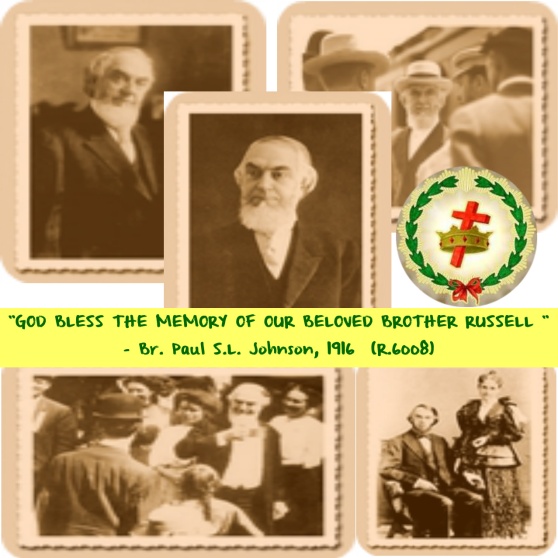
Save
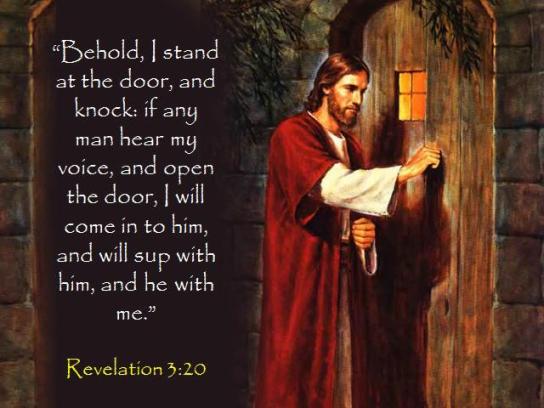
THANK YOU GOD

THANKS BE TO GOD WHO GIVES US THE VICTORY!

Hence, let’s rejoice, as our labours are not in vain IN THE LORD!

The words “thank you” are two words that mean so much for the giver and the receiver…

The video identifies some absolutely wonderful lessons all about thankfulness and it focuses on not trusting ourselves, as self-confidence leads to pride, but rather humbling ourselves under the mighty hand of God. Humility helps the heart be grateful.

Let us submit our entire will to the will of God, always remembering to ask our Divine Father for HIS help as we proceed to “make our calling and election sure” (2 Peter 1:10).

Here are several beautiful verses to consider:

Philippians 1:3-6 (KJV)

“3 I thank my God upon every remembrance of you,

Always in every prayer of mine for you all making request with joy,

For your fellowship in the gospel from the first day until now;

Being confident of this very thing, that he which hath begun a good work in you will perform it until the day of Jesus Christ.”

—————

Luke 17:11-19 (KJV)

 “11 And it came to pass, as he went to Jerusalem, that he passed through the midst of Samaria and Galilee.

12 And as he entered into a certain village, there met him ten men that were lepers, which stood afar off:

13 And they lifted up their voices, and said, Jesus, Master, have mercy on us.

14 And when he saw them, he said unto them, Go shew yourselves unto the priests. And it came to pass, that, as they went, they were cleansed.

15 And one of them, when he saw that he was healed, turned back, and with a loud voice glorified God,

16 And fell down on his face at his feet, giving him thanks: and he was a Samaritan.

17 And Jesus answering said, Were there not ten cleansed? but where are the nine?

18 There are not found that returned to give glory to God, save this stranger.

19 And he said unto him, Arise, go thy way: thy faith hath made thee whole.”

—————

philippians-4-vs-6-7.jpg

—————

1 Chronicles 16:7-12 (NKJV)

David’s Song of Thanksgiving

“7 On that day David first delivered this psalm into the hand of Asaph and his brethren, to thank the LordOh, give thanks to the LordCall upon His name; Make known His deeds among the peoples! Sing to Him, sing psalms to Him; Talk of all His wondrous works! 10 Glory in His holy name; Let the hearts of those rejoice who seek the Lord11 Seek the Lord and His strength; Seek His face evermore! 12 Remember His marvelous works which He has done, His wonders, and the judgments of His mouth…

—————

THANK YOU ALMIGHTY HEAVENLY FATHER FOR YOUR PERFECT LOVE which we can feel through the eyes of faith through studying about the character of Jesus—our Master and our King.

Thank you Father God Almighty M, that we can draw near to the throne of God with confidence that we may receive mercy and find grace to help in time of need (Hebrews 4:16).

The URL for this post: https://biblestudentsdaily.com/2016/06/11/thank-you-god/

Enter your email address to subscribe to this blog and receive notifications of new posts by email.

Let us Help Others Hear the Knock

PASTOR CHARLES RUSSELL’S DREAM – Sunrise Prayer and Praise Meeting –

Br Charles Russell (3)

WHEN we entered the hall at 5:15 A.M., there were fully 100 persons present. Promptly at 5:30 Bro. Russell stepped upon the platform and there were by that time 225 present; before the meeting closed there were over 400. The service opened by singing No. 19, “Awake My Soul to Joyful Lays.” This was followed with prayer by Bro. LaFerrey. Then we sang hymn No. 206, “O, How Happy Are We Who in Jesus Agree.”

Bro. Russell: Dear brothers and sisters, I am very glad to greet so many of you this morning and to see that so many of you enjoy the prospect of an early morning prayer meeting. As I saw a number of you headed this way as I was coming to this meeting, it made me think of some of the reasons that draw us together….

So, one reason we like to meet together in conventions and on every occasion is because the Lord seems to give us something special to eat where we are in fellowship, where two and three are gathered together, etc., so when two or three of us meet in His name, we may be sure of His blessing and a refreshment of spirit. In this morning time, more than at any other time, though it has been true throughout all the ages where His people met, but now early in the new morning, when, the new day, the grand Millennial Day, He is inviting us together; He tells us that there will be a great gathering, all the wheat from the tares, all the sons of God, that glorious gathering, which will mean the establishment of the Kingdom of God, out of which will flow all the blessings of God to all the families of the earth. So we have many reasons for thankfulness this morning as we think of the blessed scripture references to this morning time in which we are living such as, “God will help her right early in the morning.”

You remember a picture in the 91st and 45th Psalm, and how the Lord in the 45th Psalm tells of the time of trouble. As we see that day gathering all about us, we hear the Lord’s word coming to us with special emphasis and we will not fear though the earth be removed, though society be shaken and the Kingdoms be carried into the midst of the sea, because we have made the Lord our habitation. In this connection the Lord tells us He will help her, the church right early in the morning. How precious the thought that we are in the early morning, when the shadows are fleeing and we can see more clearly than they could in the centuries past. It was not the Father’s purpose that the special light should shine then, they had all they needed as saints of God that they might be separate from things of this world, but it was not the time to give the glorious sunlight of truth as now.

Thus, dear brothers and sisters, if any fail to get that thought, they fail to get one of the most inspiring thoughts of our time, namely: that the light of the truth which you and I are now seeing is not that you and I are brighter than other men to see it, but it is God’s due time–it is morning time. Why can you see brighter than you could an hour or two ago? Because the great sun has begun to shine upon the earth. Is that all we shall have? Oh, no, that is only the early light. Bye and bye the great sun of righteousness with full power, strength and light will fill the whole earth with the Glory of the Lord. How glad we are that the blessed day is already dawning, what a blessing it has brought into our hearts; we cannot feast on that thought too much.

I might tell you without any injury to any of you about a dream that I had some years ago that had great influence upon my life. Now do not misunderstand me, I do not wish to commend dreams, I think many are nonsensical dreams. I have had many myself, probably from indigestion. I know of a great many people who lay too much stress upon dreams. I pay very little attention to dreams, only so much attention as would be in harmony with God’s word, so as to feel sure the dream came from neither a piece of pie nor inspired by the adversary and I think a great many dreams are inspired by the adversary. I think a safe course is to let no dream have any influence upon our minds except as we can prove them by the word of God. That is our standard. If it agrees not with the word it is because there is no light in it.

But this dream that I will tell you about may help some of you.

I might remark that at the time I had this dream, I was giving attention to the Lord’s work to some extent, I was publishing the Truth and some thought I was neglecting my business. I had five stores at that time, and people would say I guess Mr. Russell is fanatical on the subject of religion. I knew I was not, so was in no danger.

I thought I was not giving enough time, that I ought to give all my time, and this dream helped me.

I dreamed that I was in an attic room, the front looking to the east, and the ceiling was sloping and I thereby knew it was a top room in a house. All around the room was a platform raised about ten inches and on it were mattresses strewn and upon them bed coverings of various kinds; some had been occupied and were vacant and others were occupied by sleepers, and I was in one corner. Over yonder was a door on the right.

I heard a knock that awakened me and I remember how sleepy I felt, I could hardly get my eyes open.

There I saw a servant, one that I never saw or knew, he said they are waiting for you for breakfast and they sent me up to see if you were coming.

Oh! my, it is late, I have overslept myself. Tell them not to wait for me.

With that I thought to get up, but as I started to rise, I was heavy with sleep and my foot caught in the arm of the man sleeping next to me and I went sprawling. I thought well, what will he do? But he was sound asleep, my falling over him had not awakened him.

Something in my dream told me that it was Sunday morning, with that I awakened.

What did it mean?

Well I might take a meaning out of it, that might be in full accord with the truth. I said first of all, this is an upper room and the Lord speaks of housetop saints. Well, then I am glad. Seemingly I was amongst the housetop saints, I was glad that I was not down in the basement.

Then it was Sabbath morning, early in the morning. The sunlight was coming in, all that fits well, the sun is coming in and it is time I was thoroughly awake. Then the empty beds around us, yes, yes, so far as we know, most of the housetop saints have gone in, here a few of us still sleeping; in a dozing way over-charged with the cares of this life. Well, you remember how tired and sleepy you feel almost as if you had been intoxicated. Yes, well that is a good deal the spirit of the world. You are glad you got awake, you felt so stupid, but still next to you was one still more so, and even your falling over him does not awaken him. You are glad you are awake and did not need a knock.

What was that you told the servant?

Have me excused, tell them not to wait for me. Our dear Lord has provided a bridal feast, not a supper or a dinner but a breakfast. So I knelt down and asked the Lord to wait on me for a little;

I determined to be more earnest and diligent in His service.

So I say that while I do not attach much weight to dreams and consider most of them fleshly and of the adversary, but if we think upon them and the words of the Lord, and accept nothing but what will agree with the Scriptures, we may get a good lesson from it.

Well, we are house-top Christians; we have heard the knock informing us that it was morning, that it was the time of the feast and informing us that there is but little time to get ready.

We have heard the knock and how glad we are.

Yet we find some here and there who are still asleep.

Let us help them also to hear the knock that it may go to all parts of the world and let it not be said that there were some in some parts of the world to whom you failed to give the knock.

Jesus-Knocking-At-The-Door-Picture-Revelation-3-20

So we have heard the knock and already on this side of the veil we have entered in and are getting some of the food and refreshment- how glad we are.

The whole world, a greater part of it, as we came here, are still asleep. Some others are awake besides ourselves; you saw the butcher and the baker and the milkman and others all busily engaged looking after their dollars and cents and that was proper in its way.

We also have a business, we have left the world behind, we have become new creatures in Christ Jesus and we must be about our Father’s business.

A principle proper to apply, how energetic have you and I ever been in the affairs of earth in our scramble for dollars and cents? In that proportion let the Lord see that you will be no less energetic in the Spiritual.

Some say Brother Russell, you work late and early; well I used to work late and early for selfish interests, I now have something I love far better, why not work late and early in the Lord’s cause as well as in the early interests?

If the Lord should find that I was careless of His interests in comparison of my previous experience in life, what would He say? It would indicate that I would love the earthly more than the Heavenly.

We do not want Him to say that we ever loved earthly things more than the Heavenly. We are not children of the night, but of the day, let us walk in the light. Ye brethren are not in darkness that that day should come upon you as a thief, but it shall come as a thief and a snare upon the whole world and they shall not escape. Ye brethren are not to fear or measure yourselves from a worldly standpoint. They have no hope such as we have.

Surely, very few persons hope as we do.

What manner of persons ought we to be, said the Apostle, in all manner of conversation, etc., hastening to that glorious time which shall be ushered in by the great time of trouble, the time of refreshing from the Lord, because the times of restitution shall then be near.

I am glad that we have this blessed privilege of meeting this morning.

———-

BE VIGILANT

UP then, and linger not, thou saint of God,

Fling from thy shoulders each impeding load;

Be BRAVE and WISE, SHAKE OFF earth’s soil and SIN,

That with the Bridegroom thou mayst enter in.

O watch and pray!

====================

wallpaper1371_1280x1024

Romans 13:8-14

Fulfilling the Law Through Love

Owe no one anything, except to love each other, for the one who loves another has fulfilled the law. For the commandments, “You shall not commit adultery, You shall not murder, You shall not steal, You shall not covet,” and any other commandment, are summed up in this word: “You shall love your neighbor as yourself.” 10 Love does no wrong to a neighbor; therefore love is the fulfilling of the law.

11 Besides this you know the time, that the hour has come for you to wake from sleep. For salvation is nearer to us now than when we first believed. 12 The night is far gone; the day is at hand. So then let us cast off the works of darkness and put on the armor of light. 13 Let us walk properly as in the daytime, not in orgies and drunkenness, not in sexual immorality and sensuality, not in quarreling and jealousy. 14 But put on the Lord Jesus Christ, and make no provision for the flesh, to gratify its desires.

Reference :

1907 Part II Bible Students Convention Report, Sunrise Prayer and Praise Meeting – Tues Sept 3rd 1907

URL: https://biblestudentsdaily.com/2016/06/08/let-us-help-others-hear-the-knock/

Enter your email address to subscribe to this blog and receive notifications of new posts by email.

Save

Save