Doing and Saying the Kindest Thing in the Kindest Way

1 PETER 3, 9 - DOING & SAYING THE KINDEST THING IN THE KINDEST WAY

What is the SPIRIT OF HELPFULNESS all about?

“Let every one of us please his neighbour for his good to edification(Romans 15:2).

In Romans 15:2, the Apostle Paul is not saying, let the younger ones please their neighbour, nor does he say, let the older ones please their neighbour; but he says,

 “Let EVERY ONE of us please his neighbour.”  

All of the Lord’s people should have such an interest in one another and in the Lord’s cause, and should have so much of the spirit of the Master, that they would seek rather to sacrifice themselves than to gratify self, especially at the expense of others.

If we have the spirit of Christ, we shall find various ways in which we will sacrifice self without waiting for specific directions.

The Law of Love will incite us to act contrary to our own natural preferences, if by so doing we shall help one another in the good way.

In his letter to the Corinthian Church the apostle illustrates this principle by a practical application regarding the Greek custom of offering their meat in their temples. After having been thus offered to the idols, the meat was considered to be especially sacred. Nearly all of the meat available was offered to idols, so that whenever one wished to have meat he could find none that had not been thus offered.

Those who had come out of idolatry into Christianity, knew that the worship of idols was wrong; for they had learned that there is only the one true God.

The apostle declares that he would abstain altogether from eating meat rather than risk stumbling a brother who could not take the broader, truer view. To stumble such a one, might be to throw him out of the right way entirely.

Responsibility For Our Influence

The apostle Paul did not say that it is not right to eat meat; but rather, that he was willing to forego his rights and privileges in order to edify another.

These others of whom the apostle Paul had spoke had not come to appreciate fully the fact that meat offered to idols had not suffered any ill effect or been changed in any way from having had this done. To set meat before a piece of stone would not injure it; and so to set it before an idol would not cause it any ill effects.

But Paul so self-sacrificially, preferred to give up eating meat altogether rather than to stumble any brother or sister in Christ.

What a glorious lesson for us dear friends!

Let us ask our self the follow questions:

When necessary, do I willing deny myself some of my privileges and rights in striving to be of any assistance to my brethren in Christ and in avoiding to stumble them?

Some of the Lord’s people have very sensitive consciences, others are less sensitive.

The longer one has been in the “School of Christ” and/or the more ability one may have, the more easily should one be able to discern what would be pleasing to the Lord we would hope based on each individual’s uniquely permitted experiences, of course that only the Heavenly Father and His son Jesus perfectly understand best, as they are Divine beings.

As a Christian, one would not want to do anything to offend the Lord, even if he were to go without meat for the remainder of his life.

Another introspective question for Christ-like development may be perhaps this one:

Would I, even if it be for the remainder of this carnal life, prefer to deny myself of something (that of course would not harm the New Creation of Christ within self,) that would be for the best interests of another beloved one in Christ so as not to stumble a weaker one in faith or one who may have their conscience violated by doing so?

This involves walking and talking with the Heavenly Father moment to moment to discern God’s will—who mercifully gives wisdom and provides us with His answers to all who ask, seek, and knock to Jehovah for help (Matthew 7:7).

These may be very personal items of decision-making here under consideration, yet how reassured we are through the words of the Prophet Isaiah,

“And your ears shall hear a word behind you, saying, ‘This is the way, walk in it,’ when you turn to the right or when you turn to the left” (Isaiah 30:21).

The Heavenly Father makes clear one’s path through an exercised conscience—that is, a conscience that is disciplined and trained in seeking after that which is righteous in the eyes of the divine perfect God of the universe (Matthew 5:6).

Another introspective question for Christ-like development may be:

Would I wish to lose all my influence for the good of my fellow brother and sister in Christ?

The apostle answers this suggestion in the negative; he says, “…(12) when ye sin so against the brethren, and wound their weak conscience, ye sin against Christ. (13) Wherefore, if meat make my brother to offend, I will eat no flesh while the world standeth, lest I make my brother to offend” (1 Corinthians 8:1-13).

Let us consider some practical “life” scenarios.

Example 1: Regarding clothing…

Perhaps you attend an ecclesia where consecrated sisters in Christ wear head coverings and believe that dressing modestly means to wear skirts and dresses below the knee and which cover the shoulders and not to wear pants (considering that to be a traditional male item of clothing and relying on the words of 1 Corinthians 11:4-16 and Deuteronomy 22:5 for their convictions of belief). After examining the Scriptures on these topics one may realize that wearing a head covering and wearing a modest dress or skirt does not seem in any way to violate the laws of God, and hence will see no reason why not to do so, in order to help create peace around and least offend in any way any dear member in the ecclesia attended. Yet if this does cause contention then considering it a suffering for Christ, may each be humbled—recognizing even more, one’s own ignorance or errors of self for as the words of Philippians 2:3 teach us:

“Let nothing be done through strife or vainglory; but in lowliness of mind let each esteem other better than themselves.”

As the apostle Paul stated best in regards to the above issue about clothing or hair apparel:

“But if any man seem to be contentious, we have no such custom, neither the churches of God” (1 Corinthians 11:16).

Probably the NAS Bible gives the sense better, “But if one is inclined to be contentious, we have no other practice, nor have the churches of God.”

Example 2: Our words or actions…

Perhaps at a testimony meeting in your ecclesia, one would share something that they believe would be of great edification to all, yet something in one’s conduct or words has caused offense in another—perhaps due to language or cultural barriers or perhaps a result of another mis-hearing correctly yet the results of each one’s intentions and conduct involved in such a situation shall be best understood and credited to each involved by the Heavenly Father who sees each heart and each motive. Again, we are ALL ignorant each moment of each day no matter how great or small the issue at hand—which depends on one’s closeness with the Heavenly Father—and thus, how in tune to the Father’s will each dear child of God is to be, being reassured that God through Christ, shall “reward each according to what they have done” (Romans 2:6).

“For we must all appear before the judgment seat of Christ; that every one may receive the things done in his body, according to that he hath done, whether it be good or bad” (2 Corinthians 5:10).

“Not rendering evil for evil, or railing for railing: but contrariwise blessing; knowing that ye are thereunto called, that ye should inherit a blessing” (1 Peter 3:9).

Would one not rather suffer any unkind effects towards us from our words or actions in having done what an educated conscience before the Father believes was done seeking towards righteousness rather than suffering the outcomes of results and the self-inflicted cross of guilt for knowing we had not done how Christ Jesus our Head, would wish us to?

Example 3: Sunday observance…

Applying the above principle—our responsibility for our influence—to Sunday observance, we are not to feel a bondage under the Old Law, during the Sabbath day. However we should avoid what would be considered by others as not observing the Sabbath.

To our understanding EVERY day is a part of the great Sabbath into which we have entered—rest in Christ.

We have a greater liberty. But we are not to use this liberty to the injury of others.

Many people think that any kind of labor is a violation of the Fourth Commandment.

From our viewpoint we know that the Sabbath of the Jew was typical; and we see what the antitype is. We are enjoying the antitype of that Sabbath.

But while we might have liberty to work on Sunday, our so doing might stumble our neighbour. We would not be violating any principle in not observing Sunday; but for the sake of not stumbling our neighbour we are glad to rest from our work and to give ourselves to the study of God’s Word.

Sunday should be a day that is quiet and reverential in every way, and devoted specially to the service of God—a day in which business is restricted, and as far as possible eliminated. But for the interests of the Lord’s work to forbid refraining from the use of today’s transportation blessings such as cars or trains and trams on Sunday would not apply to today’s world as once it may have been the case. Each place… each time period… each culture… each community even… have certain ways of functioning and by best striving to not offend anyone, but with gentleness of mind and being lowly of heart as Christ was, let us strive to represent Christ as best we can now, knowing that where we fall short after doing our best, Christ’s robe of righteousness covers all the failures that surround us.

Sabbath signifies rest, as the Apostle used it (Hebrews 4:9, margin), we can see that the Church of Christ keeps the Sabbath, or rest, every day, and recognizes God’s arrangement in connection with this matter. Those who keep every seventh day as a Sabbath, but who fail to enter into and keep the rest of faith, are not keeping the true Sabbath, but keeping another, so far as the Church is concerned.

The Sabbath arrangement was for the Jews. We have the better arrangement under our Covenant.

We enter into rest, our Sabbath, EVERY day; and we are hoping that soon we will enter into the still Greater Sabbath.

In that Sabbath, the Millennium, we shall have not only rest of heart, but also perfection, no longer to be challenged by trials and difficulties of life.

During His ministry Jesus chose the Sabbath day in which to perform miracles and heal the sick, that He might show forth the kind of works which He will perform during the Great Sabbath Day, the seventh-thousand-year day—the Millennium.

Helping, Not Hindering Our Neighbours

We can apply this principle in a general way. We can apply it to our conversation with Christian people.

There is a way of taunting people on their ignorance, etc. This is not love.

LOVE does not delight to expose another’s weaknesses.

The more careful we become in our words and our actions, the more polite we shall be, the more helpful.

Politeness is :

to do and say the kindest thing in the kindest way.

One may be polite for the sake of policy or for the sake of principle.

E.g. You have a business and you are polite to your clients or else you will not have any to buy from you, and in turn, no income to live from.

Our pleasing of our neighbours should be for their edification.

We should be glad to do ALL that we can for their assistance, their edification, their uplift, their upbuilding.

If we can speak a pleasant word, a kind word, it would be for upbuilding and have in mind primarily the upbuilding of the Lord’s people in spiritual things. As the apostle Paul says, we are “to provoke one another.”

In the ISV translation Hebrews 10:24 reads:

And let us continue to consider how to MOTIVATE one another
to love and good deeds…

What the apostle had in mind here was the reverse of provoking to anger, hatred and strife.

Brother Charles Russell comments in Reprints of the Original Watchtower (R.5413):

 “Some of the dear brethren who are evidently very sincere have not caught the spirit of the Truth on this subject; and wherever they go, they are apt to stir up the evil mind of others, instead of stirring up their good mind and provoking to love and good works.”

We are to please our neighbors so far as it would be for their good, and according to right principles. But to upbuild one in injustice would not be right.

Now here are our final questions to put theory into practice:

For our Australian friends: Would we think it right to let our neighbour’s emus run all over our front driveway?

emus.jpg

For our local and international friends: Would we think it right to let our neighbour’s dogs run all over our front lawn?

6a00d83451c9f669e20167678794a1970b-400wi

Take a moment or two to think of what you would do.

We believe here is a most lovingly wise, compassionate and merciful response to such a question … (but in regards to chickens) by Pastor Charles Russell:

“We think that he [his neighbor] would thus be more edified by our firm stand for right. But we must not tell him how to manage his chickens. We must do our best to keep his chickens off our place; but we would make a mistake if we were to go in and order our neighbor’s chickens, house and children.  To do so would be busybodying. We shall have enough to do to look after the weaknesses of our own family.”

Further Reading:

Bible verses for consideration:

Is the Sabbath Day a Saturday, Sunday, or any day of the Week?
https://biblestudentsdaily.com/2017/10/19/is-the-sabbath-day-a-saturday-sunday-or-any-day-of-the-week/

Acknowledgment & Reference:

Br Charles Russell—R.5413. Reprints of the Original Watch Tower & Herald of Christ’s Presence.

The URL of this post:
https://biblestudentsdaily.com/2017/03/18/doing-and-saying-the-kindest-thing-in-the-kindest-way/

Enter your email address to subscribe to this blog and receive notifications of new posts by email.


Save

Save

Like Doves Dwelling in Rocks

Psalm 27, 5.jpg

“Leave the cities, and dwell in the rock, O inhabitants of Moab! Be like the dove that nests in the sides of the mouth of a gorge.Jeremiah 48:28

When the days are cold and drear,
To the Lord, we can draw near;
Like the doves, who seek their nests,
We fly back home to peace and rest.

Underneath our Father’s wings,
We serve the Master, King of Kings;
Sweet solace for our hearts we find,
Away from joys of earthly kind.

Though the road may seem long and dark,
But like the doves, inside the ark;
We know, one day, we shall fly free,
Away from all the carnal troubles that around us we see.

Faint not, dear hearts, but do be still,
And LOOK TO THE HEAVENLY FATHER-your needs to fill;
For human minds do not aspire,
To that plane—the highest one there is …

Higher than all earthly love,
The JOY that comes from up above;
When we seek to only know and do
Our Heavenly Father will, as He carries us faithfully through.

Almighty Heavenly Father be near,
When others mock, the little doves, inside the rocks.
May our Beloved brethren in CHRIST
Patiently endure all, cheerfully, like our Beloved Jesus who so willingly sacrificed.

Based on Sr. Rosemary Page’s original poem titled “Like the Dove (That Dwells in the Rock)”

ROCK OF AGES  – sung in this video by the Antrim Menninite Choir

Suggested Further Reading

Br. Anton Frey, “Notes on the Song of Solomon.” These study notes are from the “BIBLE STUDY LIBRARY” CD which can be purchased from The Herald of Christ’s Kingdom Bookstore at the following link: https://herald-magazine.com/bookstore-2/

Br. Frank Shallieu, “Notes on the Song of Solomon.” These study notes are also from the “BIBLE STUDY LIBRARY” CD. (Same link as above.) Here is also a direct link to these “Notes” — https://www.revelation-research.org/pdf/Song%20of%20Solomon.pdf

F. A. Shuttleworth, Scot., “The Song of Songs A short series of devotional meditations – No. 1, The Herald of Christ’s Kingdom, April 1958. Here is the direct link: http://www.heraldmag.org/archives/1958_4.htm#_Toc36391359

Br. David Rice, “The Song of Solomon,” The Beauties of the Truth Periodical http://www.beautiesofthetruth.org/Archive/Library/Doctrine/Mags/Bot/90s/BOTMAY02.PDF

“I Am My Beloved’s, and My Beloved Is Mine.” The Dawn Magazine, Sept. 1989, in the Christian Life and Doctrine section.
http://www.dawnbible.com/1989/8909cl-4.htm

In relation to Psalm 27:5 – Br. Charles T. Russell, The Permission of Evil and Its Relation to God’s Plan


This post’s URL:
https://biblestudentsdaily.com/2017/03/10/like-doves-dwelling-in-rocks/


Enter your email address to subscribe to this blog and receive notifications of new posts by email.

Save

Save

STUDY 9: The Gate. The Door. The Vail.

THE GATE. THE DOOR. THE VAIL..jpg

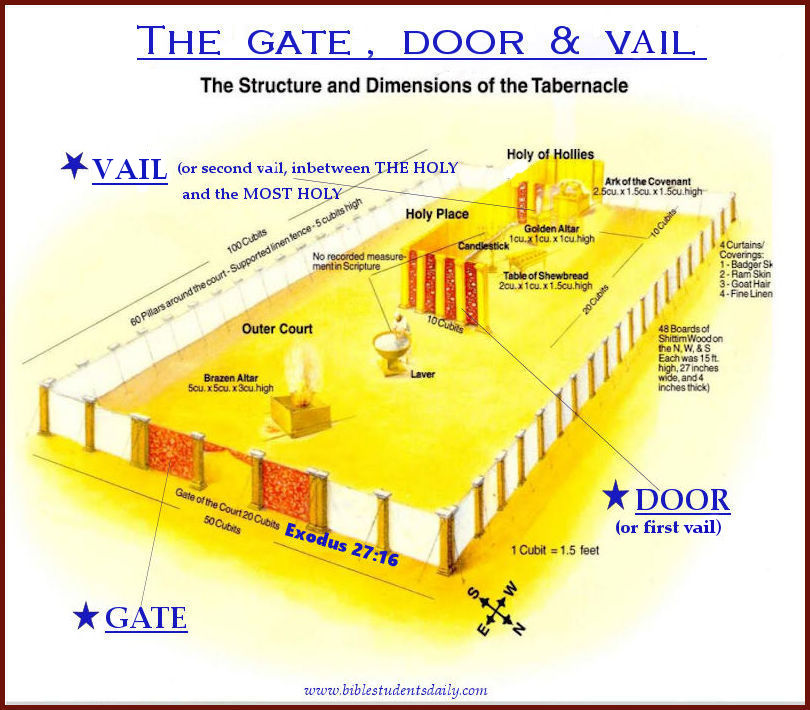
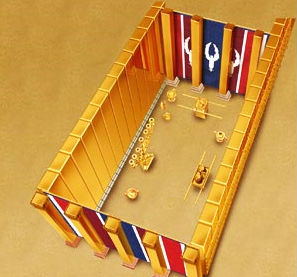
There were three entrances in the Tabernacle arrangement which include:-

  1. the “gate” to the “outer court” (Exodus 27:16-19).
  2. the “door” to the “holy place” (Exodus 26:36-37; 36:37-38).
  3. the “vail” to the “holy of holies.” (i.e. “Most Holy”) (Exodus 26:31-33).

All three entrances were made of the same material: a fine white woven linen with blue, purple and scarlet threads running through the material (Exodus 38:18).

All three entrances had the the same dimensions as regards their area, that is, they were all 100 square cubits a number representing Christ Jesus:

  • The gate was 20 cubits long x 5 cubits high (Exodus 38:18);
  • The door and the veil were 10 x 10 cubits — SQUARE — a symbol of PERFECTION (equality on every side)!

NOTE: For the door, we do not have an explicit text for its measurements however the boards were 10 cubits high (Exodus 26:16). As to the width, we infer from the 20 cubits of Solomon’s Temple that the Tabernacle was half the size (1 Kings 6:2) — thus, 10 cubits wide. The back of the Tabernacle was defined by 6 board of a cubit and a half, so 9 cubits interior — the two sides, if each 1/2 cubit thick, would constitute 10 cubits outside dimension of the Tabernacle. If the door was sufficient to cover this, then it was 10 cubits wide.

This teaches us that the same truth seems therefore to be embodied in each of these typical curtains. The same Jesus is portrayed in each. There could be no access to God, of any kind, whether of comparatively distant worship, or of closest intimacy, but through the one door, the Lord Jesus. “I am the door” (John 10:7).

The value of 100 also “beautifully correlates to the “redemption price” of the “firstborns” which was five shekels at 20 gerahs per shekel: 100 gerahs (also representing Christ Jesus)! (Numbers 3:46,47; 18:15,16)” (Notes on the Tabernacle, page 100).

Jesus is our entry into:

  • justification (the gate into the court),
  • sanctification (the door into the Holy) and
  • glorification (the vail into the Most Holy).

(1) THE GATE

the-gate-beauties-of-the-tabernacle

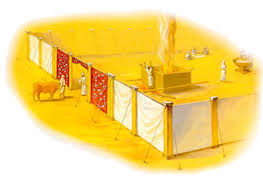
The gate was the only way into the court and represents our Lord Jesus who said of himself, “I am the door. Whoever enters through me, will be saved” (John 10:9, NIV).

“I am the way, the truth and the life. No one comes to the Father except through me” (John 14:6, NIV).

By faith in Christ’s ransom sacrifice, represented in the Brazen altar, we enter the ‘gate’ to the ‘Court’ — the vail of unbelief and sin is passed” (Tabernacle Shadows, page 22).

The gate was wider than any of the other entrances, enabling all Israelites to enter the court. The width of the entrance shows that God makes grace available to many for “many are called but few are chosen(Matthew 22:14).

In Exodus 40:33 we read, And he erected the court around the tabernacle and the altar, and set up the screen of the gate of the court. So Moses finished the work.”

The root word of “gate” from Exodus 40:33 is shâʻar, shaw-ar’ and means, to split or open, reason out, estimate… and the Gesenius’ Hebrew-Chaldee Lexicon writes: “to set free… to set a price” and Jesus most certainly did “set free” every human from the curse of sin.

The gate, (as also the door and the vail) was really a “hanging.” (See Exodus 27:9, 16; 26:31,32, 36).

All three entrances were suspended by way of metal (silver or gold) hooks from the pillars which supported them (Exodus 38:19; 26:32,37). (See Study 4 of “Beauties of the Tabernacle.”) There were no curtain rods nor any other device by way of which these “hangings” could be raised up or pulled to one side.

To enter the court, and thus, in order to pass “beneath” the “hangings,” one had to lift the bottom of the curtain and stoop down and go under the curtain. This bowing to enter shows a right attitude of heart, for when we come to Christ we come humbly in need of a Saviour. The man who will not bow his knee and his heart to Christ, cannot enter in (Psalm 99:5, Ephesians 3:14, Matthew 19:24).

We can only approach Jehovah God, by recognizing Jesus’ merit and through the eyes of a New Creation mind — the mind that was also in our Lord Jesus.

There were no cherubim interwoven into this outdoor screen surrounding the court area and the gate, unlike that of the vail. (We discuss about the cherubim a little later in this Study.)

The tribe of Judah, the kingly tribe, camped outside the Eastern Gate. The name Judah means “praise,” and Jesus was descended from this tribe (Hebrews 7:14).

The Four Posts at the Gate

There were FOUR posts at the Gate (Exodus 27:16-19).

Perhaps FOUR here, could represent the four authors of the Gospels of Jesus (Matthew, Mark, Luke, John) who most conspicuously held up Christ’s character before the world and who are the instruments used to build our faith into Christ — by studying about Jesus and getting to know who he is and thus how to become like him, and learning about what he taught to likewise follow his teachings and spread the lessons to all who have a listening ear.

(2) THE DOOR

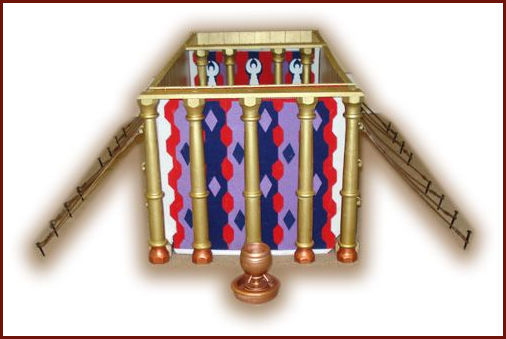
the-five-posts-at-the-door-of-the-tabernacle

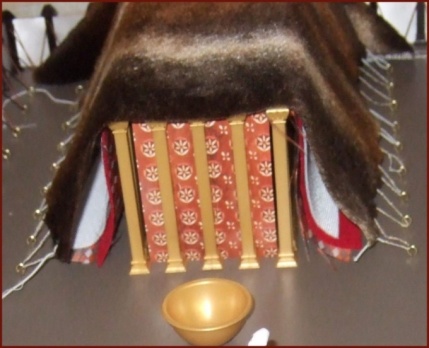
The “door” was the one entrance into the Holy (which represents the spirit begotten condition of the “little flock” class — see Study 3 of the “Beauties of the Tabernacle” series of posts on this website).

The door of the Tabernacle is of finely twisted linen (Exodus 26:36) because Jesus has completely satisfied the justice of God.

It is white to express the purity and righteousness of Jesus’ character. Jesus was the one without sin and without stain or blemish (1 Peter 1:19).

As was the gate and veil, this door was made of “blue, purple, and scarlet yarn and finely twisted linen—the work of an embroiderer” (Exodus 36:37).

The door would have been thick enough to block light and it was in the Holy Place where the golden lampstand was (which stood directly opposite the table on the south side) and it was to burn continuously both night and day (Exodus 27:20-21).

The Materials Used for the Fabric of the Sanctuary

Flax and goat’s hair were the materials used for the fabrics of the sanctuary. According to Ellicott’s Commentary for English Readers, “the flax was dyed before it was spun into thread.”

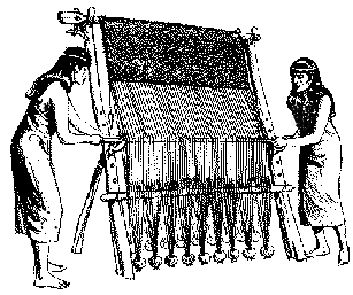
weavers.jpgHere is an image of two Israelite women moving the “weavers beam” forward on a large vertical loom as they make fine twisted linen.


In Exodus 35:25 we read, “And all the women that were wise hearted did spin with their hands, and brought that which they had spun, both of blue, and of purple, and of scarlet, and of fine linen. 26 And all the women whose heart stirred them up in wisdom spun goats’ hair.

In the above verse, “wise-hearted” women refers to all who had sufficient skill. Although both men and women of ancient Egypt spun thread, spinning seems to have been done primarily by the Hebrew women. It was effected in early times by means of a wheel and spindle, with or without a distaff. (Reference: http://wol.jw.org/en/wol/d/r1/lp-e/1200000994).

Jesus Christ referred to spinning when he urged his disciples, not to be unduly anxious about clothing, but to trust in God to clothe them. Jesus said: “Mark well how the lilies grow; they neither toil nor spin; but I tell you, Not even Solomon in all his glory was arrayed as one of these.” (Luke 12:27, 28; Matthew 6:28-30).

“Of fine linen” — Rather, of white. Most of the Egyptian linen is of a yellowish white, being made from flax imperfectly blanched.

Note: It is described in the English version as the linen being wrought with the needle, or embroidered; but the word rendered “needle-work” is now believed to denote a striped or checked pattern produced by the loom. Hence the curtain of the gate and door had a blue, scarlet and purple colour appear in them in stripes or checks, instead of being wrought into figures of cherubs, as on the curtain of the vail.

The Colours of the Linen Curtains

colours-of-the-tabernacle

  • White

White linen was used for garments for royalty and persons of rank and has been found in the tombs of the Pharaohs. White linen always speaks of purity and righteousness:

Revelation 15:6 —And out of the temple came the seven angels having the seven plagues, clothed in pure bright linen, and having their chests girded with golden bands.

Revelation 3:5  “He who overcomes shall be clothed in white garments, and I will not blot out his name from the Book of Life; but I will confess his name before My Father and before His angels.”

Revelation 19:14  “And the armies in heaven, clothed in fine linen, white and clean, followed Him on white horses.”

The fine-twined, white linen speaks of righteousness and typifies Jesus, the Son of Man, spotless, pure, and sinless.

1 John 3:3-5 — “And everyone who has this hope in Him purifies himself, just as He is pure…and you know that He was manifested to take away our sins, and in Him there is no sin.”

  • Blue

The interwoven thread of blue seems to speak the fact that Jesus remained completely loyal and true to his heavenly Father; that he faithfully maintained his righteousness and purity at all costs.

Blue is the colour of the sky without clouds and so it is also known to be a symbol of what is heavenly.

Blue is also the colour of nobility. We recognize those qualities in our Lord Jesus. He came from heaven, he then returned there as a divine soul. “He was foreknown before the foundation of the world but was made manifest in the last times for the sake of you” (1 Peter 1:20, ESV).

We read that Jesus came and being found in the appearance of a man humbled himself and became obedient unto death, even death on a cross (Philippians 2:5-11).

  • Scarlet

Scarlet represents Christ’s blood shed for all — his sufferings and death on the cross. Our Lord’s loyalty and faithfulness were put to the severest tests, tests in which obedience to the will of God resulted in his sacrificial death on Calvary’s cross.

The Apostle Peter captures the thought here in saying “it was not with …. silver and gold you were redeemed… but with the precious blood of Christ (1 Peter 1:17-23).

It is Christ’s blood which gives life and purifies.

  • Purple

Purple represents Jesus’ royalty; he was of the royal line of David, Lord of the earth, and the inheritor of all the promises of God.  Our Lord Jesus became King of kings and Lord of lords since Jesus said, “All authority in heaven and on earth has been given to me” (Matthew 28:18, NIV).

Jesus is king of a kingdom not of this world (John 18:33-39).

Because of Christ’s faithfulness unto death, God indeed did highly exalt him to the royalty of the kingdom, as was prophesied many centuries in advance:

“Therefore will I divide him a portion with the great, and he shall divide the spoil with the strong; because he hath poured out his soul unto death; and he was numbered with the transgressors; and he bare the sin of many, and made intercession for the transgressors” (Isaiah 53:12).

The Five Posts at the Door

There were FIVE posts (pillars) that supported the first vail (the door) of the Holy (Exodus 26:37; Exodus 36:38). The number 5 in the Bible represents the New Creature in Christ. (See Study 3 of “Beauties of the Tabernacle”.)

These posts were constructed of shittim wood overlaid with gold, and they were set in sockets of copper — representing perfect (or justified) human nature, and therefore, the spirit-begotten condition of the church. How beautifully this reflects that the saints still in the flesh (in the Holy — representative of the “in part” condition (1 Corinthians 13:9) have their “treasure” of the Spirit (gold) in “earthen vessels” (copper) as we read of in 2 Corinthians 4:7 (ASV):

 “But we have this treasure in earthen vessels, that the exceeding greatness of the power may be of God, and not from ourselves.”

(3) THE VAIL

the-vail-of-the-tabernacle

The entrance to the Most Holy is called “the vail” (or in Hebrew, paroketh) of the Tabernacle and which the Apostle Paul in the New Testament designates “the second vail” (Hebrew 9:3).

It was only through the vail (which represents Christ’s flesh, R.4746) that one could enter into the Most Holy — the spirit-born condition of glory, honor and immortality to which the faithful over-comers of this age became heirs. (See Study 3 of “Beauties of the Tabernacle.)

For a certain period of time the door to the High Calling of the Church stands ajar during the 6000 years of permission of evil which has been allowed since 33 AD. Jesus opened up this new way of life through the veil; that is to say, his flesh—his sacrifice.

“Having therefore, brethren, boldness to enter into the holiest by the blood of Jesus, by a new and living way, which he hath consecrated for us, through the vail, that is to say, his flesh (Hebrews 10:19, 20).

The Rending of the Vail

The rending of the Temple vail (in Jerusalem) took place at the same time as the earthquake at the moment of our Lord’s death — his crucifixion — which we read about, in Matthew 27:51 and Luke 23:45.

Interestingly, this great vail was torn, not from the bottom toward the top, as would be the expectation if it were the result of wear, but from the top to the bottom, as indicating it was a manifestation of divine power.

The rending of this curtain represents symbolically the opening of the narrow entrance way into the High Calling — an opening between heaven itself and the heavenly condition of those living in the Gospel Age (now spanning nearly 2000 years since 33 AD) by Christ through the sacrifice of his flesh.

Through that rent vail we may see into the things beyond and be ready to pass into the Most Holy (R.4746).

Passing through this second vail into the Most Holy, involves “the death of the HUMAN body” (Tabernacle Shadows, page 22).

Both the fleshly mind and fleshly body must be left behind before we can enter into the “holiest of all.” We will then be in the spirit realm, for flesh and blood cannot inherit the Kingdom of God (1 Corinthians 15:50).

True believers are represented as being associated with Jesus as priests in the Holy, (the outer apartment of the two) where they have fellowship with God through the light of the golden candlestick, through the bread of the golden table, and through the incense that we are permitted to offer on the golden altar. It is from this standpoint we can now by faith see beyond the vail — catch glimpses at least of the heavenly estate which God hath in reservation for them who love him, for the called ones according to his purpose, for the Christ, head and body (R.3371:2).

The Cherubim

Unlike the curtain for the gate and the door, the linen curtain of the vail was embroidered with cherubim, (as were the walls of the Tabernacle proper — due to cherubim embroidered on the first of the Tabernacle’s coverings). Any cherubim in the vail would presumably have been depicted in a different way than the two golden cherubim over the ark of the covenant — these being described in Exodus 25:20:-

“And the cherubims shall stretch forth their wings on high, covering the mercy seat with their wings, and their faces shall look one to another; toward the mercy seat shall the faces of the cherubims be.”

Here is one artist’s impression of what the vail pattern may have resembled:

artist's impression of vail pattern .jpgCherubim being heavenly (angelic) creatures suggests that those passing beyond this vail enter into the heavenly condition — life on the spirit plane — partakers of the Divine Nature.
The ancient Jews said this later veil of the temple was as wide as four fingers, so that no one could possibly see into the Most Holy place (David Guzik).

The vail divided the Tabernacle into two, the Holy place at the front — 20 x10 cubits — and the Most Holy place that became a room 10 cubits long x 10 cubits wide x 10 cubits high.
Only the high priest was permitted to go beyond the vail. This occurred once a year, on the Day of Atonement.

When it came to moving from place to place, the vail was taken down from its hanging position and draped over the ark of the covenant (in which case, there was no “most holy” at that point, the vail defining the most holy having been taken down).

“(5) And when the camp setteth forward, Aaron shall come, and his sons, and they shall take down the covering vail, and cover the ark of testimony with it: (6) And shall put thereon the covering of badgers’ skins, and shall spread over it a cloth wholly of blue, and shall put in the staves thereof” (Numbers 4:5-6).

Hence there was sufficient means by which the Levitical priests could carry out God’s requirements of not entering the most holy nor seeing the ark of the covenant exposed and thus not inflicting death on themselves or others. For whomever would touch the ark of the covenant (other than the High Priest on the Day of Atonement) would die, such as in the case of Uzzah (Exodus 25:14-15).

Is this not a wonderful reassurance that a consecrated child of God should not fear failing in their vows of consecration until death or fear second death! Why? Because the Heavenly Father provides enough immunity against the evils that surround when, one’s fear of reverence to the Father through Christ (Proverbs 1:7) helps one seek for God’s wisdom, help and comfort in every time of need and trial (Psalm 46:1). This reverential fear of doing wrong in the eyes of God is a blessing in disguise! — helping the consecrated Christian overcome (Romans 8:37) all the testings and temptations as did our Lord Jesus when he was on earth.

“There hath no temptation taken you but such as is common to man: but God is faithful, who will not suffer you to be tempted above that ye are able; but will with the temptation also make a way to escape, that ye may be able to bear it (1 Corinthians 10:13).

The vail (“katapetasma”) means “to hide or conceal”, hide from view the “ark of the covenant” and the “mercy seat.”

It also acted as a barrier between God and man because while we are in the flesh, in the Holy condition as the developing embryonic New Creations in Christ, God is in the Most Holy, thus the vail separates the two of us.

The FOUR POSTS at the VAIL

4-posts-at-the-vail

The FOUR posts (Exodus 26:32; 36:36) supporting the vail into the Most Holy are set in sockets of silver.

Silver is a general symbol of Truth — the knowledge of which the justified believer holds on to the righteousness of Christ. (See Study 4  of the “Beauties of the Tabernacle” Series of posts on this website, regarding details about silver.)

The posts here, represent the spirit-birth (gold) condition as an actuality (silver), where one’s treasure is obtained in the fullest sense by carrying out one’s sacrifice willingly and with great joy in the Spirit, unto death.  Thus, the posts into the Most Holy no longer had sockets of copper as in at the gate and door entrance ways and this signifies that those entering the Most Holy place (Divine Realm) are no longer in the flesh.

The vail was hung from golden hooks from off the 4 posts (not from the 50 golden clasps which joined the two parts of the linen covering, although, the vail was located approximately under these clasps.) Refer to Study 8 of “Beauties of the Tabernacle.” It was probably a unified drapery on the backside of the posts.

As were the golden hooks and covering of the pillars of the holy and most holy — so are our hopes, aspirations, and calling — these all concern with things divine (Exodus 26:32-37).

The Number FOUR — In the Bible

The number four in the Bible refers to the concept of trial, testing, probation, judgment.

Thus here at the entrance of the most holy of the Tabernacle, the time of judgment of the church may be reflected in the four posts.

Here are some other examples of four in the Bible (as explained in an article titled “Symbolic Numbers” by Br. David Rice in The Herald of Christ’s Kingdom Magazine, Nov./Dec. 2004):

  • At the second feeding of the multitudes by Jesus — representing the time of harvest and judgment closing the Gospel age, the number reported was four thousand.
  • The forty years in the wilderness (Numbers 32:13) — representing the Gospel age period of testing, trial, development.
  • The same is represented in the four hundred years of Genesis 15:13 — which describes the period of the affliction of the seed of Abraham, beginning with the mocking of Isaac, at the age of five, by Ishmael — a picture of the early affliction of the Church by the Jewish authorities and ends at the Exodus — a picture of the deliverance of God’s chosen at the end of the Gospel Age.

When multiplying these 400 years by the 360 days in a prophetic year, we yield 144,000, the number of the church in Revelation — showing the fruitage to be developed during the testing period of the Gospel age.

The different orders of magnitude of the number four (i.e. 4, 40, 400 and 4,000) also expressing the symbol.

[It is interesting to also note: “Of the dated visions of Jeremiah in chapters 25, 26, 27, 28, 29, and 36, three are dated in the fourth year of Jehoiakim, and three in the fourth year of Zedekiah — all six judgments are in a year four.

When the seven times of punishment on Israel was represented in Nebuchadnezzar’s dream, the expression “seven times” appeared four times in the narrative, and four times in the warning by Moses (Daniel 4; Leviticus 26).

These judgments were fulfilled by four Gentile kingdoms dominating Israel during the 2,520 years of their national punishment.] (Symbolic Numbers, The Herald of Christ’s Kingdom, Nov./Dec. 2004)

The colours embroidered on the white linen of the vail are the same here as for the entrance into the Holy. The presence of these three colours on the white linen vail is echoed in Revelation:

“Be thou faithful (blue) unto death (scarlet) and I will give thee a crown (purple) of life” (Revelation 2:10).

Psalm 100:2-5 (NLT)

Worship the Lord with gladness.
Come before him, singing with joy.
Acknowledge that the Lord is God!
He made us, and we are his.
We are his people, the sheep of his pasture.
Enter his gates with thanksgiving;
go into his courts with praise.

Give thanks to him and praise his name.
For the Lord is good.
His unfailing love continues forever,
and his faithfulness continues to each generation.

References

[R= Reprints of the Original Watchtower and Herald of Christ’s Presence – Charles Russell]

Acknowledgment

Content assisted by Br. George Tabac.

Suggested Further Reading

STUDY 1: An Introduction To The Tabernacle And It’s Purpose
URL: https://biblestudentsdaily.com/2016/09/02/study-1-an-introduction-to-the-tabernacle-and-its-purpose/

STUDY 2: The Pillar of Cloud By Day And The Pillar of Smoke By Night  https://biblestudentsdaily.com/2016/09/09/study-2-the-pillar-of-cloud-by-day-and-the-pillar-of-smoke-by-night/

STUDY 3: The Tabernacle Construction: The Holy and The Most Holy   https://biblestudentsdaily.com/2016/09/14/study-3-the-tabernacle-construction-the-holy-the-most-holy/

STUDY 4: The Court (“Holy Place”)
https://biblestudentsdaily.com/2016/09/20/study-4-the-court-holy-place/

STUDY 5: The Camp. The Israelites.
https://biblestudentsdaily.com/2016/10/28/study-5-the-camp-the-israelites/

STUDY 6: The Levites
https://biblestudentsdaily.com/2016/11/18/study-6-the-levites/

STUDY 7: The Priests. The Day of Atonement.
https://biblestudentsdaily.com/2016/12/10/study-7-the-priests-the-day-of-atonement/

STUDY 8: The Tabernacle Coverings
https://biblestudentsdaily.com/2017/01/02/study-8-the-tabernacle-coverings/

The URL for this post:

STUDY 9: The Gate. The Door. The Vail.


Enter your email address to subscribe to this blog and receive notifications of new posts by email.


Save

Save

Save

Save

100 Pages of BIBLE STUDY WORKSHEETS for children – based on the book “Adam to Zion”

ADAM TO ZION WORKBOOK FOR CHILDREN.jpg

Dear Parent(s),

Christian greetings in the name of our Heavenly Father and his Son, Jesus Christ.

This 100 page PDF file of the Worksheets, are based on the 93 Lessons in the book Adam To Zion. Please click here (or on the image of the workbook cover, above) to download the PDF of these ADAM TO ZION WORKSHEETS

[NOTE: The book Adam to Zion  is a 187 page paperback book for children which can be purchased directly from the Chicago Bible Students Bookstore: https://chicagobible.org/product/adam-to-zion-2/]

A CD of these Worksheets can also be obtained for FREE by contacting the Berean Bible Institute: enquiryBBI@gmail.com

This makes a great gift and inspires young minds towards focusing on that which is heaven-ward using a fun and challenging method of teaching incorporated in this valuable bible study resource.

Most of the information required to answer the questions in each worksheet is in its corresponding lesson in the book; some questions require direct reference to the scriptures.

  • All scriptures are cited from the New International Version of the Bible.
  • The Worksheets are aimed at the 8-13 age group.
  • Each lesson should be read and understood before the Worksheet questions are attempted.
  • It is suggested that younger children discuss the content with a parent or teacher.
  • Several exercises require material other than writing material. Bible study teachers should check each lesson in advance.We share this book, praying that the Almighty Heavenly Father will enable each of us in our parental/teaching roles to instil those spiritual ideas and goals which are so meaningful in our own lives.


Acknowledgement

  • Beverly Christiansen (USA) – for writing the Book “Adam to Zion.”
  • Dawn Smith (Australia) – for writing the corresponding Worksheets to each lesson for the Book “Adam to Zion.”
  • The Berean Bible Institute Inc. (www.bbi.org.au) – for allowing the above content to be shared on BIBLEStudentsDAILY.com

https://biblestudentsdaily.com/2017/02/14/93-worksheets-based-on-the-book-adam-to-zion/

Enter your email address to subscribe to this blog and receive notifications of new posts by email.

Save

Save

Save

Save

Save

Save

STUDY IN THE SCRIPTURES: The Six Volumes by Br. Charles T. Russell

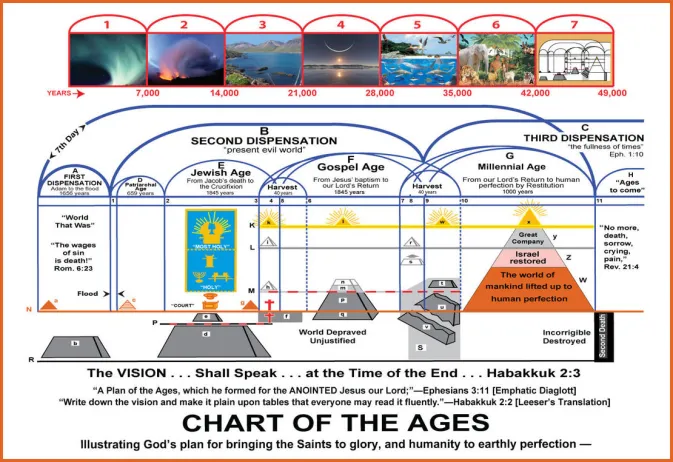
CHART OF THE DIVINE PLAN OF GOD.jpg
 

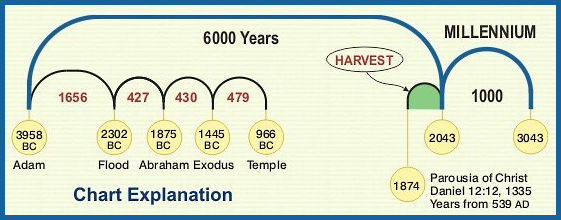
The Studies in the Scriptures lays the foundation for the above and below charts to be considered among students of the Bible today.

chartproclaiming-the-parousia-of-christ-and-the-coming-millennial-kingdom

May each faithful steward of God be fully convinced about what they believe and why they believe it (Romans 14:5). “Study to shew thyself approved unto God, a workman that needeth not to be ashamed, rightly dividing the word of truth (2 Timothy 2:15).

“Prove all things; hold fast that which is good” (1 Thessalonians 5:21).

Here are a series of overview lessons on the six book series, Studies in the Scriptures and each video can be watched by clicking on the underlined title of each of the following six Volumes:


1. THE DIVINE PLAN OF THE AGES

volume-1-the-divine-plan-of-the-ages

Volume 1 of the Studies in the Scriptures written by Br. Charles Russell, can be read here by going to the links provided on each of the underlined chapter titles below:

(i-iv) Foreword
(9-28) 1 – Joy in the Morning
(29-36) 2 – An Intelligent Creator
(37-64) 3 – A Divine Revelation
(65-76) 4 – Epochs and Dispensations
(77-88) 5 – The Hidden Mystery
(89-116) 6 – Our Lord’s Return
(117-136) 7 – The Permission of Evil
(137-148) 8 – Day of Judgment
(149-172) 9 – Ransom and Restitution
(173-204) 10 – Natures Separate and Distinct
(205-218) 11 – The Three Ways
(219-244) 12 – Chart of the Ages
(245-272) 13 – Kingdoms of this World
(273-306) 14 – The Kingdom of God
(307-342) 15 – The Day of Jehovah
(343-350) 16 – Concluding Thoughts


2. THE TIME IS AT HAND

volume-2-the-time-is-at-hand

Volume 2 of the Studies in the Scriptures written by Br. Charles Russell, can be read here by going to the links provided on each of the underlined chapter titles below:

(i-v) Foreword
(13-32) Study 1 – Times and Seasons
(33-62) Study 2 – Bible Chronology
(63-72) Study 3 – The First Advent
(73-102) Study 4 – Times of the Gentiles
(103-172) Study 5 – Manner of the Second Advent
(173-200) Study 6 – Earth’s Great Jubilee
(201-248) Study 7 – Parallel Dispensations
(249-266) Study 8 – Elias Shall First Come
(267-362) Study 9 – The Man of Sin
(363-366) Study 10 – The Time is at Hand


3. THY KINGDOM COME

VOLUME 3 - THY KINGDOM COME.jpg

Volume 3 of the Studies in the Scriptures written by Br. Charles Russell, can be read here by going to the links provided on each of the underlined chapter titles below:

(i-iv) Foreword
(19-22) Study 1 – Thy Kingdom Come!
(23-60) Study 2 – The Time of the End
(61-94) Study 3 – Days of Waiting
(95-120) Study 4 – Cleansing of the Sanctuary
(121-134) Study 5 – Time of the Harvest
(135-226) Study 6 – Work of the Harvest
(227-242) Study 7 – Deliverance of the Church
(243-300) Study 8 – Restoration of Israel
(301-308) Study 9 – Thy God Reigneth!
(309-376) Study 10 – The Great Pyramid
(377-380) Appendix


4. THE BATTLE OF ARMAGEDDON

PART 1

VOLUME 4 - THE BATTLE OF ARMAGEDDON.jpg

PART 2

volume-4-the-battle-of-armageddon

Volume 4 of the Studies in the Scriptures written by Br. Charles Russell, can be read here by going to the links provided on each of the underlined chapter titles below:


5. THE ATONEMENT BETWEEN GOD & MANVOLUME 5 - THE ATONEMENT BETWEEN GOD AND MAN.jpg

Volume 5 of the Studies in the Scriptures written by Br. Charles Russell, can be read here by going to the links provided on each of the underlined chapter titles below:


6. THE NEW CREATION

PART 1

VOLUME 6 - THE NEW CREATION.jpg

PART 2

volume-6-the-new-creation

Volume 6 of the Studies in the Scriptures written by Br. Charles Russell, can be read here by going to the links provided on each of the underlined chapter titles below:

Br Charles Russell — the author of the six volumes of the Studies in the Scriptures.
Br Joe Megacz — for the spoken video discourse content.
BibleTruth411 – YOUTUBE channel — for access to the above videos.
Content matter from the following websites was utilized: http://www.2043ad.com & http://www.htdb8.com

This post’s URL:

STUDY IN THE SCRIPTURES: The Six Volumes by Br. Charles T. Russell

Enter your email address to subscribe to this blog and receive notifications of new posts by email.

Save

Save

Save

Save

Save

Save

Save

I See Jesus In You …

I see Jesus In You & b.jpg

“Just as water reflects the face, so the heart reflects the person.”  Proverbs 27:19

My children … there are precious jewels of GOD that surround us still,
Converse with them while as through their efforts they do the Father’s will.
Be close to those who now live in Christ,
As where the carcass of GODly righteous Truth lies,
Here you will be fed with the waters of eternal life.

The ministers of the Lord do proclaim
That Christ’s mediatorial kingdom reign, is on its way.
The mystery about the selection of the 144,000—Bride of Christ members
Is understood by the called ones of GOD who trumpet the message of the Divine Gospel.
They seek to encourage the feet members of Christ that remain—who are their glory and crown and gain.

Like Jesus’ disciples who wanted to understand the Divine Truths of Jehovah,
So the Lord’s “peculiar people”—“a Royal Priesthood”—who are still present, here on earth,
Seek out every moment that remains in this flesh,
To daily learn the lessons, and become Christ’s in thought, word and action.
They hope for and await the Heavenly Father’s “well done, good and faithful servant” reaction.

While remaining united in the spirit of Christ,
With the spiritual “eagles” that do tarry onward and upward on this side of the veil,
They find comfort from feasting on the carcass of GOD’s Truth.
Encouraged by prayers and supplications of their brethren in Christ and strengthened by the holy Spirit—a gift of GOD’s grace.
Thankful in all, they remain as palm trees “tall”—in steadfastness and patient endurance until death.

Why pray for them that belong to Christ?
Because prayers of the righteous avail much.
Prayers unite us with our fellow yoke bearers with whom we suffer in Christ;
Theirs is the highest joy attainable in this life from seeking the will of the Heavenly Father,
Conforming to the standards of GODly righteousness—seeking to sacrifice in all and do what is good, true, and right.

Oh! how blessed and comforted we remain,
When close to the fully consecrated in Christ we keep near.
Whether it be in prayer, sharing a word of cheer, studying the Bible together or singing a hymn,
Let us keep close in the spirit of Christ together.
Between some, this may mean silence now—but only for a while.

Dear brethren in Christ—you are our joy and crown because you seek to please our Almighty
EL SHADDAI most, as HIS name you boast.
Like wellsprings of water in a desert land,
Please keep feeding the remaining few, for this is the commission in Christ—yours to do.
Your offerings of joyful willing sacrifice, like the priests did present in Israel’s Tabernacle of old—
Have a sanctifying effect on the consecrated unto the Lord, and upon all who have an ear to hear the wonderful words of life.

Beloved in the Lord, may He be ever-so near you here on earth,
As with longing hearts we await our eternal home,
Striving to be loyal to our covenant of sacrifice and to Christ forever belong.
May your hearts continue reflecting the brightness of the sun,
For we see Jesus in you—your knowledge of the Truth shared and your kindness and hospitality towards all, done.

“Endure everything for the sake of the Elect, that they too may obtain the salvation that is in Christ Jesus, with eternal glory.
If we died with him, we will also live with him;
If we endure, we will also reign with him.
If we disown him, he will also disown us;
If we are faithless, he remains faithful, for he cannot disown himself.”  (2 Timothy 2:10-13)


Further Reading Suggestions: (click on the direct links below):

What Does Being Consecrated to the Lord Mean?
URL: https://biblestudentsdaily.com/2017/01/01/romans-121-what-does-being-consecrated-to-the-lord-mean/

Father, Son and Holy Spirit
URL: https://biblestudentsdaily.com/category/father-son-holy-spirit/

Cheerfully Doing God’s Will
URL: https://biblestudentsdaily.com/2016/09/23/willingly-cheerfully-doing-gods-will-why-when-how/

What Can A Man Believe?
URL: http://www.dawnbible.com/booklets/believe.htm


URL for this post: https://biblestudentsdaily.com/2017/02/03/i-see-jesus-in-you/

Enter your email address to subscribe to this blog and receive notifications of new posts by email.

Save

Save

Save

Save

A List of Bible Students’ Resources For Teenagers and Children

IMG_7787 - with address.jpg

Here is a list of some great Bible Student books for children and teenagers. Of course adults can benefit too.


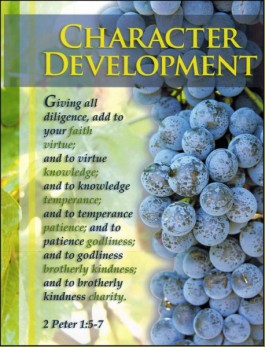
Character Development

A thorough discussion of the character development traits is provided in this great A4 sized workbook with questions presented to the reader regarding faith, humility, patience, brotherly kindness, and many other important character qualities. It is a great practical character examination suppliment to the doctrinal studies for any in their teen years and older, and can be purchased here: https://chicagobible.org/product/character-development/

Character-Development-shadow1-458x600.jpg

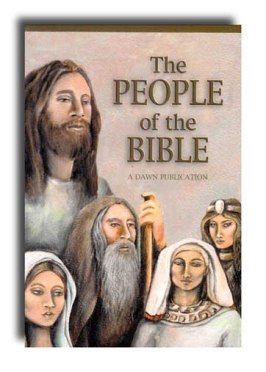
People of the Bible

This book discusses the important people of the Bible and demonstrates how God used them in accomplishing his work and how their sacrifices contributed to the development of the plan of salvation.  This will make a great present for anyone in their teen years and older and can be purchased here: https://chicagobible.org/product/the-people-of-the-bible/

p-1126-bd02575d23b9c7ee075e484bdce03301.jpg


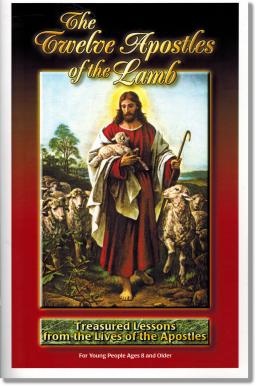
The Twelve Apostles Of The Lamb

The 83 document is a fantastic summary of each of the 12 Apostles, and can be appropriate for anyone 7 years of age and older as it tells the story of Jesus’ twelve apostles and their individual experiences. Very insightful and informative.

12-Apostles.jpg


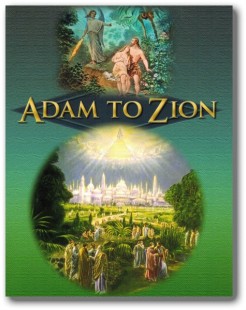
Adam to Zion

Written for younger readers this 187 page small book covers 93 short Bible lessons, beginning with our first parents in the Garden of Eden Old Testament,  followed by the life of Jesus and concluding with some lessons on the times we live in. A great daily read to a 7 year old and older. Adam to Zion can be purchased here: https://chicagobible.org/product/adam-to-zion-2/

Adam-to-Zion-475x600

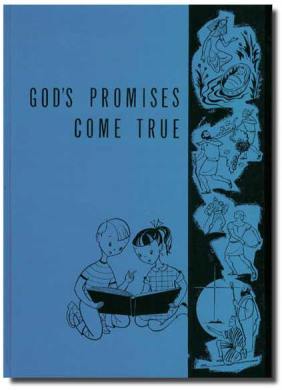
God’s Promises Come True

This book is written especially for children, as it relates some of the wonderful Bible stories in a simple understandable way. (244 Pages). This book can be read directly from here: http://www.dawnbible.com/promises/promises.htm or a hard copy of this book can be purchased through either the above website at http://www.dawnbible.com, or through the Chicago Bible Students here:

GodsPromises.jpg

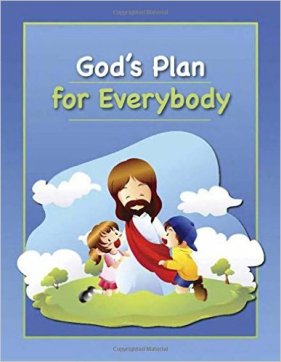
God’s Plan For Everybody

This book has been written for children 8 years old and older. It is a compilation of individual lessons created to guide young minds through the stories and doctrines taught in the Bible, with beautiful pictorial scenes of the events described in the words written.

A hard copy of this book can be purchased as a beautiful gift for children whom you may wish to educate about GOD’s marvellous Divine Plan for everyone, at Amazon.com: http://www.amazon.com/Gods-Plan-Everybody-Ruth-Cunningham/dp/1467588806

51EkqJ0BmWL._SX385_BO1,204,203,200_

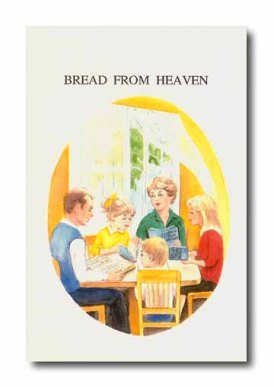
Bread from Heaven

This book is intended for a child’s morning devotions. A scripture text and brief comment help the child start the day in the right direction. This lovely addition to the meal table, can be purchased here: https://chicagobible.org/product/bread-from-heaven/

p-1291-c5b26a0bdf0c9602554391da3fa5dff2

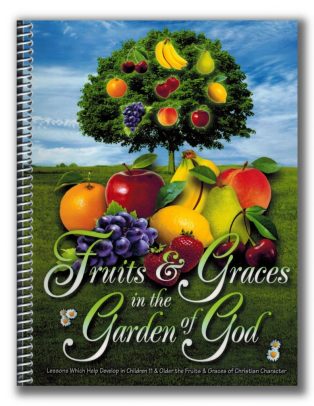
Fruits and Graces In the Garden of God

This book has been developed for children 11 years and up. The primary emphasis is not only to provide a definition of each fruit and grace of character, but also to point out a variety of illustrations from Bible stories and other lessons which encourage character growth. The lessons may be challenging to children under the age of 11, however, with adult supervision, they can be adapted for younger children. Filled with stories, puzzles, word mixes and more, this book will be a delightful source of learning for Christian children. It can be purchased here: https://chicagobible.org/product/fruits-graces-in-the-garden-of-god/

Fruits and Graces In the Garden of God.jpg

Bible Student Kids

By clicked on the image below you will be taken to a wonderful website containing lessons, activities, music and videos for children to learn about God’s divine, grand and glorious plan of the ages.

bible student kids.jpg

Israel’s Tabernacle Workbook

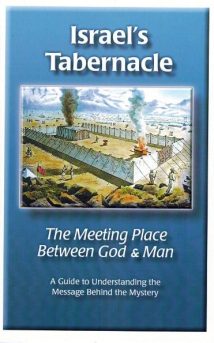
The tabernacle was an Old Testament mobile temple that God had directed the Israelites to build. It was moved from place to place as they journeyed through the wilderness for forty years. It symbolically depicts the sacrifice of Jesus and his faithful followers. This booklet describes the overall layout as well as each article of furniture, and their symbolism. Every Christian should be aware of the beautiful details that God provided of the future ages of sacrifice and blessing. This Workbook can be purchased through the Chicago Bible Students’ Bookstore: https://chicagobible.org/product/israel-s-tabernacle/

ISRAEL'S-TABERNACLE-CHILDREN'S-BIBLE-STUDY.jpg

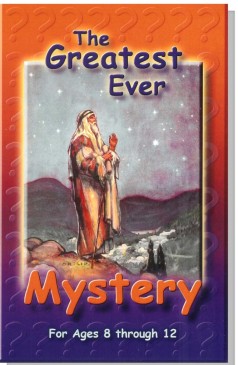
The Greatest Ever Mystery

This short workbook highlights the Plan of God for children 8-12 years of age. Full color throughout. It can be purchased through the Chicago Bible Students’ Bookstore: https://chicagobible.org/product/israel-s-tabernacle/

THE-GREATEST-EVER-MYSTERY-KIDS-BIBLE-STUDY.jpg

My Very Own Coloring Chart

This book has 25 coloring pages that each illustrate a portion of God’s plan. With a center fold Chart of the Ages a separate self stick sheet has cut outs that can be placed on the chart. It can be purchased through the Chicago Bible Students’ Bookstore:  https://chicagobible.org/product/chart-coloring-book/

MY-VERY-OWN-CHART-COLORING-BOOK-CHLDREN'S-BIBLE-STUDY.jpg

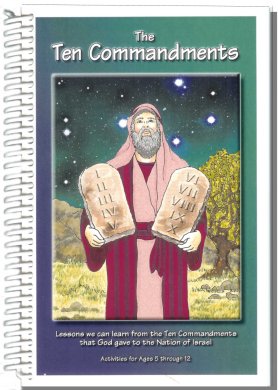
The Ten Commandments

A children’s workbook based on the Ten Commandments meant to be used as Bible Class lessons or by parents with their children. It can be purchased through the Chicago Bible Students’ Bookstore: https://chicagobible.org/product/the-ten-commandments/

THE-TEN-COMMANDMENTS-CHILDREN-BIBLESTUDY.jpg

The Bible Students’ Library – Children’s Section:

http://www.heraldmag.org/olb/contents/bsllinks/Children.htm


This post’s URL:
https://biblestudentsdaily.com/2017/02/02/a-list-of-suggested-reading-materials-for-teenagers-and-children/

Enter your email address to subscribe to this blog and receive notifications of new posts by email.


Only A Little While

  address.jpg


ONLY a little while to walk with weary feet,
Only a little while the storms of life to meet,
Only a little while to tread the thorny way,
Only a little while, then comes the perfect day.

Only a little while to spread the truth abroad,
Only a little while to testify for God.
Only a little while, the time is fleeting fast,
Only a little while, earth’s sorrows all are past.

Only a little while, then let us do our best,
Only a little while, then comes the promised rest.
Only a little while, oh, what a word is this!
Only a little while, then comes the perfect bliss.

Only a little while, then death shall be withdrawn,
Only a little while, then pain and tears are gone;
Only a little while, then by the Crystal Sea,
Only a little while, then Immortality.

Only a little while, Lord, let Thy Kingdom come!
Only a little while, Thy people sigh for home;
Only a little while, the City bring to sight,
Only a little while, come end earth’s dreary night! 

 From “Poems of Dawn”

This short while of striving to follow our Master and King Jesus is worth every moment in the “School of Christ.”

The Lord gives bread of adversity and the water of affliction (Isaiah 30:20) as the greatest of “teachers” to humble and learn submission to and dependency upon God who is the source of perfect love, joy, comfort and strength. To become empathetic New Creatures, one must experience many challenges of life and sufferings in the flesh so as to develop patient cheerful endurance in Christ.

As we see our own daily imperfections in our struggle to please our Heavenly Father, it makes us long for the perfect new body and mind promised to the “faithful unto death” (Revelation 2:10).

Let the New Creatures in CHRIST be encouraged by the words of the Apostle Paul in Philippians 4:13.

“I can do ALL things through Christ which strengtheneth me.”

The Heavenly Father understands perfectly how hard each of His children try to please Him. This realization, that God reads the heart of all whom He has created, brings us great comfort.

The words of Psalm 103:13-18 (ESV) are so refreshing:

“13 As a father has compassion on his children,
so the Lord has compassion on those who fear him;

14 for He knows how we are formed, 
He remembers that we are dust.

15 The life of mortals is like grass,
they flourish like a flower of the field;

16 the wind blows over it and it is gone,
and its place remembers it no more.

17 But from everlasting to everlasting
the Lord’s love is with those who fear Him,
and His righteousness with their children’s children—

18 with those who keep His covenant
and remember to obey His precepts.”

Do you feel your “old man” (within) has been “crushed” like grapes to be added to the juice of the most exquisite and sweet barrel of grape juice?

In order to develop “the fruit of the spirit,” did the crushing process today, result in getting rid of the “I”, “me” and “my will”?

“22 But the fruit of the Spirit is love, joy, peace, longsuffering, gentleness, goodness, faith,
23 Meekness, temperance: against such there is no law.
24 And they that are Christ’s have crucified the flesh with the affections and lusts.
25 If we live in the Spirit, let us also walk in the Spirit” (Galatians 5:22-25).

Have you asked the Heavenly Father,

  • Father what is YOUR will for me to do now and today?
  • Father how can I please YOU more?
  • Most Holy Heavenly El Shaddai please show me, how can I bring YOU the greatest JOY and pleasure through my existence?
  • Please Father teach me YOUR ways and transform me into YOUR Son Jesus’ likeness for YOUR love brings a JOY that is based on the highest level of JOY that transcends all understanding.

Those who have chosen to put to death daily the “old carnal mind” and renew the “new mind in Christ” by feeding on the word of God and feasting on the precious promises, gain Godly strength as they focus on the Bible where the inspired words of God are found (Isaiah 40:31).

Those who wait upon the Lord develop a maturity in Christ. These are “no longer… children, tossed here and there by waves and carried about by every wind of doctrine, by the trickery of men, by craftiness in deceitful scheming; but speaking the truth in lovethey grow up in ALL aspects into Him who is the head…Christ” (Ephesians 4:13-15).

They are not idle with their time as their work in the Father’s service is their delight. It is all they want and need to do, to feel the JOY IN THE LORD that transcends all understanding (Philippians 4:7).

They do not conform to the patterns of this world because they are “a chosen generation, a royal priesthood, an holy nation, a peculiar people” who shew forth the praises of him who hath called them out of darkness into his marvellous light (1 Peter 2:9).

The waiting only for a little while more is aided by the hope in Christ which the Apostle Paul in 2 Corinthians discusses comes from the holy Spirit of understanding that comes from studying the Word of God in the Bible, prayer and obedience to God, developed as theory is put into practice through the experiences God permits, which can be overcome with the strength God does supply.

“For everyone who has been born of God overcomes the world. And this is the victory that has overcome the world—our faith” (1 John 5:4).

“17 Now the Lord is that Spirit: and where the Spirit of the Lord is, there is liberty. 18 But we all, with open face beholding as in a glass the glory of the Lord, are changed into the same image from glory to glory, even as by the Spirit of the Lord” (2 Corinthians 3:17, 18).

The waiting is necessary for TIME is required to develop the fruit of character that comes from a KNOWLEDGE of GOD:

“For the priest’s lips should keep knowledge, and they should seek the law at his mouth: for he is the messenger of the LORD of hosts.”

(Malachi 2:7)

Those who have made a full consecration to Christ during the Gospel Age, do endure patiently with joy in the Lord through their experiences, developing a steadfast and resilient character in Christ.

“57 But thanks be to God, which giveth us the victory through our Lord Jesus Christ.
58 Therefore, my beloved brethren, be ye stedfast, unmoveable, always abounding in the work of the Lord, forasmuch as ye know that your labour is not in vain in the Lord (1 Corinthians 15:57-58).

The consecrated believers learn that waiting upon the Lord in all things is a wonderful means by which to prove their loyalty to their consecration vows unto God. They have vowed to serve the Lord their God with all their heart, with all their soul and with all their strength until death, to be used solely for God’s glory to be manifest to all the world.

Living a life in closest communion with God means feeling the highest level of JOY while in this temporary carnal abode!

A wonderful example of loyalty in the Bible can be found in the Book of Samuel: in David, Jonathan and the armour bearer of Saul.

In 1 Samuel 22:14 David’s loyalty to Saul is reflected in the words of Ahimelech (the high priest of Nob in Saul’s day):

“Then Ahimelech answered the king, and said, And who is so faithful among all thy servants as David, which is the king’s son in law, and goeth at thy bidding, and is honourable in thine house?

Jonathan’s loyalty to David is also a righteous example of how the consecrated child to God learns to agape their fellow brethren in Christ who profess full consecration to God and this is a sign that “we have passed from death unto life,” because we agape the brethren.

Let’s be reminded of the words of our fellow brother in Christ, the apostle Paul, who in 1 John chapter 3 writes:

15 Whosoever hateth his brother is a murderer: and ye know that no murderer hath eternal life abiding in him.

16 Hereby perceive we the love of God, because he laid down his life for us: and we ought to lay down our lives for the brethren.

17 But whoso hath this world’s good, and seeth his brother have need, and shutteth up his bowels of compassion from him, how dwelleth the love of God in him?

18 My little children, let us not love in word, neither in tongue; but in deed and in truth.

19 And hereby we know that we are of the truth, and shall assure our hearts before him.

20 For if our heart condemn us, God is greater than our heart, and knoweth all things.

21 Beloved, if our heart condemn us not, then have we confidence toward God.

22 And whatsoever we ask, we receive of him, because we keep his commandments, and do those things that are pleasing in his sight.

23 And this is his commandment, That we should believe on the name of his Son Jesus Christ, and love one another, as he gave us commandment.

24 And he that keepeth his commandments dwelleth in him, and he in him. And hereby we know that he abideth in us, by the Spirit which he hath given us.”

*******

Psalm 37 (ESV)

He Will Not Forsake His Saints

A Psalm Of David.

1Fret not yourself because of evildoers;
    be not envious of wrongdoers!
For they will soon fade like the grass
    and wither like the green herb.

Trust in the Lord, and do good;
    dwell in the land and befriend faithfulness.
Delight yourself in the Lord,
    and he will give you the desires of your heart.

Commit your way to the Lord;
    trust in him, and he will act.
He will bring forth your righteousness as the light,
    and your justice as the noonday.

Be still before the Lord and wait patiently for him;
    fret not yourself over the one who prospers in his way,
    over the man who carries out evil devices!
Refrain from anger, and forsake wrath!
    Fret not yourself; it tends only to evil.

For the evildoers shall be cut off,
    but those who wait for the Lord shall inherit the land.
10 In just a little while, the wicked will be no more;
    though you look carefully at his place, he will not be there.

11 But the meek shall inherit the land
    and delight themselves in abundant peace.
12 The wicked plots against the righteous
    and gnashes his teeth at him,

13 but the Lord laughs at the wicked,
    for he sees that his day is coming.
14 The wicked draw the sword and bend their bows
    to bring down the poor and needy,
    to slay those whose way is upright;

15 their sword shall enter their own heart,
    and their bows shall be broken.
16 Better is the little that the righteous has
    than the abundance of many wicked.

17 For the arms of the wicked shall be broken,
    but the Lord upholds the righteous.
18 The Lord knows the days of the blameless,
    and their heritage will remain forever;

19 they are not put to shame in evil times;
    in the days of famine they have abundance.
20 But the wicked will perish;
    the enemies of the Lord are like the glory of the pastures;
    they vanish—like smoke they vanish away.

21 The wicked borrows but does not pay back,
    but the righteous is generous and gives;
22 for those blessed by the Lord shall inherit the land,
    but those cursed by him shall be cut off.

23 The steps of a man are established by the Lord,
    when he delights in his way;
24 though he fall, he shall not be cast headlong,
    for the Lord upholds his hand.

25 I have been young, and now am old,
    yet I have not seen the righteous forsaken
    or his children begging for bread.
26 He is ever lending generously,
    and his children become a blessing.

27 Turn away from evil and DO good;
    so shall you dwell forever.
28 For the LORD LOVES JUSTICE;
he will not forsake his saints.
They are preserved forever,
    but the children of the wicked shall be cut off.

29 The righteous shall inherit the land
    and dwell upon it forever.
30 The mouth of the righteous utters wisdom,
    and his tongue speaks justice.

31 The law of his God is in his heart;
    his steps do not slip.
32 The wicked watches for the righteous
    and seeks to put him to death.

33 The Lord will not abandon him to his power
    or let him be condemned when he is brought to trial.
34 Wait for the Lord and keep his way,
    and he will exalt you to inherit the land;
    you will look on when the wicked are cut off.

35 I have seen a wicked, ruthless man,
    spreading himself like a green laurel tree.
36 But he passed away, and behold, he was no more;
    though I sought him, he could not be found.

37 Mark the blameless and behold the upright,
    for there is a future for the man of peace.
38 But transgressors shall be altogether destroyed;
    the future of the wicked shall be cut off.

39 The salvation of the righteous is from the Lord;
    he is their stronghold in the time of trouble.
40 The Lord helps them and delivers them;
    he delivers them from the wicked and saves them,
    BECAUSE they take refuge in him.

*******

PSALM 27, 14 - 2.jpg


The URL for this post:

Only A Little While

Enter your email address to subscribe to this blog and receive notifications of new posts by email.

Save

Save

Save

Save

Phileo & Agape Love – Helpful Reminders

1 JOHN 4, 8.jpg

Love is …

perfection of character.

“So we have come to know and to believe the love that God has for us. God is love, and whoever abides in love abides in God, and God abides in him.” – 1 John 4:16

The LOVE that our Heavenly Father seeks to have us develop is a love which is in full harmony and in total surrender to God’s will. When we please our Divine Father of Life, He will bless with eternal life,

“To those who by patience in well-doing seek for glory and honor an immortality, he will give eternal life” (Romans 2:7).

You therefore must be perfect, as your heavenly Father is perfect” (Matthew 5:48).

One element of Love is MEEKNESS.

Meekness does not mean weakness.

Consider Moses. He was a meek man and did he have a weak character? Not at all. He was humble-minded, not boastful, not proud or haughty.

“Now the man Moses was very meek, above all the men who were upon the face of the earth” (Numbers 12:3).

So the New Creatures in Christ, must develop and maintain this quality of meekness, from the divine standpoint.

Another element of love is GENTLENESS.

Does this signify weakness or fear? No.

Gentleness is part of a character of love.

Jesus said, “take my yoke upon you, and learn of me; for I am meek and lowly in heart: and ye shall find rest unto your souls” (Matthew 11:29).

In Galatians 5:22-23, the Apostle Paul writes, that the fruit of the Spirit is love, joy, peace, forbearance, kindness, goodness, faithfulness, gentleness and self-control. Against such things there is no law.”

To the Ephesians, the Apostle Paul writes, “I urge you to live a life worthy of the calling you have received. Be completely humble and gentle; be patient, bearing with one another in love. Make every effort to keep the unity of the Spirit through the bond of peace. There is one body and one Spirit, just as you were called to one hope when you were called; one Lord, one faith, one baptism; one God and Father of all, who is over all and through all and in all” (Ephesians 4:1-6).

“Let your moderation be known unto all men” (Philippians 4:5).

“Moderation”reasonableness, gentleness—the spirit of a sound mind, of gentleness, meekness.

This attitude of mind comes in large measure as a result of knowledge of God and his plans (R5840:3). Surely there never was a time when this counsel was so much needed as now!

Let the fact that we know only in part and understand only in part keep us humble and moderate in word and deed and thought (R5249:6).
Temperance, self-control—let men see by our thoughtful (not rash and hasty), careful and considerate demeanor in every affair of life, that we honor our profession (R4809:1, R2460:4).

Here is a practical example:

If we feel the leader of a meeting is not following the best Scriptural course, we must show moderation in our approach—approving what we can, objecting in kindness, meekness, and brotherly love. R3866:2 The Greek seems to carry the thought of reasonableness, of not exacting our rights too rigorouslymercy and leniency (R3128:2). Keep yourselves well in hand, subject and obedient to the will of God.

In 2 Timothy 3:3-5, the Apostle Paul warns against those “in the last days” (today) who he describes as “lovers of themselves, lovers of money, boastful, proud, abusive, disobedient to their parents, ungrateful, unholy, without love, unforgiving, slanderous, without self-control, brutal, not lovers of the good, treacherous, rash, conceited, lovers of pleasure rather than lovers of God— having a form of godliness but denying its power.” The Apostle Paul then states, “have nothing to do with such people.”

Even in discussing the time of trouble, emphasis should be laid upon the glorious Kingdom which will be inaugurated (R5716:4). We should be using the knowledge we possess, doing with our might what our hands find to do (R5249:3).
Let us be specially on guard that the influence of every word and act should be in accord with law, order and peace—“live peaceably with all men” (Romans 12:18).

Our gentleness toward all men would begin at home—more particularly in the Church—but should be manifested toward all with whom we have dealings (R5840:6).
Messiah’s Kingdom is shortly to be established—this should help the Lord’s people in living an exemplary life (R5840:6). This clause implies the exhortation belongs specially to the closing of this Gospel age—thus, to this time period we are currently living in.

We are expecting great changes soon and can well afford to be generous and liberal in our sentiments toward others (R3128:3).

PATIENCE is another element of love and a part of the true Christian character.

“With all lowliness and meekness, with longsuffering, forbearing one another in love” (Ephesians 4:2).

Patience is an element of character. We read in Revelation 3:10,

“Because thou hast kept the word of my patience I will also keep thee from the hour of temptation which shall come upon all the world to try them that dwell upon the earth.”

When examining the word “patience” we find that two quite distinct words in the Greek are translated by our English word patience in the New Testament:

  • hupomonee: this is used in the Revelation text quoted above which has a much deeper and fuller significance than attaches to our English word patience. It signifies rather constancy,—the thought being :

An endurance of evil in a cheerful, willing, patient manner. It represents, therefore, an element of character, and not merely a temporary condition or restraint of feeling or action.

For instance, a worldly man might have a great deal of patience in connection with the running of his business;—he might be very attentive to his customers, very obliging, very painstaking, and show no dissatisfaction in connection with the inconsiderateness of his customers; and “patience,” in its ordinary sense, might be ascribed to his conduct.

But the word in the Revelation text rendered patience” signifies such a development of heart and character as manifests itself in an endurance of wrong or affliction with contentment, without rebellion of will, with full acquiescence in the divine wisdom and love.

In Luke 8:15, in the parable of the sower, we read:

“That [sown] on the good ground are they which in an honest and good heart, having heard the word, keep it, and bring forth fruit with patience [with cheerful endurance, constancy].”

The thought here is that in order to be of the fruit-bearing class which the Lord will approve and accept to his Kingdom, it is necessary TO DO MORE than to receive the word of his testimony, even thou we receive it with joy—for that class in the parable is represented by the stony ground, which at first gave evidence of great fruitfulness and vigor, but which, when the sun of persecution arose, withered, because of lack of depth of soil. That stony, shallow soil represents, the Lord explains, a class of hearers who rejoice greatly in the truth, but do not endure, such as cannot withstand persecution or opposition, but wither under it, become discouraged. Such cannot be of the Kingdom class, all of whom must be overcomers.

In this parable our Lord shows us that patient endurance, constancy, is the final test, following after the readiness of preparation to receive the seed; following after the seed has been received and has sprouted; following after love and hope and joy and faith have caused it to spring forth and to give fruitage (R.2791).

Patient endurance, then, is necessary, in order that the grain may be developed and thoroughly ripened, and made fit for the garner.

Ah! how important patient endurance seems to be, in the light of this our Lord’s word—cheerful endurance; for we cannot suppose that he who judges the thoughts and intents of the heart would be pleased with his children, even if he saw them enduring much for his sake, if they endured in an impatient or dissatisfied or unhappy frame of mind. They would not, in that event, be copies of God’s dear Son, our Lord, whose sentiment is expressed in the words,

“I delight to do thy will, O God!” (Psalm 40:8)

All of the Royal Priesthood are sacrificers, as was the Chief Priest, our Redeemer and example, who offered up himself: we, as the under priests, have also presented our bodies living sacrifices, and are to lay down our lives for the brethren—in the service of the truth. And God, who accepts these sacrifices through the merit of Christ, informs us that he appreciates or loves the cheerful giver, those who perform their sacrifices of a willing heart, cheerfully.

The other instance in which our Lord used the word “patience” during his ministry is recorded in Luke 21:19. He had just been telling his followers what they must expect as the result of being his disciples during the present time, when sin abounds, and when Satan is the prince of this world—they must expect tribulation, opposition from various quarters; but he assures them that they would nevertheless be fully and completely under divine care and protection, even though the persecutions would be permitted to reach and to affect them. Then follow the words,
“In your patience [patient endurance, cheerful constancy] possess ye your souls” (Luke 21:19).

BROTHERLY KINDNESS is another element of love.

And beside this, giving all diligence, add to your faith virtue; and to virtue knowledge; (6) And to knowledge temperance; and to temperance patience; and to patience godliness; (7) And to godliness brotherly kindness; and to brotherly kindness charity. (8) For if these things be in you, and abound, they make you that ye shall neither be barren nor unfruitful in the knowledge of our Lord Jesus Christ” (2 Peter 1:5-8).

The Greek word “Philadelpia” signifies brotherly love (R3949:4; Q449:1).
“Phileo”—is duty love, a love which has a cause or demand upon it (R2807:4).
Phileo love is evidenced in the natural family relationship, and also in the spiritual family, the Church. We may not love our brethren’s peculiarities, their features, but we love them as brethren, whether black or white, bond or free, because they are brethren, comrades in the same race (Q449:1).

Phileo love means to make due allowance for inherited weaknesses and circumstantial misfortunes of others—to deal patiently and helpfully so far as wisdom may dictate, with a view to the correction of those faults, even at the expense of self-interest, if necessary and prudent (R4809:2, 1114:5).

Phileo love means to meekly bear reproof, determining to overcome deformities of character, and prove a help rather than a hindrance to others; no longer fostering old dispositions (R4809).

Phileo love allows one to exercise and manifest the principles of the divine character toward our fellow-men (R3090:2, 1628:2).

Phileo is a love for all who are brethren and yoke fellows in the cause of righteousness and truth, the cause of God (R2037:3).

Instead of disdaining those who are ignoble, instead of putting them away, treat them kindly (R448:2). This of necessity grows out of godliness. As god-likeness presupposes the other graces mentioned, so its development implies an enlargement of our hearts to all who are of the household of faith (R2155:5).

There is also “AGAPE” LOVE…

This is known as Charity (R5693:1, 5208:5).

Greek, agape, is the higher grade of disinterested love; the broader, more comprehensive, or divine love (R3949:4;Q449:1).

Love as a general expression covers all the elements of character which are really parts of love (F186).

We might divide the race-course into four quarters:

(1) duty-love;

(2) love for the Lord because we see something of the glorious majesty of his character;

(3) love for the brethren;

(4) perfect love—for all, even our enemies. (F187-189)

As we get agape love it means that we love all (Q449:1). We must reach this climax of love before we can be counted worthy of a place in the new creation (F190).

Agape Love:

  • Is deep, pure and true.
  • Thinketh no evil.
  • Does not puff itself up.
  • Is not easily offended;
  • Rejoiceth always in the truth and never in iniquity;
  • Is the climax of Christian attainment in the present life, the grace of all graces, which never fades, and which will be perfected when we receive the new resurrection body (R2037:3, 2155:5).
  • Is sincere love for the unrighteous and unlovely, as well as for the good and beautiful (R4809:3, 1114:5).
  • Is a love which is ever ready to manifest itself in wise and helpful activity for saint and sinner; and which pities, helps, comforts, cheers and blesses all within its reach—manifesting and cultivating the disposition which must be found in every member of the Christ company (R4809:3, 1114:5).
  • Is a broad, generous love, taking in the whole world, even our enemies (R5678:2, 5757:2, 5460:1).

We do not attain to the perfection of love at the beginning of our course, but it is the mark or standard which indicates the end of the course (F186).

Love is the chief of all graces.

Acts of kindness will gradually lead to an attitude of love, even where the subject does not seem to deserve it (1628:2).

Love is an experience, and includes in it an earnest desire for the well-being of the object loved (R78:5).

Love excels all the other virtues, because it is the most enduring (R4732:4).

True love on our part will manifest itself in obediencedisobedience is an evidence of the loss of love as viewed from the Lord’s standpoint (R2466:5).

“WITHOUT LOVE I AM NOTHING”

If we could speak all the languages known amongst men and even the angelic tongue as well, and if we were to use these talents in preaching, if we were to preach without being inspired by love, it would be completely unprofitable.

God would esteem it no more than the sound proceeding from cymbals or any brass instrument. Does GOD want to give cymbals and brass horns glory, honor and immortality? Of course not!

If man were to preach the whole Truth in all its grandeur, and have the ability to comprehend it even through the holy Spirit yet if there be a weakness in character development of love towards the brethren, then we could not be fit enough for divine favor and a share in the Kingdom, just like that brass horn would not be.

What a glorious lesson as we attempt to sound forth the praises of Him who has called us from darkness to light! How necessary it is that we speak the Truth in the love of it, with hearts full of devotion and appreciation!

By quieting the mind… and heading to the voice of our Heavenly Father through the inspired words of God in Bible and through prayer, we may learn to absorb and appreciate each lesson step by step as God unfolds it to us. God is the ultimate example of PATIENCE, waiting perhaps billions of years before finally confronting the pain of watching His own firstborn Son being sacrificed on Calvary and be the ransom for all mankind.

And Jesus… has been waiting for the completion of His Bride… His Body members of 144,000 since 33 A.D!

JAMES 5, 7-8.jpg

Everyone knows the saying “take time to smell the roses.”

And in the same way let’s remember to TAKE TIME TO HEAR GOD SPEAK
digest it…
absorb it…
and grow from it…

The Apostle suggests that if he had mountain-moving faith, if his knowledge of Divine mysteries were very great, superior to those of all other men, and even if in his zeal for man or for God he should become a martyr and permit his body to be burned, yet, notwithstanding all this, if the primary influence in these matters were not love, all the sacrifice, all the self-denials, all the labors, even the burning, would profit nothing.

Dear friends,

When we come to get the Divine standpoint of things we find indeed that we have a very high standard to achieve; and yet our judgment assures us that it is right, that it is just, that it is proper, that God should thus set the standard of love as the only standard by which we shall ultimately be measured. But whoever thinks to have this perfect love for God and for man and make no manifestations of it is equally mistaken.

Wherever love is in the heart words, works, thoughts and looks will testify to it, so that he who loves much will serve much.

If we love the Lord we shall delight in His service regardless of failures, regardless of fame, regardless of any earthly consideration; yea, even though the service of the Lord should cause us the loss of human approbation, fellowship, etc…

Hence every true Christian may link the two words love and service, and be sure that his love will manifest itself in zeal. Similarly, love of the brethren will mean a desire to serve the brethren; love of the home and family will mean a desire to do good to them; love of our neighbor will signify a desire to do for his interests according to our knowledge and limitations.

THE RESTRAINTS OF LOVE

The Apostle points out some of the restraints of love.

It cannot be quick, irascible; for “love SUFFERS LONG and is kind” (1 Corinthians 13:4).

  • He who is loving cannot be envious of others, nor covetous of the blessings and favors they are enjoying; for “Love envieth not.”
  • He who is loving cannot be boastful and proud; for “love vaunteth not itself, is not puffed up.”
  • He who is controlled by the spirit of love will not be ungracious, unkind, rude; for “love doth not behave itself unseemly.”
  • He who is full of the spirit of love will not be selfish, grasping, neglectful of the interests of others; for “Love does not seeks its own” (1 Corinthians 13:5).
  • The truly loving one will not be quickly angered, will not be easily offended; for “Love is not easily provoked.”

The one controlled by the spirit of love will not be imagining unkindness and rudeness nor seeking to interpret the words or conduct of others unkindly; for “Love thinketh no evil”.

What a beautiful example we see in our Master’s words to Simon:

“Simon, Simon, behold, Satan has demanded permission to sift you like wheat; but I have prayed for you, that your faith may not fail; and you, when once you have turned again, strengthen your brothers.”(Luke 22:32).

Let us not neglect to pray for our fellow brethren in CHRIST always.

“LOVE NEVER FAILS” (1 Corinthians 13:8).

Reference

The Reprints of the Original Watchtower and Herald of Christ’s Presence, http://www.htdbv8.com

Enter your email address to subscribe to this blog and receive notifications of new posts by email.

The Sacrifice

psalm-40-8-11

I laid my life on the altar, I said…

“dear Lord it is thine.”

Hence forth Thy will is my only law, my humble heart Thy shrine.
Barely I went forth to conquer, ready to die for His sake.
No sacrifice that He could ask seemed too great for me to make,
And the more I learned of His wonderful love, the dearer my Lord became,
Till I thought I could follow His pathway through any loss or shame.

But he led me by pleasant waters, where the sky was clear and bright,
And fed me in sweet green pastures and sheltered me at night.
Like a lamb I was shielded, protected. I knew no pain or fear,
Why should I shrink or falter when the tender Shepherd was near?
I had nothing that I could give in return, nothing to sacrifice.

Then I found in my pathway a jewel bright and fair,
In facets threw back the sunlight in beauty beyond compare.
I took that lovely, precious gem and hid it in my breast.
It kindled a fire that seared my heart. My spirit could not rest.
I feasted upon its beauty. I watched its glory shine,
Rejoicing in the wonderful thought that this beautiful gem was mine.

Then something dimmed its luster. It gave me grief and pain.
I brushed and polished my treasure but it would not shine again.
Then I heard the Savior whisper, “Can you give this treasure to me?”
But I said “It has no beauty now. It is dark and lifeless you see.”
I thought about my early vows, all, all I would give to Him.
Could it be that the cloud that had come between was making my jewel dim?

Could I lay at His feet a treasure whose beauty had faded away?
A jewel devoid of luster, all colorless and gray?

I laid my gift on the altar, I felt alone and bereft
Such a small and worthless offering, how could my Lord accept.

But the clouds rolled back and the sun shone out.

index.jpg

My jewel sprang to life;
There on the altar it blazed and burned, a thing with beauty rife.

My dear Lord smiled upon me and my heart was glad and free;

The jewel my heart had treasured so had never belonged to me.

He had tested my love, I had almost failed; I wanted that jewel so.

And the spin it cost me to see it fade, only the Lord can know;

I had treasured it still when its beauty was gone and fondled it to my breast;

But not till my Lord had accepted it could my weary heart find rest.

There is not grief so bitter that His love cannot share.
There is no trial of faith so great that His hand is not there.
He guarded me from the snare prepared to tangle my erring feet.
He shielded me from my own desire and tempered the cruel heat.
The fire that burned in my aching heart did but consume’ the dross;

For the soul that is really committed to Him can never suffer loss.

by L.K. Poole

“1Therefore, I urge you, brothers and sisters, in view of God’s mercy, to offer your bodies as a living sacrifice, holy and pleasing to God—this is your true and proper worship. 2Do not conform to the pattern of this world, but be transformed by the renewing of your mind. Then you will be able to test and approve what God’s will is—his good, pleasing and perfect will” (Romans 12:1).

Do your best to present yourself to God as one approved, a worker who does not need to be ashamed and who correctly handles the word of truth” (2 Timothy 2:15).

SACRIFICING WITH CHRIST

“He that saith he abideth in him ought himself also so to walk, even as he walked” (1 John 2:6).

May we encourage all who suffer with Christ in any measure to bear it with the same humility, benevolence and fortitude that characterized him under the most crucial tests of endurance.

Our Beloved Jesus knew that he was in an unfriendly world bound by sin and largely under the dominion of the prince of darkness.

Therefore he expected reproaches, taunts and persecutions, all of which he endured patiently while his great loving heart, almost unmindful of its own sufferings, was full of pity and of loving concern for others. May we like our Master, suffer with Christ, meekly bearing reproach and trusting to heaven’s vindication of us in due time.

“If, when ye do well and suffer for it, ye take it patiently, this is acceptable with God; for even hereunto were ye called. Because Christ also suffered for us, leaving us an example that ye should follow his steps: who did no sin, neither was guile found in his mouth. When he was reviled, he reviled not again. When he suffered he threatened not, but committed himself to him that judges righteously” (1 Peter 2:20-23).

“Consider him that endured such contradictions of sinners against himself, lest we be wearied and faint in our minds” (Hebrews 12:3).

It is a privilege to prove our devotion to the Lord by enduring hardness in his service as
good soldiers of the Cross of Christ.

Let us keep melodies of joy in our hearts as we walk along the narrow way, pressing onward and upward fellow pilgrims of the Cross of Christ, putting righteous effort into all we do “all for Jesus all for Jesus” as diligent stewards, to bring our Heavenly Father, Jehovah, all praise and glory and honor forevermore!

Here are 3 songs for your consideration, to build faith and strengthen our hope in Christ as by God’s grace we are transformed moment by moment, experience by experience into the character likeness of God’s dear Son and our Redeemer—Christ Jesus.


The URL for this post:
https://biblestudentsdaily.com/2017/01/05/the-sacrifice/

Enter your email address to subscribe to this blog and receive notifications of new posts by email.

Save

Save

Save

Save

Save

Save

Save

Save

Save