Blessed Bible – Hymns of Dawn No. 22

Blessed Bible – Hymns of Dawn No. 22

“(1) Come, let us shout joyfully to Jehovah! Let us shout in triumph to our Rock of salvation. (2) Let us come into his presence with thanksgiving; Let us sing and shout in triumph to him” (Psalm 95:1,2).

“My mouth shall praise Thee with joyful lips” (Psalm 63:5).

Here is a recording of Hymn No. 22 from the “Hymns of Dawn” to aid God’s people in singing and making melody in their hearts unto God.

Lyrics

1.
Blessed Bible, precious Word!
Boon most sacred from the Lord;
Glory to his name be giv’n
For this choicest gift from heav’n.

2.
‘Tis a ray of purest light,
Beaming through the depths of night;
Brighter than ten thousand gems
Of the costliest diadems.

3.
‘Tis a fountain, pouring forth
Streams of life to gladden earth;
Whence eternal blessings flow,
Antidote for human woe.

4.
‘Tis a mine, aye, deeper, too,
Than can mortal ever go;
Search we may for many years,
Still some new, rich gem appears.

*******

The History Of This Hymn

Author No information. The same four verses in the Bible Students’ Hymns of Dawn are also found amongst the six verses in an 1856 publication titled “The Harp” (No. 1162);

Composer — No information.

*******

Bible Scriptures Associated With This Hymn

Psalm 119: selected verses (KJV)

“(9) Wherewithal shall a young man cleanse his way? by taking heed thereto according to thy word.
(11) Thy word have I hid in mine heart, that I might not sin against thee.
(17) Deal bountifully with thy servant, that I may live, and keep thy word.
(25) My soul cleaveth unto the dust: quicken thou me according to thy word.
(28)  My soul melteth for heaviness: strengthen thou me according unto thy word.
(38) Stablish thy word unto thy servant, who is devoted to thy fear.
(41) Let thy mercies come also unto me, O Lord, even thy salvation, according to thy word.
(42) So shall I have wherewith to answer him that reproacheth me: for I trust in thy word.
(49) Remember the word unto thy servant, upon which thou hast caused me to hope.
(50) This is my comfort in my affliction: for thy word hath quickened me.
(58) I intreated thy favour with my whole heart: be merciful unto me according to thy word.
(81) My soul fainteth for thy salvation: but I hope in thy word.
(103) How sweet are thy words unto my taste! yea, sweeter than honey to my mouth! (104) Through thy precepts I get understanding: therefore I hate every false way.
(105) Thy word is a lamp unto my feet, and a light unto my path.
(107) I am afflicted very much: quicken me, O Lord, according unto thy word.
(114) Thou art my hiding place and my shield: I hope in thy word.
(115) Depart from me, ye evildoers: for I will keep the commandments of my God.
(116) Uphold me according unto thy word, that I may live: and let me not be ashamed of my hope.
(130)  The entrance of thy words giveth light; it giveth understanding unto the simple.
(140) Thy word is very pure: therefore thy servant loveth it.
(154) Plead my cause, and deliver me: quicken me according to thy word.
(158) I beheld the transgressors, and was grieved; because they kept not thy word.
(160) Thy word is true from the beginning: and every one of thy righteous judgments endureth for ever.
(161) Princes have persecuted me without a cause: but my heart standeth in awe of thy word. (162) I rejoice at thy word, as one that findeth great spoil.
(163) I hate and abhor lying: but thy law do I love.
(164) Seven times a day do I praise thee because of thy righteous judgments.
(165) Great peace have they which love thy law: and nothing shall offend them.
(169) Let my cry come near before thee, O Lord: give me understanding according to thy word.
(170) Let my supplication come before thee: deliver me according to thy word.
(172) My tongue shall speak of thy word: for all thy commandments are righteousness.”

Isaiah 40:8 (KJV) — “The grass withereth, the flower fadeth: but the word of our God shall stand for ever.”

Matthew 4:4 (KJV) — “But he answered and said, It is written, Man shall not live by bread alone, but by every word that proceedeth out of the mouth of God.

2 Timothy 3:12-17 (KJV)

“(12) Yea, and all that will live godly in Christ Jesus shall suffer persecution.
(13) But evil men and seducers shall wax worse and worse, deceiving, and being deceived.
(14) But continue thou in the things which thou hast learned and hast been assured of, knowing of whom thou hast learned them;
(15) And that from a child thou hast known the holy scriptures, which are able to make thee wise unto salvation through faith which is in Christ Jesus.
(16) All scripture is given by inspiration of God, and is profitable for doctrine, for reproof, for correction, for instruction in righteousness.
(17) That the man of God may be perfect, thoroughly furnished unto all good works.”

James 1:19-27 (KJV)

“(19) Know this, my beloved brothers: let every person be quick to hear, slow to speak, slow to anger;
(20) for the anger of man does not produce the righteousness of God.
(21) Therefore put away all filthiness and rampant wickedness and receive with meekness the implanted word, which is able to save your souls.
(22) But be doers of the word, and not hearers only, deceiving yourselves.
(23) For if anyone is a hearer of the word and not a doer, he is like a man who looks intently at his natural face in a mirror.
(24) For he looks at himself and goes away and at once forgets what he was like.
(25) But the one who looks into the perfect law, the law of liberty, and perseveres, being no hearer who forgets but a doer who acts, he will be blessed in his doing.
(26) If anyone thinks he is religious and does not bridle his tongue but deceives his heart, this person’s religion is worthless.
(27) Religion that is pure and undefiled before God the Father is this: to visit orphans and widows in their affliction, and to keep oneself unstained from the world.”

 *******

The words below are from Reprint No. 1144, from the Original Watchtower and Herald of Christ’s Presence as documented on “Harvest Truth DataBase Version 9: http://www.htdb.one

THE AUTHORSHIP AND CREDIBILITY OF THE BIBLE

No other book which the world has ever known has such a history as the Bible. Its origin and authorship, its antiquity, its wonderful preservation in the midst of the unparalleled and continuous opposition which sought to destroy it, as well as its diversity and teaching, make the Bible the most wonderful book in existence.

It is a collection composed of sixty-six separate books, written by about forty different writers, living centuries apart, speaking different languages, subjects of different governments, and brought up under different civilizations. Over 1500 years elapsed between the writings of Moses and of John…

He who would cast away Bible history as unworthy of credence, must on the same groundreject all history; and to be entirely consistent,must believe nothing which does not come under his own personal observation

INTERNAL EVIDENCES

Those who will make a study of the Bible plan will be fully convinced of the conclusive evidence of the credibility of the Sacred Scriptures, which is furnished in the purity, harmony and grandeur of its teachings.

Our first definite information with reference to the Sacred Writings is afforded by the direction given to Moses to write the law and history in a book, and put it in the side of the ark for preservation. (See Exod. 17:14; 34:27; Deut. 31:9-26.) This book was left for the guidance of the people. Additions were made to it from time to time by subsequent writers, and in the days of the kings, scribes appear to have been appointed whose business it was to keep a careful record of the important events occurring in Jewish history, which records—Samuel, Kings, Chronicles—were preserved and subsequently incorporated with the Law.

The prophets also did not confine themselves to oral teaching, but wrote and in some cases had scribes to record their teachings. (See, Josh. 1:8; 24:26; 1 Sam. 10:25; 1 Chron. 27:32; 29:29,30; 2 Chron. 33:18,19; Isa. 30:8; Jer. 30:2; 36:2; 45:1; 51:60.) As a result we have the Old Testament Scriptures, composed of history, prophecy and law, written by divine direction, as these citations and also Paul’s testimony (2 Tim. 3:15,16) prove. These writings collectively were termed “The Law and The Prophets,” and the Hebrews were taught of God to esteem them of divine authority and authorship, the writers being merely the agents through whom they received them… (See, Exod. 14:30,31; 19:9; 1 Kings 18:21,27,30,36,39)…

The Jewish copyists regarded these documents with great veneration. A very slight error in copying often led them to destroy it and begin anew. Josephus says that through all the ages that had passed none had ventured to add to, take away from, or transpose, aught of the Sacred Writings.

In the degeneracy of the Jewish nation, under the idolatrous administration of the successors of Rehoboam [1 Kings 14:21], these Sacred Writings fell into disuse and were almost forgotten, though they seem never to have been taken from their place. In the reformation conducted by Josiah, they were again brought to light. Again, in the Babylonish captivity this book was lost sight of by the Israelites, though it appears that they were accustomed to meet together in little companies in Babylon to be instructed by the scribes, who either taught the Law from memory or from copies in their possession. On the restoration of the Jews to Jerusalem, the Scriptures were again brought out, and Ezra and his companions read the law to the people, commenting upon and explaining it. (Neh. 8:1-8.) This public reading of the Scriptures was the only means of keeping them before the people, as printing was yet unknown and the cost of a manuscript copy was beyond the reach of the people, very few of whom could read. At the time of our Lord’s first advent, these O.T. Scriptures existed substantially as we have them today …

One of the strongest evidences of the authenticity of the O.T. Scriptures is found in the fact that the law and the prophets were continually referred to by our Lord and the apostles as authority, and that while the Lord denounced the corruptions of the Jewish Church, and their traditions, by which they made void the Word of God, he did not even intimate any corruption in these Sacred Writings, but commends them, and refers to and quotes them in proof of his claims.

In fact, the various parts of the entire book are bound together by the mutual endorsement of the various writers, so that to reject one is to mar the completeness of the whole. Each book bears its own witness and stands on its own evidence of credibility, and yet each book is linked with all the rest, both by their common spirit and harmony and by their mutual endorsement. Mark, for instance, the endorsement of the account of creation in the commandment of the law concerning the Sabbath day.—Exod. 20:11. Also compare Deut. 23:4,5; Joshua 24:9; Micah. 6:5; 2 Pet. 2:15; Jude 11-13; Isa. 28:21; Hab. 3:11; Matt. 12:40.

THE NEW TESTAMENT

[The earliest translation of the New Testament out of Greek is thought to have been in the Syriac language. Its date is sometimes estimated to be as early as the year A.D. 100. Syria was the country in which the Greek language intersected with the Syriac, which was closely related to the Aramaic dialect used by Jesus and the Apostles.]
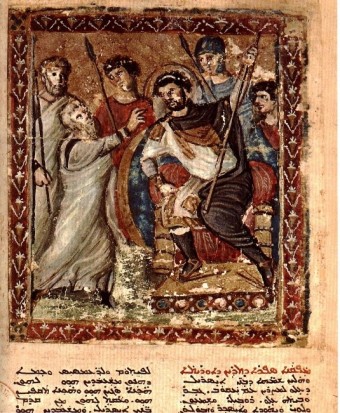
SYRIAC-BIBLE-OF-PARIS-MOSES-BEFORE-PHARAOH.jpg
The Syriac Bible of Paris, Moses before pharaoh

And even at that early date it contained the same books as at present with the exception of the Second Epistle of Peter, the Third Epistle of John, Jude and the Book of Revelation. And these omitted books we know were written about the close of the first century, and probably had not been widely circulated among the Christian congregations at that time.

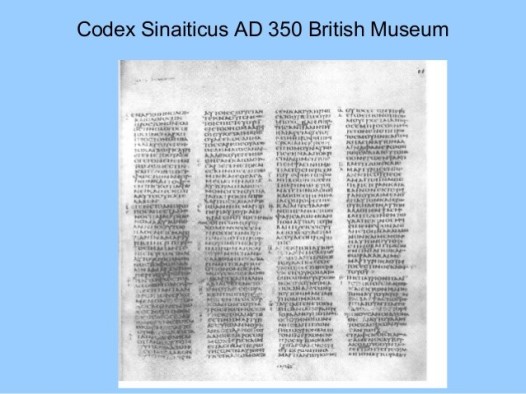
All the books of the Old and New Testaments as we now have them appear, however, in the Greek, is the Sinaitic Manuscript, the oldest known Greek MS., whose date is about A.D. 350. [Read more about the Codex Sinaiticus here: https://biblestudentsdaily.com/category/links/%5D

The first five books of the N.T. are historical, and present a clear and connected account of the life, character, circumstances, teachings and doings of Jesus of Nazareth, who claimed to be the Messiah promised in the O.T. Scriptures, and who fully substantiated his claim. The four accounts of the Evangelists, though they differ in phraseology, are in harmony in their statements, some important items being recorded by each which seem to have been overlooked by the others. These Evangelists testified to that of which they had positive knowledge. The Apostle John says: That which we have seen and heard declare we unto you—”that which was from the beginning (the beginning of the Lord’s ministry), which we have heard, which we have seen with our eyes, which we have looked upon, and our hands have handled of the Word of life; for the life was manifested, and we have seen it, and bear witness.” (1 John 1:1-3.) They testify also that they saw Christ after his resurrection. The fifth book [the Book of Acts] presents a valuable account of the doings of the Apostles after their anointing with the Holy Spirit, of the establishment of the Christian Church, and of the first preaching of the good news to the Gentiles.

The Apostolic Epistles were written to the various local congregations or churches, and were directed to be publicly read, and to be exchanged among the churches [R1146] ; and the same [divine] authority was claimed for them by their writers as that which was accorded to the O.T. Scriptures. (1 Thes. 5:27; Col. 4:16; 2 Pet. 3:2,15,16; Heb. 1:1,2 and 2:1-4.) These letters and the five historical books were carefully preserved by the different congregations, and were appealed to as authority in matters of doctrine …

The original copies of both the Old and New Testaments have, of course, long since disappeared, and the oldest manuscript (the Sinaitic) is reckoned to have been written about three centuries after the death of Christ.
CODEX-SINAITICUS-BRITISH-MUSEUM.jpg

Those of earlier date were either destroyed in the persecutions under which the church suffered, or were worn out by use. These oldest manuscripts are preserved with great care in the Museums and Libraries of Europe. During the Middle Ages, when ignorance and corruption prevailed and the Bible was hidden in monasteries away from the people, God was still carrying on his work, preserving the Scriptures from destruction even in the midst of Satan’s stronghold, the apostate [R1146] Church of Rome. A favorite occupation of the monks during the Middle Ages was the copying of the manuscripts of the N.T. … Of these manuscripts there are said to be now more than two thousand, of various dates from the fourth to the fifteenth centuries. The quiet seclusion of those monks gave them special opportunities for careful copying, and years were sometimes spent in the copying of a single manuscript.

RELIABILITY OF PRESENT TRANSLATIONS

While there are some errors in translation and a few interpolations in our common English translation, on the whole it is acknowledged by scholars to be a remarkably good transcript of the Sacred Word…

Very early in the Christian Era translations of the New Testament Scriptures were made into several languages, and the different factions that early developed and continued to exist, though they might have been desirous of adding to or taking from the original text in order to give their claims a show of Scriptural support, were watched by each other to see that they did not do so, and had they succeeded in corrupting the text in one language, another translation would make it manifest.

Even the Douay translation, in use in the Romish church, is in most respects substantially the same as the King James translation. The fact that during the “dark ages” the Scriptures were practically cast aside, being supplanted by the decrees of popes and councils, so that its teachings had no influence upon the masses of the people who did not have copies in their possession—nor could they have read them if they had them—doubtless made unnecessary the serious alteration of the text, at a time when bold, bad men had abundant power to do so. For men who would plot treason, incite to wars and commit murders for the advancement of the papal hierarchy, as we know was done, would have been bold enough for anything. Thus the depth of ignorance in the dark ages served to protect and keep pure God’s Word, so that its clear light has shone specially at the two ends of the Gospel age. (1 Cor. 10:11.) The few interpolations which were dared, in support of the false claims of Papacy, were made just as the gloom of the “dark ages” was closing in upon mankind, and are now made glaringly manifest, from their lack of harmony with the context, their antagonism with other scriptures and from their absence in the oldest and most complete and reliable manuscripts.

RELATIVE VALUES OF ANCIENT MANUSCRIPTS

As to the relative values of ancient manuscripts, we quote the following comments from the pen of that eminent German scholar, Constantine Tischendorf, who spent many years of his life in diligently searching out and comparing the various ancient manuscripts and translations of the Scriptures in many languages, and who has furnished to the church the results of his investigation in a careful exhibit of the various departures of the English Authorized Version of the New Testament from the three oldest and most important manuscripts.
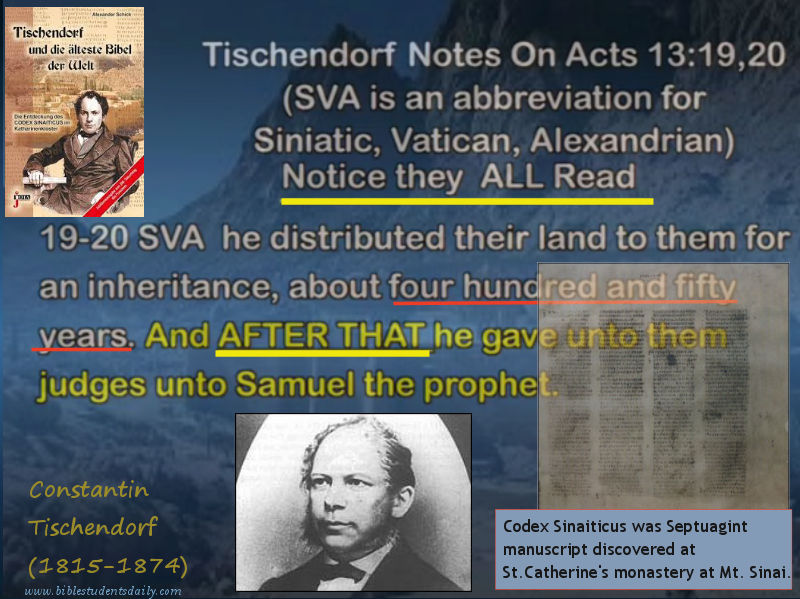
Tischendorf-bible-students-daily.jpg

Mr. Tischendorf says:

“As early as the reign of Elizabeth the English nation possessed an authorized translation, executed by the Bishops under the guidance of Archbishop Parker; and this, half a century later, in the year 1611, was revised at the command of James the First by a body of learned divines, and became the present ‘Authorized Version.’ Founded as it was on the Greek text at that time accepted by Protestant theologians, and translated with scholarship and conscientious care, this version of the New Testament has deservedly become an object of great reverence, and a truly national treasure to the English Church. The German Church alone possesses in Luther’s New Testament a treasure of similar value….

The Authorized Version, like Luther’s, was made from a Greek text which Erasmus in 1516, and Robert Stephens in 1550, had formed from manuscripts of later date than the tenth century. Whether those manuscripts were thoroughly trustworthy—in other words, whether they exhibited the Apostolic original as perfectly as possible—has long been matter of diligent and learned investigation. Since the sixteenth century Greek manuscripts have been discovered of far greater antiquity than those of Erasmus and Stephens; as well as others in Latin, Syriac, Coptic, and Gothic, into which languages the sacred text was translated between the second and fourth centuries; while in the works of the Fathers, from the second century downwards, many quotations from the New Testament have been found and compared….One thing is agreed upon by the majority of those who understand the subject, namely, that the oldest copies approach the original text more nearly than the later ones.

“Providence has ordained for the New Testament more sources of the greatest antiquity than are possessed by all the old Greek literature put together. And of these, two manuscripts have for long been especially esteemed by Christian scholars, since, in addition to their great antiquity, they contain very nearly the whole of both the Old and New Testaments. Of these two, one is deposited in the Vatican, and the other in the British Museum. Within the last ten years a third has been added to the number, which was found at Mount Sinai, and is now at St. Petersburg. These three manuscripts undoubtedly stand at the head of all the ancient copies of the New Testament, and it is by their standard that both the early editions of the Greek text and the modern versions are to be compared and corrected.

“The effect of comparing the common English text with the most ancient authorities will be as often to disclose agreement as disagreement. True, the three great manuscripts alluded to differ from each other both in age and authority, and no one of them can be said to stand so high that its sole verdict is sufficient to silence all contradiction. But to treat such ancient authorities with neglect would be either unwarrantable arrogance or culpable negligence; and it would be indeed a misunderstanding of the dealings of Providence, if after these documents had [R1147] been preserved through all the dangers of fourteen or fifteen centuries, and delivered safe into our hands, we were not to receive them with thankfulness as the most valuable instruments for the elucidation of truth.

“… To us the most reverential course appears to be, to accept nothing as the Word of God which is not proved to be so by the evidence of the oldest, and therefore most certain, witnesses that he has put into our hands. With this in view, and with this intention, the writer has occupied himself for thirty years past, in searching not only the Libraries of Europe, but the obscurest convents of the East, both in Africa and Asia, for the most ancient manuscript, of the Bible; and has done all in his power to collect the most important of such documents, to arrange them and to publish them for the benefit both of the present age and of posterity, so as to settle the original text of the sacred writers on the basis of the most careful investigation.

“The first of these great manuscripts already referred to which came into possession of Europe was the Vatican Codex. Whence it was acquired by the Vatican Library is not known; but it appears in the first catalogue of that collection which dates from the year 1475. The manuscript embraces both the Old and New Testaments. Of the later it contains the four Gospels, the Acts, the seven Catholic Epistles, nine of the Pauline Epistles, and the Epistle to the Hebrews as far as 9:14, from which verse to the end of the New Testament it is deficient; so that not only the last chapters of Hebrews, but the Epistle to Timothy, Titus and Philemon, as well as the Revelation, are missing. The peculiarities of the writing, the arrangement of the manuscript, and the character of the text—especially certain very remarkable readings—all combine to place the execution of the Codex in the fourth century, possibly about the middle of it.

The Alexandrine Codex was presented to King Charles the First in 1628 by Cyril Lucar, Patriarch of Constantinople, who had himself brought it from Alexandria, of which place he was formerly Patriarch, and whence it derives its name. It contains both the Old and New Testaments. Of the New the following passages are wanting:—Matt. 1:1 to 25:6; John 6:50 to 8:52; 2 Cor. 4:13 to 12:6. …It would appear to have been written about the middle of the fifth century.

The Sinaitic Codex I was myself so happy as to discover in 1844 and 1859, at the convent of St. Catherine, on Mount Sinai, in the later of which years I brought it to Russia to the Emperor Alexander the Second, at whose instance my second journey to the East was undertaken. It contains both Old and New Testaments—the latter perfect without the loss of a single leaf….All the considerations which tend to fix the date of manuscripts lead to the conclusion that the Sinaitic Codex belongs to the middle of the fourth century. Indeed, the evidence is clearer in this case than in that of the Vatican Codex; and it is not improbable (which cannot be the case with the Vatican MS.) that it is one of the fifty copies which the Emperor Constantine in the year 331 directed to be made for Byzantium, under the care of Eusebius of Caesarea. In this case it is a natural inference that it was sent from Byzantium to the monks of St. Catherine by the Emperor Justinian, the founder of the convent. The entire Codex was published by its discoverer, under the orders of the Emperor of Russia, in 1862, with the most scrupulous exactness, and in a truly magnificent shape, and the New Testament portion was issued in a portable form in 1863 and 1865.

“These considerations seem to show that the first place among the three great manuscripts, both for age and extent, is held by the Sinaitic Codex, the second by the Vatican, and the third by the Alexandrine. And this order is completely confirmed by the text they exhibit, which is not merely that which was accepted in the East at the time they were copied; but, having been written by Alexandrine copyists who knew but little of Greek, and therefore had no temptation to make alterations, they remain in a high degree faithful to the text which was accepted through a large portion of Christendom in the third and second centuries. The proof of this is their agreement with the most ancient translations—namely, the so-called Italic, made in the second century in proconsular Africa; the Syriac Gospels of the same date, now transferred from the convents of the Nitrian desert to the British Museum; and the Coptic version of the third century. It is confirmed also by their agreement with the oldest of the Fathers, such as Irenaeus, Tertullian, Clement and Origen.
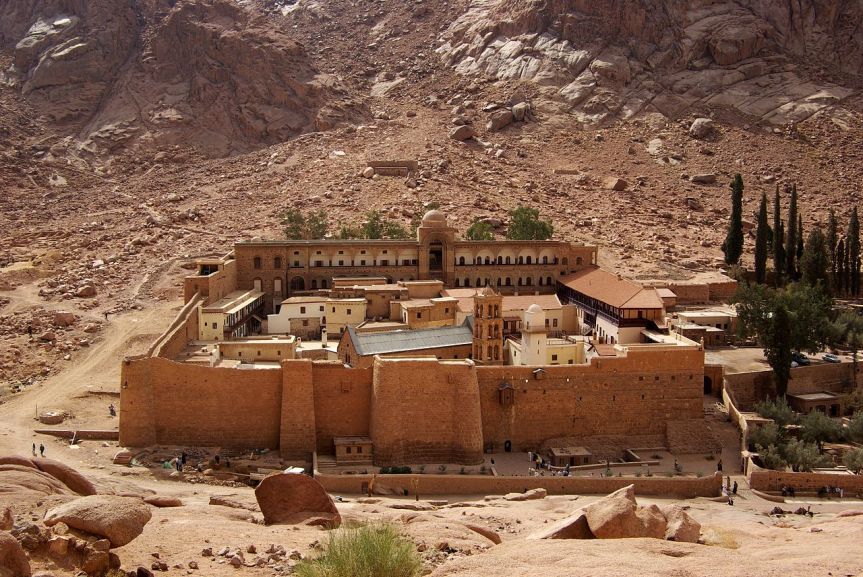
ST.CATHERINE'S-MONASTRY-MOUNT-SINAI.jpg
St. Catherine’s Monastry, Mount SinaiHere Constantine Tischendorf discovered the Sinaitic Codex (one of the original New and Old Testament manuscripts) in 1844 and 1859.

“These considerations seem to show that the first place among the three great manuscripts, both for age and extent, is held by the Sinaitic Codex, the second by the Vatican, and the third by the Alexandrine. And this order is completely confirmed by the text they exhibit, which is not merely that which was accepted in the East at the time they were copied; but, having been written by Alexandrine copyists who knew but little of Greek, and therefore had no temptation to make alterations, they remain in a high degree faithful to the text which was accepted through a large portion of Christendom in the third and second centuries. The proof of this is their agreement with the most ancient translations—namely, the so-called Italic, made in the second century in proconsular Africa; the Syriac Gospels of the same date, now transferred from the convents of the Nitrian desert to the British Museum; and the Coptic version of the third century. It is confirmed also by their agreement with the oldest of the Fathers, such as Irenaeus, Tertullian, Clement and Origen.

“These remarks apply to the Sinaitic Codex—which is remarkably close in its agreement to the ‘Italic’ version—more than they do to the Vatican MS., and still more so than the Alexandrine, which, however, is of far more value in the Acts, Epistles and Apocalypse than it is in the Gospels [R1147]….

“No single work of ancient Greek classical literature can command three such original witnesses as the Sinaitic, Vatican and Alexandrine Manuscripts, to the integrity and accuracy of its text. That they are available in the case of a book which is at once the most sacred and the most important in the world is surely matter for the deepest thankfulness to God.”

OTHER MEANS OF VERIFICATION

Another remarkable means for preserving and verifying the New Testament writings is their copious quotation in other writings. Origen — who wrote in the early part of the third century, quotes 5745 passages from all the books in the New Testament; Tertullian — (A.D. 200), makes more than 3000 quotations from the N.T. books; Clement — (A.D. 194), quotes 380 passages; Irenaeus — (A.D. 178), quotes 767 passages; Polycarp — who was martyred A.D. 165, after serving Christ 86 years, quoted 36 passages in a single epistle; Justin Martyr — (A.D. 140), also quotes from the N.T. These were all Christian writers; and in addition to these, the Scriptures were largely quoted by heathen and infidel writers, among them Celsus (A.D. 150) and Porphyry (A.D. 304).

Indeed the entire New Testament, with the exception of about a dozen verses, has been found scattered as quotations through various writings that are still extant. And if every copy of the N.T. had been destroyed by its enemies, the book could have been reproduced from these quotations contained in the writings of the early Christians and their enemies.

While the means for the preservation of the Scriptures have been thus remarkably complete, and in view of the unparalleled opposition with which they have met give evidence of Divine care in their preservation, the means for their verification, and for arriving at an understanding of them in God’s due time, are found to be none the less remarkable. No other book in the world has ever had such attention as this book. The labor that has been spent in the preparation of complete concordances, indexes, various translations, etc., has been enormous; and the results to students of the Bible are of incalculable value. And while we recognize the providence of God in all this, we should and do appreciate these labors of his children and their great service to us, though we utterly repudiate, as useless, the labor that has been spent on many so-called theological writings, which are nothing more than miserable efforts to support the vain traditions of men, the accumulated monstrous volumes of which would indeed form a monument of human folly.

Just in “The Time of the End,” when the prophet (Dan. 12:9,10) declares that “the wise (the meek and faithful children of God) shall understand,” we find these wonderful aids coming forward to our assistance. And parallel with these has happened the general spread of intelligence and education and the placing of the Bible in the hands of the people, thus enabling them to use the helps provided.

In view of these things, our only reasonable conclusion must be, that this wonderful book has been completely under Divine supervision in its preparation, and in its gradual and seasonable unfolding to the understanding; and yet it has all been accomplished through human agency. Those who are too careless, or too indifferent, or who permit themselves to be too much engrossed with the cares of this life to give it a studious examination, should not be expected to comprehend its weight of authority, and its full evidence of credibility…

The very existence of such a book, animated with such a spirit of justice, wisdom, love and power, and disclosing such good tidings of great joy to all people, having such a history and authorship, and containing such varied information—historic, scientific, and moral; and so remarkably preserved for so many centuries, though so violently opposed, is sufficient to awaken at least a suspicion of its value, and to claim the attention and investigation of every reasoning mind…

THE INSPIRATION OF THE BIBLE

The Bible claims to be a book written under divine inspiration. The word inspire signifies to breathe in, to infuse, to fill, to inhale—as to inspire the lungs with air. (See Webster’s Dictionary.) Hence, when it is said that certain scriptures, or writings of godly men, were given by inspiration of God (2 Tim. 3:16), it signifies that those men were in some way, whether through miraculous or natural means, inspired by, or brought under the influence of God; so as to be used by him in speaking or writing such words as he wished to have expressed. The prophets and apostles all claimed such inspiration. Peter says, “The prophecy came not in old time by the will of man, but holy men of God spake as they were moved by the holy Spirit.”2 Pet. 1:21.

Through Moses we have the law of God and the only existing credible history of mankind from the creation of Adam down to his own time, covering a period of about 2500 years. While Moses and the other Bible writers were holy men, inspired with pure motives and holy zeal, and while personal pride, ambition, etc., were no part of their spirit, we learn that Moses was inspired with the knowledge of God’s law, both in its great principles and also in the minutiae of its typical ceremonials, by direct revelation from God at Mount Sinai, and of some points of duty at the burning bush at Horeb, etc.

As for his historical writings, Moses was evidently guided of God in the collation and presentation in its present complete and connected form of the history of the world down to his day, which was really in great part the history of his own family back to Adam with an account of the creation doubtless given by God to Adam while he was yet in fellowship in Eden. Nor does a correct handing down of family information, covering a period of over 2300 years, seem impossible, or liable, as it would now be, to have become polluted; for, aside from the fact that it was handed down through the God-fearing family line of Seth, it should be remembered that at that time the bodies, brains and memories of men were not so weak as they are now, and as they have been since the flood; and finally, because the long lives of two men link Adam with the family of Abraham, the family of covenant favor,—with Isaac, the typical seed of promise. These two men were Methuselah and Shem. Methuselah was over 200 years old when Adam died, and had abundant opportunity, therefore, for information at first hands; and Shem, the son of Noah, lived contemporaneously with Methuselah for 98 years, and with Isaac for 50 years. Thus, these two living, God-fearing men acted as God’s historians to communicate his revelations and dealings to the family in whom centered the promises, of which Moses was one of the prospective heirs.

In addition to these facts, we have the statement of Josephus that Methuselah, Noah and Shem, the year before the flood, inscribed the history and discoveries of the world on two monuments of stone and brick which were still standing in Moses’ time.

As for the writings of the prophets, their devoted, godly lives attest their sincerity; their lives were spent for God and in the defense of righteousness, and not for gain and worldly honor. And as for proofs that God acted through them and that they merely expressed his messages, as Peter declares, it is to be found in the fulfilment of their predictions… This brings us to the examination of the inspiration of the New Testament

The Apostle Peter tells us that the prophets of old time often did not understand their own utterances, as they themselves also acknowledge (1 Pet. 1:12; Dan. 12:4,8-10); and we should remember that the twelve apostles (Paul taking the place of Judas—Gal. 1:17; 1 Tim. 2:7) not only filled the office of apostles… they also, especially Peter and Paul and John, filled the office of prophets, and were not only given the spirit of wisdom and understanding by which they were enabled to understand and explain the previously dark prophecies, but in addition to this we believe that they were under the guidance and supervision of the Lord to such an extent that their references to things future from their day, things therefore not then due to be fully understood, were guided, so as to be true to an extent far beyond their comprehension, and such consequently were as really prophetic as the utterances of the old-time prophets. Illustrations of this are to be found in the Revelations of the Apostle John, in Peter’s symbolic description of the Day of the Lord (2 Pet. 3:10-13), and in numerous references to the same period by Paul also, among which were some things hard to be understood even by Peter (2 Pet. 3:16) and only partially then by Paul himself. The latter, however, was permitted to see future things more clearly than others of his time, and to that end he was given special visions and revelations which he was not allowed to make known to others (2 Cor. 12:1-4), but which, nevertheless, influenced and colored his subsequent teachings and his epistles. And these very items which Peter thought strange of, and called “hard to be understood,” are the very items which now, in God’s due time, for which they were intended, so grandly illuminate not only Peter’s prophecies and John’s Revelation, but the entire word and plan of God,—that the man of God may be thoroughly furnished.2 Tim. 3:16,17.

… There were, even in the days of the apostles, ambitious men who taught another gospel and claimed for themselves the honors of special revelations and authority as apostles and teachers of no less authority than the twelve apostles. And ambitious men of the same sort have from time to time since arisen—Emanuel Swedenborg and many less able and less notable—whose claims, if conceded, would not only place them in rank far above Paul, the prince of the apostles, but whose teachings would tend to discredit entirely, as “old wives’ fables,” the whole story of redemption and remission of sins through the blood of the cross. These would-be apostles, boastful, heady, high-minded, have “another gospel,” a perversion of the gospel of Christ; and above all they despise and seek to cast discredit upon the words of Paul who so clearly, forcibly and logically lifts up the standard of faith and points to the cross—the ransom—as the sure foundation, and who so clearly showed that pseudo -apostles, false apostles, would arise and deceive many.

It not only required an inspiration to write God’s plan, but it also requires an inspiration of the Almighty to give an understanding of that revelation; yet this inspiration is of a different sort.

When any one has realized himself a sinner, weak, imperfect and condemned, and has accepted of Christ as his Redeemer, and full of love and appreciation has consecrated his heart (his mind, his will) to the Lord, to henceforth please not himself but his Redeemer,—God has arranged that such a consecration of the natural mind brings a new mind.

It opens the way for the holy mind or will of God, expressed through his written word, to be received; and as it is received into such a good, honest, consecrated heart, it informs that heart and opens the eyes of the understanding, so that from the new standpoint (God’s standpoint) many things wear a very different aspect, and among other things the Scripture teachings, which gradually open up as item after item of the divine plan is fulfilled, and new features of the unfolding plan become due to be understood, and from the new standpoint appreciated and accepted… Thus it is that “The path of the just is a shining light which shineth more and more unto the perfect day.” [R1149] …

The spirit of the truth inspires and controls to a greater or lesser extent … their words and thoughts, and even their very looks.

Yet such an inspiration, common to all the saints, in proportion to their development, should be critically distinguished from the special and peculiarly guided and guarded inspiration of the twelve apostles, whom God specially appointed to be the teachers of the church, and who have no successors in this office. Only twelve were “chosen,” and when one of these, Judas, fell from his honorable office, the Lord in due time appointed Paul to the place; and he not only has never recognized others, but clearly indicates that he never will recognize others in that office.—Rev. 21:14.

With the death of the Apostles the canon of Scripture closed, because God had there given a full and complete revelation of his plan for man’s salvation; though some of it was in a condensed form which has since expanded and is expanding and unfolding and will continue to expand and shine more and more until the perfect daythe Millennial Dayhas been fully ushered in. Paul expresses this thought clearly when he declares that the Holy Scriptures are able to make wise unto salvation, and that they are sufficient.

As we consider, then, the completeness, harmony, purity and grandeur of the Bible, its age and wonderful preservation through the wreck and storms of [nearly] six thousand years, it must be admitted to be a most wonderful book; and those who have learned to read it understandingly, who see in it the great plan of the ages, cannot doubt that God was its inspiring Author, as well as its Preserver. Its only parallel is the book of nature by the same great Author.

====================

Our Saviour — Christ Jesus

Here are some free online articles in relation to the Heavenly Father — Jehovah, and his Son — Christ Jesus — “a ransom FOR ALL … to be testified in due time” (1 Timothy 2:6), as well as, about the holy Spirit (the invisible power and influence of God) with clear explanations about why the anti-Christ teaching of “the trinity” — introduced by the Roman Catholic Church system (the “Beast” in the Book of Revelation) — is not what the Bible teaches. The Bible Student Movement does not support the teaching of purgatory nor does it support the Roman Catholic System’s teaching about people being sent to a place where they burn up forever, which certainly does not reflect the perfect love of God — the Almighty Creator of all things.

Hence, for the interested Reader, we urge you to consider the following articles and posts:

The Doctrine of the Trinity – Mystery or Confusion by Br. David Rice.
http://www.heraldmag.org/1999/99nd_3.htm

The Origin of the Trinity – From Paganism To Constantine by Sr. Cher-El L. Hagensick.
http://www.heraldmag.org/olb/Contents/doctrine/The%20Origin%20of%20the%20Trinity.htm

Facts About the Trinity
http://www.heraldmag.org/olb/contents/doctrine/FACTS%20ABOUT%20THE%20TRINITY.htm

God and the Trinities
http://www.heraldmag.org/literature/doc_42.htm

Development of the “Trinity Doctrine” by Br. Tom Gilbert.
http://www.beautiesofthetruth.org/Archive/Library/Doctrine/Mags/Bot/90s/2010d.pdf

Understanding John 1:1 by Br. Richard Doctor.
http://www.beautiesofthetruth.org/Archive/Library/Doctrine/Mags/Bot/90s/2010d.pdf

Father, Son and Holy Spirit
https://biblestudentsdaily.com/2016/06/23/father-son-and-holy-spirit/

What Is the Heavenly Father’s Name
https://biblestudentsdaily.com/2017/06/27/gods-name-what-is-the-heavenly-fathers-name-that-we-are-to-hallow-and-why/

Jesus – The Name
https://biblestudentsdaily.com/2017/07/05/jesus-the-name/

The Doctrine of Christ – Booklet
http://www.biblestudents.com/docs/DoctrineChrist.pdf

Hymn Book Purchase

The Hymns Of Dawn (hymn book) can be purchased at:

The Chicago Bible Students Online Bookstore: https://chicagobible.org/product-category/books/page/4/

The Dawn Bible Students Association: http://www.dawnbible.com/dawnpub.htm

Acknowledgment & References

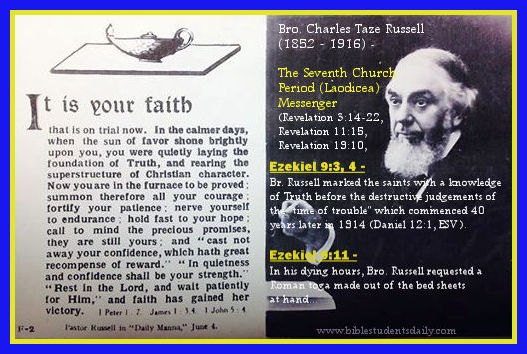
  • Br. Charles Taze Russell

2

Br. Charles Russell—the founder of the Bible Students movement, who is the compiler of “Poems and Hymns of Millennial Dawn” which was published in Allegheny, Pa., in 1890. This Bible Students’ devotional originally contained a total of 151 poems and 333 hymns.

POEMS-AND-HYMNS-OF-MILLENNIAL-DAWN

The following prefatory to the 1905 publication of Hymns of Millennial Dawn may be of historical interest to many of our readers.

We published in 1890, with several more recent editions, a volume entitled “Poems and Hymns of Millennial Dawn” without music. The same collection of hymns with the music is now urgently needed, and therefore appears in this volume. The poems, although highly prized, are omitted for greater convenience in size. We have preserved the same alphabetical order, because so many of our readers have the older book; and where a different tune is given from that originally suggested the latter is indicated by Alt. for alternative tune, with the number where that tune can be found.

Both words and music are credited to the same class to whom the work is dedicated-to the Lord and His faithful people, “the Saints.” The authors of many of the best of them are unknown to us, and, besides, slight changes have been made in the phraseology and sentiment of quite a number, which we could not be sure their original authors would approve, and to give personal credit to less than one half would seem invidious. To all of these dear “Saints” of all ages we therefore give united and hearty thanks for the blessings which they, as the Lord’s servants and handmaidens, have bestowed upon their fellow-members of “the Church of the Firstborn, whose names are written in Heaven.” Most of them died long ago: their abundant reward will be of the Lord in the resurrection.

That the collection is thoroughly undenominational, unsectarian, will be manifest to those recognizing the fact that it includes the choicest old hymns and tunes used by all denominations.

Although we have gathered far and near and winnowed carefully we cannot hope to have gotten all the golden grains, though we do hope that no chaff can be found. The collection is for the Church, for “believers” “reconciled,” and hence contains none of the “sinners” hymns, such as “Come, ye sinners poor and needy,” because willful sinners are in no sense members of the “Body” of Christ, nor are those who have not yet accepted the Lord as their Savior.

Those who will feel the deepest interest in this collection, and whose sentiments will be most fully voiced in its verses, will undoubtedly be those in fullest degree of sympathy with the divine plan of the ages, as set forth in the several volumes of Millennial Dawn—the eyes of whose understanding have been opened to the clearer, purer light now shining from our great Redeemer’s cross, showing the fulness and the completeness of his salvation.

In fact, this volume, while not numbered as one of the volumes of the Millennial Dawn series, is designed to be a companion volume, a melodious accompaniment to the “new song,” “the song of Moses and the Lamb” (the grand harmony of the Law and the Gospel), as presented in the regular Dawn series.

Let the music of God’s good and great plan ring through your hearts and lives, dear fellow-pilgrims and fellow members of the “royal priesthood,” so that every day and every hour shall be filled with joy and praise and thankfulness! And that this little volume may assist in deepening the work of grace in your hearts is our hope and prayer.

– Watch Tower Bible and Tract Society, July, 1905, Allegheny, PA, USA

——-

Later on, the hymns from this book formed a basis for the hymnal titled “Hymns of Dawn” which was published by the Dawn Bible Students Association in East Rutherford, New Jersey (USA) and the 1999 edition contains a total of 361 hymns.
Hymns of Dawn.jpg

  • Br. George Tabac — Written Work: “Harvest Timing Clarifications” —

Here is a link to Br. George Tabac’s 2016 Discourse —”Harvest Timing Clarifications”: https://www.youtube.com/watch?v=Yqa_GT2QSVA

[Note: Br. George Tabac’s 2016 discourse is almost identical but not the same as his 2015 discourse where it had been concluded that 6000 years from Adams creation would be up in 2042. However later, like Br. Charles Taze Russell, Br. George too came to realize the need to clarify his understanding by one year in his 2016 General Convention discourse, where he concluded the 6000 years from creation would be up in 2043, which concurs with Br. David Rice’s chronology (www.2043ad.com). Note the distinction in the final charts of these two discourses.]

Click on the following link to download Br. George Tabac’s 2016 Script Version of “Harvest Timing Clarifications”

HARVEST TIMING CLARIFICATIONS 7-9-2016 General Convention – 34 Page Han…

Click to access harvest-timing-clarifications-7-9-2016-general-convention-34-page-han.pdf

Suggested Further Reading

THE BIBLE — The World’s Best Model. Here is Why.

THE BIBLE – The World’s Best Novel. Here Is Why.

Epoch Periods In God’s Plan

Epoch Periods In God’s Plan

Debtors To His Marvelous Grace, by J.J. Blackburn. The Herald of Christ’s Kingdom Magazine, July/August 1986.
http://www.heraldmag.org/archives/1986_4.htm#_Toc36907878

The Foreshadowing of Grace, by F.A. Essler. The Herald of Christ’s Kingdom Magazine, January/February 1986.
http://www.heraldmag.org/archives/1986_1.htm#_Toc36905444

A Special Calling by Br. David Rice. The Herald of Christ’s Kingdom. July /August 2016.
https://herald-magazine.com/2016/07/01/the-bride-class/

The Bride and the Bridegroom by Br. Carl Hagensick. A Verse-by-verse Study of Psalm 45. The Herald of Christ’s Kingdom. July/August 2004.
http://www.heraldmag.org/2004/04ja_4.htm

A Chaste VirginThe Herald of Christ’s Kingdom.
http://www.heraldmag.org/literature/chliv_38.htm

His Loving Kindness – Hymns of Dawn No. 19

His Loving Kindness – Hymns of Dawn No. 19

Awake My Soul — Hymns of Dawn No. 20

Awake My Soul – Hymns of Dawn No. 20

The Sacrifice

The Sacrifice

Give Thanks In All Circumstances

1 THESSALONIANS 5:18 – Give Thanks In All Circumstances

The Truth About Hell. A Dawn Bible Association Publication. http://www.dawnbible.com/booklets/hell.htm

Hope Beyond the Grave. A Dawn Bible Association Publication. http://www.dawnbible.com/booklets/grave.htm

Christ and His Bride. BIBLE Students DAILY.
https://biblestudentsdaily.com/2017/06/25/christ-and-his-bride/

Our Beliefs — What Does the Bible Teach Us?
https://biblestudentsdaily.com/category/beliefs/

Bible Students’ Links and Bible Study Resources
https://biblestudentsdaily.com/category/links/


This post’s URL:

Blessed Bible – Hymns of Dawn No. 22

Enter your email address to subscribe to this blog and receive notifications of new posts by email.


Wondrous Grace – Hymns of Dawn No. 21

Wondrous Grace – Hymns of Dawn No. 21

Here is a recording of Hymn No. 21 from the “Hymns of Dawn” to aid God’s people in singing and making melody in their hearts unto God.

“(1) Come, let us shout joyfully to Jehovah! Let us shout in triumph to our Rock of salvation. (2) Let us come into his presence with thanksgiving; Let us sing and shout in triumph to him” (Psalm 95:1,2).

“My mouth shall praise Thee with joyful lips” (Psalm 63:5).

Lyrics

1.
Behold, what wondrous grace
The Father hath bestowed
On members of a fallen race,
To make them sons of God.

2.
By His dear Son redeemed,
By grace then purified;
What favor that we should be named
For Christ’s joint heir and bride!

3.
Nor doth it yet appear
How great we must be made;
But when we see our Saviour here,
We shall be like our Head.

4.
A hope so much divine
May trials well endure;
May purify our souls from sin,
As Christ, The Lord, is pure.

5.
Now in our Father’s love
We share a filial part;
He grants the spirit from above
To dwell within each heart.

6.
We can no longer lie
Like slaves beneath the throne;
Our hearts now Abba, Father, cry,
And He the kindred owns.

*******


The History Of This Hymn

Author Isaac Watts (1674-1748). Verse 2 in the “Hymns of Dawn” is not contained in the lyrics written by Isaac Watts and could not be found in any other Hymnal other than in the Hymns of Dawn.

ComposerNo information. From a Google search, the earliest record of the same tune as contained in the Hymns of Dawn, has been found in the “Songs for Social and Public Worship” published in 1863, on page 144.  Another tune arrangement (nearly identical to the “Hymns of Dawn” score) is found in “Every Sabbath: A new collection of music adapted to the wants and capacities of Sunday-Schools, the home circle, and devotional gatherings,” page 147 Hymn No. 145a published in 1874


*******


Bible Scriptures Associated With This Hymn

John 1:11-13 (ESV)—(11) He came to his own, and his own people did not receive him. (12) But to all who did receive him, who believed in his name, he gave the right to become children of God, (13) who were born, not of blood nor of the will of the flesh nor of the will of man, but of God.

Acts 15:10, 11 (ESV) — “(10) Now, therefore, why are you putting God to the test by placing a yoke on the neck of the disciples that neither our fathers nor we have been able to bear? (11) But we believe that we will be saved through the grace of the Lord Jesus, just as they will.”

Romans 3:23, 24 (NIV) — “… for all have sinned and fall short of the glory of God, and all are justified freely by his grace through the redemption that came by Christ Jesus.”

Roman 5:1-2 (KJV) — “(1) Therefore being justified by faith, we have peace with God through our Lord Jesus Christ: (2) By whom also we have access by faith into this grace wherein we stand, and rejoice in hope of the glory of God.”

Romans 6:13, 14 (ESV) — “(13) Do not present your members to sin as instruments for unrighteousness, but present yourselves to God as those who have been brought from death to life, and your members to God as instruments for righteousness. (14) For sin will have no dominion over you, since you are not under law but under grace.”

2 Corinthians 6:1 — “(1) We then, as workers together with him, beseech you also that ye receive not the grace of God in vain. (2) (For he saith, I have heard thee in a time accepted, and in the day of salvation have I succoured thee: behold, now is the accepted time; behold, now is the day of salvation.)

Ephesians 2:8, 9 (ESV) — “(8) For by grace you have been saved through faith. And this is not your own doing; it is the gift of God, (9) not a result of works, so that no one may boast.

Titus 2:11-14 (ESV) — “(11) For the grace of God has appeared, bringing salvation for all people, (12) training us to renounce ungodliness and worldly passions, and to live self-controlled, upright, and godly lives in the present age, (13) waiting for our blessed hope, the appearing of the glory of our great God and Savior Jesus Christ, (14) who gave himself for us to redeem us from all lawlessness and to purify for himself a people for his own possession who are zealous for good works.

Hebrews 4:16 (KJV) — “Let us therefore come boldly unto the throne of grace, that we may obtain mercy, and find grace to help in time of need.

1 John 3:1-3 (KJV) — “(1) Behold, what manner of love the Father hath bestowed upon us, that we should be called the sons of God: therefore the world knoweth us not, because it knew him not. (2) Beloved, now are we the sons of God, and it doth not yet appear what we shall be: but we know that, when he shall appear, we shall be like him; for we shall see him as he is. (3) And every man that hath this hope in him purifieth himself, even as he is pure.”

*******

The words below are from Reprint No. 2283, from the Original Watchtower and Herald of Christ’s Presence.

“BY GRACE ARE YE SAVED.”

EPHESIANS-2-8-9.jpg

“For the grace of God that bringeth [leads to] salvation hath been manifested for all men—teaching us that renouncing ungodly desires we should live soberly, righteously and godly in this present age, waiting for the blessed hope, even the glorious manifestation of our great God and Savior Jesus Christ; who gave himself for us that he might redeem us from all iniquity and purify unto himself a peculiar people, devoted to good works.”Titus 2:11-14.

[Note: The definition of “renouce” (or “say no to”— NIV Bible): formally declare one’s abandonment of (a claim, right, or possession). Synonyms: reject, refuse to abide by, refuse to recognize, desert, discard, disown, cut off, cast off, lay aside, refuse to fulfil, invalidate, nullify, disclaim, repudiate (which means reject, divorce from, refuse to accept).] 

“GRACE, ’tis a charming sound,” sang the poet, nor did he exaggerate; for to all who have learned the true meaning of divine grace, that word, like the word “gospel,” is a synonym for all the divine mercies which God’s people may now or ever enjoy…

The word grace signifies favor—particularly unmerited [not deserved] favor. Acts of grace are thus to be clearly distinguished from acts of justice and from obligations… Every testimony to the effect that God is extending his “grace” to humanity or to the Church is a testimony to their unworthiness to justly demand those favors or blessings.

The spirit of the world in general is that of self-sufficiency and independence; following their own wisdom and lacking the instruction and wisdom from above, the worldly-wise regard themselves with complacency; they believe themselves to be quite sufficiently righteous to merit a good deal of divine blessing and reward: true, they admit also that they have imperfections, but these they expect to pay for to the full according to some law of divine retribution. Hence they are undisposed to look for or to accept pardon, forgiveness, justification through the great sacrifice for sins which God has provided… And so they regard all of the laws governing humanity as merciless, graceless—strictly just.

The Scripture presentation of the matter does not overlook the law of retribution—that sin of any kind, the transgression of any law, will surely bring its penalty, whoever may be the sinner and whatever may be the conditions. And the propositions respecting divine grace, rightly understood, are not in conflict with this universal law of retribution: the proposition of grace is … not to prevent the wages of sin from following transgression, but to succor the repentant who desire to reform, and to help him back to divine favor and full recovery, along the lines of strictest justice;—by a willing ransom-price.

And since this succor is wholly unmerited on man’s part and without just obligation on God’s part, it is purely of divine favor—”grace.” Indeed, if it were not for sin and its retributive punishments, there would be no room for grace: it is man’s necessity for grace that constitutes the divine opportunity for its exercise. Grace, however, operates in harmony with the divine laws, and not in violation of them.

Remembering that divine grace signifies God’s unmerited mercy and favor, let us examine its operation in the light of Scripture:—

(1) The first movement of divine grace toward mankind was the exercise of benevolence, love and compassion toward mankind in his fallen and sinful condition. There was nothing in man to merit this compassion and sympathy; quite to the contrary: we were aliens from God and enemies of his righteous rule through wicked works,—the depravity wrought in us through sin voluntarily committed by father Adam.

(2) It was in harmony with this thought of grace on God’s part, or, as we might term it, God’s gracious plan, that he revealed something respecting his purpose of ransom and restitution to father Abraham;—thus preaching first, beforehand, to him the good tidings of a coming blessing or grace, saying, “In thy seed shall all the families of the earth be blest.” Abraham, and others who believed God, rejoiced in mind under the influence of this gracious promise—altho even the beginning of its fulfilment was still nearly two thousand years off.

(3) The third step of grace was in the great gift of divine love, our Lord Jesus Christ. It included the gracious arrangement made with the only begotten Son of God, on account of which he joyfully laid aside his heavenly glories and conditions and humbled himself in death as the ransom or substitute for the first Adam and thus incidentally a “ransom for all” [1 Timothy 2:6] the race of Adam.

(4) It was a fourth step of grace when God, having determined to select a Church, a “little flock,” to be heirs of God and joint-heirs of Jesus Christ their Lord, in the dispensing of the divine favors or grace, promised through Abraham, began the work of selecting this Church—receiving at Pentecost the first installment, from the house of servants into the house of sons and joint-heirs. (John 1:12,13.) Altho tests were applied to those received into the family of sons, and altho character qualifications were imposed upon them and will be imposed upon all who will be called and accepted to this high calling [Philippians 3:14], nevertheless this also was a step of grace, because there were no obligations resting upon God to confer upon us such a “high calling,such “riches of his grace in Jesus Christ our Lord.”

(5) Throughout this Gospel age the same grace has been in operation doing a twofold work; (a) justifying repentant believers from the guilt of their moral obliquity, and giving them thus a standing before God in Christ’s imputed righteousness;—thus making them eligible to the “high calling” to divine sonship and to joint-heirship in God’s Kingdom to come, and (b) then extending to them that “high calling,” inviting them through the divine Word to become the “very elect.” True, there are conditions imposed, and not all the many “called” will be among the few “chosen;” but nevertheless it is an inestimable privilege to be “called” and to have put within our grasp the opportunity and all the needful helps, whereby we may make our calling and election sure.

(6) The grace of God will still further be manifested when the “elect” Church shall all have been sought, found, tried, disciplined, and “made meet to be partakers of the inheritance of the saints in light;” for the blessings which will be conferred upon this glorified Church will not only be such as were not merited, such therefore as were not of obligation upon God’s part, but according to the divine testimony they will be additionally great, super-abounding in grace, “exceedingly abundantly more than we know how to ask or expect;” for “eye hath not seen, nor ear heard, neither hath entered into the heart of man, the things which God hath in reservation for those that love him.”1 Cor. 2:9.

(7) Even then, God’s grace will not have exhausted itself;—even after having thus honored and blessed and exalted the Church, the body of Christ, whose only merit consisted first in an honest confession of sin and an acceptance of the divine favor, and second, in their “reasonable service” in rendering their lives in obedience to him who bought them and in and through whom the divine graces were extended.

Then divine grace will begin to be fully manifested—then all shall see it, all shall know it, and all who will may share it; for then will begin the glorious [R2284] “times of restitution of all things, which God hath spoken by the mouth of all his holy prophets since the world began”the Millennial age of a thousand years; the time when the knowledge of the Lord shall graciously be caused to fill the whole earth; the time when all the sin-blinded eyes shall be opened; the time when all the prisoners of the pit (death) shall come forth, that they may be instructed in righteousness. Then, according to the grace of the divine promise, he who redeemed the world shall judge the world in righteousness, a trial, an opportunity, that whosoever will, with a knowledge of sin and its penalty, and with a knowledge of righteousness and its rewards, with a knowledge of the goodness and grace of God shining in the face of Jesus Christ our Lord, may then stand trial and be judged as to whether they will receive God’s grace and its provisions of eternal life, or whether they will reject these and die the second death.

Here we behold the wonderful steps of grace. No one can intelligently believe in divine grace who holds the theory of evolution or any other theory of salvation than the Scriptural one, which recognizes man’s original creation in the divine likeness, his fall into sin and death, his redemption therefrom by the death of our Redeemer, and his hope for recovery through divine grace extended now to the Church and to be extended by and by through the Church (under Christ its Head) to all the families of the earth.

Coming now to consider present manifestations of divine grace toward the Church, we note that many professed followers of the Lord fail … to appreciate this grace which it is their privilege to enjoy. This is attributable largely to false teaching and preaching… For instance, how common it is for people to hear and to believe that if they “do right” they will have divine rewards at the end of life’s race; but if they “do wrong” they shall have divine punishment at the end of the race. Such views ignore grace entirely…

If we are to be punished in proportion to our shortcomings and rewarded for our obedient deeds, where would be the grace? Where would be the mercy? Where would be the necessity of a Savior, a sin-offering, an atonement and a reconciliation with God? Where would be the peace through our Lord and Savior Jesus Christ? None of these mercies and blessings can be rightly recognized except as the grace of God (his unmerited favor) is seen in them.

The fact is that the divine standard of righteousness is much higher than men generally understand: with God righteousness is synonymous with perfection; and hence “all unrighteousness [all imperfection, however or whenever or wherever]—is [a proof of] sin. Thus all men are proved to be sinners,—because all are imperfect, un-right. And the divine law is that the sinner, the wrongdoer, the un-right, the imperfect, shall not live. “The wages of sin is death.” Whoever [R2285] understands this can see at once that man’s only hope of eternal life lies not in his own perfection, but in divine mercy, grace.

But, says someone, That is not a fair statement of the case. God made me as I am, imperfect; and justice requires that he shall not demand of me an impossible perfection, nor punish me for weaknesses and imperfections beyond my control. Such reasoning implies a misunderstanding of the case. It is a mistake to assume that God made us imperfect. All “his work is perfect.” (Deut. 32:4; Psa. 18:30; Matt. 5:48.) He neither created idiots nor other physical and mental malformations of humanity, but, as the Scriptures declare, we were “born in sin and shapen in iniquity—in sin did my mother conceive me.”

Our blemishes come to us from our parents, not from God.

The Scriptures not only point out to us father Adam’s sinless perfection, saying that he was created in the image of God, but they plainly declare that it was by his disobedience that the divine sentence of death passed upon him and passed as an inheritance, a legacy of evil, to his offspring, saying, “By one man’s disobedience sin entered into the world and death as a result of sin, and so death passed upon all men, for all are sinners [imperfect].” Truly also, “The fathers have eaten a sour grape [disobedience] and the children’s teeth are set on edge.”Rom. 5:12,17-19; Jer. 31:29; Ezek. 18:2.

The very basis of all our hopes, then, is this grace of God, operating toward us through Jesus Christ our Lord. God’s grace does not subvert or set aside God’s law, however, and he who would rightly appreciate and use the divine grace should recognize this fact. God’s grace was not intended to frustrate the spirit of his own law: it was not intended to clear the guilty, the wilful transgressor. It acknowledges the divine law, attests its justice, and has fully met its requirements in the person and sacrifice of our Lord Jesus on behalf of Adam and all his race involved in his transgression and his penalty—death. Hence it was that “Christ died, the just for the unjust” in order “that God might be just and yet be the justifier of him that believeth in Jesus.”

The only condition upon which God’s grace is offered is:

  • our acknowledgment of our sin, weakness and imperfection,
  • a sorrow for these and
  • a repentance and
  • reformation to the extent of our ability and
  • an acceptance of Christ Jesus as the personification of divine grace.

Upon no other condition can we step into this grace of God or walk in its way and inherit its rewards.

And even after we have received Christ and God’s grace in him, and are no longer recognized as strangers, aliens to God, but sons, as servants of righteousness and no longer servants of sin, being imperfect, we are not free from blemishes of word, thought and deed; yet, God’s grace … continues with us to cover our blemishes until perfected in the resurrection. Under its provisions whatever is contrary to our wills, and purely the result of hereditary weakness, may be forgiven; and our obliquity and blameworthiness be gauged only by the measure of wilfulness or assent connected with the wrongdoing. Nevertheless, to some extent, chastisements or natural penalties for violations of law may be expected: but to those under grace these will come as helps by the way, causing them more and more to detest sin, as corrections in righteousness, as chastisements and disciplines for their blessing. And even these sure penalties may be to some extent ameliorated in accordance with the wisdom of our great High priest, who, having borne all our sins in his own body on the tree, is freely empowered to abate for us so much of the penalty of our misdeeds as grace may be able to cover as un-wilful [accidental, not deliberate] transgressions.

There is a disposition in our day, as there was a disposition in the days of the apostles, for those who have once accepted of divine forgiveness, the grace of God through Christ, to turn aside therefrom and to attempt to justify themselves by works. Even while first experiences were those of humble dependence upon divine mercy, subsequent experiences sometimes lead to the rejection of the grace that at first was so thankfully received. The Apostle wrote to some thus affected, saying, “Christ has become of none effect unto you, whosoever of you are justified by the law; ye are fallen from grace.” (Gal. 5:4.)

Judged from this same standard, how many Christians today have backslidden—fallen from grace—lost the trust in the merit of the precious blood and in divine favor extended to us through the great atonement sacrifice. Now, as then, the disposition is to trust to works of our own righteousness, which … our own consciences should prove to us are imperfect, “filthy rags” unfit and unable to cover us. Yes, we need a covering before we could in any manner or degree hope to be acceptable to God, and this covering of our imperfections with the imputed righteousness of Christ, is another statement of the grace of God extended to us. This tendency to depart from a recognition of God’s grace in Christ as our only hope for eternal life, and to take instead a hope of being able to walk righteously and to do justly, and thus to merit eternal life, is what the Apostle very properly calls “another gospel”a false gospel.—Gal. 1:6.

This thought of the divine grace as the basis of all our mercies is interwoven with all the promises of God’s Word. Thus the Apostle speaks of the gracious plan of God, and Christ as the exponent of that plan as “the grace of God and the gift by grace.”Rom. 5:15.

Our approach to God in prayer is spoken of as an approach, not to the throne of justice and equity, but as an approach to “the throne of grace,” where “we may obtain mercy and find grace to help in every time of need.”Heb. 4:16.

Hebrews-4-16.jpg

Again we are exhorted that our hearts be established in grace; and again told that unto every one of us is given grace according to the measure of our faith; and again the Apostle declares of himself, “By the grace of God I am what I am” [1 Corinthians 15:10].

According to the testimony of our text this grace is general, for ALL men,” and must therefore ultimately in some manner or other be extended to all men,—the dead as well as the living. The translation of our Common Version is manifestly faulty here; all men, even in this most enlightened day of the world’s history, have not yet beheld God’s grace in any degree, nor has it as yet brought them salvation. But since it has been provided freely for all, so ultimately it shall be extended to all, that all may avail themselves of it.

The teaching of this grace is not that we may continue in sin that grace may abound; for divine grace is intended to benefit only those who renounce sin and become servants of righteousness: and thus, as our text declares, God’s grace teaches us that we should repudiate sin and live separate from every ungodly desire, in righteousness, soberness and godlikeness. Furthermore, as our text declares, this grace of God does not claim to have reached its completeness, and to have accomplished in us and for us the grand designs of the God of all grace. On the contrary, it teaches us to WAIT for the consummation of this grace until the glorious manifestation of the Son of God in the majesty and power of his Kingdom, to unite his Church with himself as his Bride and joint heir, the channel of mercies and blessings through which God’s grace shall flow to all the groaning creation.—Rom. 8:18-22; 11:31.

“RECEIVE NOT THE GRACE OF GOD IN VAIN.”

“We then as workers together with him, beseech you also that ye receive not the grace of God in vain.”2 Cor. 6:1.

This exhortation is addressed to such as have already recognized God’s gracious character and the gift [R2285] of his grace toward mankind,—the redemption which is in Christ Jesus. The Apostle has just been explaining this matter of how God’s grace had provided a reconciliation; “that God was in Christ reconciling the world unto himself, not imputing their trespasses unto them [but unto him who died for them]. He declares himself an ambassador on behalf of God to declare this grace and exhorts his readers not only to accept of God’s grace in the forgiveness of sins through Christ, but additionally that they also should become fully reconciled or completely in harmony with the Lord, as would be represented by full consecration to him and his service, after the example of the Apostle himself.

We take it that this exhortation of our text is the equivalent of the same apostle’s exhortation elsewhere, namely, “I beseech you, brethren, by the mercies of God [already brethren because already believers in Christ and partakers through him of divine grace], that ye present your bodies living sacrifices, holy, acceptable unto God, which is your reasonable service.”Rom. 12:1.

The Apostle was here urging progress on the part of the believers, advancement from “justification by faith” to the next higher step in divine grace and privilege,—full consecration even unto death, in response to the “call” to joint-heirship with Christ in his Kingdom,—to suffer with him in the present time, and to reign with him by and by in glory. These two steps are contrasted by the same Apostle, who says of himself and others who had taken both steps, (1) “Being justified by faith we have peace with God through our Lord Jesus Christ.” (2) “By whom also [additionally] we have access by faith into this [further] grace wherein we stand and rejoice in hope of [sharing] the glory of God.”Rom. 5:1,2. [R2286]

In our text the Apostle distinctly implies the possibility that some may receive the grace of God in vain—to no purpose.  We see from the connection as we have examined it, that he refers to the grace of God in justification, the forgiveness of our sins, and not to the second step of grace, our acceptance to the new nature through the begetting of the spirit. This implies, therefore, that the only object of justification by faith in this present age, is to give us a footing, a standing of acceptableness with God, from which we may be able to advance and take the second step of self-sacrifice, and become joint-heirs with Christ in his Kingdom. Nevertheless, this first step and all the privileges and blessings connected with it would be “in vain,”profitless to us, if we fail to take the second step, the particular feature of the divine plan which belongs to this Gospel age.

We are not to add to the Word of God, and to say that to receive justification in vain (by not making use of it to progress to a complete consecration and newness of nature) would mean eternal torment, or even the second death: we are simply to understand it as it reads, that the intention of the grace of justification, the first step, being to qualify us for the second step, those who fail to take the second step will have no particular benefit accrue to them from the first step, which would thus have been taken in vain, profitlessly, without permanent results and advantages.

… Only those who take the “narrow way” will gain any prize offered during this Gospel age, which is specifically the age set apart for the development of the “royal priesthood,” devoted to good works—to self-sacrifices in the service of the Lord and his cause. Indeed, there is only one prize and one hope of our calling during this age—the other prize and other hope and other call will be in the age to come. We cannot therefore expect that any who take the first step of faith in Christ, and who are therefore temporarily justified because of their faith, will have a reward for a faith which did not work by love. The faith that works by love speedily goes on to full consecration and self-sacrifice, and is a sure indication of the kind the Lord is seeking for his “little flock,” the “royal priesthood,” the “joint-heirs.” The faith, therefore, which refuses to work by love, cannot be considered an acceptable faith in God’s sight. Nor can we expect that this class will be counted worthy to share in the earthly phase of the Kingdom with Abraham, Isaac and Jacob and all the prophets.

… While not favored with the “high calling” to the divine nature and jointheirship with Christ, because this “call” was not yet due to be proclaimed, nevertheless, these ancient worthies manifested a faith and a trust in the Lord and his promises which worked, and by their works manifested a love for the Lord and a loyalty to him which did not hesitate to sacrifice reputation, wealth and life itself, in obedience to the principles of righteousness revealed to them… [R2286]

A much misunderstood text respecting grace is the one used as a caption for this article, namely, “By grace are ye saved, and that not of yourselves, it is the gift of God.” (Eph. 2:8.) The erroneous thought given by many is that our faith is not our own faith, not of our own volition, but an impartation, a gift from God. Of course, in one sense every gift and blessing which we enjoy is indirectly if not directly from God; “Every good gift and every perfect gift is from above, and cometh down from the Father of lights.” (Jas. 1:17.) But the proper understanding of the Apostle’s words, we believe, is this: It is of God’s grace and not of personal merit on our part that salvation is offered to us; and altho that salvation is offered to us as a reward of faith (including true faith’s obedience), yet we cannot even boast respecting our faith as tho it merited the Lord’s favor,—for our faith is something which is the indirect result of divine providence also; there are millions of others in the world who might exercise just as much faith as we if they had been favored of God with as much light, intelligence, knowledge, as a basis of faith: hence our faith is not to be credited as a meritorious condition but we are to be thankful to God for it, for the circumstances and conditions which have made it possible for us to exercise faith are of his grace.

====================

Hymn Book Purchase

The Hymns Of Dawn (hymn book) can be purchased at:

The Chicago Bible Students Online Bookstore: https://chicagobible.org/product-category/books/page/4/
The Dawn Bible Students Association: http://www.dawnbible.com/dawnpub.htm

Acknowledgment & References

  • Br. Charles Taze Russell

IMG_1071

Br. Charles Russell—the founder of the Bible Students movement, who is the compiler of “Poems and Hymns of Millennial Dawn” which was published in Allegheny, Pa., in 1890. This Bible Students’ devotional originally contained a total of 151 poems and 333 hymns.

POEMS-AND-HYMNS-OF-MILLENNIAL-DAWN

The following prefatory to the 1905 publication of Hymns of Millennial Dawn may be of historical interest to many of our readers.

We published in 1890, with several more recent editions, a volume entitled “Poems and Hymns of Millennial Dawn” without music. The same collection of hymns with the music is now urgently needed, and therefore appears in this volume. The poems, although highly prized, are omitted for greater convenience in size. We have preserved the same alphabetical order, because so many of our readers have the older book; and where a different tune is given from that originally suggested the latter is indicated by Alt. for alternative tune, with the number where that tune can be found.

Both words and music are credited to the same class to whom the work is dedicated-to the Lord and His faithful people, “the Saints.” The authors of many of the best of them are unknown to us, and, besides, slight changes have been made in the phraseology and sentiment of quite a number, which we could not be sure their original authors would approve, and to give personal credit to less than one half would seem invidious. To all of these dear “Saints” of all ages we therefore give united and hearty thanks for the blessings which they, as the Lord’s servants and handmaidens, have bestowed upon their fellow-members of “the Church of the Firstborn, whose names are written in Heaven.” Most of them died long ago: their abundant reward will be of the Lord in the resurrection.

That the collection is thoroughly undenominational, unsectarian, will be manifest to those recognizing the fact that it includes the choicest old hymns and tunes used by all denominations.

Although we have gathered far and near and winnowed carefully we cannot hope to have gotten all the golden grains, though we do hope that no chaff can be found. The collection is for the Church, for “believers” “reconciled,” and hence contains none of the “sinners” hymns, such as “Come, ye sinners poor and needy,” because willful sinners are in no sense members of the “Body” of Christ, nor are those who have not yet accepted the Lord as their Savior.

Those who will feel the deepest interest in this collection, and whose sentiments will be most fully voiced in its verses, will undoubtedly be those in fullest degree of sympathy with the divine plan of the ages, as set forth in the several volumes of Millennial Dawn—the eyes of whose understanding have been opened to the clearer, purer light now shining from our great Redeemer’s cross, showing the fulness and the completeness of his salvation.

In fact, this volume, while not numbered as one of the volumes of the Millennial Dawn series, is designed to be a companion volume, a melodious accompaniment to the “new song,” “the song of Moses and the Lamb” (the grand harmony of the Law and the Gospel), as presented in the regular Dawn series.

Let the music of God’s good and great plan ring through your hearts and lives, dear fellow-pilgrims and fellow members of the “royal priesthood,” so that every day and every hour shall be filled with joy and praise and thankfulness! And that this little volume may assist in deepening the work of grace in your hearts is our hope and prayer.

– Watch Tower Bible and Tract Society, July, 1905, Allegheny, PA, USA

——-

Later on, the hymns from this book formed a basis for the hymnal titled “Hymns of Dawn” which was published by the Dawn Bible Students Association in East Rutherford, New Jersey (USA) and the 1999 edition contains a total of 361 hymns.

Hymns of Dawn.jpg


Suggested Further Reading

Debtors To His Marvelous Grace, by J.J. Blackburn. The Herald of Christ’s Kingdom Magazine, July/August 1986.
http://www.heraldmag.org/archives/1986_4.htm#_Toc36907878

The Foreshadowing of Grace, by F.A. Essler. The Herald of Christ’s Kingdom Magazine, January/February 1986.
http://www.heraldmag.org/archives/1986_1.htm#_Toc36905444

A Special Calling by Br. David Rice. The Herald of Christ’s Kingdom. July /August 2016.
https://herald-magazine.com/2016/07/01/the-bride-class/

The Bride and the Bridegroom by Br. Carl Hagensick. A Verse-by-verse Study of Psalm 45. The Herald of Christ’s Kingdom. July/August 2004.
http://www.heraldmag.org/2004/04ja_4.htm

A Chaste VirginThe Herald of Christ’s Kingdom.
http://www.heraldmag.org/literature/chliv_38.htm

His Loving Kindness – Hymns of Dawn No. 19
https://biblestudentsdaily.com/2018/06/19/his-loving-kindness-hymns-of-dawn-no-19/

Awake My Soul — Hymns of Dawn No. 20
https://biblestudentsdaily.com/2018/06/27/awake-my-soul-hymns-of-dawn-no-20/

The Sacrifice
https://biblestudentsdaily.com/2017/01/05/the-sacrifice/

Give Thanks In All Circumstances
https://biblestudentsdaily.com/2018/01/03/1-thessalonians-518-thankfulness/

The Truth About Hell. A Dawn Bible Association Publication. http://www.dawnbible.com/booklets/hell.htm

Hope Beyond the Grave. A Dawn Bible Association Publication. http://www.dawnbible.com/booklets/grave.htm

Christ and His Bride. BIBLE Students DAILY.
https://biblestudentsdaily.com/2017/06/25/christ-and-his-bride/

Our Beliefs — What Does the Bible Teach Us?
https://biblestudentsdaily.com/category/beliefs/

Bible Students’ Links and Bible Study Resources
https://biblestudentsdaily.com/category/links/


This post’s URL:
https://biblestudentsdaily.com/2018/07/25/wondrous-grace-hymns-of-dawn-no-21/

Enter your email address to subscribe to this blog and receive notifications of new posts by email.

EZEKIEL 18:4 – What the Bible Teaches About SOUL and SPIRIT

EZEKIEL-18-4.jpg

“The soul that sinneth, it shall die” (Ezekiel 18:4).

This brief text expresses a simple truth. Souls die. Against the speculations of some that there is something within a man, a “soul,” which remains alive after death, lingering as a disembodied spirit, the scriptures affirm to the contrary. Death is what it seems to be — death.

When a dog dies, what happens to the dog? It stops breathing, its body decays and returns to the elements. Thought and consciousness immediately terminate. There is no more dog. It does not go to some place prepared for old dogs, to chew bones in bliss, for there simply is no more dog. It is dead, it is gone, it is no more.

Death is the same for human beings. Death is the cessation of life. Psalm 146:4 describes what happens when a man dies. “His breath goeth forth, he returneth to his earth; in that very day his thoughts perish.”

“That which befalleth the sons of men befalleth beasts; even one thing befalleth them: as the one dieth, so dieth the other … they have all one breath … all go unto one place, all are of the dust, and all turn to dust again. (Ecclesiastes 3:19, 20).

The Resurrection

However, unlike the animals, man has the hope of a resurrection from the dead. Animals were made to live for a limited period of time, procreate, age, and pass away as part of the cycle of nature. But man, the height of God’s physical creation, was created with the capacity to live forever. They appreciate life, plan for the future, and cherish the hope for continued life. Accordingly, the prospect of living forever was offered to Adam in the Garden of Eden, by God who created him.

This offer was contingent upon obedience, a test which Adam and Eve failed. But even after being expelled from the Garden, so robust was the human frame that Adam lived 930 years before death claimed his life (Genesis 5:5). Almost 4000 years after Adam sinned, Jesus died as a ransom for father Adam (1 Timothy 2:6), which allows Adam and his posterity a release from the death penalty — in other words, a resurrection from the dead (1 Corinthians 15:22). For the world, this will come during the Millennium so near at hand.

In the meantime, where are all the dead of past ages? They are simply dead. They silently await the resurrection, when they will be reconstituted as the persons they were before they died, to learn the lessons God has for them during the Kingdom on earth.

What is a Soul?

From our opening text, it is apparent that souls do die. The expression “immortal soul,” sometimes used among Christians, is not found in the Bible.

A soul is a living being, whether animal or human, and neither animals nor humans are immortal.

The Hebrew word for soul is nephesh, word number 5315 in Strong’s Concordance, which gives this definition: “A breathing creature, i.e. animal or (abstractly) vitality; used very widely in a literal, accommodated or figurative sense.”

Genesis 2:7 uses the word “soul” for Adam.

“The LORD God formed man of the dust of the ground, and breathed into his nostrils the breath of life; and man became a living soul.

Here the word nephesh, or soul, is defined as a living being, a body combined with the breathe of life. Thus we learn, that man does not possess a soul, but that he IS a soul, which means simply that man, when alive, is a living being.” Adam subsequently died, and he with all the others silently awaits the resurrection.

Animals as Souls

The “breath of life” which animates the human organism is no different than the breath of life given to the lower animals. In reference to the “beasts and every creeping thing” which perished in the Flood, we read, “All in whose nostrils was the breath of life, of all that was in the dry land, died” (Genesis 7:21,22). Ecclesiastes 3:19-21 informs us that both man and beast “have all one breath, so that a man hath no pre-eminence above a beast.”

As Strong’s Concordance notes, animals are also souls — living beings. However, in the common English version this is hidden by the translation, which confuses the subject to many readers. When the word nephesh, soul, refers to an animal, the translators rendered it with some other word, such as creature or beast.

For example, Genesis 1:20 says “let the waters bring forth abundantly the moving creature [nephesh, soul]…”

Verse 21, God created great whales, and every living creature [nephesh, soul] that moveth…”

Verse 24, “And God said, Let the earth bring forth the living creature [nephesh, soul] after his kind, cattle, and creeping things, and beast of the earth after his kind: and it was so.”

Here are other texts of the same sort: Genesis 1:30, 2:14, 9:3, 4, 9, 10, 12, 18. And Isaiah 19:10, “… all that make sluices and ponds for fish [nephesh, souls].

This method of translating hides the fact that animals are souls. Were this fact more open and apparent, it would assist people to recognize that souls are not immortal, for no one supposes that animals are in any sense immortal.

Only once in the Old Testament did the translators render the word nephesh “soul” when it applied to animals, namely Numbers 31:28, where the word applies at one time both to people and animals: “one soul of five hundred, both of the persons, and of the beeves, and of the asses, and of the sheep.”

The Difference Between the Human Soul and the Animal Soul

The difference between the soul of a human and an animal is in the construction of the organism, particularly in the formation of the brain. Although some organisms of some of the lower animals may seem to be superior to man’s (such as a dog’s keen sense of smell and hearing and an eagle’s eyesight), God in his great wisdom created man in his own image, thus giving man the ability to reason, and to have a moral sense of right and wrong — possessing a conscience (1 John 3:20-22). Man has the ability to love and obey Jehovah-God as well as to love (agape) his enemies or those who do or wish him wrong through, striving to see all things through the eyes of their Bridegroom — Christ Jesus. He died as a “ransom for all” (1 Timothy 2:6) because of his great love of the Heavenly Father — stemming from a love for righteousness which comes from a knowledge, understanding and experience of the results of obeying the Heavenly Father, which permits the highest and purest form of joy to be felt, that joy that is felt through the eyes of faith, that joy that our Lord Jesus had in bringing the Heavenly Father joy, as reflected in his words: “My food is to do the will of him who sent me and to accomplish his work” (John 4:34, ESV).

Other Hidden References

There are other important places where the translators also obscured the use of nephesh. “There were certain men, who were defiled by the dead body [nephesh, soul] of a man … those men said unto him, We are defiled by the dead body [nephesh, soul] of a man … If any man of you or of your posterity shall be unclean by reason of a dead body [nephesh, soul] …” (Numbers 9:6, 7, 10). If the translation use “soul” in these places, it would be apparent to the reader that souls simply die. When Samson toppled the house of Dagon, he prayed to God: “Let me [my nephesh, soul] die with the Philistines” (Judges 16:30).

Expanded Use

The texts above give us the proper meaning of the word soul, namely any living being. However, Strong’s Concordance shows that nephesh is sometimes used figuratively for one’s life, being, or vitality. Here are two examples of this. (1) When Rachel was dying at the birth of Benjamin, Genesis 35:18 says “As her soul was in departing (for she died) … she called his name Benomi: but his father called him Benjamin.” (2) 1 Kings 17:21, speaking of the raisin of a young boy by Elijah, says he cried to God “let this child’s soul come into him again.” In both of these cases the word “life” or “being” is the meaning intended.

Sometimes the word is used of one’s deepest thoughts or feelings, distinguished from the mere body. Thus 2 Kings 4:27 says of a troubled woman, “her soul is vexed in her.” Language is flexible, and the word nephesh is used flexibly. But none of these cases are any predicate for believing some conscious force called “soul” mysteriously lingers after death. Death is death. It is the cessation of life.

Soul in the New Testament

The New Testament Greek word for soul is psuche. Whenever the word “soul” appears in the common English version of the New Testament, it is from this word (Strong’s number 5590).

1 Corinthians 15:45 uses psuche as the counterpart of the Hebrew nephesh, which serves to equate the two words. “The first man Adam was made a living soul [psuche].” This expression clearly draws from Genesis 2:7, where nephesh is used. This word is frequently rendered life. “Whosoever will save his life shall lose it” (Mark 8:35). “I lay down my life (John 10:17). “They seek my life (Romans 11:3), and many other examples. In these cases “life” refers to the being, the person. The same meaning attaches when the word is rendered “soul,” as in Acts 2:43, “fear came upon every soul” — every person, or being.

Revelation 8:9 and 16:3 apply the word to sea creatures. Revelation 6:9 and 20:4 use the term metaphorically of the spent life of the saints, awaiting the resurrection. John 12:27 says of Jesus “now is my soul troubled.” Thus there is a breadth in this Greek word that matches the breadth of its Hebrew counterpart.

In the Old Testament the condition of death is expressed by the Hebrew sheol, and its Greek counterpart in the New Testament is hades. This was the condition into which Jesus’ “soul,” psuche, passed for three days until his resurrection, for a soul, psuche, dies and is later raised from the dead.

The Soul Is Not Immortal

If the soul were truly immortal, the soul would be indestructible, yet it is not, because each human born under the curse of Adamic condemnation, dies until the curse shall be lifted up from humanity once Christ’s ransom price has been applied to all mankind. By then the Bride of Christ will have completed their share in the sin offering — and the antityical “atonement day” sin offering thus completed. The High Priest in Leviticus 16 made atonement for  himself, his sons, and then, finally, for the sins of the people (the world of mankind). God warned Adam that if he disobeyed God’s rule, then as a living soul Adam would cease to exist. We read about this in Genesis 2:17, “but of the tree of the knowledge of good and evil you shall not eat, for in the day that you eat of it you shall surely die.” In Ezekiel 18:4 God said, “Behold, all souls are mine; as the soul of the father, so also the soul of the son is mine: the soul that sinneth it shall die.” This means that the person who sins shall die, and since all are born in sin, the entire human race has been dying for nearly 6000 years. Here are two examples of Scriptures about death being the consequence of sin:

“So death spread to all men, because all sinned” (Romans 5:12, NASV).

Every soul [person] sins and, as a consequence, every soul dies (Romans 6:16,23).

But God in his great love provided redemption from death for all sinful souls, or persons, through the gift of his beloved Son, Christ Jesus, who died as a corresponding ransom price to free mankind from the prison house of death. All of Adam’s progeny lost life through Adamic transgression and thus have inherited sin and imperfection. The Apostle Paul wrote that “in Adam all die,” adding to this, “even so in Christ shall all be made alive.” And again, “Since by man came death, by man came also the resurrection of the dead” (1 Corinthians 15:21,22). The Prophet Isaiah wrote that Christ’s “soul” was made an offering for sin, and also that he “poured out his soul unto death” (Isaiah 53:10,12).

John 3:16 says, “For God so loved the world, that he gave his only begotten Son, that whosoever believeth in him should not perish, but have everlasting life.” Adam and all past generations of his children have fallen asleep in death, but they have not “perished,” because through the redemption which is in Christ Jesus, and by the exercise of divine power, they are to be awakened in the resurrection and given an opportunity to believe. Then, upon the basis of their belief and obedience, they may live forever.

Those called to discipleship in the present life are given an opportunity to inherit eternal life by accepting Jesus as their personal Redeemer and responding to the invitation to take up their cross and follow him, gladly lay down their lives with him, and be planted together in the likeness of his death (Roman 6:3-6). These are referred to in Revelation 20:4 as the “souls” which are “beheaded for the witness of Jesus, and for the Word of God.”

The Apostle Paul wrote, “If Christ be not raised, your faith is vain; ye are yet in your sins. Then they also which are fallen asleep in Christ are perished” (1 Corinthians 15:17,18). Thus, Paul speaks of Christians who die as merely being “asleep,” and not in any sense perishing in death.

Genesis 12:11-13 (NASB) says Abraham was afraid that his soul would not live, and thus, that he would die. “It came about when he [Abram] came near to Egypt, that he said to Sarai his wife, See now, I know that you are a beautiful woman; and when the Egyptians see you, they will say, This is his wife; and they will kill me, but they will let you live. Please say that you are my sister so that it may go well with me because of you, and that I (“my soul,” nephesh) may live on account of you.” If the Hebrew word nephesh meant an indestructible immortal soul, Abram’s soul could not have died (Br. Peter Karavas, 2011).

Jesus emphasized this same important truth in an admonition to his disciples to meet courageously any and all opposition against them and any persecuted unto death, saying, “Fear not them which kill the body, but are not able to kill the soul; but rather fear him which is able to destroy both soul and body in hell [Gehenna] (Matthew 10:28). Jesus here refers to the possibility of permanent cessation of life by God for the incorrigible, which the Bible terms as “second death.”

“This does not imply that the soul can live apart from the body, for actually the body is the organism of the soul. Rather, Jesus is speaking from the standpoint of the divine plan to awaken the dead in the resurrection. It was from this standpoint that Paul could say that Christians who fell asleep in death had not ‘perished.’ If an enemy puts a Christian to death, he has not perished as a soul. The body dies, but the person, the soul, merely ‘sleeps’ until the resurrection. But if a Christian becomes a willful sinner and is not worthy of a resurrection, then death means extinction of that person, or soul, forever.

“Jesus explained this from another standpoint, as recorded in Luke 20:37,38 ‘Now that the dead are raised, even Moses showed at the bush, when he calleth the Lord the God of Abraham, and the God of Isaac, and the God of Jacob. For he is not a God of the dead, but of the living: for all live unto him.’ Jesus did not say that Abraham, Isaac, and Jacob had gone to heaven to live with God. He simply explained that because there is to be a resurrection of the dead, and these faithful servants will be restored to life, God does not consider them as having gone out of existence — they ‘live unto him,’ or, to him they are alive.

“So it is with all God’s faithful servants of the past. They may have been ‘sawn asunder’ by their enemies; they may have been thrown to the lions, or beheaded, or burned at the stake, but to God they still live, they have not ‘perished,’ for he has the power and will use that power to awaken them from the sleep of death.

“The ‘souls’ which are ‘beheaded,’ as mentioned in Revelation 20:4, are brought forth in the ‘first resurrection’ to live and reign with Christ a thousand years. The ‘souls’ that died serving God during the ages preceding Jesus’ first advent will come forth to a ‘better resurrection,’ to serve as ‘princes in all the earth’ Hebrews 11:35; Psalm 45:16” (The Dawn – and Herald of Christ’s Kingdom Magazine, January 1959 issue).

Lazarus – An Example that the Soul is not immortal

In John 11:11 Jesus said “Lazarus sleepeth.” Lazarus was dead for four days (John 11:39). Surely Jesus would not have retrieved Lazarus from the bliss of heaven. For those four days Lazarus did not go anywhere, nor did he see anyone, nor did he speak, eat, feel, or think. He was simply dead. When he was raised to life he began again to do all those things. In this respect the whole world sleeps in death, waiting for the resurrection — unaware of what is transpiring in the meantime, because the dead do not sense, feel or think anything. “The living know that they shall die: but the dead know not any thing” (Ecclesiastes 9:5). “There is no work, nor device, nor knowledge, nor wisdom, in the grave, whither thou goest” (Ecclesiastes 9:10).

In John 5:28,29 Jesus said that the hour is coming when all in their graves will come forth. If their souls were already in heaven, then there would be no need for Jesus to say that he would bring them forth from the grave? If physical bodies were needed in heaven, how have these presumably immortal souls survived without them? Scripture also tells us that “flesh and blood cannot inherit the kingdom of God, nor does the perishable inherit the imperishable” (1 Corinthians 15:50).

Seeking After Immortality

The Bible never equates immortality with the soul of common man, only with the saints, and then only as a gift for faithfulness (Romans 2:7, 1 Corinthians 15:53-54). The sleeping, unconscious dead will one day be awakened from their graves (John 5:28,29; Job 14:11-15; Psalm 17:15; Acts 24:15,16). At that time, ‘the earth shall be full of the knowledge of the LORD, as the waters cover the sea’ (Isaiah 11:9). ‘Many nations shall come, and say, Come, and let us go up to the mountain of the LORD, and to the house of the God of Jacob; and he will teach us of his ways, and we will walk in his paths’ (Micah 4:2). In God’s kingdom on earth, mankind will be raised from the dead and have their first real opportunity to learn God’s ways of righteousness because Satan will be bound and will no longer be able to deceive the world (Revelation 20:3) (Br. Peter Karavas, 2011).

The Dead Raised To Life In the Resurrection Age

“Possibly the spirit that returns to God contains the unique ‘data’ of each individual can be compared to computer information on a removable disk. The resurrection of an individual could be a recreation after the pattern of Adam. The original body had passed to dust so a new one, either spiritual or fleshly, would be created. The individual again comes to life when the (unique?) spirit is returned to the body and he becomes a living soul again. Whatever the exact process is, we know the resurrected fleshly body will be in its intended perfected state. Job intimates that the flesh will be fresher than a child’s and will have the beauty and vitality of youth (Job 33:25)” (Robert Davis, The Herald of Christ’s Kingdom article.)

Spirit

The word “spirit” in the Old Testament is usually from the Hebrew ruach, and in the New Testament it is usually from the Greek pneuma. Both terms refer to breath, inhalation, or the movement of air, whether gentle or forceful. But as these are invisible forces, the words are applied by extension to the “spirit” of a person which is the invisible mental force, personality, influence, or disposition of a person.

Thus the Old Testament uses ruach when speaking of the “spirit” of Jacob, Elijah, Cyrus, Zerubbabel, Joshua, God, and others. The New Testament uses pneuma when speaking of the “spirit” of Paul, Christ, and God.

These words are also used to describe the influence of various non-personal but good “spirits” — the spirit of Truth, Holiness, Life, Faith, Wisdom, Grace and Glory and of an opposite spirit of Jealousy, Judgment, Burning, Heaviness, Infirmity, Divination, Bondage, Slumber, Fear and Error.

Ruach also refers to the “spirit of life” which we receive from God, which figuratively “returns” to him when we die. “Then shall the dust return to the earth as it was: and the spirit shall return unto God who gave it” (Ecclesiastes 12:7). This does not imply a transport of persons. It applies to the motivating force of life, of both good and bad people alike.

Both words sometimes refer to the essence of a person, that is, their identity, character, personality. In this sense Jesus commended his “spirit” to God when he died, which was restored on the third day when God raised Jesus from the dead (Luke 23:46, Psalms 31:5).

In this sense also Paul speaks of the “spirits of just men,” the faithful Ancient Worthies of the Old Testament, who were matured by the things they suffered, and await their resurrection reward in the Kingdom (Hebrews 12:23, 11:40).

None of these cases teach that any conscious entity persists after the death of a person, except metaphorically, in the memory of God. Not until the resurrection does a person who has died live again as a conscious, sentient being. The great hope for the world lies in such a Resurrection from the Dead. “There shall be a resurrection of the dead, both of the just and unjust” (Acts 24:15). “The hour is coming, in the which all that are in the graves shall hear his voice, and shall come forth” (John 5:28,29).

This assurance was secured for us at great cost, both by God who gave His dearest treasure, his son Jesus, and by Jesus who labored in his ministry for 3 ½ years, suffered accusation from the religious leaders of his day, and died for our sins on the cross.

“Christ also hath once suffered for sins, the just for the unjust … [to] bring us to God, being put to death in the flesh” (1 Peter 3:18). “By man [Adam] came death, by man [Jesus] came also the resurrection of the dead” (1 Corinthians 15:21).

For the saints of the Gospel Age, this resurrection occurs during the present “Harvest” period. For the remainder of the world, the resurrection will occur during the coming Millennium.

Do Angels Have a Soul?

As with human being, angels are souls, for they are the union of the spirit of life, together with a body, in this case a spiritual body. “The first man Adam was made a living soul…” (1 Corinthians 15:45). It would be the same with the angelic hosts, but on a higher scale. “There are also celestial bodies … but the glory of the celestial is one, and the glory of the terrestrial is another” (1 Corinthians 15:40).

——-

Acknowledgment & References

We are thankful for the permission of sharing content from a study titled “Soul and Spirit,” drawn from a study by Br. Gilbert Rice, featured in the “Faithbuilders Fellowship” Journal.
http://www.2043ad.com/journal/2006/01_jan_06.pdf

“Immortality and the Human Soul,” The Bible versus Tradition—Article IV, April 1959 in The Dawn – A Herald of Christ’s Presence (Monthly Magazine) Rutherford, NJ, USA.
http://www.dawnbible.com/1959/5904tbs1.htm

“Immortality of the Soul” by Br. Peter Karavas. The Herald of Christ’s Kingdom Magazine, May-June 2011.
http://www.heraldmag.org/2011/11mj_3.htm

“The Resurrection of the Dead” by Br. Robert Davis. The Herald of Christ’s Kingdom.
http://www.heraldmag.org/literature/doc_14.htm

Suggested Further Reading

Volume 5 of “Studies in the Scriptures” — “The Atonement Between God and Man” by Br. Charles Taze Russell, pages 383-404, Study 13, “Hopes For Life Everlasting and Immortality Secured by the Atonement.”

“What Is the Soul?” by Br. Robert Seklemian
http://www.heraldmag.org/olb/contents/treatises/seklemians%20discourses.htm

ACTS 23:6 — HOPE & RESURRECTION. Part A: What Is Jesus All About?https://biblestudentsdaily.com/2016/11/03/acts-236-hope-resurrection-part-a-what-is-jesus-all-about/

ACTS 23:6 — HOPE & RESURRECTION. Part B: Will Mankind Resurrect With the Same Mind?

ACTS 23:6 —HOPE & RESURRECTION. PART B. Will Mankind Resurrect With the Same Mind?

ACTS 23:6 — HOPE & RESURRECTION. Part C: The Order of the Resurrection Process

ACTS 23:6 —HOPE & RESURRECTION. PART C: The Order of the Resurrection Process

This post’s URL:

EZEKIEL 18:4 – What the Bible Teaches About SOUL and SPIRIT

Enter your email address to subscribe to this blog and receive notifications of new posts by email.


Awake My Soul – Hymns of Dawn No. 20

Awake My Soul – Hymns of Dawn No. 20

Here is a recording of Hymn No. 20 from the “Hymns of Dawn” to aid God’s people in singing and making melody in their hearts unto God.

“(1) Come, let us shout joyfully to Jehovah! Let us shout in triumph to our Rock of salvation. (2) Let us come into his presence with thanksgiving; Let us sing and shout in triumph to him” (Psalm 95:1, 2).

“My mouth shall praise Thee with joyful lips” (Psalm 63:5).

Lyrics

1.
Awake, my soul, stretch ev’ry nerve,
And press with vigor on;
A heav’nly race demands thy zeal,
And an immortal crown,
And an immortal crown.

2.
A cloud of witnesses around
Hold thee in full survey;
Forget the steps already trod,
And onward urge thy way,
And onward urge thy way.

3.
‘Tis God’s all animating voice
That calls thee from on high;
‘Tis his own hand presents the prize
To thine aspiring eye,
To thine aspiring eye.

4.
That prize with peerless glory bright,
With thee, O Lord, we’ll gain,
When earth’s great monarchs shall have lost
Their glory and their fame,
Their glory and their fame.

5.
Blest Saviour, introduced by thee,
Our race have we begun;
And crowned with vict’ry, at thy feet
We’ll lay our trophies down,
We’ll lay our trophies down.

*******

The History Of This Hymn

Author Philip Doddridge (1702-1751)

Composer George Frideric Handel (1685-1759). This Hymn’s tune was written by Handel in 1728 and titled “Christmas.”

*******

Bible Scriptures Associated With This Hymn

James 1:12 (NIV) — “Blessed is a man who perseveres under trial; for once he has been approved, he will receive the crown of life which the Lord has promised to those who love Him.”

Revelation 2:10 (NAS) — “Be faithful until death, and I will give you the crown of life.”

Revelation 3:11, 21 (ESV) — “(3) I am coming soon. Hold fast what you have, so that no one may seize your crown... (21) The one who conquers, I will grant him to sit with me on my throne, as I also conquered and sat down with my Father on his throne.”

Isaiah 62:3 (NAS) — “You will also be a crown of beauty in the hand of the LORD, And a royal diadem in the hand of your God.”

Philippians 3:14 (NIV) — “I press on toward the goal to win the prize for which God has called me heavenward in Christ Jesus.”

Hebrews 10:36 (NAS) — “For you have need of endurance, so that when you have done the will of God, you may receive what was promised.”

Hebrews 12:1-2 (NAS) — “(1) Therefore, since we have so great a cloud of witnesses surrounding us, let us also lay aside every encumbrance and the sin which so easily entangles us, and let us run with endurance the race that is set before us, (2) fixing our eyes on Jesus, the author and perfector of faith, who for the joy set before Him endured the cross, despising the shame, and has sat down at the right hand of the throne of God.”

2 Timothy 4:7-8 (ESV) — “(7) I have fought the good fight, I have finished the race, I have kept the faith. (8) Henceforth there is laid up for me the crown of righteousness, which the Lord, the righteous judge, will award to me on that day, and not only to me but also to all who have loved his appearing.

*******

The words below are from Reprint No. 5499, from the Original Watchtower and Herald of Christ’s Presence.

THE PURPOSE OF OUR TRIALS

“Blessed is the man that endureth temptation; for when he is tried, he shall receive the crown of life, which the Lord hath promised to them that love Him.” —  James 1:12.

THE WORD blessed in this text may be understood to signify the condition of one in the favor of God. The state of such will be a happy one, a desirable one. The word blessed does not, of course, always suggest a happy condition as relates to the feelings, or emotions, but rather as relates to the outcome. It is used here in connection with the results of trial to the Christian. The child of God who wins the crown of life will be very highly favored or blessed of God; then whatever conduces to this end is a very great blessing, even though it cause much pain to the flesh.

Who will gain this crown of life? Of what character will he be? The Scriptures declare that it will be that man or that woman who endures temptation, trial. What is signified by enduring temptation? Evidently the thought is not the enduring of one temptation for one time or for many times. Even the world must endure trials. The reference is to the retaining permanently of the attitude of patient endurance and faithfulness when tempted, of remaining true to God under temptation and stress. Temptations come from a variety of sources. They may come from friends, who may tempt us to live a life of more or less self-indulgence, to relax in a measure our fidelity to the Lord. The enticements of wealth or worldly society, a natural love of ease and disinclination of the flesh to endure hardness—any or all of these may prove strong and subtle temptations to the Christian.

But if we love the Lord supremely, that love will become the chief impulse of our lives. Our one aim will be that we may glorify God in our spirit and in our body. We know that there are things which are displeasing to God, and if we love Him we will seek to keep His commandments. The child of God might fail once, or he might fail repeatedly along the same line, until in deep humiliation and anguish of soul because of his continued manifestation of the same weakness, he would be led to cry out with strong crying and tears to the Lord; and his pain and distress of heart might so impress upon him his need of greater watchfulness along that line that he would become strengthened for further attacks of the same nature, and thus be enabled to gain the victory over his besetment, his special weakness.

THE CROWN OF RIGHTEOUSNESS

While we shall never reach the point of perfection in the flesh, nevertheless this power to endure temptation should become more marked day by day, as the New Creature remains loyal, still resisting and striving still harder to resist and be true to the Lord in thought and word and deed. Blessed is the man who shall endure—time after time, day after day—thus proving his faithfulness and obedience to God. For when that man is tried, when the trial time is over, when God has seen that he has demonstrated fully his loyalty, then, when God’s “due time” has come, that tried and proven one shall receive the crown of life.

The expression, “the crown of life,” is another way of saying the reward of life; and this life is on the highest plane. The Apostle Paul speaks of this same crown as the “crown of righteousness.” The Apostle Peter calls it the “crown of glory.” It is the crown of righteousness because it is the reward that comes as the result of righteousness, of obedience to God and the principles of His Government, of faithfulness to our covenant. It is the crown of glory because it is the reward which brings glory, honor, immortality.

In the Grecian games certain rewards were given to those who endured successfully the trial of their skill, of their prowess and of their physical endurance. The reward given was usually a crown or wreath of laurel. That crown was valuable, not so much in itself, but especially as an outward token of appreciation of superior merit. The fact that it was evergreen would suggest to the Christian that our reward as “overcomers” will be a lasting reward, an eternal reward.

The Lord is to give us life in fullest measure. The penalty that came upon our race because of sin was death; but now there is an opportunity to regain life—life in perfection, untainted, unending. This life is in the Son of God. At the present time life can be gained only by being begotten to the spirit nature. The crown of life, to be given to the “more than conquerors,” is a very special kind of life—immortality, the highest form of life possible, the crown, or pinnacle, of all life. This is to be the reward of the class called in Scripture the Bride of Christ, when they shall have demonstrated their faithfulness, when they shall have been proven worthy to be members of that exalted class.

There will be a crown of life in the next Ageperfect human life—as the result of obedience to the tests and trials of that time. These tests will differ in many respects from the trials and difficulties of the Church at the present time. They will be much less crucial; for then temptations to sin from without will be removed, and bodily and mental uplifting and assistance granted, which will make their trial a more favorable one. Righteousness, too, will immediately be rewarded in that Day, and sin and disobedience of every kind will be promptly punished. But now righteousness often brings suffering, reproach, pain and loss, from the human standpoint; while sin often brings present advantage, popularity and pleasure to the flesh.

THE PROPER VIEW OF OUR TRIALS

There is a special love required by God of the Gospel Church—this peculiar class now called of Him. They are to have a love that is so unselfish that it will be willing, yea, glad, to lay down the earthly life in the service of God, that they may bring blessings to others. To these God has promised the special crown of life—immortality, His own nature. These are to be the blessers of their brethren, those of the nature formerly their own. As Isaac was the blesser of Ishmael and of the sons of Keturah, and as the first-born of Israel were the blessers of their brethren, so these will bless all the peoples of the earth, from among whom they were chosen. How thankful we should be for an honor so great!

If these favored children of the Heavenly King could always keep in mind the fact that every trial and testing, every persecution and difficulty, permitted to come upon those who have made the Covenant of Sacrifice with the Lord, is designed to develop them, to prove and test their love, to demonstrate whether or not their characters are fixed, rooted and grounded in righteousness, it would set all their painful experiences and temptations in a new light, and would be a great assistance to them in fighting the good fight of faith successfully. For if by these trials and tribulations the Lord is proving our love and devotion to Him, then whatever they may be, whether great or small, we should diligently use them as opportunities to demonstrate to our God the fulness of our love for Him and His cause, and as means by which we may rise day by day to greater heights of spiritual attainment, being changed into the likeness of our Master.

Thus viewed and thus met, every trial and affliction would prove a blessing, a Heavenly messenger, bearing us on wings of faith “Nearer, our God, to Thee, nearer to Thee.” Then, beloved, “count it all joy when ye fall into divers temptations [trials, testings], knowing this, that the trial of your faith worketh patience [patient endurance]. But let patience perfect her work, that ye may be perfect and entire, wanting nothing.” Herein we “greatly rejoice—though now for a season, if need be, ye are in heaviness through manifold temptations [testings, provings], that the trial of your faith, being much more precious than of gold, which perisheth, might be found unto praise and honor and glory at the appearing of Jesus Christ, whom having not seen, ye love; in whom, though now ye see Him not, yet believing, ye rejoice with joy unspeakable and full of glory, receiving the end of your faith, even the salvation of your souls!”—James 1:2-4; 1 Peter 1:6-8.

Truly, “these light afflictions, which are but for a moment, work out for us a far more exceeding and eternal weight of glory, while we look not at the things which are seen, but at the things which are not seen; for the things that are seen [the things of the present order] are temporal, but the things which are not seen [the glories to come] are eternal.”—2 Corinthians 4:17,18.

“WILL YE ALSO GO AWAY?”

Thus we are assured in the infallible Word of God that those who love the Lord, and who are to receive the Kingdom, will have their love tested by trials and temptations on the way to that Kingdom. Those who do not [R5500 : page 215] love the Lord with all their hearts, in whom self or some other idol has first place, will be seduced by the world, the flesh or the Devil into some form of rebellion against the Divine Word or the Divine providences. They will have schemes and theories which they will prefer to the Lord’s Plan and the Lord’s way; and their schemes when analyzed will usually be found to be based either upon selfishness or ambition or upon an evil spirit of envy, hatred, jealousy, etc.

The Lord’s leading and the Lord’s words lose their attraction to such, and they lose their interest correspondingly; and like those who turned away from the Master at His First Advent, and said, “This is a hard saying,” so these also go away and “walk no more with Him.” But some will continue to walk with the Lord; some will not be driven away nor decoyed from Him by the arts and wiles of the Evil One and his hosts. These are such as are at heart fully the Lord’s, not their own; they will follow the Lamb of God, whithersoever He may lead, because they have no will except His will. They will follow Him through all the Narrow Way of discipline and trial in this life; and by and by, as He has assured them, “They shall walk with Me in white; for they are worthy.”—Revelation 3:4.

OUR UNFAILING SHELTER

Nor will this choice company lack in number by reason of the falling away of some. It will be of the predestinated number which God arranged to constitute the Bride, the Lamb’s Wife. The Father’s foreknowledge made full allowance for all who would turn back, and He knew that the requisite number would follow on, to make their calling and election sure. These have learned that the call of the world, the promptings of the flesh, and the arts of the Adversary, are all snares and traps and pitfalls to drag them down to death.

They have learned the sound of the true Shepherd’s voice, and cannot be enticed by the voice of strangers.

Precious children of the Lord, blessed are ye! Sheltered in the “secret place of the Most High” no evil shall befall thee, neither shall any plague come nigh thy dwelling. “He shall give His angels charge concerning thee; they shall bear thee up in their hands, lest thou dash thy foot against a stone.” How safe and secure are these! Though a thousand fall at their side, and ten thousand at their right hand, yet the plague shall not come nigh them. They have “made the Most High their Habitation,” and He will keep them from all harm.

Under His Wings I am safely abiding,
Though the night deepens and tempests are wild;
Still I can trust Him, I know He will keep me;
He has redeemed me, and I am His child.

Under His Wings! What a refuge in sorrow!
How the heart yearningly turns to His rest!
Often when earth has no balm for my healing,
Here I find comfort, and here I am blest.

Under His Wings! Oh, what precious enfolding!
Here will I hide till life’s trials are o’er;
Sheltered, protected, no evil can harm me,
Resting in Jesus, I’m safe evermore!”

As the faithful disciples of the Master in the first Harvest realized a meaning in His teachings which others of the professed children of God could not appreciate, so now, at the Second Advent of the Lord, His words have a precious significance to those who are in heart-harmony with Him which none others can realize. And we see now, as at the First Advent, that some are stumbling and going back, while others are being drawn more closely to the Lord than ever, by means of the knowledge of His Plan which He is supplying.

FEASTING IN THE BANQUET HALL

As we draw nearer to the close of the Harvest, we shall not be surprised if the way become still narrower, still more difficult, and if the temptations to stumble and to fall become still more frequent.

Let us then, dear brethren, be more and more on our guard against the wiles of the great Enemy of our souls, and against the deceptions of our own fallen nature. Let the perfect love of God rule in your hearts, driving out self-love and world-love, with their pride, ambition and folly. Let entire devotion to God bring into your hearts the promised fulness of joy and rest and peace.

Be fruitful branches in the Vine, abiding ever in Him, responding to all the prunings of the great Husbandman with more abundant fruitage.

If beguilements come to us, let us say with the Apostles of old: “Lord, to whom shall we go? Thou hast the words of eternal life.” There is life nowhere else, and we wish to go nowhere else. We are feasting in the banquet hall of our Father’s House, “and His banner over us is love!” We have an abundant supply: our table is richly laden. So we eat and go on our way rejoicing. We are nearing Home. We shall soon reach the last mile-stone in our journey! Then, with a song on our lips, let us press on!

Tempted and tried, whatever betide,
In His secret pavilion His children shall hide.
‘Neath the shadowing wing of eternity’s King,
His children may trust, yea, His children may sing.

Tempted and tried, yet the Lord will abide
Thy faithful Redeemer and Keeper and Guide,
Thy shield and thy sword, thine exceeding reward;
Then enough for the servant to be as his Lord.

Tempted and tried, the Savior who died
Hath called thee to suffer—then reign by His side.
If His cross thou wilt bear, His crown thou shalt wear,
And forever and ever His glory shalt share.”

*******

Hymn Book Purchase

The Hymns Of Dawn (hymn book) can be purchased at:


Acknowledgment & References

  • Br. Charles Taze Russell

pastor-russell-in-his-study.jpg

Br. Charles Russell—the founder of the Bible Students movement, who is the compiler of “Poems and Hymns of Millennial Dawn” which was published in Allegheny, Pa., in 1890. This Bible Students’ devotional originally contained a total of 151 poems and 333 hymns.

POEMS-AND-HYMNS-OF-MILLENNIAL-DAWN

The following prefatory to the 1905 publication of Hymns of Millennial Dawn may be of historical interest to many of our readers.

We published in 1890, with several more recent editions, a volume entitled “Poems and Hymns of Millennial Dawn” without music. The same collection of hymns with the music is now urgently needed, and therefore appears in this volume. The poems, although highly prized, are omitted for greater convenience in size. We have preserved the same alphabetical order, because so many of our readers have the older book; and where a different tune is given from that originally suggested the latter is indicated by Alt. for alternative tune, with the number where that tune can be found.

Both words and music are credited to the same class to whom the work is dedicated—to the Lord and His faithful people, “the Saints.” The authors of many of the best of them are unknown to us, and, besides, slight changes have been made in the phraseology and sentiment of quite a number, which we could not be sure their original authors would approve, and to give personal credit to less than one half would seem invidious. To all of these dear “Saints” of all ages we therefore give united and hearty thanks for the blessings which they, as the Lord’s servants and handmaidens, have bestowed upon their fellow-members of “the Church of the Firstborn, whose names are written in Heaven.” Most of them died long ago: their abundant reward will be of the Lord in the resurrection.

That the collection is thoroughly undenominational, unsectarian, will be manifest to those recognizing the fact that it includes the choicest old hymns and tunes used by all denominations.

Although we have gathered far and near and winnowed carefully we cannot hope to have gotten all the golden grains, though we do hope that no chaff can be found. The collection is for the Church, for “believers” “reconciled,” and hence contains none of the “sinners” hymns, such as “Come, ye sinners poor and needy,” because willful sinners are in no sense members of the “Body” of Christ, nor are those who have not yet accepted the Lord as their Savior.

Those who will feel the deepest interest in this collection, and whose sentiments will be most fully voiced in its verses, will undoubtedly be those in fullest degree of sympathy with the divine plan of the ages, as set forth in the several volumes of Millennial Dawn – the eyes of whose understanding have been opened to the clearer, purer light now shining from our great Redeemer’s cross, showing the fulness and the completeness of his salvation.

In fact, this volume, while not numbered as one of the volumes of the Millennial Dawn series, is designed to be a companion volume, a melodious accompaniment to the “new song,” “the song of Moses and the Lamb” (the grand harmony of the Law and the Gospel), as presented in the regular Dawn series.

Let the music of God’s good and great plan ring through your hearts and lives, dear fellow-pilgrims and fellow members of the “royal priesthood,” so that every day and every hour shall be filled with joy and praise and thankfulness! And that this little volume may assist in deepening the work of grace in your hearts is our hope and prayer.

– Watch Tower Bible and Tract Society, July, 1905, Allegheny, PA, USA

—–

Later on, the hymns from this book formed a basis for the hymnal titled “Hymns of Dawn” which was published by the Dawn Bible Students Association in East Rutherford, New Jersey (USA) and the 1999 edition contains a total of 361 hymns.

Hymns of Dawn.jpg


Suggested Further Reading

1 THESSALONIANS 5:16-18 – Prayer – The “Oxygen” for the New Creature in Christ.
https://biblestudentsdaily.com/2017/11/04/1-thessalonians-516-18-prayer-the-oxygen-for-the-new-creature-in-christ/

Be Thou Faithful Unto Death
https://biblestudentsdaily.com/2017/08/10/be-thou-faithful-unto-death/

Our Trial
https://biblestudentsdaily.com/2016/11/10/our-trial/

Are You Able
https://biblestudentsdaily.com/2017/07/04/are-you-able/

ACTS 23:6 – HOPE & RESURRECTION. PART A. What Is Jesus All About?
https://biblestudentsdaily.com/2016/11/03/acts-236-hope-resurrection-part-a-what-is-jesus-all-about/

ACTS 23:6 – HOPE & RESURRECTION. PART B. Will Mankind Resurrect With the Same Mind?
https://biblestudentsdaily.com/2016/11/05/acts-236-hope-resurrection-part-b-will-mankind-resurrect-with-the-same-mind/

ACTS 23:6 – HOPE & RESURRECTION. PART C. The Order of the Resurrection Process. https://biblestudentsdaily.com/2016/11/11/acts-236-hope-resurrection-part-c-the-order-of-the-resurrection-process/

ACTS 3:19-21 – The Restitution of All Things
https://biblestudentsdaily.com/2017/08/02/acts-319-21-the-restitution-of-all-things/

Epoch Periods In God’s Plan
https://biblestudentsdaily.com/2017/08/16/epoch-periods-in-gods-plan/

The Resurrection of the Dead. Faithbuilders Fellowship, Nov. – Dec. 2008 (Journal Section). http://www.2043ad.com/journal/2008/06_nd_08.pdf

Life After Death. Dawn Bible Students Association.
http://www.dawnbible.com/booklets/life.htm

What Does the Word “hell” really mean?
https://biblestudentsdaily.com/2017/05/18/what-does-the-word-hell-really-mean/

The Truth About Hell booklet, the Dawn Bible Association.

When A Man Dies booklet, the Dawn Bible Association.

What Everyone Should Know About Being Saved booklet, the Chicago Bible Students.

What Say the Scriptures About Hell, The Herald of Christ’s Kingdom Magazine.


Charles-Taze-Russell-Laodicean-Messenger7.jpg

The URL of this post: https://biblestudentsdaily.com/2018/06/27/awake-my-soul-hymns-of-dawn-no-20/

Enter your email address to subscribe to this blog and receive notifications of new posts by email.

His Loving Kindness – Hymns of Dawn No. 19

His Loving Kindness – Hymns of Dawn No. 19

Here is a recording of Hymn No. 19 from the “Hymns of Dawn” to aid God’s people in singing and making melody in their hearts unto God.

“(1) Come, let us shout joyfully to Jehovah! Let us shout in triumph to our Rock of salvation. (2) Let us come into his presence with thanksgiving; Let us sing and shout in triumph to him” (Psalm 95:1,2).

“My mouth shall praise Thee with joyful lips” (Psalm 63:5).

Bible Scriptures Associated With This Hymn

Titus 3:4-7 (ESV) — “(4) But when the goodness and loving kindness of God our Savior appeared, (5) he saved us, not because of works done by us in righteousness, but according to his own mercy, by the washing of regeneration and renewal of the Holy Spirit, (6) whom he poured out on us richly through Jesus Christ our Savior, (7) so that being justified by his grace we might become heirs according to the hope of eternal life.

Isaiah 54:8 (NASB) — ” ‘In an outburst of anger I hid My face from you for a moment, But with everlasting loving kindness I will have compassion on you,’ Says the LORD your Redeemer.”

Isaiah 63:7 (NASB) — “I shall make mention of the loving kindnesses of the LORD, the praises of the LORD, According to all that the LORD has granted us, And the great goodness toward the house of Israel, Which He has granted them according to His compassion And according to the abundance of His loving kindnesses.”

Psalm 23:4, 6 (ESV) — “(4) Even though I walk through the valley of the shadow of death, I will fear no evil, for you are with me; your rod and your staff, they comfort me. (6) Surely goodness and mercy shall follow me all the days of my life, and I shall dwell in the house of the LORD forever.

Psalm 36:7 (NIV) — “How priceless is your unfailing love, O God! People take refuge in the shadow of your wings.”

Psalm 117:2 (NASB) — “For His loving kindness is great toward us, And the truth of the LORD is everlasting. Praise the LORD!”

Psalm 63:3 — “(3) Because Your loving kindness is better than life, My lips will praise You.”

Lyrics

1.
Awake, my soul, to joyful lays,
And sing thy great Redeemer’s praise;
He justly claims a song from me:
His loving kindness, O how free!
Loving kindness, Loving kindness,
His loving kindness, O how free!

2.
He saw me ruined in the fall,
Yet loved me, notwithstanding all;
He saved me from my lost estate;
His loving kindness, O how great!
Loving kindness, loving kindness,
His loving kindness, O how great!

3.
Tho’ numerous hosts of mighty foes
Combine its heav’nward way t’ oppose;
He safely leads his Church along:
His loving kindness, O how strong!
Loving kindness, loving kindness,
His loving kindness, O how strong!

4.
When trouble, like a gloomy cloud,
Has gathered thick and thundered loud,
He near my soul has always stood:
His loving kindness, O how good!
Loving kindness, loving kindness,
His loving kindness, O how good!

5.
And now earth’s rightful King has come,
To take his ransomed people home;
I’ll sing upon that blissful shore:
His loving kindness evermore.
Loving kindness, loving kindness,
His loving kindness evermore.

The History Of This Hymn

Author & Composer The “Hymns of Dawn” version of this hymn does vary to the original version of this hymn’s lyrics (first written by Samuel Medley in 1782) while the composition is the same tune as the original (attributed to William Caldwell, 1831).[https://hymnary.org/text/awake_my_soul_to_joyful_lays]

*******

The words below are based on content of Reprint No. 5440 as documented on the Harvest Truth Data Base: http://www.htdb.one

“HIS LOVING-KINDNESS, O HOW GREAT!”

“Because Thy loving-kindness is better than life, my lips shall praise Thee.”Psalm 63:3.

GOD has a kindness of nature and disposition, a loving-kindness, that is general, that goes out, in one sense of the word, to all of His creatures—not only the intelligent, but the unintelligent creatures of His hand. He bestows His kindness, His favors, upon the just and the unjust. He sends His sunshine and His rain upon the good and the evil. But there is a special loving-kindness, a special love which He reserves for those who have lovable qualities of heart—those who have such traits of character as permit Him thus to love them—just as every good person loves every other person who is good and noble-hearted.

God has such a love for the holy angels. He had such a love for Adam before he sinned. And since the sin, He has a sentiment of loving-kindness toward those of Adam’s race who, realizing their sin, desire to turn back to Him and to do His will. His loving-kindness has led Him to make a wonderful provision for these. He has provided that some shall be of the earthly nature, to receive the blessing of life everlasting here upon earth, after it has been brought to Edenic perfection. He has provided for others to be of the spiritual nature. Truly,

“There’s a wideness in God’s mercy
Like the wideness of the sea!”

But God does not love the wilful sinner. This is in harmony with righteousness. We may love the ignorant, who violate the Law of God because of a lack of knowledge, of proper information; but we could not rightly love one who is wicked, whose intention of heart, of will, is to do wrong. God has no love for the incorrigibly wicked. “All the wicked will He destroy.” He has arranged that only those who shall come into accord with His righteousness may enjoy the blessing of eternal life. These shall have an eternity of happiness; they shall be the recipients of His loving favor everlastingly.

The Psalmist had a taste of the loving-kindness of God in his own experiences. When he was anointed to be king of Israel, he knew that he had found favor in God’s sight. And later, when he did things that were wrong, God chastised him, punished him in love, because David was a man after the Lord’s own heart—had a desire to do right—to do God’s will. As the needle of a compass may under certain circumstances be detracted from its normal condition of pointing toward the pole, just so some attraction at times influenced David and led him into a wrong course. But as soon as the besetment was past, or he was led of the Lord to see his sin, his heart returned fully to Jehovah, as the needle of the compass returns and again points to the pole. Therefore King David declared that life without God’s loving-kindness would be worth nothing to him; he would not appreciate his life if cut off from the favor of the Lord. This being the case, his lips would always confess the Lord—tell forth His loving-kindness, show forth His praises. [R5441 : page 118]

OUR ANOINTING FAR SUPERIOR

And this is still more true of us who are now the Lord’s truly consecrated children, who are daily striving to serve Him and to follow the Master. We who by the grace of God have come into covenant relationship with Him since the Atonement for sin has been made have become sons of God, and have been begotten of the Holy Spirit. We have come thus into the anointed Body of Christ. We have not been anointed to an earthly throne, as was David, but our anointing does more: it anoints us to a Heavenly Throne, to share in the rulership of the entire earth.

No king or emperor on any earthly throne can hope to reign for more than a few brief years. But those who shall be accounted worthy to reign with Messiah, to share His Throne, shall reign for a thousand years. And this is only the beginning of their glory. Our Father in Heaven, who is now training and preparing us for this glorious exaltation through His Only Begotten Son, with whom we are to reign, gives us the assurance that

He will be with us to guide our way; that all things shall work together for good to us, because we love Him and are called according to His purpose.

So we, above all other people in the world’s history, [R5441 : page 119] have the loving-kindness of God manifested toward us. We have His exceeding great and precious promises. We are the recipients of His special love. And the more we appreciate this love and these glorious promises and the bountiful provisions of His grace, the more our hearts respond in gratitude, the more His loving-kindness becomes a reality to us, and the more are we ready to lay down our lives in His service.

It was thus with Jesus. He preferred the Father’s favor above all else. And He, through the Father’s arrangement, opened up this new and living way for us, that we, by becoming His disciples, may share with Him God’s special loving-kindness and matchless promises, granted only to those “who follow the Lamb whithersoever He goeth.”

Surely our lips shall praise our God! And not only so, but our pocketbooks, our bank accounts, and our influence shall praise Him! All that we have shall praise the Lord; and all that we ever hope to have!

“I LOVE TO TELL THE STORY!”

We who have come to realize our Father’s unspeakable favor to us as better than this present life with all it could have to give, we who have joyfully laid upon His altar every earthly good thing, every hope and ambition, every power of our being, rejoice to tell the Good Tidings of Salvation to others. We rejoice to sound forth the praises of Him who hath called us out of darkness into His marvelous light.

The Message is too good to keep!

If we could not proclaim it, it would be as a burning fire shut up in our bones; so we must tell it. And we are willing that the telling of it shall cost us trouble, cost us money, cost us the misunderstanding and persecution of former friends, and possibly the breaking of home ties. We are willing that it shall cost us the frown of the world and of organized churchianity.

TEXT APPLICABLE ONLY TO SAINTS

The Prophet David in our text spoke prophetically of the Church of Christ. These words could apply to none other than saints of God. None but those who walk and talk with God would esteem His favor more precious and desirable than their earthly life. If we ask the average nominal Christian to weigh this matter, and tell us if he would exchange this life for the favor of the Lord—putting in one side of the balance all the good things, hopes, ambitions, family ties, social position, churchianity, esteem of men, and putting in the other side of the scale God’s favor—he will hesitate, and will eventually decide in favor of the things of this life.

The reason for this is that such do not highly appreciate Divine favor. They have heard and believed certain things about the Almighty, some of them true and some false; but the misrepresentation of God’s character and Plan, together with the worldly influences surrounding them, have largely neutralized and offset and made noneffective the truths which they have learned, and they lack confidence in the things unseen. Hence worldly interests outweigh their appreciation of Divine favor—ten to one.

Those who have, through the Plan of the Ages, come to see the loving-kindness and mercy of the Lord are, if they are children of God at all, being put to the test. If they are merely glad to find out that there is no place of eternal torture, and that God’s loving Plan includes the whole human race, their hearts are not touched to responsiveness by this manifestation of His great love. They will go on their way, rejoicing that they have been delivered from the bondage of error, but will be like the nine lepers who were healed by the Master, yet did not return to give Him the glory, nor to offer themselves in service to Him. And these, alas, are the majority! We are now in the great day of proving. Who will be able to stand the test in this evil time?

GOD THE SUN OF OUR SOUL

This loving favor of God, which is so appreciated by the true saints, is not a favor respecting future prospects and hopes merely, but it is the blessed possession also of the present life.

Gradually these come to prize the communion and fellowship of the Lord to such a degree that any interruption of this communion produces misery of soul. It brings an aching void that nothing else can fill.

This sentiment is beautifully expressed in the hymn we often sing:

“Sun of my soul, my Father dear,
I know no night when Thou art near;
O, may no earth-born cloud arise
To hide Thee from Thy servant’s eyes!”

The true child of God will walk so closely with Him that nothing, however sweet or precious to the natural man, will be permitted to shut from him his Father’s face. This would be esteemed a calamity with which nothing else could compare. He would rather cut off anything as dear as a right hand, or pluck out of his life anything as precious as an eye, than that it should come between himself and his Heavenly Friend, whom He has come to love above all else beside.

God is truly to these the Sun of their soul, without whom life would become the blackness of night.

“THE DARKNESS HATETH THE LIGHT”

Some professed disciples of Christ may say that a Christian life will not cost earthly friendships; that such an idea is an exaggeration; that it is an extreme view of what is required of a Christian; that a course which produces such a result is an unreasonable one. But no! Our Master’s words are as true today as when they were spoken: “If ye were of the world, the world would love his own; but because ye are not of the world, therefore the world hateth you.” (John 15:19.) The declaration of the Apostle still holds good: “Yea, and all who live godly in Christ Jesus shall suffer persecution.”2 Tim. 3:12.

Why did the Master suffer the loss of social position and of favor with the churchianity of His day? Why did the Doctors of Divinity and the notables among the religionists hide their faces from Him? Why did they finally become so embittered against Him that they crucified Him? Was it because of evil-doing on His part? Nay; for He went about doing good. It was because He told the truth. He declared truths which they themselves recognized as such, but with which they had so mixed the “traditions of the elders” that they were too stupefied, drunken and blinded to take anything but a perverted view of our Lord’s work and teachings. Their hearts were not in the right attitude before God. “The darkness hateth the light.”

The Master’s persecutions came not from the outside world, but from the professed holy people of His time. So has it ever been since, and so is it today. Those who now oppose the Truth are not worldly people outside of the churches, with but few exceptions; but they are zealous sectarians, whom Satan has blinded with his false doctrines and misrepresentations. We are not to be surprised, therefore, that wherever the Truth goes it will be a Sword to separate, as our Lord declared.

These conditions prove a test to the followers of Jesus.

Are we willing to bear the hatred, the scorn, the contumely, which loyalty to the Truth brings?

Is our Father’s loving favor more, far more, to us than the favor and smiles of the whole world—even more, far more to us than life itself?

[R5441: page 120]

THE GLORIOUS HARP OF THE AGES

If so, we can go forth in His name, rejoicing as we go, praising Him with our lips, singing the New Song which he hath put into our mouths, “even the loving kindness of our God.” It costs something to sing this song. Only those who have learned to play upon the Harp of God, who have all its strings attuned to perfect harmony, can properly render this “Song of Moses and the Lamb.” Never until today has it been possible to produce such melody from this wonderful Harp; for never before have all its chords been properly placed and attuned. Now its music is entrancing! Then let us take this wonderful Harp of the Ages, and as we sweep its chords, let us sing with the spirit and with the understanding this wondrous, glad New Song!

====================

“My Saviour” — Christ Jesus

Here are some free online articles in relation to the Heavenly Father — Jehovah, and his Son — Christ Jesus — “a ransom FOR ALL … to be testified in due time” (1 Timothy 2:6), as well as, about the holy Spirit (the invisible power and influence of God) with clear explanations about why the anti-Christ teaching of “the trinity” — introduced by the Roman Catholic Church system (the “Beast” in the Book of Revelation) — is not what the Bible teaches. The Bible Student Movement does not support the teaching of purgatory nor does it support the Roman Catholic System’s teaching about people being sent to a place where they burn up forever, which certainly does not reflect the perfect love of God — the Almighty Creator of all things.

Hence, for the interested Reader, we urge you to consider the following articles and posts:

The Doctrine of the Trinity – Mystery or Confusion by Br. David Rice.
http://www.heraldmag.org/1999/99nd_3.htm

The Origin of the Trinity – From Paganism To Constantine by Sr. Cher-El L. Hagensick.
http://www.heraldmag.org/olb/Contents/doctrine/The%20Origin%20of%20the%20Trinity.htm

Facts About the Trinity
http://www.heraldmag.org/olb/contents/doctrine/FACTS%20ABOUT%20THE%20TRINITY.htm

God and the Trinities
http://www.heraldmag.org/literature/doc_42.htm

Development of the “Trinity Doctrine” by Br. Tom Gilbert.
http://www.beautiesofthetruth.org/Archive/Library/Doctrine/Mags/Bot/90s/2010d.pdf

Understanding John 1:1 by Br. Richard Doctor.
http://www.beautiesofthetruth.org/Archive/Library/Doctrine/Mags/Bot/90s/2010d.pdf

Father, Son and Holy Spirit
https://biblestudentsdaily.com/2016/06/23/father-son-and-holy-spirit/

What Is the Heavenly Father’s Name
https://biblestudentsdaily.com/2017/06/27/gods-name-what-is-the-heavenly-fathers-name-that-we-are-to-hallow-and-why/

Jesus – The Name
https://biblestudentsdaily.com/2017/07/05/jesus-the-name/

Who Is The World’s Ransom and Why?https://biblestudentsdaily.com/2016/03/29/who-is-the-worlds-ransom-and-why/

The Doctrine of Christ – Booklet
http://www.biblestudents.com/docs/DoctrineChrist.pdf

Hymn Book Purchase

The Hymns Of Dawn (hymn book) can be purchased at:
The Chicago Bible Students Online Bookstore: https://chicagobible.org/product-category/books/page/4/
The Dawn Bible Students Association: http://www.dawnbible.com/dawnpub.htm

Acknowledgment & References

  • Br. Charles Taze Russell

pastor-russell-in-his-study.jpg

Br. Charles Russell—the founder of the Bible Students movement, who is the compiler of “Poems and Hymns of Millennial Dawn” which was published in Allegheny, Pa., in 1890. This Bible Students’ devotional originally contained a total of 151 poems and 333 hymns.

POEMS-AND-HYMNS-OF-MILLENNIAL-DAWN

The following prefatory to the 1905 publication of Hymns of Millennial Dawn may be of historical interest to many of our readers.

We published in 1890, with several more recent editions, a volume entitled “Poems and Hymns of Millennial Dawn” without music. The same collection of hymns with the music is now urgently needed, and therefore appears in this volume. The poems, although highly prized, are omitted for greater convenience in size. We have preserved the same alphabetical order, because so many of our readers have the older book; and where a different tune is given from that originally suggested the latter is indicated by Alt. for alternative tune, with the number where that tune can be found.

Both words and music are credited to the same class to whom the work is dedicated—to the Lord and His faithful people, “the Saints.” The authors of many of the best of them are unknown to us, and, besides, slight changes have been made in the phraseology and sentiment of quite a number, which we could not be sure their original authors would approve, and to give personal credit to less than one half would seem invidious. To all of these dear “Saints” of all ages we therefore give united and hearty thanks for the blessings which they, as the Lord’s servants and handmaidens, have bestowed upon their fellow-members of “the Church of the Firstborn, whose names are written in Heaven.” Most of them died long ago: their abundant reward will be of the Lord in the resurrection.

That the collection is thoroughly undenominational, unsectarian, will be manifest to those recognizing the fact that it includes the choicest old hymns and tunes used by all denominations.

Although we have gathered far and near and winnowed carefully we cannot hope to have gotten all the golden grains, though we do hope that no chaff can be found. The collection is for the Church, for “believers” “reconciled,” and hence contains none of the “sinners” hymns, such as “Come, ye sinners poor and needy,” because willful sinners are in no sense members of the “Body” of Christ, nor are those who have not yet accepted the Lord as their Savior.

Those who will feel the deepest interest in this collection, and whose sentiments will be most fully voiced in its verses, will undoubtedly be those in fullest degree of sympathy with the divine plan of the ages, as set forth in the several volumes of Millennial Dawn – the eyes of whose understanding have been opened to the clearer, purer light now shining from our great Redeemer’s cross, showing the fulness and the completeness of his salvation.

In fact, this volume, while not numbered as one of the volumes of the Millennial Dawn series, is designed to be a companion volume, a melodious accompaniment to the “new song,” “the song of Moses and the Lamb” (the grand harmony of the Law and the Gospel), as presented in the regular Dawn series.

Let the music of God’s good and great plan ring through your hearts and lives, dear fellow-pilgrims and fellow members of the “royal priesthood,” so that every day and every hour shall be filled with joy and praise and thankfulness! And that this little volume may assist in deepening the work of grace in your hearts is our hope and prayer.

– Watch Tower Bible and Tract Society, July, 1905, Allegheny, PA, USA

——-

Later on, the hymns from this book formed a basis for the hymnal titled “Hymns of Dawn” which was published by the Dawn Bible Students Association in East Rutherford, New Jersey (USA) and the 1999 edition contains a total of 361 hymns.

Hymns of Dawn.jpg

Suggested Further Reading

What is Love?
https://biblestudentsdaily.com/2016/03/20/what-is-love/

Worthy To Be Praised
https://biblestudentsdaily.com/2016/05/15/worthy-to-be-praised/

The Lord Is My Shepherd, (R.1396) — Reprints of the Original Watch Tower and Herald of Christ’s Presence.


This post’s URL:
https://biblestudentsdaily.com/2018/06/19/his-loving-kindness-hymns-of-dawn-no-19/

Enter your email address to subscribe to this blog and receive notifications of new posts by email.

Jerusalem, Awake! – Hymns of Dawn No. 18

Jerusalem, Awake! – Hymns of Dawn No. 18

Here is a recording of Hymn No. 18 from the “Hymns of Dawn” to aid God’s people in singing and making melody in their hearts unto God.

“(1) Come, let us shout joyfully to Jehovah! Let us shout in triumph to our Rock of salvation. (2) Let us come into his presence with thanksgiving; Let us sing and shout in triumph to him” (Psalm 95:1,2).

“My mouth shall praise Thee with joyful lips” (Psalm 63:5).

Bible Scriptures Associated With This Hymn

Isaiah 52:1-15

“(1) Awake, awake, put on your strength, O Zion; put on your beautiful garments, O Jerusalem, the holy city; for there shall no more come into you the uncircumcised and the unclean.

(2) Shake yourself from the dust and arise; be seated, O Jerusalem; loose the bonds from your neck, O captive daughter of Zion.

(3) For thus says the Lord: ‘You were sold for nothing, and you shall be redeemed without money.’

(4) For thus says the Lord God: ‘My people went down at the first into Egypt to sojourn there, and the Assyrian oppressed them for nothing.

(5) Now therefore what have I here,’ declares the Lord, ‘seeing that my people are taken away for nothing? Their rulers wail,’ declares the Lord, ‘and continually all the day my name is despised.

(6) Therefore my people shall know my name. Therefore in that day they shall know that it is I who speak; here I am.”

(7) How beautiful upon the mountains are the feet of him who brings good news, who publishes peace, who brings good news of happiness, who publishes salvation, who says to Zion, ‘Your God reigns.’

(8) The voice of your watchmen—they lift up their voice; together they sing for joy; for eye to eye they see the return of the Lord to Zion.

(9) Break forth together into singing, you waste places of Jerusalem, for the Lord has comforted his people; he has redeemed Jerusalem.

(10) The Lord has bared his holy arm before the eyes of all the nations, and all the ends of the earth shall see the salvation of our God.

(11) Depart, depart, go out from there; touch no unclean thing; go out from the midst of her; purify yourselves, you who bear the vessels of the Lord.

(12) For you shall not go out in haste, and you shall not go in flight, for the Lord will go before you, and the God of Israel will be your rear guard.

(13) Behold, my servant [Christ Jesus] shall act wisely; he shall be high and lifted up, and shall be exalted.

(14) As many were astonished at you— his appearance was so marred, beyond human semblance, and his form beyond that of the children of mankind—

(15) so shall he sprinkle many nations. Kings shall shut their mouths because of him, for that which has not been told them they see, and that which they have not heard they understand.”

Isaiah 60:1-3 (RSV) —

“(1) Arise, shine; for your light has come, and the glory of the Lord has risen upon you.
(2) For behold, darkness shall cover the earth, and thick darkness the peoples; but the Lord will arise upon you, and his glory will be seen upon you. (3) And nations shall come to your light, and kings to the brightness of your rising.”

John 8:31-38 (ESV) —

“(31) So Jesus said to the Jews who had believed him, ‘If you abide in my word, you are truly my disciples, (32) and you will know the truth, and the truth will set you free.‘ (33) They answered him, ‘We are offspring of Abraham and have never been enslaved to anyone. How is it that you say, ‘You will become free’?’ (34) Jesus answered them, ‘Truly, truly, I say to you, everyone who practices sin is a slave to sin. (35) The slave does not remain in the house forever; the son remains forever. (36) So if the Son sets you free, you will be free indeed. (37) I know that you are offspring of Abraham; yet you seek to kill me because my word finds no place in you. (38) I speak of what I have seen with my Father, and you do what you have heard from your father.”

Galatians 5:1-15 (ESV) —

Christ Has Set Us Free

“(1) For freedom Christ has set us free; stand firm therefore, and do not submit again to a yoke of slavery. (2) Look: I, Paul, say to you that if you accept circumcision, Christ will be of no advantage to you. (3) I testify again to every man who accepts circumcision that he is obligated to keep the whole law. (4) You are severed from Christ, you who would be justified by the law; you have fallen away from grace. (5) For through the Spirit, by faith, we ourselves eagerly wait for the hope of righteousness.

(6) For in Christ Jesus neither circumcision nor uncircumcision counts for anything, but only faith working through love.

(7) You were running well. Who hindered you from obeying the truth? (8) This persuasion is not from him who calls you. (9) A little leaven leavens the whole lump. (10) I have confidence in the Lord that you will take no other view, and the one who is troubling you will bear the penalty, whoever he is. (11) But if I, brothers, still preach circumcision, why am I still being persecuted? In that case the offense of the cross has been removed. (12) I wish those who unsettle you would emasculate themselves! (13) For you were called to freedom, brothers. Only do not use your freedom as an opportunity for the flesh, but through love serve one another. (14) For the whole law is fulfilled in one word: ‘You shall love your neighbor as yourself.’ (15) But if you bite and devour one another, watch out that you are not consumed by one another.”

Psalm 119:45 (NLT) —

‘I will walk in freedom, for I have devoted myself to your commandments.’

Lyrics

1.
Awake, Jerusalem, awake!
No longer in the dust lie down;
The garment of salvation take,
Thy beauty and thy strength put on.

2.
Shake off the dust that blinds thy sight,
And hides the promise from thine eyes;
Arise, and gladly hail the light:
The great Deliv’rer calls, Arise!

3.
Shake off the bands of sad despair;
And now receive thy liberty;
Look up, thy broken heart prepare,
And God shall set the captive free.

4.
Vessels of mercy, sons of grace,
Be purged from ev’ry sinful stain;
Behold your Lord! His Word embrace,
Nor bear His hallowed name in vain.

The History Of This Hymn

AuthorCharles Wesley (1707-1788). There are several slight changes of lyrics found in the Hymns of Dawn version of this hymn. (i.e. St. 1. “dust” rather than “thy sins;” St. 2. “gladly hail the light” rather than “struggle into light;” St. 3. “And now” rather than “Zion assert;” St. 4. “Be-hold” rather than “Be like.”)  

Composerno information found.

*******

Slide6

FREEDOM IN AND THROUGH CHRIST

As soon as any measure of truth is received into a good and honest heart, it begins to strike off the chains of sin, ignorance, superstition and fear (R5508:4, R3153:6) … to make people independent (R2440:1) until each member shall stand free and independent of all human bonds, creeds and confessions (F242; R5144:6).

“Only the courageous “overcomers” of those bound in the congregational chains could even think of bursting the bonds which associate them with their food supply, their honor of men, and all opportunity they know for divine service” (R5145:1).

Let us be FREE FROM:

  • the condemnation of the Law Covenant (Colossians 2:14).
  • sin and death (Romans 8:2, 6:23).
  • the awful dogmas of the past; from ignorance and superstition (R1425:2).
  • the service of sin (R2440:2).
  • the fear that we now see coming upon the whole world as the great civil and ecclesiastical systems that have so long ruled the world are being terribly shaken (R5508:5, 3153:6).

Through Christ, we are FREE TO:

  • love God.
  • believe his Word.
  • trust in and understand how Jesus tasted death for every man
  • believe that he who redeemed will restore (Pastor Russell’s “Sermon Book,” 33:1).
  • bold to declare the whole counsel of God.

This freedom is necessarily incomplete so long as we have this treasure in an earthen vessel, so long as the new creature must use the imperfect body of the flesh as its instrument and exponent (R2440:2).

Those who make satisfactory progress will have in the resurrection full deliverance from sin, from all imperfections of the flesh, and from the flesh itself—through the power of the first resurrection (R5507:4, 2440:2).

The more you are getting of the truth, the more you are getting free indeed (“Convention Report Sermons,” page 14, paragraph 1).

*******
The words below are based on content of Reprint No.5506 as documented on the Harvest Truth Data Base: http://www.htdb.one

THE WAY, THE TRUTH, THE LIFE

“If ye continue in My Word, then are ye My disciples indeed; and ye shall know the Truth, and the Truth shall make you free.”John 8:31,32.

At his first advent our Lord came to the Jewish nation, which was a House of Servants in covenant relationship with God. To these was to be granted the first privilege of becoming sons of God, and their blessing would be in proportion as they were faithful to the light that would come to them. Before they could become sons of God, however, it was necessary that Jesus should be their Redeemer, should make reconciliation for iniquity, and thus open up the way. This He had come to do, but He had not done it as yet. Whoever would come to understand the Divine purposes and arrangements, and act in harmony with them, should be made free, should be liberated from the condemnation resting upon them as Jews, from the results of the weaknesses of their flesh, and would be brought into full accord with God.

We can see that this great privilege also meant something more than all this. It meant something still higher—even joint-heirship with Messiah. But all these things were a hidden mystery as yet. They were known up to that time only by our Lord Himself; they were made clear to Him because He had been begotten of the Holy Spirit. There were many things hard to be understood. Jesus spoke in parables, in dark sayings, for the very purpose of making the Way of Life then opened up a “narrow way.” And so we read in the Scriptures that some said of the Master’s words: “This is a hard saying! Who can hear it?” Who could believe it?

The particularly hard saying referred to was that His “flesh was meat indeed, and His blood was drink indeed,” and that by eating and drinking of these they might gain eternal life. And so we read that after this many forsook Him and abandoned the thought of being His disciples, so blinded were they to their own interests. Instead of following on patiently, they said, This is all foolishness! We do not understand it!

Jesus was anticipating this condition of things when He spoke these words to them. He would put them on their guard. It was as though He would say, You have declared that “never man spake like this man!” Already you have heard words very different from the words of the Scribes and Pharisees. Now continue; hold on for a little while. If you will do this, you will grasp the situation in due time. Exercise faithexercise patience. You have begun to have interest in these things, and as you fully become My disciples you will be granted a knowledge of the Truth. And this Truth will make you free; it will give you all the blessings and privileges that come to the children of God. Greatly blessed were the few who took heed to the Master’s counsel!

BLESSINGS BEGUN AT PENTECOST

These words of Jesus were not addressed especially to the twelve Apostles, but to the Jews in general who were sympathetically drawn. Nicodemus may have been one of these; he was inclined to stumble over the spiritual things; he could not see how one could be born again. The Holy Spirit was not yet given, we read, “because Jesus was not yet glorified.” St. Paul tells us that “the natural man receiveth not the things of the Spirit of God, for they are foolishness unto him; neither can he know them, because they are spiritually discerned.”—1 Corinthians 2:14.

But some saw enough in Jesus to attract them to Him. These, in honesty of heart, said, Surely His words are true, and His criticisms of our nation are true. We do [R5507 : page 227] not see how He is going to fulfil these prophecies; but He says to us, Hold on and you will understand later. And some did hold on—”above five hundred brethren.” As Jesus had promised, these were given the privilege of becoming disciples indeed.

When Pentecost came, the Heavenly Father received all who had continued in Jesus’ Word, and they were begotten of the Holy Spirit into the Lord’s family. Then they began to see spiritual things—they were illuminated. All the light did not come at once, but they progressed as the days and years went by. They were indeed Christ’s true disciples—such followers of Jesus as the Father was pleased to recognize. They were not only made free from the condemnation of the Law Covenant, but made free from sin and death. They received a new will, a new mind, and the Holy Spirit showed “the deep things of God” unto them.

In His prayer to the Father, our Lord said, “Sanctify them through Thy Truth; Thy Word is Truth.” By the word Truth Jesus was here referring to the Father’s revealment of His Divine Plan through the Holy Spirit; and the sanctifying influence would come through the knowledge of that Truth, received into an honest heart. This sanctification, or setting apart, strictly speaking, began with the Pentecostal blessing, and still continues to operate. And this sanctification progresses as long as the individual allows the Truth to have its designed influence in his life. We see a difference between our text and the one just quoted. In the latter case it is the Word [R5507 : page 228] of Jehovah, and in the former it is the Word of Jesus. Jesus says, If you continue in My Word, you will become more and more acquainted with the Heavenly Father, and will know His will, His way, His method; thus you will know His Word. All things are working out His will—the will of the Father—and seeing and doing the will of the Father, the sanctifying process will follow. Jesus says to all, “I am the Way; I am the Truth; I am the Life.” I am the only One through whom you can come to the Father and become His sons; and abiding in Me will bring you the grand consummation.

THE CHANNEL OF ALL OUR BLESSINGS

We perceive, then, that Christ is the sufficiency which God has provided for us in all respects. “He of God is made unto us Wisdom, and Righteousness [Justification], and Sanctification, and Redemption [Deliverance].” (1 Corinthians 1:30.) We first receive, through learning of His sacrificial work on our behalf, necessary wisdom, instruction and guidance, by which we may through His merit come to the Father. And He is our Wisdom all along the way. The Heavenly Father had a glorious Plan before the foundation of the world; this was hinted in Eden, just after the fall. In due time He gave a further intimation of that Plan through Enoch and through Abraham, and still later through Moses and the Prophets. But how the world was to benefit from it was all hidden, all kept secret.

Not until Jesus came was the way of life opened up, made manifest. “He [Christ] hath brought life and immortality to light through the Gospel.” The essence of the Gospel was never even declared, much less known, before Jesus came. The Apostle Paul says that this salvation “at the first began to be spoken by the Lord, and was confirmed unto us by them that heard Him.” (Hebrews 2:3.) Our Lord began to speak it; but the secret of the Gospel, its Mystery, was not fully revealed until after Pentecost. It was not until after Jesus was begotten of the Holy Spirit that He Himself began to comprehend it clearly—not until then did He begin to set before us the way of life and immortality. And even then His words were parabolic, and it was not until His followers were begotten of the Holy Spirit that they were able to enter into “the deep things of God.”

JESUS OUR RIGHTEOUSNESS

In addition to His being our Wisdom, Jesus becomes our Righteousness. He covers our sins. He imputes to us His own righteousness, the merit of His own sacrifice. And this imputation brings us to a condition of complete righteousness—not actual, but reckoned, which God is pleased to recognize in the way He has arranged.

Our Lord does not become the Righteousness of everybody—not even of those who give some heed to His Words—but to those alone who come to the point of full submission to the Father’s will. And there is a good reason for this; for only those who offer themselves to become members of His Body during this Gospel Age, only the spirit-begotten, would be profited by a justification by faith. Others would be condemned to death by it now. In the next Age, others will come to Him. But only those who come to Him now, to walk in His steps, have a faith-justification.

JESUS OUR SANCTIFICATION

The step of consecration on the part of those who become Jesus’ disciples is in the Scriptures called sanctification. But it is not the same sanctification which comes to us through Him. God says, “Sanctify yourselves, and I will sanctify you”—that is, Set yourselves apart, and then I will set you apart; I will put you into this place where you desire to come. So, to all of us who come to the Father through Him, Jesus not only becomes our Justification, but through Him we also have Sanctification—the complete setting apart. We are accepted in Him, and His grace and Advocacy enable us to attain complete and final sanctification.

God sets us apart by begetting us of the Holy Spirit to the new nature and making us prospective members of the Royal Priesthood—prospective members of the Body of the Anointed One. This is Scripturally called a foretaste, or “earnest,” of our inheritance, which will be experienced to the full when we are changed from the human to the spirit nature—”changed in a moment, in the twinkling of an eye.” But this “earnest of our inheritance” is given us with the intention of our growing in the process of sanctification already begun in us until its completion. We attain this through Christ.

JESUS OUR DELIVERANCE

Those who make satisfactory progress will have in the resurrection full deliverance from sin, from all imperfections of the flesh, and from the flesh itself—full deliverance through the power of the First Resurrection. Christ thus becomes our Deliverance. We shall then attain the full completeness of sons of God on the Divine plane.

In all these things Christ is the Center; through Him alone can we obtain these blessings. While the Father gives them, they are given through His Son, who is the Father’s Representative. Jesus received the Spirit of the Father and has shed it forth upon us. This is pictured in the type, in the anointing of the high priest. The holy anointing-oil was poured upon his head, and it ran down over his body. So we are anointed through our Head as members of the great High Priest.

“He who raised up Jesus from the dead will raise us up also by Jesus”; that is to say, Jesus will be the active agent. But there are certain features of the Divine Plan which Jesus will accomplish in His own name; for instance, the world’s blessing and uplifting. While the Father is the Author of the entire Plan, yet this blessing comes to the world exclusively through the sacrifice of the Son. Christ will do the work of the Millennial Age, and will then deliver mankind up to the Father.

But His work for the Church is different: “The God and Father of our Lord Jesus Christ, according to His abundant mercy, hath begotten us.” (1 Peter 1:3.) It is not the Son who has begotten us, though it is through the Son that we receive this Divine favor. The price, or cost, of obtaining this special Divine favor is the sacrifice of our lives. The particular thing which the Church receives more directly from the Son is justification. Yet this justification is of the Father, and it is not an actual justification, but an imputed justification. It is a special arrangement on the Father’s part for us that we may come into His favor now in advance of the world—the First-fruits unto God and the Lamb.

Ours is a wonderful God, and His great Plan of the Ages is marvelous beyond expression! Our hearts rejoice that our eyes have been anointed to see these glorious things hidden to the many during this Gospel Age, knowing that all the blind eyes shall yet be opened, and all the deaf ears be made to hear!

“THEY TURN THEIR EARS FROM THE TRUTH”

The Lord’s preaching always produced two opposite effects upon the promiscuous multitudes that heard Him: He attracted one class and repelled the other. Those who were full of pride and conceit, and who preferred darkness to light because their deeds were evil and because they realized that if they admitted the light of Truth they must of necessity conform their characters to it—all such were repelled by the teachings of Christ. And [R5507 : page 229] if the Lord had undertaken the work of the ministry according to the methods pursued today, depending for support on the good will and contribution of the people, that support would often have been very meager, or at least, very fluctuating.

On some occasions multitudes received His testimony, but later deserted Him, walking no more with Him as He continued to enforce the lessons of Divine Truth. (Luke 4:14-29.) Sometimes the multitudes hung upon His teachings, “wondering at the gracious words that proceeded out of His mouth”; yet again and again they forsook Him, only the merest handful remaining.—John 6:60-69.

What consternation would follow in the various churches of today, if the professed ministers of the Gospel should follow the Master’s example in similarly declaring the whole counsel of God! How quickly they would become unpopular and be charged with breaking up the churches! The congregations of the great temples of fashion ostensibly dedicated to the service of God and the teachings of Christ would not stand it. They go there to [R5508 : page 229] be entertained with pleasing and eloquent discourses from titled gentlemen who presumably know the tastes and ideas of the congregation, and will preach to please them. They are quite willing to pay their money for what they want, but they do not want the Truth.

Those who followed the Lord only for a little season and then forsook Him, of course then ceased to be His disciples and were no longer so recognized; nor did they presume longer to claim to be His disciples. A disciple is a pupil, a learner; and when a man ceases to be a student and pupil of Christ, the great Teacher, he is no longer His disciple. This was very manifest when the Lord was present, and when His name was one of reproach among men; but later, when His presence was withdrawn, and when His doctrines were unscrupulously mixed with human philosophies to such an extent as to divest them of reproach, and to make them really void, then men began to claim to be His disciples. This was long after His doctrines had been utterly repudiated.

THE REWARD OF TRUE DISCIPLESHIP

The Lord’s expression, “Then are ye My disciples indeed,” implies a distinction between real and merely nominal disciples. And since we desire to continue to be Jesus’ sincere disciples, let us mark the expressed condition: “If ye continue in My Word, then are ye My disciples indeed.” The hypocrisy of merely nominal discipleship is an abomination to the Lord.

It is a blessed thing to take the first step in the Christian life—that of acceptance of Christ as our Redeemer and Lord and yielding ourselves fully to the Father through Him. But the reward of this step depends entirely upon our continuance in His Word, in the attitude of true disciples. The disposition of human pride is to wander away from the simplicity of Divine Truth and to seek out new theories and philosophies of our own, or to pry into those of others who desire to be considered wise and great according to this world’s estimate.

The reward of continued discipleship is, “Ye shall know the Truth”—not, Ye shall be “ever learning and never able to come to the knowledge of the Truth.” (2 Timothy 3:7.) Here is the mistake many make; failing to continue in the Word of the Lord, they delve into various human philosophies, which ignore or pervert the Word of the Lord and set up opposing theories.To those who seek for Truth among these human theories, there is no promise that they shall ever find it, and they never do.

Divine Truth is found only in the Divinely appointed channel—our Lord, the Apostles and the Prophets. To continue in the doctrines set forth in the inspired writings of the Prophets and the Apostles, to study and meditate upon them, to trust implicitly in them, and to faithfully conform our characters to them, is what is implied in “continuing in the Word” of the Lord. And this is entirely compatible with the heeding of all the helps which the Lord raises up from among our brethren in the Body of Christ, as enumerated by the Apostle Paul. (Ephesians 4:11-15; 1 Corinthians 12:12-14.) The Lord always has raised up, and will to the end raise up, such helps for the edification of the Body of Christ; but it is the duty of every member carefully to prove their teaching by the infallible Word.

If we thus continue in the Word of the Lord as earnest and sincere disciples, we shall indeed “know the Truth,” be “established in the Present Truth” [the Truth due], and “be rooted and grounded in the Truth”; we shall be “firm in the faith,” and “able to give a reason for the hope that is in us”; to “earnestly contend for the Faith once delivered to the saints”; to “war a good warfare”; to “witness a good confession” and to firmly “endure hardship as good soldiers of Jesus Christ,” even unto the end of our conflict.

We do not come into the knowledge of the Truth at a single bound; but gradually, step by step, we are led into the Truth. Every step is one of sure and certain progress leading to a higher vantage ground for further attainments both in knowledge and in established character.

The Truth thus acquired, step by step, becomes a sanctifying power, bringing forth in our lives its blessed fruits of righteousness, peace, joy in the Holy Spirit, love, meekness, faith, patience and every virtue and every grace, which time and cultivation ripen to a glorious maturity.

Not only shall the true disciple thus know the Truth and be sanctified by it, but the Lord also said, “The Truth shall make you free.” Those who have received the Truth know by blessed experience something of its liberating power. As soon as any measure of it is received into a good and honest heart, it begins to strike off the fetters of sin, of ignorance, superstition and fear. Its health-restoring beams penetrate the darkest recesses of our hearts and minds, and thus invigorate the whole being; it quickens our mortal bodies.

“THE ENTRANCE OF THY WORDS GIVETH LIGHT”

Sin cannot endure the light of Truth; and those who continue to live in sin when a sufficiency of light has been received to manifest its deformity must inevitably lose the Light, because they are unworthy of it. Ignorance and superstition must vanish before this Light. And what a blessed realization it is to be thus liberated! Millions, however, are still under the blinding influence of error. Under its delusions they fear and reverence some of the basest tools of Satan for their oppression and degradation, because they hypocritically claim Divine appointment; and they have been made to fear God as a vengeful Tyrant, consigning the vast majority of His creatures to an eternity of torment. Thank God! We who have received the Truth have awakened from that horrible nightmare, and the bondage of Satan over us is broken. The Light has scattered our darkness.

We are made free, too, from the fear that we now see coming upon the whole world as the great civil and ecclesiastical systems that have so long ruled the world are being terribly shaken. All thinking people are in dread of the possible outcome of anarchy and terror; the alarm of all is increasing as we near the awful crisis toward [R5508 : page 230] which we are rapidly hastening, and as the danger becomes more and more apparent. Yet, in the midst of it all, and with the fullest assurance of the infallible Word of God as to the terrors of the conflict through which the world will soon have to pass, the true disciples of Christ who abide in His Word are not afraid, but rejoice; for they know that God’s object in permitting this mighty storm is to clear the moral atmosphere of the world, and that after the storm, there shall come, by His providence, an abiding peace. Instructed in the Truth, they realize the necessities of the situation, and have confidence in the Divine providence that can make even the wrath of man to praise Him, make all things work together for good.

Blessed promise!—”If ye continue in My Word, then are ye My disciples indeed, and ye shall know the Truth, and the Truth shall make you free.” Dearly beloved, having received this wondrous favor from the Lord, shall we not continue in it, giving no heed to seducing doctrines but bringing forth its blessed fruitage in our lives? And shall we not be faithful to it under all circumstances, defending it against every assault, and bearing its reproach? Let us prove our appreciation of the glorious Light by our loyalty and faithfulness, working out our salvation with fear and trembling.

==================

“My Saviour” — Christ Jesus

Here are some free online articles in relation to the Heavenly Father — Jehovah, and his Son — Christ Jesus — “a ransom FOR ALL … to be testified in due time” (1 Timothy 2:6), as well as, about the holy Spirit (the invisible power and influence of God) with clear explanations about why the anti-Christ teaching of “the trinity” — introduced by the Roman Catholic Church system (the “Beast” in the Book of Revelation) — is not what the Bible teaches. The Bible Student Movement does not support the teaching of purgatory nor does it support the Roman Catholic System’s teaching about people being sent to a place where they burn up forever, which certainly does not reflect the perfect love of God — the Almighty Creator of all things.

Hence, for the interested Reader, we urge you to consider the following articles and posts:

The Doctrine of the Trinity – Mystery or Confusion by Br. David Rice.
http://www.heraldmag.org/1999/99nd_3.htm

The Origin of the Trinity – From Paganism To Constantine by Sr. Cher-El L. Hagensick.
http://www.heraldmag.org/olb/Contents/doctrine/The%20Origin%20of%20the%20Trinity.htm

Facts About the Trinity
http://www.heraldmag.org/olb/contents/doctrine/FACTS%20ABOUT%20THE%20TRINITY.htm

God and the Trinities
http://www.heraldmag.org/literature/doc_42.htm

Development of the “Trinity Doctrine” by Br. Tom Gilbert.
http://www.beautiesofthetruth.org/Archive/Library/Doctrine/Mags/Bot/90s/2010d.pdf

Understanding John 1:1 by Br. Richard Doctor.
http://www.beautiesofthetruth.org/Archive/Library/Doctrine/Mags/Bot/90s/2010d.pdf

Father, Son and Holy Spirit
https://biblestudentsdaily.com/2016/06/23/father-son-and-holy-spirit/

What Is the Heavenly Father’s Name
https://biblestudentsdaily.com/2017/06/27/gods-name-what-is-the-heavenly-fathers-name-that-we-are-to-hallow-and-why/

Jesus – The Name
https://biblestudentsdaily.com/2017/07/05/jesus-the-name/

The Doctrine of Christ – Booklet
http://www.biblestudents.com/docs/DoctrineChrist.pdf

Hymn Book Purchase

The Hymns Of Dawn (hymn book) can be purchased at:
The Chicago Bible Students Online Bookstore: https://chicagobible.org/product-category/books/page/4/
The Dawn Bible Students Association: http://www.dawnbible.com/dawnpub.htm

Acknowledgment & References

  • Br. Charles Taze Russell

pastor-russell-in-his-study.jpg

Br. Charles Russell—the founder of the Bible Students movement, who is the compiler of “Poems and Hymns of Millennial Dawn” which was published in Allegheny, Pa., in 1890. This Bible Students’ devotional originally contained a total of 151 poems and 333 hymns.

POEMS-AND-HYMNS-OF-MILLENNIAL-DAWN

The following prefatory to the 1905 publication of Hymns of Millennial Dawn may be of historical interest to many of our readers.

We published in 1890, with several more recent editions, a volume entitled “Poems and Hymns of Millennial Dawn” without music. The same collection of hymns with the music is now urgently needed, and therefore appears in this volume. The poems, although highly prized, are omitted for greater convenience in size. We have preserved the same alphabetical order, because so many of our readers have the older book; and where a different tune is given from that originally suggested the latter is indicated by Alt. for alternative tune, with the number where that tune can be found.

Both words and music are credited to the same class to whom the work is dedicated-to the Lord and His faithful people, “the Saints.” The authors of many of the best of them are unknown to us, and, besides, slight changes have been made in the phraseology and sentiment of quite a number, which we could not be sure their original authors would approve, and to give personal credit to less than one half would seem invidious. To all of these dear “Saints” of all ages we therefore give united and hearty thanks for the blessings which they, as the Lord’s servants and handmaidens, have bestowed upon their fellow-members of “the Church of the Firstborn, whose names are written in Heaven.” Most of them died long ago: their abundant reward will be of the Lord in the resurrection.

That the collection is thoroughly undenominational, unsectarian, will be manifest to those recognizing the fact that it includes the choicest old hymns and tunes used by all denominations.

Although we have gathered far and near and winnowed carefully we cannot hope to have gotten all the golden grains, though we do hope that no chaff can be found. The collection is for the Church, for “believers” “reconciled,” and hence contains none of the “sinners” hymns, such as “Come, ye sinners poor and needy,” because willful sinners are in no sense members of the “Body” of Christ, nor are those who have not yet accepted the Lord as their Savior.

Those who will feel the deepest interest in this collection, and whose sentiments will be most fully voiced in its verses, will undoubtedly be those in fullest degree of sympathy with the divine plan of the ages, as set forth in the several volumes of Millennial Dawn – the eyes of whose understanding have been opened to the clearer, purer light now shining from our great Redeemer’s cross, showing the fulness and the completeness of his salvation.

In fact, this volume, while not numbered as one of the volumes of the Millennial Dawn series, is designed to be a companion volume, a melodious accompaniment to the “new song,” “the song of Moses and the Lamb” (the grand harmony of the Law and the Gospel), as presented in the regular Dawn series.

Let the music of God’s good and great plan ring through your hearts and lives, dear fellow-pilgrims and fellow members of the “royal priesthood,” so that every day and every hour shall be filled with joy and praise and thankfulness! And that this little volume may assist in deepening the work of grace in your hearts is our hope and prayer.

– Watch Tower Bible and Tract Society, July, 1905, Allegheny, PA, USA


Later on, the hymns from this book formed a basis for the hymnal titled “Hymns of Dawn” which was published by the Dawn Bible Students Association in East Rutherford, New Jersey (USA) and the 1999 edition contains a total of 361 hymns.

Hymns of Dawn.jpg

  • Harvest Truth Data Base
  • “Sermon Book” — This book of Pastor Charles Russell’s sermons can be read from the website: http://www.htdb.one and clicking on “Sermon Book” in the subheading “Other.”
  • Hymnary.org.


Suggested Further Reading

Worthy To Be Praised
https://biblestudentsdaily.com/2016/05/15/worthy-to-be-praised/

DANIEL 3:17 – Our God Whom We Serve Is Able To Deliver Us
https://biblestudentsdaily.com/2017/10/14/daniel-317-our-god-whom-we-serve-is-able-to-deliver-us/

The Lord Is My Shepherd, (R.1396) — Reprints of the Original Watch Tower and Herald of Christ’s Presence.

The Lord Is My Shepherd, (R.3268) — Reprints of the Original Watch Tower and Herald of Christ’s Presence.

Acts 23:6—HOPE & RESURRECTION. Part A: What is Jesus All About?
https://biblestudentsdaily.com/2016/11/03/acts-236-hope-resurrection-part-a-what-is-jesus-all-about/


This post’s URL:
https://biblestudentsdaily.com/2018/06/13/jerusalem-awake-hymns-of-dawn-no-18/

Enter your email address to subscribe to this blog and receive notifications of new posts by email.

Revelation Chapter 15 to 18 and The Song of Moses and the Lamb

The Holy City

“And they sing the song of Moses the servant of God, and the song of the Lamb, saying, Great and marvelous are thy works, Lord God Almighty; just and true are thy ways, thou King of saints” (Revelation 15:3).

The Song

The words of “the song of Moses” and “the song of the Lamb” in Revelation 15:3‑4 remind us of the song of deliverance and victory in Exodus 15, sung by Moses, Miriam, and the children of Israel, after crossing the Red Sea, after coming out of Egypt. Moses composed a hymn of praise in which the people joined, while Moses’ sister Miriam and the singing women prepared a response to various parts of the hymn of praise (Exodus 15:1‑20).

If it was appropriate that the Israelites give glory to God for their deliverance from Egypt, it is much more appropriate that spiritual Israel recognize the still greater deliverance from the power of Satan and the bondage of sin (R3998:6) and in the reassurance of our Heavenly Father’s grace permitting us to be called out of “Babylon” (Revelation 18:4), and recognize and thus stay away from the “antichrist” systems of belief. As the Apostle John said, “Ye are of God, little children, and have overcome them: because greater is he that is in you, than he that is in the world” (1 John 4:4).

Song expresses the feeling of the heart, and there can be no song of joy, no song of the Lord in the hearts of spiritual Israel, if we feel that we are not pleasing to our heavenly Father, if we feel that we are not living in harmony with his will and purpose for us, for only in the sunshine of His love and favor is there joy forevermore in the heart and a song upon the lips of His child. If we are living up to our privileges in Christ Jesus, we will be constantly rejoicing, and the song of the Lord will well up from our hearts and will constantly be upon our lips” (H. V. Warren, 1978).

King Ahaz fostered idolatry (2 Chronicles 28:2-4) and sent silver and gold from the sacred temple to the king of Assyria (2 Kings 16:8). He constructed an altar patterned after a heathen one, replacing the customary temple altar (1 Kings 16:10-15), profaned sacred vessels, and closed the temple (2 Chronicles 28:24).

“All this and his closing the doors of the house of God robbed Israel of her song. And if the song of the Lord shall ever go out of the life of spiritual Israel, it will be because of our closing the door of the temple of our hearts to God’s holy spirit, a gradual closing of the door by a growing neglect of the study of God’s Word. Earnest prayer to the Lord might become too much of a task. The worship of the Lord might lose its attraction. Then would the door to the temple of our heart be closed, and the song of the Lord would cease. How then could one get the song back that he knew when first he loved the Lord? [2 Chronicles 29:27] provides the answer: ‘And when the burnt offering began, the song of the Lord began also.’ What a beautiful picture is the burnt offering of our [devoted appreciation] and of … acceptance by our heavenly Father'” (H. V. Warren, 1978).

We are now learning this song Brethren in Christ!

“Thanks be to God, who gives us the victory [over sin, and thus victory over the world, Egypt] through our Lord Jesus Christ” (1 Corinthians 15:57).

“With the rosy view of the future which the Bible so surely gives, darkness and clouds, sorrows and tears for the immediate present cannot daunt us” (R5799:5).

The song of Moses and the Lamb practiced by the prospective Bride of Christ class while they are training on earth in the Priesthood of Christ, may be heard by others. They preach in perfect accord with the Law and the Gospel (R497:3). They “sing” about the good tidings announced in connection with our Lord’s birth, his ministry; and the testimony of the apostles respecting the Lamb of God and the great work to be accomplished by him (R2569:6). The song of the Lamb is the clearer revelations contained in the writings of the New Testament (C237, Hebrews 7:19, Hebrews 8:5).

This song described in Revelation 15:3,4 is the beautiful and harmonious expression (R497:3) about restitution (R130:3), reflecting an intellectual (R3177:5, R5441:6) understanding of God’s marvelously harmonious Plan. It is a balance of the Old Testament prophecies (the song of Moses) and the New Testament content (the song of the Lamb).

The song, practiced now by the “called” of God (Romans 1:7, Romans 8:28, 1 Thessalonians 4:7) who are seeking to be the Bride of Christ, is driven by their love of God’s perfect standard of righteousness and their delight to do God’s will as they daily mortify the deeds of the flesh, for their eyes of faith are fixed on Christ (Hebrews 12:2,3, 2 Corinthians 4:18) and the one hope found in Christ (Ephesians 4:4). Their joys in the precious promises of God are theirs by faith (Romans 15:13). They seek to gain Christ and Christ alone. They willing lay down their lives as living sacrifices pleasing and acceptable to God (Romans 12:1), cheerfully enduring (Revelation 3:10, Luke 21:19) the testings of faith patiently; an enduring of wrong or affliction with contentment, without rebellion of will, with full acquiescence in the divine wisdom and love. They are fully depending on God’s strength and His leadings in all the affairs of life, and are running the race of the high calling to “win the prize… in Christ Jesus” (Philippians 3:14, 1 Corinthians 9:24).

PHILIPPIANS 3, 7-11.jpg

The song of Moses and the Lamb is “to be sung by the immortalized bride [the 144,000 in glory] on the sea of glass” (HG16:5) who are the overcomers of the Gospel Age (R3078:3). However, those who understand the work of God, and are sympathetic to it, and “who can exercise faith in the Lord” may sing it even now while the work progresses but it is not its complete fulfillment: that will be attained when all the people of God shall have been found  at the end of the Millennial age” (R3999:1). Let us keep practicing and training our “voices” of character, mind, and heart so that we can sing this song in glory, as did the angelic sons of God who “shouted for joy” in the dawn of earth’s creation (Job 38:7).

Those who sing this song teach others through their behaviour, actions, and words to do the same until “all nations will come and worship” (Revelation 15:4) in the presence of God “Who so loved the world, that he gave his only begotten Son, that whosoever believeth on him shall not perish, but have everlasting life” (John 3:16). Before they can believe they must hear (Romans 10). The billions who have died in ignorance must be made alive before they can hear. Their blessing will come during the Millennium when they “shall learn of the divine mercy, … and they shall bow to the Lord to confess his goodness and his love and enjoy … the opportunity of full reconciliation to God and full return to the perfect conditions of mind and of body, and to life everlasting, lost by Adam’s disobedience, and brought back by the great Redeemer for as many as will receive it upon God’s terms” (R3282). Then all will “come to a knowledge of the truth: For there is one mediator between God and men, the man Christ Jesus, who gave himself a ransom for all, to be testified in due time” (1 Timothy 2:4,6, R76). Once the glory of the Lord shall have filled the Temple, all peoples shall sing this song, just as all of Israel sang the song of Moses when delivered out of Egypt, representing the escape from sin and death (R3283:4).

Great and marvelous thy works, just and true are thy ways!

The Levites who sang at the dedication of the Temple did not sing of divine wrath never ending, but of divine mercy forever (Psalm 136, R3283:4). We can sing now of God’s righteousness and just dealings with the nations, because we have come to see how He permitted evil and death by looking at the work of the next, as well as that of present and past ages (R497). The more advanced our concept of right, truth, holiness, and purity, the more we appreciate the divine view of sin (R3729:4).

Having The Harps of God

In Revelation 15:2, the singers have “harps of God in their hands” with all its strings attuned (R5441:6, 926:4). Our harps are “called The word of God, and Isaiah, Jeremiah, Daniel, David, Job, Moses, and all the Prophecies are but strings to our harp; they only require keying up and they will produce the sweetest harmony to this ‘Song of Moses and the Lamb,’ for as Peter says, God hath spoken of the restitution by the mouth of all these holy Prophets (Acts 3:21)” (R130).

Revelation 15:2-4

In Revelation chapter 15 and 16, the seven vials of the wrath of God, that close out this age and introduce the next, are described as poured out by seven angels in divine service. The blessings of the kingdom follow this work, and wait for its completion. In the meantime, those who appreciate the aim and result can sing with thanks and praise for the Divine action.

The “sea of glass” perhaps refers to the large “sea” or laver of water before the temple of God (2 Chronicles 4:2). The laver contained water for washing, and thus draws to our mind the cleansed or justified class of believers who stand above the world with a higher prospect and understanding. The “sea of glass mingled with fire” suggests the judgments of God that proceed during the Harvest, as described in the pouring of the seven vials. “Above the troubled people are the overcomers — calm, serene, untroubled. Their position shows that their standing is by faith (Matthew 14:29). To the eye of faith all is transparent as glass” (R497).

Brother Charles T. Russell wrote in an August 1880 Zion’s Watchtower article (R130): “We believe that this fire [trouble] has been mingling or coming among the people since 1873, and that it is to continue until 1914” (R130). Pastor Russell understood the period of the last plague “to be the closing act in the drama of this age” (R497). “An important difference exists between our view and that of many others however, in that they suppose the end of the age to be accompanied by the destruction of the people, and of the earth itself; while we understand that it is the ending of the present reign of evil, and a necessary preparation of mankind for the reign of righteousness” (R497).

Since Pastor Russell’s passing in 1916, clearer prophetic insight for the last 102 years has been permitted due to the unfolding of Biblical Prophecies. It is now apparent that the “time of trouble” (Daniel 12:1) that began in 1914 is a process consuming many decades. Elijah’s vision of the time of trouble shows three waves of activity (1 Kings 19:11,12).

(1) The winds of war came in two stages, World War I followed by World War II.

(2) The earthquake breaking up the colonial powers proceeded thereafter, perhaps until the break up of the Soviet Union in 1989.

(3) The fire of Islamic insurgency continues until Armageddon and its consequent effects, which close out the “time of trouble” and introduce the long sought Millennial Kingdom.

The ending part of this “time of trouble” will be punctuated with the seventh plague (beginning with Armageddon), and the loosing of the four winds of Revelation chapter seven. These will come after the saints have been “sealed,” apparently referring to the completion of the Bride class in glory. Recall that in Exodus 12:29, the firstborn were delivered from the power of the death angel, as the last plague was poured. So the “Church of the firstborn” are “passed over” from death to life at the outset of the final judgments against this “world,” or order of things.

The Crossing of the Red Sea Versus the Deliverance of the Saints of the Gospel Age

In Revelation there are seven last plagues, whereas in Exodus there were ten plagues. It seems to many brethren therefore that the first three of the ten in Egypt refer to distresses on Christendom that precede the seven last plagues of Revelation. These may be the (1) Reformation, (2) the French Revolution, and the (3) Adventist Movement, which all prepared the way for the end of the age.

After crossing the Red Sea, the awesome and eerie calmness of the sea, when restored to its normal height, could be likened to a sea of glass without a ripple (Matthew 8:26), as Israel looked down in hushed and prolonged silence upon the Egyptians dead upon the sea shore. Just as the seventh plague of Revelation 16 is in three parts — Armaggedon, Earthquake, Hail — so the end of Papacy is described in three parts in Revelation 18:8Death, Mourning, Famine.

The 144,000 members of the Bride of Christ will be complete in glory at the opening of the 7th plague of Revelation 16. Some members of the Great Company class will linger here, passing through this “great tribulation” while washing their robes (Revelation 7:14).

In this Exodus 15 account, Moses is a type of Christ, and the Israelites picture of the Lord’s people who sing the song of praise. Standing beside the sea, but at a higher elevation, the Israelites were witnesses of God’s judgment on Pharaoh and his host (Psalm 136:15).

The saints living at the end of this Gospel age must be faithful unto death (Revelation 2:10); they must be victors in every test. The enemies which have confronted the saints are many. Revelation 15 mentions these —

The beast, Papacy, which is described symbolically in the opening verses of Revelation 13.

The image of the beast. Here are some suggestions respecting this. “The Image was formed by the organization of the ‘Evangelical Alliance’ in 1846 … [thus] the overcomers of the ‘Image’ could not occupy this position of favor and exaltation prior to that date. This furnishes a general reason for believing that the plagues must commence this side of the date mentioned, since it is during the pouring out of the plagues that the overcomers occupy this condition upon the ‘sea of glass'” (R497). The image may refers to “organized sectarian Protestantism” (R497), perhaps allied in spirit.

The image of the beast is later referred to as the false prophet (Church of England) which is one of the three entities combining in plague six (Revelation 16:12-14) as a prelude to Armageddon (Revelation 16:16).

There is a comparison to be made between the golden image of Daniel 3:1, and the image of the beast in Revelation 13:18. In both instances the numbers mentioned are multiples of six. Both refer to statues that are set up. Both have to do with religious worship, and in each case the penalty for failure to do so is death.

King Nebuchadnezzar represents the civil or “dragon” element of society (Revelation 16:3) and it is these world governments (political power under the influence of Satan) that will try to co-operate together with the actions of the “beast” and its “image” (that represent the clerical or religious element on earth) to try to stabilize the crumbling societies of the world when things really start to pull apart — the brunt of this we believe, will occur in just over a decade from now).  These co-operative efforts will be born out of weakness, not strength but their efforts and croaking together “like frogs” (Revelation 16:13) will prove abortive (Revelation 16:18,19).

Babylon is pictured as a harlot in Revelation 17. The harlotry of the apostate church is due to her having a unification (adulterous marriage) with the governments of this world. On the other hand, the true saints (who are represented as the wise virgins in Matthew 25:1-13), strive to keep themselves separate from all entanglements with the world.

Revelation 10:1 in the sixth trumpet (the longest of all the trumpet descriptions, Revelation 9:13-11:14) depicts an angel with a rainbow — an emblem that the distress (of the 1260 years and its persecution unto death by Papacy) is past, just as the rainbow in the cloud after the Flood meant that the experience would not be repeated. This indicates that the persecution of the saints by Papacy, in the manner that it was exhibited during the 1260 years of Papal power, is over, not to be repeated.

In Revelation 17 the Papal system (represented as the “whore”) is destroyed. The 10 horns and the beast (that is, the people, the body of the beast ridden formerly by Papacy, the woman) will eat and devour and burn the whore. The “hour” in Revelation 17:12 is the time of her final judgment, depicted in the Old Testament as Jezebel being eaten by the dogs. Compare Revelation 18:10, “Alas, alas that great city Babylon, that mighty city! for in one hour is thy judgment come.”

 The “mark” of the beast is an identifying mark that the recipient is in sympathy with Papacy. The mark could be either in the forehead (belief and mental agreement with Papacy), or in the hand (sympathetic activity with Papacy) — Revelation 13:16.

 The “number of his name — which is 666. The number six represents something sinful or away from the holy influence of God, and the triple appearance here intensifies the connection (Revelation 13:18). Compare Lamech’s “number” or lifespan of 777, whom some believe is related to the true church.

For many centuries the Papal System persecuted the saints of God. Revelation 13:7,6,5 — “It was given unto him to make war with the saints, and to overcome them … he opened his mouth in blasphemy against God … power was given unto him to continue 42 months.”

The number 666 some think is reflected also in the Latin title which the pope has taken to himself, “Vicarius Filii Dei,” that is, “Vicar of the Son of God.” Of the Latin letters in this title, those which the Latins also used to represent numerals, add up to 666. (In Latin the “U” of Vicarius becomes a “V,” and the double U [W] is actually a double V. Br. Frank Shallieu, “The Keys of Revelation,” page 361).

The Trinity: “The number 666 is composed of three 6’s. The fact that it is one number, yet contains three integers, may suggest the doctrine that from the time of Arius has been embraced by the nominal Church… The pagan Trinitarian doctrine, as shown so profusely by Alexander Hislop’s “The Two Babylons,” existed many centuries prior to the introduction of Christianity into the world. This unholy and unscriptural doctrine found its way into nominal churchianity about the time of Constantine. It not only existed in Babylon but also was expressed in the complicated theology of Hinduism and Brahmanism (Br. Frank Shallieu, “The Keys of Revelation,” page 366).

“Just and true are your ways”

“Who, but those who see the restitution to be accomplished in the next age, could sing this part of the song? Not one; Christendom in general fears to think of God’s justice in dealing with the nations in general, the great majority of whom have gone down into death without any knowledge of the only name whereby we must be saved. The righteousness, and justice, and love of God’s dealing, can only be seen by looking at the work of the next, as well as at that of present and past ages. Yes indeed we rejoice to proclaim to all who have an ‘ear to hear’ — Just and true are Jehovah’s ways in ruling the nations” (Br. Charles Russell, R497).

‘For all the nations shall come and worship in thy presence, because thy righteous acts are manifested.’ This is the last note of the song, and is full of force and meaning. How few are proclaiming, either publicly or privately, this part of the song. Some believe that many of the nations now dead are in a place of mental or physical torture, there to remain to all eternity. Others claim that they are dead, and will never again have life; others that those who are dead, will be raised from death to pass a mock trial, and be destroyed. But how few can sing this song of restitution, declaring that all nations shall yet come from death, and shall worship their Lord and Redeemer, when brought to a knowledge of the truth (1 Timothy 2:4). Even Sodom, a nation long since destroyed, shall come and worship (Ezekiel 16:48‑63)” (R497).

“King of the Ages”

“The Sinaitic manuscript renders the phrase “King of saints” as “King of the ages,” which appears to be the proper thought. The emphasis indicates that as God brings to a successful conclusion His purposes with respect to the Gospel Age, so likewise He will bring to a triumphant climax at the end of the Millennial Age His purposes in regard to mankind. This is the song and this is the confidence of the saints in verse 3. The fulfillment of Revelation 15:4 is yet future — the very near future it is believed!” (Br. Frank Shallieu, The Keys of Revelation, page 400).

Christ returned in 1874, and the Time of Trouble began in 1914 (Daniel 12:1). When the final stage of the trouble has come upon Christendom, after Israel’s deliverance, and the subsequent “earthquake” and “hail” that complete the seventh plague (Revelation 16:18-21), the revelation will dawn upon the people of Earth that God has intervened in a remarkable way. Thereafter, in Christ’s 1000 year reign of righteousness, all humanity will seek and obey the laws of the Kingdom (Psalms 96:11,13).

Tune Your Harps

Dearly Beloved Brethren in Christ —

“tune up your harps, and sing aloud our glad song of ‘Jubilee.’ Sing to your dear friends who love God, despite what seems to them his injustice. But if they will not hear sing to the world. It will be a ‘Bow of promise’ to them when they go further down into the time of trouble. And if you cannot do this sing it loudly in your own heart. It will joy and comfort bring you, to think of our Father’s love and realize that ‘His mercy endureth forever’ (Psalm 136). It will open and warm your heart and enrich it with love, both for your Father and for those who are the objects of His care and love” (R130).

Let us present ourselves as peace offerings, such as the Ram of Consecration, so that our lives may ascend as a sweet savor, to our Heavenly Father. Our consecration “is not to this condition or to that condition, to this prize or to that prize, but it is to our heavenly Father, to the One on high, an ascending consecration to God alone .. a full, entire, and complete consecration, nothing held back; not a part or partial … offering, but a whole.” “For our consecration to be acceptable in the sight of God, we must be stripped of all fleshly coverings. Hebrews 4:13, “Neither is there any creature that is not manifest in his sight; but all things are naked and laid open before the eyes of him with whom we have to do” (H. V. Warren, 1978).

As we onward sojourn without murmuring, seeking the Promised Land of Zion above, may we with great joy in the one Love, one Hope, and one Faith, and testifying and proclaiming of God’s acts of justice, love, wisdom, and power, continue to gladly and with thanksgiving in and for all experiences, sing:

“‘Not my own!’ my time, my talent,
Freely all to Christ I bring,
To be used in joyful service
For the glory of my King.”

Have You Lost the Song?

Dear friend — If you ever feel you have lost the song of the Lord, or if you feel you are walking through a valley which is overcast with the shadow of death, then may you gain great encouragement through the words of Brother H. V. Warren’s article “The Song of the Lord” in The Herald of Christ Kingdom Magazine (A direct website link of this article is cited in the Reference section below).

“When the burnt offering began, the song of the Lord began also” (2 Chronicles 29:27).

———————————-

References, Acknowledgment and Suggested Further Reading:

“R” – represents the references to the article numbers of the Reprints of the Original Zion’s Watch Tower and Herald of Christ’s Presence.
http://www.htdbv8.com/reprintA.html

Harvest Gleanings (HG)

Click to access HG1.pdf

Br. David Rice — Editing.

Br. Frank Shallieu — “The Keys of Revelation,” pages 398‑400.

Br. Jim Parkinson, “The Exodus Plagues,” The Herald of Christ’s Kingdom, January / February 2018.
https://herald‑magazine.com/2018/01/01/the‑exodus‑plagues/

V. Warren, “The Song of the Lord,” in The Herald of Christ’s Kingdom, July / August 1978
http://www.heraldmag.org/archives/1978_4.htm#_Toc36734285

“God’s Comprehensive Law,” The Herald of Christ’s Kingdom, Volume 14. August 1‑15, 1931 No. 15/16
http://www.heraldmag.org/archives/1931_8.htm#_Toc23239884

Br. William J. Hollister, Notes on the Book of Revelation, Miami, Florida, May 1, 1960 (found in the Bible Study Library).

Christ’s Parousia (Second Presence) In 1874

Christ’s Parousia (Second Presence) In 1874

Moses and The Lamb — Hymns of Dawn No. 17
https://biblestudentsdaily.com/2018/05/19/moses-and-the-lamb-hymns-of-dawn-no-17/

Revelation Chapter 15 to 18 and The Song of Moses and The Lamb

Revelation Chapter 15 to 18 and The Song of Moses and the Lamb

All For Jesus – Hymns of Dawn No. 8

All For Jesus – Hymns of Dawn No. 8

Church Union and the Antichrist Booklet: https://chicagobible.org/product/church-union-the-antichrist/

p-1033-0b4da7fdf4754fc992a050096ab172df-411x600


This post’s URL:
Revelation Chapter 15 to 18 and The Song of Moses and the Lamb

Enter your email address to subscribe to this blog and receive notifications of new posts by email.

Moses and The Lamb – Hymns of Dawn No. 17

Moses and The Lamb – Hymns of Dawn No. 17

Here is a recording of Hymn No. 17 from the “Hymns of Dawn” to aid God’s people in singing and making melody in their hearts unto God.

“(1) Come, let us shout joyfully to Jehovah! Let us shout in triumph to our Rock of salvation. (2) Let us come into his presence with thanksgiving; Let us sing and shout in triumph to him” (Psalm 95:1,2).

“My mouth shall praise Thee with joyful lips” (Psalm 63:5).

Lyrics

1.
Awake! and sing the song
Of Moses and the Lamb;
Wake ev’ry heart and ev’ry tongue,
To praise the Saviour’s name.

2.
Come, pilgrims on the road
To Zion’s city, sing:
Rejoice we in the Lamb of God—
In Christ, the eternal King.

3.
Soon shall each raptured tongue
His endless praise proclaim;
In sweeter voices tune the song
Of Moses and the Lamb.


*******

Revelation 15 (ESV)

The Seven Angels with Seven Plagues

(1) Then I saw another sign in heaven, great and amazing, seven angels with seven plagues, which are the last, for with them the wrath of God is finished.

(2) And I saw what appeared to be a sea of glass mingled with fire—and also those who had conquered the beast and its image and the number of its name, standing beside the sea of glass with harps of God in their hands.

(3) And they sing the song of Moses, the servant of God, and the song of the Lamb, saying,

“Great and amazing are your deeds, O Lord God the Almighty! Just and true are your ways, O King of the nations!

(4) Who will not fear, O Lord, and glorify your name? For you alone are holy. All nations will come and worship you, for your righteous acts have been revealed.”

(5) After this I looked, and the sanctuary of the tent of witness in heaven was opened,

(6) and out of the sanctuary came the seven angels with the seven plagues, clothed in pure, bright linen, with golden sashes around their chests.

(7) And one of the four living creatures gave to the seven angels seven golden bowls full of the wrath of God who lives forever and ever,

(8) and the sanctuary was filled with smoke from the glory of God and from his power, and no one could enter the sanctuary until the seven plagues of the seven angels were finished.

Exodus 15: 1-21 (ESV)

The Song of Moses

(1) Then Moses and the people of Israel sang this song to the Lord, saying,

“I will sing to the Lord, for he has triumphed gloriously;
the horse and his rider he has thrown into the sea.

(2) The Lord is my strength and my song,
and he has become my salvation;
this is my God, and I will praise him,
my father’s God, and I will exalt him.

(3) The Lord is a man of war;
the Lord is his name.

(4) “Pharaoh’s chariots and his host he cast into the sea,
and his chosen officers were sunk in the Red Sea.

(5) The floods covered them;
they went down into the depths like a stone.

(6) Your right hand, O Lord, glorious in power,
your right hand, O Lord, shatters the enemy.

(7) In the greatness of your majesty you overthrow your adversaries;
you send out your fury; it consumes them like stubble.

(8) At the blast of your nostrils the waters piled up;
the floods stood up in a heap;nthe deeps congealed in the heart of the sea.

(9) The enemy said, ‘I will pursue, I will overtake,
I will divide the spoil, my desire shall have its fill of them.
I will draw my sword; my hand shall destroy them.’

(10) You blew with your wind; the sea covered them;
they sank like lead in the mighty waters.

(11) “Who is like you, O Lord, among the gods?
Who is like you, majestic in holiness,
awesome in glorious deeds, doing wonders?

(12) You stretched out your right hand;
the earth swallowed them.

(13) “You have led in your steadfast love the people whom you have redeemed;
you have guided them by your strength to your holy abode.

(14) The peoples have heard; they tremble;
pangs have seized the inhabitants of Philistia.

(15) Now are the chiefs of Edom dismayed;
trembling seizes the leaders of Moab;
all the inhabitants of Canaan have melted away.

(16) Terror and dread fall upon them;
because of the greatness of your arm, they are still as a stone,
till your people, O Lord, pass by,
till the people pass by whom you have purchased.

(17) You will bring them in and plant them on your own mountain,
the place, O Lord, which you have made for your abode,
the sanctuary, O Lord, which your hands have established.

(18) The Lord will reign forever and ever.”

(19) For when the horses of Pharaoh with his chariots and his horsemen went into the sea, the Lord brought back the waters of the sea upon them, but the people of Israel walked on dry ground in the midst of the sea.

(20) Then Miriam the prophetess, the sister of Aaron, took a tambourine in her hand, and all the women went out after her with tambourines and dancing.

(21) And Miriam sang to them:

“Sing to the Lord, for he has triumphed gloriously;
the horse and his rider he has thrown into the sea.”

Hymn Book Purchase

The Hymns Of Dawn (hymn book) can be purchased at:
The Chicago Bible Students Online Bookstore: https://chicagobible.org/product-category/books/page/4/
The Dawn Bible Students Association: http://www.dawnbible.com/dawnpub.htm

Acknowledgment & References

  • Br. Charles Taze Russell

IMG_1071

Br. Charles Russell—the founder of the Bible Students movement, who is the compiler of “Poems and Hymns of Millennial Dawn” which was published in Allegheny, Pa., in 1890. This Bible Students’ devotional originally contained a total of 151 poems and 333 hymns.

POEMS-AND-HYMNS-OF-MILLENNIAL-DAWN

The following prefatory to the 1905 publication of Hymns of Millennial Dawn may be of historical interest to many of our readers.

We published in 1890, with several more recent editions, a volume entitled “Poems and Hymns of Millennial Dawn” without music. The same collection of hymns with the music is now urgently needed, and therefore appears in this volume. The poems, although highly prized, are omitted for greater convenience in size. We have preserved the same alphabetical order, because so many of our readers have the older book; and where a different tune is given from that originally suggested the latter is indicated by Alt. for alternative tune, with the number where that tune can be found.

Both words and music are credited to the same class to whom the work is dedicated-to the Lord and His faithful people, “the Saints.” The authors of many of the best of them are unknown to us, and, besides, slight changes have been made in the phraseology and sentiment of quite a number, which we could not be sure their original authors would approve, and to give personal credit to less than one half would seem invidious. To all of these dear “Saints” of all ages we therefore give united and hearty thanks for the blessings which they, as the Lord’s servants and handmaidens, have bestowed upon their fellow-members of “the Church of the Firstborn, whose names are written in Heaven.” Most of them died long ago: their abundant reward will be of the Lord in the resurrection.

That the collection is thoroughly undenominational, unsectarian, will be manifest to those recognizing the fact that it includes the choicest old hymns and tunes used by all denominations.

Although we have gathered far and near and winnowed carefully we cannot hope to have gotten all the golden grains, though we do hope that no chaff can be found. The collection is for the Church, for “believers” “reconciled,” and hence contains none of the “sinners” hymns, such as “Come, ye sinners poor and needy,” because willful sinners are in no sense members of the “Body” of Christ, nor are those who have not yet accepted the Lord as their Savior.

Those who will feel the deepest interest in this collection, and whose sentiments will be most fully voiced in its verses, will undoubtedly be those in fullest degree of sympathy with the divine plan of the ages, as set forth in the several volumes of Millennial Dawn – the eyes of whose understanding have been opened to the clearer, purer light now shining from our great Redeemer’s cross, showing the fulness and the completeness of his salvation.

In fact, this volume, while not numbered as one of the volumes of the Millennial Dawn series, is designed to be a companion volume, a melodious accompaniment to the “new song,” “the song of Moses and the Lamb” (the grand harmony of the Law and the Gospel), as presented in the regular Dawn series.

Let the music of God’s good and great plan ring through your hearts and lives, dear fellow-pilgrims and fellow members of the “royal priesthood,” so that every day and every hour shall be filled with joy and praise and thankfulness! And that this little volume may assist in deepening the work of grace in your hearts is our hope and prayer.

– Watch Tower Bible and Tract Society, July, 1905, Allegheny, PA, USA

—–

Later on, the hymns from this book formed a basis for the hymnal titled “Hymns of Dawn” which was published by the Dawn Bible Students Association in East Rutherford, New Jersey (USA) and the 1999 edition contains a total of 361 hymns.

Hymns of Dawn.jpg

Suggested Further Reading

Revelation Chapter 15 to 18 and The Song of Moses and The Lamb
https://biblestudentsdaily.com/2018/05/21/revelation-chapter-15-to-18-and-the-song-of-moses-and-the-lamb/

The Song of Moses and the Lamb
https://biblestudentsdaily.com/2018/05/19/the-song-of-moses-and-the-lamb/

The Herald of Christ’s Kingdom, Nov/Dec 2000
http://www.heraldmag.org/2000/00nd_9%20.htm

Br. Frank Shallieu — “The Keys of Revelation,” pages 398‑400.

Br. Jim Parkinson, “The Exodus Plagues,” The Herald of Christ’s Kingdom, January / February 2018.
https://herald‑magazine.com/2018/01/01/the‑exodus‑plagues/

V. Warren, “The Song of the Lord,” in The Herald of Christ’s Kingdom, July / August 1978
http://www.heraldmag.org/archives/1978_4.htm#_Toc36734285

“God’s Comprehensive Law,” The Herald of Christ’s Kingdom, Volume 14. August 1‑15, 1931 No. 15/16
http://www.heraldmag.org/archives/1931_8.htm#_Toc23239884

Br. William J. Hollister, Notes on the Book of Revelation, Miami, Florida, May 1, 1960 (found in the Bible Study Library).

A Special Calling by Br. David Rice. The Herald of Christ’s Kingdom. July /August 2016.
https://herald-magazine.com/2016/07/01/the-bride-class/

Old Testament Portrayals of the Church by Br. Homer Montague. The Herald of Christ’s Kingdom. July/August 2004.
http://www.heraldmag.org/2004/04ja_2.htm

The Song of Solomon by Br. Frank Shallieu. The Herald of Christ’s Kingdom. July/August 2004.
http://www.heraldmag.org/2004/04ja_3.htm

The Bride and the Bridegroom by Br. Carl Hagensick. A Verse-by-verse Study of Psalm 45. The Herald of Christ’s Kingdom. July/August 2004.
http://www.heraldmag.org/2004/04ja_4.htm

New Testament Portrayals of the Church by Br. Michael Nekora. A Precious Treasure. The Herald of Christ’s Kingdom. July/August 2004.
http://www.heraldmag.org/2004/04ja_5.htm

A Chaste VirginThe Herald of Christ’s Kingdom.
http://www.heraldmag.org/literature/chliv_38.htm

The Truth About Hell. A Dawn Bible Association Publication. http://www.dawnbible.com/booklets/hell.htm

Hope Beyond the Grace. A Dawn Bible Association Publication. http://www.dawnbible.com/booklets/grave.htm

Christ and His Bride. BIBLE Students DAILY.
https://biblestudentsdaily.com/2017/06/25/christ-and-his-bride/


The URL of this post:
https://biblestudentsdaily.com/2018/05/19/moses-and-the-lamb-hymns-of-dawn-no-17/

Enter your email address to subscribe to this blog and receive notifications of new posts by email.

The Song of Moses and the Lamb

REVELATION 15-1-4 BIBLE.jpg

Have you heard the new song? that most beautiful song,
The song which the saints now may sing—
How the old harp of Moses and sweet flute of John
With harmonious melody ring?

‘Tis the song of the Lamb once by Moses foretold,
In the symbols and types of God’s law;
As the dawn of the day doth those symbols unfold,
We behold what we ne’er before saw,

O! what visions of glory are brought to faith’s view,
Of glory which all soon shall see;
For the great King of Glory shall make all things new,
And O! what rejoicing there’ll be.

Thy works great and marvelous, Almighty Lord,
Are glorious indeed in our sight;
Thy ways just and true, Thou blest King of the world,
We acknowledge are perfectly right.

O! who shall not filially fear Thee, O Lord,
And Thy righteous ways own as the best?
Soon all nations shall worship and praise before Thee,
When Thy judgments are made manifest.

Tune your voices, ye saints, for this glorious strain,
And earth shall with melody ring;
Let the grand “harp of God” loudly swell the refrain,
For tributes of praise all may bring.

God’s Word is that harp, which has long been unstrung,
And men heard but discordant its notes;
Now as tuned are its chords from Moses to John,
How grandly sweet melody floats.

It will float o’er the world in a rapturous strain,
Of glory and peace and good will,
And all then shall hear and may join the refrain
And joy shall the hearts of all thrill

—∞—∞—∞—

Reference:

The Herald of Christ’s Kingdom, Nov/Dec 2000
http://www.heraldmag.org/2000/00nd_9%20.htm

—∞—∞—∞—

Revelation 15 (ESV)

The Seven Angels with Seven Plagues

(1) Then I saw another sign in heaven, great and amazing, seven angels with seven plagues, which are the last, for with them the wrath of God is finished.

(2) And I saw what appeared to be a sea of glass mingled with fire—and also those who had conquered the beast and its image and the number of its name, standing beside the sea of glass with harps of God in their hands.

(3) And they sing the song of Moses, the servant of God, and the song of the Lamb, saying,

“Great and amazing are your deeds, O Lord God the Almighty! Just and true are your ways, O King of the nations!

(4) Who will not fear, O Lord, and glorify your name? For you alone are holy. All nations will come and worship you, for your righteous acts have been revealed.”

(5) After this I looked, and the sanctuary of the tent of witness in heaven was opened,

(6) and out of the sanctuary came the seven angels with the seven plagues, clothed in pure, bright linen, with golden sashes around their chests.

(7) And one of the four living creatures gave to the seven angels seven golden bowls full of the wrath of God who lives forever and ever,

(8) and the sanctuary was filled with smoke from the glory of God and from his power, and no one could enter the sanctuary until the seven plagues of the seven angels were finished.

Exodus 15: 1-21 (ESV)

The Song of Moses

(1) Then Moses and the people of Israel sang this song to the Lord, saying,

“I will sing to the Lord, for he has triumphed gloriously;
the horse and his rider he has thrown into the sea.

(2) The Lord is my strength and my song,
and he has become my salvation;
this is my God, and I will praise him,
my father’s God, and I will exalt him.

(3) The Lord is a man of war;
the Lord is his name.

(4) “Pharaoh’s chariots and his host he cast into the sea,
and his chosen officers were sunk in the Red Sea.

(5) The floods covered them;
they went down into the depths like a stone.

(6) Your right hand, O Lord, glorious in power,
your right hand, O Lord, shatters the enemy.

(7) In the greatness of your majesty you overthrow your adversaries;
you send out your fury; it consumes them like stubble.

(8) At the blast of your nostrils the waters piled up;
the floods stood up in a heap;nthe deeps congealed in the heart of the sea.

(9) The enemy said, ‘I will pursue, I will overtake,
I will divide the spoil, my desire shall have its fill of them.
I will draw my sword; my hand shall destroy them.’

(10) You blew with your wind; the sea covered them;
they sank like lead in the mighty waters.

(11) “Who is like you, O Lord, among the gods?
Who is like you, majestic in holiness,
awesome in glorious deeds, doing wonders?

(12) You stretched out your right hand;
the earth swallowed them.

(13) “You have led in your steadfast love the people whom you have redeemed;
you have guided them by your strength to your holy abode.

(14) The peoples have heard; they tremble;
pangs have seized the inhabitants of Philistia.

(15) Now are the chiefs of Edom dismayed;
trembling seizes the leaders of Moab;
all the inhabitants of Canaan have melted away.

(16) Terror and dread fall upon them;
because of the greatness of your arm, they are still as a stone,
till your people, O Lord, pass by,
till the people pass by whom you have purchased.

(17) You will bring them in and plant them on your own mountain,
the place, O Lord, which you have made for your abode,
the sanctuary, O Lord, which your hands have established.

(18) The Lord will reign forever and ever.”

(19) For when the horses of Pharaoh with his chariots and his horsemen went into the sea, the Lord brought back the waters of the sea upon them, but the people of Israel walked on dry ground in the midst of the sea.

(20) Then Miriam the prophetess, the sister of Aaron, took a tambourine in her hand, and all the women went out after her with tambourines and dancing.

(21) And Miriam sang to them:

“Sing to the Lord, for he has triumphed gloriously;
the horse and his rider he has thrown into the sea.”

Suggested Further Reading:

Revelation Chapter 15 to 18 and The Song of Moses and The Lambhttps://biblestudentsdaily.com/2018/05/21/revelation-chapter-15-to-18-and-the-song-of-moses-and-the-lamb/

Moses and The Lamb — Hymns of Dawn No. 17https://biblestudentsdaily.com/2018/05/19/moses-and-the-lamb-hymns-of-dawn-no-17/

The Herald of Christ’s Kingdom, Nov/Dec 2000
http://www.heraldmag.org/2000/00nd_9%20.htm

Br. Frank Shallieu — “The Keys of Revelation,” pages 398‑400.

Br. Jim Parkinson, “The Exodus Plagues,” The Herald of Christ’s Kingdom, January / February 2018.
https://herald‑magazine.com/2018/01/01/the‑exodus‑plagues/

V. Warren, “The Song of the Lord,” in The Herald of Christ’s Kingdom, July / August 1978
http://www.heraldmag.org/archives/1978_4.htm#_Toc36734285

“God’s Comprehensive Law,” The Herald of Christ’s Kingdom, Volume 14. August 1‑15, 1931 No. 15/16
http://www.heraldmag.org/archives/1931_8.htm#_Toc23239884

Br. William J. Hollister, Notes on the Book of Revelation, Miami, Florida, May 1, 1960 (found in the Bible Study Library).

A Special Calling by Br. David Rice. The Herald of Christ’s Kingdom. July /August 2016.
https://herald-magazine.com/2016/07/01/the-bride-class/

Old Testament Portrayals of the Church by Br. Homer Montague. The Herald of Christ’s Kingdom. July/August 2004.
http://www.heraldmag.org/2004/04ja_2.htm

The Song of Solomon by Br. Frank Shallieu. The Herald of Christ’s Kingdom. July/August 2004.
http://www.heraldmag.org/2004/04ja_3.htm

The Bride and the Bridegroom by Br. Carl Hagensick. A Verse-by-verse Study of Psalm 45. The Herald of Christ’s Kingdom. July/August 2004.
http://www.heraldmag.org/2004/04ja_4.htm

New Testament Portrayals of the Church by Br. Michael Nekora. A Precious Treasure. The Herald of Christ’s Kingdom. July/August 2004.
http://www.heraldmag.org/2004/04ja_5.htm

A Chaste VirginThe Herald of Christ’s Kingdom.
http://www.heraldmag.org/literature/chliv_38.htm

The Truth About Hell. A Dawn Bible Association Publication. http://www.dawnbible.com/booklets/hell.htm

Hope Beyond the Grace. A Dawn Bible Association Publication. http://www.dawnbible.com/booklets/grave.htm

Christ and His Bride. BIBLE Students DAILY.
https://biblestudentsdaily.com/2017/06/25/christ-and-his-bride/


This post’s URL:https://biblestudentsdaily.com/2018/05/19/the-song-of-moses-and-the-lamb/


Enter your email address to subscribe to this blog and receive notifications of new posts by email.

Matthew 14:22-33 – How To Walk On Water

Jesus walks on water - Matthew 14

And Peter answered him and said, Lord, if it be thou, bid me come unto thee on the water. And he said, Come. And when Peter was come down out of the ship, he walked on the water, to go to Jesus. Matthew 14:28, 29

Very early in that morning, Jesus’ disciples were in their little boat on the sea of Galilee. A strong, contrary wind whipped boisterous waves against them. There was almost something personal about this adverse gale.

A Joyous Multitude

It had been a remarkable day. Thousands had come to hear Jesus. The disciples felt honored to be associated with the wonderful Teacher. The crowds hung on his gracious words. His doctrines and manner of teaching were delightful. There was a thrilling challenge in his message that searched the depths of their hearts.

Every hearer had some notion of the kingdom hope and the part Israel was to play in it. Most were natural, even carnal, concepts, appealing to human pride; were they not the people of God? But Jesus’ kingdom was beautiful—the Lord’s hallowed presence enthroned in every heart.

Blessing Now, Blessing Later

The throng was hungry for His teachings. They forgot their hunger for food. But the disciples became aware of practicalities. They noticed the descending sun, and became uneasy. They interrupted Jesus, whispering that he should dismiss his audience.

Then followed an experience that would make their minds tingle on every future recollection. They became instruments in an amazing demonstration of power: one lad’s supper fed the multitude. What a climax to the day! They witnessed a portrayal of that blessed time when all human needs would be divinely satisfied and they would again be the instruments used of the Lord to convey blessings to mankind. They were learning to live with the power of God.

This is essential to the preparation of the future ministers of the kingdom. Each was a vessel of divine grace, a channel of divine love, an instrument through which the Lord would exhibit the glory of his power to give life abundant to whosoever will.

A Need for Quiet

Finally, the crowds dispersed, and Jesus was left alone with his disciples—but not before another wonderful moment occurred. The people were so elated by the experience that groups gathered, rallying the support of all. The disciples realized that the hopeful congregation wanted to proclaim Jesus their king!

Knowing the people’s intent, Jesus motioned to his disciples, climbing higher up the mountain trail to be alone with God. He longed for that future day when men would respond to divine love in a way more enduring than the fervor of that crowd.

Their Stormy Challenge

He told the apostles to proceed to Bethsaida, leaving him alone with his Father in prayer. The disciples in the midst of the sea, and Jesus on high with the Father, depicted the Gospel age night of weary toil for the Church.

It was hard for them. A hazardous storm had risen. They strained at the oars, their struggles seeming to avail nothing. Their Master’s presence seemed remote. For hours they toiled, the journey taking much longer than they had anticipated. They longed for the sight of dawn and the shoreline.

But Jesus knew. From his vantage point on high, he saw their plight. The watches of the night passed. In the fourth watch, they glimpsed a sight which frightened them. It was Jesus, but a Jesus they had yet to know. He was now demonstrating divine abilities.

Winds and waves threatened their ship;

               yet there was Jesus,

                                                     walking on that troubled water as though it was solid rock.

Consider their fear: Here was a being with superhuman power—power above that of the storm. Even earth’s gravity was impotent beneath his feet.

Our Stormy Challenges

This parallels the mighty power of One whose presence is now recognized by saints on earth. Can we comprehend the vast resources of divine power now available to our returned Lord? He is exercising in this earth’s atmosphere, in the midst of the storms that bring fear into human hearts, the power of the victor over sin, the conqueror of every evil force released on earth.

We do not cry out in fear, but let us shout in worship and praise to our returned King, no longer bound by flesh but glorious in majesty.

“Gird thy sword upon thy thigh, O most mighty, with thy glory and thy majesty. And in thy majesty ride prosperously on behalf of truth and meekness and righteousness” (Psalm 45:3, 4).

The disciples feared because they glimpsed a being with powers of another world. This recognition of spirit realm was awesome. Blessed are our eyes that see beyond human sight to celestial glory. In awe we see that One who today stands here amidst the earthly scene.

We Learn from Peter

We were not with him on Galilee. We cannot feel the might of battering waves, the force of gale, the surrounding darkness. But our proxy was there, Peter. How we love his earnest heart!

In Peter we see ourselves. His lessons were enjoyed by saints throughout the age. Yet now, the lessons are for us. When Jesus and the disciples were united in the boat, the storm abated, the wind dropped, the sea became a great calm. Soon they reached the other shore.

The time of trouble will not end, nor the testing of the saints, until the last is gathered to be with the Lord. That is the dispensational message. There is also a personal message for each saint, pertaining to their walk this side of the veil. It has special meaning for us, in this time of the Master’s presence in the very midst of earth’s troubled scenes.

Peter was reassured by the Master’s voice,

Take courage. It is I! Do not be afraid!”

 What comfort we find in recognizing One who stands before us now endowed with wondrous powers. The earth hears and trembles; Zion hears and is glad. In the midst of so much disturbance, so many demonstrations of the powers of darkness, when all human existence on this earth is threatened, what comfort to our hearts to hear the voice of our Beloved saying,

Be not afraid. It is I!”

 Peter was stirred. He saw that Jesus’ powers could overcome all limitations of flesh. He glimpsed a higher realm. A blessed truth confronted him, and dear, impulsive Peter, wanted to taste that power divine.

Water-walking

The Lord created a scenario, teaching us what Peter sought to learn—how to walk on water.

When Jesus walked upon that sea, he was upheld by an invisible force superior to any power on earth. Here was faith in its fulness, faith-fulness that finds the rock on which to walk throughout life.

Peter asked, “Lord, if it is you, command me to come to you on the water.”

We should not presume, but meekly ask. The invitation comes from him, “Come. Follow me.”

Peter was not testing God. He was asking for the Master’s power to resist the downward force that gravitates the mind to earth. Peter wanted to experience the power of God.

It was an impulsive request. He had not learned that long-sighted vision which the Spirit would later endow. That Spirit recognizes that a heavenly purpose is working on a grand scale. It is our privilege to co-work with God toward that goal. And the Lord utilized Peter’s impulse to teach us lessons.

First we request the Lord’s help to follow him. He does not ask us to do the impossible. God makes ALL things possible.

We are called to walk in Jesus’ steps. How can we do that? He was holy; we are corrupt. Then Peter had to believe that if Jesus gave the word, Jesus had the power. Believe!

Step out of the rocking boat into the stormy sea.

The power is there. This means more than believing when comfortable, in good health. It means to put ALL our confidence and trust on Someone truly worthyto accept him as our TOTAL means of support.

PSALM 20, 7

Jesus walked on water with no visible support. Our visible support refers to job, home, health, family, friends, position, income, material possessions. We cannot depend on them for our peace of mind.

PSALM 118-8

Our Rocky Boats

Believing meant stepping out of the boat. Even a rocky boat is some means of support. Each human strength is like that rocky boat. Stepping out of the boat requires faith.

HEBREWS-11-1-6

Are we then at the mercy of the waves? No, we are abandoning the things that can be shaken and placing our feet on solid rock. Matthew 14:30 records the situation: “When he saw the wind boisterous, he was afraid; and beginning to sink, he cried, saying, Lord save me! And immediately Jesus stretched forth his hand, and caught him, and said unto him, O thou of little faith, wherefore didst thou doubt?”

No one can see what supports the child of faith through tribulation and weakness. But the visible effect of faith can be seenpeace, confidence, joy, at times when the world would expect utter dejection and expect us to sink!

The window of the heart opens to heaven when this body of death is locked in its prison.

PSALM 61, 1-2

The attitude of prayerful praise is the visible evidence of the rock of faith. The confining of the body quickens the spirit of perception that enjoys glorious liberty as God’s sons.

Paul, too, stepped out of a boat and walked on water: “Bonds and afflictions wait for me, but none of these things move me, neither count I my life dear unto me.” We look not at the things that are seen, but at the things that are unseen. No overcomer cowers in the boat. How frightening, when poor Peter found himself sinking!

Our failures teach us deep and permanent lessons.

All saints experience boisterous winds and waves, dark and threatening contradictions to our faith.

Every step of walking on water is a test of faith.

PSALM 73-26

There is no retirement from the life of faith. As the years advance, we become like Enoch: this walk with the Lord becomes so absorbing to our mind that we do not see death, only the victorious Lord at the side of God’s throne, his voice ringing out, “Come!” This is the victory . . . your faith.”

At Golgotha, visible evidence indicated that Jesus had been abandoned. Yet that ultimate contradiction to his faith proved its very reality, faith FULL unto death. Faith is knowing our Father’s abiding faithfulness. We know he is there, he is for us, he knows every detail required to bring us to himself in the bond of perfect trust.

When Peter stepped out, he needed something more sure than the rocking ship made with human hands. He needed the most dependable power that exists. To reach for it, he needed faith that can let go, as surely as it can cling!

Reaching to Jesus

Matthew 14, Mark 6, and John 6, each add some precious detail. We read in Mark 6:48, that as the wonderful Master walked upon those waves, he seemed to be passing them by, proceeding towards the shore. It was this realization that spurred Peter on to request the Lord’s command to follow him.

Peter did not want the Lord to pass him by. He wanted to walk with Jesus. We do not want the Lord to pass us by. We cannot merely watch him from the uncertain safety of our storm-dashed ship.

We are not arm-chair saints.

Our faith is on trial NOW.

THIS is the hour to realize the power of total trust.

Why wait for that hour of tribulation when our ship may break on the rocks? The truth is staring at us today. Jesus defies that which is seen by natural sight. Contradictions are real. This body of humiliation contradicts the high aspirations of the new mind. It humiliates our pure desire for a holy life. Let our clay vessels manifest the miracle of God’s power.

2 COR. 4, 16

Everyone, not just the Lord’s people, eventually lose the things on which human security depends—health, strength, partner, friends. All have a coded date-stamp beyond which corruption will set in. How vital to our peace that we learn to walk on water NOW, before that evil day.

Then shall we know the triumph of faith that conquers the fury of every storm. Then shall we say:

Let the chill mists gather round me.
Let the lights of earth grow dim.
Leave me Jesus, only Jesus.
I am Satisfied with him.

*****

HEB. 10, 23


Acknowledgment

Br. Donald Holliday — for the above study.

*****

This post’s URL:
Matthew 14:22-33 – How To Walk On Water

Enter your email address to subscribe to this blog and receive notifications of new posts by email.