And Peter answered him and said, Lord, if it be thou, bid me come unto thee on the water. And he said, Come. And when Peter was come down out of the ship, he walked on the water, to go to Jesus. —Matthew 14:28, 29
Very early in that morning, Jesus’ disciples were in their little boat on the sea of Galilee. A strong, contrary wind whipped boisterous waves against them. There was almost something personal about this adverse gale.
A Joyous Multitude
It had been a remarkable day. Thousands had come to hear Jesus. The disciples felt honored to be associated with the wonderful Teacher. The crowds hung on his gracious words. His doctrines and manner of teaching were delightful. There was a thrilling challenge in his message that searched the depths of their hearts.
Every hearer had some notion of the kingdom hope and the part Israel was to play in it. Most were natural, even carnal, concepts, appealing to human pride; were they not the people of God? But Jesus’ kingdom was beautiful—the Lord’s hallowed presence enthroned in every heart.
Blessing Now, Blessing Later
The throng was hungry for His teachings. They forgot their hunger for food. But the disciples became aware of practicalities. They noticed the descending sun, and became uneasy. They interrupted Jesus, whispering that he should dismiss his audience.
Then followed an experience that would make their minds tingle on every future recollection. They became instruments in an amazing demonstration of power: one lad’s supper fed the multitude. What a climax to the day! They witnessed a portrayal of that blessed time when all human needs would be divinely satisfied and they would again be the instruments used of the Lord to convey blessings to mankind. They were learning to live with the power of God.
This is essential to the preparation of the future ministers of the kingdom. Each was a vessel of divine grace, a channel of divine love, an instrument through which the Lord would exhibit the glory of his power to give life abundant to whosoever will.
A Need for Quiet
Finally, the crowds dispersed, and Jesus was left alone with his disciples—but not before another wonderful moment occurred. The people were so elated by the experience that groups gathered, rallying the support of all. The disciples realized that the hopeful congregation wanted to proclaim Jesus their king!
Knowing the people’s intent, Jesus motioned to his disciples, climbing higher up the mountain trail to be alone with God. He longed for that future day when men would respond to divine love in a way more enduring than the fervor of that crowd.
Their Stormy Challenge
He told the apostles to proceed to Bethsaida, leaving him alone with his Father in prayer. The disciples in the midst of the sea, and Jesus on high with the Father, depicted the Gospel age night of weary toil for the Church.
It was hard for them. A hazardous storm had risen. They strained at the oars, their struggles seeming to avail nothing. Their Master’s presence seemed remote. For hours they toiled, the journey taking much longer than they had anticipated. They longed for the sight of dawn and the shoreline.
But Jesus knew. From his vantage point on high, he saw their plight. The watches of the night passed. In the fourth watch, they glimpsed a sight which frightened them. It was Jesus, but a Jesus they had yet to know. He was now demonstrating divine abilities.
Winds and waves threatened their ship;
yet there was Jesus,
walking on that troubled water as though it was solid rock.
Consider their fear: Here was a being with superhuman power—power above that of the storm. Even earth’s gravity was impotent beneath his feet.
Our Stormy Challenges
This parallels the mighty power of One whose presence is now recognized by saints on earth. Can we comprehend the vast resources of divine power now available to our returned Lord? He is exercising in this earth’s atmosphere, in the midst of the storms that bring fear into human hearts, the power of the victor over sin, the conqueror of every evil force released on earth.
We do not cry out in fear, but let us shout in worship and praise to our returned King, no longer bound by flesh but glorious in majesty.
“Gird thy sword upon thy thigh, O most mighty, with thy glory and thy majesty. And in thy majesty ride prosperously on behalf of truth and meekness and righteousness” (Psalm 45:3, 4).
The disciples feared because they glimpsed a being with powers of another world. This recognition of spirit realm was awesome. Blessed are our eyes that see beyond human sight to celestial glory. In awe we see that One who today stands here amidst the earthly scene.
We Learn from Peter
We were not with him on Galilee. We cannot feel the might of battering waves, the force of gale, the surrounding darkness. But our proxy was there, Peter. How we love his earnest heart!
In Peter we see ourselves. His lessons were enjoyed by saints throughout the age. Yet now, the lessons are for us. When Jesus and the disciples were united in the boat, the storm abated, the wind dropped, the sea became a great calm. Soon they reached the other shore.
The time of troublewill not end, nor the testing of the saints, until the last is gathered to be with the Lord. That is the dispensational message. There is also a personal message for each saint, pertaining to their walk this side of the veil. It has special meaning for us, in this time of the Master’s presence in the very midst of earth’s troubled scenes.
Peter was reassured by the Master’s voice,
“Take courage. It is I!Do notbe afraid!”
What comfort we find in recognizing One who stands before us now endowed with wondrous powers. The earth hears and trembles; Zion hears and is glad. In the midst of so much disturbance, so many demonstrations of the powers of darkness, when all human existence on this earth is threatened, what comfort to our hearts to hear the voice of our Beloved saying,
“Be not afraid. It is I!”
Peter was stirred. He saw that Jesus’ powers could overcome all limitations of flesh. He glimpsed a higher realm. A blessed truth confronted him, and dear, impulsive Peter, wanted to taste that power divine.
Water-walking
The Lord created a scenario, teaching us what Peter sought to learn—how to walk on water.
When Jesus walked upon that sea, he was upheld by an invisible force superior to any power on earth. Here was faith in its fulness, faith-fulness that finds the rock on which to walk throughout life.
Peter asked, “Lord, if it is you, command me to come to you on the water.”
We should not presume, but meekly ask. The invitation comes from him, “Come. Follow me.”
Peter was not testing God. He was asking for the Master’s power to resist the downward force that gravitates the mind to earth. Peter wanted to experience the power of God.
It was an impulsive request. He had not learned that long-sighted vision which the Spirit would later endow. That Spirit recognizes that a heavenly purpose is working on a grand scale. It is our privilege to co-work with God toward that goal. And the Lord utilized Peter’s impulse to teach us lessons.
First we request the Lord’s help to follow him. He does not ask us to do the impossible. God makes ALL things possible.
We are called to walk in Jesus’ steps. How can we do that? He was holy; we are corrupt. Then Peter had to believe that if Jesus gave the word, Jesus had the power. Believe!
Step out of the rocking boat into the stormy sea.
The power is there. This means more than believing when comfortable, in good health. It means to put ALL our confidence and trust on Someone truly worthy—to accept him as our TOTAL means of support.
Jesus walked on water with no visible support. Our visible support refers to job, home, health, family, friends, position, income, material possessions. We cannot depend on them for our peace of mind.
Our Rocky Boats
Believing meant stepping out of the boat. Even a rocky boat is some means of support. Each human strength is like that rocky boat. Stepping out of the boat requires faith.
Are we then at the mercy of the waves? No, we are abandoning the things that can be shaken and placing our feet on solid rock. Matthew 14:30 records the situation: “When he saw the wind boisterous, he was afraid; and beginning to sink, he cried, saying, Lord save me! And immediately Jesus stretched forth his hand, and caught him, and said unto him, O thou of little faith, wherefore didst thou doubt?”
No one can see what supports the child of faith through tribulation and weakness. But the visible effect of faith can be seen—peace, confidence, joy, at times when the world would expect utter dejection and expect us to sink!
The window of the heart opens to heaven when this body of death is locked in its prison.
The attitude of prayerful praise is the visible evidence of the rock of faith. The confining of the body quickens the spirit of perception that enjoys glorious liberty as God’s sons.
Paul, too, stepped out of a boat and walked on water: “Bonds and afflictions wait for me, but none of these things move me, neither count I my life dear unto me.” We look not at the things that are seen, but at the things that are unseen. No overcomer cowers in the boat. How frightening, when poor Peter found himself sinking!
Our failures teach us deep and permanent lessons.
All saints experience boisterous winds and waves, dark and threatening contradictions to our faith.
Every step of walking on water is a test of faith.
There is no retirement from the life of faith. As the years advance, we become like Enoch: this walk with the Lord becomes so absorbing to our mind that we do not see death, only the victorious Lord at the side of God’s throne, his voice ringing out, “Come!” This is the victory . . . your faith.”
At Golgotha, visible evidence indicated that Jesus had been abandoned. Yet that ultimate contradiction to his faith proved its very reality, faith FULL unto death. Faith is knowing our Father’s abiding faithfulness. We know he is there, he is for us, he knows every detail required to bring us to himself in the bond of perfect trust.
When Peter stepped out, he needed something more sure than the rocking ship made with human hands. He needed the most dependable power that exists. To reach for it, he needed faith that can let go, as surely as it can cling!
Reaching to Jesus
Matthew 14, Mark 6, and John 6, each add some precious detail. We read in Mark 6:48, that as the wonderful Master walked upon those waves, he seemed to be passing them by, proceeding towards the shore. It was this realization that spurred Peter on to request the Lord’s command to follow him.
Peter did not want the Lord to pass him by. He wanted to walk with Jesus. We do not want the Lord to pass us by. We cannot merely watch him from the uncertain safety of our storm-dashed ship.
We are not arm-chair saints.
Our faith is on trialNOW.
THIS is the hour to realize the power of total trust.
Why wait for that hour of tribulation when our ship may break on the rocks? The truth is staring at us today. Jesus defies that which is seen by natural sight. Contradictions are real. This body of humiliation contradicts the high aspirations of the new mind. It humiliates our pure desire for a holy life. Let our clay vessels manifest the miracle of God’s power.
Everyone, not just the Lord’s people, eventually lose the things on which human security depends—health, strength, partner, friends. All have a coded date-stamp beyond which corruption will set in. How vital to our peace that we learn to walk on water NOW, before that evil day.
Then shall we know the triumph of faith that conquers the fury of every storm. Then shall we say:
Let the chill mists gather round me. Let the lights of earth grow dim. Leave me Jesus, only Jesus. I am Satisfied with him.
1.
And can I yet delay
My little all to give?
To wean my soul from earth away
For Jesus to receive?
2.
Tho’ late, I all forsake;
My will, my all resign:
Gracious Redeemer, take, O take,
And seal me ever thine
3.
Come and possess me whole,
Nor hence again remove;
Settle and fix my wavering soul
With all thy weight of love.
4.
My one desire be this,
Thy love to fully know:
Nor seek I longer other bliss,
Or other good below.
5.
My life, my portion thou;
Thou all sufficient art:
My hope, my heavenly treasure, now
Enter, and keep my heart.
This Hymn’s History
Author — Charles Wesley (1707-1788) was the original author of the lyrics to this hymn. The“Hymns of Dawn” Hymnal contains four of the original five verses of this Hymn (“Full Surrender,” No. 14), with some word modifications.
Composer —Unknow (in relation to the melody of “Full Surrender” (No. 14) in the “Hymns of Dawn.”
Bible Scriptures Associated With This Hymn
Psalm 37:4 (KJV) — “Delight thyself also in the LORD; and he shall give thee the desires of thine heart.“
John 6:38 (KJV) — “For I came down from heaven, not to do mine own will, but the will of him that sent me.“
Psalm 40:8 (KJV) — “I delight to do thy will, O my God: yea, thy law is within my heart.“
Romans 12:1-5 (KJV) — “(1) I beseech you therefore, brethren, by the mercies of God, that ye present your bodies a living sacrifice, holy, acceptable unto God, which is your reasonable service. (2) And be not conformed to this world: but be ye transformed by the renewing of your mind, that ye may prove what is that good, and acceptable, and perfect, will of God. (3) For I say, through the grace given unto me, to every man that is among you, not to think of himself more highly than he ought to think; but to think soberly, according as God hath dealt to every man the measure of faith. (4) For as we have many members in one body, and all members have not the same office: (5) So we, being many, are one body in Christ, and every one members one of another.”
Ephesians 4 (ESV) — “(22) to put off your old self, which belongs to your former manner of life and is corrupt through deceitful desires, (23) and to be renewed in the spirit of your minds, (24) and to put on the new self, created after the likeness of God in true righteousness and holiness.
The following words are from a “Reprint” (No. 1839-1840) from “The Original Watch Tower and Herald of Christ’s Presence:”
CONSOLATION
“Trust in the Lord and do good: so shalt thou dwell in the land, and verily thou shalt be fed. Delight thyself also in the Lord; and he shall give thee the desires of thy heart. Commit thy way unto the Lord; trust also in him, and he shall bring it to pass; and he shall bring forth thy righteousness as the light, and thy judgment as the noonday. Rest in the Lord and wait patiently for him.”—Psa. 37:3-7.
WHILE the Word of God abounds in precepts and admonitions, in warnings and instructions, and while it lifts high the standard of moral excellence—so high that in our weak and fallen condition we cannot attain unto it, and in our efforts to do so in the midst of a crooked and perverse generation we must of necessity encounter the wrath of all the powers of darkness strongly entrenched in the hearts of fallen fellow-men, this same blessed Word comes to the faithful children of God in the very midst of this battle of life with sweet and refreshing consolation [comfort, solace].
Consolation! What is it?
Oh, you who have never enlisted under the banner of the cross, you who have never made an honest endeavor to withstand the powers of darkness, to fight the good fight of faith, to stem the current of your own fallen nature’s tendencies, or to contend earnestly for truth and righteousness in the midst of a crooked and perverse generation, what can you know of the sweets of divine consolation?
It is the balmfor wounded spirits on the battle fields of time;
the cooling draughtfor fainting souls hard pressed by the relentless foe;
the soothing caress of a loving hand upon the fevered brow of a noble contender for truth and righteousness;
the gentle whisper of hope and courage when the heart and flesh begin to fail—
that is consolation, divine consolation, the only consolation that has any virtue of healing and refreshingin it.
But it is reserved only for those noble souls who are faithfully bearingthe burden and heat of the day; while those who listlessly drift with the current of the world’s favor, and of the downward tendencies of the carnal nature, can never have an intimation of its sweetness.
It is to the faithful soldiers of the Lord that the above words of the Psalmist are addressed—to the persecuted, tempted and tried. Hear them, tempest-tossed and fainting souls: they were long ago penned by the Lord’s prophet for your edification—“Fret not thyself,”but “trust in the Lord and do good, so shalt thou dwell in the land, and verily thou shalt be fed.”
How strong is the Lord, how wise and good! His promises have never failed to those that put their trust in him.
We may feel that our efforts to be good and to do good are very unproductive, and that the opposition from within and without is very strong; but it iswhen we are weak—when we thus realize our own incompetency—that we may be “strong in the Lord and in the power of his might.”
Let us endeavor to make straight paths for our feet, lest that which is lame be turned out of the way, and then lay hold of the Lord’s strength to help us pursue our course in the narrow way of difficulty and trial. The fact that we are weak and lame does not separate us from the love and power of God; for “he knoweth our frame, he remembereth that we are dust.”He knows that we have the treasure of the new nature in earthen vessels, and therefore it is that, while we strive to overcome, we have his proffered sympathy and aid and the imputed righteousness of Christ for our all-sufficient covering.
“Trust in the Lord and do good; so shalt thou dwell in the land; and verily thou shalt be fed” (Psalm 37:3).
Our food and shelterwill be sure: he will never leave nor forsake his own, but will make all things work together for good to them [Romans 8:28].
“Delight thyself also in the Lord, and he shall give thee the desires of thine heart”(Psalm 37:4).
This delight in the Lord is a still more advanced step in the Christian life. It is a blessed thing to learn to trust in the Lord; but it is when continued trust and responsive providences have ripened into personal acquaintance and fellowship with God that we learn to delight in him. Yes, it is when heart answers to heart, when pleading prayer brings recognized answers of peace, when the divine care and love are specially seen in the guidance of our way: in a word, when we come to feel that the Father and the Son have so clearly manifested themselves to us that we can recognize their abiding presence with us.
Ah! then it is that we begin to delight ourselves in the Lord.
Then, however dark may be the way, or however heavy may be the storm that rages about us, the balm of divine consolation is always there, so that the child of God, though often troubled on every side, is not distressed; though perplexed, he is never in despair; though cast down, he is not destroyed; and though persecuted, he is never forsaken.
To delight thus in the Lord is to have the affections centered in him; it is to have the heart in such sympathy with righteousness and truth as to see in God the fountain of all goodness and truth, the one altogether lovely.
The Psalmist expresses such an attitude of heart when, personifying our Lord Jesus, he said, “I delight to do thy will, O my God: yea, thy law is within my heart.” And again, “O how love I thy law! It is my meditation all the day.”And again, when he says, “O God, thou art my God; early will I seek thee: my soul thirsteth for thee, my flesh longeth for thee in a dry and thirsty land where no water is….Because thy loving kindness is better than life, my lips shall praise thee….My soul shall be satisfied as with marrow and fatness, and my mouth shall praise thee with joyful lips when I remember thee upon my bed, and meditate on thee in the night watches. Because thou hast been my help, therefore in the shadow of thy wings will I rejoice. My soul followeth hard after thee: thy right hand upholdeth me.”—Psa. 63.
Such an experience springs only from the felt consolations of divine grace in times of sore and pressing need, and however great the afflictions or the trials of faith, patience and endurance that lead to such an acquaintance with God, there is great cause for rejoicing in them; for—
“E’en sorrow,touched by heaven, grows bright With more than rapture’s ray, As darkness shows us worlds of light We never saw by day.”
When the heart has been thus centered in God, it is its most natural impulse to commit its way to him. As one has beautifully expressed it—
“We’d rather walk in the darkwith God Than go alone in the light; We’d rather walk by faith with him Than go alone by sight.”
And how precious is the promise to those who thus learn to trustin the Lord and go on doing good, no matter how obstinate or fierce may be the persecution it may excite, and who delight in the Lord and confidentlycommittheir way to hisloving wisdom. Surely they shall have the desires of their heart, and no good thing will he withhold from them. Their fervent prayers avail much, and in his own good timetheir righteousness,however misrepresented and evil spoken of now,shall be brought forth as the light—clear, cloudless and widely manifest; and their judgment, the justice and righteousness of their hearts, as the noonday. And even while we remain here as aliens and foreigners in the enemy’s land, verily we shall be fed, both with the temporal bread and with the bread of heaven for our spiritual sustenance.
“Rejoice in the Lord, O ye righteous, and give thanks at the remembrance of his holiness.”
But the Psalmist adds one more important word of counsel to the Lord’s beloved children. It is this—
“Rest in the Lord, and wait patiently for him.”
Do not make the mistake of expecting him to give you the desires of your heart at the very instant of your request; to make your path peaceful, easy and pleasant as soon as you commit your way to him; and at once to bring forth your righteousness as the light and your judgment as the noonday. He has not promised to do that. Time is necessary for the working out of his kind providences in our individual affairs; for God works on philosophical principles and for lasting and blessed results. So—
This waiting, under severe trial or affliction, will indeed be a blessing in disguise, if the soul be rightly exercised unto patience, endurance, faith, hope, meekness, long-suffering, kindness and true Christian fortitude. And it will be in the darkness of these waiting seasons that the blessed stars of hope will shine the brightest, and the bright Morning Star, the harbinger of day, will shed his beams into the deepest recesses of our hearts. “They that wait upon the Lord,” says the Prophet (Isa. 40:31), “shall renew their strength; they shall mount up with wings as eagles; they shall run and not be weary, and they shall walk and not faint.”
Blessed promises! and, to the praise of his abounding grace, his saints of the past and present all bear ample testimony of their fulfilment.
“Who need faint while such a river Ever flows our thirst to assuage? Grace, which, like the Lord, the giver, Never fails from age to age.”
Br. Charles Russell—the founder of the Bible Students movement, who is the compiler of“Poems and Hymns of Millennial Dawn” which was published in Allegheny, Pa., in 1890. This Bible Students’ devotional originally contained a total of 151 poems and 333 hymns.
Later on, the hymns from this book formed a basis for the hymnal titled “Hymns of Dawn” which was published by the Dawn Bible Students Association in East Rutherford, New Jersey (USA) and the 1999 edition contains a total of 361 hymns.
Have you ever considered answering these questions in your mind:
WHY do some Christians meet for study on Saturday, while others do so on Sunday? OR WHY did Sunday become a legal day of rest? OR WHY do we even need a “sabbath day” at all?
You have come to the right post for some answers to these questions and by God’s grace,
Let us share the Truth about God’s Truth!
Exodus 20:8-11 gives the fourth of ten commandments. This fourth commandment is about the Sabbath day that God commanded Israel to observe, when he gave Israel His law through Moses, at Mount Sinai.
The fourth commandment does not say to cease from ordinary work and engage in religious work, as many of its advocates seem to suppose. On the contrary, it prohibits allkinds of work—even picking up sticks for kindling a fire (Exodus 35:3, Numbers 15:32-36). Often Sunday is as busy a day as any. How many who claim to keep this commandment do more work in the way of cooking, etc., than on other days?
If that law is now in force and has by any means extended beyond the Israelites (on whom alone it was put), so as to cover Christians, then every Christian violates it repeatedly, and is under jeopardy for “they that violated Moses’ Law died without mercy” (Hebrews 10:20).
But though our views on this subject differ widely from those of many Christian people, we are glad that one day of each week is set apart for rest from business, without regard to which of the seven days is thus observed, or by what law or lawgiver it was originally appointed. We greatly enjoy the day, and think it not only a blessing to those who use it for worship and study, but also for those who use it merely as a day of rest and recreation from toil, to enjoy the beauties of nature, or to visit with their friends and families as they cannot do on other days. And we are specially pleased that the day set apart by the government under which we live is Sunday—the First Day of the week—because of the same blessed memories and associations which gave that day a special sacredness to the Church in the days of the apostles.
But for two reasons we dissent from the idea of the Sabbath common to the majority of Christian people. First, if their claim that we are under the Law (of which the Sabbath day observance was a part), be true, the day they keep as a Sabbath is not the day mentioned in that command. They observe the first day of the week, while the command designated the seventh day. If the Fourth Commandment be binding at all, it is binding as stated, and cannot be changed.
Second, if bound to the Law, the keeping of the Sabbath in any other than the strict way in which its keeping was prescribed is inconsistent. If the command be binding upon us, the manner of its observance, in its details, is no less binding. If the strict significance of it has passed away, surely whatever set aside its strict requirements, has set aside the command entirely. Therefore, if observed at all, it should be observed with all its former strictness.
The only proper reason for the less strict observance of the day, or for the substituting of some other day than the one originally designated, would be an order from God himself to that effect. Men have no right to alter or amend God’s laws. Not even an angel from heaven could sanction the change. But God did not change that Law. It stands exactly as it was given, but it applied only to those to whom it was given—Israelites. If it was altered in any degree, or made applicable to any other people than Israelites, the evidence should be no less clear and positive than its original giving at Mt. Sinai. But no such evidence of change exists.
Those who are Gentiles by nature were not under the Law, for it was not given to them. Therefore the Sabbath ordinance does not apply to them. Those who are Jewish, and have come into Christ, have been freed from the Law, so that they also are no longer subject to the laws of the Sabbath day.
The apostle Paul explains in Romans 7:4 that having come into Christ, Jewish Christians have died to the Law and received a new commitment to God through Jesus. “My brethren, ye also are become dead to the law by the body of Christ; that ye should be married to another, even to him who is raised from the dead, that we should bring forth fruit unto God.”
The apostle Paul also wrote to the Colossians about the ordinances of the Law. He said that Jesus“took it out of the way, nailing it to his cross … Let no man therefore judge you in meat, or in drink, or in respect of an holyday, or of the new moon, or of the sabbath days”(Colossians 2:14-17).
What Work Did the Apostles Do On Sundays?
The apostles used the seventh day as a time for preaching Christ, as they used every day in the week, and especially because on that day the Jews, their most hopeful hearers, met for worship and study. But the Apostles nowhere recognized the seventh-day Sabbath as a day of rest, as the Jewish Law Covenant had enforced it. On the contrary, they taught (Romans 14:5-8) that any and all days are acceptable for good works done in the service of God and for the benefit of fellow men (Matthew 12:10,12).
“5 One person esteems one day as better than another, while another esteems all days alike. Each one should be fully convinced in his own mind.6 The one who observes the day, observes it in honor of the Lord. The one who eats, eats in honor of the Lord, since he gives thanks to God, while the one who abstains, abstains in honor of the Lord and gives thanks to God.7 For none of us lives to himself, and none of us dies to himself.8 For if we live, we live to the Lord, and if we die, we die to the Lord. So then, whether we live or whether we die, we are the Lord’s” (Romans 14:5-8).
***********************
“9 He went on from there and entered their synagogue.10 And a man was there with a withered hand. And they asked him, ‘Is it lawful to heal on the Sabbath?’—so that they might accuse him.11 He said to them, ‘Which one of you who has a sheep, if it falls into a pit on the Sabbath, will not take hold of it and lift it out?12 Of how much more value is a man than a sheep! So it is lawful to do good on the Sabbath.’13 Then he said to the man, ‘Stretch out your hand.’And the man stretched it out, and it was restored, healthy like the other.14 But the Pharisees went out and conspired against him, how to destroy him” (Matthew 12:10-14).
Sunday Worship
Some claim that Sunday gathering and worship was introduced by an edict of one of the popes. But this is a mistake: it had its start in the fact that it was on the first day of the week that our Lord arose from the dead;and that upon that day and evening he met with his disciples, and expounded unto them the Scriptures, until their hearts burned within them.
Christ’s faithful disciple, Luke (the only non-Jewish Gospel writer) recalled the blessing after the Lord Jesus appeared to two disciples (Cleopas and an unnamed companion) on the way to Emmaus, saying: “Did not our hearts burn within us while he talked with us by the way and opened unto us the Scriptures?” (Luke 24:32)
This occurred on the same Sunday that Jesus was raised. He had appeared to the women leaving the tomb (Matthew 28:1-9), then Mary Magdalene after her second visit to the tomb (John 20:1,16), then to Simon (Luke 24:34), and subsequently to the apostles (except Thomas, John 20:24) and others gathered together that evening (Luke 24:33, 36).
They waited another week (John 20:26) for further manifestations from the risen Master, when again he appeared to the Eleven, this time including Thomas. When the holy Spirit came at Pentecost that year, this also was on a Sunday (May 22, AD 33). From these experiences, it is not surprising that without any command from the Lord, the early Church fell into the custom of meeting together on the first day of the week as a commemoration of the joys begotten in them by our Lord’s resurrection and as a reminder, also, of how their hearts burned within them as he on that day of the week had opened unto them the Scriptures (Luke 24:45-49).
Acts 20:7 says that “upon the first day of the week … the disciples came together to break bread.”1 Corinthians 16:2 says that “upon the first day of the week let every one of you lay by him in store, as God hath prospered him,” as a donation for some of the poorer brethren in Jerusalem. This text also indicates that the first day of the week became a common day for gathering and Christian worship. Revelation 1:10 says that John was “in the Spirit on the Lord’s day,” on the isle of Patmos, evidently after the custom of special worship on the day of the week that Jesus had been raised from the dead.
As gradually the Church became free from close association with Judaism, and particularly after the destruction of Jerusalem and the general disruption of the Jewish system, the influence of the seventh‑day Sabbath waned, and more or less became attached to the first day of the week and the spiritual rest and refreshment of the New Creation, dating from our Lord’s resurrection in glory, honor and immortality.
For a time both days, Saturdays and Sundays, were observed by Christians. Saturday,the seventh day from Jewish custom (and because it furnished the best opportunity for reaching devout Hebrews, the class most likely to be interested in the gospel). Sunday, the first day, in commemoration of our Lord’s resurrection.
Ignatius, AD 75 (a student of the Apostle John, an Elder of the Church of Antioch, and a Christian Martyr,) in his writings mentions some approvingly as “no longer Sabbathizing, but living in observance of the Lord’s day, on which also our life sprang up again.”
When Did Sunday Become a Legal Day of Rest From Work?
The earliest record found in Scripture of the use of the name “Lord’s day” for the first day of the week is in Revelation 1:10 (AD 96), “I was in the Spirit on the Lord’s day, and I heard behind me a loud voice like a trumpet.”
The Encyclopaedia Britannica says: “By that name it is almost invariably referred to by all writers of the century immediately succeeding apostolic times….Thefirst writer who mentions the name of Sunday is Justin Martyr: this designation of the first day of the week, which is of heathen origin, had come into general use in the Roman world shortly before Justin wrote. [Second century AD]…As long as the Jewish-Christian element continued to have any prominence or influence in the Church a tendency more or less strong to observe Sabbath as well as Sunday would of course prevail….The earliest recognition of the observance of Sunday as a legal duty is a Constitution of Constantine, AD 321, enacting that all courts of justice, inhabitants of towns and workshops were to be at rest on Sunday, with an exception in favor of those engaged in agricultural labor.”
Not a Papal Mandate
It is, therefore, a misstatement to say that Pope Gregory or any other Pope first by decree instituted Sunday or the Lord’s day as taking the place of the Jewish seventh day Sabbath. The Decretals of Gregory do enjoin Sunday-keeping, saying, “We decree that all Sundays be observed, from vespers to vespers, and that all unlawful work be abstained from, so that in them trading or legal proceedings be not carried on.”But Constantine’s decree was in AD 321, while Gregory did not become a Pope until AD 590. Also Gregory refers to the fact that the work prohibited was already unlawful. Hence his decree is merely confirmatory of the laws of Constantine and other civil rulers preceding him.
The Roman Catholic church does not now, and, so far as we know, never did insist upon a strict observance of Sunday. In Catholic countries today both priests and people attend service in the morning, and give up the afternoon to various forms of pleasure—social recreational activity, etc
What Should True Christians Consider As Their Sabbath Day?
We rejoice that under divine providence the first day of the week, Sunday, is generally observed throughout the civilized world because the Lord’s consecrated few have special advantages and privileges of which they might be deprived were the observance of the day less general. The New Creation in Christ everywhere may surely rejoice greatly that they have the opportunity of setting apart one day in seven specially for worship, spiritual fellowship, etc. May all who are the Lord’s, not only use the day reverently, soberly and in spiritual exercise and pleasure, but, additionally, cast their influence in favor of its observance. To seek that by no word or act of theirs its observance be slacked amongst people in general.
But as some are deluded into thinking that the seventh day of the Jewish Covenant extended to all men as a bondage, so others have come under a similar bondage to the first day, laboring under the delusion that by divine appointment it became clothed with the outward sanctity accorded the seventh day among the Jews under their Law Covenant as a “house of servants,” “under the Law” and not under Grace.
Indeed many, not too religious themselves—professing no consecration—set great store by such observances, and would lose respect for professed children of God who neglected in any measure to utilize the first day of the week for worship and praise, or used it, on the contrary, for secular business.
We advise, for all the above reasons, that those who most clearly discern the liberty wherewith Christ makes free shall not misuse their liberty so as to stumble others; but use it rather as unto God and each other, for opportunities togrow in grace, knowledge, andall the fruits of the Spirit. We advise that within all reasonable bounds the Lord’s consecrated people, and, so far as their influence extends, their families—not only the minor children, but the adult members also—should keep Sunday faithfully.All should be instructed respecting the appropriateness of such a day of worship and praise, and respecting also the necessity of a day of rest from physical toil, not only for the Church, but for the world.
A Practical Good Benefit From The Fourth Commandment
While entirely free from the Jewish Law through Christ’s sacrifice (Colossians 2:14), we may, nevertheless, realize that since its provisions came from the Lord there is every probability that in addition to the typical significance of Israel’s ordinances there was also a practical good connected with them.
For instance, we may see a typical significance in the designation of certain animal foods as clean and fit for food, and of others as unclean and unfit for food; and although we may not understand just how or why some of these foods are unsanitary, unhealthful, we have every reason to believe that this is the case—for instance, swine, rabbits, eels, etc. We violate no law in eating these things, because we are not Jews; nevertheless, we should be rather suspicious of them, and rather on the alert to notice to what degree they are healthful or unhealthful; because we are bound to observe all laws of health, so far as we are able to discern them.
It is generally admitted, even by those who ignore the divine Word entirely, that a rest every seven days is advantageous, not only to the humankind, but also to the beasts of burden.
In France, following the Commune and its period of infidelity, it was determined to obliterate the Sabbath period of the Bible,one day in seven, and instead to have one day in ten as a rest day; but this was found to work unsatisfactorily, and however much the French desired to count on the metrical system they soon discovered that nature had a way of its own, and that nature stamps the number 7 with its approval in some unaccountable manner.
The New Creation needs no special advice respecting the proper use of the day, realizing that their lives as a whole have been consecrated, devoted to the Lord and to his service. Walking not after the flesh but after the Spirit, they will be seeking specially to use such a favorable opportunity to glorify God in their bodies and spirits,which are his. Praise, thanksgiving, meditations, and exhortations in accord with the divine Word and plan, will be in order.
Nor do we urge that the Lord’s Day, or Sunday, must be usedexclusivelyfor religious worship.God has not so commanded, and no one else has the right to do so.However, where our heart is, where our sympathies and love are, there we will delight to be, and we may safely conclude that every member of the New Creation will find his/herchiefest joy, his/her chiefest pleasure, in fellowship and communion with the Lord and with the brethren, and that, consequently, he/she will very rarely forget to assemble himself/herself with them, as the Scriptures exhort (Hebrews 10:25).
What we do voluntarily as unto the Lord, without being commanded, is all the more an evidence of our love and loyalty to him and his, and, undoubtedly, will be appreciated by him accordingly.
Israel’s Sabbath Typical
The Sabbath obligation of the Jewish Law announced at Sinai was given to no other nation than Israel, and consequently was obligatory upon no other people than the Jews. In giving the command of a seventh day rest to Israel, God identified their keeping of a 24-hour period with his own rest on a larger and higher scale. This leads us to infer that, aside from whatever blessing Israel obtained from a weekly rest, there was, additionally, a typical lesson in it for the New Creation; as indeed we find typical lessons in connection with every feature of that people and their Law.
The first mention of a Sabbath day in Scripture is in Exodus 16:23, to the Israelites, a month after the Exodus (see Exodus 16:1,2). This occasion was before the Israelites reached Mount Sinai and received the 10 Commandments.
Genesis 2:2,3 does mention the days of creation, and that “On the seventh day God ended his work which he had made; and he rested on the seventh day from all his work which he had made.”However, nothing in Genesis indicates that God mentioned the Sabbath to Adam, Enoch, Noah, Abraham, Isaac, or Jacob.
The seventh day, the seventh month, and the seventh year were all prominent under the Law. The seventh daywasa period of cessation from toil, a period of physical rest. The seventh monthwasthe month in which the atonement for sin, thus rest from sin, was effected. The seventh yearwasfor a release from bondage, servitude.
In addition, the seventh year multiplied by itself (7 x 7 equals 49) led up to the fiftieth or Jubilee Year, in which all mortgages, liens and judgments against persons and lands were canceled, and every family was permitted to return to its own estate—relieved from all the burdens of the previous errors, wrongdoings, etc.
The Antitypical Seventh Day
The antitype of Israel’s Jubilee year will be the Millennial Kingdom, and its general “times of restitution of all things which God hath spoken by the mouth of all the holy prophets,” the antitype being immensely larger than the type, and applicable to mankind in general.
To explain the antitypical meaning of the “seventh day” in Bible chronology, here is an extract from an article titled “Coming Blessings” by Bro. David Rice:
“In Israel it was customary to labor for six days and rest on the Sabbath. That day was set aside from mundane labor, both in order to focus on spiritual values and worship, and for rest and refreshment of the physical frame from the burdens of daily life. “Six days shall work be done: but the seventh day is the sabbath of rest, an holy convocation; ye shall do no work therein: it is the sabbath of the LORD in all your dwellings” (Leviticus 23:3).
This is a picture of the experience of mankind laboring for six days, six millennia, [The 6 epoch periods are listed in the following Post: https://biblestudentsdaily.com/2017/08/16/epoch-periods-in-gods-plan/] under the burden of sin and death, but resting from these burdens on the seventh millennium, a day for holiness and worship of God. The prophet Ezekiel mentions the same concept in the lengthy nine-chapter prophecy about the Millennial Kingdom that closes his book. “Thus saith the Lord Jehovah; The gate of the inner court that looketh toward the east shall be shut the six working days; but on the sabbath it shall be opened” (Ezekiel 46:1). For six thousand years the world remains outside the gate of access to God. But during the Millennium they will come to Him with praise, worship, and for instruction.”
We Have a Sabbath Rest by Faith
The Apostle Paul says in Hebrews 4:1-11, ” 1 Let us, therefore, fear lest a promise having been left us of entering into his rest [Sabbath]any of you shouldseem to come short of it…. 3 For we which have believed doenter into rest[the keeping of the Sabbath]…. 6 Seeing, therefore, it remaineth that some must enter therein, and that they to whom it was first preached entered not in because of unbelief… 9there remaineth, therefore, a rest to the people of God. 10 For he that is entered into his rest, he also hath ceased from his own works, as God did from his. 11Let us labour therefore to enter into that rest, lest any man fall after the same example of unbelief.”
Here the Apostle sets before us a double lesson:
(1) That it is our privilege, at the present time,to enter into rest—a perpetualrest of heart, of mind, of faith in the Son of God. As a matter of fact, all who have truly accepted the Lord, and are properly resting and trusting in him, are thus enjoying the antitypical Sabbath, or rest, at the present time.
(2) He also points us to the fact that in order to maintain this present rest, and to insure entrance into the eternal Sabbath “rest that remains for the people of God,” the heavenly Kingdom, it will be necessary for us toabide in the Lord’s favor—continually to exercise toward Him faith, as well as obedience(to the extent of ability in thought, word and deed,) trusting in the Heavenly Father—who is both able and willing to bring us off “more than conquerors“ (Romans 8:37) and grant us a share in the great work of the antitypical Jubilee—when the grand rest will come at the end—to all those who shall finish their course faithfully with joy.
Our Sabbath rest starts with our full acceptance of the Lord Jesus as the High Priest who made the sacrifice, by which our sins were covered by the imputed merit of the Redeemer, the Messiah. It increases as we recognized Christ as the Head of the New Creation, and heir of the Abrahamic promise, and ourselves as being called of God to be Christ’s joint-heirs in that Kingdom of blessing. By submitting our all to God and accepting gratefullyand joyfully His divine mercy and promised guidance through a “narrow way” to the Kingdom, we can rest from our own works, that is, rest from all effort to justify ourselves; we confessed ourselves imperfect and unworthy of divine grace, and unable to make ourselves worthy.
The disciples entered this Sabbath rest on the day of Pentecost, day 50, which follows 7 x 7 days from Passover season. God there fulfilled His gracious promise, and granted that those who had accepted Jesus should enter into his rest—the keeping of the higher Sabbath of the New Creation.
“Our God, whom we serve, is able to deliver us.” Daniel 3:17
The King of Babylon – King Nebuchadnezzar
Probably twenty years elapsed after Daniel and his companions reached Babylon in captivity before the scenes of the lesson in Daniel Chapter 3 were enacted. Meantime Daniel had been raised to a very high position in the empire, as the King’s counselor, while his three Jewish companions—Shadrach, Meshachand Abednego—had been made magistrates in the provinces of Babylon. We know that their prosperity did not tend to make them careless of their duties and responsibilities toward God, for otherwise they would not have been able to stand the severe test recounted in this lesson, and which proved a great blessing to them because of their fidelity to the Lord.
King Nebuchadnezzar just before this had won some great victories over surrounding nations—Egypt, Syria, etc.—as he had previously done with Judah, and as the Lord had predicted in the dream which Daniel had interpreted for the King, which showed the Babylonian Empire as the golden head of earthly dominion. His great success no doubt had tended to feelings of pride and a desire for display. Yet these were probably not the only motives which led to the program of the great festival in honor of his victories, and the erection of the great image which all were commanded to worship.
With a view to unifying the Babylonian empire by unifying the religious views and worship of the various peoples under his sway, Nebuchadnezzar had a great feast arranged, of which the very center of attraction was the great image that Nebuchadnezzar had set up.
In Daniel 3:1 we read that this image, with its pedestal, was sixty cubits high (approximately 27 metres or 8 storeys high) and six cubits wide (approximately 2.7 metres wide). It was of gold, probably either made hollow or on a base of clay cement. It was located in the Plain of Dura, about the centre of the walled enclosure twenty-four miles square, known as the city of Babylon. As it is a level country, and as the structures were comparatively low, the image could probably be seen from every part of the great city.
The Festival
The appointed time for the festival having come, leading representatives, judges, treasurers, governors, sheriffs, etc., from all the divisions of the empire, clad in the gorgeous garments of the East, were present. A great band had been prepared, composed of all the musical instruments popular at that period.
As the people stood before the image that Nebuchadnezzar had set up, the herald proclaimed aloud:
“‘You are commanded, O peoples, nations, and languages,that when you hear the sound of the horn, pipe, lyre, trigon, harp, bagpipe, and every kind of music, you are to fall down and worship the golden image that King Nebuchadnezzar has set up.And whoever does not fall down and worship shall immediately be cast into a burning fiery furnace'” (Daniel 3:4-6).
By falling down and worshiping the image, the people would thus be indicating their loyalty, not only to King Nebuchadnezzar, but also to his gods who he believed had given him the wonderful victories which they were celebrating.
This was a crucial test for Shadrach, Meshach and Abednego. They knew that the King’s powers were autocratic, and that to cross his will meant death in some form, yet they wanted to be true to God, whatever the cost. It might be that their refusal to prostrate themselves before the image would pass entirely unnoticed by others, or it might be that, even if noticed, the incident might never reach the ears of the King, but such circumstances could make no change in the matter of their duty; whatever others might do, they must not bow the knee to any but the true God. Daniel is omitted from mention here, possibly because, occupying a different position as one of the king’s personal staff and household, his conduct would not come so directly in contrast with the general conduct.
The Hour of Trial
Finally, the hour of trial came, when the great King of Babylon was recognized not only as civil but also as religious ruler, and the image which he had set up was worshiped by the various representatives of his empire—except Shadrach, Meshach and Abed-nego. Their neglect to bow was quickly brought to the attention of the King, for no doubt these, like all good men, had their enemies: some enemies through jealousy and rivalry for the King’s favor; other enemies because, perhaps, they had been interrupted or hindered in dishonest practices and contracts with the government. The matter seems to have astounded the king, and hence his inquiry, Is it true, can it be true? Surely, no sane men would be so foolhardy as to oppose my decree, and that in my very presence, and upon such a fete-day as this? Not waiting an answer as respects matters of the past, the king voluntarily proposed for them a fresh test of loyalty and submission.
Perhaps the king’s mind shot a glance backward fifteen years, to the time when the God of the Hebrews, through Daniel, had told and interpreted his dream, a matter which none of the other gods of his wise men could do; and as though he had this in mind, and wishing to impress the matter upon these three Hebrews who had dared to challenge his power, he made the boast, “Who is that God that shall deliver you out of my hands?” In his arrogance of mind and under the flush of his mighty victories over the greatest nations and mightiest kings, Nebuchadnezzar felt prepared to have a contest even with the unseen and to him unknown invisible powers. He would not be backed down in his own capital city; he would demonstrate his power to inflict a penalty, regardless of what any of the gods might do in retaliation.
The answer of the three Hebrews was a wise one; seeing from the king’s mood that the discussion of the subject would be useless, they did not attempt to retaliate by threatening him with divine vengeance;neither did they attempt to convert the King to Judaism, knowing well that the provisions of the Jewish covenant were not for Gentiles. They simply responded that they were not anxious to avail themselves of the opportunity to arguethe matter with the King. They assured him of their full confidence that their God was able to deliver them from the fiery furnace, and out of the hand or power of even the greatest king of the earth; but they answered:
“O Nebuchadnezzar, we have no need to answer you in this matter.17 If this be so, our God whom we serve is able to deliver us from the burning fiery furnace, and he will deliver us out of your hand, O king.18 But if not, be it known to you, O king, that we will not serve your gods or worship the golden image that you have set up” (Daniel 3:16-18).
Angered that his great festal day should be thus marred by even the slightest opposition to his will, the king did not wait to give another opportunity wherein the Hebrews might relent. He saw that it was useless, that they weremen of character and determination, and he resolved that he would make an example of them before all the people. The form of his visage or his countenance changed toward these men; whereas once he had admired them, as amongst his ablest counselors and magistrates, and an honor to his empire, now he hated them, as opponents whose course, if not interrupted, might introduce disorder into his empire, and lead to more or less sedition, if copied by others. In his rage he commanded that the furnace be heated seven times,or to its utmost capacity. The furnace, already heated for the occasion, may have been the one used in melting the gold for the image, and must have been of immense size.
Probably as a mark of his great authority, and to show that even the very greatest of his subjects were subordinate to his supreme authority, the king commanded that these three recalcitrant officials be cast into the fiery furnace by prominent officers of his army—no doubt to teach a lesson respecting the power of the army, and the willingness of its chief representatives to serve the king, as against everybody else.
The Hebrews, bound in their official garb, were evidently cast into the furnace from the top, because it is stated that they fell down bound, while the heat was so intense that it even killed those who cast them into the furnace, possibly by the inhalation of the flames, which might kill them instantly.
The King seemed to be having matters his own way, as usual; even the mighty God of the Hebrews had not delivered these men from his power. And yet the King was solicitous and eyed the furnace, and to his surprise beheld those who had been cast into the furnace bound, walking about free in the flames—seemingly uninjured. More than this, he saw a fourth person there, of most remarkable appearance, which caused the King to think and speak of him as one of the gods. No wonder he was astonished; he was evidently contending with a God of whose powers he had been ignorant.
Nebuchadnezzar realized he had made a great mistake in attempting the destruction of three of his most eminent magistrates, and that he was thus defying the great God. He was prompt to make acknowledgement, and approached the furnace, calling out, “Shadrach, Meshach, and Abednego, servants of the Most High God, come out, and come here!” In the presence of the king’s courtiers they came forth, and all beheld them that the fire had done them no injury, not even having singed their clothes or their hair. This was indeed a stupendous miracle, and doubtless was valuable in its influence, not only upon the Gentiles, but also upon the Hebrews residing throughout Babylon, who would thus hear of the power of Jehovah in delivering those faithful to him.
Whether this had a bearing on the subject or not, we know well that, while idolatry had been one of the chief sins of the Israelites before this captivity, there was comparatively little of idolatry in its crude forms in that nation afterward.
Nebuchadnezzar’s acknowledgement of the God of the Hebrews, who sent his messenger and delivered his servants that trusted in him, is very simple and very beautiful. He rejoiced in the noble character of these men, and at once made a decree:
“Any people, nation, or language that speaks anything against the God of Shadrach, Meshach, and Abednego shall be torn limb from limb, and their houses laid in ruins, for there is no other god who is able to rescue in this way” (Daniel 3:30).
And furthermore, he promoted these faithful men to still higher positions, for they had still more of his confidence respecting their integrity.
Men who would thus hazard their livesfor conscience’ sake could be trusted in the most important positions.
Lessons From This Bible Account
The Lord’s people may find in this Biblical story many valuable lessons and suggestions. Not all of God’s people are in such prominent positions as were these Hebrews; and not many have testings of exactly the same kind as were theirs, with a literal fiery furnace before their eyes. Nevertheless, there are trialsbefore the Lord’s people today that arefully as severe.
Babylon the literal was in ruins long before the Apostle John on the Isle of Patmos was shown in prophetic vision the mystic or symbolic Babylon “which reigneth over the kings of the earth” today. The provinces of Babylon today are the various civilized nations—really “kingdoms of this world;” but deluded into calling themselves and thinking themselves kingdoms of Christ—“Christendom.” And parallels to the King and the image are also presented in Revelation—they are religious systems symbolically described as “the beast [Papacy] and his image”(Revelation 13:15-18).
The worship of this symbolic beast and his image are to be the great test or trial upon professing Christians in every province of symbolic Babylon in the end of this age and indeed, the testing is even now in progress. Only those who refuse to render worship to those powerfully influential religious systems (symbolized by “the beast and his image”) will be counted by the Lord as “overcomers” and be made his joint-heirs as members of his elect Church (Revelation 20:4).
As already pointed out, the “beast” represents not Roman Catholics (the people) but the Roman Catholicsystem, as an institution: and the image represents not Protestants (the people) but the consolidation of Protestant systems, as an institution. Those who absolutely refuse to worship its images are already exposed to fiery trials;—social ostracism and financial boycotts. Prominent amongst these is:
The Roman Catholic idol—that church sets itself as the representative of God, and demands worship, obedience and contribution to its funds;
The Greek Catholic Church idol: the Anglican is another; and the Lutheran,Methodist, Presbyterian, etc.—all similarly demand worship, obedience and revenue.They have “pooled their issues,” to a certain extent, so as not to war upon each other’s devotees, but they unite in warfare against all who do not bow the knee to some such idol (who reverence and worship only the Almighty God, and recognize his only begotten Son as the only Head and Lord of the true Church, whose names are only written in heaven—not on earthly rolls of membership (Hebrews 12:23).
In the “dark ages,” when Papacy had a monopoly of the “church” business, it meant torture and the stake, as well as social ostracism. Today, in many instances there are evidences that the same spirit prevails, merely restrained by changed circumstances and lack of power. Thousands today are worshiping at the various shrines of Christendom who in their hearts long to be free from the sectarian bondage of fear—who fain would serve the Lord God only, had they the courage. And there are some the world over who, with a courage not less than that of Shadrach, Meshach and Abednego, declare publicly that the Lord God alone shall have the worship and the service which they can render. None, perhaps, know better than the writer the various fiery experiences to which these faithful few are exposed—boycotted socially, boycotted in business, slandered in every conceivable manner, and often by those of whom they had least expected it,who, according to the Lord’s declaration, say “all manner of evil against them falsely” (Matthew 5:11,12).
But with these, as with the three Hebrews of our lesson, the chief trial is in connection with their faith; after they have taken a firm stand for the Lord and his truth they may indeed be bound and have their liberties of speech and of effort restrained, and they may indeed be cast into the fiery furnace, but nothing more than these things can be done to them. As soon as they have demonstrated their fidelity to God to this extent, their trials and troubles are turned into blessings and joys. As the form of the Son of God was seen with the Hebrews in the fiery furnace, so unseen, the Lord is present with those who trust him and who, because of faithfulness to him and to his Word, come into tribulation. How beautifully this is expressed in the familiar hymn,
“When through fiery trials thy pathway shall lie, My grace all sufficient shall be thy supply; The flame shall not hurt thee, I only design Thy dross to consume, and thy gold to refine.”
And sometimes even the worldly can realize that the Lord’s people in the furnace of affliction arereceiving a blessing, and sometimes thus our Heavenly Father’s name is glorified in the world, as in Nebuchadnezzar’s experience.
Sometimes the Lord’s people who are bound, restrained of liberty to proclaim the truth, find, as did those Hebrews, that the fire burns the cords and sets them free, and really gives them larger opportunities to testify to the glory of our God than they could have had by any other course.
The Lord’s providences vary, and it is not for his people to decide when shall come remarkable deliverances, and when they shall apparently be left entirely to the will of their enemies without any manifestation of divine favor on their behalf.
Note, for instance, the fact that, while the Lord interposed to deliver these three Hebrews from the fiery furnace, he did not interpose to preventthe beheading of John the Baptist, although of the latter it is specifically declared, “There hath not arisen a greater prophet than John the Baptist.” We remember that, while Peter was delivered from prison by the angel of the Lord, James was not delivered, but was beheaded. We remember also that Paul’s life was miraculouslypreserved on several occasions, and that the Apostle John, according to tradition, was once cast into a cauldron of boiling oil, but escaped uninjured, while on other occasions dire disaster came upon the Lord’s faithful ones, and that quickly, as in the case of Stephen, who was stoned.
It is not, therefore, for us to predetermine what shall be the divine providence in respect to ourselves; we are to note the point of right and duty and to follow it regardless of consequences, trusting implicitly in the Lord. This lesson is most beautifully set forth in the language of the three Hebrews, who declared to King Nebuchadnezzar that their God was entirely capable of delivering them from his power, but that, whether he chose to do so or not, they would not violate their conscience.
It is just such characters that the Lord is seeking for, and it is in order to their development and testing that multiform evil is now permitted to have sway.
While such testings have been in progress to a considerable extent throughout this entire Gospel age, the Scriptures clearly indicate to us that in some special sense all of the Lord’s people will be tested in the “harvest” or closing time of this age. Our Lord speaks of it, likening our Christian faith to a house, and represents the trials in the end of this age as a great storm which will beat upon every house, with the result that all that are founded upon the rock will stand, and all founded upon the sand will collapse. The Apostle Peter speaks of this trial-time, saying:
“Think it not strange concerning the fiery trial which shall try you, as tho some strange thing happened unto you” (1 Peter 4:12).
We are to expect a testing in the end of this age, just as there was a testing of the Jewish nominal church in the end of its age. As in that testing there was a thorough, complete separating of the “wheat” from the “chaff,” so here the separating will be complete between the “wheat” and the “tares,” as our Lord declares (Matthew 13:24-30). Throughout the age the “wheat” and the “tares,” by divine arrangement, have been permitted to grow side by side; but in the “harvest” the separation must occur, that the “wheat” may be “garnered,” received to the Kingdom.
The Apostle Paul, also, speaks of this time of fiery trial, and, likening the faith and works of a zealous Christian to a house built of gold, silver and precious stones, he declares that the fire of this day, in the end of this age, shall try every man’s work of what sort it is, and shall consume all but the genuine faith and character structures (1 Corinthians 3:11-15). But we are to remember that such loyal characters grow not suddenly, in a few hours or days—mushroom-like,—but are progressive developments, fine-grained and strong like the olive tree.
We who have become “new creatures” reckonedly, in Christ, know that we are to be tested (if our testing has not already commenced), and should realize thatonly as we practice self-denials in the little things of life, and mortify (deaden) the natural cravings of our flesh in respect to food, clothing, conduct, etc., will we become strong spiritually and be able to “overcome.”
Many deal slackly with themselves in respect to little violations of their consecration vow, saying,—“What’s the use” of such carefulness and so different a life from that of the world in general? Ah! there is great use in it, for victories in little things prepare for greater victories and make them possible: and on the contrary, surrender to the will of the flesh in the little things means sure defeat in the warfare as a whole. Let us remember the maxim laid down by our Great Teacher—that he that is faithful in the things that are least will be faithful also in the things which are great. And this is the operation of a law, whose operations may be discerned in all the affairs of life.
Our Lord expresses the same thought, saying,—To him that hath (used) shall be given (more), and from him that hath not (used) shall be taken away that which he hath. If we start on a Christian life ever so weak in the flesh and weak in spirit, we will find that faithfulness in the little things will bring increasing strength in the Lord and in the power of his might. But it is in vain that we pray, “Lord, Lord,” and hope for great victories and the “crown of rejoicing,” if we fail to do our best to conquer in the little affairs of daily life. In other words, our testing is in progress from the moment of our consecration,and the little trials are but preparations for greater ones which, when faithfully attained, we will be able to reckon with the Apostle as light afflictions which are but for a moment, and which are working out for us a far more exceeding and eternal weight of glory (2 Corinthians 4:17).
The answer of the Hebrews to Nebuchadnezzar,—“Our God whom we serve,” is worthy of note. They not only acknowledged God and worshiped him, but they additionally servedhim, according as they had opportunity. And so it will be found today: those who have the necessary strength of character to refuse to worship human institutions and thereby to “suffer the loss of all things,” counting them but as loss and dross, that they may win Christ and be found finally complete in him, as members of his glorified body, and joint-heirs in his Kingdom, not only practice self-denials, but gladly serve and confess the Lord in their daily life.Rightly appreciated, a profession of love for the Lord would always be a profession of service to his cause. Whoever is not rendering some service to our King in the present time of multiplied opportunities has at very most the “lukewarm” love that is offensive to the Master (Revelation 2:4; 3:16).
Let us resolve, dear brethren, as did the three Hebrews of this lesson, that we will worship and serve only the Lord our God—that we will neither worship nor serve sectarianism, in any of its many forms, nor mammon, with its many enticements and rewards, nor fame, nor friends, nor self.
God “seeketh such to worship him as worship him in spirit and in truth,” is the declaration of our Lord and Head (John 4:23,24).
Acknowledgement
Br. Charles Taze Russell – The above content is based on Reprint 2494-2497 – from The Reprints of the Original Watchtower and Herald of Christ’s Presence.
When down hearted and discouraged At the trend of life’s affairs, Seek,alone, the quiet places; Give yourself to earnest prayers.
There’s a hint for us, emphatic, In the way our Savior walked; In the open, solitary, Oh, how oft with God he talked.
For all troubles that infest the Pilgrim’s tortuous, earthly way, Holy Writ sets forth the antidote— Importunately pray.
I rejoice that God has told us Always, how to overcome; How the victory is realized, The finished fight is won.
We may often feel dejected, But we never need despair, If we seek, with Christ, the mountain, There to wrestle long in prayer.
Pray until the heavens’ open, And the earth recedes from view; Till in all our fiery trials, God’s grand purposes shine through.
L. Hatcher
THE PRAYERS OF THE NEW CREATION
PRAYER TO GOD, communion with Him, is a great privilege and an evidence of His favor. God does not grant us this privilege, however, in order that He might be informed of our desires, for since we are imperfect ourselves our desires cannot be perfect: “We know not what things to ask for as we ought;” and He does for us better than we know how to ask or think. Nor does God permit us to pray to Him that we may inform Him regarding matters here; for He knoweth the end from the beginning, as well as every intervening step. But He has instituted prayer for our benefit and comfort and instruction.
The object of prayer is to bring the heart and the mind of the child of God into contact with the heart of God, that he may be enabled thus most fully to realize the Fatherhood of God, His love and His deep interest in every item of our welfare; that in deep affliction we may unburden our hearts to God and thus have forcibly brought to our attention His love and care and wisdom—for our encouragement, not His; for ourstrengthening, not His, and for our joy.
This opportunity is not for us to instruct Jehovah how to arrange matters for the best, but to bring our hearts to realize Him as the Center of wisdom and power, that having unburdened our hearts, we may be prepared to listen for His answer and advice through His Word. And he whose knowledge of prayer is confined to the meager information he has imparted to God with “much speaking,” and who has never learned to listen for the answer to his prayer from the Word of God, has, as yet, measurably failed to appreciate the object of prayer.
Earnestness in God’s service will bring His children to Him frequently, to realize at His feet His sympathy with them in the difficulties, discouragements and trials of life, as well as to ask His guidance and overruling of every affair of life, and through His Word to hearken to His wisdom, which will enable them to serve Himacceptably.
The province of prayer is to ask for only such things as God has already declared Himself well pleased to grant. And while we may freely speak to Him as a Father, and tell Him how we understand His Word, and the confidence and trust we have in its ultimate fulfilment, yet we must not only avoid telling the Lord of our will and our plans, and what we would like, but we must avoid and put far from us any such spirit, and must recognize, and bring ourselves into full accord with His will and His plan for accomplishing it. If this thought were appreciated, it would cut short some of the “long prayers,” “much speaking,” and “vain repetitions” by which some endeavor to instruct the Lord in their wishes regarding every matter under heaven. It would send them speedily to the Word of God to search diligently the Plan of God that they might labor as well as pray in harmony with it.
While assuring us that the Father cares for us, and is well pleased to have us come to Him with sincere hearts, the Master informs us of the conditions upon which we may expect an answer. He says, “If ye abide in Me, and My words abide in you, ye shall ask what ye will, and it shall be done unto you.”—John 15:7.
“ABIDE IN ME”
The conditions of the above statement, or promise, are two; the first is, abiding in Christ. But what is it to abide in Christ? Only those can abide in Christ who are in Christ, who have come into Him by faith, repentance andconsecration; and to abide in Him means that the faith will abide, the repentance for sin and the opposition to it will abide, and the consecration to the Lord and His service will abide, and it will be manifest that our will has been wholly consecrated—swallowed up in the will of Christ.
The other condition is also a weighty one: “If My Word abide in you.” Ah! how evident it is that our Lord meant to associate Himself and His Word, the Scriptures, in the minds, in the hearts, in the lives of all who are truly His! They must search the Scriptures to know the will of the Lord; to know what He has promised and what He has not promised; to know what they may ask and what they may not ask; and, ascertaining these, one fully consecrated—one controlled entirely by the will of God—will not want to be, to have, or to do anything except that which will be pleasing to the Lord in respect to himself.
When this position has been reached, the will of Christ governing him, the words of Christ abiding in him, we can readily see that whatever would be asked by one thus well informed with respect to the Divine promises and fully submissive to the Divine will would be things which the Father would be pleased to grant in answer to his requests.
These requests would probably be as simple as was the Master’s petition when He prayed, “Not My will, but Thine, be done!” (Luke 22:42.) In such a condition prayers are always answered; but in such a condition the prayers would be very modest. One’s prayers under such circumstances would be more a thanksgiving for blessings, an expression of confidence and trust, and the committal of his way unto the Lord, confidently realizing the promise that to him under such conditions, all things (even seeming disasters and troubles) shall work together for good. Hence, whatever came, such a one could realize his prayer answered. He could rejoice evermore because he is prepared to rejoice in tribulation as well as in prosperity, in the path of service. He has no will to oppose whatever God permits, knowing that it will work out good.
Such, amongst the Lord’s people, could not pray that their own will be done; for they have no will except God’s. Those who abide in Christ, and in whom His Word abides, can pray for their enemies and those who despitefully use them and persecute them, though they cannot pray God to open the blinded eyes of their enemies at once, nor in their way. Realizing from the indwelling Word of God’s promise that the blinded eyes shall all be opened to the Truth, they can abide His time. Going to God in prayer they may express their forgiveness of their persecutor, their interest in him, and their patient waiting for the day when “the knowledge of the Lord shall fill the whole earth as the waters cover the sea”—ocean deep—and His will shall be done on earth even as it is done in heaven.—Isaiah 11:9.
ANSWERS OFTEN DELAYED
The answer to our prayer is not always granted immediately; but after we have made sure that our requests are in accord with the promises, those things which lie very close to our hearts become our continual prayer, associating in our minds with all of life’s duties and interests, the heart gravitating continually toward the thing we have desired of the Lord, and on suitable opportunities repeating to Him the request. This is the kind of prayer which the Lord commended, saying, “Men ought always to pray and not to faint.” (Luke 18:1.) The Lord’s people ought to continue asking for the right things with some degree of persistency, and should not grow weary, hopeless, faithless, faint in their hearts.
Doubtless there are many reasons why the Lord does not promptly grant all of our requests which are in accordance with His will, in harmony with His Word. We may not know all of these reasons; but some of them are apparent. Undoubtedly one reason for the Lord’s delay in answering us is often to test the strength and the depth of our desires for the good things that we request of Him.
For instance, He informs us that He is more willing to give His Holy Spirit to us who ask than are earthly parents to give good things to their children. Yet the giving of His Holy Spirit is a gradual process; and we are enabled to receive it only in proportion as we are emptied of the worldly or selfish spirit. It requires time to become thus emptied of self and prepared for the mind of Christ; in some it requires longer for this than in others; but all need emptying in order to receive the refilling.
He that seeketh findeth, but the more he seeketh the more he findeth; to him that knocketh it shall be opened, but his continual knocking and his increasing interest in the knocking means his increasing desire to enter, so that as the door of privilege, of opportunity, swings slowly open before him, his courage and his strength increase as he seeks to avail himself of the opening. Thus every way the blessing is greater than if the Lord were to answer the petitions hastily.
We are to think of our Heavenly Father as rich and benevolent, kind and generous, yet wise as well as loving. We are to suppose that He will have pleasure in giving us the desires of our hearts if those desires are in harmony with His plan, which He has already framed on such lines as to include not only our very highest and best interests, but the highest and best interests of all His creatures. Then, whatever comes, His well-informed children can have all the desires of their hearts, because their hearts are in full accord with the Lord; and they desire nothing of the Lord except the good things of His purpose and promise.
“DESIRE, UTTERED OR UNEXPRESSED”
When thus considered, not as a begging arrangement, nor as an occasion of instructing the Lord as to our wills, but as a season of union and communion of heart withthe Father, in which we may relieve our burdened or perplexed hearts and realize Divine sympathy, calling to mind Divine promises, reviewing Divine care, and expressing our confidence in God’s many promises, thus bringing those promises afresh and close to our hearts, as though God now audibly uttered them in our hearing—thus considered, how proper, yea, how necessary is prayer to the true child of God! He cannot live without it. To break off this communion would be like stripping a tree of its leaves; their removal would stunt and hinder its development.
But to suppose that Christian life depends solely upon prayer without earnest study of God’s Word, is like supposing that a tree could flourish from its leaves only, without roots and soil. Both are needful. As good soil and roots will produce leaves and fruitage, so, likewise, the promises of God’s Word absorbed by us will naturally lead to good works and to communion with God in prayer, without which the fruits of the Spirit would soon wither and disappear.
No wonder, then, that Jesus both by precept and by example said, “Watch and pray”(Matthew 26:41), uniting the conditions necessary to our development. Some prayand neglect to watch; others watch and neglect to pray. Both these errors are serious; and it is not possible for us to decide which is the more serious neglect, since either would work disastrous loss of the great “prize” for which we are running.
Nowhere is prayer defined as a duty, though its necessity is stated. The Father desireth such to worship Him as worship Him in spirit and in truth (John 4:23); and it would be contrary to this principle to define prayer as a duty, and to stipulate a set time or place or a formal manner. The earnestness of the service and the peculiarity of the circumstance will regulate the frequency and the subject matter of prayer.
No form of prayer is furnished in the Scriptures. Even the Master, when asked by the disciples for instruction on the subject, gave them, not a form to repeat, but merely an idea or example of how to arrange their prayers to God. He did not say, Pray this prayer, but, “After this manner pray ye.” Our prayers, then, should be after this manner—not an assortment of extravagant demands, but the simple expression of the earnest heart: first, acknowledging and paying homage to God as our Father, the Almighty and Hallowed One; second, expressing our expectation and trust that His Kingdom is coming according to promise, and our eagerness for it, and for the time when His will shall be done on earth as in Heaven; third, our reliance upon Him for “daily bread,” which He has promised us; fourth, our acknowledgment that our ways are not perfect and of our reliance upon His favor (granted through Christ Jesus) for forgiveness; and our willingness to exercise forgiveness toward our debtors, toward those who trespass against us.
“Israel—A Prince With God.” Reprints of the Original Watchtower & Herald of Christ’s Presence: R.2864. http://www.htdbv8.com/1901/r2864.htm Here is a passage from this Reprint article (R.2864):-
Israel—A Prince With God
Golden Text:—“Men ought always to pray and not to faint.”—Luke 18:1 .
FLEEING from his father’s home, Jacob traveled a distance of nearly five hundred miles to Chaldea, the original home of his grandfather Abraham, where his uncle Laban still lived. His esteem for the promise of God had made him a pilgrim and a stranger, a wanderer from home, just as Abraham’s faithfulness to the call had taken him from home in the opposite direction. While the blessings God had promised to Jacob were earthly and temporal, and in these respects differed from the promises which are made to spiritual Israelites, nevertheless, in order to prove Jacob’s worthiness of the blessings—in order to test his faith in God’s promises, he was permitted to pass through various trying experiences and disappointments. One of these was a love-affair with Rachel, his cousin, for whom he served his uncle in all fourteen years, seven before he got her as a wife, and seven years afterward; his uncle taking a dishonest advantage of him in the arrangement. Nevertheless, we see Jacob’s patience and persistency, and note with pleasure that he never for a moment seems to have doubted the promises of God that he should be blessed as the inheritor of the Abrahamic promise.
“Not slothful in business, fervent in spirit, serving the Lord,” would seem to apply well to Jacob’s career. So energetic was he in Laban’s service, so successful in all that he undertook, so persevering, that his uncle soon considered his service indispensable, and was glad to make favorable terms with him to have him remain and take chief charge of his property. Shrewdly Jacob bargained for an interest in the increase of the flocks and herds, etc., as his salary, and practically became a partner. There was nothing dishonest in his making a bargain with Laban that all the brown sheep and streaked and speckled goats should be his; nor was there anything wrong in his scientifically increasing the proportionate numbers of these colored and speckled animals. Laban became aware, before long, that he had a very capable and shrewd son-in-law, and, moreover, that the Lord’s blessing was with him. He fain would have had him remain permanently in Chaldea, but Jacob’s mind was full of the Abrahamic promise and of the reiteration of that promise to himself in the vision at Bethel, and he desired to return to the land of promise. He surmised, however, not without good cause, that his uncle would use force to restrain him from leaving, or to take from him some of the cattle, etc., which were properly his under the contract, and hence he chose an opportunity for leaving when Laban was absent.
Laban was evidently a powerful sheik, having many servants, and indeed Jacob had become so by this time, as the narrative shows that he was able, shortly after, to give away as a present to his brother Esau, 220 goats, 220 sheep, 30 camels, 50 head of cattle and 20 asses. But when Laban pursued, with the full intention of bringing back Jacob, his family and servants and flocks and herds, God interfered, warning Laban in a dream, saying, “Take heed that thou speak not to Jacob from good to bad”—margin. In consequence of this dream, and Jacob’s subsequent fair statement of his side of the case, showing clearly that he had not wronged Laban, but that Laban had repeatedly dealt hardly with him, he was let go on his way in peace.
If we draw a lesson from these incidents respecting ourselves, as heirs of the promises of God, spiritual Israelites, it would be that while our hearts are full of rejoicing in God’s promises we should not expect these to come to us wholly without our effort to secure them. If God has promised us spiritual blessings, we should put forth the effort to attain these, just as Jacob had put forth his efforts to attain the temporal blessings promised him. If adversity seems to go with us, and we meet with disappointments and more or less fraudulent conspiracy to take away from us our spiritual blessings, as Jacob met with disappointment which seemed for the time to interfere with his temporal blessings, we, like him, should patiently wait for the Lord,and trust and hope and labor on, knowing that the Lord will bring out the promised results in the end;knowing that he is on our part, and greater than all they that be against us.
We noticed in previous lessons the peaceabledisposition of Abraham, and also of Isaac, and now we note that Jacob not only left home and abandoned his share in the father’s house, and family property belonging to the birthright he had purchased, rather than quarrel with his brother, but that similarly in dealing with his uncle he refused to quarrel; he submitted himself; he trusted to the Lord to bring out the results rather than to his own strength for a conflict, either mental or physical. The Lord apparently would have the spiritual Israelites learn this lesson: “Seek peace and pursue it;” “Patiently wait for the Lord, and he will bring it to pass.” It is not of God’s arrangement that the spiritual Israelites shouldcontend with carnal weapons; but rather that they should submit themselves to the powers that be, learning the lessons which accompany such submission; and have developed in them the faith, the trust,the hope in God, necessary to a maintenance of their relationship to him, and growth in his grace.
As Jacob and his caravan approached Palestine his confidence in God, and his reliance upon the Lord’s promise to bless him, did not hinder him from taking a wise, generous, reasonable course for the conciliation of his brother. He did not stand upon his rights, and say: I purchased the inheritance, and was obliged to flee from it, and now I am differently situated, and will seek my first opportunity to take from Esau the cattle and substance which he received of my father’s estate which are rightfully mine, and should there be any quarrel in the matter, let him look to his own side, for right is on my side and I may exert as much force as is necessary to obtain it. Quite to the contrary of this, Jacob said to himself: I care nothing for the earthly inheritance, I abandoned that all when I left home, and I do not intend to lay any claim to it, now or ever. I merely got what Esau did not appreciate, and now, if he can come to realize that I am not after the property, it will assuage his wrath, his malice, his envy. On the contrary, I will be generous to him; I will send him a valuable present, thus showing him that so far from wishing to take from him earthly goods I am disposed to give him more. Moreover, I will send such a message by my servants as will show him that I treat him as my superior—my lord, and that I rank myself as his inferior. He shall see that I am neither wishing to take the honors of his birthright nor its earthly emoluments, though all of these were purchased—I resign freely all of these temporal good things and honors, that I may have the Lord’s favor, as represented in the original covenant with grandfather Abraham. He carried out his program successfully, and Esau became his friend. The lesson for spiritual Israelites along this line is,—We should not be sticklers for full justice and the last penny in earthly matters. Rather we may use the earthly mammon generously to make and keep the peace, and to forward our spiritual interests. Our readiness to do this will measure or gauge our appreciation of the spiritual interests, in comparison to which earthly blessings, “Mammon” should be esteemed as loss and dross.
A MODEL PRAYER.
Jacob’s prayerat the time he was anticipating a meeting with Esau is recorded in this lesson, and may be considered one of the best examples of prayer to be found in God’s Word. It is so full ofconfidence and trust in God. It recounts the original promise to Abraham, its renewal to Isaac, and its second repetition to Jacob at Bethel, and the Lord’s promise there given him, that he would bring him again to his home country. It shows the humilityof Jacob’s mind, which cried out, “I am not worthy of the least of all the mercies and of all the truth which thou hast shown unto thy servant; for with my staff [only] I passed over this Jordan [when fleeing from home], and now I am become two bands [great companies].” He tells the Lord of his fear of Esau, yet shows that his fear is offset by his confidence in the Almighty. It was at this time, and doubtless in answer to this prayer, that the angel of the Lord appeared to Jacob, and so full of faith in the power of God, and in the promise of God was Jacob that he laid physical hold upon the angel, declaring that he would never let go until he got a blessing.
Here, the lesson proper, relating to Jacob’s struggle with the angel, comes in. The angel appeared as a man, as was frequently the case in olden times; Jacob had recognized him, nevertheless, and laying hold of him urged that he as God’s representative, sent to meet him, should give him a blessing. We cannot suppose for a moment that the angel was not powerful enough to release himself from the grasp of Jacob, and hence that the wrestling and struggle between them kept up until the morning light, the angel vainly pleading, “Let me go,” and Jacob as persistently holding on and declaring, “I will not let thee go unless thou bless me.” We must suppose, on the contrary, that the Lord was well pleased to bless Jacob, and had sent the angel for this very purpose; and that the circumstances were intended as an opportunity to draw out Jacob’s longing desires in this respect; to demonstrate to himself how much he really desired the Lord’s favor, the Lord’s blessing. And when the desired result had been obtained—when Jacob had evidenced the intensity of his desire for harmony with God and such blessing as God alone could give—then the blessing came—Jacob’s victory. Not that Jacob prevailed to get from God, through his angel, something the Lord was not pleased to grant; but that he prevailed to obtain the coveted blessing by manifesting thezeal, the energy,thepatience, and thefaith which God was pleased to see and reward.
The lesson of the spiritual Israelite in this circumstance is in harmony with our Lord’s words, “Men ought continuously to pray and not to faint.”God wishes us to be persistent, and our persistence measures and indicates the depth of our desires.
If the blessing in answer to our prayer does not come in the moment of asking we are to continue “instant in prayer,”—patiently waiting for the Lord’s due time, faithfully trusting him that he is willing to give the blessing which he promised, even though he may for a time withhold it with a view to our becoming the more earnest in seeking it.
Although Jacob was a natural man, not a “new creature in Christ Jesus,” nevertheless his prayer is a model one, in that he did not specify even the earthly things which had been promised him. All he asked was a blessing, in whatever manner the Lord might be pleased to give it. Alas, how many spiritual Israelites seem to have a much less keen appreciation of proprieties in such matters than had Jacob! Many ask and receive not because they ask amiss, for things to be consumed upon their earthly desires—wealth or fame or temporal good things. (James. 4:3.) How many forget that the Lord has already promised to take care of the temporal necessitiesof his spirit-begotten children, and to do for them better than they would know how to ask or to think. How few seem to remember that as new creatures our conditions and desires should be specially for the things that pertainto the new creature, and that it is this class of blessing the Lord invites us to ask for and to wrestle to obtain, assuring us that as earthly parents are pleased to give good gifts to their children, so our Heavenly Father is pleased to give the holy spirit to those who ask him. (Luke 11:13.)
If the Lord’s consecrated people could all be brought to the point where the chief aim in life, the burden of all their prayers, would be that they might have a larger measure ofthe spirit of the Lord, the spirit of holiness, the spirit of the truth, the spirit of Christ, the spirit of a sound mind, what a blessing it would mean!
If, then, they should wrestle with the Lord until the breaking of the day their hold upon him would be sure to bring the desired blessing. The Lord has revealed himself to his people for the very purpose of giving them this blessing; nevertheless, he withholds it until they learn to appreciate and earnestly desire it.
Jacob got the blessing and with it a change of name. He was thenceforth called Israel,which signifies “Mighty with God.” This new name would thenceforth be continually a source of encouragement to him, an incentive to fresh zeal and trust in the one whose blessing he had secured. All of Jacob’s posterity adopted this name. They were all known as children of Israel, or Israelites; for God acknowledged the name as applicable to all of the nation. Similarly, in antitype, we have Christ Jesus our Lord, the true, the antitypical Israel, the one who, through faith and obedience to the Father, has prevailed, has overcome the world and the flesh and the Adversary, and has received the divine blessing as the result of his struggle. He has been highly exalted and is declared now to be prince or ruler of the kings of the earth. He has sat down with the Father in his throne.—Revelation 1:5.
Nor does the analogy end here; for, as Jacob had twelve sons, so our Lord Jesus had twelve apostles; and these, and all who come into Christ through their ministry of the gospel, are accepted as the true, the spiritual, Israel. The same name belongs to all of these that belongs to the Head. As with fleshly Israel there were some who were “Israelites indeed,” and others who were not, but of the synagogue of Satan, in the spiritual Israel there are nominal and real Israelites; and only the latter will ultimately obtain the blessing and be joint-heirs with Jesus Christ their Lord. And the name, “Victor,” or “Mighty with God,” will be a name which will apply to everyone of the Lord’s faithful ones in the same manner that it applied to Jesus himself. Each one will be required to manifest his loyalty to the Lord, his faith, his trust, and only those who love the Lord and the promise he has made that they will hold on to his promise, and will not let him go without a blessing—only such will receive the great blessing, only such will be able to overcome the world, the flesh and the Adversary. “This is the victory that overcometh the world, even your faith”—in God and in his promises.
Have you ever watched a bird sleeping on its perch and never falling off? How does it manage to do this?
The secret is the tendons of the bird’s legs. They are so constructed that when the leg is bent at the knee, the claws contract and grip like a steel trap. The claws refuse to let go until the knees are unbent again. The bended knee gives the bird the ability to hold on to his perch so tightly.
From sleeping birds we can learn the secret of holding things which are most precious to us—honesty, purity, thoughtfulness, honor, character. That secret is the knee bentin prayer, seeking to get a firmer grip on those values which make life worth living. When we hold firmly to God in prayer, we can rest assured he will hold tightly to us.
“Seek the Lord, and his strength: seek his face evermore.”—Psalm 105:4
“The Prayer of the New Creature.”Reprints of the Original Watchtower & Herald of Christ’s Presence: R.4983.http://www.htdbv8.com/1912/r4983.htm
Here is a section from this Reprint article (R.4983):-
The URL for this post is: https://biblestudentsdaily.com/2017/08/23/importunate-prayer/


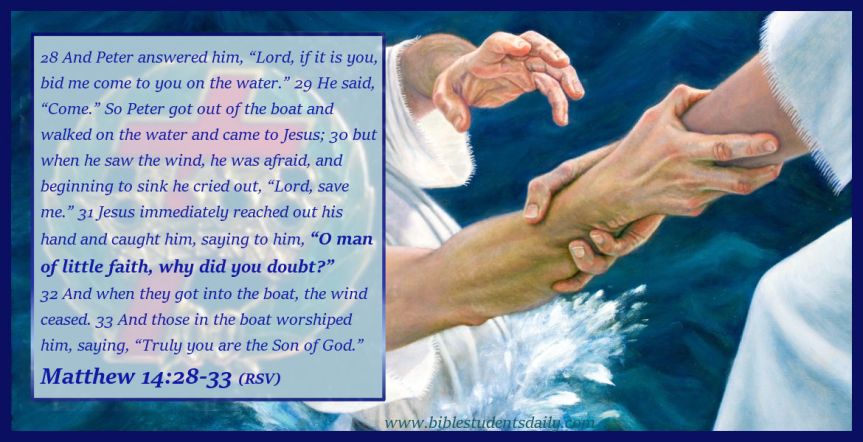








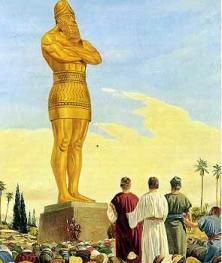

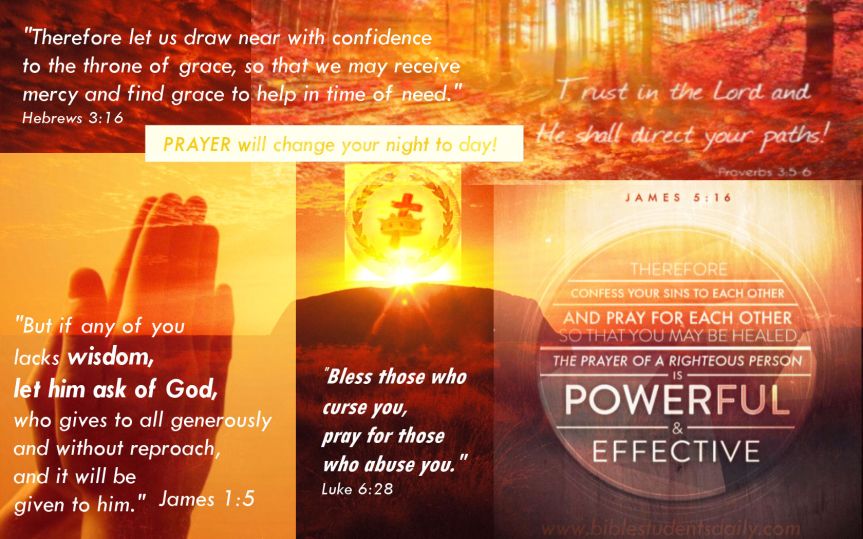

 BIBLE Students DAILY