LUKE 22:17-20 – The Two Cups

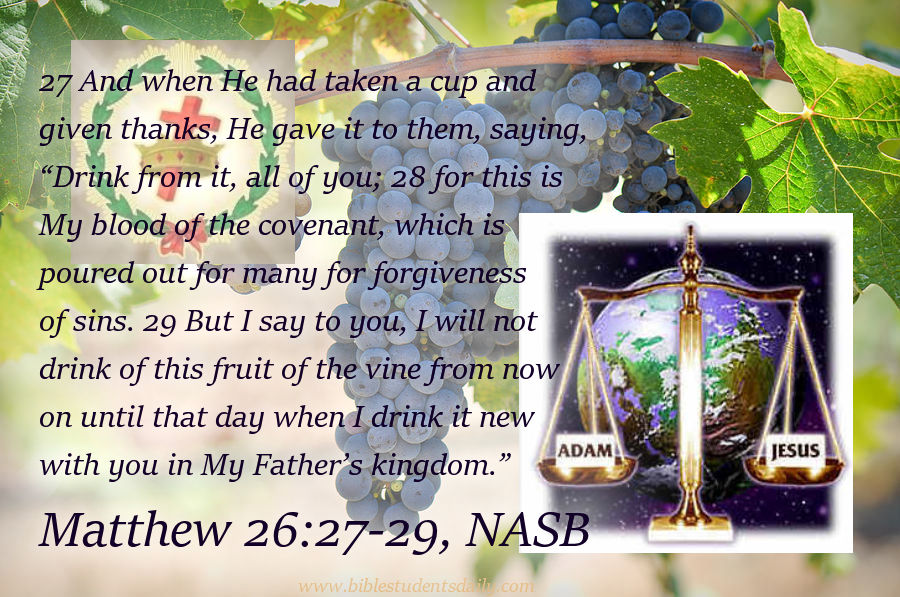
MATTHEW 26, 27-29, NASB.jpg

The Two Cups

Introduction

The Memorial is a special time of the year, a time when we refocus on the basis for our Christian existence and hope; by remembering the sacrifice Jesus made for us and thereby reconciled us to God.

On the night he was betrayed, at the beginning of the 14th of Nisan, Jesus instituted the emblems of the bread and wine after the last supper he had with his disciples. He gave us both to partake of, which simply but powerfully reminds us that only in him we have true life through forgiveness of sins.

That each Gospel account gives us additional details of the events, and from a slightly different perspective and approach, suggests that all of the accounts need to be taken together as a whole in order to get the most complete picture of those final moments of our Redeemer’s life. The Apostle Matthew arranges his Gospel more thematically whereas Luke arranges the events more chronologically.

Here we will focus on clarifying what the cup Jesus instituted means.

The Gospel of Matthew Account

Matthew 26:27–29 (ESV) And he took a cup, and when he had given thanks he gave it to them, saying, “Drink of it, all of you, 28 for this is my blood of the covenant, which is poured out for many for the forgiveness of sins. 29 I tell you I will not drink again of this fruit of the vine until that day when I drink it new with you in my Father’s kingdom.”

In the Matthew account in Chapter 26 verses 27–29, it appears that there is one cup, and that Jesus refers to it both as “my blood of the covenant, which is poured out for many for the forgiveness of sins” in verse 28 and as “this fruit of the vine” in verse 29. If we just take Matthew’s account as the basis for Jesus’ institution of the memorial cup emblem, we might get the impression that not only there was one cup, but that Jesus did drink of this cup – for he says according to the ESV in verse 29 “I will not drink again,” suggesting that he had already drank of it. And some suggest that this therefore shows that the disciples – and by implication all consecrated believers, share with Jesus in his sufferings – after all, like Jesus, we are told to present ourselves a living sacrifice in Romans 12:1.

If Jesus did drink of the memorial cup, what Jesus described as “this fruit of the vine” would seemingly and straightforwardly refer to wine consumed during a supper. The “vine” referring to a grapevine and its fruit as consumed and referred to at the time meant wine, i.e. fermented grape juice – for this was a way of preserving it. Grape juice would of course be an acceptable substitute for those inclined to do so. That Jesus does not refer to the contents according to the normal, commonly used ancient Greek word for wine, oinos, may be significant.

But if the cup was also “my blood of the covenant, which is poured out for many for the forgiveness of sins” – as Jesus states, and if Jesus also drank of it, then we are left with the uncomfortable suggestion that Jesus needed forgiveness of sins provided by his own sacrifice – which of course does not make sense as Jesus was sinless, and no sinner can redeem their own sin.

One solution to this problem seems to be that Jesus did not in fact drink of this cup. And this does seem to be supported by the questionable translation of the Greek preposition “apo” and adverb “arti” in the ESV as “again” in some Bibles. These two ancient Greek words literally mean “from now.” About 10 Bibles translate them as “again”, but at least 15 translate them as “from now” or “henceforth”, and the RVIC2016 as well as Wilson’s Diaglott translate them as “henceforth.” Importantly, the better translations of “henceforth” and “from now” are ambiguous in indicating whether Jesus did in fact drink of the cup or not.

The Gospel of Matthew Account

The Gospel of Mark account is much more succinct in general and here in regards to the institution of the memorial cup, is very similar to Matthew’s.

Luke 1:3 (ESV) “it seemed good to me also, having followed all things closely for some time past, to write an orderly account for you, most excellent Theophilus.”

The Gospel of Luke account of these events is however fuller, and as mentioned, Luke the physician, paid particularly attention to the sequence of events, and he states so in Luke 1:3, he says “having followed all things closely for some time past, to write an orderly account for you, most excellent Theophilus.” When he addresses the reader as “Theophilus” he means “lover of God”, which is what the word means in ancient Greek. That Luke wrote his account with particular attention to the sequence of events is important for us.

Luke 22:17–20 (ESV) And he took a cup, and when he had given thanks he said, “Take this, and divide it among yourselves. 18 For I tell you that from now on I will not drink of the fruit of the vine until the kingdom of God comes.” 19 And he took bread, and when he had given thanks, he broke it and gave it to them, saying, “This is my body, which is given for you. Do this in remembrance of me.” 20 And likewise the cup after they had eaten, saying, “This cup that is poured out for you is the new covenant in my blood.

Luke distinguishes between the cup of “the fruit of the vine” and the cup “that is poured out for you is the new covenant in my blood,” as partaking of the bread emblem occurred in between.

Two cups:

  • The “fruit of the vine” cup
  • The “new covenant in my blood, for the forgiveness of sins, poured out for you” cup

This is important information, for it tells us that there were, in fact, two cups – not one; firstly, the “fruit of the vine” cup and secondly – combining the Matthew and Luke accounts, of “the new covenant in my blood, for the forgiveness of sins, poured out for you.”

1 Corinthians 11:25 (ESV) In the same way also he took the cup, after supper, saying, “This cup is the new covenant in my blood. Do this, as often as you drink it, in remembrance of me.”

The first cup was seemingly partaken of during the last supper, as the second cup, the memorial cup was instituted by Jesus after supper – as the Apostle Paul tells us in 1 Corinthians 11:25.

An important question to ask at this point is, is this important? – one, two cups, what is the difference?

If they are the same cup and if Jesus did partake of it does affect what the cup means, and also what our relationship to Jesus in regards to the cup actually is. As mentioned, some suggest that by drinking of the cup shows that we share in “the sufferings of Christ” with Jesus. So, the implications of whether there are one or two cups is not insignificant.

The “Fruit of the Vine” Cup

If there are two cups, they are different. Does that mean that they signify different things, or anything at all beyond the literal contents of wine?

It seems that that both signify different things.

Both cups literally contained “fruit of the vine” – almost certainly wine. That the 2nd cup, the memorial cup meant more than the literal wine it contained may suggest that Jesus also meant more than the literal wine in the first cup. This seems to be supported by Jesus’ use of the unusual phrase “fruit of the vine” for the wine, as this phrase is only found 3 times in the New Testament and only in the Gospel accounts in relation to the memorial cup. No where else in the Scriptures is the phrase “fruit of the vine” used to refer to wine. The normal word for wine, oinos, is however widely and commonly used in the New Testament, some 34 times.

Luke 7:33–34 (NKJV) For John the Baptist came neither eating bread nor drinking wine, and you say, ‘He has a demon.’ 34 The Son of Man has come eating and drinking, and you say, ‘Look, a glutton and a winebibber, a friend of tax collectors and sinners!’

As an example, in Luke 7:33–34 we have the word oinos used twice in relation to John the Baptist and Jesus when the Pharisees criticized both – John for not eating bread and drinking wine saying he had a demon, and Jesus for eating bread and drinking wine saying he was a glutton and drunkard. If therefore the word for wine, oinos was commonly used, but that Jesus did not use it for the contents of the first cup but instead used the unusual phrase “fruit of the vine” suggests Jesus may have had a deeper meaning in mind.

John 6:48 (ESV) I am the bread of life.

John 15:5 (ESV) I am the vine; you are the branches. Whoever abides in me and I in him, he it is that bears much fruit, for apart from me you can do nothing.

Just as the memorial emblem of the bread that they all ate of indicates that Jesus “is the bread of life” – as Jesus explicitly states in John 6:48, the “fruit of the vine” reference may point to Jesus’ statement in John 15:5 that he is “the vine” and that his disciples are the branches – just as all consecrated Christians are. But if it is not literal, what is the metaphorical “fruit of the vine?” This would seem to be the fruits of the spirit that all those in Christ develop. And the full fruitage of the vine will not be evident till the body of Christ is completed at the end of the harvest period when the kingdom of God is established.

Galatians 5:22–23 (ESV) But the fruit of the Spirit is love, joy, peace, patience, kindness, goodness, faithfulness, 23 gentleness, self-control; against such things there is no law.

Here the “fruit of the vine” therefore seems to refer to the fruits of the holy spirit evident in all true consecrated believers in Jesus – love, joy, peace, patience, kindness, goodness, faithfulness, gentleness, and self-control. This would be consistent with Jesus’ statement that he would not drink of this 1st cup till the kingdom of God comes, or in other words that the full fruitage of the vine would not be evident till the kingdom.

What does it mean then if Jesus drank of this cup? If Jesus did drink of this cup, because he also received the holy spirit, he would also be a first fruit of the holy spirit – and so appropriately drink of the same cup.

Luke 22:16 (ESV) For I tell you I will not eat it until it is fulfilled in the kingdom of God.”

This would also seem to be consistent with Jesus’ statement that he would not eat of the Passover till it is fulfilled in the kingdom of God. This statement is also somewhat enigmatic and unlikely to be fulfilled literally in the future, but it does show that the antitype of the Passover is also still not fulfilled. When we examine the details of the Passover, we understand that Israel as a nation was a type for the world in general. The Passover ultimately led to the liberation from the Pharaoh and Egypt, but in the antitype, this has not occurred yet – the world in general has not yet been liberated from the Adversary and his kingdom. In the same way, the “fruitage of the vine” will not be completed and will not be able to be drank of by Jesus and his consecrated followers, till the church is complete and the marriage of the Lamb occurs.

The “New Covenant in My blood, for the forgiveness of sins, poured out for you” Cup

What then, does the second cup mean and indicate? This seems more self-explanatory – for Jesus actually tells us. Jesus says that the cup depicts “the new covenant in my blood, poured out for you, for the forgiveness of sins.” Jesus’s words seem plain and straightforward enough. Some have suggested that they do not apply to us [believers in the Gospel Age], and that the new covenant will only be inaugurated in the kingdom period. That Jesus says that his “blood, [is] poured out for you,” seems to unequivocally apply it to his consecrated followers now during the Gospel Age, not the kingdom age. When Jesus says “for you,” he means his disciples, and by extension us consecrated believers also.

1 Corinthians 15:19 (ESV) If in Christ we have hope in this life only, we are of all people most to be pitied.

Moreover, that Jesus’ blood provides forgiveness of sins – the prime requirement for reconciliation with God means that if we do not have forgiveness of sins in Christ, then we are still in our sins and most pitiable of men. Let us be clear, if the new covenant, which is the only means by which we can receive forgiveness of sins is not in operation, then how can we be reconciled to God by our faith?

That Jesus did not drink of this 2nd memorial cup, because it is a different cup, makes much better sense – for to partake of it would suggest that he needed forgiveness of sins; which of course he did not – for he was sinless.

That only all of the disciples did drink of this cup, showed that they were the recipients of the benefits of his sacrifice – for the forgiveness of their sins. We note what Jesus said when he gave them [and by extension us] to drink of the cup, he said “Drink of it, all of you” – he did not say let “us” drink of this cup.

Partaking of the cup did not indicate a sharing in the sufferings of Christ. Not that we do not partake in the sufferings of Christ – for the scriptures indicate that we do, but the memorial cup does not indicate this. It indicates that we together have in common that we are all dependent on the sacrifice of Jesus for our reconciliation with God through forgiveness of sins.

The Common Union of the Blood of Christ

1 Corinthians 10:16 (NKJV) The cup of blessing which we bless, is it not the communion of the blood of Christ? The bread which we break, is it not the communion of the body of Christ?

But what about 1 Corinthians 10:16, does this not indicate that we share in the sufferings of Christ, when the apostle Paul says “is not the cup we bless the communion in the blood of Christ?” It has been assumed that the common union in the blood of Christ here is a common union with Jesus, but the context and the grammatical usage here of “koinonia” [translated communion] indicate that the common union is with one another – a common participation of the blood of Jesus showing that we all receive forgiveness of sins through Jesus’ sacrifice.

Here in 1 Corinthians Chapter 10, the Apostle Paul outlines that “the cup we bless” – the memorial cup we ask a blessing for, is not an empty ritual but shows that we are eating at the table of the Lord – we are appropriating the merit of Jesus’ sacrifice to ourselves. And that eating at the table of the Lord is incompatible with eating at the table of demons – which eating of the sacrifices to idols then essentially was. The Apostle warns us to flee from idolatry. There is no suggestion here that we contribute to the food at the table of the Lord. The idolatry we face is much more subtle; it can be the pursuit of wealth, fame, respect, or even a sense of belonging at the expense of the truth but also includes anything that supplants the authority of God’s word.

John 6:54 (NKJV) Whoever eats My flesh and drinks My blood has eternal life, and I will raise him up at the last day.

Jeremiah 31:33–34 (NKJV) But this is the covenant that I will make with the house of Israel after those days, says the LORD: 1) I will put My law in their minds, and write it on their hearts; and I will be their God, and they shall be My people. 34 2) No more shall every man teach his neighbor, and every man his brother, saying, ‘Know the LORD,’ for they all shall know Me, from the least of them to the greatest of them, says the LORD. For 1) I will forgive their iniquity, and their sin I will remember no more.”

Jesus said, whoever drinks of my blood has eternal life…as John 6:54 says.

Faith in Jesus provides us with 1) forgiveness of sins, and thereby reconciliation with God, in order that we may, through baptism, receive of His holy spirit and be developed as new creatures, as 2) the holy spirit teaches us all things of God [rather than any man], even the deep things, and it writes 3) His royal law of agape love on our hearts – these are all functions of the holy spirit through the new covenant as outlined in Jeremiah 31; that we may be born on the spirit plane in the image of Jesus – when we will see the Passover fulfilled, when the fruit of the vine is complete through commonly with one another, partaking of the blood of Jesus shown in the memorial cup Jesus instituted – if we patiently endure to the end.

In Conclusion

In conclusion, it seems then that when Matthew talks about the cup of “the fruit of the vine” and the cup of Jesus’ “blood of the new covenant, for the forgiveness of sins, poured out for you” that they are in fact two separate cups – according to the Gospel of Luke. Jesus may have drank of the former – as the “fruit of the vine” seems to refer to the first fruits of the holy spirit – and which will not be evident till the marriage of the lamb, the seed of blessing is complete. The second cup is separate, a cup that Jesus did not drink of – but of which Jesus said they should all drink of, indicating their, and by extension, our dependence on the sacrifice of Jesus for forgiveness of sins and reconciliation to God. Without it God could not give us of His holy spirit in order to develop us as new creatures and be born on the spirit plane in the likeness of Jesus.

Hallelujah, O what a prospect! Praise be to our Heavenly Father and to His son Jesus.

Suggested Further Reading:

Eating at the Table of the Lord



ROMANS 8, 18 - ad..jpg

Sea-of-Galilee-Mount-of-Beatitudes.jpg

Suggested Further Reading

“Are We Actual Or Reckoned New Creatures?” The Reprints (No. 5325) of the Original Watch Tower and Herald of Christ Second Presence.

“The Ransom.” by Br. David Rice. Faithbuilders Fellowship Journal.
http://www.2043ad.com/journal/2007/02_ma_07.pdf

“Bread and Cup” by Br. James Parkinson. The Herald of Christ’s Kingdom Magazine, March-April 2018.

“Jesus The Name.”
https://biblestudentsdaily.com/2017/07/05/jesus-the-name/

“Who Is the World’s Ransom and Why?”
https://biblestudentsdaily.com/2016/03/29/who-is-the-worlds-ransom-and-why/?share=press-this&nb=1

“Nehemiah 8:10 — The Joy of the Lord Is Your Strength.”
https://biblestudentsdaily.com/2016/12/20/nehemiah-810-the-joy-of-the-lord-is-your-strength/


This post’s URL:
https://biblestudentsdaily.com/2018/03/19/matthew-2627-29-drinking-from-christs-one-cup/

Enter your email address to subscribe to this blog and receive notifications of new posts by email.


STUDY IN THE SCRIPTURES: The Six Volumes by Br. Charles T. Russell

CHART OF THE DIVINE PLAN OF GOD.jpg
 

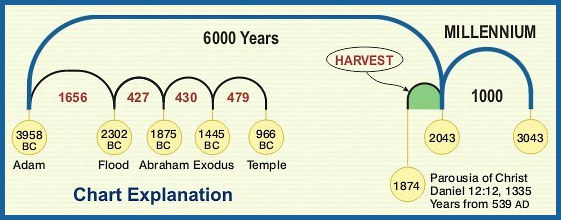
The Studies in the Scriptures lays the foundation for the above and below charts to be considered among students of the Bible today.

chartproclaiming-the-parousia-of-christ-and-the-coming-millennial-kingdom

May each faithful steward of God be fully convinced about what they believe and why they believe it (Romans 14:5). “Study to shew thyself approved unto God, a workman that needeth not to be ashamed, rightly dividing the word of truth (2 Timothy 2:15).

“Prove all things; hold fast that which is good” (1 Thessalonians 5:21).

Here are a series of overview lessons on the six book series, Studies in the Scriptures and each video can be watched by clicking on the underlined title of each of the following six Volumes:


1. THE DIVINE PLAN OF THE AGES

volume-1-the-divine-plan-of-the-ages

Volume 1 of the Studies in the Scriptures written by Br. Charles Russell, can be read here by going to the links provided on each of the underlined chapter titles below:

(i-iv) Foreword
(9-28) 1 – Joy in the Morning
(29-36) 2 – An Intelligent Creator
(37-64) 3 – A Divine Revelation
(65-76) 4 – Epochs and Dispensations
(77-88) 5 – The Hidden Mystery
(89-116) 6 – Our Lord’s Return
(117-136) 7 – The Permission of Evil
(137-148) 8 – Day of Judgment
(149-172) 9 – Ransom and Restitution
(173-204) 10 – Natures Separate and Distinct
(205-218) 11 – The Three Ways
(219-244) 12 – Chart of the Ages
(245-272) 13 – Kingdoms of this World
(273-306) 14 – The Kingdom of God
(307-342) 15 – The Day of Jehovah
(343-350) 16 – Concluding Thoughts


2. THE TIME IS AT HAND

volume-2-the-time-is-at-hand

Volume 2 of the Studies in the Scriptures written by Br. Charles Russell, can be read here by going to the links provided on each of the underlined chapter titles below:

(i-v) Foreword
(13-32) Study 1 – Times and Seasons
(33-62) Study 2 – Bible Chronology
(63-72) Study 3 – The First Advent
(73-102) Study 4 – Times of the Gentiles
(103-172) Study 5 – Manner of the Second Advent
(173-200) Study 6 – Earth’s Great Jubilee
(201-248) Study 7 – Parallel Dispensations
(249-266) Study 8 – Elias Shall First Come
(267-362) Study 9 – The Man of Sin
(363-366) Study 10 – The Time is at Hand


3. THY KINGDOM COME

VOLUME 3 - THY KINGDOM COME.jpg

Volume 3 of the Studies in the Scriptures written by Br. Charles Russell, can be read here by going to the links provided on each of the underlined chapter titles below:

(i-iv) Foreword
(19-22) Study 1 – Thy Kingdom Come!
(23-60) Study 2 – The Time of the End
(61-94) Study 3 – Days of Waiting
(95-120) Study 4 – Cleansing of the Sanctuary
(121-134) Study 5 – Time of the Harvest
(135-226) Study 6 – Work of the Harvest
(227-242) Study 7 – Deliverance of the Church
(243-300) Study 8 – Restoration of Israel
(301-308) Study 9 – Thy God Reigneth!
(309-376) Study 10 – The Great Pyramid
(377-380) Appendix


4. THE BATTLE OF ARMAGEDDON

PART 1

VOLUME 4 - THE BATTLE OF ARMAGEDDON.jpg

PART 2

volume-4-the-battle-of-armageddon

Volume 4 of the Studies in the Scriptures written by Br. Charles Russell, can be read here by going to the links provided on each of the underlined chapter titles below:


5. THE ATONEMENT BETWEEN GOD & MANVOLUME 5 - THE ATONEMENT BETWEEN GOD AND MAN.jpg

Volume 5 of the Studies in the Scriptures written by Br. Charles Russell, can be read here by going to the links provided on each of the underlined chapter titles below:


6. THE NEW CREATION

PART 1

VOLUME 6 - THE NEW CREATION.jpg

PART 2

volume-6-the-new-creation

Volume 6 of the Studies in the Scriptures written by Br. Charles Russell, can be read here by going to the links provided on each of the underlined chapter titles below:

Br Charles Russell — the author of the six volumes of the Studies in the Scriptures.
Br Joe Megacz — for the spoken video discourse content.
BibleTruth411 – YOUTUBE channel — for access to the above videos.
Content matter from the following websites was utilized: http://www.2043ad.com & http://www.htdb8.com

This post’s URL:

STUDY IN THE SCRIPTURES: The Six Volumes by Br. Charles T. Russell

Enter your email address to subscribe to this blog and receive notifications of new posts by email.

Save

Save

Save

Save

Save

Save

Save

ROMANS 12:1 – What Does Being CONSECRATED TO THE LORD mean?

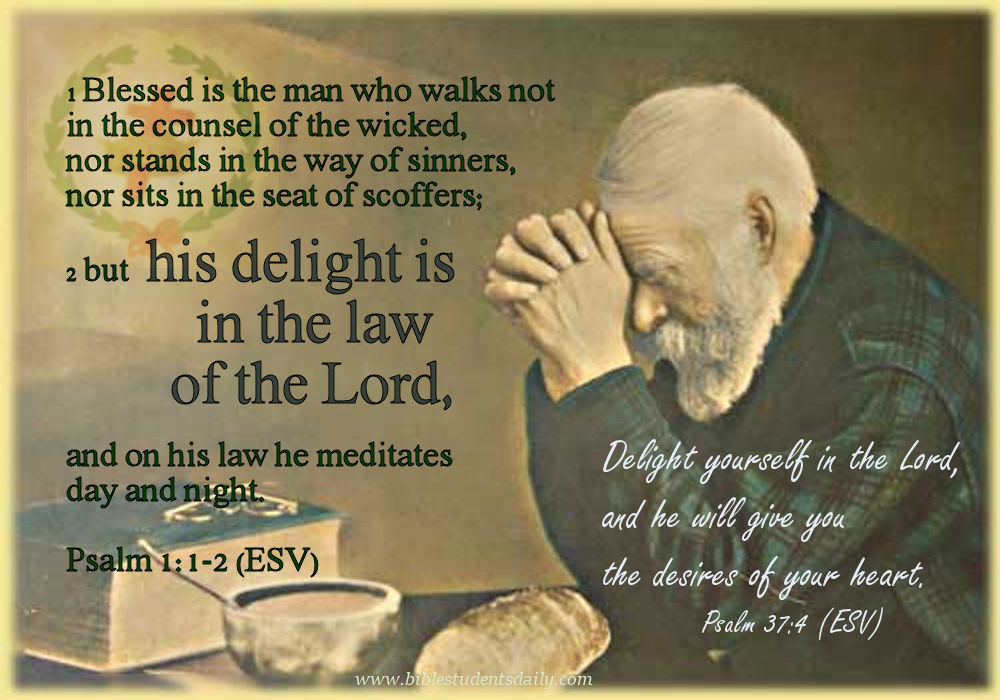
Psalm 1,1-2.jpg

“I beseech you therefore, brethren, by the mercies of God, that ye present your bodies a living sacrifice, holy, acceptable to God, which is your reasonable service” (Romans 12:1).

Dear fellow Brethren and friends in CHRIST,

“Are you consecrated to the LORD?” 

What is your first reaction to this question?

Is it a question you have been asked before or perhaps you have asked others?

Which word in that question stands out the most?

If your answer is “consecration” … then stay tuned! If not, stay tuned anyway as we wish all who read this post to God willing, receive a spiritual blessing.

What does the word consecration really mean in relation to a Christian’s calling?

Is consecration a means of escaping horrible punishment in the afterlife, where just a simple profession of faith, and reasonably moral conduct are enough to avoid the jeopardy and secure a place in heaven?

Of course not.

God is not merely saving a few before He destroys (or worse) the vast majority…

Rather, God is selecting from among men and women of faith an “elect” class (Matthew 24:24, Romans 8:33, 2 Peter 1:10) for a special honour during the coming 1000 year reign of Christ with his “Bride” (consisting of 144,000 members — the more than overcomers from the Gospel Age) — who with Christ, their “Head”, will be the spiritual rulers of the world. They will help lead mankind — that is all the human  race from Adam who will be resurrected — up the “Highway of Holiness”, teaching them godliness and truth, so that righteousness will flourish through the Universe and the eradication of evil and the evil ones will lead to everlasting joy and pain-less-ness and sin-less-ness! (Isaiah 35:8)

What a MARVELLOUS PLAN!

What an incredibly unfathomable Creator of ALL we have!

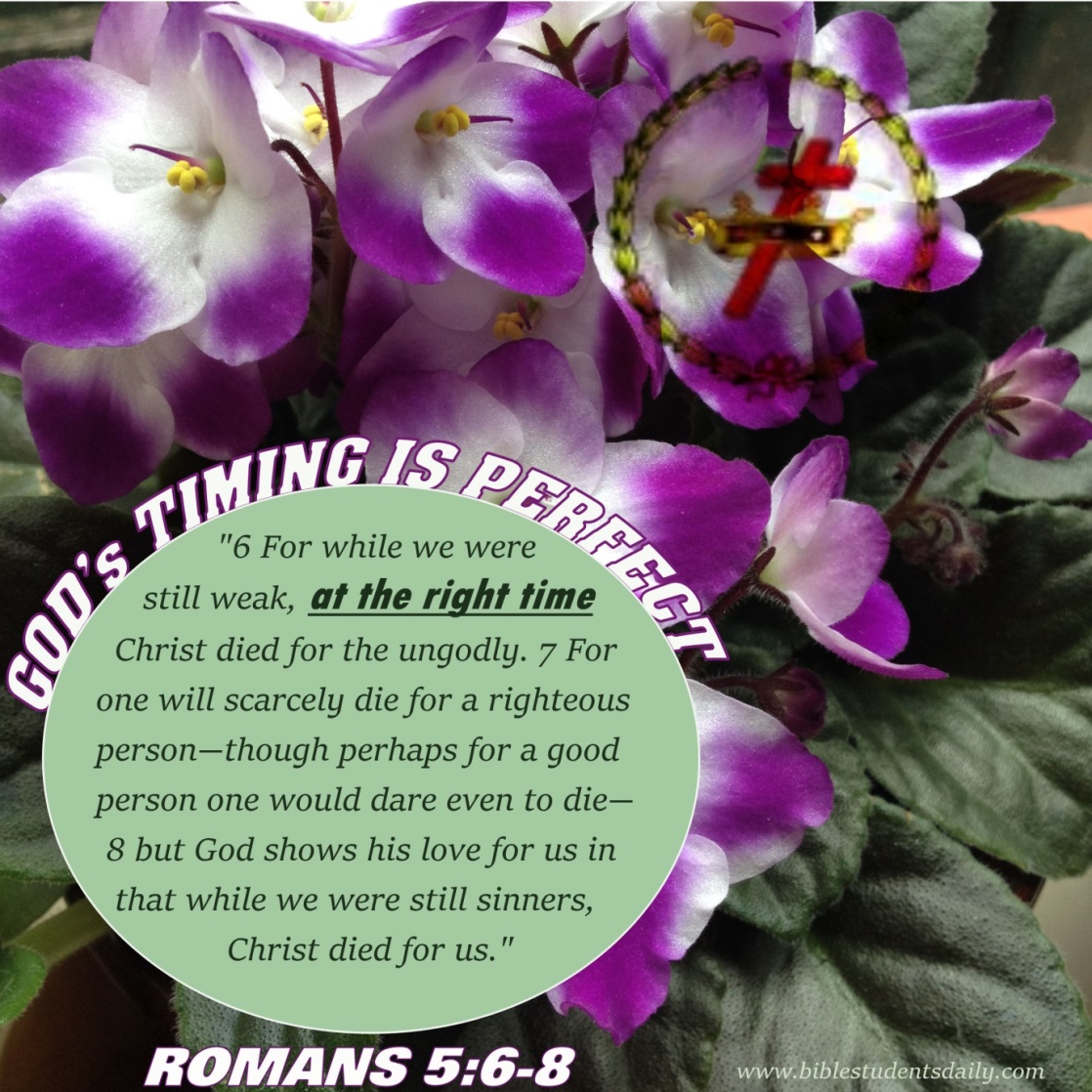
God’s timing is perfectly precise to work out everything for the ultimate purpose of bringing everlasting JOY to all and in all for eternal eternities (Habakkuk 2:3, Galatians 4:4-5, Romans 5:6, Psalm 27:14, Ecclesiastes 3:11, Romans 11:25, Genesis 18:14).

Romans 5, 6-8.jpg

Can you imagine what glorious harmony and unity in all things will occur amongst every soul that lives once Christ and his saints lead the world into obedience and understanding?! WOW! It will be like ONE MIND made up of trillions of bodies united in thought, action and purpose bring the Heavenly Father JOY in all things (Revelation 20:1-3, 6).

How High are God’s Standards?

By understanding the high honour associated with the saintly class called by God during this Gospel Age as his “royal priesthood” training as the under-priests of a heavenly government soon to commence—then we can better appreciate the high standards which are expected of them by God.

These standards may be considered in four parts:

(1) Godly conduct, (2) Character Development, (3) Study of the Truth, (4) Service and Sacrifice.

  1. Godly Conduct

Paul clearly explains in 1 Corinthians 6:10 in Corinth, Greece, he knew some of them had practiced the darker sins of the world. He listed these in 1 Corinthians 6:9-11 (ESV) what our conduct MUST BE:

“9 Or do you not know that the unrighteous will not inherit the kingdom of God? Do not be deceived: neither the sexually immoral, nor idolaters, nor adulterers, nor men who practice homosexuality, 10 nor thieves, nor the greedy, nor drunkards, nor revilers, nor swindlers will inherit the kingdom of God. 11 And such were some of you. But you were washed, you were sanctified, you were justified in the name of the Lord Jesus Christ and by the Spirit of our God.”

We learn from these words of the Apostle Paul to the “called of God” in the church of Corinth in Greece, that once we have been washed,” we are not to return to any immoral ways of conduct of the past.

What then, do you think is the pre-requisite for consecration?

It is REPENTANCE.

Repentance means turning completely 160 degrees away from past ways of living for the flesh to now living to feed the New Creation—the New Mind in Christ.

It means COMPLETELY being DEAD to sin and ALIVE IN CHRIST.

It means soaring like an eagle towards the SUN…

isaiah-40-31

Who does the sun represent in the Bible?

It represents JESUS. Yes, our Lord and Saviour who’s wings are of healing soon to come to all the nations of the earth!

By focusing on JESUS… and by being considered a FOOL IN CHRIST by many if not most, we will not be caught in the VISIBLE spider web spun by the most evil one of all in this dark world — the one who is described in 1 Peter 5:8 as “a roaring lion seeking whom he may devour.”

He wants most to deceive “the best of the best”! Watch out and BE ON THE ALERT!

Is a spider web visible in the day?:-

NO — if you are rushing around and careless…

YES — if you tread with CAUTION and are FOCUSED ON WHAT IS AHEAD—a mind fixed on Jesus.

By inquiring “What is your will Father? Please show me” we are at a “safe speed” of zealous action moving forward with Christ who has promised to never leave us nor forsake us (Hebrews 13:5).

—– LET US PRAY FOR EACH OTHER AND BE ON THE ALERT. —–

DO NOT SLUMBER even for a moment away from spiritual alertness of the New Mind in CHRIST!

Let our thoughts be on Jesus and the faithful ones of the Bible — the Apostles and the Ancient Worthies — our “cloud of witnesses” talked about by the Apostle Paul in the Book of Hebrews, and the prophets of the Old Testament.

May we be HOT (not lukewarm) for the Truth (Revelation 3:16)… because if we are not careful of GROWTH and PROGRESS in the School of Christ, slipping towards the gates of perhaps no return… means slipping towards second death! To be by these “gates” is emptiness in the fullest sense and a loneliness and rejection and loss of …

EVERYTHING!

Jesus explains to us what should characterize a Christian’s character in his words spoken in his Sermon on the Mount:

“Blessed are the poor in spirit, for theirs is the kingdom of heaven.

“Blessed are those who mourn, for they shall be comforted.

“Blessed are the meek, for they shall inherit the earth.

“Blessed are those who hunger and thirst for righteousness, for they shall be satisfied.

“Blessed are the merciful, for they shall receive mercy.

“Blessed are the pure in heart, for they shall see God.

“Blessed are the peacemakers, for they shall be called sons[a] of God.

10 “Blessed are those who are persecuted for righteousness’ sake, for theirs is the kingdom of heaven.

11 “Blessed are you when others revile you and persecute you and utter all kinds of evil against you falsely on my account.

12 Rejoice and be glad, for your reward is great in heaven, for so they persecuted the prophets who were before you (Matthew 5:3-11, ESV).

  1. Character Development

Actions are a result of thoughts. Likewise, one’s outward conduct is the result of one’s inward character. Our character is like a mirror that reflects hidden within principles and qualities that are in our heart and mind (Proverbs 23:7, Proverbs 4:23).

How reassuring it is though, that God knows the intent of our heart even when our conduct does not express our intents, or when our conduct is misunderstood or misrepresented by others. “Man looks on the outward appearance, but the LORD looks on the heart” (1 Samuel 16:7).

How do we live in this world but not be of the world? (John 17:16)

How do we not become friends of this world and thus enemies of God? (James 4:4):-

  • By feasting on the Words of God.
  • By prayer.
  • By disciplining the flesh.
  • By feeding the spiritual mind.
  • By going AGAINST the tide of the world — STARVING the fleshly minds and FEEDING the spiritual mind.
  • Literally saturating the mind with Divine Beauties of Truth and thus feasting on the Word of God and communing with the Heavenly Father moment by moment (Romans 12:1).

The result of these actions is a clear conscience before God which is the only way to righteous peace… a peace unlike that which the world knows… It is a peace that knows only JOY in the spirit for the flesh is counted as dead as one lives in newness of life feeding that which is spiritual — the embryonic New Creature within (Psalm 97:11).

Christian character can be defined by “the fruits of the Spirit” which the Apostle Paul so brilliantly explains in Galatians 5:22-23.

Galatians 5, 22.jpg

Another list of Christian character is given to us by Apostle Peter in 2 Peter 1:5-12:

5Make every effort to supplement your faith with virtue, and virtue with knowledge, and knowledge with self-control, and self-control with steadfastness, and steadfastness with godliness, and godliness with brotherly affection, and brotherly affection with love. For if these qualities are yours and are increasing, they keep you from being ineffective or unfruitful in the knowledge of our Lord Jesus Christ. For whoever lacks these qualities is so nearsighted that he is blind, having forgotten that he was cleansed from his former sins. 10 Therefore, brothers, be all the more diligent to confirm your calling and election, for if you practice these qualities you will never fall. 11 For in this way there will be richly provided for you an entrance into the eternal kingdom of our Lord and Savior Jesus Christ. 12 Therefore I intend always to remind you of these qualities, though you know them and are established in the truth that you have.

Colossians 3, 2.jpg

  1. Study of the Truth

The Apostle Paul wrote to “the saints and faithful brothers in Christ at Colossae” including in this letter, the following words:

“from the day we heard, we have not ceased to pray for you, asking that you may be filled with the knowledge of his will in all spiritual wisdom and understanding, 10 so as to walk in a manner worthy of the Lord, fully pleasing to him: bearing fruit in every good work and increasing in the knowledge of God…”

To the Philippian brethren, the Apostle Paul wrote:

“And it is my prayer that your love may abound more and more, with knowledge and all discernment (Philippians 1:9).

Why is studying the Word of God in the Bible so important for the consecrated in the Lord?

Because by doing so, we can learn to understand the plans and purposes of God in part (1 Corinthians 13:9), so that we can be in harmony with Him, and work in sympathy with Him.

Some of the Jews in the Apostle Paul’s day had “a zeal for God, but not according to knowledge” (Romans 10:2). This was because the brethren back then were transiting from the old Jewish Age to the new Gospel Age and the labours of Apostle Paul were in this direction.

We should be zealous as they, but our zeal should be directed by an accurate knowledge of the Divine Plan. One method of reasoning upon Holy Scriptures which the Apostle Paul teaches us from his methods of reasoning, is to understand the types, or pictures, used in the Old Testament.

E.g. The Apostle Paul cited:

(1) the spiritual meaning of the wives of Abraham (Galatians 4:21-31),
(2) the meaning of Israel’s Day of Atonement (Hebrews 9:1-14, 10:1-10),
(3) the meaning of Melchizedek as a figure of Christ (Hebrews chapters 5 & 7).

Other methods of studying the Bible include: drawing lessons from the prophets (e.g. Romans 9:23-33), topical and chronological.

“No work is more noble and ennobling than the reverent study of the revealed purposes of God.”

(Studies in the Scriptures, Volume 1, page 13).

  1. Service and Sacrifice

Does our consecrated life include active service in the cause of Christ? It must.

Why?

Because this is a way of sacrificing our earthly interests for our spiritual work by using our time, strength, energy, talents, or any other means for the Lord’s cause.

A great way of seeking out opportunities in this way is to inquire of the Lord:

“Heavenly Father, please show me, what is your will for me today. Where do you wish I be sent? To whom do you wish me to minister unto? Who may I spiritually edify? Please use me to bring you joy so that your Holy Name may be glorified, and your Son Jesus may shine through into the hearts of whomever you wish requires this.”

Some examples of active service in the cause of Christ include:

  • Opening our home for fellowship with the brethren.
  • Attending meetings of the Lord’s people rather than spending time in pursuing hobbies and things of this world.
  • Preparing answers to Biblical questions asked by others or in preparation for Bible Studies.
  • Travelling to serve the brethren (Acts 15:25, 26).
  • Preach the Truth in favourable or non-favourable circumstances.
  • Visiting/assisting the sick, bereaved, widows, orphans.
  • Accepting physical and/or mental abuse and/or imprisonment. (Note: According to traditions and the Bible, eight of the Apostles died as martyrs. At least two of the Apostles, Peter and Andrew, were crucified.)

Even when on beds of sickness, one can lie in bed and when mentally alert, send prayers of petitions and supplications to the Heavenly father for others as well as for self. This is the GREATEST of gifts perhaps that one can give another!

The Apostle Paul wrote that he was “being poured out as a drink offering upon the sacrifice and service of” the faith of the Philippian brethren, which made him rejoice and be filled with joy. He urged the Philippian brethren to “rejoice in the same way and share your joy” with him. (Philippians 2:17).

In 1 Corinthians 16:15-16 the household of Stephanas is praised by the Apostle Paul because they “devoted themselves to the service of the saints”. Paul encourages the brethren in Corinth to be subject to such as these, and to every fellow worker and laborer.”

The Word “Consecration”

There are eight different Hebrew words in the Old Testament which are rendered consecrate, consecrated, consecration, or consecrations.

  1. “Nazar” (Strong’s Concordance #5144) means to set apart (for sacred purposes) and this word is in Numbers 6:12 – a text referring to the Nazarite vow, which is a picture of the consecration of Christians to God. (See Study 6 – The Levites). The worshipper taking this vow was to consecrate [nazar, set apart] unto Jehovah the days of his separation..

Are we continuously keeping our earthly life SET APART for the sacred purposes of devotion to God?

  1. “Nezer” (Strong’s # 5145) means something set apart and this word is found in Numbers 6:7 and also refers to the Nazarite vow:

“7 He shall not make himself unclean for his father, or for his mother, for his brother, or for his sister, when they die: because the consecration [separation] of his God is upon his head.”

  1. “Charam” (Strong’s #2763) means to seclude, by a ban, to devote to religious use and this word is found in Micah 4:13, “I will consecrate their gain unto the Lord.”

This refers to the wealth of gentile nations after the judgments of God. It is not directly relevant to our present study.

  1. “Godesh” (Strong’s 6944) means a sacred place or thing and this word is found in Joshua 6:19, “all the silver, and gold, and vessels of brass and iron are consecrated unto the Lord.”

This refers to the precious things of the gentile nations conquered by Joshua which would come into the treasury of Jehovah. These precious items of “silver and gold” taken from the world might represent the Church Class (the Elect of the Gospel Age).

[Note: Compare Haggai 2:7, 8, where God will “shake the nations,” and the silver and gold may here too represent the saints of God who will glorify God’s spiritual temple.

  1. “Qadash” (Strong’s # 6942) means to make, pronounce, or observe as clean. This is used three times of the priests. See: Exodus 28:3, 30:30; 2 Chronicles 26:18.
  1. The most frequent Hebrew term rendered consecrate is actually a pair of words used together, “mala” (Strong’s #4390) meaning to fill and “yad” (Strong’s #3027) meaning open hand.

To fill an open hand, in this context, means for the priests to be devoted to their sacred duty to God and ministering to others. In English there is an expression, “my hands are full,” meaning one is fully occupied. So it should be with those consecrated to God during this age. We should have our hands full in the sacred service which is our privilege.

  1. “Millu” (Strongs #4394) means a filling, or consecration.

In Exodus 29 and Leviticus 8 this word is used of the offerings by which the priests were consecrated to their office. In Leviticus 8:33 it is once used in reference to days of consecration of the priests.

In what way is this consecration in relation to the Priests, significant to us?

It is fitting to us since we are called to be priests of God to reconcile the world back to God during the Kingdom.

So actually, we should be consecrated to God even more deeply than the priests under the Old Law were.

In the New Testament, the term “consecration” is found in the following 2 places:

  • Hebrews 7:28 (ESV) – “For the law appoints men in their weakness as high priests, but the word of the oath, which came later than the law, appoints a Son who has been made perfect forever.”

Here it speaks of Jesus consecrated as a priest to serve God, and “the oath” refers to the oath given by God to King David in Psalms 110:4, “The LORD hath sworn, and will not repent, Thou art a priest for ever after the order of Melchizedek.” Prophetically, this refers to Jesus Christ, who was descended from the line of David.  Melchizedek was a king of Jerusalem who was also a priest (Genesis 14:18). Paul says Melchizedek was a picture of Jesus, who in heaven, after his glorification, is also a King and Priest. (See further words on Melchizedek in the post: Study 7 – The Priests.)

Jesus is now our high priest, but during the Millennium we will join with him as priests for the world (Revelation 20:6).

By being consecrated unto death now in the entire service of and for God, we will be, God willing, qualified, tested and proven worthy and ready to serve with him to uplift the world.

  • Hebrews 10:20 (KJV) — refers to the “new and living way which he [Christ] hath consecrated [inaugurated] for us, through the veil, that is to say, his flesh.”

Here the Apostle Paul reminds us about how remarkably, the thick veil in Solomon’s Temple was rent from top to bottom when Jesus died on the cross (Matthew 27:51).

The present heavenly calling of the Gospel Age to consecrate our lives to God, was never even extended to the righteous of past ages. This call is unique, and was opened up (inaugurated) through Christ’s death on the cross.

Those who consecrate their lives to God now receive the redemption provided by this ransom now, whereas the world will receive the redemption later, during the Millennial Age.

Are All Christians Consecrated?

We hope they will be as not all now are.

One may believe in God, believe in Jesus as their Saviour, appreciate what God has provide, strive to refrain from sin and evil as best one can, commit to works of kindness and charity, attend worship services but if there is no full personally commitment, then there is no valid consecration .

A step in the direction of full consecration involves showing by an outward sign of God’s invisible grace (the holy Spirit) one’s full commitment to their consecration vow through water baptism — a testimony to others.

If you have still not done so please take some time to thoughtfully consider consecrating your all to the Lord — the benefits in this life, far outweigh any other joy that any other person, thing and place can give!

What will it cost?

A good answer is in Luke 14:26-33. Jesus explains this best!

(See Post: “The Cost of Discipleship.”)

In the earlier verses Jesus spoke of humility (verse 11), and of giving without having any thought of getting back in return (verse 14). Jesus also gave a parable about a great supper prepared by a good man, who sent his servants to invite his guests. It represents God’s invitation through Christ to come into the spiritual kingdom of God. Since most of those invited declined, (giving one excuse or another), the man decided to open the invitation to any who would be interested for he insisted, “my house [will] be filled.” (verse 23).

Are you one of the interested? Are you ready to accept the blessings of “a gracious God [who is] merciful, slow to anger, and abounding in steadfast love?” (Jonah 4:2)

You know… the fastest way to happiness is BEING A GIVER and what better way than to give the Creator of ALL your ALL?

To the already consecrated brethren in Christ, are you rejoicing in your testing of patient continuance in well doing and seeking for glory and honour and immortality?

Acknowledgment:

We thank the author(s) of the article titled “Consecration”  in the publication “Faithbuilders Fellowship-Proclaiming Christ’s Parousia and the coming Millennial Kingdom,” February 2006 (www.2043ad.com) for content material used in creating this post.


This post’s URL:

ROMANS 12:1 – What Does Being CONSECRATED TO THE LORD mean?

Enter your email address to subscribe to this blog and receive notifications of new posts by email.

Save

Save

Save

Jesus’ Commission: Make Disciples. Baptize. Teach.

Mat. 28, 20 -2

Let’s begin with the words of Matthew 28:19‑20 (KJV)

19 Go ye therefore, and teach all nations, baptizing them in the name of the Father, and of the Son, and of the holy Spirit: 20 Teaching them to observe all things whatsoever I have commanded you: and, lo, I am with you always, even unto the end of the world. Amen.”

WHAT IS OUR WORK? 

We are definitely not travelling alone in this narrow way since GOD called out a faithful band of servants who, with every talent consecrated to His work, are steadily pursuing their course in the narrow way. We know some of them by name and by character and by their steady and progressive activity in the blessed work. And though not all of these have a copious amount of talents, they, nevertheless, quietly and unobtrusively go about from day to day preaching the wonderful words of life, and GOD is with them and is leading them on. Their hearts are full of joy and hope and they are kept securely amidst all the perils of this evil day. No amount of discouragement from the adversary, stops these that still remain amongst our midst, from continuing on with FULL ZEAL in the LORD’s work.

The ones who have the greatest appreciation of Truth,
are those who are FULLY enlisted in the LORD’s service.

If we bury our one or our many talents under a weight of worldly cares and encumbrances which might be avoided or set aside; if we bury them under worldly ambitions for either self or family — whether this be by wasting consecrated time upon science, philosophy, music or art; or upon business, politics or pleasures; or in pampering pride and appetite – then as unfaithful servants we will sooner or later go into outer darkness, by being caught in some of the snares of this “evil day.” and will be led farther and farther into error and away from truth. (R.1282)

In no single case have we seen one drift away from the Truth in these last years of the Gospel Age among those who were very active and FULLY enlisted in the LORD’s work, whose one aim and endeavor was to herald the truth and to bless others with it. (R.1282)

“To such the LORD says, ‘My grace is sufficient for thee’ – Ye shall never fail, for so an abundant entrance shall be ministered unto you into the everlasting kingdom of our Lord Jesus Christ .” (R.3696).

Each royal priest is the peer of each other one in authority and dignity of priesthood; though in talents, intelligence, etc., and therefore in fitness, they are not all equals. (R.1137:4)

Some stewards do not quickly enough note talents which might be utilized in the Lord’s service. (R.1047:5)

Jesus’ words of Matthew 28:19‑20 to the apostles, apply to all fully consecrated disciples of Christ – who are authorized to preach the Gospel in any and every way, publicly or privately, by word, pen, or printed page.

THE THREE PARTS OF JESUS’ COMMISSION

PART 1 – MAKE DISCIPLES of all nations

The word “disciple” signifies pupil, in the school of Christ, in the primary department. We are to first inform those who have ears to hear that they are sinners through the fall, but that GOD has made a provision for their rescue.

“We have a commission to proclaim the Gospel according to our opportunities and abilities.”(R5588:1)

The work of the Evangelist comes first, to make disciples. So let us continue to preach as the twelve disciples preached, by the wayside” (Matthew 13:4) or wherever you find a hearing ear (Mark 4:9).

Pastor Charles Russell encourages and suggests, the following:

“If you lack talent for preparing a discourse,
READ FORCIBLY AND CLEARLY
something touching the subject
you consider most needful to your hearers.” (R. 1047:5)

“This Gospel shall be preached in all the world for a witness unto all nations.” (Matthew 24:14)

Since Christ died on Calvary as our Passover Lamb, the message of redemption has gone out to all who are willing to be disciples of Christ – no longer restricted to the Jewish people. The early disciples became witnesses to the Truth, and we should follow that example.

“Ye shall be witnesses unto me, both in Jerusalem and in all Judea and in Samaria, and unto the uttermost parts of the earth” (Acts 1:8).

PART 2 – BAPTIZE them

Immersion is the correct translation and the original method of baptism, as acknowledged by many authorities. Water immersion is the outward symbol by which believers confess their faith in Jesus as their Redeemer. When a Christian devotes his or her life to GOD, one is “immersed” into the will of GOD, and thus into the service of Christ whom GOD appointed as our Lord and Master.

In Romans 6:3-11, Apostle Paul adds another dimension to our immersion into Christ – namely, immersion INTO the sacrificial DEATH OF CHRIST:

“Know ye not that so many of us as were baptized into Jesus Christ were baptized into his death?”

4 Therefore we are buried with him by baptism into death: that like as Christ was raised up from the dead by the glory of the Father, even so we also should walk in newness of life. 5 For if we have been planted together in the likeness of his death, we shall be also in the likeness of his resurrection:

6 Knowing this, that our old man is crucified with him, that the body of sin might be destroyed, that henceforth we should not serve sin. 7 For he that is dead is freed from sin.

8 Now if we be dead with Christ, we believe that we shall also live with him: 9 Knowing that Christ being raised from the dead dieth no more; death hath no more dominion over him.

10 For in that he died, he died unto sin once: but in that he liveth, he liveth unto God. 11 Likewise reckon ye also yourselves to be dead indeed unto sin, but alive unto God through Jesus Christ our Lord.”

WHO CAN PERFORM THE IMMERSION SERVICE?

“All authorized to teach are equally authorized to baptize. That includes every follower of Christ, not excluding females, only that modesty indicates that they should avoid such public services except in rare necessary cases” (R1541:4).

“All baptized would be commissioned to perform this symbol for others; and, if no consecrated could be found, an unconsecrated believer, or even a worldly person or unbeliever, might do it.” (Volume 6, “Studies in the Scriptures,” page 454).

The following words are recommended by Pastor Charles Russell for any immersion service:

“Brother … in the name of the Father, and of the Son, and of the holy Spirit, by this authority, I baptize thee into Christ” (Volume 6, “Studies in the Scriptures,” page 455).

There is the thought amongst some Bible Students that the words of Jesus in Matthew 28:19 may have been altered during the third century to support the development of the false doctrine of the trinity. This is well explained in a study titled “In the Name of the Father, the Son and the Holy Spirit” by Lenard Griehs (“Beauties of the Truth”, January, 1991). The evidence for this seems good.

However, if one favors the text as it appears in the common version, following are some comments that are helpful.

“Into the name of” – signifies into accord with, into fellowship with (R5587).

By the words “The Father” ‑ the meaning is that “all of Christ’s disciples are to recognize the Father’s name as standing for righteousness; and they are to become dead to every other principle than that which His name represents, and to be thoroughly immersed into that name of righteousness, justice, truth.” (R.5587 )

“These words do not imply three baptisms in one. The use of the three names is as if you were using a firm name, such as Smith, Jones and Brown; all three names would be used to show that it has the authorization of the whole firm. The Divine Three ‑ Father, Son and holy Spirit ‑ are related to our faith in the Creator, Redeemer and Regenerator; and this suggests the three steps in bringing men into the divine image.” (R.197:3)

The words “Of the Son ‑ shows that we ignore all sectarian names, Protestant or Catholic, but rather, recognize the name of Jesus, Yeshua, the Messiah, and desiring to be his members, his Bride and his Body, “the Church of the firstborn, whose names are written in heaven” (Hebrews 12:23, NIV).

The term “holy Spirit refers to GOD’s spirit, influence and character in our lives. The word in the Greek is “pneuma”, which means spirit (not “ghost” as in the King James version). The use of these words in Matthew 28:19 has been understood to signify that the immersed candidate’s own spirit or will becomes dead, and GOD’s holy will and mind are to become their will and purpose.

PART 3 ‑ TEACH them

The word “teach” in verse 19, is from a Greek word “matheteuo” and signifies proselyting or making disciples of.

It is not a command to convert the world but to gather out of all nations those willing to be disciples of Christ.

In verse 20, the words “teaching them” means instructing them regarding GOD’s divine character and plan, the graces of the spirit and the rooting out of the spirit of worldliness and selfishness. Not astronomy, geology, nor any of the vain philosophies about which the world speculates, but “the things which I have commanded you.” (R5045:4, 3200:2).

In Jesus’ words “observe all that I command you” we are reminded that all men are sinners, that Christ came to give himself a ransom, that he is the only way to life, that whosoever would come must take up his cross, that all believers are one with him, that every branch in him must bear fruit or be taken away, that those who trust in him are to hope for and expect his second coming, that we have a hope to be of those of the first resurrection, and that love is the fulfilling of the Law.

Jesus reassures, encourages, and strengthens us through his words to the Apostles, “I am with you always,” and we see this by the gift from GOD of the holy Spirit of GOD to guide and lead us through the age. By this, means Jesus is present with us in spirit. As our high priest, he sees to our spiritual interests. Jesus has been with his representatives in all their labors of love and self‑denial throughout the entire age so we are NEVER alone! We have the companionship of him who promised, “I will never leave thee nor forsake thee” (Hebrews 13:5).

In our Lord’s words, “even unto the end of the age,” the word “end” is from the Greek word suntelia, which means the ending period of the age. Now, in the present “Harvest,” or ending period of the Gospel Age, beginning with 1874 as pointed to in Daniel 12:12, Jesus is actively engaged on behalf of his saints to complete the Church, and inaugurate a period of transition into his Millennial Kingdom.

Jesus’ work for his people includes raising his sleeping saints in the first resurrection! Once the last member of the 144,000 shall have gone through the 2nd vail into the Divine Realm, then Jesus with His Bride, the Elect, shall establish his Kingdom, bless the nation of Israel with the New Covenant, and thus bless all mankind.

We are now not only in the Harvest, the ending period of the age, but even in the closing years of the harvest period itself. We have some years to go. Some brethren point to Acts chapter 27, and Paul’s voyage to Rome, as indicating the travel of the Church through the Harvest to the Kingdom, the center of world authority.

In this case, it is feasible that the 14 days of storm which precede the “Armageddon” crash of the ship of state, could suggest 14 years of distress closing the harvest.

In this case, those who consider that the blessed Millennium might commence another 27 years hence, find a milestone along the way, by which to check their expectations.

Meanwhile, let us not neglect our opportunities
to represent the Truth to all who may have a hearing ear.

We seek the last grains of wheat for the heavenly barn – so that thereafter the blessings of life can flow to the world. Then, through the elect, raised to heavenly glory, the inhabitants of the world shall all come to a saving knowledge of Christ, and secure wonderful, everlasting, earthly blessings.

“Let us remember, too, while using all the WISDOM we can in this service, that the Lord’s object in giving us a share in his work is not so much what we can accomplish as in the blessing that the labor will bring upon us. This will be an encouraging thought to the dear ones who are engaged in the “Volunteer” work; and if they find many discouragements and but small results the reflection that the Master knoweth them that are His, and that He appreciates every sincere effort made to serve His cause and to lay down our lives on behalf of the brethren, will give courage and strength to those who otherwise might faint by the way” (R. 2811).

“Let us see to it, not only that we do with our might what our hands find to do, but also that our every sacrifice and gift to the Lord and His cause is so full of love and devotion that the Lord will surely approve it; as done from love for Him and His, and not from vainglory” (R3166).


Acknowledgments:

Charles T.  Russell – “R” represents the “Reprints of the Original Watchtower and Herald of Christ’s Presence.” The numbers next to the “R” represent the page numbers of the reprinted articles.

Leonard Griehs’ – for his study from “Beauties of the Truth” – as referenced in the above post.

Click to access BOTJAN91.PDF


URL: https://biblestudentsdaily.com/2016/08/15/jesus-commission-make-disciples-baptize-teach/

Enter your email address to subscribe to this blog and receive notifications of new posts by email.


Save

What Does It Mean To Be Baptized Into Christ?

matt-16-25

What types of baptism are practiced in the Churches?

There is more than one type of baptism practiced in the Christian world. There is:

  • Sprinkling or Pouring on the Head
  • Infant Baptism
  • Submersion under water.

Sprinkling or pouring water on the head

There are no Scriptures in the Bible that describe baptism as the sprinkling or pouring of water on the head.

The first instances in the Bible where individuals were baptized was accomplished by John the Baptist.

Did John the Baptist sprinkle water or submerse the person under water?

“Now John also was baptizing in Aenon near Salim, because there was much water there. And they came and were baptized” (John 3:23, NKJ).

And He [Jesus] went away again beyond the Jordan to the place where John was baptizing at first” (John 10:40, NKJ).

If all John was doing was sprinkling water to baptize, he did not need to worry about being near the “much water” of the Jordan River. Clearly, John was doing more than just sprinkling those he baptized.

Infant Baptism

Is infant baptism scriptural?

Nowhere in the Bible do we find infant baptism mentioned. Although at times the Scriptures do mention the baptism of households, they never specifically mention children or infants.

For example, in Acts 8, Philip preached to the people of Samaria.

“But when they believed Philip as he preached the things concerning the kingdom of God and the name of Jesus Christ, both men and women were baptized” (Acts 8:12, NKJ).

Notice, there is no mention of Philip baptizing infants in Samaria; just men and women.

In Mark 16:16, Jesus said, “He who believes and is baptized will be saved.”

It would not be possible for a newborn infant to understand who Christ is, let alone believe in him.

Remember the question Jesus asked James and John in Mark 10:38,

Are you able to be baptized with the baptism I am baptized with?”

A newborn infant would not be capable of answering Jesus’ question, let alone responsibly making such a commitment.

Submersion (Dunking) into Water

Now we do find examples in the New Testament of adult baptism and in every case we believe the baptism was a submersion into water. For example:

“When He [John] had been baptized, Jesus came up immediately from the water; and behold, the heavens were opened to Him, and He saw the Spirit of God descending like a dove and alighting upon Him” (Matthew 3:16).

” (38) So he [Philip] commanded the chariot to stand still. And both Philip and the eunuch went down into the water, and he baptized him. (39) Now when they came up out of the water, the Spirit of the LORD caught Philip away, so that the eunuch saw him no more; and he went on his way rejoicing” (Acts 8:38-39).

The only way Jesus and the Ethiopian eunuch could have “come up” out of the water is if they have been submersed under it.

Greek Definition Of Baptism:

In support of this conclusion that baptism is submersion, let us looks at some definitions.

STRONGS: 907 baptizo (bap-tid’-zo); to immerse, submerge; to make overwhelmed (i.e. fully wet).

VINES: baptism, baptist, baptize.

A. Nouns.

1. baptisma (908), “baptism,” consisting of the processes of immersion, submersion and emergence (from bapto, “to dip”).

B. Verb.

baptizo (907), “to baptize,” primarily a frequentative form of bapto, “to dip,” was used among the Greeks to signify the dyeing of a garment, or the drawing of water by dipping a vessel into another.

So this word has the meaning of complete submersion under water. Certainly when dying, the garment must be totally submerged in the dye.

There is a variation of this word.

2. baptismos (909), as distinct from baptisma (the ordinance), is used of the “ceremonial washing of articles,” in some texts; once in a general sense.

This word is only found four times in the New Testament and refers to ceremonial washings.

John’s Baptism & Its Purpose

Let us talk about John’s (the Baptist’s) baptism. John’s work was not for the Gentiles. His work of baptism was intended to reveal Jesus to the Israelites only, but John did not baptize believers into Christ. That would come later, after Pentecost. His work was not for the Gentiles.

In John 1:29-31 we read, “(29) The next day John saw Jesus coming toward him, and said, ‘Behold! The Lamb of God who takes away the sin of the world! (30) This is He of whom I said, After me comes a Man who is preferred before me, for He was before me. (31) I did not know Him; but that He should be revealed to Israel, therefore I came baptizing with water.‘”

So John the Baptist was baptizing in order to reveal Jesus to Israel only, not yet to the Gentiles.

Bearing fruit was an evidence of those who had sincerely baptized. As John the Baptist said, “Therefore bear fruits worthy of repentance” (Matthew 3:8, NKJ).

John’s baptism required a personal confession of sins. “And all the land of Judea, and those from Jerusalem, went out to him and were all baptized by him in the Jordan River, confessing their sins” (Mark 1:5, NKJ).

Repentance and typical cleansing restored repentant Jews back to the condition of harmony with God as enjoyed under the Law Covenant and through the tabernacle arrangement.

“John came baptizing in the wilderness and preaching a baptism of repentance for the remission of sins” (Mark 1:4, NKJ).

The Jews had not previously practiced individual baptism. The whole nation was recognized as “baptized into Moses in the sea and in the cloud” (1 Corinthians 10:1-2).

In what sense were the Israelites “baptized into Moses in the sea and in the cloud”? 
We answer: When the Israelites passed through the Red Sea they were surrounded by water, and Paul mentions that this is a picture of them being baptized. The cloud is mentioned in Exodus 13:22, “He took not away the pillar of the cloud by day, nor the pillar of fire by night, from before the people.” We think that that was the cloud Paul referred to as over the Israelites — so that in that sense they were surrounded from above by water as well.

The Jews were already children of God and heirs of the covenants and promises, and their washing away of their sins meant their coming near again to God, and into closer touch with all the promises and the blessings thereof (Harvest Gleanings I, 1HG255).

John the Baptist’s baptism, was “for the remission of avoidable sins, gross sins. The godly Jews were not intended, nor expected, to come to John to be baptized. He said, ‘Now come, if you want to get ready for Messiah’s kingdom, and try to keep the law the best you are able and take this water immersion, accepting this as a sign of your putting away sin and starting a new course of life.’ This is all that baptism meant to the Jews. That was not a regular institution. It was a peculiar thing that belonged just to the end of the [Jewish] age, and John tried there to especially prepare a people by this preaching of holiness and putting away of sin for the Messiah; for the testimony is that if they had believed John they would have believed Jesus. If they disbelieved John and disregarded what he said, and were not careful to come back into harmony with God, and become as holy as they were able to do, then they were not in a condition to receive the message God had to give” (What Pastor Russell Said – Question Book, Q34:3).

This typical cleansing available to the Jews is discussed in Leviticus & Hebrews.

“For on that day [of Atonement] the priest shall make atonement for you, to cleanse you, that you may be clean from all your sins before the LORD” (Leviticus 16:30).

“And every priest stands ministering daily and offering repeatedly the same sacrifices, which can never take away sins” (Hebrews 10:11).

So John baptized the Jews for repentance and remission of sins similar to the typical cleansing as was accomplished in the tabernacle by the sacrifice of bulls and goats on the Day of Atonement. Every Jew under the Law Covenant was a member of the house of Moses (Hebrews 3:5). As mentioned above, the Jews were baptized unto Moses in the sea and in the cloud (1 Corinthians 10:12). As natural branches of the olive tree the Jews did not need en-grafting into Christ (Romans 11:16-21). John could not baptize Gentiles since they could not by repentance be restored back to a position they had never occupied.

After Pentecost, John’s baptism was replaced by Christian baptism into Christ.

In the book of Acts we have an incident where some of John’s disciples, after hearing the gospel, were baptized again, this time into Christ; after which they received the holy Spirit.

Acts 19:1-6 – “(1)… Paul, having passed through the upper regions, came to Ephesus. And finding some disciples (2) he said to them, ‘Did you receive the holy Spirit when you believed?’ So they said to him, ‘We have not so much as heard whether there is a holy Spirit.’ (3) And he said to them, ‘Into what then were you baptized?’ So they said, ‘Into John’s baptism.’ (4) Then Paul said, ‘John indeed baptized with a baptism of repentance, saying to the people that they should believe on Him who would come after him, that is, on Christ Jesus.’ (5) When they heard this, they were baptized in the name of the Lord Jesus. (6) And when Paul had laid hands on them, the holy Spirit came upon them, and they spoke with tongues and prophesied. (7) Now the men were about twelve in all.”

These disciples were baptized twice (John’s & Christ’s). Bro. Charles T. Russell teaches, “The Apostle instructed them more fully, assuring them that John’s baptism was all right in its time and place, but that they should be baptized in the name of Jesus, baptized into Christ” (Harvest Gleanings I, HG732:6).

In Acts 2:41 three thousand people were baptized and among these, there may have also been some that had been baptized by John earlier.

‘Never is it said of any Gentile that he was baptized unto repentance and remission of sins, that he got back into Moses and in accord with the law. On the contrary, the apostle shows that we and all spiritual Israelites coming from among the Gentiles, come into Christ in a different way from that in which the Jews became related to him. I call your attention to the apostle’s argument in Rom. 11:17-24, where he uses an olive-tree as a symbol or picture. He tells us that that olive-tree was primarily the Jewish nation; that its root was the Abrahamic promise; its branches were the individual Jews. It was to those branches that John preached the baptism of repentance. Many of them were defiled, living in sin, and he urged them to repent and be washed, cleansed; that otherwise they would be broken off. And so it was when Messiah was manifest; the prepared ones, Israelites indeed, in whom was no guile, were ready for him, received him and he received them, and they continued to be branches of that olive, tree. But the great mass of the branches, as the apostle goes on to explain, were broken off because they did not receive our Lord, because they were not in the right condition of heart, not “Israelites indeed, without guile” (Harvest Gleanings I, HG).

Christian Baptism and Its Meaning

Christian baptism has many elements that are similar to John’s baptism and some elements that are different. As with the Jews baptized by John’s baptism, Christians are to confess and repent from their sins.

“And many who had believed came confessing and telling their deeds” (Acts 19:18).

“(46) Then he said to them, ‘Thus it is written, and thus it was necessary for the Christ to suffer and to rise from the dead the third day, (47) and that repentance and remission of sins should be preached in His name to all nations, beginning at Jerusalem'” (Luke 24:46-47).

“Then Peter said to them, ‘Repent, and let every one of you be baptized in the name of Jesus Christ for the remission of sins; and you shall receive the gift of the Holy Spirit'” (Acts 2:38).

Br. Charles Russell teaches, “This baptism was for Jews only, who had already been baptized into Moses in the sea and the cloud. Sins thus figuratively washed away did not include original sin, but merely minor transgressions against the Mosaic law.” (Reprints of the Original Watchtower 4308:5, 6th Volume of Studies in the Scriptures p.428, Harvest Gleanings I, 600:1,2)

John the Baptist could only provide typical remission. The Christian receives a real remission of sins through actual justification by Jesus’ blood.

John’s baptism pointed the Jews to Christ, but the Christian is to actually believe in Christ and accept Him as their Savior. Let’s see how this is shown in the Scriptures.

“(36) Now as they went down the road, they came to some water. And the eunuch said, ‘See, here is water. What hinders me from being baptized?’ (37) Then Philip said, ‘If you believe with all your heart, you may.’ And he answered and said, ‘I believe that Jesus Christ is the Son of God’” (Acts 8:36-37).

Then Crispus, the ruler of the synagogue, believed on the Lord with all his household. And many of the Corinthians, hearing, believed and were baptized” (Acts 18:8).

So faith in Jesus Christ is a requirement for the Christian baptism.

Baptism Into Christ – Not Into An Organization

Although those baptized into John’s baptism were to bear fruit, the Christian’s death to sin, walking in newness of life and drinking of the cup is a far deeper action. Christian baptism is more than the pursuit of righteousness. It is the total death of self will and a total commitment to sacrifice ALL — one’s time, talent and possessions to the Lord, often at the cost of suffering and persecution.

“Yes, and all who desire to live godly in Christ Jesus will suffer persecution” (2 Timothy 3:12).

“(3) Or do you not know that as many of us as were baptized into Christ Jesus were baptized into His death? (4) Therefore we were buried with Him through baptism into death, that just as Christ was raised from the dead by the glory of the Father, even so we also should walk in newness of life. (11) Likewise you also, reckon yourselves to be dead indeed to sin, but alive to God in Christ Jesus our Lord. (12) Therefore do not let sin reign in your mortal body, that you should obey it in its lusts. (13) And do not present your members as instruments of unrighteousness to sin, but present yourselves to God as being alive from the dead, and your members as instruments of righteousness to God” (Romans 6:3-13).

So we see from the 6th chapter of Romans and lowering the candidate into the water represents the death of the Old Man with his sinful ways and the raising up of the candidate shows our walk in newness of life as New Creatures in Christ Jesus. Notice how Romans 6:3 teaches that we are baptized into Christ’s death.

No scripture talks about being baptized into Jehovah’s organization. Also see how the following text show we are actually baptized into Christ.

For all of you who were baptized into Christ have clothed yourselves with Christ” (Galatians 3:27, NASV).

“Peter said to them, ‘Repent, and each of you be baptized in the name of Jesus Christ for the forgiveness of your sins; and you will receive the gift of the Holy Spirit'” (Acts 2:38, NASV).

Ultimate Purpose of Baptism

What is the ultimate purpose of Christian baptism? Certainly to lay down our lives in the Lord’s service is purpose enough, but the Bible shows a purpose even beyond that.

Just as going to medical school is of no benefit to humanity unless the student becomes a practicing doctor, so it is with the Christian.

Context:

“And the Scripture, foreseeing that God would justify the Gentiles by faith, preached the gospel to Abraham beforehand, saying, ‘In you all the nations shall be blessed'” (Galatians 3:8, NKJ).

“In your seed all the nations of the earth shall be blessed, because you have obeyed My voice” (Genesis 22:18).

“(27) For as many of you as were baptized into Christ have PUT ON Christ… (29) And if you are Christ’s, then you are Abraham’s seed, and heirs according to the promise” (Galatians 3:27,29).

Those who are baptized are Abraham’s seed through whom God’s purpose is to bless all the families of the earth. This is the ultimate purpose of baptism.

The same point is expressed in 1 Corinthians 15:29.

“Otherwise, what will they do who are baptized for the dead, if the dead do not rise at all? Why then are they baptized for the dead?”

This passage says that we are baptized for the dead,” not “into death.” The ultimate purpose of baptism is to bless all the families of the earth.

Many translations agree with this wording, “baptized for the dead.” The translators do not believe this. They would rather not translate this text. Peter puts it this way:

“receiving the end of your faith—the salvation of your souls” (1 Peter 1:9, NKJ).

The word “your” is in italics. The thought is that the outcome of our faith, THE ULTIMATE PURPOSE, will be the salvation of mankind.

Does water baptism cancel sins? 

The traditional view among Catholic and many Protestant denominations is that baptism is necessary for salvation, forgiveness and the cancellation of sins. Not only do they believe it necessary, but some feel it must be performed in a prescribed fashion in order to secure salvation.  Some of their supposed proof texts are:

“Then Peter said to them, ‘Repent, and let every one of you be baptized in the name of Jesus Christ for the remission of sins; and you shall receive the gift of the Holy Spirit’ ” (Acts 2:38).

“He who believes and is baptized will be saved; but he who does not believe will be condemned” (Mark 16:16).

“And now why are you waiting? Arise and be baptized, and wash away your sins, calling on the name of the Lord” (Acts 22:16).

“There is also an antitype which now saves us — baptism” (1 Peter 3:21).

These texts are telling us that those who are baptized will be saved and receive a remission or washing away, of sins. So are the Catholics and many Protestants correct in believing that the act of baptism is necessary for salvation?

No. Where these Christians are wrong is that it is NOT “water baptism” that saves us.  Rather, the true baptism saves us, that is, consecration and the resultant justification by Christ’s blood. Water baptism cannot save.  It is merely a symbol of the true baptism and the resultant justification that can save us.

Baptism is the outward sign of an invisible grace from our Heavenly Father through Jesus Christ.

“Since, therefore, we have now been justified by his blood, much more shall we be saved by him from the wrath of God” (Romans 5:9, ESV). 

We are saved by Jesus’ act of justification, not by our symbolic act of water baptism.

Water Baptism Is Symbolic

Many Scriptures establish that water baptism itself is merely a symbol and that it does not have intrinsic atoning qualities.

Luke 12:50 – “But I have a baptism to be baptized with, and how distressed I am till it is accomplished!”

Jesus had already received water baptism by John, so in this case the word “baptism” must be symbolic of more than the literal water baptism. This is also borne out in Mark 10:38-39 (see also Matthew 20:22-23):

“(38) Jesus said to them, ‘You do not know what you ask. Can you drink the cup that I drink, and be baptized with the baptism that I am baptized with?’ (39) They said to Him, ‘We are able.’ So Jesus said to them, ‘You will indeed drink the cup that I drink, and with the baptism I am baptized with you will be baptized.'” 

More evidence of the symbolic nature of water baptism is found in Colossians 2:11-12 (ESV):

“(11) In him also you were circumcised with a circumcision made without hands, by putting off the body of the flesh, by the circumcision of Christ, (12) having been buried with him in baptism, in which you were also raised with him through faith in the powerful working of God, who raised him from the dead.

Notice here that both circumcision & water baptism are symbolic of putting away sin.  Obviously “circumcision” here is not literal. The Christian is not literally required to be circumcised as were the Jews under the Law. This is the symbolic circumcision of the heart. So, just like circumcision is symbolic, likewise, water baptism here is also symbolic.

Next is another symbolic usage of baptism, although a much different one.

“(11) I baptize you with water for repentance, but he who is coming after me is mightier than I, whose sandals I am not worthy to carry. He will baptize you with the Holy Spirit and fire. (12) His winnowing fork is in his hand, and he will clear his threshing floor and gather his wheat into the barn, but the chaff he will burn with unquenchable fire” (Matthew 3:11-12, ESV). 

The baptism by “fire” is symbolic of the judgment and destruction upon the nation of Israel as stated in verse 12, “He will burn up the chaff with unquenchable fire.”

Just as the baptism by fire is symbolic, so is water baptism.

We are not saved by the symbol “water baptism,” but by the reality of it, the meaning of which we will get to shortly.

Born of Water – Spirit Begettal

Many believe John 3:5 teaches that unless you are baptized in water you cannot enter the kingdom of heaven. It says, “Jesus answered, ‘Most assuredly, I say to you, unless one is born of water and the Spirit, he cannot enter the kingdom of God.'”

The word “baptism” is no where to be found in this context. “Water here is symbolic of the Word of Truth. Without the Bible we would not have the necessary knowledge to grow in Christ and enter God’s Kingdom.

Our growth in Christ through his Word (the Holy Scriptures) is illustrated by the Greek word genno, that is Strongs #1080. Vines defines it as:

BEGET, BEAR (OF BEGETTING), BORN

gennao —“to beget,” in the passive voice, “to be born,” is chiefly used of men “begetting” children; more rarely of women “begetting” children (Vine’s Expository Dictionary of Biblical Words, 1985).

So in John 3:5 we are “begotten of water.” This means that we are spiritually begotten by Truth.

Br. Charles Russell writes “We see that symbolical water represents truth, and that our begetting of the holy Spirit is said to be also a begetting ‘through the Word of truth’” (James 1:18). (Reprints of the Original Watchtower: R.4124:6, R.3600:6, R.2422:1.)

In support of this we will quote four scriptures which relate begettal to the Word of God.

“Of his own will begat He us with the word of truth, that we should be a kind of firstfruits of his creatures” (James 1:18, KJV).

“For though you might have ten thousand instructors in Christ, yet you do not have many fathers; for in Christ Jesus I have begotten you through the gospel” (1 Corinthians 4:15, NKJ).

“…having been born again, not of corruptible seed but incorruptible, through the word of GOD which lives and abides forever” (1 Peter 1:23).

“…that He might sanctify and cleanse her with the washing of water by the word” (Ephesians 5:26).

So we see that John 3:5 does not teach that unless you are baptized in water you cannot enter the kingdom of heaven. It actually teaches that we are begotten as New Creatures in Christ by the Truth of God’s word. It is the guidance from God’s Word that develops the embryo New Creature in Christian growth, preparing us for our ultimate Spiritual birth, after the first resurrection.

Saved By Belief, Grace & Justification, Not Saved By Baptism

There are many more Scriptures that talk about us as being saved, but it’s not by water baptism, it is by belief in Jesus Christ and the resultant grace of God and justification to life.

“And it shall come to pass that whoever calls on the name of the Lord shall be saved” (Acts 2:21).

“Whoever calls on the name of the Lord shall be saved” (Romans 10:13).

“(30) And he [the jailer] brought them [Paul & Silas] out and said, ‘Sirs, what must I do to be saved?’ (31) So they said, ‘Believe on the Lord Jesus Christ, and you will be saved, you and your household'” (Acts 16:30-31).

“…that if you confess with your mouth the Lord Jesus and believe in your heart that God has raised Him from the dead, you will be saved” (Romans 10:9).

“Much more then, having now been justified by his blood, we shall be saved from wrath through him” (Romans 5:9).

“If anyone’s work is burned, he will suffer loss; but he himself will be saved, yet so as through fire” (1 Corinthians 3:15).

“(1) Moreover, brethren, I declare to you the gospel which I preached to you, which also you received and in which you stand, (2) by which also you are saved, if you hold fast that word which I preached to you– unless you believed in vain” (1 Corinthians 15:1-2).

“Even when we were dead in trespasses, made us alive together with Christ (by grace you have been saved.)” (Ephesians 2:5).

“For by grace you have been saved through faith, and that not of yourselves; it is the gift of God” (Ephesians 2:8).

The Jerusalem Counsel never addressed the issue of baptism when presenting minimum requirements expected of the Gentile brothers.

“(28) For it seemed good to the holy Spirit, and to us, to lay upon you no greater burden than these necessary things: (29) that you abstain from things offered to idols, from blood, from things strangled, and from sexual immorality. If you keep yourselves from these, you will do well. Farewell” (Acts 15:28-29).

Where is water baptism on this list? If it were necessary for salvation, certainly the Apostles would have required it of the Gentile brethren.

“And certain men came down from Judea and taught the brethren, ‘Unless you are circumcised according to the custom of Moses, you cannot be saved'” (Acts 15:1).

Some Christians today take the same approach with baptism as these Jews took of circumcision, that it is a requirement for salvation.

Saved By Baptism?

In 1 Peter we find scriptures used by many Christians to again attempt to prove that water baptism is necessary for salvation.

“(19) by whom also He [Jesus] went and preached to the spirits in prison, (20) who formerly were disobedient, when once the Divine long suffering waited in the days of Noah, while the ark was being prepared, in which a few, that is, eight souls, were saved through water. (21) There is also an antitype which now saves us—baptism (not the removal of the filth of the flesh, but the answer of a good conscience toward God), through the resurrection of Jesus Christ” (1 Peter 3:19-22).

Does this passage prove we are saved by literal water baptism? The simple answer here is that Peter is not talking about literal water baptism. In verse 21, He describes “baptism” as “a good conscience toward God.”  That word “conscience” is also used in the prior chapter.

“For this is thankworthy, if a man for conscience toward God endure grief, suffering wrongfully” (1 Peter 2:19, KJV).

So the word “conscience” connected with the word “baptism” refers to suffering for righteousness sake. Hence, the word “baptism” is talking about living our consecration.  Our consecration results in justification by the ransom to life. That is what saves us.

It is interesting to note from verse 21 that we are not saved by the “removal of the filth of the flesh,” that is, we are not saved simply by John’s baptism, the repentance from sin. But we must go beyond that to consecration INTO Christ’s death and this involves cheerful in the spirit, willing patient endurance and sacrifice of self-will and self-interest.

“I have been crucified with Christ. It is no longer I who live, but Christ who lives in me. And the life I now live in the flesh I live by faith in the Son of God, who loved me and gave himself for me” (Galatians 2:20).

Baptized In Who’s Name?

In whose name is the Christian baptized? Many quote the great commission of Matthew 28:19 to prove we are baptized into the Trinity, not into Jesus Christ alone.

“Go therefore and make disciples of all the nations, baptizing them in the name of the Father and of the Son and of the holy Spirit” (Matthew 28:19).

If we accept the translation as is, it does not prove that we are baptized into the Trinity, but merely the desperation of those who strive in vain to find support for this false doctrine, in Scripture. This passage does not state that these three are one person, nor anything of the kind.

In conflict with this, six other Scriptures refer baptism in the name of Jesus, not baptism in the name of the Father, Son and Holy Spirit of Matthew 28:19.

Let us look at these Scriptures that contradict Matthew 28:29. Notice that in none of these texts was anyone baptized in the name of the Father, Son and holy Spirit.

“Then Peter said to them, ‘Repent, and let every one of you be baptized in the name of Jesus Christ for the remission of sins; and you shall receive the gift of the Holy Spirit'” (Acts 2:38).

“But when they believed Philip as he preached the things concerning the kingdom of GOD and the name of Jesus Christ, both men and women were baptized” (Acts 8:12).

“For as yet He had fallen upon none of them. They had only been baptized in the name of the Lord Jesus(Acts 8:16).

“And he commanded them to be baptized in the name of the Lord. Then they asked him to stay a few days” (Acts 10:48).

“When they heard this, they were baptized in the name of the Lord Jesus” (Acts 19:5).

“Or do you not know that as many of us as were baptized into Christ Jesus were baptized into HIS DEATH ?” (Romans 6:3).

*******

How else are we “baptized into Christ’s death?

We need to surrender our wills to God, as Jesus did. He said, “Lo I come…to do thy will, O God. I delight to do thy will, O my God; thy law is written in my heart” (Psalm 40:7, 8; Hebrews 10:7).

We dedicate or consecrate our all to follow and obey the Lord with our minds, hearts, and our whole beings. This is a total dedication of service to do God’s will. When consecrated, we walk “in newness of life,” having a new, different direction or purpose. We pattern our lives after our dear Redeemer.

A few days before his crucifixion, Jesus stated, “But I have a baptism to undergo, and how distressed I am until it is accomplished!” (Luke 12:50) This shows that in Jesus’ baptism, water was a symbol of his real baptism in death. It was about to be accomplished at Calvary. Like Christ, we who dedicate our lives to the Lord make ourselves “dead” to the world’s pursuits. Instead, we pursue heavenly things, studying the scriptures to find out what God’s will is for us. Our desire is to prove faithful unto death and be resurrected with Christ in a divine and immortal body (Philippians 3:10, 11; Romans 2:7, Revelation 2:10).

Water baptism is a witness to others of what has taken place in our hearts with the Lord and our commitment to Him, as well as symbolizing that life of baptism. The individual places himself in the arms of another, and being fully immersed in the water, is dependent on that person to help him up. He comes out of the water into “newness of life.” This is the new life to which he has committed himself until he dies. Hence, we believe water baptism is necessary, not for salvation, but for a witness of that life of commitment.

SO WHAT NOW?

Are you interested to GIVE UP your life rights on earth to inherit what eye has not seen nor ear heard … to inherit a life with Jesus and those who have now given up the pride of life and disclaim all rights to themselves, to their soul, to their body, to their time, to their health, to their reputation, to their talents or to anything that they own?

 If you confess to be the property of Jesus Christ your Redeemer, then:

  DEDICATE YOURSELF

to belong entirely to Jesus now,

to serve, love and trust him as your life and salvation until your life’s end and show this through baptism.

“Present your bodies a living sacrifice, holy, acceptable unto God, which is your reasonable service” (Romans 12:1).

God is now selecting men and women of faith for special honors during the Millennium. Namely, to reign with Christ in heaven as spiritual rulers of the world, to lead the world to righteousness, godliness, and truth and raise all the dead of past Ages. Satan’s demons now lead the world into sin and ignorance. Then, Christ and his saints will lead the world into obedience and understanding (Revelation 20:1-6).

High Standards

When we understand the high honor to which the saints are called, we better appreciate the high standards that are expected of them.

(1) Godly conduct
(2) Character Development
(3) Study of the Truth
(4) Service and Sacrifice.

Consecration

We enter the race for the “prize of the High Calling of God in Christ Jesus” (Philippians 3:14) by consecrating our life to GOD.

This we do in personal prayer to God, committing our life and service and interests to God hereafter.

If this step is taken, then it is proper to symbolize that decision with water baptism, as a testimony to others.

(11) The saying is trustworthy, for: If we have died with him, we will also live with him; (12) if we endure, we will also reign with him; if we deny him, he also will deny us” (2 Timothy 2:11-12, ESV).

If you have not considered the matter of consecration, take time to do so.

Read our Lord’s words about this decision, thoughtfully, in Luke 14:27‑35.
Remember the blessings promised, and the conditions for them:

“by patient continuance in well doing seek for glory, honor, and immortality” (Romans 2:7).

Remember the privilege of being with Christ, in heaven, to bless “all the families of the earth” during the Millennium. God wishes us to respond favorably. “This is the will of God, even your sanctification” (1 Thessalonians 4:3).

So dear brethren, let us pursue our consecration with determination and great zeal, so that we may please our Father and be prepared for our future mission.

Click here to watch a baptism service video

References and Acknowledgement:

Br. Peter Karavas & our brethren in Christ at http://www.friendsofjehovahswitnesses.com/

Br. Charles Taze Russell: What Pastor Russell Said – Question Book, Q34:3; Harvest Gleanings I; Reprints of the Original Watch Tower and Herald of Christ’s Presence, Studies in the Scriptures – Volume 6.

Vine’s Expository Dictionary of Biblical Words, 1985.

STRONG’S Concordance.

This post’s URL:

What Does It Mean To Be Baptized Into Christ?

Enter your email address to subscribe to this blog and receive notifications of new posts by email.

Save

Save

Save