The Sacrifice

psalm-40-8-11

I laid my life on the altar, I said…

“dear Lord it is thine.”

Hence forth Thy will is my only law, my humble heart Thy shrine.
Barely I went forth to conquer, ready to die for His sake.
No sacrifice that He could ask seemed too great for me to make,
And the more I learned of His wonderful love, the dearer my Lord became,
Till I thought I could follow His pathway through any loss or shame.

But he led me by pleasant waters, where the sky was clear and bright,
And fed me in sweet green pastures and sheltered me at night.
Like a lamb I was shielded, protected. I knew no pain or fear,
Why should I shrink or falter when the tender Shepherd was near?
I had nothing that I could give in return, nothing to sacrifice.

Then I found in my pathway a jewel bright and fair,
In facets threw back the sunlight in beauty beyond compare.
I took that lovely, precious gem and hid it in my breast.
It kindled a fire that seared my heart. My spirit could not rest.
I feasted upon its beauty. I watched its glory shine,
Rejoicing in the wonderful thought that this beautiful gem was mine.

Then something dimmed its luster. It gave me grief and pain.
I brushed and polished my treasure but it would not shine again.
Then I heard the Savior whisper, “Can you give this treasure to me?”
But I said “It has no beauty now. It is dark and lifeless you see.”
I thought about my early vows, all, all I would give to Him.
Could it be that the cloud that had come between was making my jewel dim?

Could I lay at His feet a treasure whose beauty had faded away?
A jewel devoid of luster, all colorless and gray?

I laid my gift on the altar, I felt alone and bereft
Such a small and worthless offering, how could my Lord accept.

But the clouds rolled back and the sun shone out.

index.jpg

My jewel sprang to life;
There on the altar it blazed and burned, a thing with beauty rife.

My dear Lord smiled upon me and my heart was glad and free;

The jewel my heart had treasured so had never belonged to me.

He had tested my love, I had almost failed; I wanted that jewel so.

And the spin it cost me to see it fade, only the Lord can know;

I had treasured it still when its beauty was gone and fondled it to my breast;

But not till my Lord had accepted it could my weary heart find rest.

There is not grief so bitter that His love cannot share.
There is no trial of faith so great that His hand is not there.
He guarded me from the snare prepared to tangle my erring feet.
He shielded me from my own desire and tempered the cruel heat.
The fire that burned in my aching heart did but consume’ the dross;

For the soul that is really committed to Him can never suffer loss.

by L.K. Poole

“1Therefore, I urge you, brothers and sisters, in view of God’s mercy, to offer your bodies as a living sacrifice, holy and pleasing to God—this is your true and proper worship. 2Do not conform to the pattern of this world, but be transformed by the renewing of your mind. Then you will be able to test and approve what God’s will is—his good, pleasing and perfect will” (Romans 12:1).

Do your best to present yourself to God as one approved, a worker who does not need to be ashamed and who correctly handles the word of truth” (2 Timothy 2:15).

SACRIFICING WITH CHRIST

“He that saith he abideth in him ought himself also so to walk, even as he walked” (1 John 2:6).

May we encourage all who suffer with Christ in any measure to bear it with the same humility, benevolence and fortitude that characterized him under the most crucial tests of endurance.

Our Beloved Jesus knew that he was in an unfriendly world bound by sin and largely under the dominion of the prince of darkness.

Therefore he expected reproaches, taunts and persecutions, all of which he endured patiently while his great loving heart, almost unmindful of its own sufferings, was full of pity and of loving concern for others. May we like our Master, suffer with Christ, meekly bearing reproach and trusting to heaven’s vindication of us in due time.

“If, when ye do well and suffer for it, ye take it patiently, this is acceptable with God; for even hereunto were ye called. Because Christ also suffered for us, leaving us an example that ye should follow his steps: who did no sin, neither was guile found in his mouth. When he was reviled, he reviled not again. When he suffered he threatened not, but committed himself to him that judges righteously” (1 Peter 2:20-23).

“Consider him that endured such contradictions of sinners against himself, lest we be wearied and faint in our minds” (Hebrews 12:3).

It is a privilege to prove our devotion to the Lord by enduring hardness in his service as
good soldiers of the Cross of Christ.

Let us keep melodies of joy in our hearts as we walk along the narrow way, pressing onward and upward fellow pilgrims of the Cross of Christ, putting righteous effort into all we do “all for Jesus all for Jesus” as diligent stewards, to bring our Heavenly Father, Jehovah, all praise and glory and honor forevermore!

Here are 3 songs for your consideration, to build faith and strengthen our hope in Christ as by God’s grace we are transformed moment by moment, experience by experience into the character likeness of God’s dear Son and our Redeemer—Christ Jesus.


The URL for this post:
https://biblestudentsdaily.com/2017/01/05/the-sacrifice/

Enter your email address to subscribe to this blog and receive notifications of new posts by email.

Save

Save

Save

Save

Save

Save

Save

Save

Save

STUDY 8: The Tabernacle Coverings

The Tabernacle Coverings.jpg

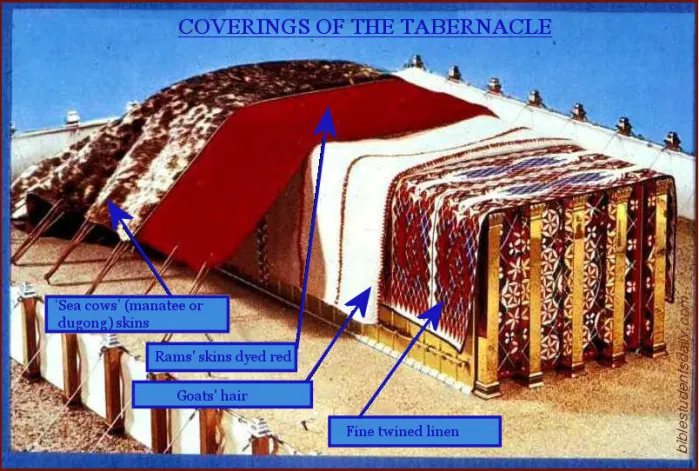
The Tabernacle structure was overlaid with 4 coverings as explained in detail in Exodus chapter 26 (and chapter 36). There were 2 primary coverings of measured dimensions and 2 additional coverings over those.

The Two Inner Coverings or Curtains

The two inner coverings formed the “MISHKAN” the Tabernacle proper.

  1. The First Covering

The Tabernacle was covered by a large white linen cloth composed of ten curtains interwoven with figures of cherubim, in blue, purple, and scarlet (Exodus 26:1, 36:8-13).

Each curtain was 28 cubits x 4 cubits, making a total of 28 cubits across and 40 cubits from front to back. The ten curtains were sewn into two sets 28 x 20 and these two sets were coupled together with 50 blue loops on each joined by 50 gold clasps. This joint would have been situated above the pillars of the vail (Exodus 26:33).

Since the dwelling was 30 x 10 cubits, this linen curtain covered the roof and both the northern and the southern side of the Tabernacle plus the back (western side).

If this linen curtain had have hung straight down, then it would have reached 9 cubits from the top of the Tabernacle structure (on the northern and southern side) and 10 cubits on the back (western side) and this would mean that the western corners of the curtain would be dragging along the dirty ground — and we do not believe this was the case. This white curtain presumably did not drape straight down, but was angled outward on the ropes that were secured by the pins and cords of both the Tabernacle and the court, Exodus 35:18:

18 The pins (“tent pegs,” NIV) of the tabernacle, and the pins of the court, and their cords(“ropes,” NIV).”

If not for these cords (that would have kept the curtain from going straight down), then the two back corners would have lain on the dirty ground — just as the two corners of a bedspread go farther down than the bedspread on the three sides of a bed. Thus it we understand the curtain did not drag along the ground.

The pure linen covering with its embroidery represents the New Creation, holy (white linen), sanctified (set apart for God’s service), with the fruits of the spirit intertwined in their character.

This covering was in two main parts — five strips in each part.

The two main parts represents the two parts of the New Creation — our Lord Jesus, and the Church, his Bride class.

That there were five strips in each part is consistent with the use of the number five elsewhere in the Scriptures to represent the New Creation. (Thus the five wise virgins of the parable and their companions of the same number, the five foolish virgins.) As Jesus is the effulgence of God’s glory, so the Church will reflect the glory of God also, and thus the splendid beauty of this covering. [See Study 3 of “Beauties of the Tabernacle” on this website titled “The Tabernacle Construction: The Holy & The Most Holy.”]

The gold clasps suggest the divine nature to be obtained by the Church.

The loops of blue suggest the bonds of faith and fidelity that hold the Church as a unit. They are 50 in number, appropriate for the New Creation which is often represented by the number 5 or its higher orders, 50, 500, 5000. [see Study 3 of “Beauties of the Tabernacle”].

This overwhelming inner beauty of the Tabernacle may reflect our Heavenly Father’s interest in having a dwelling place of the holy Spirit where the inward detail of our lives is beautiful because of our efforts of striving for righteousness in all.

  1. The Second Covering

The second covering over the linen curtain was the goats hair curtain. (Exodus 26:7-13; 36:14-18). This one extended a cubit further on the back and 2 outer sides than did the first linen curtain underneath it.

It consisted of eleven curtains 30 cubits x 4 cubits. Eleven of the curtains made 30 cubits across (2 cubits wider than the first linen covering) and 42 cubits overall length (2 cubits longer than the first linen covering) from front to back (Exodus 26:9).

At the front of the Tabernacle, the 11th of the four-cubit-wide curtains was doubled over — (creating a one cubit vertical “ledge” above, at the front of the Tabernacle door) — something unique to this particular curtain, possibly signifies that when we begin our consecration we have a double measure of goat nature, but less of it later on.

Just like the white linen curtain, this goat’s hair curtain did not touch the ground in the back but would have been elevated by ropes (cords) that were pegged to the ground outside with bronze pegs so that it hung down at an angle preventing them from getting dirty and degraded easily.

The goats hair curtain was also sewn into two sets, but this time the two sets of 50 loops were joined by 50 bronze clasps.

Bronze, (chiefly copper) representing human nature which is noted in the bronze serpent (Numbers 21:9) — representing the justified human nature of Jesus that was sacrificed for us to remove our sins. Thus bronze clasps are appropriate here, because this covering represents the human nature (in its perfection — thanks only to the imputed robe of Christ’s righteousness covering us so that a fully consecrated justified believer can be reckoned as righteous in the eyes of God) of the New Creation while in the flesh.

In other words, the goat hair covering represents our old nature (the fleshly), in which we have our spiritual hopes.

It is interesting to note that there was no bronze inside the Tabernacle, showing that the calling of the saints is away from the flesh, into the spirit.

One wonders whether the joining clasp areas of the linen and goat hair coverings may have allowed some ventilation for the Tabernacle and a place of exit for the smoke from the incense altar and the lamps. Our “ventilation” from the sorrows and difficulties of the flesh also is upward, through our prayers to our Heavenly Father (Psalm 34:4).

However, this possibility seems foreclosed, because the clasped area for the linen covering, and the clasped area for the goat hair covering, did not line up with each other, to allow such ventilation. This is because of the stagger of 1/2 curtain width in one covering relative to the other, occasioned by folding one of the goat hair curtains in half at the front of the Tabernacle.

The Bride class is depicted in Song of Solomon 4:1 as having “hair as a flock of goats,” which further connects the goat hair curtain with the Church class.

This covering represented the Church, as sacrificed with Jesus, as an offering given for the purpose of cleansing the world from sin during the Millennium. In this, it reminds us of the goat for a sin offering that was offered on the Day of Atonement.

Jesus’ sacrifice as a sin offering was represented in the bullock for a sin offering on the Day of Atonement [as is discussed in Post 7 of “Beauties of the Tabernacle” on this website, titled “Study 7: The Priests. The Day of Atonement.”] The Church shares with Jesus in suffering and sacrifice during the present Gospel Age, in order to assist Jesus during the Kingdom to cleanse the world from their propensity for sin. The share of the Church class in this service is represented in the goat hair curtain.

As the Church is presently imperfect, they need a covering for their imperfections in order to be an acceptable sacrifice to God. That covering is the Ransom given by Jesus represented in the covering of rams’ skins dyed red, which was above the goat hair curtain.

The 5 strips represents the Church as the New Creation:

i.e.

2  (holy Spirit — the understanding of God’s divine plan and God’s influence on our character through studying the Old and New Testaments of the Bible)
+   
3  (redemption through Christ’s blood)
=
5  (the New Creation in Christ).

The 6 strips — show we are still in sinful flesh.

The 11 strips in total — is a picture of the Church in the flesh but with their new hopes. Thus the need for the ram skin dyed red covering, of the ransom.

It is most interesting to note that the perimeter of this covering of goat’s hair, with the “sixth curtain” doubled over in the forefront of the Tabernacle (Exodus 26:9) measures exactly 144 cubits, which when multiplied by 1000 (God’s number in the Tabernacle), gives the number of those who will share with Jesus in the sin offering of atonement, 144,000 — the Elect, Bride of Christ (Revelation 7, 14).

The Outer Coverings

The outer coverings formed the “OHEL” — the large tent, that spread over the first two coverings (curtains), protecting them from the sun and rain. This was the covering mentioned in Exodus 40:19 which was put over the top of the tent (the curtains or Tabernacle proper). These coverings were a weather proof protection to the tabernacle and were held in place by cords and pins fixing them to the ground.

  1. The Third Covering

The third covering was made of ram skins dyed red (Exodus 26:14, 36:19; Numbers 4:25).

The ram skins dyed red covering represents the ransom sacrifice, which covers our imperfect humanity. It is over the goat hair covering, to show that it covers our flesh with its imperfections.

A ram is a grown male sheep and the head of the flock. A shepherd may have one or two rams in a flock of ewes to promote uniformity. The ram is forever in the eyes of the Jew as the substitute animal, faithful unto death. This is of course because God provided a ram as a substitute for Isaac on that day when Abraham’s faith was revealed (Genesis 22:12-13).

The ram’s skins were dyed red to represent the ransom sacrifice of Jesus shedding his blood on the cross for the redemption of all mankind from inherited Adamic sin.

John 1:29 — “The next day John saw Jesus coming toward him, and said, “Behold! The Lamb of God who takes away the sin of the world!”

Hebrews 2:9 — “But we see Jesus, who was made a little lower than the angels, for the suffering of death crowned with glory and honor, that He, by the grace of God, might taste death for everyone.”

Hebrews 2:17 — “Therefore, in all things He had to be made like His brethren, that He might be a merciful and faithful High Priest in things pertaining to God, to make propitiation for the sins of the people.”

Thus, the first layer typifies the New Creation, the second layer shows that we are still in the flesh, the third layer typifies that Jesus bore our sins and shed his blood to redeem us.

Measurements for both the 3rd (ram’s skin) & 4th (sea cow skin) coverings are not given in the Bible nor are we told precisely how they covered. Thus some artist conceptions show them as a covering tent, not in direct contact with the goat hair covering. In any case, we presume the third covering was more than sufficient to cover the second, and that the fourth was more than sufficient to cover the third.

Nevertheless, the reason for no dimension given for the ram’s skin covering may be as if to say that God’s love manifested toward the world, in the sending of his son “out of the realms of light into the shades of night,” to become the man Christ Jesus and thus to give himself a ransom for all, is immeasurable!! Who can measure it?

The ram and sea cow coverings were not divided into units as were the other two, which may mean that while the Church shares together with Jesus in the sin offering and in the glory of the kingdom, it cannot and does not share either in the humiliation of the Logos in leaving his glory to become the man Christ Jesus, nor in his death as the ransom sacrifice for the sins of the world.

  1. The Fourth Covering

The fourth and top covering was made of  sea cows’ (manatee or dugong) skins (mistranslated badger skins) (Exodus 26:14, 36:19).

This outward covering was serviceable for the elements of weather, rather than suited for attractive décor. Thus it was durable (Exodus 26:14). It was not especially attractive, just as the world sees no attraction to our service in the present time. However, in the Millennium they will see the Church class cleared of all unattractive conditions. She will then be seen in her glory and grandeur; just as the temple, a type of the glorified Church, was covered with plates of gold, there were no ugly skins.

As this outward covering hid all that was beneath it, so also, Jesus’ flesh did not reveal him to be what he truly was — the Messiah whom Israel so long sought. When he presented himself to his own people as simple and humble, “his own received him not” (John 1:11) for they beheld in him “no form nor comeliness … no beauty” that they should desire him (Isaiah 53:1-2). Jesus said, “though seeing they do not see, though hearing, they do not hear or understand” (Matthew 13:13). They see only the outer things. But blessed are those who use the eyes of faith and enter in.

To those of us who have accepted Jesus as our Personal Redeemer and Advocate and Sin offering, Jesus is to us part of our being… the “altogether lovely One” (Song of Solomon 5:16). He is the “Rose of Sharon,” the “Lily of the Valley” (Song of Solomon 2:1) and the “fairest among 10,000” (Song of Solomon 5:10) to our souls… Jesus Christ is our Bridegroom and our Head, our ultimate example of everything and everyone, our source of “oxygen” and the source of our eternal joy already now while still in the flesh, whom we long to belong to, forever more.

If anyone desired to look beyond the outer flesh covering they will see Christ’s glory. Just as questioned by Nathanael “Can any good thing come out of Nazareth?” (see Post titled: Will Mankind Need To Become “Israelites Indeed”) Jesus says, “Come and see.”

God does not attract anyone by apparent riches. We do not come to God because of the majesty and beauty of some building. Our reasons are not visible. The ones who endure to the end are those who do not have an outward beautiful appearance but who have an inward heavenly beauty and divine comeliness. Christ is both their content and covering, so nothing can damage or overcome them. We must learn to seek Christ in the spirit, as then we will enjoy the riches of Christ. Ultimately we will arrive at the measure of the stature of the fullness of Christ (Ephesians 3:8, 4:13).

Many think that the Truth is as unattractive as a manatee’s skin. Many think a Christian life is sad and dark; they do not know that for Christians the exterior has no value. Inside there is light, joy, richness, and peace — the “inside” being founded on the precious promises and the joy of pleasing a Creator whose standard of righteousness leads to the highest level of happiness and joy that anyone could imagine and which provides the means for us to gain immortality.

The Manatee

The Manatee - for the Tabernacle's fourth covering.jpg

It was also a peculiar skin and this illustrates the peculiarity of God’s people. The world does not like this peculiarity and considers us a bit out of our minds.

The manatees are gentle, herbivorous, and possibly ritually clean creatures, like the Church, who are out of their natural habitat, “the heavenlies” of Ephesians 2:6. Jesus, in his pre-human existence, was “the Logos” (“the Word,” John 1:1). His natural habitat was the spirit plane on which he was created. Thus being on earth was being out of his natural, comfortable environment, also.

A Summary — The Antitypical Lesson Behind All Four Coverings

Since the Tabernacle depicts things as they are during the Gospel Age, the saints are a new creation (linen with cherubim), sacrificing in the flesh (goat hair curtain), covered by the ransom (ram skins dyed red), apparent to the world as a drab outer covering which refers to the flesh of the saints, reflective of how our Lord Jesus was treated during the 3 1/2 sacrificial years of his life as a sin offering (aged 30-33 1/2 years) who “was despised and rejected by men, a man of sorrows, and familiar with suffering… like one from whom men hide their faces he was despised…numbered with the transgressors,” until our precious Lord Jesus, “poured out his life unto death”  (Isaiah 53:2-12, NIV).

Why Four Coverings?

Since four refers to the concept of testing or judgment, perhaps there being four coverings could suggest that this is how the Church is represented while under judgment in this life.

Likewise, at the entrance of the most holy of the Tabernacle, the time of judgment of the Church, there are four posts. Other Biblical examples of four representing judgment and testing include:

  • the second feeding of four thousand by Jesus, representing the time of harvest and judgment closing the Gospel age;
  • the forty years in the wilderness representing the Gospel age period of testing, trial, development;
  • the four hundred years of Genesis 15:13 which describes the period of the affliction of the seed of Abraham and represents the Gospel age affliction of the Church. These four hundred years, if multiplied by the 360 days in a prophetic year, yield 144,000, the number of the church in Revelation.
  • It is also noteworthy that of the dated visions of Jeremiah in chapters 25, 26, 27, 28, 29, and 36, three are dated in the fourth year of Jehoiakim, and three in the fourth year of Zedekiah — all six judgments are in a year four.
  • When the seven times of punishment on Israel was represented in Nebuchadnezzar’s dream, the expression “seven times” appeared four times in the narrative, and four times in the warning by Moses (Daniel 4, Leviticus 26). These judgments were fulfilled by four Gentile kingdoms dominating Israel during the 2,520 years of their national punishment.

In all these uses, four is linked to the concept of trial, testing, probation, judgment.
Which one?

Out of the following four drawings, which do you think would be the most probable to represent the actual Tabernacle Proper’s covering setup?

the tabernacle structure - which one was it.jpg

Not the first one. All the four coverings were draped on cords at an angle (not downward straight as covering a box). If one stretched the cords entirely vertically, then the pegs would be right next to the boards and sockets of the Tabernacle which would be a clumsy arrangement and the back corners of the first two coverings would then both be dragged along the ground, become very dirty and corrupted. (This has been discussed earlier in this Post.)

The covering was unlikely to be as the one in the 4th picture because there is no reference to the supports that appear to be necessary in that case for holding up the curtains on the side before they go straight down.

If the outer covering were like a circus top, then another beam or pole(s) would most likely be mentioned in the Bible that gives the added pointy height, hence eliminating the possibility of covering appearing as in the third drawing.

On the other hand, such a ridge pole might simply be covered by the term “tent;” all tents requiring some poles for erecting them.

Based on the data read and researched, we conclude that the Tabernacle covering was most possibly as the 2nd drawing (top right) demonstrates. Probably the first two coverings were draped as suggested in Drawing No. 2. The last two coverings may have been a tent over the whole, like one of the bottom two. Artistically, the author likes the last one, perhaps even with an extension to the back like the side extensions. But one cannot be sure.

Hidden Beauty

It has been a matter of surprise to some, that the glories and beauties of the Tabernacle — its golden walls, its golden and beautifully engraved furniture, and vail of curious work — were so completely covered and hidden from view of the people; no sunlight from without even to illuminate its glorious beauty. Yet you see, there is a beautifully glorious lesson behind this.

God covered the type and hid its beauty under skins and curtains, so the glories and beauties of spiritual things are seen only when within by those who enter the Tabernacle.

During the Gospel Age it is the “royal priesthood” and “peculiar people” who respond to God’s invitation and suffer with Christ developing into His likeness of character and conduct who may enter a hidden glory which the world and all outside fail to recognize and comprehend. Their standing as new creatures in Christ are hidden from their fellow men.

“But the natural man receiveth not the things of the Spirit of God: for they are foolishness unto him: neither can he know them, because they are spiritually discerned” (1 Corinthians 2:14).

“Ah; these are of a royal line,
All children of a King,
Heirs of immortal crowns divine,
And lo, for joy they sing!
Why do they, then, appear so mean?
And why so much despised?
Because of their rich robes unseen
The world is not apprised.”

To these “God would make known what is the riches of the glory of this mystery among the Gentiles; which is Christ in you, the hope of glory: 28Whom we preach, warning every man, and teaching every man in all wisdom; that we may present every man perfect in Christ Jesus: 29Whereunto I also labour, striving according to his working, which worketh in me mightily” (Colossians 1:27-29).

References & Acknowledgment

“The Tabernacle and Its Teachings” — Supplement to Feb. ZION’S WATCH TOWER, 1882 page 52.

“Our Wilderness Wanderings” — by Br. Anton Frey.

Content — assisted by Br. David Rice.

Further Suggested Reading

STUDY 1: An Introduction To The Tabernacle And It’s Purpose
URL: https://biblestudentsdaily.com/2016/09/02/study-1-an-introduction-to-the-tabernacle-and-its-purpose/

STUDY 2: The Pillar of Cloud By Day And The Pillar of Smoke By Night  https://biblestudentsdaily.com/2016/09/09/study-2-the-pillar-of-cloud-by-day-and-the-pillar-of-smoke-by-night/

STUDY 3: The Tabernacle Construction: The Holy and The Most Holy   https://biblestudentsdaily.com/2016/09/14/study-3-the-tabernacle-construction-the-holy-the-most-holy/

STUDY 4: The Court (“Holy Place”)
https://biblestudentsdaily.com/2016/09/20/study-4-the-court-holy-place/

STUDY 5: The Camp. The Israelites.
https://biblestudentsdaily.com/2016/10/28/study-5-the-camp-the-israelites/

STUDY 6: The Levites
https://biblestudentsdaily.com/2016/11/18/study-6-the-levites/

STUDY 7: The Priests. The Day of Atonement.
https://biblestudentsdaily.com/2016/12/10/study-7-the-priests-the-day-of-atonement/

STUDY 8: The Tabernacle Coverings
https://biblestudentsdaily.com/2017/01/02/study-8-the-tabernacle-coverings/

STUDY 9: The Gate. The Door. The Vail.
https://biblestudentsdaily.com/2017/03/01/study-9-the-gate-the-door-the-vail/

The URL for this post:

STUDY 8: The Tabernacle Coverings

Enter your email address to subscribe to this blog and receive notifications of new posts by email.


Listing of All Posts For 2017


psalm-11-2

Fill your hands with the LORD’s work…

The most frequent Hebrew term rendered consecrate is actually a pair of words used together, “mala” (Strong’s #4390) meaning to fill and “yad” (Strong’s #3027) meaning open hand. To fill an open hand, in this context, means for the priests to be devoted to their sacred duty to God and ministering to others. In English there is an expression, “my hands are full,” meaning one is FULLY occupied. So it should be with those consecrated to God during this age. We should have our hands full in the sacred service which is our privilege (Br. David Rice).

2017

JANUARY

Posts


FEBRUARY

Posts


MARCH

Posts


APRIL

Posts


MAY

Posts


JUNE

Posts


JULY

Posts


AUGUST

Posts


SEPTEMBER

Posts


OCTOBER

Posts


NOVEMBER

Posts


DECEMBER

Posts


URL: https://biblestudentsdaily.com/2017/01/02/listing-of-all-posts-for-2017/

Enter your email address to subscribe to this blog and receive notifications of new posts by email.

Save

Save

Save

Save

Save

ROMANS 12:1 – What Does Being CONSECRATED TO THE LORD mean?

Psalm 1,1-2.jpg

“I beseech you therefore, brethren, by the mercies of God, that ye present your bodies a living sacrifice, holy, acceptable to God, which is your reasonable service” (Romans 12:1).

Dear fellow Brethren and friends in CHRIST,

“Are you consecrated to the LORD?” 

What is your first reaction to this question?

Is it a question you have been asked before or perhaps you have asked others?

Which word in that question stands out the most?

If your answer is “consecration” … then stay tuned! If not, stay tuned anyway as we wish all who read this post to God willing, receive a spiritual blessing.

What does the word consecration really mean in relation to a Christian’s calling?

Is consecration a means of escaping horrible punishment in the afterlife, where just a simple profession of faith, and reasonably moral conduct are enough to avoid the jeopardy and secure a place in heaven?

Of course not.

God is not merely saving a few before He destroys (or worse) the vast majority…

Rather, God is selecting from among men and women of faith an “elect” class (Matthew 24:24, Romans 8:33, 2 Peter 1:10) for a special honour during the coming 1000 year reign of Christ with his “Bride” (consisting of 144,000 members — the more than overcomers from the Gospel Age) — who with Christ, their “Head”, will be the spiritual rulers of the world. They will help lead mankind — that is all the human  race from Adam who will be resurrected — up the “Highway of Holiness”, teaching them godliness and truth, so that righteousness will flourish through the Universe and the eradication of evil and the evil ones will lead to everlasting joy and pain-less-ness and sin-less-ness! (Isaiah 35:8)

What a MARVELLOUS PLAN!

What an incredibly unfathomable Creator of ALL we have!

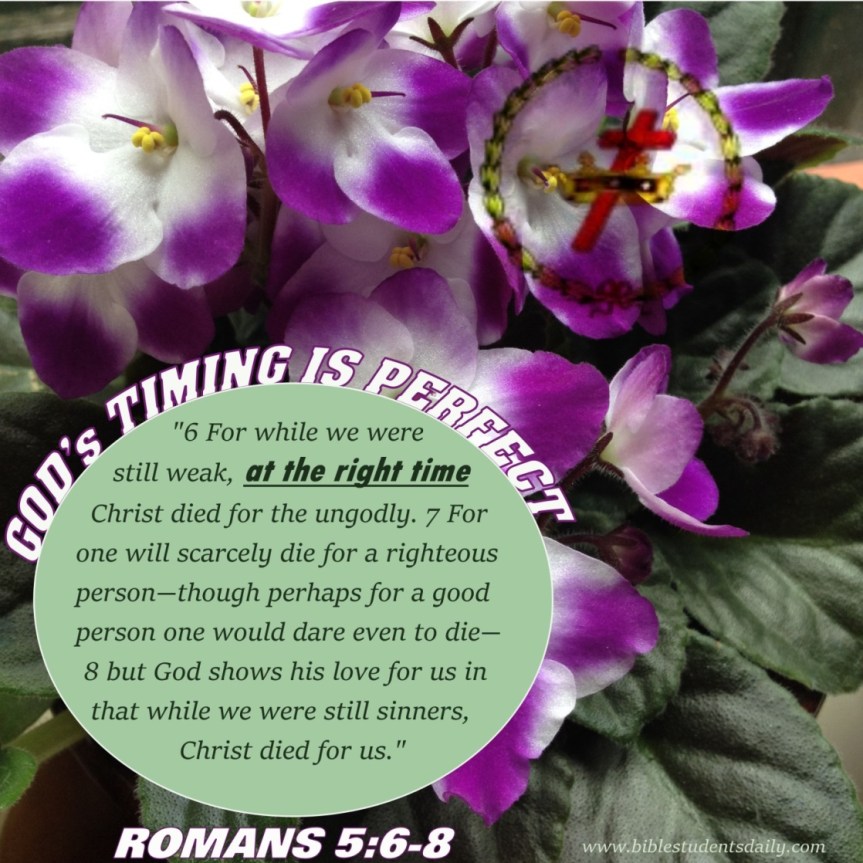
God’s timing is perfectly precise to work out everything for the ultimate purpose of bringing everlasting JOY to all and in all for eternal eternities (Habakkuk 2:3, Galatians 4:4-5, Romans 5:6, Psalm 27:14, Ecclesiastes 3:11, Romans 11:25, Genesis 18:14).

Romans 5, 6-8.jpg

Can you imagine what glorious harmony and unity in all things will occur amongst every soul that lives once Christ and his saints lead the world into obedience and understanding?! WOW! It will be like ONE MIND made up of trillions of bodies united in thought, action and purpose bring the Heavenly Father JOY in all things (Revelation 20:1-3, 6).

How High are God’s Standards?

By understanding the high honour associated with the saintly class called by God during this Gospel Age as his “royal priesthood” training as the under-priests of a heavenly government soon to commence—then we can better appreciate the high standards which are expected of them by God.

These standards may be considered in four parts:

(1) Godly conduct, (2) Character Development, (3) Study of the Truth, (4) Service and Sacrifice.

  1. Godly Conduct

Paul clearly explains in 1 Corinthians 6:10 in Corinth, Greece, he knew some of them had practiced the darker sins of the world. He listed these in 1 Corinthians 6:9-11 (ESV) what our conduct MUST BE:

“9 Or do you not know that the unrighteous will not inherit the kingdom of God? Do not be deceived: neither the sexually immoral, nor idolaters, nor adulterers, nor men who practice homosexuality, 10 nor thieves, nor the greedy, nor drunkards, nor revilers, nor swindlers will inherit the kingdom of God. 11 And such were some of you. But you were washed, you were sanctified, you were justified in the name of the Lord Jesus Christ and by the Spirit of our God.”

We learn from these words of the Apostle Paul to the “called of God” in the church of Corinth in Greece, that once we have been washed,” we are not to return to any immoral ways of conduct of the past.

What then, do you think is the pre-requisite for consecration?

It is REPENTANCE.

Repentance means turning completely 160 degrees away from past ways of living for the flesh to now living to feed the New Creation—the New Mind in Christ.

It means COMPLETELY being DEAD to sin and ALIVE IN CHRIST.

It means soaring like an eagle towards the SUN…

isaiah-40-31

Who does the sun represent in the Bible?

It represents JESUS. Yes, our Lord and Saviour who’s wings are of healing soon to come to all the nations of the earth!

By focusing on JESUS… and by being considered a FOOL IN CHRIST by many if not most, we will not be caught in the VISIBLE spider web spun by the most evil one of all in this dark world — the one who is described in 1 Peter 5:8 as “a roaring lion seeking whom he may devour.”

He wants most to deceive “the best of the best”! Watch out and BE ON THE ALERT!

Is a spider web visible in the day?:-

NO — if you are rushing around and careless…

YES — if you tread with CAUTION and are FOCUSED ON WHAT IS AHEAD—a mind fixed on Jesus.

By inquiring “What is your will Father? Please show me” we are at a “safe speed” of zealous action moving forward with Christ who has promised to never leave us nor forsake us (Hebrews 13:5).

—– LET US PRAY FOR EACH OTHER AND BE ON THE ALERT. —–

DO NOT SLUMBER even for a moment away from spiritual alertness of the New Mind in CHRIST!

Let our thoughts be on Jesus and the faithful ones of the Bible — the Apostles and the Ancient Worthies — our “cloud of witnesses” talked about by the Apostle Paul in the Book of Hebrews, and the prophets of the Old Testament.

May we be HOT (not lukewarm) for the Truth (Revelation 3:16)… because if we are not careful of GROWTH and PROGRESS in the School of Christ, slipping towards the gates of perhaps no return… means slipping towards second death! To be by these “gates” is emptiness in the fullest sense and a loneliness and rejection and loss of …

EVERYTHING!

Jesus explains to us what should characterize a Christian’s character in his words spoken in his Sermon on the Mount:

“Blessed are the poor in spirit, for theirs is the kingdom of heaven.

“Blessed are those who mourn, for they shall be comforted.

“Blessed are the meek, for they shall inherit the earth.

“Blessed are those who hunger and thirst for righteousness, for they shall be satisfied.

“Blessed are the merciful, for they shall receive mercy.

“Blessed are the pure in heart, for they shall see God.

“Blessed are the peacemakers, for they shall be called sons[a] of God.

10 “Blessed are those who are persecuted for righteousness’ sake, for theirs is the kingdom of heaven.

11 “Blessed are you when others revile you and persecute you and utter all kinds of evil against you falsely on my account.

12 Rejoice and be glad, for your reward is great in heaven, for so they persecuted the prophets who were before you (Matthew 5:3-11, ESV).

  1. Character Development

Actions are a result of thoughts. Likewise, one’s outward conduct is the result of one’s inward character. Our character is like a mirror that reflects hidden within principles and qualities that are in our heart and mind (Proverbs 23:7, Proverbs 4:23).

How reassuring it is though, that God knows the intent of our heart even when our conduct does not express our intents, or when our conduct is misunderstood or misrepresented by others. “Man looks on the outward appearance, but the LORD looks on the heart” (1 Samuel 16:7).

How do we live in this world but not be of the world? (John 17:16)

How do we not become friends of this world and thus enemies of God? (James 4:4):-

  • By feasting on the Words of God.
  • By prayer.
  • By disciplining the flesh.
  • By feeding the spiritual mind.
  • By going AGAINST the tide of the world — STARVING the fleshly minds and FEEDING the spiritual mind.
  • Literally saturating the mind with Divine Beauties of Truth and thus feasting on the Word of God and communing with the Heavenly Father moment by moment (Romans 12:1).

The result of these actions is a clear conscience before God which is the only way to righteous peace… a peace unlike that which the world knows… It is a peace that knows only JOY in the spirit for the flesh is counted as dead as one lives in newness of life feeding that which is spiritual — the embryonic New Creature within (Psalm 97:11).

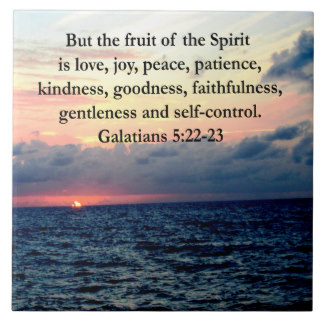
Christian character can be defined by “the fruits of the Spirit” which the Apostle Paul so brilliantly explains in Galatians 5:22-23.

Galatians 5, 22.jpg

Another list of Christian character is given to us by Apostle Peter in 2 Peter 1:5-12:

5Make every effort to supplement your faith with virtue, and virtue with knowledge, and knowledge with self-control, and self-control with steadfastness, and steadfastness with godliness, and godliness with brotherly affection, and brotherly affection with love. For if these qualities are yours and are increasing, they keep you from being ineffective or unfruitful in the knowledge of our Lord Jesus Christ. For whoever lacks these qualities is so nearsighted that he is blind, having forgotten that he was cleansed from his former sins. 10 Therefore, brothers, be all the more diligent to confirm your calling and election, for if you practice these qualities you will never fall. 11 For in this way there will be richly provided for you an entrance into the eternal kingdom of our Lord and Savior Jesus Christ. 12 Therefore I intend always to remind you of these qualities, though you know them and are established in the truth that you have.

Colossians 3, 2.jpg

  1. Study of the Truth

The Apostle Paul wrote to “the saints and faithful brothers in Christ at Colossae” including in this letter, the following words:

“from the day we heard, we have not ceased to pray for you, asking that you may be filled with the knowledge of his will in all spiritual wisdom and understanding, 10 so as to walk in a manner worthy of the Lord, fully pleasing to him: bearing fruit in every good work and increasing in the knowledge of God…”

To the Philippian brethren, the Apostle Paul wrote:

“And it is my prayer that your love may abound more and more, with knowledge and all discernment (Philippians 1:9).

Why is studying the Word of God in the Bible so important for the consecrated in the Lord?

Because by doing so, we can learn to understand the plans and purposes of God in part (1 Corinthians 13:9), so that we can be in harmony with Him, and work in sympathy with Him.

Some of the Jews in the Apostle Paul’s day had “a zeal for God, but not according to knowledge” (Romans 10:2). This was because the brethren back then were transiting from the old Jewish Age to the new Gospel Age and the labours of Apostle Paul were in this direction.

We should be zealous as they, but our zeal should be directed by an accurate knowledge of the Divine Plan. One method of reasoning upon Holy Scriptures which the Apostle Paul teaches us from his methods of reasoning, is to understand the types, or pictures, used in the Old Testament.

E.g. The Apostle Paul cited:

(1) the spiritual meaning of the wives of Abraham (Galatians 4:21-31),
(2) the meaning of Israel’s Day of Atonement (Hebrews 9:1-14, 10:1-10),
(3) the meaning of Melchizedek as a figure of Christ (Hebrews chapters 5 & 7).

Other methods of studying the Bible include: drawing lessons from the prophets (e.g. Romans 9:23-33), topical and chronological.

“No work is more noble and ennobling than the reverent study of the revealed purposes of God.”

(Studies in the Scriptures, Volume 1, page 13).

  1. Service and Sacrifice

Does our consecrated life include active service in the cause of Christ? It must.

Why?

Because this is a way of sacrificing our earthly interests for our spiritual work by using our time, strength, energy, talents, or any other means for the Lord’s cause.

A great way of seeking out opportunities in this way is to inquire of the Lord:

“Heavenly Father, please show me, what is your will for me today. Where do you wish I be sent? To whom do you wish me to minister unto? Who may I spiritually edify? Please use me to bring you joy so that your Holy Name may be glorified, and your Son Jesus may shine through into the hearts of whomever you wish requires this.”

Some examples of active service in the cause of Christ include:

  • Opening our home for fellowship with the brethren.
  • Attending meetings of the Lord’s people rather than spending time in pursuing hobbies and things of this world.
  • Preparing answers to Biblical questions asked by others or in preparation for Bible Studies.
  • Travelling to serve the brethren (Acts 15:25, 26).
  • Preach the Truth in favourable or non-favourable circumstances.
  • Visiting/assisting the sick, bereaved, widows, orphans.
  • Accepting physical and/or mental abuse and/or imprisonment. (Note: According to traditions and the Bible, eight of the Apostles died as martyrs. At least two of the Apostles, Peter and Andrew, were crucified.)

Even when on beds of sickness, one can lie in bed and when mentally alert, send prayers of petitions and supplications to the Heavenly father for others as well as for self. This is the GREATEST of gifts perhaps that one can give another!

The Apostle Paul wrote that he was “being poured out as a drink offering upon the sacrifice and service of” the faith of the Philippian brethren, which made him rejoice and be filled with joy. He urged the Philippian brethren to “rejoice in the same way and share your joy” with him. (Philippians 2:17).

In 1 Corinthians 16:15-16 the household of Stephanas is praised by the Apostle Paul because they “devoted themselves to the service of the saints”. Paul encourages the brethren in Corinth to be subject to such as these, and to every fellow worker and laborer.”

The Word “Consecration”

There are eight different Hebrew words in the Old Testament which are rendered consecrate, consecrated, consecration, or consecrations.

  1. “Nazar” (Strong’s Concordance #5144) means to set apart (for sacred purposes) and this word is in Numbers 6:12 – a text referring to the Nazarite vow, which is a picture of the consecration of Christians to God. (See Study 6 – The Levites). The worshipper taking this vow was to consecrate [nazar, set apart] unto Jehovah the days of his separation..

Are we continuously keeping our earthly life SET APART for the sacred purposes of devotion to God?

  1. “Nezer” (Strong’s # 5145) means something set apart and this word is found in Numbers 6:7 and also refers to the Nazarite vow:

“7 He shall not make himself unclean for his father, or for his mother, for his brother, or for his sister, when they die: because the consecration [separation] of his God is upon his head.”

  1. “Charam” (Strong’s #2763) means to seclude, by a ban, to devote to religious use and this word is found in Micah 4:13, “I will consecrate their gain unto the Lord.”

This refers to the wealth of gentile nations after the judgments of God. It is not directly relevant to our present study.

  1. “Godesh” (Strong’s 6944) means a sacred place or thing and this word is found in Joshua 6:19, “all the silver, and gold, and vessels of brass and iron are consecrated unto the Lord.”

This refers to the precious things of the gentile nations conquered by Joshua which would come into the treasury of Jehovah. These precious items of “silver and gold” taken from the world might represent the Church Class (the Elect of the Gospel Age).

[Note: Compare Haggai 2:7, 8, where God will “shake the nations,” and the silver and gold may here too represent the saints of God who will glorify God’s spiritual temple.

  1. “Qadash” (Strong’s # 6942) means to make, pronounce, or observe as clean. This is used three times of the priests. See: Exodus 28:3, 30:30; 2 Chronicles 26:18.
  1. The most frequent Hebrew term rendered consecrate is actually a pair of words used together, “mala” (Strong’s #4390) meaning to fill and “yad” (Strong’s #3027) meaning open hand.

To fill an open hand, in this context, means for the priests to be devoted to their sacred duty to God and ministering to others. In English there is an expression, “my hands are full,” meaning one is fully occupied. So it should be with those consecrated to God during this age. We should have our hands full in the sacred service which is our privilege.

  1. “Millu” (Strongs #4394) means a filling, or consecration.

In Exodus 29 and Leviticus 8 this word is used of the offerings by which the priests were consecrated to their office. In Leviticus 8:33 it is once used in reference to days of consecration of the priests.

In what way is this consecration in relation to the Priests, significant to us?

It is fitting to us since we are called to be priests of God to reconcile the world back to God during the Kingdom.

So actually, we should be consecrated to God even more deeply than the priests under the Old Law were.

In the New Testament, the term “consecration” is found in the following 2 places:

  • Hebrews 7:28 (ESV) – “For the law appoints men in their weakness as high priests, but the word of the oath, which came later than the law, appoints a Son who has been made perfect forever.”

Here it speaks of Jesus consecrated as a priest to serve God, and “the oath” refers to the oath given by God to King David in Psalms 110:4, “The LORD hath sworn, and will not repent, Thou art a priest for ever after the order of Melchizedek.” Prophetically, this refers to Jesus Christ, who was descended from the line of David.  Melchizedek was a king of Jerusalem who was also a priest (Genesis 14:18). Paul says Melchizedek was a picture of Jesus, who in heaven, after his glorification, is also a King and Priest. (See further words on Melchizedek in the post: Study 7 – The Priests.)

Jesus is now our high priest, but during the Millennium we will join with him as priests for the world (Revelation 20:6).

By being consecrated unto death now in the entire service of and for God, we will be, God willing, qualified, tested and proven worthy and ready to serve with him to uplift the world.

  • Hebrews 10:20 (KJV) — refers to the “new and living way which he [Christ] hath consecrated [inaugurated] for us, through the veil, that is to say, his flesh.”

Here the Apostle Paul reminds us about how remarkably, the thick veil in Solomon’s Temple was rent from top to bottom when Jesus died on the cross (Matthew 27:51).

The present heavenly calling of the Gospel Age to consecrate our lives to God, was never even extended to the righteous of past ages. This call is unique, and was opened up (inaugurated) through Christ’s death on the cross.

Those who consecrate their lives to God now receive the redemption provided by this ransom now, whereas the world will receive the redemption later, during the Millennial Age.

Are All Christians Consecrated?

We hope they will be as not all now are.

One may believe in God, believe in Jesus as their Saviour, appreciate what God has provide, strive to refrain from sin and evil as best one can, commit to works of kindness and charity, attend worship services but if there is no full personally commitment, then there is no valid consecration .

A step in the direction of full consecration involves showing by an outward sign of God’s invisible grace (the holy Spirit) one’s full commitment to their consecration vow through water baptism — a testimony to others.

If you have still not done so please take some time to thoughtfully consider consecrating your all to the Lord — the benefits in this life, far outweigh any other joy that any other person, thing and place can give!

What will it cost?

A good answer is in Luke 14:26-33. Jesus explains this best!

(See Post: “The Cost of Discipleship.”)

In the earlier verses Jesus spoke of humility (verse 11), and of giving without having any thought of getting back in return (verse 14). Jesus also gave a parable about a great supper prepared by a good man, who sent his servants to invite his guests. It represents God’s invitation through Christ to come into the spiritual kingdom of God. Since most of those invited declined, (giving one excuse or another), the man decided to open the invitation to any who would be interested for he insisted, “my house [will] be filled.” (verse 23).

Are you one of the interested? Are you ready to accept the blessings of “a gracious God [who is] merciful, slow to anger, and abounding in steadfast love?” (Jonah 4:2)

You know… the fastest way to happiness is BEING A GIVER and what better way than to give the Creator of ALL your ALL?

To the already consecrated brethren in Christ, are you rejoicing in your testing of patient continuance in well doing and seeking for glory and honour and immortality?

Acknowledgment:

We thank the author(s) of the article titled “Consecration”  in the publication “Faithbuilders Fellowship-Proclaiming Christ’s Parousia and the coming Millennial Kingdom,” February 2006 (www.2043ad.com) for content material used in creating this post.


This post’s URL:

ROMANS 12:1 – What Does Being CONSECRATED TO THE LORD mean?

Enter your email address to subscribe to this blog and receive notifications of new posts by email.

Save

Save

Save

Where Does “Christmas” Originate From?

Where Does CHRISTMAS ORIGINATE from.jpg

The Christmas season is the most enjoyable time of the year for many who think upon the events surrounding the gift of Jehovah to the world—his firstborn Son, our Lord Jesus as a special gift to the human family, but is the redemptive work of Jesus Christ, truly appreciated in its full sense?

You see, the true reason for Jesus’ birth was that he would give his life as a ransom price for the sins of every single human that has lived.

The apostle Paul wrote to Timothy, “I exhort therefore, that, first of all, supplications, prayers, intercessions, and giving of thanks, be made for all men; For kings, and for all that are in authority; that we may lead a quiet and peaceable life in all godliness and honesty. For this is good and acceptable in the sight of God our Saviour; Who will have all men to be saved, and to come unto the knowledge of the truth. For there is one God, and one mediator between God and men, the man Christ Jesus; Who gave himself a ransom for all, to be testified in due time” (1 Timothy 2:1-6).

In John 3:16 we read that “God so loved the world, that he gave his only begotten Son, that whosoever believeth in him should not perish, but have everlasting life.”

The Greatest Message of Joy

The angel in Luke 2:10-14 was announcing God’s greatest gift to his poor, sin-sick and dying human creation: A SAVIOR… The “ransom for ALL to be testified in due time” when Christ’s future kingdom of righteousness will soon be established on earth, and when “God’s sons” (the Bride of CHRIST—the 144,000, shall be all beyond the vail and “revealed.” (1 Timothy 2:6, Romans 8:19)

The birth of Jesus had been foretold by the Prophet Isaiah:

“Unto us a child is born, unto us a son is given: and the government shall be upon his shoulder: and his name shall be called Wonderful, Counsellor, The mighty God, The everlasting Father, The Prince of Peace. Of the increase of his government and peace there shall be no end, upon the throne of David, and upon his kingdom, to order it, and to establish it with judgment and with justice from henceforth even for ever. The zeal of the Lord of hosts will perform this” (Isaiah 9:6,7).

Isaiah’s prophecy speaks of Jesus as the antitypical King David, and that he would in due time assume the several and distinct offices of his yet future kingdom as outlined in the prophecy.

At that future time, our loving Heavenly Father would entrust the glorified Jesus to exercise the great power and authority that would be given him to bless all the families of the earth as promised to the true and faithful “seed” of Abraham (Genesis 22:15-18; Acts 17:31).

At Christmas when the world’s attention is drawn to the birth of our dear Lord Jesus, we must acknowledge that he left us with no instructions to celebrate his birth date.

However, Jesus did give us instructions to memorialize his deathinviting us to partake of the emblems and to remember his death. (Matthew 26:26-30; Mark 14:22-26, 1 Corinthians 11:17-34).

In the Book of Luke, Jesus’ words spoken to his followers at the last supper on Nisan 14th (the day of unleavened bread when the Passover lamb was to be sacrificed) are as follows:

“(17)And he took the cup, and gave thanks, and said, Take this, and divide it among yourselves: (18) For I say unto you, I will not drink of the fruit of the vine, until the kingdom of God shall come. (19) And he took bread, and gave thanks, and brake it, and gave unto them, saying, This is my body which is given for you: this do in remembrance of me. (20) Likewise also the cup after supper, saying, This cup is the new testament in my blood, which is shed for you” (Luke 22:17-19).

An Ancient Holiday Season

Although many Christian people continue to observe December 25th as the date of Jesus’ birth, there is no scriptural evidence for this date. Many students of the Bible have come to the conclusion that the blessed event took place around the beginning of October, as we have explained in the post titled Calculating the Date of Jesus’ Birth.

The Winter Solstice

Many ancient cultures chose the Winter Solstice as a special time for celebrating Christmas—which was the terminal point between the darkest days of the year, and the time when the sunlight would begin to increase. That is, when the path of the sun has reached its furthest southern position. The word “solstice” literally means “the sun stands still.”

The time of the Winter Solstice was determined using very primitive and imprecise methods—measuring the length of the shadow created by a stick or a standing stone, which in turn, was dependent on clear weather to create a shadow and to make their calculations as accurate as possible.

In pagan times, the Winter Solstice was seen as part of an annual cycle of the earth’s seasons known as “the wheel of the year.” They celebrated eight festivals including the spring, midsummer, fall, and Yule seasons. Four others were spaced midway between each of them. These festivals have origins in Germanic and Celtic pre-Christian feasts.

Yuletide Celebrations

The Yuletide festival was one of the ancient traditions that was observed in many areas of Europe, the British Isles, and elsewhere. The word Yule relates to the Christmas season and the time when the sun reverses its downward path and begins to shine longer each day.

The actual time may vary a few days over the course of years, but usually occurs sometime between December 21st – 23rd.

Fathers and sons would bring home large logs, which they would set on fire. The people would feast until the log burned out, which could take as many as 12 days. The Norse believed that each spark from the fire represented a new pig or calf that would be born during the coming year. The log was believed to bring good luck to the occupants of the dwelling. Ashes from the log were placed in wells to keep the water pure and they were also placed at the roots of fruit trees and vines to help them bear an abundant harvest during the following year.

The end of December was also when most cattle were slaughtered, thus, the only time of year when they had a supply of fresh meat and most wine and beer made during the year was finally fermented and ready for drinking.

In Germany, people honoured the pagan god Oden during the mid-winter holiday who they were terrified of, as they believed he made nocturnal flights through the sky to observe his people, and then decide who would prosper or perish. Because of his presence, many people chose to stay inside.

Saturnalia

In Rome, where winters were not as harsh as those in the far north, Saturnalia—a holiday in honour of Saturn, the god of agriculture—was celebrated. Beginning in the week leading up to the winter solstice and continuing for a full month, Saturnalia was a hedonistic time, when food and drink were plentiful, when slaves would become masters for this month and when peasants were in command of the city. Business and schools were closed so that everyone could partake of this pagan “fun.”

Mithraism

Another of the Winter Solstice festivals was the celebration of Mithra—annually observed by the people of ancient Persia in honour of the Persian god Mithra who was considered the deity of light, wisdom, and moral purity. For some Romans, Mithra’s birthday was the most sacred day of the year and celebrated on December 25th.

The celebration of Mithra was later introduced into Europe and other areas of Asia Minor after the conquests of Alexander the Great (in early 300 BC) but it began to lose much of its influence by the end of the fourth century. With the rise of Constantine the Great in the fourth century, Christianity was then elevated to the prominent position as the official religion of the Roman Empire. Therefore, the ancient traditions and various observances of the old pre-Christian era gave way to the new Christian religion and its festivals.

The Christian Era

Who Established the Christmas December 25th Date?  

In the early years of Christianity, Easter was the main holiday; the birth of Jesus was not celebrated. During the early centuries of the Christian era, religious leaders wanted to establish a fixed date to celebrate the mass of Christ, which was called Christmas.

It is commonly believed that the church (that is, Pope Julius I—a bishop of Rome from AD 337 to his death in AD 352) chose this date in an effort to adopt and absorb the traditions of the pagan Saturnalia festival.

First called the Feast of the Nativity, the custom spread to Egypt by AD 432 and to England by the end of the sixth century. By the end of the eighth century, the celebration of Christmas had spread all the way to Scandinavia. Today, in the Greek and Russian orthodox churches, Christmas is celebrated 13 days after the 25th, which is also referred to as the Epiphany or Three Kings Day.

By holding Christmas at the same time as traditional winter solstice festivals, church leaders increased the chances that Christmas would be popularly embraced, but gave up the ability to dictate how it was celebrated.

By the Middle Ages, on Christmas believers attended church and afterwards celebrated raucously in a drunken, carnival-like atmosphere. Christmas became the time of year when the upper classes could repay their real or imagined “debt” to society by entertaining less fortunate citizens.

Christmas is Outlawed In the Early 17th Century

In 1645, Oliver Cromwell and his Puritan forces took over England and they vowed to rid England of decadence and, thus Christmas was cancelled through these efforts, even being known to be outlawed (from 1659-1681) in Boston. However, by popular demand, Charles II was restored to the throne and, with him, came the return of the popular holiday.

In fact, Christmas wasn’t declared a federal holiday until June 26, 1870.

The Christmas Tree – A Pagan Custom Brought to Christianity

Long before Christ, evergreen trees and plants have been used to celebrate winter festivals.

Early Romans used evergreens to decorate their temples at the New Year’s celebration of the Saturnalia festival, and exchanged branches and twigs of evergreens as a good luck blessing.

The ancient Egyptians used green palm rushes as part of their worship of the god Ra.

Pagans in Europe believed that because the evergreen tree stayed green throughout the year and could withstand the rigors of an extreme winter, they had magical abilities to ward off the life-threatening powers of darkness and cold. Thus they were considered to possess powers over evil spirits, which some ancient pagan civilizations of northern Europe believed stalked the eerie shadows of the wintertime forests.

During the winter months, evergreen wreaths and other forms of greenery were hung over doors and windows and brought inside the house to protect one from the darkness and evil spirits. The incense from burnt needles and cones as well as the scent from this greenery would freshen the dark and dismal dwellings from the otherwise stagnant odour of thresh and straw and was considered a means of blessing the occupants of the home.

The evergreens served as a reminder that the rigors of winter would pass, and that the land would once again be fruitful.

Many historians believe that the pagan people of Scandinavia were among the first to actually bring evergreen trees indoors, which served as a mid-winter symbol of the promise of the coming warmth of spring.

German Saxons are believed to have been the first to light their trees with candles, and to adorn them with decorations and trinkets for good fortune. The tradition of the indoor evergreen tree became popular in Germany, and it is believed that the first use of Christmas trees by Christians was developed in that part of Europe. Some historians have suggested that its origin may reach back as far as the eighth century.

In England, the first recorded Christmas tree was in 1841. At that time, Queen Victoria was married to Prince Albert of Germany, and he brought the tradition with him and set up the first Christmas tree in Windsor Castle.

German immigrants to America also brought the tradition with them and were celebrating Christmas with evergreen trees as early as the 1830s. The custom took several decades to catch on in the United States. During that period of time, most religious people correctly assumed that it had pagan origins. However, by the 1890s the indoor decorated Christmas tree had become popular in the majority of homes in America.

The Truth behind the Word “CHRISTMAS”

The word “CHRISTMAS” is based upon an impure doctrinal foundation: THE ROMAN CATHOLIC PAPAL SYSTEM—the ANTICHRIST of the Bible—was identified by the Reformers of the Early Church, such as Martin Luther.

The Papal system fit the description found in 2 Thessalonians 2:4:

“…who opposeth and exalteth himself above all that is called God, or that is worshipped; so that he as God sitteth in the temple of God, showing himself that he is God…”

The evidence to the Reformers in confirming the identity of Antichrist was the doctrine of the Mass. The ritual of the Mass claims to recreate and sacrifice over and over Christ’s actual flesh (bread) and blood (wine). Known as the Eucharist, it became a requirement that each believer must receive this fresh sacrifice of Christ to cover his daily sins. Daniel 11:31 refers to this as “the abomination that maketh desolate.”

The Mass makes desolate or negates the full merit of Christ’s blood which was shed once for all.” (Hebrews 7:27; 10:10)

It is important to note that the Protestant Reformers were careful not to condemn any individual Catholic believer as Antichrist—recognizing that no man is The Antichrist. Popes, bishops, priests and others have been only parts of, and, possibly, innocent members of the corrupt Antichrist system.

Jesus Christ’s Commission On Earth

At the age of maturity (30 years), the perfect man Jesus presented himself to his Heavenly Father in total consecration and obedience to do his will.

Jesus fulfilled the words that the Psalmist David had written concerning him:

“Then said I, Lo, I come: in the volume of the book it is written of me, I delight to do thy will, O my God: yea, thy law is within my heart. I have preached righteousness in the great congregation: lo, I have not refrained my lips, O Lord, thou knowest. I have not hid thy righteousness within my heart; I have declared thy faithfulness and thy salvation: I have not concealed thy lovingkindness and thy truth from the great congregation. Withhold not thou thy tender mercies from me, O Lord: let thy lovingkindness and thy truth continually preserve me” (Psalm 40:7-11).

In Luke 4:18-19, Jesus explains to us his commission:

 “The Spirit of the Lord is upon me, because he hath anointed me to preach the gospel to the poor; he hath sent me to heal the brokenhearted, to preach deliverance to the captives, and recovering of sight to the blind, to set at liberty them that are bruised, To preach the acceptable year of the Lord.”

“To the poor”—In his sermon on the mount, Jesus said, “Blessed are the poor in spirit: for theirs is the kingdom of heaven” (Matthew 5:3).

“Heal the brokenhearted—Jesus was to heal the brokenhearted, and he said, “Come unto me, all ye that labour and are heavy laden, and I will give you rest” (Luke 11:28).

“Preach deliverance to the captives”—Isaiah’s account reads, “To proclaim liberty to the captives, and the opening of the prison to them that are bound” (Isaiah 61:1).

When Jesus quoted Isaiah’s prophecy, he used the word “bruised” which means to crush, as in death. The reference to “captives” points to the prison house of death. In his sermon on the resurrection of the dead, he said, “The hour is coming, and now is, when the dead shall hear the voice of the Son of God: and they that hear shall live” (John 5:25).

“To preach the acceptable year of the Lord”—speaks of the special invitation which has been extended to the called by God during this present Gospel Age who are laying their lives down in sacrifice which is acceptable to God (Romans 12:1,2).

What is our Commission?—see post titled Jesus’ Commission: Make Disciples. Baptize. Teach.

We, too, are commissioned to preach the Gospel to the poor, groaning creation. If we are faithful unto death, we will have the great privilege to share with our glorified Lord in his future kingdom of righteousness over all the people of earth. Let us renew our efforts to serve him as we approach another new year.

May we continue to give thanks to our loving Heavenly Father for his gift of Jesus, in whom the whole human family will be blessed under the provisions of his future kingdom of life and righteousness.

Should Christians Celebrate Christmas?

“Let us remember: Jesus did not tell his disciples to celebrate his birth. Therefore, it is not important when we choose to remember this wonderful event. Because love and appreciation for our Savior abound in people’s hearts on December 25th, we may join in their attitude of glad remembrance. And the habit of giving gifts to one another seems especially appropriate. God is the giver of every good and perfect gift. Certainly, amongst all His gifts, the one of greatest important to us is the gift of His Son to be our Redeemer” (Chicago Bible Students Website, Questions and Answers).

Reference:

The Dawn Magazine, December 2005, “The Birth of a Savior: Tidings of Great Joy.”
The Dawn Magazine, December 2011, “The Yuletide Traditions: and the Winter Solstice.”
The End Times, Fall 2005, Issue No. 34 – “Anti-Christ – the Counterfeit Heavens.”
Chicago Bible Students Website: Questions and Answers (www.chicagobible.org)

The URL for this post:
https://biblestudentsdaily.com/2016/12/23/where-does-christmas-originate-from/

Enter your email address to subscribe to this blog and receive notifications of new posts by email.

Save

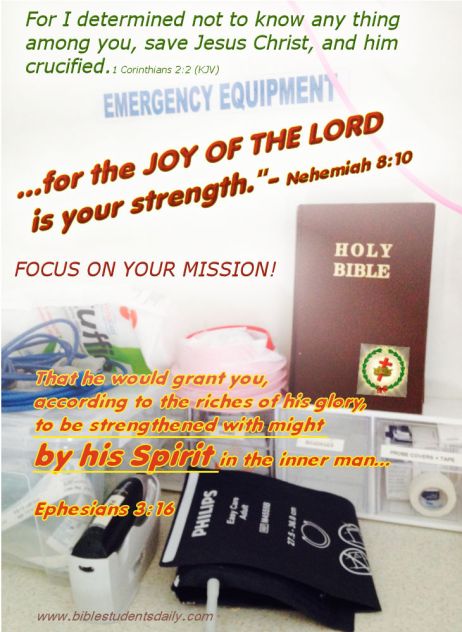
NEHEMIAH 8:10 – The Joy of the Lord is Your Strength

emergency equipment - the Bible, pray for the holy spirit of understanding.jpg

Why should the children of the Almighty God go mourning all their days?

It was proper that we should mourn for sin, that we should realize the need for a Savior, that we should lay hold upon him by faith; but, once we have accepted the Lord and realized the forgiveness of our sins, the time for mourning is past, the time for joy and rejoicing is commenced.

The Apostle exhorts that we should:

Rejoice in everything!
And YES, rejoice most especially in tribulation, because:

“tribulation worketh patience; And patience, experience; and experience, hope: And hope maketh not ashamed; because the love of God is shed abroad in our hearts by the holy Spirit which is given unto us” (Romans 5:3-5).

Since we have given ourselves to the Lord and he has accepted us as his children and given us the anointing of his spirit, adopting us into his family and made us heirs with Christ in the glorious promises to be fulfilled, our hearts should be so full of rejoicing that all the trials and difficulties of the way should seem as no burden to the New Mind in CHRIST but in fact… they are THE BEST OPPORTUNITIES TO EXERCISE CHEERFUL PATIENT ENDURANCE and prove to GOD that we are indeed trusting in Him—trusting that our Heavenly Father is treating us as His most special Sons and Daughters by allowing us to share in the experiences of humanity to one day, in the Heavenly Jerusalem up above, be able to be empathetic High Priests and Kings—perfected through the experiences that were overcome while in the human shell—the flesh—during disadvantageous conditions when the permission of evil was present, permitted as a “testing ground” for God’s called ones. 

Whoever can exercise the proper faith in the Lord and in his Word can rejoice.

The Lord is now seeking those who may FIRMLY TRUST him, come what may; he is seeking those who will walk by faith, not by sight (2 Corinthians 5:7).

Those who cannot walk by faith now will have the opportunity of walking by sight very shortly, when the kingdom shall be established. They indeed shall have a goodly portion, but the portion which God has specially provided for the faithful is joint heirship with his Son in the kingdom.

Let us, then, who have accepted the Lord and his Word, CAST AWAY everything of DOUBT and of FEAR, and live rejoicingly day by day while seeking to walk in the footsteps of him who loved us and bought us with his precious blood.

“The joy of the Lord is our strength” (Nehemiah 8:10).

This is the joy which God gives; the joy which comes from realizing that the Lord is our fortress; and that no ill can betide us without his knowledge, and that he has promised that all things shall work together for good to them that love him – with all their heart, mind, soul and strength.

“Our present sojourn is toward the heavenly Jerusalem, the kingdom … in a tabernacle condition, waiting for the eternal conditions which God has promised us” (Reprints of the Original Watch Tower, R3677).

“The true worshipers shall worship the Father in Spirit and in truth: for the Father seeketh such to worship him. God is a Spirit: and they that worship him must worship in spirit and in truth (John 4:23).

“Jesus saith unto them, My meat is to do the will of him that sent me, and to finish his work” (John 4:34).

Is not this our aim too—to finish our “mission” here for which we were called out by our Heavenly Father to complete?

The body members of Christ must endure all the pain, sufferings and ridicule for the sake of Christ—overcoming the battle of the flesh that results in the greatest joys in the Spirit of Christ, and a victory over every evil that surrounded in order to develop the highest form of Godly Love possible—AGAPE love—that “knows no evil” (Psalm 101:4; 1 Corinthians 13:5).

Worshiping in spirit and in truth does not simply mean prayer, praise, supplication and thanks giving. It goes deeper than all these and takes hold upon the affections, upon the heart, and hence signifies:

Not an act of worship but rather
A LIFE of worship.

This means a life in which, through the begetting of the spirit and the knowledge of the divine plan, the individual becomes so at-one with God and all the features of the plan of God that it is, in the words of our Lord his meat and his drink to do the Father’s will.

This is the real meaning of “worship in spirit and in truth.” It will find its expression… also in all the acts and words of life (R2071).

“It is the privilege of the Lord’s people to ask, in order that they may have fullness of joy.” (R5877).

We have this joy and the “peace of God, which passeth all understanding,” and we rejoice greatly in hope of the glorious things which the Father has in store for us and which the holy Spirit reveals through the Word.

“The joyful Christian is the thankful Christian. The thankful Christian is the one who is making the best use of his life. By reason of having exercised thankfulness of heart, he will be the better prepared for the kingdom” (R5203).

“Thankfulness will make every trial and sacrifice on our part seem small, and proportionately easy to be offered, and it will make all of God’s mercies and favors toward us proportionately grand and great and inspiring (R2723).


Reference:
R = Reprints of the Original Watch Tower and Herald of Christ’s Presence.

URL: https://biblestudentsdaily.com/2016/12/20/nehemiah-810-the-joy-of-the-lord-is-your-strength/

Enter your email address to subscribe to this blog and receive notifications of new posts by email.

Save

Save

Save

STUDY 7: The Priests. The Day of Atonement.

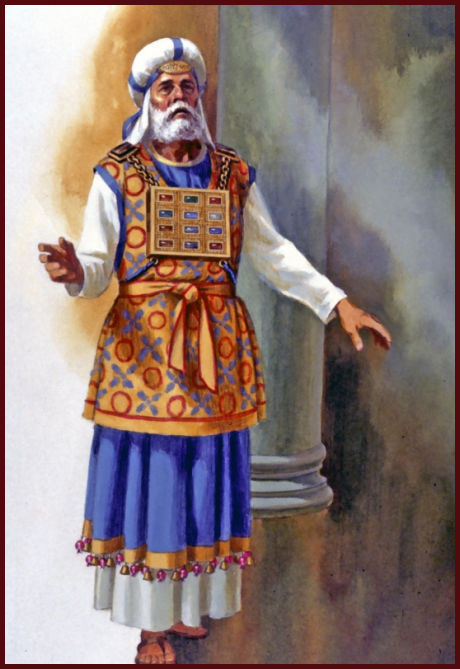
ex39-high-priest-garmentsThe Priests

In Leviticus, the ones serving at the altar and approaching near with the blood of offerings were the priests.

The priests had a special service regarding the sacrifices of the Law — representing the saints who have the privilege of sacrifice and service during the present time, together with their High Priest, Jesus.

Only the High Priest and the under-priests were to approach the altar for the service of performing the sacrifices and offerings, as we read in Numbers 3:10, “And thou shalt appoint Aaron and his sons, and they shall wait on their priest’s office: and the stranger that cometh nigh shall be put to death.”

On the Day of Atonement, according to the 16th chapter of Leviticus, the High Priest is said to have offered the sacrifices. This is explained in the following passages of the Bible:

Leviticus 16:1-3, 17: “And the Lord spake unto Moses after the death of the two sons of Aaron, when they offered before the Lord, and died; And the Lord said unto Moses, Speak unto Aaron thy brother, that he come not at all times into the holy place within the vail before the mercy seat, which is upon the ark; that he die not: for I will appear in the cloud upon the mercy seat. Thus shall Aaron come into the holy place: with a young bullock for a sin offering, and a ram for a burnt offering.”

17 And there shall be no man in the tabernacle of the congregation when he goeth in to make an atonement in the holy place, until he come out, and have made an atonement for himself, and for his household, and for all the congregation of Israel.

Hebrews 9:7 (NLT): “But only the high priest ever entered the Most Holy Place, and only once a year. And he always offered blood for his own sins and for the sins the people had committed in ignorance.”

The ark of the covenant was especially sacred. Levites were not allowed to see the ark. Thus Numbers 4:5 says it was to be covered by priests for moving, before the Levites accessed it.

Who Could Become a Priest?

The first High Priest of Israel was Aaron and the first under-priests were Aaron’s sons. We read about this in Exodus 28:1:

“And take thou unto thee Aaron thy brother, and his sons with him, from among the children of Israel, that he may minister unto me in the priest’s office, even Aaron, Nadab and Abihu, Eleazar and Ithamar, Aaron’s sons.

God chose Aaron as His mouthpiece (Exodus 4:16). In the Book of Hebrews, the Apostle Paul explains to us that “no man taketh this honour unto himself, but he that is called of God, as was Aaron (Hebrews 5:4).

In the generations after Aaron, the sons and grandsons and great grandsons (etc.) of Aaron, were qualified to become High Priests (as long as they were not otherwise impaired). They did not have to be sons of the then current High Priest.

The High Priests could only come from the Israelite — Levitical — Kohathitical — Amramic and Aaronic line, thus, they could only come from Aaron’s descendants (see Exodus 6:16-18).

In Ezra 7:1-5 there is an abbreviated list of the High Priests and in 1 Chronicles 6:4-14 there is a more complete list up to the captivity.

Here is a chart listing the names of the High Priests (in the two ascending rows to the left of the chart) descending from Eleazar and Ithamar, based on the recorded information by Ezra in 1 Chronicles chapter 6 — that is, until the deportation of Jehozadak when the Lord sent Judah and Jerusalem into exile to Babylon by the hand of Nebuchadnezzar.

(Note: There are also other names from the Levitical line listed in the chart below, yet these others were not priests.)
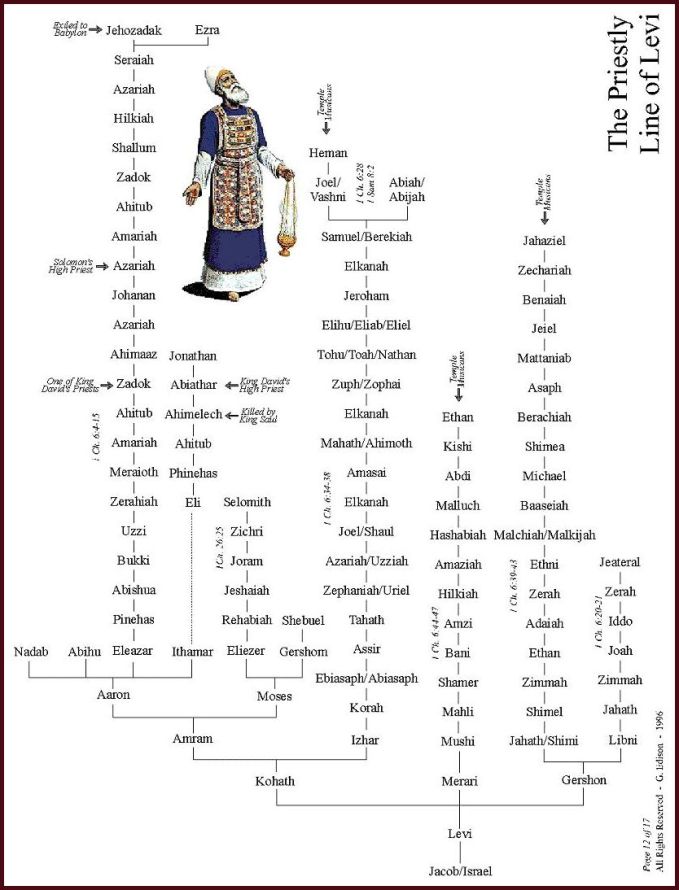
12 The Priestly Line of Levi.jpg

Why was Jesus — our “Melchizedek” priest & “King of Righteousness” (Hebrew 7:1–3)not born through the Levitical Tribe, but rather through the Tribe of Judah?

Jesus was born through the tribe of Judah, because Judah received the chain of genealogy that went from Reuben (disqualified) to Simeon (disqualified) to Levi (disqualified) to Judah.

Jesus by coming through Judah, was in the line of descent of Abraham, Isaac, Jacob, Judah as a genealogically clear line. Had Jesus come from Levi, one might suppose that he was a successor priest, and that the Levitical priesthood was intended to continue — which it was not.

(But Aaron married Eli-sheba, of Judah, and Jesus’ mother was from Judah — and her cousin Elizabeth, which is Greek for Eli-sheba, was evidently of Judah like Mary, but married Zachariah, a priest and thus from Levi — so at the beginning the two tribes were united in this way, and at the ending point when John (Levite) and Jesus (Judahite) came, the two tribes were united in this way.)

Here is a chart showing Jesus’ Geneology:
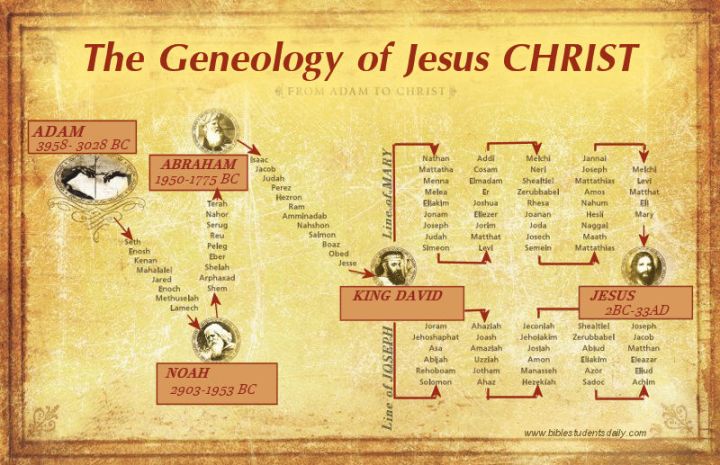
geneology-of-jesus-beauties-of-the-tabernacle-biblestudentsdaily-com

The Function of the Priests

16And Eleazar the son of Aaron the priest shall have charge of the oil for the light, the fragrant incense, the regular grain offering, and the anointing oil, with the oversight of the whole tabernacle and all that is in it, of the sanctuary and its vessels (Numbers 4:16).

Here is a brief summary of the priests’ functions, which included:

  • Primarily offering sacrifices on the altar for sins. This included the sprinkling of blood and burning portions of sacrifices (Leviticus 17:6, Hebrews 5:1).
  • Looking after the fire of the brazen altar (in the Court) and the burning incense on the hot coals on the incense altar in the Holy of the Tabernacle.
  • Overseeing the duties of the sanctuary performed by the Levites (Numbers 3:32).
  • Resolving arguments / deciding all cases of dispute and assault — be the ‘mediators’ between 2 parties of Israelites in any dispute (Deuteronomy 21:5, Hebrews 5:2).
  • Covering the holy furnishings and all the holy articles when the camp is to move (Numbers 4:5-15).

Some of the differences between the High Priest and the under-priests (who originally were composed of Aaron’s sons) include:

The high priest:

– Was the spiritual leader of the people of Israel;

– Wore different clothing compared to the other priests. e.g. the breast plate was only worn by the high priest (Exodus 28:29)

– Wore/had access to the Urim and the Thummim (Exodus 28:30).

– Offered sacrifices on the Day of Atonement, and on this day, was allowed to enter the Most Holy of the Tabernacle. The under-priests (i.e. Aaron’s sons) could not enter the Most Holy compartment of the Tabernacle, regardless if it was the Day of Atonement or not, unless for the sole purpose of covering the ark of the testimony when the camp was to move (Leviticus 16, Hebrews 9:7, Leviticus 10:1-5, Numbers 4:5). In Leviticus 10, evidently Nadab and Abihu died in front of the sanctuary, where these non-priests could retrieve the bodies. Had they entered the holiest place, their bodies would have been behind the veil, beyond which only the High Priest had authority to enter.

The Antitypical Priesthood

The Priesthood, one body under one chief or High Priest, was typical of the “little flock” (Luke 12:32) which, with its “head” and “High Priest,” Jesus, will constitute a royal priesthood in glory (1 Corinthians 11:3, Colossians 1:18, Hebrews 3:1, 4:14). Members of this priesthood, after the present time of sacrificing, will be kings and priests unto God, and reign over earth for a thousand years (Revelation 5:10, 20:6). But before the under-priests (the members of the Body of Christ) will be united to their “head” and begin their reign as the “Bride of Christ,” the 144,000, they must suffer with him,” sharing in the antitypical sacrifices in order to be glorified together with Christ (2 Timothy 2:12, Romans 8:17).

Those who qualify (at the point of death) as members of the Bride of Christ, shall receive the highest reward due to their sacrifice unto death, suffering for Christ’s sake (2 Timothy 2:12).

“They shall be priests of God and of Christ, and shall reign with him a thousand years (Revelation 20:6).

These are the 144,000 described in Revelation 7:4, who shall sit with Christ in his throne (Revelation 3:21).

The Apostle Peter addresses these sanctified ones (represented by the Aaronic priests), as “an holy priesthood … acceptable to God by Jesus Christ” (1 Peter 2:5).

About the spirit-begotten of the present time, Pastor Charles T. Russell wrote, “They are all ministers (servants) of the truth, though not all preachers and Doctors of Divinity: and each must do his share at self-sacrifice ere he will be accounted worthy to be a joint-heir with Christ” (Tabernacle Shadows, page 27).

It is the Bride class that will inherit immortality and live in the Divine Realm reigning with Jesus, as they are the ones described in Revelation 14:4, “which were not defiled with women; for they are virgins. These are they which follow the Lamb whithersoever he goeth. These were redeemed from among men, being the firstfruits unto God and to the Lamb.”

  • Few In Number

Jesus once addressed his followers (representative of the entire Gospel Age) as a “little flock” (Luke 12:32). This term “little flock” refers to the Bride of Christ class from the “called out” ones — that is, “the few” chosen from the “many” consecrated and spiritually begotten of the Gospel Age (Matthew 22:14). The 144,000 members of this Bride class, make their “calling and election sure” (2 Peter 1:10) revealed at the final verdict of judgment, that is, at one’s death, which is the point of time in the flesh, until one is to be “faithful until” (Revelation 2:10).

In Numbers 4:46–48, the number of Levites (in this context, representative of all the spirit begotten of the Gospel Age) prepared for service, was similarly few, 8580, compared to the population of Israelites as a whole (representative here, of the world of mankind). When we consider the priests inaugurated to serve at the time the Tabernacle was established, the number is remarkably few, five persons in all — Aaron and four sons (Exodus 28:1). Two of those priests were subsequently lost to the priesthood — Nadab and Abihu — evidently through intoxication (Leviticus 10:1, 2, 9). It is a lesson to us how careful we should be to avoid the intoxicating spirit of this world, lest we fall away from our privileges in Christ.

As those called of God to become priests who draw the world back to God, these have special privileges now.

Only the “Priestly” called-out class of this Gospel Age can see the glorious beauties of God’s Divine Plan. Others may know of them only as they hear them described — they have never seen the hidden light and beauty; never eaten of the “bread of presence;” never offered acceptable incense at the “golden altar.” To enjoy these privileges we must pass beyond the “door” of the “Holy,” through an entire (full) consecration to God, displayed even in the smallest intricacies of conduct — such as in one’s gentleness, tone of voice, modesty in clothing attire; not focusing on outward beauty such as (in the case of women) through the use of make-up or wearing of jewelry or expensive clothing or the braiding of hair as is explained by the Apostle Paul in 1 Timothy 2:9.

Rather, let us desire to add “shine” to the inner characterthe New Creation — by developing the fruits of the spirit to resemble the character of Christ. We still have this privilege presently, but soon it will draw to a close (Luke 13:25).

The Day of Atonement (Leviticus 16:1–34)

The Day of Atonement type reflects Jesus and His Church during the Gospel Age (Leviticus 23:27–28). The Day of Atonement is also known as Yom Kippur and was the most solemn holy day of all the Israelite feasts and festivals, occurring once a year on the tenth day of Tishri, the seventh month of the Hebrew calendar. On that day, the High Priest performed elaborate rituals to atone for the sins of Israel — that is, present a sin offering for himself (Aaron) and his “house” (Aaron’s sons), and present a sin offering for the “people” (the Israelites).

The Levites are not mentioned in Leviticus 16. Aaron and his sons were covered by the first sin offering, and the remainder of the Israelites were covered by the second sin offering, including the Levites other than the priests. As of Leviticus 16, the Levites (other than only Aaron and his sons) had not yet been given any special status. For their status was transferred to the Levites from the firstborn in the second year of Israel in the wilderness, whereas the first Day of Atonement occurred during the autumn of the first year of Israel in the wilderness (Numbers 1:1, 3:12).

The Day of Atonement was the only day of the year when the High Priest would enter the Most Holy of the Tabernacle to complete the sin offering ordinance.

Specific animals were sacrificed.
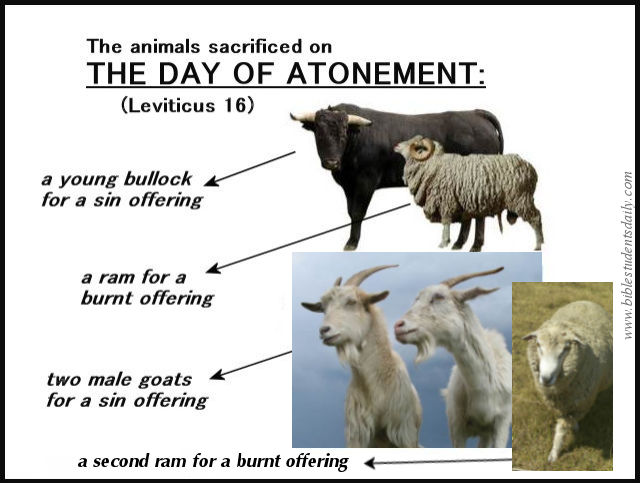
The Animals Sacrificed ON the DAY of ATONEMENT.jpg

We are told of this in Leviticus 16:6, 11 & 33:

 “And Aaron shall offer his bullock of the sin offering, which is for himself, and make an atonement for himself, and for his house.

11 And Aaron shall bring the bullock of the sin offering, which is for himself, and shall make an atonement for himself, and for his house, and shall kill the bullock of the sin offering which is for himself:

33 And he shall make an atonement for the holy sanctuary [the Most Holy area of the Tabernacle], and he shall make an atonement for the Tabernacle of the congregation [the Holy area of the Tabernacle], and for the altar [the golden altar in the Holy], and he shall make an atonement for the priests, and for all the people of the congregation [for the world].”

Two animals were sacrificed for the ATONEMENT DAY sin offering: (a) a bullock and (b) a goat.

  • (a) The Bullock

The bullock (on this specific day) represents our Lord Jesus as a man — as expressed in the Scriptures, “a body hast thou prepared me” (Hebrews 10:5).

Our Lord’s sacrifice took place at the beginning of his ministry and was finished at its close. Under the Law, it was only from the age of thirty, when Jesus could begin the sin offering sacrifice, and thus at thirty, Jesus came to John at the river Jordan to be baptised (Luke 3:23). It was here that Jesus presented himself in sacrifice to God, at the earliest possible time. It was at Jordan that Jesus fulfilled the prophecy (in Psalm 40:7) saying, “Lo, I have come, as in the volume of the Book it is written of me, to do thy will, O God. Thy law is written in my heart.”

Our Lord Jesus came to “taketh away the first that he may establish the second” (Hebrews 10:9); to set aside the typical for the “better sacrifices.”

From the moment of his consecration at baptism he was reckonedly dead and, at the same time, begotten of the holy Spirit. He was reckonedly alive as a new creature, an embryo spirit-being, during the three and a half years, the flesh being consumed and the new nature growing strong in the Lord, developing in harmony with the Divine will (R 4436).

Although the offering up of our Lord Jesus’ life was instantaneous (consecrating himself in a moment to give up all, even life itself, in the Father’s service), it is the presentation of his body to the trials and difficulties of life (i.e. his actual giving of time, influence, strength and vitality), that continued throughout the three and a half years of his ministry, ending at Calvary, on the cross.

“His House”

Jesus was the sin offering for “his house.” Jesus’ “house” is composed of the High Calling spirit begotten members consecrated to God during the current Gospel Age — those who have been running the race of the high calling during the Gospel Age, striving to present themselves as “living” sacrifices “holy, acceptable unto God(Romans 12:1).

It is only ONE house since there is only ONE high calling to be of the Bride of Christ — and this Bride class will be completed when the last “feet” members shall have passed beyond the “vail” at death of the flesh just before “the four winds” are let loose, signalling the beginning of Armageddon.

The “house” of Aaron are the priests, Aaron’s sons (not the tribe from which Aaron descended), just as the “house of David” meant David’s descendants, not his tribe.

Leviticus 16:6 says that the bullock was to make atonement for the Priest “himself:”

And Aaron shall offer his bullock of the sin offering, which is for himself, and make an atonement for himself, and for his house.

How then can we understand that Jesus required making atonement for “himself” if Jesus was without sin? (2 Corinthians 5:21)

We have the same question in Exodus 30:19, “For Aaron and his sons shall wash their hands and their feet thereat” (that is, at the laver). “His sons,” the priests, wash — representing that we wash from our sins. But why does Aaron wash, if he represents Jesus? The answer to this question is that Aaron washes in order to be a fitting picture of the sinless Jesus. This then, also answers the question why Aaron is atoned for — in order to be a picture of the sinless Jesus.

Let us now explain this, using the picture in Leviticus chapter eight (about the consecration of the priesthood). Leviticus 8:14 says, “And he brought the bullock for the sin offering: and Aaron and his sons laid their hands upon the head of the bullock for the sin offering.”
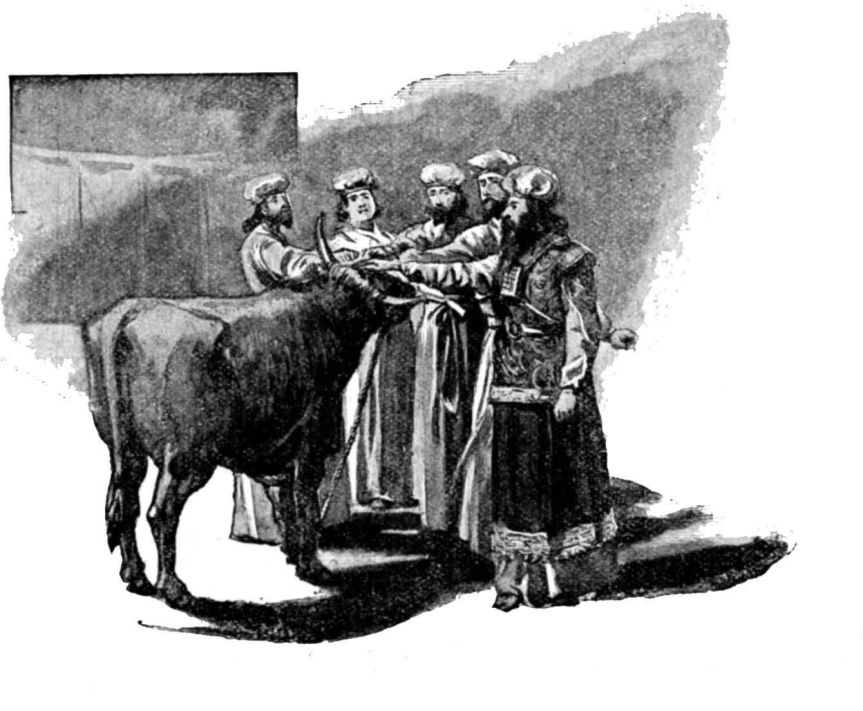
lev 8 - aaron and his sons laid their hands upon the bullock.jpgHere Aaron was consecrated and also his sons were consecrated. Since Aaron here represents Jesus, and his sons represent the priests (spirit begotten, consecrated of the Gospel Age) it is clear that here Aaron as a picture does not include the Church, for they are separately represented in the sons of Aaron. And yet, Aaron had to be atoned for (Leviticus 8:14), and he had to be “washed” (Leviticus 8:6). These are symbols of cleansing, yet Jesus did not need cleansing. Here is Br. Charles Russell’s comment on this in Tabernacle Shadows, page 29. Being but a sinful man, like others, Aaron had to be washed in order fitly to represent the purity of the antitype, Jesus, who knew no sin.”

Similarly, Aaron in Leviticus 16, after making an atonement for himself, was cleansed, in order to be a fitting representation of sinless Jesus. Thus, atonement for Aaron needed to be made because he personally had sin, and also for him to represent the sinless Jesus.

The non-priest Levites are not mentioned in Leviticus chapter eight, nine or sixteen. So they would not be part of the picture needing to have some fulfilment in the antitype. They are simply part of the “people,” part of the “congregation.” In the book of Numbers, we have a different picture. In the opening chapters of that book we have two classes the Israelites in general, and the Levites as a separate, consecrated class. In that picture (where no priests are mentioned), the Israelites represent believers in Jesus during the Gospel Age, and the Levites represent consecrated believers of the Gospel Age.

Aaron and his sons were atoned for by the bullock, while the “people” were atoned for by the Lord’s goat.

  • (b) The Goat

Besides the bullock being sacrificed on the Day of Atonement, there were also two goats presented before the Lord at the entrance of the “Holy” of the Tabernacle.

We read about this in Leviticus 16:8–10,

“8 And Aaron shall cast lots upon the two goats; one lot for the Lord, and the other lot for the scapegoat.

And Aaron shall bring the goat upon which the Lord’s lot fell, and offer him for a sin offering.

10 But the goat, on which the lot fell to be the scapegoat, shall be presented alive before the Lord, to make an atonement with him, and to let him go for a scapegoat into the wilderness.”

The Lord’s goat represents the Church of the Gospel Age (the spirit begotten and consecrated members of the High Calling).

The scapegoat was a vehicle for showing that the sins of the people were sent away and gone. It is a means of representing the removal of the sins of Israel, as a picture that the sins of the world will be cleansed and gone from the world of mankind, during the Millennium, as a consequence of the antitypical Atonement Day sacrifices of the Gospel Age. “As far as the east is from the west, so far hath he removed our transgressions from us” (Psalm 103:12).

The sacrifices of the Day of Atonement represent the Gospel Age.

The removal of sin from Israel represents what the world will appreciate in the Millennial Age soon to commence within a generation when the great High Priest (Jesus) will apply the blood of the antitypical goat on behalf of all the world of mankind — who, by restitution and instruction, will be brought into relationship with God as his people. In due time these will all become true Israelites indeed and the Heavenly Father shall become “All in All”  (1 Corinthians 15:28).

Garments of Glory

After offering the blood of the goat, the High Priest put off his sacrificial garments and put on his garments of glory and beauty, typified by the glorious qualities of Christ’s character and the honorable mission to which he had been anointed as the world’s Prophet, Priest, King, Judge, and Mediator. Thus coming forth he represents our Lord’s Second Advent and assumption of divine glory and power, at which time the Church will be with him as members of his Body, to cooperate in the dispensing of the blessings of the New Covenant to Israel and to all the families of the earth.

As on the Day of Atonement the people of Israel put on sackcloth and ate no pleasant food, but fasted and waited for the High Priest to appear in his garments of glory and beauty, so it has been throughout this Gospel Age. The whole world is under the power of the wicked one (1 John 5:19), overwhelmed in sin and death and corruption.

The Apostle Paul declares, “For we know that the whole creation groaneth and travaileth in pain together until now. For the earnest expectation of the creation waiteth for the manifestation of the sons of God” (Romans 8:22,19) — waiting for the Jesus and the Church (the Bride of Christ composed of 144,000 members) to appear to the world in glory and beauty to serve as their priesthood to bring all humanity back to harmony with God.

If in the type a blessing is portrayed, how much greater will be the blessing in reality!

As in days of old the people could then  arise, threw off their sackcloth and fasting and rejoice in their forgiveness, so in the Millennial morning, the world, coming to an appreciation of the great High Priest and the sacrifices of Atonement, will arise from sin and degradation and death and REJOICE in divine favor and in the realization of the many blessings of restitution set before Israel, as declared by the mouth of all the holy prophets since the world began (Acts 3:20).

References

Pastor Charles Russell: “Tabernacle Shadows,” “The Tabernacle and Its Teachings” — Supplement to Feb. “Zion’s Watch Tower,” Pittsburgh, PA, 1882, Volume 6 — “Studies in the Scriptures,” Reprints of the Watch Tower: R.4427.

Br. Anton Frey: “Notes on the Tabernacle,” pages 362-364; “Wilderness Wanderings.”

Br. David Rice — written content.

Further Suggested Reading

STUDY 1: An Introduction To The Tabernacle And It’s Purpose
https://biblestudentsdaily.com/2016/09/02/study-1-an-introduction-to-the-tabernacle-and-its-purpose/

STUDY 2: The Pillar of Cloud By Day And The Pillar of Smoke By Night  https://biblestudentsdaily.com/2016/09/09/study-2-the-pillar-of-cloud-by-day-and-the-pillar-of-smoke-by-night/

STUDY 3: The Tabernacle Construction: The Holy and The Most Holy  https://biblestudentsdaily.com/2016/09/14/study-3-the-tabernacle-construction-the-holy-the-most-holy/

STUDY 4: The Court (“Holy Place”)

STUDY 4: The Court (“Holy Place”)

STUDY 5: The Camp. The Israelites.
URL: https://biblestudentsdaily.com/2016/10/28/study-5-the-camp-the-israelites/

STUDY 6: The Levites
https://biblestudentsdaily.com/2016/11/18/study-6-the-levites/

STUDY 8: The Tabernacle Coverings
https://biblestudentsdaily.com/2017/01/02/study-8-the-tabernacle-coverings/

STUDY 9: The Gate. The Door. The Vail.
https://biblestudentsdaily.com/2017/03/01/study-9-the-gate-the-door-the-vail/

The URL for this post:

STUDY 7: The Priests. The Day of Atonement.


Enter your email address to subscribe to this blog and receive notifications of new posts by email.

Save

Save

Calculating the Date of Jesus’ Birth & the 70 week Prophecy of Daniel 9

calculating-the-date-of-jesus-birth

A good starting point for determining the date of Christ Jesus’ date of birth is to look at the dates we have in the Bible surrounding the life of John the Baptist, who was Jesus’s older cousin.

Jesus was 6 months younger than John the Baptist. We read about this in the first chapter of the Book of Luke.

“24 And after those days his wife Elisabeth conceived, and hid herself five months, saying, 25 Thus hath the Lord dealt with me in the days wherein he looked on me, to take away my reproach among men. 26 And in the sixth month the angel Gabriel was sent from God unto a city of Galilee, named Nazareth, 27 To a virgin espoused to a man whose name was Joseph, of the house of David; and the virgin’s name was Mary. 28 And the angel came in unto her, and said, Hail, thou that art highly favoured, the Lord is with thee: blessed art thou among women. 29 And when she saw him, she was troubled at his saying, and cast in her mind what manner of salutation this should be. 30 And the angel said unto her, Fear not, Mary: for thou hast found favour with God. 31 And, behold, thou shalt conceive in thy womb, and bring forth a son, and shalt call his name Jesus32 He shall be great, and shall be called the Son of the Highest: and the Lord God shall give unto him the throne of his father David: 33 And he shall reign over the house of Jacob for ever; and of his kingdom there shall be no end. 34 Then said Mary unto the angel, How shall this be, seeing I know not a man? 35 And the angel answered and said unto her, The holy Spirit shall come upon thee, and the power of the Highest shall overshadow thee: therefore also that holy thing which shall be born of thee shall be called the Son of God. 36 And, behold, thy cousin Elisabeth, she hath also conceived a son in her old age: and this is the sixth month with her, who was called barren. 37 For with God nothing shall be impossible” (Luke 1:24-37).

Another fact to consider in determining the date of Jesus’ birth, is the date of Tiberius Caesar’s 15th year of reign, which was AD 29. This is based on Luke 3:1-3 which reads,

“1 Now in the fifteenth year of the reign of Tiberius Caesar, Pontius Pilate being governor of Judaea, and Herod being tetrarch of Galilee, and his brother Philip tetrarch of Ituraea and of the region of Trachonitis, and Lysanias the tetrarch of Abilene, Annas and Caiaphas being the high priests, the word of God came unto John the son of Zacharias in the wilderness.” And he came into all the country about Jordan, preaching the baptism of repentance for the remission of sins.”

Tiberius received the throne in August of AD 14. If the remainder of that year was an accession year, then his first year would be in AD 15, his 12th when Pontius Pilate was appointed govenor of Judea would be AD 26, and his 15th when John the Baptist began his ministry would be AD 29.

Jesus was thirty years old when he was baptized by John the Baptist and started His ministry. We read of this in the third chapter of Luke:

“21 Now when all the people were baptized, it came to pass, that Jesus also being baptized, and praying, the heaven was opened, 22 And the Holy Ghost descended in a bodily shape like a dove upon him, and a voice came from heaven, which said, Thou art my beloved Son; in thee I am well pleased. 23 And Jesus himself began to be about thirty years of age, being (as was supposed) the son of Joseph, which was the son of Heli…” (Luke 3:21-23).

In the Gospel of Luke, we read that sheep and shepherds were out in the fields when Jesus was born. This highlights that it was the autumn season in Israel, and could not reflect the cold winter season, which the month of December falls into, in Israel.

“8 And there were in the same country shepherds abiding in the field, keeping watch over their flock by night. And, lo, the angel of the Lord came upon them, and the glory of the Lord shone round about them: and they were sore afraid. 10 And the angel said unto them, Fear not: for, behold, I bring you good tidings of great joy, which shall be to all people. 11 For unto you is born this day in the city of David a Saviour, which is Christ the Lord. 12 And this shall be a sign unto you; Ye shall find the babe wrapped in swaddling clothes, lying in a manger. 13 And suddenly there was with the angel a multitude of the heavenly host praising God, and saying, 14 Glory to God in the highest, and on earth peace, good will toward men. 15 And it came to pass, as the angels were gone away from them into heaven, the shepherds said one to another, Let us now go even unto Bethlehem, and see this thing which is come to pass, which the Lord hath made known unto us. 16 And they came with haste, and found Mary, and Joseph, and the babe lying in a manger” (Luke 2:8-16).

Now let us discuss the EXACT DAY of Jesus’ birth.

Some have thought that Jesus was born on September 29 on the Julian calendar, because that was celebrated as St. Michael’s day on the church calendar. This may be correct, but it is uncertain. The difference between lunar time, used by the Jews, and solar time, now in common use, involves some uncertainty also. However, autumn of 2 BC, is about correct.

Br. James Parkinson has an engaging analysis in “The Beauties of the Truth,” February 2011 issue, in the article “From Jordan to Golgotha.” “The single most-likely assumption is that Jesus was baptized on the first Sabbath after the Feast of Sukkoth, or Saturday, October 22. If so, then it follows that the number of days of Jesus’ spirit-begotten life to his crucifixion (?April 3, 33 AD) was … 1260 days.”

Nine months back of that date would bring us to the previous winter as the time at which our Lord laid aside the glory which he had with the Father before the world was [made] and the taking of or changing to human nature began. Possibly this is related to the celebration of December 25th as Christmas Day, though that specific date was evidently chosen to connect Jesus to the solar solstice, a day observed in common culture centuries ago.

The Seventy Week Prophecy

Thus the ministry of Jesus would have been about 3 1/2 years in length. This is compatible with what one might infer from the SEVENTY WEEK PROPHECY in Daniel Chapter 9. For that prophecy speaks of the “midst of the week,” which divides the last “week” of seven years into two parts, marking one of those as the ministry of Jesus. If Jesus was 30 years old at his baptism in the autumn of the year 29, then his death at Passover season in the spring of 33 AD yields a ministry, about 3½ years later, would be consistent.

The 70 week prophecy is given not in years but in units of “weeks”—seven year increments—so in weeks of years. Using this fairly course measure, the prophecy stipulates the number of weeks which would pass until the appearance of Messiah, namely 69. Messiah did appear subsequent to the end of 69 weeks, and of course before the end of 70 weeks, so this part of the prophecy is correctly fulfilled.

But precisely when in this last week would his ministry begin?

In order to specify this, the prophecy says, God would cause the “sacrifice and oblation” of the Law to cease “in the midst of the [last] week” (Daniel 9:27).

The middle of that last (70th) week would be in AD 29, the very time Jesus presented himself to John at Jordan for baptism. Jesus there became the antitype of the bullock of the sin offering for 3 1/2 years until 33 AD. Jesus began replacing the typical arrangements by fulfilling them as an antitype. At his baptism, Jesus began to fulfill the Law types and shadows respecting himself. Thus, in Hebrews 10:9 we read:

“Lo, I come to do thy will, O God. He taketh away the first [the Law and its types], that he may establish the second [the antitypes] (Hebrews 10:9).

Notice that the prophecy does not say Jesus would be cut off in the middle of the week. This thought, though a common interpretation of the prophecy, is not actually stipulated in the text. Verse 26 says “Messiah will be cut off,” and verse 27 says in the middle of the week God would cause the “sacrifice and oblation” to cease, but these are two separate parts of the prophecy.

Confirmed for One Week

Verse 27 says “he [God] shall confirm the covenant with many for one week.” When the text says “he,” clearly God is the one intended. Some suppose Christ is meant by this pronoun, and claim the antecedent is the same as the pronoun “himself” in verse 26 (King James version).

But in that verse “himself” does not appear in the Hebrew. The “he” of verse 27 who confirms the covenant is the same as the one who “determined” the seventy weeks (verse 24), namely Yahweh.

The week referred to is the last (70th) week, which included the ministry of John the Baptist, which began before Jesus appeared as Messiah in the middle of the week. The Jewish Covenant was “confirmed” to them by both John and Messiah, in order for faithful ones to be transferred from Moses into Messiah.

After the cross Jesus became the “end of the law covenant … to everyone that believeth” (Romans 10:4). The Law Covenant was not being “confirmed” to the Jews after Christ died.

The beginning of the week would be AD 26, and it is natural to ask what episode marked this date. But the prophecy does not specify any particular event. The prophecy does stipulate that 69 weeks would pass before Messiah appeared, but this does not require Messiah to appear immediately at the expiration of 69 weeks, any more than verse 26 requires Messiah to be “cut off” immediately “after threescore and two weeks.”

Incidentally, we notice that AD 26 was the date when Pontius Pilate assumed the governorship of Judea, setting the stage as it were for the events soon to unfold.

The fundamental basis for applying the Seventy Weeks must be proper historical dates. If we loose ourselves from this requirement, the whims of interpretation can direct the issue a variety of ways, with no anchor of fact to settle the matter. Today we have that anchor. Ezra’s commission was in 458 BC (Ezra 7:7-14), Nehemiah’s in 445 BC, and only the first one fits the prophecy.

The traditional understanding amongst many students of the Bible has been that AD 29 marks the beginning of the 70th week. In our understanding this cannot be so. Here is our reasoning WHY:

  • The prophecy tells us that it begins with a decree to restore Jerusalem.
  • There was no such decree in the year 455 BC, as would be necessary to make 69 weeks reach precisely to AD 29.
  • There was also no such decree in 454 BC (which is however, the understanding advocated by many dearly beloved brethren in Christ, and the understanding documented in Volume 2, Study 3, page 67 of “Studies in the Scriptures”)—and if there had been such a decree in 454 BC, then the time from 454 BC to AD 29 is only 482 years, rather than the required 483 years.

Thus 483 years forward take us to the year AD 26, which began the last, or 70th week. Seventy weeks of years forward terminate at Calvary, with no imprecision crossing the BC/AD divide.

The dates of Christ’s life are sometimes disputed elsewhere. But the evidence has been decisively shifting in favor of considerate Bible Student view.

In October, 1966, in The Journal of Theological Studies, appeared an article by William Filmer, “The Chronology of the Reign of Herod the Great,” showing that Herod died near the opening of 1 BC (rather than 4 BC), which allows Jesus’ birth in the fall of 2 BC, 30 years before his ministry began in the 15th year of Tiberius (Luke 3:1,23).

As three Passovers in Jesus’ ministry are explicitly referred to in the book of John, and possibly another in John 5:1, this is consistent with a 3½ year ministry which would have ended at Passover in the year AD 33, in which year Nisan 14 did fall on a Friday, consistent with the Gospel narratives.

See also “Dating the Crucifixion,” by Humphreys and Waddington, Nature magazine, December, 1983, which shows this to be the only feasible date for the crucifixion in all the years Pontius Pilate governed Judea, namely AD 26 to AD 36.

As Jesus died on Friday April 3, 33 AD (Julian calendar)—for that was Nisan 14 in the year 33 AD as best we can judge (which rarely falls on a Friday, but in this year it actually did) then if his ministry was 3½ years, discount the three for a moment, the half year would take us back six months from April—thus to October.

The day of the death of Jesus also coincided with a lunar eclipse, visible at Jerusalem as the moon rose near sunset on that fateful day. In this case, it seems the “moon turned to blood” as a token of the passing of the Law, with the death of Jesus. (Acts 2:16-21)

(Technical side note: in those days the Julian calendar operated in the Roman world, and the Gregorian calendar in use today did not begin introduced in 1582 in some European countries. However, some countries used the Julian calendar much longer. Turkey was the last country to officially switch to the new system on January 1, 1927.

To personally experiment with converting dates from one system to another, one can google “Calendar Converter.” The first hit should be the Formula date conversion site, https://www.fourmilab.ch/documents/calendar/. There are some caveats about computing Jewish dates before about 300 AD or so, but in this case it has it correctly.)

JESUS

THE gentle sighing of the wind among the pines,
The joyous singing of the lark at break of day,
The rippling of the water-brooks through cooling shade,
The patter of the softly falling rain at night,
Are sounds less sweet by far than His most precious name.

No art can show a form so gracious and so fair,
No Master’s hand hath drawn a smile so wondrous sweet,
Nor could depict the majesty of that pure brow;
No canvas ever glowed with such a holy light
As shines from His most radiant image in my heart.

The dearest earthly friend may fail in time of need,
The sweetest and the loveliest grow cold at heart,
The nearest may not heed the throbbing heart’s sad cry,
The gayest throng may hold the loneliest solitude,
But Jesus, Jesus never fails my call to hear.

Oh, may the music of Thy name more clearly fall
Upon my ears attuned to catch that sweetest sound!
Oh, may Thine image in my heart so bright become
That I by gazing may be changed into the same;
Oh, blessed Jesus, let Thy presence ne’er depart,
Oh, come and reign forevermore with my heart!

by Gertrude W. Seibert

Acknowledgement

Br. David Rice – written content.
Br. James Parkinson – for his study from “The Beauties of the Truth” – as referenced in the above post.

Further Reference & Reading Material:

“Confirmation on a Fall Birth Date,” The Beauties of the Truth, December 1980.

Volume 2 of “Studies in the Scriptures” by Br. Charles. T. Russell – “The Time Is At Hand”, Study 2 – Bible Chronology pg.55-62 : THE DATE OF OUR LORD’S BIRTH

“The Birth of a Savior” – The Dawn Magazine, December 2005.

“The Star of Bethlehem” – The Dawn Magazine, December 2003.

What Scriptures Point to Seven Years of Tribulation?https://chicagobible.org/what-scriptures-point-to-7-years-of-tribulation/

The URL of this post:
https://biblestudentsdaily.com/2016/12/06/how-to-calculate-the-date-of-jesus-birth/

Enter your email address to subscribe to this blog and receive notifications of new posts by email.

Save

Save

Save

Save

Save

The Cost of Discipleship

luke-9-23-bible-students-daily-poem

Would you be my disciples? Consider again:
Can you follow my footsteps through trial and pain?
Can you throw away pleasure, and glory, and fame,
And live but to honor my cause and my name?

Can you turn from the glitter of fashion and mirth,
And dwell like a pilgrim and stranger on the earth.
Despising earth’s riches, and living to bless?
Can you follow the feet of the shelterless?

Can you ask from your heart the forgiveness of men?
Can you list to reproaches, nor answer again?
Can you pray that repentance to life may be theirs
Who have watched for your falling, who have set for you snares?

When you hear I am come, then can you arise,
The joy of your heart springing up in your eyes?
Can you come out to meet me whatever the cost be,
Though you come on the waves of a storm-crested sea?

When I call, can you turn and in gladness “come out”
From the home of your childhood, the friends of your heart?
With naught but my promise on which to rely,
Afar from their love — can ye lie down and die?

Yes! We’ll take up the cross and in faith follow you
And bear your reproach, your disciples to be.
Blest Savior, for courage to you we will fly;
Of grace you has promised abundant supply.

This poem is from “Poems of Dawn.”

*******

Hebrews 12:1-12 (KJV)

1 Wherefore seeing we also are compassed about with so great a cloud of witnesses, let us lay aside every weight, and the sin which doth so easily beset us, and let us run with patience the race that is set before us,

Looking unto Jesus the author and finisher of our faith; who for the joy that was set before him endured the cross, despising the shame, and is set down at the right hand of the throne of God.

For consider him that endured such contradiction of sinners against himself, lest ye be wearied and faint in your minds.

Ye have not yet resisted unto blood, striving against sin.

And ye have forgotten the exhortation which speaketh unto you as unto children, My son, despise not thou the chastening of the Lord, nor faint when thou art rebuked of him:

For whom the Lord loveth he chasteneth, and scourgeth every son whom he receiveth.

If ye endure chastening, God dealeth with you as with sons; for what son is he whom the father chasteneth not?

But if ye be without chastisement, whereof all are partakers, then are ye bastards, and not sons.

Furthermore we have had fathers of our flesh which corrected us, and we gave them reverence: shall we not much rather be in subjection unto the Father of spirits, and live?

10 For they verily for a few days chastened us after their own pleasure; but he for our profit, that we might be partakers of his holiness.

11 Now no chastening for the present seemeth to be joyous, but grievous: nevertheless afterward it yieldeth the peaceable fruit of righteousness unto them which are exercised thereby.

12 Wherefore lift up the hands which hang down, and the feeble knees;


The URL for this post:

The Cost of Discipleship

Enter your email address to subscribe to this blog and receive notifications of new posts by email.

Save

Are You in the Little Flock?

Many called few chosen- 2.jpg

You can quote scriptures from the Apostle Paul, from James, from Isaiah and Malachi, but only when you hear the words of Jesus does it have power. I’m not saying there is no power in the others, but when Jesus speaks we listen! And this is what he says:

“Strive to enter in at the narrow gate, for many I say unto you will seek to enter in and shall not be able” (Luke 13:24).

Now there’s a companion text to that in Matthew 22:14:

Many are called, but few are chosen.”

This is a sobering kind of text. It shakes me up!

Are you one of the many called, or are you the one that’s not chosen?

Most of you are called, but will you be the one chosen? This is a powerful idea. It circumvents all the things in the scriptures—the Tabernacle and the shadows.

If I asked, what is the foremost question in your mind?  What is the question you want answered? If a call came in and God’s on the phone and He says I will answer any question as long as it’s one question, what question would you ask? Would it be whether the Levites are in the Great Company class? … What’s the question that burns in your mind?

Have I made it in the Little Flock?

The Apostle Paul even wanted the answer to this question. In 66 ad when he was martyred, the Apostle Paul said, I have made it!  Did God give him that answer? I don’t think so. I think he just had the confidence – I’ve done the job, I’ve executed the mission, I’ve done what the Lord wanted me to do. Can you say the same thing? Do you have that confidence?

Jesus said, Strive to enter in. Does the word “strive” mean relax, take your lounge? The word means “to vigorously apply oneself with great strenuous effort toward a goal or a mission.” “Strive” means to unceasingly reach for success, to battle, to fight.

What’s the opposition preventing you from making it?

Satan’s one. He doesn’t want you to make it, not because he has anything personally against you, but only because he knows that when the 144,000 is complete that’s the end of him!

The second opposition is our inherited imperfection. We are not born perfect. We’ve got a lot of imperfections, we’re in captivity, in slavery. It restrains us. Then we have the opposition of the government, from poor education, from poor relationships, opposition from poor health. All these weigh heavily on you and these restraints prevent us from striving, because striving means to struggle with these captivities, to fight these restraints.

Didn’t Jesus say that many will not be able to enter in? These are the words of Jesus.

Look around you – you’re not all going to make it! I’m sorry but I have to say it, and I’m saying it to myself because it burns within me.

I want to be in that Little Flock and I will do anything that’s necessary to do it.

Do you have that same determination, that same fight?

Striving is the process for releasing these captivities; it’s the path toward freedom from restrictions. Striving is the process of becoming better, the road to perfection. This is what the Holy Spirit does for us. It gives us the strength to rid the captivities, moving us toward being part of that divine family.

We’re not all going to make it!

Striving is the benchmark, and benchmark means a marked point of evaluation that indicates you’re doing what is expected. It is the standard model, a kind of touchstone. God sees your striving as a benchmark. God does not look at your imperfections, He knows you’re already imperfect, but He’s looking to see how you’re striving. Do you get it – striving to move ahead?

Remember what Jesus said:

Strive, strive, strive!

Many will not be able to do it.

  • We strive for knowledge, but how much knowledge is enough? You will never reach the ultimate knowledge but we strive to get as much knowledge as we can.
  • We strive for sacrifices, but how much sacrifice is enough? We don’t know how much. How much sacrifice does the Lord accept?
  • We strive for goodness, but how much goodness is enough?  We don’t know. Jesus said there’s only one that’s good and that’s God. You’re striving to be good when there’s only One that’s good, so how much goodness must we do to be acceptable?
  • We strive for services, but how much service is enough? We strive to do as many services as we can, but can we really be perfect? What is the answer if we cannot reach the absoluteness of these values?

It’s striving, acting and reacting strenuously to go as high with these values as we can. God sees the striving; that’s what He’s looking at.

If you’re not striving it means you feel you have arrived, but if you keep striving you are recognizing that you’re going towards where He wants you to be.

Time Is Running Out.

God’s time clock for those of the high calling will shortly shut down.

Don’t look at the high calling  and think it’s going to go on and on and on. It won’t!

It’s going to shut down one day.

There’s a spiritual urgency and we can no longer delay.

We can no longer defer what we must do while the door is still open. It may close next year or in 5 years, 10 years, 15 years but probably not beyond that.

What’s sobering about this kind of evaluation and appraisal is your destiny in a class where you will remain in that class eternally.

Do you understand that? Do you know what destiny means?

It means future living, the provenance of life, the inevitability. Whatever class you achieve – the divine class, the Great Company class, the human class, or the second-death class – whichever class you’re in you will be in that class not 100 years, 1000 years, 1,000,000 years, 100,000,000 years, No, for ever and ever and ever because we have no indication that there will be another change of nature.

NOW is the time for you to affect your destiny. Get to it! There is an urgency.

 Fight, and fight hard for your destiny.

Destiny is only a word but you know that it means forever.

COL. 3, 2.JPG

Don’t get fixed on earth!

Time is short and drawing to an end.

The lesson is that if you’re going to make your calling and election sure, you must get with it because the door to the high calling will not be shut until all who are called will have the opportunity to crystallize their characters and show themselves approved unto God. All the prophetic events, all the promises and all the due-time accomplishments will be completed – we’re not discounting them. Everything has to be done, but you’re the most delayed element in all of them. The rest of them the Lord God can change overnight.

There’s another issue here: the validation of God’s Plan. Do you want to help God with His Plan? Most of our prayers are Lord, help me, I’ve got this problem. Lord, we need this. Always me, me, me.

How many of us have ever said, Lord, what can I do to help you? How many have asked that question? I’ll give you the answer because the answer is intrinsic in the divine plan:

Make your calling and election SURE!

When you do that you validate His Plan because He called you to do that. If you don’t make it He will call someone else to replace you. When you make your calling and election sure, things will move more rapidly.

There will be no kingdom, no resurrection, no eternity, nothing will happen until that Little Flock is completed and they help God with His Plan. That’s YOU!

It’s frightening and sobering to think we are such an important part of God’s Plan. We must remember what’s happening: God is re-creating us. To create means to originate a new form, a new design. We were created once but it didn’t work out well, so we are being re-created. In our first creation you didn’t have a choice. We didn’t pick our parents or our genetic package, our style of imperfection. But here God is saying you now have choice. You can choose who you want to be in those ages of ages, you have choice. Jesus says, Strive to enter into the narrow gate for many will not be able to.

God is not trying to make us clones of Jesus even though we try to be like him. We can never be like him because Jesus was the Logos, he has a different genetics, he was the son of God, he was perfect – we cannot be exactly like him but we can have a likeness of him.

How Are We Like Jesus?

We’re like him in the way he lived, the principles he lived, those divine principles of God. Do you know what those principles are?

I want to share a few with you and light a fire under you.

1. Upgrade your consecration. Most of us are consecrated to a model we had years ago, and I’ll refer to that later.

2. Incorporate these divine principles into our re-creation. That’s how you have to think of yourself. You are changing your nature, you are going to be a divine being. That’s what Jesus meant when he said about John the Baptist that he was greater than any of the prophets. That’s quite an evaluation! Then he said, The least in the kingdom is greater than John the Baptist. WOW!

That means you’re greater than Abraham, Elijah, Elisha, Isaiah, Daniel and all these great prophets!

How are you greater than them? Not one of them was being changed into the divine being.

YOU are! That’s what the Lord Jesus meant.

You are going to acquire a kind of inheritance that no one has ever had, not even the angels who were not begotten but created.

Back to Point 1: increasing our services. Upgrade your model of consecration: I hear it so often said that “if I follow the beatitudes I’ll make it.” Another will say, “if I can follow the fruits of the spirit and do a good job there I’ll be in the Little Flock.” These are notions of yesterday; the new consecration model is to recognise that there are many models in the Bible, not just one. The beatitudes is one, fruits of the spirit is two, John’s message to the churches is three, Peter’s Christian virtues is four, Moses’ tabernacle processes is five, James’ spiritual fruits is six, and Paul’s mark of the four quarters is seven. There are seven models. Which one do you want to fill?

I suggest you put them all together into a composite model, that is, statistically see how many of these various virtues are found in every one of them. I did that for you and found:

  1. The first is to love. That’s the big one.
  2. The second is to sacrifice, and that’s big, too. It isn’t giving up a meal but sacrificing on behalf of other people.
  3. The third is to learn. Learning is not preparation for the Little Flock, it is part of it.
  4. The fourth is to be holy, sinless. Sinning is serious with God. He doesn’t want sinners in the holy family.
  5. The fifth is to serve, serving to reconcile.
  6. The sixth is to be zealous for God’s work
  7. The seventh is to be re-created and loyal to God Himself.

That’s the composite model. Let’s take a second suggestion: Re-examine and change your attitude about the divine nature.

When does the divine nature begin?

Most of you would say, at the resurrection. When Jesus was resurrected, was he resurrected to a spiritual nature and then later given the divine nature? Or was he resurrected with a divine nature?  I’m only saying that we have to address ourselves to divine nature because what does “nature” mean. I like the word “likeness”. We are like Jesus; we are like God, but we’re not God. How? We live like He does with the same principles. What are they?

  1. To love first: (John 3:16). In the 2 billion Christians in the world today, most practice a reaction love – I will love you if you love me. God doesn’t have that love. God practises a first love. GOD first initiates the love.
  1. Loving without reward: (Matthew 6:3). We’ve got to stop asking, What’s in it for me? Do something without getting any credit for it. That’s a hard thing to do – I want my name on that!
  1. Giving to others: (Luke 6:38). “Give” should be your middle name. Keep giving until it hurts. I sometimes wonder why the Lord wants us to be like that. It’s because the Lord is going to give you the divine power, a divine body. What are you going to do with that? Are you going to keep it to yourself? Oh, I’m a divine being! God doesn’t want that because God doesn’t like that way. He gives and you too must give when you become a divine being but you have to practise it now as a principle.
  1. Loving your enemy: Don’t take revenge if someone does an injustice to you. How many times among the brethren injustice has happened to us? Do you try to get even? We’re not going to invite them to our convention any more! That’s getting even. Don’t get even. Loving your enemy means for any injustice, not judging according to external appearances. If you can’t get along with people here on earth, brethren with the holy Spirit, what makes you think you’re going to get along with them up there?
  1. Upgrade your services: Our call to be re-created to the divine nature is also a call to service. Once we get into the Little Flock we’re not going to lie in a hammock and someone will bring us cold drinks!

It’s very simple:

The Lord has called you to go to work. There’s a big work.

It’s been estimated 20 billion has ever lived. Science says there have been 100 billion people since the Ice Age — that’s a lot of people. And we’ve heard the sort of things that have to be done. We have to reconcile a lot of people. That’s work! Just wait to see what has to be done. And the Lord says, Do it now!  This is the work of the Kingdom.

[NOTE: There are currently seven billion people alive today and the Population Reference Bureau estimates that about 107 billion people have ever lived. (According to the BBC News in 2012)]

Brethren in Christ,

Let us get with divine principles, as many as we can, incorporate them into our lifestyle, because we want to please God and be part of the Little Flock.

Make sure you don’t lose it!

I am going to be in that Little Flock if it kills me, and it may kill me, but at least I can say I tried.

I am going to fight, to struggle.

We know we’re not perfect and our failings have been numbered, but what is precious in God’s sight is our striving.

If you’re not striving, you’re not trying to get into the Little Flock.

The gift of grace from God is precious. USE every moment you got now in the service of the Lord, and get to work like never before with the mind FIXED… SUPERGLUED to Jesus, to bring GREATEST JOY to our Heavenly Father!

Amen.

Acknowledgment & reference:

Br. Paul Mali – his discourse.


This post’s URL:
https://biblestudentsdaily.com/2016/12/03/are-you-in-the-little-flock/

Enter your email address to subscribe to this blog and receive notifications of new posts by email.

Save

Save