

All The Way My Saviour Leads Me – Hymns of Dawn No. 12
Bible Scriptures Associated With This Hymn
- “The LORD alone guided him, And there was no foreign god with him” (Deuteronomy 32:12, NAS).
- “He restores my soul. He leads me in paths of righteousness for his name’s sake” (Psalm 23:3, ESV).
“The path marked out by the Word of the Lord as one of meekness, faith, patience, love, etc” (R1646:5 — Reprints of the Original Watch Tower and Herald of Christ’s Presence).
- “For if we live, we live to the Lord, and if we die, we die to the Lord. So then, whether we live or whether we die, we are the Lord’s” (Romans 14:8, ESV).
- “For the Lamb in the midst of the throne will be their shepherd, and he will guide them to springs of living water, and God will wipe away every tear from their eyes” (Revelation 7:17, ESV).
- “But if we walk in the light, as he is in the light, we have fellowship with one another, and the blood of Jesus his Son cleanses us from all sin” (1 John 1:7, ESV).
- “(16) Now may our Lord Jesus Christ himself, and God our Father, who loved us and gave us eternal comfort and good hope through grace (17) comfort your hearts and establish them in every good work and word” (2 Thessalonians 2:16-17, ESV).
- “and you belong to Christ; and Christ belongs to God” (1 Corinthians 3:23, NAS).
- “To them who by patient continuance in well doing seek for glory and honour and immortality, eternal life” (Romans 2:7, KJV).
- “And we know that all things work together for good to them that love God, to them who are the called according to his purpose” (Romans 8:28, KJV).
- “For thou, Lord, art good, and ready to forgive; and plenteous in mercy unto all them that call upon thee” (Psalm 86:5, KJV).
Lyric
1.
All the way my Saviour leads me;
What have I to ask beside?
Can I doubt his tender mercy,
Who through life has been my guide?
Heav’nly peace, divinest comfort,
Here by faith in him to dwell!
Chorus
For I know whate’er befall me,
Jesus doeth all things well,
For I know, whate’er befall me,
Jesus doeth all things well.
2.
All the way my Saviour leads me;
Cheers each winding path I tread;
Gives me grace for ev’ry trial,
Feeds me with the living bread;
Though my weary steps may falter,
And my soul athirst may be,
Chorus
Gushing from the Rock before me,
Lo! a spring of joy I see.
Gushing from the Rock before me,
Lo! a spring of joy I see.
3.
All the way my Saviour leads me;
Oh, the fulness of his love!
Perfect rest to me is promised
In my Father’s house above;
When my spirit, clothed immortal,
Wings its flight to realms of day,
Chorus
This my song through endless ages—
Jesus led me all the way.
This my song through endless ages—
Jesus led me all the way.
The History Of This Hymn
Author – Frances Jane van Alstyne (perhaps best known as “Fanny Jane Crosby,” 1820-1915). At 6 weeks old, she lost her sight due to a traveling doctor instructing her parents to apply hot mustard poultices to treat an eye infection, which burnt her corneas.
Just a year after she was blinded, her father caught a chill while working in the cold November rain, and died soon after. Twenty-one-year-old Mercy Crosby (her mother) was left to provide for herself and her daughter. This she did by seeking employment as a maid. Fanny’s grandmother (Eunice Crosby) cared for her during the day, and the two became very close.
Around the age of 15 years, she entered the New York City Institution for the Blind. On completing her training she became a teacher therein from 1847 to 1858. In 1858 she married (one of her students) Alexander Van Alstyne, a musician, eleven years her junior, who was also blind. Her first poem was published in 1831.

Fanny loved her work, and was happy in it. It is contentment that Fanny Crosby said “has been the motto of my life,” she says. Amongst her earliest composition (aged eight) she wrote:
“O what a happy soul am I!
Although I cannot see,
I am resolved that in this world
Contented I will be;”
She maintained this positive outlook all her life and considered her blindness a blessing, not the curse many would be tempted to call it. As she once stated:
“It seemed intended by the blessed providence of God that I should be blind all my life, and I thank him for the dispensation. If perfect earthly sight were offered me tomorrow I would not accept it. I might not have sung hymns to the praise of God if I had been distracted by the beautiful and interesting things about me.”
Her grandparents spent many hours reading the Bible to Fanny and teaching her the importance of prayer and a close relationship with God. They quickly discovered that Fanny had an amazing capacity for memorization and encouraged her to learn large passages of scripture by heart, which Fanny did — memorizing several chapters each week and she could quote the Gospels, Proverbs, Song of Solomon, and many of the Psalms.
When Fanny was five, her mother got another job far away and they were forced to say goodbye to her grandparents.
“Whatever your affliction is, you can bear it cheerfully. That’s because God is using it to lead you to something even better.” ~ Grandmother Eunice Crosby
Fanny Crosby began her hymn writing (of around 9,000 hymns) in her forties. Publisher and hymn writer William B. Bradbury hired her to write hymns for his company, telling her, “While I have a publishing house, you will always have work!” Fanny knew she needed God’s help in this new endeavor, and once described her hymn writing process this way:
“It may seem a little old-fashioned, always to begin one’s work with prayer, but I never undertake a hymn without first asking the good Lord to be my inspiration.”
Some of Crosby’s best-known songs are found in the Bible Students’ Hymnal “Hymns of Dawn,” which include: “Blessed Assurance” (Hymns of Dawn — No. 342), and “To God Be the Glory” (Hymns of Dawn — No. 360). Some publishers were hesitant to have so many hymns by one person in their hymnals, so Crosby used nearly 200 different pseudonyms during her career.
One day in the fall of 1874, Fanny did not have enough money to pay the rent and no way to get it. As was her custom, she prayed in earnest that God would supply her need. Not long after she finished praying, there was a knock at the door. There at the door stood a complete stranger who spoke not a word, but handed Fanny a folded piece of paper, and then turned and left. It was the five dollars needed for the rent, the exact amount needed to stay in her flat for another month.
“I have no way of accounting for this,” she later said, “except to believe that God put into the heart of this good man to bring the money. My first thought was that it is so wonderful the way that the Lord leads me. I immediately wrote the poem, and Dr. Robert Lowry set it to music” and it is this very hymn — “ALL THE WAY MY SAVIOR LEADS ME.” ~ Fanny Crosby
Although Fanny was only paid a dollar or two for each of her hymns, she and Van could have lived comfortably on this income yet Fanny’s priority was to give away anything that was not necessary to their daily survival. Hence, the Van Alstines lived in a small, cramped apartment in Manhattan’s Lower East Side, near one of Manhattan’s worst slums, just a few blocks from the notorious Bowery, a well-known “haunt for hopeless alcoholics and the main artery of a thriving red light district and pornographic center.” Because of her proximity to this needy area, Fanny became zealous in her efforts to help the people around her. She became a great fan of Jerry McAuley, a former convict who was converted after hearing the testimony of a friend. Jerry founded the Water Street Mission, America’s first rescue mission, to minister to those enslaved to alcohol and violence as he once had been. She often mingled with McAuley’s audiences, conversing and counseling with those she met. She did not believe in pointing out people’s faults to them.
“You can’t save a man by telling him of his sins. He knows them already. Tell him there is pardon and love waiting for him. Win his confidence and make him understand that you believe in him, and never give him up!” ~ Fanny Crosby
Fanny Crosby refused to let the trials and tribulations of life get her down.
“One of the easiest resolves that I formed in my young and joyous heart was to leave all care to yesterday and to believe that the morning would bring forth its own peculiar joy.” ~ Fanny Crosby
The life of Fanny Crosby is an excellent example of how God uses trials and tribulations to refine us, to teach us to depend on Him, and to equip us for the calling He has placed on our lives.
Composer – Robert Lowry (March 12, 1826 – November 25, 1899) was an American professor of literature, a Baptist minister and composer of gospel hymns.

He was responsible for around 500 compositions, including “Nothing But the Blood,”“Follow On“ (with William O. Cushing), “Shall We Gather At The River?” and “How Can I Keep From Singing?“ He also wrote the music and refrain for “Marching to Zion” (words by Isaac Watts).
*******
The words below, are from the Reprints (R5653) of the Original Watch Tower and Herald of Christ’s Presence, with the insertion of words in brackets from R3268 —
“JEHOVAH IS MY SHEPHERD”—
Psalm 23:1
IT IS safe to say that no other collection of poems has accomplished as much good as the Book of Psalms. Its sentiments seem to touch the soul at every turn — in joy, in sorrow…
THE GREAT SHEPHERD AND HIS FLOCK
All the features of the Psalm are applicable to our Redeemer Himself as well as to His followers, whom He styles the sheep of His flock. To His Church He is the Representative of the Father, so fully, so completely, that He could say truthfully, “He that hath seen Me hath seen the Father.” No human being could see the Heavenly Father and live, as the Scriptures declare; and those who saw and understood Jesus to be the Son of God, caught the best possible glimpse of the Heavenly Father.
And so we all see Jesus as the Representative of the Father, the Son of the great King, the Son of the great Shepherd, Jehovah.
Jesus and His Church are more particularly the sheep of Jehovah’s flock than were the Israelites of the Jewish Age; for the relationship of the Jews was through Moses, while the relationship of the Church is through Christ and the superior Covenant which centers in Him… Jesus declared that there is only one way of entering the sheepfold; namely, through the door. And He declared Himself to be the Door.
HOW TO BECOME A TRUE SHEEP
By nature we are sinners under Jehovah’s sentence of death, and not His sheep. He has purposed a great Plan for the world in general, which will begin to operate as soon as Messiah’s Kingdom is established. However, in the interim He is receiving special sheep — during this Gospel Age; and Jesus tells how, saying, “If any man will come after Me [be My disciple, My follower, My sheep], let him deny himself, and take up his cross and follow Me.”
Self-denial is the first step — self-renunciation, giving up of the will to God. The Covenant reads, “Gather My saints together unto Me; those who have made a Covenant with Me by sacrifice.” All who would be the Lord’s sheep must make this Covenant of Sacrifice; it is the condition under which they may be accepted.
Moreover, as the Jews could come only through their appointed mediator, Moses, so we can come into this higher sheepfold only under the antitypical, greater Moses, Christ. There is none other name given. Once having taken this step, once having come into the sheepfold by the Door — in the approved manner — we have the Message of God, saying, “All things are yours; for ye are Christ’s and Christ is God’s.” What this means is described in this Psalm (1 Corinthians 3:22,23).
ALL WANTS ABUNDANTLY SUPPLIED
The Lord’s sheep, abiding in perfection of relationship with Him, will lack nothing. Their every need will be supplied. This may not mean greater earthly wealth or name or fame or luxury.
The Lord’s sheep are New Creatures, spirit beings, who are temporarily dwelling in the flesh like other people, but who really are waiting for their change, to be completed by a share in the First Resurrection.
The Lord’s blessings to Natural Israel were earthly blessings, supplying their every earthly need; but His blessings to Spiritual Israel are spiritual favors. “No good thing will He withhold” from these — yea, even chastisements and sorrowful experiences that may be necessary for their spiritual development.
Green Pastures
The Psalm assures us that, as the Lord’s sheep, we shall be provided with green pastures and the cool, refreshing waters of Truth. Moreover, while thus being spiritually fed and refreshed, we shall have the peace of God, as is implied in the suggestion that the sheep will lie down in the green pastures — to such an extent that the Lord’s sheep may truthfully say that they have “the peace of God which passeth all understanding” ruling in their hearts, notwithstanding outward trials, difficulties, perplexities and adversities.
[“Which of the Lord’s sheep has not found such green pasturage of spiritual refreshment in his private devotions and studies of divine things? Which of them has not experienced similar refreshment and rest and nourishment from the Master’s provision that his sheep shall not forsake the assembling of themselves together as the manner of some is — for the study of the Word, for prayer, for testimonies of the Lord’s goodness and mercy? All these opportunities and privileges, whether personally experienced or whether they are yet only in the mind through the medium of the printed page, are provisions made for the sheep by the great Shepherd. Those sheep which find no enjoyment in such privileges and blessings and refreshments have reason to question their faithfulness in following the lead of the Shepherd. And those sheep which, finding such opportunities, decline to use them, thus give evidence of lack of harmony with the Shepherd’s gracious intentions and wisdom (R3268).”]
They [the Lord’s people] in their hearts rejoice in the sentiment expressed by the poet, “Jesus has satisfied, Jesus is mine” (Matthew 6:32).
But alas! Not all of the sheep have full confidence in the Shepherd and are fully resigned to have no will but His. Some are continually getting into difficulty, because they neglect the green pastures and cool, refreshing waters of Truth found in the Word of God — because, goat-like, they sometimes wander off into the desert, straying far from the Shepherd and attempting to feed themselves on the indigestible things of the present life, on which no spiritual nature can thrive.
Rod and Staff
Yet even such straying sheep the Shepherd will not leave, if they have become truly His. He goes after them, as the Psalm represents. His rod and His staff are their comfort; [it is a rod of help, defense and chastisement].
- With the rod —he beats off their enemies, the wolves that would injure;
- With the crook of His staff — He wisely and carefully assists the entangled sheep out of its difficulties — out from amongst the cares of this life, the entanglements and deceitfulness of riches, and the besetments of sin and of Satan.
Many of the sheep of the Lord’s flock thus can sing, “He restoreth my soul”—
- He brings me back to Himself;
- He makes me again to know, to appreciate, to enjoy His provision for me and to see how much better it is than anything I could have provided for myself.
[“The prophet does not refer to a restoration of body or of physical health, but a restoration of soul, being. Some of the Lord’s most precious saints have been weary and faint and troubled—even the dear Redeemer fainted under his cross, and was neither kept whole or made whole miraculously on the occasion. The application of the Prophet’s words to the Christian experience would make these experiences, called restoring of soul or being, to correspond with our justification to life. All our lives were forfeited under the divine sentence, and by faith a complete restitution or restoration of soul is granted to the believer, that he might have something to offer in sacrifice to the Lord, “holy, acceptable” (Rom. 12:1), and that in this sacrifice service he may walk in the footsteps of the great Shepherd who lay down his life for the sheep. Thus are the true sheep led in right paths, in proper paths, advantageous to their spiritual development, though frequently trying and difficult to them according to the flesh. This favor and blessing and opportunity comes to them not for their own sakes or worthiness but through the Lord’s grace — ‘for his name’s sake’” (R3268)].
A further experience is next brought to our view — the Shepherd’s leading.
“He leadeth me in the paths of righteousness.” He causes me, even by my own stumblings and difficulties, to learn to appreciate the desirableness of His ways and the undesirableness of every other way. All His ways are perfect, are righteous. He leads us not contrary to our wills, but in harmony therewith, to prove what is the good, next the acceptable, and finally the perfect will of God (Romans 12:2).
THE VALLEY OF DEATH’S SHADOW
All of our lives we have been in the shadow of this great Valley of Death. Only father Adam was ever on the mountain-tops of life. He lost his footing there, and descended gradually the slopes into this Valley of the Shadow of Death. We, his children, were all born here. We are dying daily; we are surrounded by dying conditions. We have merely the hope that the Lord will lead His sheep back to the heights of life.
He is now leading His sheep of this Gospel Age — the Church, the Body of Christ.
By and by He will lead the world, during His Millennial Kingdom; as He declared, “Other sheep I have, that are not of this fold; them also must I bring,… and there shall be one fold and one Shepherd” (John 10:16).
“Oh, sometimes the shadows are deep,
And rough seems the path to the goal!”

The end of this Valley of Shadow is near, not merely in the sense that we shall soon reach the end of life’s journey, but especially in the sense that the New Day is about to dawn, of which the Lord, our Shepherd, declared the result: “The Sun of Righteousness shall arise with healing in His beams” (Malachi 4:2). The final result will be that there shall be no more sighing, no more crying, no more dying; but the whole world will begin to emerge from the Valley of the Shadow of Death. For a thousand years they will be rising again to the glorious heights of human perfection from which Adam fell, and the right to return to which is secured for all by the death of Jesus, “the Just for the unjust.”
[“The sheep of the little flock fear no evil because of the Lord’s favor, because he is with them, on their side, and has shown his favor in the redemption price already paid. He is with them, too, in his word of promise — his assurance that death shall not mean extinction of life, but merely, until the resurrection, an undisturbed sleep in Jesus. What wonder that these can walk through the valley of the shadow of death singing and making melody in their hearts to the Lord, calling upon their souls with all that is within them to praise and laud and magnify his great and holy name, who loved us and bought us with his precious blood, and has called us to joint-heirship with our dear Redeemer (R 3268).]
THE CHURCH’S BETTER TABLE
The Lord’s people of the present time have an especially prepared table, where they may partake even in the presence of their enemies. That will not be true in the future; for no enemies nor anything to hurt or injure shall then be permitted (Isaiah 11:9.)
The Lord’s consecrated people, even when misunderstood, misrepresented, defamed and opposed, are still privileged to feast at the Lord’s Table!
The table — represents God’s provision for their needs — the promises of God, the assurances of His favor, etc.
Another evidence that the Psalm belongs especially to the Church of this Age is the statement, “Thou anointest my Head with oil.” Jesus, the Head of the Church, was anointed with the oil of gladness above His fellows. That holy anointing oil used on the priests and kings of Israel typified the Holy Spirit, which came upon the Church representatively in Jesus. And this same anointing oil has come down over all the members of the Church, which is the Body of Christ, as we read in Psalm 133:2.
THE CUP BOTH SWEET AND BITTER
“My cup runneth over.” The word cup is used in the Scriptures to represent a draft, sometimes sweet, sometimes bitter, sometimes both. The intimation is that the Lord’s Cup signifies bitter experiences and trials in the present time; as Jesus said, “The Cup which My Father hath poured for Me, shall I not drink it?” And this was the Cup — His Cup—which He offered to His disciples and which we, in becoming His disciples, propose to share with Him, and which is symbolically represented in the Communion Cup (1 Corinthians 10:15-17).
It is sweet and precious, in many senses of the word to be privileged to participate in the sufferings of Christ, in any sacrifices or services for the Lord and His Cause.
The sweet mingles freely with the bitter. But the Lord promises that in the future the Cup of new wine in the Kingdom shall more than compensate for any bitterness of the present time.
Our Cup is full,
but we would not wish it one drop less.
[“He who would partake of the joys of the Lord must also partake of his cup of suffering; we must suffer with him if we would reign with him. But we count the sufferings of this present time as not worthy to be compared with the glories that shall be revealed in us, and hence we are enabled to rejoice in tribulation, so that as the tribulations will overflow the rejoicing likewise overflows, and with the Apostle we can say, Rejoice, and again I say rejoice!” (R3268)]
“Surely goodness and mercy shall follow me all the days of my life.”
How precious the thought — God’s goodness, God’s mercy, with all those who are truly His in Christ — following us day by day, moment by moment, and according to the Scriptures making all things work together for our good! Then the grand finale is signified, “I shall dwell in the House of the Lord forever” — in the Heavenly House, of which the Redeemer said, “In My Father’s House are many mansions;…I go to prepare a place for you,” and “I will come again and receive you unto Myself.” Then, at His Second Coming, with our glorious change, we shall enter the Father’s House in the fullest sense of the word, on the spirit plane, which flesh and blood does not inherit.

This shall be the everlasting portion of God’s Elect — the Church. The great blessings subsequently to come to the world — earthly blessings — will in no sense interfere with, but enhance, the glory of the Church; for she will be engaged with her Lord in dispensing blessings to the earthly sheep (Galatians 3:29).
*******
“My Saviour” — Christ Jesus
Here are some free online articles in relation to the Heavenly Father — Jehovah, and his Son — Christ Jesus — “a ransom FOR ALL … to be testified in due time” (1 Timothy 2:6), as well as, about the holy Spirit (the invisible power and influence of God) with clear explanations about why the anti-Christ teaching of “the trinity” — introduced by the Roman Catholic Church system (the “Beast” in the Book of Revelation) — is not what the Bible teaches. The Bible Student Movement does not support the teaching of purgatory nor does it support the Roman Catholic System’s teaching about people being sent to a place where they burn up forever, which certainly does not reflect the perfect love of God — the Almighty Creator of all things.
Hence, for the interested Reader, we urge you to consider the following articles and posts:
The Doctrine of the Trinity – Mystery or Confusion by Br. David Rice.
http://www.heraldmag.org/1999/99nd_3.htm
The Origin of the Trinity – From Paganism To Constantine by Sr. Cher-El L. Hagensick.
http://www.heraldmag.org/olb/Contents/doctrine/The%20Origin%20of%20the%20Trinity.htm
Facts About the Trinity
http://www.heraldmag.org/olb/contents/doctrine/FACTS%20ABOUT%20THE%20TRINITY.htm
God and the Trinities
http://www.heraldmag.org/literature/doc_42.htm
Development of the “Trinity Doctrine” by Br. Tom Gilbert.
http://www.beautiesofthetruth.org/Archive/Library/Doctrine/Mags/Bot/90s/2010d.pdf
Understanding John 1:1 by Br. Richard Doctor.
http://www.beautiesofthetruth.org/Archive/Library/Doctrine/Mags/Bot/90s/2010d.pdf
Father, Son and Holy Spirit
https://biblestudentsdaily.com/2016/06/23/father-son-and-holy-spirit/
What Is the Heavenly Father’s Name
https://biblestudentsdaily.com/2017/06/27/gods-name-what-is-the-heavenly-fathers-name-that-we-are-to-hallow-and-why/
Jesus – The Name
https://biblestudentsdaily.com/2017/07/05/jesus-the-name/
The Doctrine of Christ – Booklet
http://www.biblestudents.com/docs/DoctrineChrist.pdf
Hymn Book Purchase
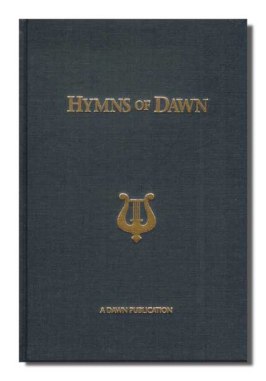
The Hymns Of Dawn (hymn book) can be purchased at:
The Chicago Bible Students Online Bookstore: https://chicagobible.org/product-category/books/page/4/
The Dawn Bible Students Association: http://www.dawnbible.com/dawnpub.htm
Acknowledgment & References
- Br. Charles Taze Russell

Br. Charles Russell—the founder of the Bible Students movement, who is the compiler of “Poems and Hymns of Millennial Dawn” which was published in Allegheny, Pa., in 1890. This Bible Students’ devotional originally contained a total of 151 poems and 333 hymns.

Later on, the hymns from this book formed a basis for the hymnal titled “Hymns of Dawn” which was published by the Dawn Bible Students Association in East Rutherford, New Jersey (USA) and the 1999 edition contains a total of 361 hymns.
- Harvest Truth Data Base
- Hymnary.org.
- Wikipedia.org
- Christianity.com
Further Reading
Worthy To Be Praised
https://biblestudentsdaily.com/2016/05/15/worthy-to-be-praised/
DANIEL 3:17 — Our God Whom We Serve Is Able To Deliver Us
https://biblestudentsdaily.com/2017/10/14/daniel-317-our-god-whom-we-serve-is-able-to-deliver-us/
The Lord Is My Shepherd, (R.1396) — Reprints of the Original Watch Tower and Herald of Christ’s Presence.
The Lord Is My Shepherd, (R.3268) — Reprints of the Original Watch Tower and Herald of Christ’s Presence.
The URL of this post:
https://biblestudentsdaily.com/2018/02/18/all-the-way-my-saviour-leads-me-hymns-of-dawn-no-12/













 BIBLE Students DAILY