What Does It Mean To Be Baptized Into Christ?

matt-16-25

What types of baptism are practiced in the Churches?

There is more than one type of baptism practiced in the Christian world. There is:

  • Sprinkling or Pouring on the Head
  • Infant Baptism
  • Submersion under water.

Sprinkling or pouring water on the head

There are no Scriptures in the Bible that describe baptism as the sprinkling or pouring of water on the head.

The first instances in the Bible where individuals were baptized was accomplished by John the Baptist.

Did John the Baptist sprinkle water or submerse the person under water?

“Now John also was baptizing in Aenon near Salim, because there was much water there. And they came and were baptized” (John 3:23, NKJ).

And He [Jesus] went away again beyond the Jordan to the place where John was baptizing at first” (John 10:40, NKJ).

If all John was doing was sprinkling water to baptize, he did not need to worry about being near the “much water” of the Jordan River. Clearly, John was doing more than just sprinkling those he baptized.

Infant Baptism

Is infant baptism scriptural?

Nowhere in the Bible do we find infant baptism mentioned. Although at times the Scriptures do mention the baptism of households, they never specifically mention children or infants.

For example, in Acts 8, Philip preached to the people of Samaria.

“But when they believed Philip as he preached the things concerning the kingdom of God and the name of Jesus Christ, both men and women were baptized” (Acts 8:12, NKJ).

Notice, there is no mention of Philip baptizing infants in Samaria; just men and women.

In Mark 16:16, Jesus said, “He who believes and is baptized will be saved.”

It would not be possible for a newborn infant to understand who Christ is, let alone believe in him.

Remember the question Jesus asked James and John in Mark 10:38,

Are you able to be baptized with the baptism I am baptized with?”

A newborn infant would not be capable of answering Jesus’ question, let alone responsibly making such a commitment.

Submersion (Dunking) into Water

Now we do find examples in the New Testament of adult baptism and in every case we believe the baptism was a submersion into water. For example:

“When He [John] had been baptized, Jesus came up immediately from the water; and behold, the heavens were opened to Him, and He saw the Spirit of God descending like a dove and alighting upon Him” (Matthew 3:16).

” (38) So he [Philip] commanded the chariot to stand still. And both Philip and the eunuch went down into the water, and he baptized him. (39) Now when they came up out of the water, the Spirit of the LORD caught Philip away, so that the eunuch saw him no more; and he went on his way rejoicing” (Acts 8:38-39).

The only way Jesus and the Ethiopian eunuch could have “come up” out of the water is if they have been submersed under it.

Greek Definition Of Baptism:

In support of this conclusion that baptism is submersion, let us looks at some definitions.

STRONGS: 907 baptizo (bap-tid’-zo); to immerse, submerge; to make overwhelmed (i.e. fully wet).

VINES: baptism, baptist, baptize.

A. Nouns.

1. baptisma (908), “baptism,” consisting of the processes of immersion, submersion and emergence (from bapto, “to dip”).

B. Verb.

baptizo (907), “to baptize,” primarily a frequentative form of bapto, “to dip,” was used among the Greeks to signify the dyeing of a garment, or the drawing of water by dipping a vessel into another.

So this word has the meaning of complete submersion under water. Certainly when dying, the garment must be totally submerged in the dye.

There is a variation of this word.

2. baptismos (909), as distinct from baptisma (the ordinance), is used of the “ceremonial washing of articles,” in some texts; once in a general sense.

This word is only found four times in the New Testament and refers to ceremonial washings.

John’s Baptism & Its Purpose

Let us talk about John’s (the Baptist’s) baptism. John’s work was not for the Gentiles. His work of baptism was intended to reveal Jesus to the Israelites only, but John did not baptize believers into Christ. That would come later, after Pentecost. His work was not for the Gentiles.

In John 1:29-31 we read, “(29) The next day John saw Jesus coming toward him, and said, ‘Behold! The Lamb of God who takes away the sin of the world! (30) This is He of whom I said, After me comes a Man who is preferred before me, for He was before me. (31) I did not know Him; but that He should be revealed to Israel, therefore I came baptizing with water.‘”

So John the Baptist was baptizing in order to reveal Jesus to Israel only, not yet to the Gentiles.

Bearing fruit was an evidence of those who had sincerely baptized. As John the Baptist said, “Therefore bear fruits worthy of repentance” (Matthew 3:8, NKJ).

John’s baptism required a personal confession of sins. “And all the land of Judea, and those from Jerusalem, went out to him and were all baptized by him in the Jordan River, confessing their sins” (Mark 1:5, NKJ).

Repentance and typical cleansing restored repentant Jews back to the condition of harmony with God as enjoyed under the Law Covenant and through the tabernacle arrangement.

“John came baptizing in the wilderness and preaching a baptism of repentance for the remission of sins” (Mark 1:4, NKJ).

The Jews had not previously practiced individual baptism. The whole nation was recognized as “baptized into Moses in the sea and in the cloud” (1 Corinthians 10:1-2).

In what sense were the Israelites “baptized into Moses in the sea and in the cloud”? 
We answer: When the Israelites passed through the Red Sea they were surrounded by water, and Paul mentions that this is a picture of them being baptized. The cloud is mentioned in Exodus 13:22, “He took not away the pillar of the cloud by day, nor the pillar of fire by night, from before the people.” We think that that was the cloud Paul referred to as over the Israelites — so that in that sense they were surrounded from above by water as well.

The Jews were already children of God and heirs of the covenants and promises, and their washing away of their sins meant their coming near again to God, and into closer touch with all the promises and the blessings thereof (Harvest Gleanings I, 1HG255).

John the Baptist’s baptism, was “for the remission of avoidable sins, gross sins. The godly Jews were not intended, nor expected, to come to John to be baptized. He said, ‘Now come, if you want to get ready for Messiah’s kingdom, and try to keep the law the best you are able and take this water immersion, accepting this as a sign of your putting away sin and starting a new course of life.’ This is all that baptism meant to the Jews. That was not a regular institution. It was a peculiar thing that belonged just to the end of the [Jewish] age, and John tried there to especially prepare a people by this preaching of holiness and putting away of sin for the Messiah; for the testimony is that if they had believed John they would have believed Jesus. If they disbelieved John and disregarded what he said, and were not careful to come back into harmony with God, and become as holy as they were able to do, then they were not in a condition to receive the message God had to give” (What Pastor Russell Said – Question Book, Q34:3).

This typical cleansing available to the Jews is discussed in Leviticus & Hebrews.

“For on that day [of Atonement] the priest shall make atonement for you, to cleanse you, that you may be clean from all your sins before the LORD” (Leviticus 16:30).

“And every priest stands ministering daily and offering repeatedly the same sacrifices, which can never take away sins” (Hebrews 10:11).

So John baptized the Jews for repentance and remission of sins similar to the typical cleansing as was accomplished in the tabernacle by the sacrifice of bulls and goats on the Day of Atonement. Every Jew under the Law Covenant was a member of the house of Moses (Hebrews 3:5). As mentioned above, the Jews were baptized unto Moses in the sea and in the cloud (1 Corinthians 10:12). As natural branches of the olive tree the Jews did not need en-grafting into Christ (Romans 11:16-21). John could not baptize Gentiles since they could not by repentance be restored back to a position they had never occupied.

After Pentecost, John’s baptism was replaced by Christian baptism into Christ.

In the book of Acts we have an incident where some of John’s disciples, after hearing the gospel, were baptized again, this time into Christ; after which they received the holy Spirit.

Acts 19:1-6 – “(1)… Paul, having passed through the upper regions, came to Ephesus. And finding some disciples (2) he said to them, ‘Did you receive the holy Spirit when you believed?’ So they said to him, ‘We have not so much as heard whether there is a holy Spirit.’ (3) And he said to them, ‘Into what then were you baptized?’ So they said, ‘Into John’s baptism.’ (4) Then Paul said, ‘John indeed baptized with a baptism of repentance, saying to the people that they should believe on Him who would come after him, that is, on Christ Jesus.’ (5) When they heard this, they were baptized in the name of the Lord Jesus. (6) And when Paul had laid hands on them, the holy Spirit came upon them, and they spoke with tongues and prophesied. (7) Now the men were about twelve in all.”

These disciples were baptized twice (John’s & Christ’s). Bro. Charles T. Russell teaches, “The Apostle instructed them more fully, assuring them that John’s baptism was all right in its time and place, but that they should be baptized in the name of Jesus, baptized into Christ” (Harvest Gleanings I, HG732:6).

In Acts 2:41 three thousand people were baptized and among these, there may have also been some that had been baptized by John earlier.

‘Never is it said of any Gentile that he was baptized unto repentance and remission of sins, that he got back into Moses and in accord with the law. On the contrary, the apostle shows that we and all spiritual Israelites coming from among the Gentiles, come into Christ in a different way from that in which the Jews became related to him. I call your attention to the apostle’s argument in Rom. 11:17-24, where he uses an olive-tree as a symbol or picture. He tells us that that olive-tree was primarily the Jewish nation; that its root was the Abrahamic promise; its branches were the individual Jews. It was to those branches that John preached the baptism of repentance. Many of them were defiled, living in sin, and he urged them to repent and be washed, cleansed; that otherwise they would be broken off. And so it was when Messiah was manifest; the prepared ones, Israelites indeed, in whom was no guile, were ready for him, received him and he received them, and they continued to be branches of that olive, tree. But the great mass of the branches, as the apostle goes on to explain, were broken off because they did not receive our Lord, because they were not in the right condition of heart, not “Israelites indeed, without guile” (Harvest Gleanings I, HG).

Christian Baptism and Its Meaning

Christian baptism has many elements that are similar to John’s baptism and some elements that are different. As with the Jews baptized by John’s baptism, Christians are to confess and repent from their sins.

“And many who had believed came confessing and telling their deeds” (Acts 19:18).

“(46) Then he said to them, ‘Thus it is written, and thus it was necessary for the Christ to suffer and to rise from the dead the third day, (47) and that repentance and remission of sins should be preached in His name to all nations, beginning at Jerusalem'” (Luke 24:46-47).

“Then Peter said to them, ‘Repent, and let every one of you be baptized in the name of Jesus Christ for the remission of sins; and you shall receive the gift of the Holy Spirit'” (Acts 2:38).

Br. Charles Russell teaches, “This baptism was for Jews only, who had already been baptized into Moses in the sea and the cloud. Sins thus figuratively washed away did not include original sin, but merely minor transgressions against the Mosaic law.” (Reprints of the Original Watchtower 4308:5, 6th Volume of Studies in the Scriptures p.428, Harvest Gleanings I, 600:1,2)

John the Baptist could only provide typical remission. The Christian receives a real remission of sins through actual justification by Jesus’ blood.

John’s baptism pointed the Jews to Christ, but the Christian is to actually believe in Christ and accept Him as their Savior. Let’s see how this is shown in the Scriptures.

“(36) Now as they went down the road, they came to some water. And the eunuch said, ‘See, here is water. What hinders me from being baptized?’ (37) Then Philip said, ‘If you believe with all your heart, you may.’ And he answered and said, ‘I believe that Jesus Christ is the Son of God’” (Acts 8:36-37).

Then Crispus, the ruler of the synagogue, believed on the Lord with all his household. And many of the Corinthians, hearing, believed and were baptized” (Acts 18:8).

So faith in Jesus Christ is a requirement for the Christian baptism.

Baptism Into Christ – Not Into An Organization

Although those baptized into John’s baptism were to bear fruit, the Christian’s death to sin, walking in newness of life and drinking of the cup is a far deeper action. Christian baptism is more than the pursuit of righteousness. It is the total death of self will and a total commitment to sacrifice ALL — one’s time, talent and possessions to the Lord, often at the cost of suffering and persecution.

“Yes, and all who desire to live godly in Christ Jesus will suffer persecution” (2 Timothy 3:12).

“(3) Or do you not know that as many of us as were baptized into Christ Jesus were baptized into His death? (4) Therefore we were buried with Him through baptism into death, that just as Christ was raised from the dead by the glory of the Father, even so we also should walk in newness of life. (11) Likewise you also, reckon yourselves to be dead indeed to sin, but alive to God in Christ Jesus our Lord. (12) Therefore do not let sin reign in your mortal body, that you should obey it in its lusts. (13) And do not present your members as instruments of unrighteousness to sin, but present yourselves to God as being alive from the dead, and your members as instruments of righteousness to God” (Romans 6:3-13).

So we see from the 6th chapter of Romans and lowering the candidate into the water represents the death of the Old Man with his sinful ways and the raising up of the candidate shows our walk in newness of life as New Creatures in Christ Jesus. Notice how Romans 6:3 teaches that we are baptized into Christ’s death.

No scripture talks about being baptized into Jehovah’s organization. Also see how the following text show we are actually baptized into Christ.

For all of you who were baptized into Christ have clothed yourselves with Christ” (Galatians 3:27, NASV).

“Peter said to them, ‘Repent, and each of you be baptized in the name of Jesus Christ for the forgiveness of your sins; and you will receive the gift of the Holy Spirit'” (Acts 2:38, NASV).

Ultimate Purpose of Baptism

What is the ultimate purpose of Christian baptism? Certainly to lay down our lives in the Lord’s service is purpose enough, but the Bible shows a purpose even beyond that.

Just as going to medical school is of no benefit to humanity unless the student becomes a practicing doctor, so it is with the Christian.

Context:

“And the Scripture, foreseeing that God would justify the Gentiles by faith, preached the gospel to Abraham beforehand, saying, ‘In you all the nations shall be blessed'” (Galatians 3:8, NKJ).

“In your seed all the nations of the earth shall be blessed, because you have obeyed My voice” (Genesis 22:18).

“(27) For as many of you as were baptized into Christ have PUT ON Christ… (29) And if you are Christ’s, then you are Abraham’s seed, and heirs according to the promise” (Galatians 3:27,29).

Those who are baptized are Abraham’s seed through whom God’s purpose is to bless all the families of the earth. This is the ultimate purpose of baptism.

The same point is expressed in 1 Corinthians 15:29.

“Otherwise, what will they do who are baptized for the dead, if the dead do not rise at all? Why then are they baptized for the dead?”

This passage says that we are baptized for the dead,” not “into death.” The ultimate purpose of baptism is to bless all the families of the earth.

Many translations agree with this wording, “baptized for the dead.” The translators do not believe this. They would rather not translate this text. Peter puts it this way:

“receiving the end of your faith—the salvation of your souls” (1 Peter 1:9, NKJ).

The word “your” is in italics. The thought is that the outcome of our faith, THE ULTIMATE PURPOSE, will be the salvation of mankind.

Does water baptism cancel sins? 

The traditional view among Catholic and many Protestant denominations is that baptism is necessary for salvation, forgiveness and the cancellation of sins. Not only do they believe it necessary, but some feel it must be performed in a prescribed fashion in order to secure salvation.  Some of their supposed proof texts are:

“Then Peter said to them, ‘Repent, and let every one of you be baptized in the name of Jesus Christ for the remission of sins; and you shall receive the gift of the Holy Spirit’ ” (Acts 2:38).

“He who believes and is baptized will be saved; but he who does not believe will be condemned” (Mark 16:16).

“And now why are you waiting? Arise and be baptized, and wash away your sins, calling on the name of the Lord” (Acts 22:16).

“There is also an antitype which now saves us — baptism” (1 Peter 3:21).

These texts are telling us that those who are baptized will be saved and receive a remission or washing away, of sins. So are the Catholics and many Protestants correct in believing that the act of baptism is necessary for salvation?

No. Where these Christians are wrong is that it is NOT “water baptism” that saves us.  Rather, the true baptism saves us, that is, consecration and the resultant justification by Christ’s blood. Water baptism cannot save.  It is merely a symbol of the true baptism and the resultant justification that can save us.

Baptism is the outward sign of an invisible grace from our Heavenly Father through Jesus Christ.

“Since, therefore, we have now been justified by his blood, much more shall we be saved by him from the wrath of God” (Romans 5:9, ESV). 

We are saved by Jesus’ act of justification, not by our symbolic act of water baptism.

Water Baptism Is Symbolic

Many Scriptures establish that water baptism itself is merely a symbol and that it does not have intrinsic atoning qualities.

Luke 12:50 – “But I have a baptism to be baptized with, and how distressed I am till it is accomplished!”

Jesus had already received water baptism by John, so in this case the word “baptism” must be symbolic of more than the literal water baptism. This is also borne out in Mark 10:38-39 (see also Matthew 20:22-23):

“(38) Jesus said to them, ‘You do not know what you ask. Can you drink the cup that I drink, and be baptized with the baptism that I am baptized with?’ (39) They said to Him, ‘We are able.’ So Jesus said to them, ‘You will indeed drink the cup that I drink, and with the baptism I am baptized with you will be baptized.'” 

More evidence of the symbolic nature of water baptism is found in Colossians 2:11-12 (ESV):

“(11) In him also you were circumcised with a circumcision made without hands, by putting off the body of the flesh, by the circumcision of Christ, (12) having been buried with him in baptism, in which you were also raised with him through faith in the powerful working of God, who raised him from the dead.

Notice here that both circumcision & water baptism are symbolic of putting away sin.  Obviously “circumcision” here is not literal. The Christian is not literally required to be circumcised as were the Jews under the Law. This is the symbolic circumcision of the heart. So, just like circumcision is symbolic, likewise, water baptism here is also symbolic.

Next is another symbolic usage of baptism, although a much different one.

“(11) I baptize you with water for repentance, but he who is coming after me is mightier than I, whose sandals I am not worthy to carry. He will baptize you with the Holy Spirit and fire. (12) His winnowing fork is in his hand, and he will clear his threshing floor and gather his wheat into the barn, but the chaff he will burn with unquenchable fire” (Matthew 3:11-12, ESV). 

The baptism by “fire” is symbolic of the judgment and destruction upon the nation of Israel as stated in verse 12, “He will burn up the chaff with unquenchable fire.”

Just as the baptism by fire is symbolic, so is water baptism.

We are not saved by the symbol “water baptism,” but by the reality of it, the meaning of which we will get to shortly.

Born of Water – Spirit Begettal

Many believe John 3:5 teaches that unless you are baptized in water you cannot enter the kingdom of heaven. It says, “Jesus answered, ‘Most assuredly, I say to you, unless one is born of water and the Spirit, he cannot enter the kingdom of God.'”

The word “baptism” is no where to be found in this context. “Water here is symbolic of the Word of Truth. Without the Bible we would not have the necessary knowledge to grow in Christ and enter God’s Kingdom.

Our growth in Christ through his Word (the Holy Scriptures) is illustrated by the Greek word genno, that is Strongs #1080. Vines defines it as:

BEGET, BEAR (OF BEGETTING), BORN

gennao —“to beget,” in the passive voice, “to be born,” is chiefly used of men “begetting” children; more rarely of women “begetting” children (Vine’s Expository Dictionary of Biblical Words, 1985).

So in John 3:5 we are “begotten of water.” This means that we are spiritually begotten by Truth.

Br. Charles Russell writes “We see that symbolical water represents truth, and that our begetting of the holy Spirit is said to be also a begetting ‘through the Word of truth’” (James 1:18). (Reprints of the Original Watchtower: R.4124:6, R.3600:6, R.2422:1.)

In support of this we will quote four scriptures which relate begettal to the Word of God.

“Of his own will begat He us with the word of truth, that we should be a kind of firstfruits of his creatures” (James 1:18, KJV).

“For though you might have ten thousand instructors in Christ, yet you do not have many fathers; for in Christ Jesus I have begotten you through the gospel” (1 Corinthians 4:15, NKJ).

“…having been born again, not of corruptible seed but incorruptible, through the word of GOD which lives and abides forever” (1 Peter 1:23).

“…that He might sanctify and cleanse her with the washing of water by the word” (Ephesians 5:26).

So we see that John 3:5 does not teach that unless you are baptized in water you cannot enter the kingdom of heaven. It actually teaches that we are begotten as New Creatures in Christ by the Truth of God’s word. It is the guidance from God’s Word that develops the embryo New Creature in Christian growth, preparing us for our ultimate Spiritual birth, after the first resurrection.

Saved By Belief, Grace & Justification, Not Saved By Baptism

There are many more Scriptures that talk about us as being saved, but it’s not by water baptism, it is by belief in Jesus Christ and the resultant grace of God and justification to life.

“And it shall come to pass that whoever calls on the name of the Lord shall be saved” (Acts 2:21).

“Whoever calls on the name of the Lord shall be saved” (Romans 10:13).

“(30) And he [the jailer] brought them [Paul & Silas] out and said, ‘Sirs, what must I do to be saved?’ (31) So they said, ‘Believe on the Lord Jesus Christ, and you will be saved, you and your household'” (Acts 16:30-31).

“…that if you confess with your mouth the Lord Jesus and believe in your heart that God has raised Him from the dead, you will be saved” (Romans 10:9).

“Much more then, having now been justified by his blood, we shall be saved from wrath through him” (Romans 5:9).

“If anyone’s work is burned, he will suffer loss; but he himself will be saved, yet so as through fire” (1 Corinthians 3:15).

“(1) Moreover, brethren, I declare to you the gospel which I preached to you, which also you received and in which you stand, (2) by which also you are saved, if you hold fast that word which I preached to you– unless you believed in vain” (1 Corinthians 15:1-2).

“Even when we were dead in trespasses, made us alive together with Christ (by grace you have been saved.)” (Ephesians 2:5).

“For by grace you have been saved through faith, and that not of yourselves; it is the gift of God” (Ephesians 2:8).

The Jerusalem Counsel never addressed the issue of baptism when presenting minimum requirements expected of the Gentile brothers.

“(28) For it seemed good to the holy Spirit, and to us, to lay upon you no greater burden than these necessary things: (29) that you abstain from things offered to idols, from blood, from things strangled, and from sexual immorality. If you keep yourselves from these, you will do well. Farewell” (Acts 15:28-29).

Where is water baptism on this list? If it were necessary for salvation, certainly the Apostles would have required it of the Gentile brethren.

“And certain men came down from Judea and taught the brethren, ‘Unless you are circumcised according to the custom of Moses, you cannot be saved'” (Acts 15:1).

Some Christians today take the same approach with baptism as these Jews took of circumcision, that it is a requirement for salvation.

Saved By Baptism?

In 1 Peter we find scriptures used by many Christians to again attempt to prove that water baptism is necessary for salvation.

“(19) by whom also He [Jesus] went and preached to the spirits in prison, (20) who formerly were disobedient, when once the Divine long suffering waited in the days of Noah, while the ark was being prepared, in which a few, that is, eight souls, were saved through water. (21) There is also an antitype which now saves us—baptism (not the removal of the filth of the flesh, but the answer of a good conscience toward God), through the resurrection of Jesus Christ” (1 Peter 3:19-22).

Does this passage prove we are saved by literal water baptism? The simple answer here is that Peter is not talking about literal water baptism. In verse 21, He describes “baptism” as “a good conscience toward God.”  That word “conscience” is also used in the prior chapter.

“For this is thankworthy, if a man for conscience toward God endure grief, suffering wrongfully” (1 Peter 2:19, KJV).

So the word “conscience” connected with the word “baptism” refers to suffering for righteousness sake. Hence, the word “baptism” is talking about living our consecration.  Our consecration results in justification by the ransom to life. That is what saves us.

It is interesting to note from verse 21 that we are not saved by the “removal of the filth of the flesh,” that is, we are not saved simply by John’s baptism, the repentance from sin. But we must go beyond that to consecration INTO Christ’s death and this involves cheerful in the spirit, willing patient endurance and sacrifice of self-will and self-interest.

“I have been crucified with Christ. It is no longer I who live, but Christ who lives in me. And the life I now live in the flesh I live by faith in the Son of God, who loved me and gave himself for me” (Galatians 2:20).

Baptized In Who’s Name?

In whose name is the Christian baptized? Many quote the great commission of Matthew 28:19 to prove we are baptized into the Trinity, not into Jesus Christ alone.

“Go therefore and make disciples of all the nations, baptizing them in the name of the Father and of the Son and of the holy Spirit” (Matthew 28:19).

If we accept the translation as is, it does not prove that we are baptized into the Trinity, but merely the desperation of those who strive in vain to find support for this false doctrine, in Scripture. This passage does not state that these three are one person, nor anything of the kind.

In conflict with this, six other Scriptures refer baptism in the name of Jesus, not baptism in the name of the Father, Son and Holy Spirit of Matthew 28:19.

Let us look at these Scriptures that contradict Matthew 28:29. Notice that in none of these texts was anyone baptized in the name of the Father, Son and holy Spirit.

“Then Peter said to them, ‘Repent, and let every one of you be baptized in the name of Jesus Christ for the remission of sins; and you shall receive the gift of the Holy Spirit'” (Acts 2:38).

“But when they believed Philip as he preached the things concerning the kingdom of GOD and the name of Jesus Christ, both men and women were baptized” (Acts 8:12).

“For as yet He had fallen upon none of them. They had only been baptized in the name of the Lord Jesus(Acts 8:16).

“And he commanded them to be baptized in the name of the Lord. Then they asked him to stay a few days” (Acts 10:48).

“When they heard this, they were baptized in the name of the Lord Jesus” (Acts 19:5).

“Or do you not know that as many of us as were baptized into Christ Jesus were baptized into HIS DEATH ?” (Romans 6:3).

*******

How else are we “baptized into Christ’s death?

We need to surrender our wills to God, as Jesus did. He said, “Lo I come…to do thy will, O God. I delight to do thy will, O my God; thy law is written in my heart” (Psalm 40:7, 8; Hebrews 10:7).

We dedicate or consecrate our all to follow and obey the Lord with our minds, hearts, and our whole beings. This is a total dedication of service to do God’s will. When consecrated, we walk “in newness of life,” having a new, different direction or purpose. We pattern our lives after our dear Redeemer.

A few days before his crucifixion, Jesus stated, “But I have a baptism to undergo, and how distressed I am until it is accomplished!” (Luke 12:50) This shows that in Jesus’ baptism, water was a symbol of his real baptism in death. It was about to be accomplished at Calvary. Like Christ, we who dedicate our lives to the Lord make ourselves “dead” to the world’s pursuits. Instead, we pursue heavenly things, studying the scriptures to find out what God’s will is for us. Our desire is to prove faithful unto death and be resurrected with Christ in a divine and immortal body (Philippians 3:10, 11; Romans 2:7, Revelation 2:10).

Water baptism is a witness to others of what has taken place in our hearts with the Lord and our commitment to Him, as well as symbolizing that life of baptism. The individual places himself in the arms of another, and being fully immersed in the water, is dependent on that person to help him up. He comes out of the water into “newness of life.” This is the new life to which he has committed himself until he dies. Hence, we believe water baptism is necessary, not for salvation, but for a witness of that life of commitment.

SO WHAT NOW?

Are you interested to GIVE UP your life rights on earth to inherit what eye has not seen nor ear heard … to inherit a life with Jesus and those who have now given up the pride of life and disclaim all rights to themselves, to their soul, to their body, to their time, to their health, to their reputation, to their talents or to anything that they own?

 If you confess to be the property of Jesus Christ your Redeemer, then:

  DEDICATE YOURSELF

to belong entirely to Jesus now,

to serve, love and trust him as your life and salvation until your life’s end and show this through baptism.

“Present your bodies a living sacrifice, holy, acceptable unto God, which is your reasonable service” (Romans 12:1).

God is now selecting men and women of faith for special honors during the Millennium. Namely, to reign with Christ in heaven as spiritual rulers of the world, to lead the world to righteousness, godliness, and truth and raise all the dead of past Ages. Satan’s demons now lead the world into sin and ignorance. Then, Christ and his saints will lead the world into obedience and understanding (Revelation 20:1-6).

High Standards

When we understand the high honor to which the saints are called, we better appreciate the high standards that are expected of them.

(1) Godly conduct
(2) Character Development
(3) Study of the Truth
(4) Service and Sacrifice.

Consecration

We enter the race for the “prize of the High Calling of God in Christ Jesus” (Philippians 3:14) by consecrating our life to GOD.

This we do in personal prayer to God, committing our life and service and interests to God hereafter.

If this step is taken, then it is proper to symbolize that decision with water baptism, as a testimony to others.

(11) The saying is trustworthy, for: If we have died with him, we will also live with him; (12) if we endure, we will also reign with him; if we deny him, he also will deny us” (2 Timothy 2:11-12, ESV).

If you have not considered the matter of consecration, take time to do so.

Read our Lord’s words about this decision, thoughtfully, in Luke 14:27‑35.
Remember the blessings promised, and the conditions for them:

“by patient continuance in well doing seek for glory, honor, and immortality” (Romans 2:7).

Remember the privilege of being with Christ, in heaven, to bless “all the families of the earth” during the Millennium. God wishes us to respond favorably. “This is the will of God, even your sanctification” (1 Thessalonians 4:3).

So dear brethren, let us pursue our consecration with determination and great zeal, so that we may please our Father and be prepared for our future mission.

Click here to watch a baptism service video

References and Acknowledgement:

Br. Peter Karavas & our brethren in Christ at http://www.friendsofjehovahswitnesses.com/

Br. Charles Taze Russell: What Pastor Russell Said – Question Book, Q34:3; Harvest Gleanings I; Reprints of the Original Watch Tower and Herald of Christ’s Presence, Studies in the Scriptures – Volume 6.

Vine’s Expository Dictionary of Biblical Words, 1985.

STRONG’S Concordance.

This post’s URL:

What Does It Mean To Be Baptized Into Christ?

Enter your email address to subscribe to this blog and receive notifications of new posts by email.

Save

Save

Save

Hebrews 10:25 – Not Forsaking the Assembling of Ourselves Together


Heb 10, 25 with address

Dear friends,

“Not forsaking the assembling of ourselves together as the manner of some is, but exhorting one another, and so much more as ye see the day approaching. For if ye sin willfully after ye have received a knowledge of the truth, there remaineth no more sacrifice for sin” (Hebrews 10:25-26).

It seems to me that there is a most astounding connection between those two verses, as though the Apostle were explaining that a time would come when communion and fellowship with the people of GOD would be more essential than it had been before, and if we would ignore and neglect that PRIVILEGE there would be great danger that the final results might be the loss of everything.

You will notice, too, the Apostle uses the word “forsake” here. He did not say, “Do not ignore the assembling of yourselves together.” If you and I have never met with the people of GOD, and knew nothing of the blessing and benefits of that fellowship, the Lord would never have made the statement quite so strong; and you and I would not be quite so well able to discern the necessity or value of meeting with the people of GOD. And, the thought is, if you have once tasted of this blessing, if you have once enjoyed this fellowship, if you have once participated in this communion, now do not forsake it; NEVER GIVE IT UP; forsake not the assembling of yourselves together as the manner of some is.

Why is this made such an important matter to not forsake the assembling together ?

Why does the Apostle lay such stress on it?

Why should you and I be so careful about meeting with the children of God?

Here are some reasons:

1.

You and I should do this thing on the basis of FAITH, because the Lord says so, even if we could not see one single benefit to be derived, even if we could not see one single advantage to be gained; the very fact the Lord said so ought to settle the whole matter, and we should say, “Lord, I respect your Word; you have said it, and I am going to abide by that.”

I think there is not the confident faith in many of the statements of the Word of GOD, even among some of his children, that there ought to be.

Do you remember the faith that Abraham had? Do you remember the time when GOD came to Abraham and said to him, “Abraham, leave thine own house, and thy father’s house and come out into this land that I will show you?” Do you remember how Abraham never stopped to question the wisdom of GOD’s advice? He did not say, “Well, LORD, your desire is clear to me, but I cannot see why you want me to go out there? Don’t you think, LORD, this is a pretty good place where I am living? Why cannot I stay here and serve you? How is that land that you want me to go out into? Is it a pretty good land for farming purposes? Do you think I would be able to raise a crop to support myself and my family?  Abraham did not say one word. GOD told Abraham to go, and he was ready to go. Even when he got there he found nothing but a barren wilderness. Dear friends, that was faith, and that is the faith that you and I want to have.

When we find the advice in the Word of GOD that we should not forsake the assembling of ourselves together, then when we find the people that have GOD’s spirit, when we find the people who give evidence of living close to the LORD, then, whether you find the measure of profit in associating with them you expect or not, you should meet with them, because GOD has said so.

Some might say, “Well, but do not situations alter the matter?” I am sure if there is no one in your neighborhood who does give evidence of having love for GOD and his Truth, then of course matters would be altered, but even in that case you would have to hold fellowship in your mind and heart with the people of GOD, even though visible fellowship was impossible. But if you are located where there is a company of GOD’s children, then your course is clear from that statement.

I am afraid that there are some of the Lord’s people who say, “Well, I know the Scriptures say we should not forsake the assembling of ourselves together, but I have some trials and some obstacles in the way, now don’t you think I am justified in not attending ecclesia meetings?

“Sister, the LORD said forsake not the assembling of yourselves together.”

“But now wait, I want to show you from this standpoint: I live quite a ways from the meeting, and I have not the very best of health. Now don’t you think I would be justified in staying home and not assembling with the LORD’s people?”

“The LORD has said, Sister, forsake not the assembling of yourselves together. It does not matter how you view it, the matter is settled. ”

Let us not be of that class that are seeking some excuse that they may not have to act on what GOD has advised, but let us be of the class that are determined to overcome every obstacle in order to adhere to the advice and abide by the suggestions GOD has made. I think it is a dangerous thing when we get into the position where we want some excuse for ignoring the Word of GOD. I believe that Satan realizes our weaknesses along that line and he knows how to take advantage of them. It seems as if the devil has a big excuse department, and if anybody wants any excuse for anything-anything that would be contrary to the Word of GOD, he will get the excuse up for them. All you have to do is to have a half a wish in your heart that you do not have to go to the bible study meeting tomorrow, and he will send you a box of excuses right away. If he finds in your heart or in my heart the least inclination to ignore the admonition of the LORD, he will find some way of taking advantage of that inclination, and you and I are going to be trapped.

2.

Where GOD’s people are gathered, there GOD is, and where the church is, there the head (Jesus) of the church is. The Savior himself says, “Where two or three are met together in my name there will I be” (Matthew 18:20).

It would be absurd for any of GOD’s children to gather together without the Lord being present if they really are his children. How absurd to think of someone coming to these meetings and leaving their head at home? Indeed if they come they have to bring their head with them. If you are one of the children of GOD, and if Jesus is your head, if you have given up your own head, your own will, to do the will of your Master, then wherever you go your Master goes; and you will say, “Where there is a company under the control of the Spirit of the Master there I want to be; I want to be where he is, and I know he is there in a special and peculiar sense over and above what he is with me when I am alone in connection with my daily employment.”

3.

When we meet with the LORD’s people, we realize that these are the people who love to talk about the things that we love to talk about; they love to dwell on the topics that are dearest to our hearts. If we are amongst the people of the world, and if all our interests and all our desires are along worldly lines, then we would rather go where our neighbors go-we would rather go to places of amusement, we would rather go to places that would to some degree benefit us along worldly lines; and if your heart has been given to the LORD you want to go to the place where these things are talked about that you are most deeply interested in, the things of the LORD, where his will is in control.

And yet this does not mean that when the people of GOD meet together they always do confine their discussions and conversations to the subject that means the most to them. Let us be careful all along that line.

When we meet with the LORD’s people let us keep our minds focused on the things of the Lord; let us keep our hearts centered upon spiritual matters. And you might misuse the LORD’s time in talking about the things that do not profit you as respects the edification of the new creature.

I think it is very much like the Jewish Tabernacle. You know how when you went into the Holy if you would look up there on that curtain overhead you could see all of those figures of cherubim wrought in needle work. To me that illustrates the way you and I, when we are in that condition, begotten of GOD’s holy Spirit, as we look up we see GOD’s providences, we see his wisdom, his love, his power and his justice, and by the eye of faith we behold the very angels as ministering spirits sent forth to minister to the people of GOD.

Do you remember when the high priest, or the under priests either, were in the Holy, if they looked up they could see these angels, these cherubim, everywhere on that curtain wrought with needle work? But suppose instead of looking up, the priest just looked down, and kept his eyes on the earth, what would he see? Nothing but dirt, just ground. You remember there was no special floor made in that Tabernacle, it just stood on the earth. This gives us the thought that even though you and I have been begotten of GOD’s Holy Spirit, even though we have been brought to the place where we are new creatures in Christ Jesus, yet we have to keep our eyes up, as it were-lift up our heads. On the contrary, if we are looking down in the worldly direction we will see earthly things; we will just see dirt, nothing but dirt.

4.

When we meet together with the LORD’s people, we talk about the things that will help them toward the kingdom, help them to make their calling and election sure, things that will give them an abundant entrance into the everlasting kingdom of GOD.

In the 3rd chapter of the Book of Philippians, we read “Forgetting the things that are behind.” We want to learn to set our affections on the things above and forget those things that are behind. We want to seek the things that will edify, and especially let us beware of boastfulness along these lines. I find so often we are inclined to cultivate a little boastful spirit, we like to talk about the different people we have engaged in conversation, and how we have downed them in our argument, and how they could not answer us, how we were able to cover them with confusion, etc. Dear friends, I think it would be well for us if we would not talk quite so much along those lines. We do not want to have that boastful spirit that will go around boasting of the victories gained, or anything of that kind. We do not want to merely pull the faith of others down. Rather we want to build their faith up in the right direction. So I would suggest that we talk more along the line that would draw us towards the Lord, and less along the lines that would draw us away from the Lord.

5.

In meeting with the people of God we will find grace and strength to prepare us for the hard experiences that are coming.

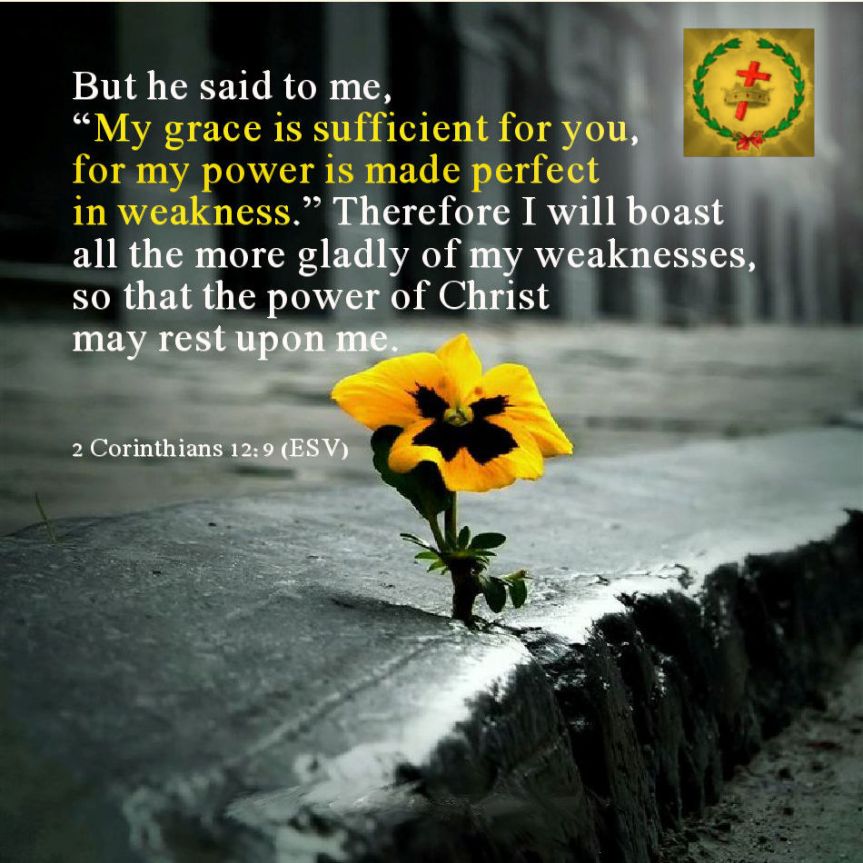
In 2 Corinthians 12:9, the LORD, through the Apostle Paul, uttered these words:

“My GRACE is sufficient for you.”

By these words, our LORD did not mean that we would always have grace sufficient for every trial. It may be possible some of the LORD’s people have found themselves in trials sometimes, and they have had to confess that they did not have grace enough. They said, “Oh, I know if I had sufficiency of grace I could bear this trial better than I do. There is something wrong; the LORD said his grace would be sufficient, but it is not.” Has the LORD broken the promise? Not at all. Here is the thought:

The LORD promised he will supply sufficient grace, but you and I, in order to make use of that supply, we will have to go to the source of supply in the right way, as it were. Perhaps in going to a particular Bible Student Convention or an ecclesia meeting, GOD has arranged that you will obtain grace to prepare you for trials you are going to have, in the nearest future.

Now suppose you say to yourself, “Well, I know the LORD has told me I should not forsake the assembling of myself with you people, but it is a long distance to the meeting place, and I do not like the brethren altogether there. I think some of them have very peculiar and eccentric ways about them, and I just think I will stay at home instead”…

What about going to BE A BLESSING? Or going for the sake of even that ONE who may benefit? Ill health or lack of money may be the case but if one prays in faith about it, then GOD does indicate His will and often what seems impossible GOD makes possible if the desire is to DO HIS WILL (Luke 18:27).

What is the result of not going to that convention or that ecclesia meeting?

You are not obtaining the grace that you needed for the trial when it comes and the consequence is when the trial arises, you will be lacking, but not because GOD failed in the keeping of his word; GOD has done his part, he is supplying the grace, but you just as much as told him, “LORD, I know there is grace at that meeting, but I do not want it that way; you have just got to inject the grace into me; that is the way I want it.”

Dear friends, we cannot afford to miss one single opportunity for service, or one single opportunity that is reasonable and proper for us to make use of in connection with associating with those who love the Lord, without it being to our detriment spiritually, so that some trial will come and we will be unprepared for that trial.

So I say, we want to be ready for those trials coming; we want to have that preparation of heart and mind that will enable us to pass through trials victoriously, and that is the reason why we do not wish to forsake the assembling of ourselves together.

6.

We also want to meet with the people of GOD because we recognize these are the people we are going to spend eternity with; we want to get acquainted beforehand. If you are one of the faithful followers of the Lord Jesus Christ, and if I am one of those who may prove true to him, then we will be among those who will have to be associated through all the boundless ages of the future. I feel, therefore, that if I am at all unwilling to associate with you today, if I feel that I would rather live without physically meeting with the people of GOD, that I would rather spend my time dealing with business associations or ways of worldly pleasure, the consequence of that would be that I would be unfit to spend those ages of eternity in your company, and in the company of others that are making their calling and election sure.

7.

In assembling with the people of GOD, they help us, and we are able to help them. Do they help us? They certainly do if our heart is in the right attitude.

In going to a convention or ecclesia meeting, is your attitude such that you think you will get no benefit from going because you feel there will not be anything said which you did not know and you think you are pretty well informed and well up on the Scripture?

If that was the spirit in which you go to meeting or to a convention, then to the extent you entertained that inclination, that spirit, to that extent you have lost a blessing; but if on the other hand you go in a teachable attitude, with a desire to learn-not merely to learn something new, but to learn something that will draw you closer to the Lord, then I know you will go away spiritually enriched, you will go away feeling as though you were nearer to our Lord than you ever have been before.

If we are in the attitude where we simply want to hear only something new, where we come to the conventions not to hear about brotherly love, and not to hear about patience, and not to have our spirit of zeal encouraged, and not to be impressed with the glories of the kingdom so much, but we come to hear only something new, something that has never been said before, something that will just make our blood tingle to hear, because of its novelty, then we realize that we will also go away to some extent disappointed, because that is not the LORD’s purpose. It is not GOD’s intention that His people should be built up and strengthened by the amount of new things that should be said, but on the other hand it is the frequent reiteration of the old things that is likely to strengthen us and to enable us to make our calling and election sure.

So now when you go to your little home bible study meetings and you find that the brother who took the leading part in that meeting never has anything very original to say, and you find that the other friends in the class seem to have very little novelty in their statements, then, dear friends, the fault is not with the class, the fault is with you; you are not in the proper attitude. Just think, if we are one of those faithful ones who will be united with our Lord in the ages to come, what is going to be your work and my work? Will we have all of that thousand years for something new to say to the world every day? I think not. It seems to me that when the world comes up from the tomb in the near future, if we are one of that honored company associated with our Lord Jesus, we will have to repeat the plan just so many times that if you do not love it very dearly you will get tired of it then; and that is why the Lord is not going to have one in that class who does not love the “old, old story” so dearly that he can sing it from the heart; and “those who know it best seem hungering and thirsting to hear it like the rest.”

I have come across brethren and sisters who sometimes go to a Berean study and they only half listen. Brother so and so says something, and they think of something else because they know that brother never says anything new… then another brother speaks up, and they pay a little attention to what he is saying, because they know already what he is going to say. And consequently when the meeting is over they think it is strange they do not get much benefit from the meeting. But the fact is, that if we had paid attention to what that brother said, instead of allowing the spirit of pride to make us feel we knew it already and did not have anything to learn from him, it would have done us good and been refreshing. Then we listened to the next brother, and he made a statement and we would probably see a connection between what he said and what that other brother said that was especially helpful; and the third brother would follow with a little statement, and there would be some helpful point in what he said that would fit in with the statement made by the other, and when the meeting was all over we would say, “Gee… that was such a profitable meeting we had today! Oh, how much benefit I received; how much help I derived from this little Berean study!” Let us remember that frequently it is pride that causes us to be inattentive when another is speaking.

What did Apostle Paul mean from the following words:

“For though ye have ten thousand instructors in Christ, yet have ye not many fathers: for in Christ Jesus I have begotten you through the gospel” (1 Corinthians 4:15).

Well, possibly at that time, there may have been about ten thousand consecrated believers, as far as the Apostle Paul would judge, and he wanted this number to realize that every consecrated child of GOD was in a position to some extent to be an instructor. I will have to say that I have gotten an indescribable measure of benefit from just observing the conduct, the speech and the deportment of those I come in contact with in my travels.

May I also suggest that we cannot only learn from others, and instruct others by the words that are spoken, but by our example, by the deeds we perform. I think a great many must fail to appreciate what examples we ought to be.

We often say, “Well, you must not take me for an example.” But, dear friends, if you claim to be a consecrated Christian you ought to be an example-you must be an example.

To be a Christian means to be an example; not an example of perfection, but an example of what the grace of GOD can do.

Do you mean to say you have been under the influence of GOD’s grace for five years or ten years or fifteen years, and yet the LORD has done nothing in your life that ought to be an example, a benefit, a blessing to those who come in contact with you?

It would be something to be very much ashamed of, if we would have to say that we have resisted the influences of GOD’s spirit to such a degree that we are not an example of what our Heavenly Father can do at all-even though the LORD has thus been dealing with us so long.

If we are living epistles, as we ought to be in our homes, we will be careful there just as truly as anywhere else. But sometimes even friends who are very careful how they act amongst others when they are in a public place, when it comes to their own home it is rather a matter of indifference to them. You cannot help but sometimes observe it.

I remember I was in one home where there was a little sister there who was in many respects a grand consecrated character. Her husband did not make very much religious profession at all, but I will never forget the impression made upon me. At the table, for instance, if I would ask for a thing that sister would go to any amount of trouble to have it at my plate right on the instant; if her husband asked for anything she did not seem to care whether she heard him or not; he would have to wait until the thing got around to him. If I asked a question, she would take ten minutes to explain and tell me all about how to get to the post office, or whatever it was; if her husband asked her a question she would cut him off in such a snappy sort of way that it made me wonder why he ever wanted to ask her anything much.

I could not help but realize that sister was not showing the spirit the Lord desired in his people, and I could not help but think if possibly I stayed at that home for six months she would not be quite so beautiful in her treatment of me as she had been in the few days I was there.

Now, dear friends, let us be careful along those lines. Let us remember that we can just put it on when we have company for a day or two, but what we really are, and what is actually in our hearts, manifests itself by the daily lives we live in our home, and amongst those with whom we are accustomed to associate day after day.

Also, we can set an example to others on very simple lines, in ordinary things, that will have an influence over them in very important matters.

E.g. Suppose in your ecclesia you find there is a lack of thoughtfulness; for instance when the song service is going on there is some brother or sister that has no song book; nobody ever seems to think of looking around to see whether others have hymn books or not; the rest of you sing and this one is allowed to sit there without an opportunity to look on a book at all. Now that would be an indication that there was a lack of consideration, and a measure of selfishness probably, amongst the friends. But if that is the case you ought to keep the thought in your mind that you are partly to blame for it, because if you set the proper example, it does not matter who you are, you might be a very unimportant personage apparently, and yet at the same time your influence in helping to overcome that condition would be valuable. So if you see a brother without a book, you would immediately hand your book to that one, and then let’s say… the next time you were at a meeting you did the same thing… well, the result would be that by and by the members of the class would notice those things, and they would begin to see the spirit of consideration in you, and you would begin to find them doing likewise; and soon, there would be such a spirit of considerate unselfishness in that class that it would do anybody’s heart good to meet with them. So then, if the little company with whom you meet is not in the condition you think it ought to be, do not blame them but begin to blame yourself, and think,

“Should not I set a different example?

Should not I have been showing a different spirit, and in doing so would it not be found a benefit to the other members of this class?”

Our influence will count most in proportion to the thorough spirit of humility we possess.

Whoever tries to be conspicuous, will injure their influence to that extent, I would say that especially with regard to the elders of the various classes. If a brother is permitted to occupy the position of an elder, it seems to me he ought to perform the duties that devolve on an elder in a spirit that is so permeated with humility that others would get a blessing from his service, and yet at the same time would hardly be aware of the fact that he was the elder of the class.

I remember one class where I went where they all seemed to be fairly humble, but there was one brother that I am afraid-well, wanted to be a little prominent, to be rather conspicuous, and I remember at first this brother went ahead and opened the meeting, and at the second meeting the same brother took charge of the meeting, and just before the third meeting began I said, “Brother, who will open the meeting this morning?”-Sunday morning it was.

He said, “I think I will, Brother Barton.”

“Well, are there any other elders in the class, brother?”

“Oh, yes, we have four elders.”

“Well,” I said, “suppose brother, you take your turns; I think it looks much nicer if all the elders take their turns in matters of this kind. Suppose you have one of the other brethren open the meeting this morning.”

“Well, Brother Barton, I know they will not want to do it; they put it off on me, and tell me I ought to do it; I know they will refuse.”

“Well,” I said, “you go and ask them anyhow.”

He went to one of the brothers and asked him if he would open the meeting. The brother apparently refused, and this brother came back to me and said, “He tells me he would rather I would open the meeting, he does not want to do it.”

I said, “Wait, I will go and speak to him.”

I said, “Brother, you are one of the elders of this class?”

“Yes.”

“Well now, could not you open the meeting this morning?”

“Well, but I think Brother So and So could probably do it much better.”

“Well, but brother, I think if the class elected you as one of the elders it would be proper for you to take your turn.”

“Well, if you think so, it will be all right.”

That brother opened the meeting, and I got another brother to open another meeting, and a third brother the next meeting, and I think if I am not mistaken possibly all the elders of the class had a turn in opening those meetings before the conclusion of our visit.

Now the thought is this: These brethren apparently had the spirit of humility, but there was one brother that was too willing that he should be prominent. He ought to have impressed on the minds of the others the fact that they had a work to do, too; they had an opportunity, according to the Lord’s voice as expressed through the class; and I would suggest that brethren who are elders of the classes be especially careful that they do not assume too much of the responsibilities and ignore the other elders in the class. And where there is only one elder, how careful that brother ought to be!

Another thing: the elder that exerts the greatest influence over the class is the elder who performs the duties developing upon him in such a way the others would hardly know he was an elder. He does not feel boastful about the matter, he does not have much inclination to put himself forward.

So, by not forsake the assembling of ourselves together, we get HUGE opportunities to assist in the building up of the Body of Christ.

8.

We find especially helpful opportunities for spiritual development which we do not find out in the world amongst those who do not profess Jesus Christ as the son of GOD Yahweh, Jehovah. Hence, when we come to the people of GOD, we do expect something better, and the consequence is, when we find that GOD’s people are imperfect, when we find that they sometimes do things we would rather they should not do or sometimes say things we would rather they should not say, it helps to develop in us a larger measure of spirituality, a larger measure of the graces of the Holy Spirit than would possibly have been developed in us if it had been a worldly person that had treated us that way.

I think we are all inclined to expect too much of the people of God. We realize we are in the flesh, and we know that as long as we are in the flesh we are imperfect, we all have our failings; but we are thankful that the failings and imperfections and blemishes are not of the new nature, but the old nature-not in the hearts but rather in the flesh. And I think if we would keep that in mind we would be ready to make greater allowances for those who we come in contact with; we would have great allowances for our dear brethren and sisters when they do something that is not altogether to our liking.

In the Book of Romans 15:24, the Apostle Paul writes:

“Whensoever I take my journey into Spain, I will come to you: for I trust to see you in my journey, and to be brought on my way thitherward by you, if first I be somewhat filled with your company.” 

Here the Apostle Paul told us about the journey he hoped to make to Spain, and he said he expected he would go by way of Rome, and he would stop and visit the Roman brethren for awhile, and he said he hoped that when he met those brethren in Rome he would be somewhat filled with them. Another translation  reads: he hoped he would be ‘partly satisfied’ with them. What? Why only ‘partly satisfied’ with the brethren at Rome? Did he not expect to be entirely satisfied? No. You see, if he was not entirely satisfied with himself, how could he be entirely satisfied with them?

I know I have been acquainted with myself a great deal longer than I have been acquainted with you, and I know I have had opportunities to understand my motives better than I could possibly understand your motives, because I can not read your hearts, and I know furthermore I have had plenty of time to get accustomed to my own peculiarities and idiosyncrasies, and so on, while I have not had much opportunity to get acquainted with yours. It must be so then, that if after all of these years I am not satisfied with myself, how can I possibly be satisfied with you? I know that in you there are things I do not like; if I do not know what they are it is simply because I have not been with you long enough. If you and I could live under the same roof for about six months probably I would know something about your weaknesses, and probably you would know something about mine; and therefore the thing for us to do is to not cultivate the spirit that would readily find fault because a brother is weak, but rather the spirit which seeks to be strengthened and benefited and helped by the weaknesses of the brethren.

How can these weaknesses help us?

By developing in us more of the spirit of patience, of compassion, etc.—the spirit that would make allowances for that brother.

Here is one illustration of this:

A certain brother in Christ who was on his way to one of the conventions; he got on the train; there was quite a company going to the convention, and he went through one of the coaches talking to a number of friends there, and he sat down beside another brother to talk to him, and he said he was one of the most disagreeable brethren he had ever met; he did not like his ways; he did not like his way of talking, he did not like some of his manners, etc., and the consequence was the brother terminated that conversation in a very short time and got up and said to himself, “Well, I feel so sorry for this poor brother, but I would not want to be with him during the convention.” And he said he had taken a few steps when the thought came to him, “Look here; that is the very brother that will give you an opportunity to humble yourself. Do you think the Lord has accepted him, and now you can turn your back on him? It is your duty to show a better spirit than that toward that brother.” He said he went back and sat down beside that brother and talked to him for quite a while.

In fact, when they got to the convention, they got a room together, and the greatest part of the convention to him was the communion with that disagreeable brother who was his greatest blessing during the time spent together.

Now, that is the way with us.

If we meet with those who seem to show some disagreeable traits, the thing is not to run away from them, but to look at the new nature; do not look at the old nature; we cannot see much of the new nature, but it is there. We have got to think of that one as walking after the Spirit rather than what we see of the flesh.

“Wherefore henceforth know we no man after the flesh: yea, though we have known Christ after the flesh, yet now henceforth know we him no more” (2 Corinthians 5:16).

Dear Friends, let us not then forsake the assembling of ourselves together. Let us be among those who appreciate fully this opportunity for communion.

May are ecclesias be strengthened and helped, not merely by what we are able to say, but by the spirit we show, the life we live; and if a Bible Study meeting or a Bible Student Convention has lifted us to a little higher plane than we had been on before, our suggestion is, stay on that plane; do not go back to the old plane-indeed, do not stay on that higher plane, but try to go to a still higher one, until by and by in GOD’s providence, having enjoyed the blessings of our meetings with the brethren, we may all be prepared and fitted for a place we hope to share with our Lord and master, Jesus Christ.

“Speaking the truth in (agape)love, we will grow to become in every respect the mature body of him who is the head, that is, Christ. From him the whole body, joined and held together by every supporting ligament, grows and builds itself up in love, as each part does its work” (Ephesians 4:15-16).

Acknowledgement:
Content from a discourse by Br. Benjamin Barton (in his book, “Pilgrim Echoes,”) has been used to create this post.

A Testimony
The reason behind the creation of this post was such, that it was a Sunday morning here in Australia, and the night before, an email had been sent to one of the Elder’s of the Ecclesia expressing a request to kindly have several answers emailed back after they were discussed at the Revelation Study on the Sunday and explaining that one’s presence will not be there due to some major “road blocks” … and the next morning a chapter from a book was opened up and begun to be read during the breakfast meal for the spiritual benefit of the listeners intended … but it actually turned out to be a personally “hand-delivered” GOD sent letter to the reader only thanks to divine providence—our Heavenly Father’s inspiration—which immediately changed the day’s decision, from one not going to ecclesia meeting, to one going. The words that were read that Sunday morning, were like blinding white lights from heaven with, as if a voice saying, “GO TO THE ECCLESIA MEETING… YOU ARE NOT TO STAY HOME WHATEVER THE EXCUSE!”… and the following thought immediately illuminated the mind like a most joyous revelation never thought of before…. that is, that let us just say one were faced with a life threatening situation (we are not saying this is the case here), then one should not think they are a burden to others and hence not want to go to meet with their Brothers and Sisters in Christ, but rather think:

Would it not be a grand privilege to be finally taken home by our Heavenly Father while in active service being BOTH PHYSICALLY and MENTALLY PRESENT amongst one’s brethren in Christ Jesus ?

YES—Of course it would!

The URL for this post:  https://biblestudentsdaily.com/2016/06/26/hebrews-1025/

Enter your email address to subscribe to this blog and receive notifications of new posts by email.


Save

Save

Save

Save

The Praise Belongs To Him

6. ALL PRAISE BELONGS TO HIM.jpg

I know if I am chosen to joint-heirship with my Lord,
To reign with Him in glory, to receive that great reward;

If after all my weaknesses a crown for me He’ll claim,
I know that choice will surely bring great glory to GOD’s name.

If I had been more worthy, and my stumblings had been few,
When men gave GOD the glory, they’d have praised my virtue, too;

If I’d ne’er lost a battle, or had never missed the mark,
As they talked about HIS goodness, mine, also, they’d remark.

But my being SO deficient, in thought and word and deed,
Means HE’LL get all the glory—HE deserves it all, indeed.

When they see this weak mortal raised to such immortal heights,
What praise will rise to HIM who in such nothingness delights!

I know that when my Savior did return to heaven above,
And was crowned with wondrous glory, it did prove His Father’s love;

But thinking of Christ’s merit, and His sinless life of grace,
‘Twas no wonder that Jehovah chose Him for such a place.

With me it is so different; I have not one thing to plead,
That I should be more honored than another bruised reed;

And truly there’s no reason to give me a mite of praise;
To HIM belongs all glory for the joys which crown my days.

If you knew all my failings, and my blemishes so vile,
And saw the loving patience my Father shows the while,

T’would amaze you beyond measure to think HE could or would
Make me an able servant who should do HIS people good.

But if to HIM such praise is due because of what I am—
Because of such a weakling HE has made a stronger man,

Then what will be HIS glory when HE’s raised me higher still,
And crowned me with His choicest on the top of Zion’s Hill?

That all these years of striving find me so imperfect still,
Does not speak much to my credit nor give a happy thrill;

Where I appear as worthy ’tis because HIS grace is there,
And in the praise and glory I deserve no part, no share.

I HATE my faults and failings, and I FIGHT them day by day,
But from self with all its weaknesses I cannot get away;

Despite this fact, HE uses me—beyond is still more grace—
And hosts will tell HIS glory—HIS who found poor me a place.

BENJAMIN H. BARTON.


The URL of this post:
https://biblestudentsdaily.com/2016/05/14/the-praise-belongs-to-him/

Enter your email address to subscribe to this blog and receive notifications of new posts by email.


Save

Matthew 28:20 – I am with you always…

Lo, I am with you always, even unto the end of the world. Matthew 28:20
THIS text contains a precious thought—that the Lord has been with his representatives in all their labors of love and self-denial, throughout the entire age, noting their efforts, assisting, encouraging, sustaining them, and surely watering and refreshing all who are making his service their special object in life—ministering his grace to others, watering and feeding them. And if this has been true in the past, all through the age, how specially true we may realize it to be now, in the end of the age, in the time of harvest, in the time of our Lord’s second presence! How we may realize that he is with us, in sympathy, in co-operation, in assistance, in sustaining grace, able and willing to make all of our experiences profitable to us, and to use us abundantly in showing forth the praises of him who has called us out of darkness into his marvelous light! Z’03-91 R3166:6 (Hymn 226)

Hymn 226   –  Delight In Thy Presence

O thou, in whose presence my soul takes delight,
On whom in affliction I call,
My comfort by day, and my song in the night,
My hope, my salvation, my all!

Where dost thou, at noontide, resort with thy sheep,
To feed in the pasture of love?
For why in the valley of death should I weep,
Or alone in the wilderness rove?

No longer I wander an alien from thee,
Or cry in the desert for bread;
My table is furnished with bounties so free,
My soul on thy Word is well fed.