2 PETER 1:5-11 – Is Mere FAITH IN GOD Enough?

2 Peter 1, 5-11 - C&C.jpg

The following post is an extract from “Epistles of Peter” by Bro. Frank Shallieu.

2 PETER 1:5: “And beside this, giving all diligence, add to your faith virtue; and to virtue knowledge.”

“Add to your faith virtue.”

The next step in the Apostle Peter’s evaluation is virtue.

The Apostle Paul breaks down the various fruits leading up to love, but Peter is talking from the standpoint of making one’s calling and election sure and his listing gives a sequential development. The Apostle Peter, the fisherman, is now a mature Christian feeding the lambs as well as the sheep. Having been qualified with a wealth of experience, he knows that death is imminent. Likewise, Paul realized the end of his life was approaching when he said, “Henceforth there is laid up for me a crown of righteousness, which the Lord, the righteous judge, shall give me at that day” (2 Timothy 4:8).
We are not reading a textbook but a very valuable, sobering account by one who speaks from experience as well as under the guidance of the holy Spirit.

Comment: Instead of the King James wording “And beside this,” the New International
Version has “For this very reason.” The NIV makes clearer the tie-in with the “exceeding
great and precious promises” of the preceding verse. In other words, “Because of the great and precious promises–for this very reason–you need to add to your faith virtue, etc.”

“Giving all diligence” is an important phrase, and it applies to all of the steps.
Give all diligence to add to your faith virtue.
Give all diligence to add to your virtue knowledge.
Give all diligence to add to your knowledge temperance, and so forth.

The great majority of Christians are immature seed.

In the parable, seed that falls in good ground and develops to maturity brings forth “some an hundredfold, some sixty, some thirty” (Matthew 13:23). In other words, full capacity is reached according to the content of the individual vessel. Some have
a 30 percent vessel, some have a 60 percent vessel, and the ten-talented person has a 100
percent vessel—and hence more responsibility. All three categories picture the Little Flock, children of the Kingdom in the real sense of the word.

Virtue means fortitude, strength of character.
Question: Doesn’t “virtue” also convey a morality aspect?

Answer: Yes, the breastplate of righteousness is part of virtue. From the simple rudiments of faith
and the milk of the Word, one now starts to get food that is a little stronger, and the body
grows proportionately stronger as well. The child grows, spiritually speaking, with moral
development and strength of character based on an outgrowth of faith.

Following initial faith, virtue is the first development of one who believes into Christ and starts to grow.

Many, thinking that knowledge follows faith, try to bypass virtue and want to teach and
write books when they are still babes. In the enthusiasm of our early days, we tend to be
overconfident. Those who talk that way are not mature Christians, and they betray
themselves by their immaturity of conduct, immaturity of reasoning, and immaturity in an assumed familiarity with Scripture. Thus the flesh tends to jump over virtue and go
straight to knowledge. However, Peter shows our need to go step by step by step.

Faith is the substratum of an entire Christian’s life. The just shall live by faith (Romans 1:17).
Faith in Jesus is the bottom line–faith that he is the Redeemer. We are to add to that faith, in successive order, the seven steps that Peter enumerates.

“Add … to virtue knowledge.” “Knowledge” is a broad term, for there are all kinds of knowledge.

2 PETER 1:6: “And to knowledge temperance; and to temperance patience; and to patience godliness.”

Peter continues to enumerate the various steps in the progression to maturity.

At the Last Supper, Jesus remarked to Peter, “I have prayed for thee, that thy faith fail not: and when thou art converted, strengthen thy brethren” (Luke 22:32).

After Jesus’ resurrection he gently rebuked Peter three times for the three denials. At that time Jesus said to Peter, “Feed my lambs.” The second time the Master said, “Feed my sheep.” And the third time was “Feed my sheep,” after which Peter said, “Thou knowest that I love thee” (John 21:15–17). Notice the progression: (1) “feed my lambs,” and then (2) “feed my sheep” and (3) “feed my sheep.” In other words, Peter was not in the position to feed mature adults at the time of our Lord’s ascension or even after Pentecost. At Pentecost, Peter possessed the first two qualities: faith and virtue. Peter had faith: “Thou art the Christ, the Son of the living God” (Matthew 16:16). Also, he and John spoke very boldly on the Day of Pentecost.

“Virtue” means strength, courage, fortitude.

Now when we study Peter’s epistles, we see a very different Peter from the impulsive one in the Gospels.

Peter tells us to add to or supplement our faith with virtue, knowledge, temperance, patience, godliness, brotherly kindness, and charity. In other words, Peter adds seven different qualities to the basic substratum of faith.
Let us consider “knowledge.”

Remember, Peter is speaking about character development. Regardless of the subsequent lack or fullness of development, we all start our Christian walk as babes with faith in Jesus. In his first epistle, Peter said that “as newborn babes, [we should] desire the sincere milk of the word, … [so that we] may grow thereby” (1 Peter 2:2). As the babe feeds on milk, his bones grow and he gets a little stronger so that, spiritually speaking, he can withstand opposition and persecution. This would be adding virtue to our faith.

To add knowledge, the babe needs milk for growth. “Milk” includes the knowledge of
God’s Word, for how can we instruct others if we have not been instructed ourselves?

To knowledge, we are to add temperance or self-control.

The growth of Peter in the area of self-control is amazing! He underwent a remarkable change from his earlier impulsiveness.

Jesus said to Peter, “Verily, verily, I say unto thee, When thou wast young, thou girdedst thyself, and walkedst whither thou wouldest: but when thou shalt be old, thou shalt stretch forth thy hands, and another shall gird thee, and carry thee whither thou wouldest not [to death in crucifixion]” (John 21:18). Jesus was referring to the manner in which Peter would die. When Jesus asked, “Who do men say that I am?” impulsive Peter responded, “Thou art the Christ, the Son of the living God” (Matthew 16:13–16).

Peter was a natural leader, but he needed to be instructed himself. The very fact Peter was naked in the boat after Jesus’ resurrection gives us an insight into his character. He did not want any restraints. He impulsively girt himself with his coat and jumped into the water to swim to Jesus, who was frying fish on the shore.

This same man, but a mature and developed Peter at the end of his life, said, “Add to your knowledge self-control and self-restraint.”

This self-restraint must come after knowledge.

Both of Peter’s epistles were written in the last years of his life, just before his death. How valuable is the instruction of Peter in his maturity!

When Paul discusses the various graces of the holy Spirit, he does not necessarily
enumerate them in succession. For instance, in describing love, he does not follow any
particular sequence, but Peter says, “Add to your faith virtue. Add to your virtue knowledge. Add to your knowledge temperance.” Thus Peter gives a sequence and Paul does not. The point is that the instruction of the two apostles does not conflict. Paul gives more detail but lists the graces of the holy Spirit in random fashion. (An exception would be Paul’s discussion of faith, hope, and love, which are in succession.)

Comment: It was Peter who lopped off the ear of Malchus in the Garden of Gethsemane at the arrest of Jesus. This act is another example of his impetuosity and impulsiveness.

Comment: In a practical sense, temperance could be along both material and spiritual lines. We need to have self-control over our life-style and how we expend our resources. Along spiritual lines, temperance would affect how we witness and preach the gospel. For example, as a general rule we would not deliberately make a spectacle of ourselves.

Comment: A comment in the Berean Manual says, “Moderation, self-restraint in all things–we are not to be hasty and hot-tempered, or rash and thoughtless, but evenly balanced, thoughtful and considerate.” We get this moderation through the knowledge of God’s Word.

Reply: Yes, “he that ruleth his spirit [is better] than he that taketh a city” (Proverbs 16:32).

“Let your moderation be known unto all men” (Philippians 4:5).

We should be temperate in language, money-getting, money saving, eating, drinking, joy, sorrow, at work, in the store, home, church, and schoolroom–everywhere.

Comment: On the other side of the coin, there is a danger in becoming too temperate and thus not having enough zeal for the truth, the Lord, and His service.

Reply: If we have too much self-control, we will be mute when we should speak. The other extreme is being so out of hand and rambunctious that we destroy whatever good we might do. The proper amount of self-control makes us much more effective.

Add “to temperance patience.” What is this “patience”?

The Greek word is hupomone, which means “endurance.” Hupomone conveys the thought of bearing under a burden, of enduring it and not chafing, of remaining under the burden and not giving up. The same word is used in Hebrews 12:1, “Wherefore seeing we also are compassed about with so great a cloud of witnesses, let us lay aside every weight, and the sin which doth so easily beset us, and let us run with patience the race that is set before us.” Of course a lot depends on the makeup of the individual, for we are all different. Some brethren under trial may react without a lot of apparent cheerful endurance and yet be faithful. The circumstances must be considered. Those who run a marathon race are not very cheerful when they near the end of the race, for they are pressing on to the utmost. Those who win have an extremely strong
desire to excel and be a champion.

Comment: James 5:11, in referring to Job, uses this same Greek word for “patience.”
“Behold, we count them happy which endure. Ye have heard of the patience of Job, and
have seen the end of the Lord; that the Lord is very pitiful, and of tender mercy.”

We are all familiar with Job and the conditions under which he endured.

Comment: “Patience” would be meekly submitting to discipline in every case. Add “to patience godliness.” “Godliness” is the wrong word, for that quality should be the
end, the highest step. Godliness and love are synonymous. The thought here should be
love and reverence for God, God-likeness. Thus the word “piety” is a better translation, for piety is a form of reverence. Piety can also be considered decorum, as in 1 Timothy 3:15, “Behave thyself in the house of God.”

Comment: Strong’s and the Diaglott use the word “piety.”
Reply: The Greek word is eusebeia, and a famous historian was Eusebius, a name meaning piety, a reverent one.

Comment: Reprint 2155 states that God-likeness, piety, is “that devout controlling reverence for God which yields a hearty, cheerful, loving conformity to his will–fervency of spirit in serving the Lord.”

Reply: Piety is especially fervency in spirit in obeying the Lord. He is looking for obedience in us–that is the bottom line.

Works by themselves are meaningless.

“To obey is better than sacrifice, and to hearken than the fat of rams [which is offered in sacrifice and may cost a little money]” (1 Samuel 15:22).

Obedience supersedes works.

2 PETER 1:7: “And to godliness brotherly kindness; and to brotherly kindness charity” 

Add to piety “brotherly kindness.” There are occasions where it is difficult to love all
brethren completely and indiscriminately. In other words, there are cases where we cannot manifest love to others because of their disobedience. For instance, 1 Corinthians 5:11 says, “I have written unto you not to keep company, if any man that is called a brother be a fornicator, or covetous, or an idolater, or a railer, or a drunkard, or an extortioner; with such an one no not to eat.”

The individual may not have even consecrated, but if he thinks he is a brother in truth and is a drunkard, a brawler, a fornicator, etc., we are to refrain from fellowship with him. Treating him in this manner is doing him a favor, for if he truly loves God, the truth, and the Lord’s people, he will feel he has done something wrong and will repent.

The Greek word for “brotherly kindness” is philadelphian. Some translations use “love of
the brotherhood,” and that is a better term.

We love those who fervently love God. We are drawn to such because they are of the brotherhood. Jesus particularly favored Peter, James, and John because they manifested a greater zeal for God. The incident in which Jesus raised the daughter of Jairus illustrates this favoritism (Mark 5:35–43). Another example is Jesus’ transfiguration (Matthew 17:1–9). That is the type of love we should have for the brotherhood.

We love those who love God, and the more they love Him, the more we love them.

Moreover, we are helped by their example. In the hymn “Onward, Christian Soldiers,”
when we sing the words “All one body we,” we are thinking not of individuals but of the
brotherhood, of those who love Christ and are trying to serve God.

Add “to brotherly kindness charity [love]. If the previous step was love for the brotherhood, what is this highest type of love? It is agape love.

Comment: We love those who love God and have a special affinity for them because of our common bond, but our love must go beyond that point to where we love mankind.

Comment: This would be a principled love versus phileo love with an emotional basis.

Comment: We love the Lord, the brethren, humanity, our enemies, and also the brute
creation.

Reply: That is true, for principled agape love is broad. The Law shows how we should treat the animals; for example, they should not be unequally yoked in plowing. Agape love includes love for our enemies and doing good to them that despitefully use us (Matthew 5:44).

With this principled love, “God so loved the world, that he gave his only begotten Son”
(John 3:16). Those who obey in the future will be saved, for God has made provision for the restitution of mankind. In other words, He will open the opportunity for salvation toothers besides the brotherhood. His love goes from the brotherhood to mankind and even to those who are enemies now but may not be once their eyes are opened in the Kingdom.

Only those who are incorrigible in iniquity will go into Second Death.

Remember that before Peter started the enumeration of the seven graces of the holy Spirit, he said, “And beside this, giving all diligence,” add to your faith, etc. (2 Peter 1:5).

Because we live in the world with its responsibilities and experiences, our time becomes important–the little time we have left after doing that which is right for family, employer, and others. We must give all diligence to add these seven qualities. Isn’t it remarkable that the impulsive Peter is like a statesman or a father in these epistles? True, he was a leader in the beginning of his Christian walk, but now he is more than that. In his first epistle, which was written only a couple of years before the second epistle, he called Marcus “my son” (1 Peter 5:13). Paul used the same terminology with Timothy, and that epistle was written near the end of Paul’s life. As the apostles aged in the truth, they matured. Peter underwent a radical, miraculous, almost unbelievable change from his days as a fisherman. True, he speaks according to the holy Spirit, but his own life is in harmony with that holy Spirit. He experienced these steps himself, and he is passing on the information to us. Later he says, “I am going to remind you of these things until the day I die, and the Lord Jesus has informed me that my death will occur soon.”

Comment: The verses being alluded to are quite touching: “Yea, I think it meet, as long as I am in this tabernacle, to stir you up by putting you in remembrance; Knowing that shortly I must put off this my tabernacle, even as our Lord Jesus Christ hath shown me” (2 Peter 1:13,14).

2 PETER 1:8: “For if these things be in you, and abound, they make you that ye shall neither be barren nor unfruitful in the knowledge of our Lord Jesus Christ.”

Comment: If “these things” (the seven steps above faith in verses 5–7) are in us and abound, we will make our calling and election sure. The fact that Peter uses the term “these things” five times in this chapter (verses 8–10, 12, 15) shows how important they are.

Reply: Yes, Peter is inclined to repeat words and references. For instance, the use of the
word “divine” twice in this chapter is unusual, for that word appears only three times in
the whole New Testament. The reason is that Peter recognized his own faults and weaknesses and how the Lord changed his life. He is admitting, as it were, that what God
did for him, He can do for us. Accordingly, Peter mentions the importance of developing
character and the various steps of grace that are required if we are to win a crown. We must have diligently tried to add the seven graces to our faith.

Comment: If the words “and abound” had been omitted, the meaning of the verse would have been a little different. All who get life on the spirit plane, including the Great
Company, must have these qualities, but to attain the Little Flock, to get an “abundant
entrance,” these qualities must abound in us and must increase more and more.

Reply: For example, when people do acts of kindness, are patient, etc., there is often a lack of consistency. With knowledge, some are satisfied with a certain level and stop there. These qualities must be diligently practiced if we would be more than overcomers.

Question: Is the “knowledge of our Lord Jesus Christ” in verse 8 the same “knowledge” that is in verse 5?

Answer: The Greek gnosis is used in verses 5 and 6, and epignosis (full knowledge) is used in verses 2, 3, and 8. The words are the same except that epignosis is expressed more powerfully, i.e. with more fullness. By faith we know (gnosis) that Jesus is the Savior, that he died for our sins, and through this knowledge we are forgiven for our sins. In addition, we should also know in more fullness (epignosis) his sermons and parables, his life and character, and how he lived to please the Father.

The “knowledge” (gnosis) of verses 5 and 6 is the second step in the various graces of the holy Spirit, but epignosis embraces all seven steps, which would include a comparison and study of Jesus’ statements and teachings. However, epignosis has nothing to do with the depth of our understanding, which is not always the same. If we have not searched the Scriptures daily, if we have not habitually familiarized ourselves with the Word of God, with the life of Jesus, with the Old Testament, etc., we will be lacking.

Comment: In the footnote for the text “If these things be in you, and abound … ye shall
neither be barren nor unfruitful,” “barren” means “idle.”

2 PETER 1:9: “But he that lacketh these things is blind, and cannot see afar off, and hath forgotten that he was purged from his old sins.”

To be “blind” in this sense is to be nearsighted, meaning the individual “cannot see afar
off.”

Question: What is the relationship between the first part of verse 9 and the second part? What does lacking the graces of the holy Spirit have to do with forgetting that we were purged from our old sins?

Answer: The object of our being purged from old sins is to grow in character. We are nearsighted if we do not always keep this goal in mind. Peter is saying, “It is not enough to just believe Jesus is the Savior and to be willing to suffer for him. We must have more understanding in order to please God.” Since we are imperfect and by nature fallen–our humanity is depraved–we must frequently occupy our minds with pure thoughts. Paul said, “Think on these things.” “Finally, brethren, whatsoever things are true, whatsoever things are honest, whatsoever things are just, whatsoever things are pure, whatsoever things are lovely, whatsoever things are of good report; if there be any virtue, and if there be any praise, think on these things” (Philippians 4:8).

If we do not feed on pure thoughts, our minds will naturally gravitate to unspiritual things.

Those who neglect or do not see the necessity of developing the fruits of the holy Spirit, are “blind,” nearsighted. Far-sighted vision would be making our calling and election sure. We are not at the goal yet, so we must keep running.

We cannot let ourselves drift in our thinking or in our actions, but must school ourselves with God’s Word.

Comment: If we stagnate and do not grow in character, we stay in the sins from which we were supposed to be purged.

Reply: We must try to distance ourselves from the old man as far as possible. Of course we cannot do this completely, for he is saddled on our backs, but we must separate as far as possible from our own reasoning and our own will.

2 PETER 1:10: “Wherefore the rather, brethren, give diligence to make your calling and election sure: for if ye do these things, ye shall never fall:”

The objective is to make our calling and election sure.

If we take our eyes off the goal, we will gravitate to our natural tendencies instead of to the supernatural tendencies of the Holy Spirit.

“If ye do these things, ye shall never fall.” The thought is that if we develop these fruits of the holy Spirit and they abound in us, we will never fail but will succeed in attaining the Bride class.

Comment: The Great Company will fall or fail to a certain extent.

2 PETER 1:11: “For so an entrance shall be ministered unto you abundantly into the
everlasting kingdom of our Lord and Saviour Jesus Christ.”

If we give all diligence to developing the fruits of the holy Spirit, if we have the right heart attitude and diligently practice Christianity throughout our Christian walk, we will get an abundant entrance into the Kingdom, for we will be obeying the promptings of God’s holy Spirit.

We are given “exceeding great and precious promises” so that we might inherit the divine nature.

The “everlasting kingdom” would be the age-lasting Kingdom (Greek aionian). The 144,000 will be on the throne and reign throughout the Kingdom Age.


Acknowledgment:

Bro. Frank Shallieu–for the content above which was an extract from “Epistles of Peter” The full study is on the Bible Study Library CD which can be accessed at the following link: https://herald-magazine.com/bookstore-2/#!/Bible-Study-Library/p/38387237/category=0


URL of this post: https://biblestudentsdaily.com/2016/08/06/2-peter-15-11-is-mere-faith-in-god-enough/

Enter your email address to subscribe to this blog and receive notifications of new posts by email.


Save

How Does “the Son of Man” Title, Speak Volumes About Jesus?

sun on hand gesture

What better name to talk about, then that of JESUS whom we wish to become a copy of in character likeness.

If our goal in life is to BECOME LIKE Jesus and to SUFFER with Jesus so we can reign with him and bring joy to our Heavenly Father, helping all mankind walk up the highway of holiness in the Messianic Kingdom soon to begin, then this involves to “see him” (Hebrews 2:9) through study and reflection upon the Divine words of God in the Bible so we can understand and appreciate our Lord and Master’s character and in this way, develop into Christ.

Jesus had many titles throughout the Bible, such as: High Priest, Lamb, Bridegroom, Lord, Christ, Captain of our Salvation, Everlasting Father, Prince of Peace, Redeemer, Savior etc. Each title gives us a little different dimension of the character of our Lord Jesus—his attributes and his accomplishments.

The title “the Son of Man” is not used just by the prophets, or by God, or by many others… but, Jesus uses it many times in reference to himself, and it appears nearly 200 times in the King James Version of the Bible, and in 14 different Books of the Bible from Numbers to Revelation. Almost half of these instances are in the 4 Gospels and the other half, in the Book of Ezekiel.

“So Jesus said to them, ‘Truly, truly, I say to you, unless you eat the flesh of the Son (STRONGS # 5207 – ‘huios’) of Man (STRONGS #444 – ‘anthropos’) and drink his blood, you have no life in you’ “ (John 6:53).

Why is this title so profusely used?

Because God doesn’t want us to miss the important significance and meaning of this very special title.

1. WHAT DOES THIS TITLE “THE SON OF MAN” MEAN?

“How much less man, (STRONGS #H582 enowsh’) that is a worm? and the son (STRONGS #1121 ‘ben’) of man, (STRONGS #120 ‘adam’) which is a worm?” (Job 25:6).

Two different men being contrasted in this verse are:

  • the first “man” mentioned is Adam—the fallen man and his progeny;
  • the second “man” mentioned is Jesus—the Son of Man.

The word “son” here comes from a Hebrew word that means a builder of the family.

The second “man” word mentioned is the word Adam and it means a human being.

This teaches us that the son of man (Jesus) is a relative of Adam and is a builder of the human family.

Let us contrast this now with the New Testament scripture in John 6:53. Here the word “son” simply denotes “kingship.” The word “man” here, comes from the Greek word “anthropos”—from which our English word “anthropology” comes from which denotes a human being.

So we are taught here that the son of man is related to the human family.

As we examine things further, we see far greater beautiful lessons beyond just the word study basics in this title “the Son of Man.”

2. TO WHOM DOES THIS TITLE “THE SON OF MAN” APPLY?

It applies of course to Jesus. BUT, to which phase of Jesus’s existence, as Jesus has 4 phases of existence:

  1. The Prehuman Logos—before he was born of a woman on earth as a perfect human?
  2. The man Christ Jesus?
  3. The man in the grave Jesus?
  4. The exalted Divine Immortal Jesus?

Let us look at all four phases of Jesus’s life for the answers.

A cautionary note: not all verses in the Bible that talk about the son of man refer to Jesus, hence the context of the scripture(s) must be examined to determine who is being referred to.

E.g. “Put not your trust in princes, in a son of man, in whom there is no salvation” (Psalm 146:3).

Obviously this is not referring to Jesus but rather to ordinary lowly man; an ordinary member of the human family. The Psalmist here is not teaching us about Jesus, but teaching us to put our TRUST IN GOD in contrast to ordinary man.

Let us begin by considering some verses that deal with the SECOND phase of Jesus’ life.

PHASE 2 of Jesus’ life: THE MAN CHRIST JESUS

In the Book of Ezekiel the term “the son of man” appears 93 times in the King James Version of the Bible.

Why is this title used so many times here in this Book?

Well, in Ezekiel, God frequently refers to the man and prophet himself, Ezekiel, as “the son of man.”

E.g. When God first called Ezekiel to be a prophet for Israel, he labelled him, or called him “Son of man.”

“And he said unto me, Son of man, stand upon thy feet, and I will speak unto thee” (Ezekiel 2:1).

In many instances in the Book of Ezekiel, there is a striking parallel between the prophet Ezekiel and the man Jesus.

Let’s look at some of these “connectors” between the man Jesus and the man Ezekiel:-

  • Ezekiel’s name means “the strength of Jehovah.” Jesus is prophetically referred to as ‘the strength or the arm of Jehovah’ E.g. Psalm 98.
  • There is a striking resemblance between the Book of Ezekiel and the Book of Revelation. The Book of Ezekiel is full of symbolism (often labelled as the Apokalypse of the Old Testament), just as the Book of Revelation is full of symbolism too.
  • Ezekiel’s prophetic work overshadowed the prophetic work of Jesus’ ministry.
  • God sent Ezekiel to prophecy amongst a rebellious people. God sent Jesus to minister amongst a rebellious and stiff-necked generation.
  • God instructed Ezekiel to speak in symbols or parables as we read in Ezekiel 17. Jesus was directed to speak in parables.
  • God instructed Ezekiel to prophecy against the selfish leaders of the nation of Israel. God directed Jesus to condemn Israel’s selfish leaders.
  • Ezekiel foretold the restoration of Israel and the times of restitution. Jesus likewise taught restitution and he taught that he came to save that which was lost.

So as pointed out, many of the Old Testament scriptures in the Book of Ezekiel apply to Ezekiel but also apply to Jesus. In one sense we might think of Jesus as being “The Greater Ezekiel” just like Jesus is referred to as “The Greater than Jonah.”

Let us now look at some scriptures referring to Jesus as the son of man.

What is man that You take thought of him, and the son of man that You care for him? Yet You have made him a little lower than God, and You crown him with glory and majesty!” (Psalm 8:4-5)

The “man” in this prophecy is the first man Adam, who was created perfect.

“The son of man” here refers to Adam’s posterity, and God’s intended design for them, but, this term is also connected to Jesus as the Apostle Paul quotes this exact verse in Hebrews 2:9:

 “But we see him who for a little while was made lower than the angels, namely Jesus, crowned with glory and honor because of the suffering of death, so that by the grace of God he might taste death for everyone.”

God created Adam one step below the angels, and perfect. God gave Adam to be King of the Earth, so long as he obeyed God. Adam was to be the supreme Earthly ruler over the Creatures of the land, air, and water. He was crowned. Similarly when Jesus became a man, God created him one step below the angels. God intended that the Son of Man would purchase the right to be earth’s supreme leader and be the king over the creatures of the air, land and water.

But “the Son of Man” title means more than gaining the legal right to be king over all the earth. In Hebrews 2:9, the Apostle Paul explains, that “the Son of Man” title means that Jesus was destined to suffer death.

This leads us to the next scripture that talks about the son of man referring to Jesus.

“And whosoever will be chief among you, let him be your servant: 28 Even as the Son of Man came not to be ministered unto, but to minister, and to give his life a ransom for many” (Matthew 20:27-28).

In this text Jesus describes himself but tells us two more things about “the Son of Man”:-

  1. That he would give his lifehis death would not be an ordinary death but a unique, “one of a kind” death and Jesus gives this death a name. He calls it a RANSOM death. This idea of the ransom means a corresponding/purchase price that would be used to buy out everything that Adam and his progeny lost, this includes Adam’s crown. The son of man’s sacrificed life would be substituted for Adam’s forfeited life. This transfers the death sentence from the man Adam to the man Jesus. So the son of man’s death creates the redemptive price to free every human being from the curse of death.
  2. The Son of Man would be humble… and he would humble himself to the very MAXIMUM…to death on a cross.

Yet another text referring to Jesus as “the son of man” is in John 3:14-15:

“And as Moses lifted up the serpent in the wilderness, even so must the Son of man be lifted up:  That whosoever believeth in him should not perish, but have eternal life.”

Jesus here reflects back to Ancient Israel. We can see this if we look at the Holy words of the Bible, in the Book of Numbers 21:8:-

“And the LORD said unto Moses, Make thee a fiery serpent, and set it upon a pole: and it shall come to pass, that every one that is bitten, when he looketh upon it, shall live.”

Similarly in John 3, Jesus is telling us that he is the anti-typical copper serpent. And anyone believing that the son of man is the great antidote for sin, will be healed.

The pole represents the crucifixthe pole on which our Lord Jesus died. It was an extremely painful death. So not only was the Son of man destined to die, but was to do so in the most painful way.

The sufferings of the Son of man are directly related to the eradication of sin.

What is the connection between the sufferings and the healings?

The Apostle Paul answers this in Hebrews 2:10, where he explains that the son of man’s sacrificial sufferings and painful experiences perfected him as a New Creature.

Our beloved Master and King Jesus and the world’s Saviour suffered throughout his ministry. He was was abused, neglected, opposed, betrayed, humiliated, accused, exhausted and the list goes on!

All of our beloved Lord’s sufferings were part of the great Son of Man’s offering for sin. We are sure of this, as we are explained of it, in Isaiah 53:10.

“Yet it was the will of the LORD to crush him; he has put him to grief; when his soul makes an offering for guilt, he shall see his offspring; he shall prolong his days; the will of the LORD shall prosper in his hand.”

All of Jesus’s sufferings are what qualified our Lord the MEDIATOR for sin. It was part of the “SIN OFFERING PROGRAM” which develops the Mediator (headChrist Jesus, and his body—the 144,000 Bride of Christ; the Elect members), and the Mediator eradicates sin through the future, soon to begin, New (Law) Covenant “Program” which will be inaugurated once the 144,000 Bride is complete and the wedding of the Lamb has taken place, when the Mediatorial Kingdom shall commence and this New Covenant will begin with natural Israel being ministered to by the Ancient Worthies (i.e. the Prophets of Old from Esau right up to John the Baptist) who will be the first to bring peace on earth after their resurrection and during the end of Armageddon / Jacob’s Trouble (Micah 5:5).

In future when humanity shall look upon Jesus CHRIST (complete)the copper servantand follow and obeythey shall be healed.

PHASE 3 of Jesus’ life: JESUS IN THE GRAVE

In Matthew 12:40 we read, “For as Jonas was three days and three nights in the whale’s belly; so shall the Son of Man be three days and three nights in the heart of the earth.”

The scribes and the Pharisees told Jesus they wanted a sign from him and not just wanted his teaching and miracles. So Jesus identified himself as “the greater Jonah.”

The prophet Jonah’s incarceration in the great fish pictured Jesus’ 3 day death. For parts of 3 days (50 hours), our Lord Jesus was in oblivionhe did not exist for parts of 3 days because that is what death means.

“Sheoul” (in Hebrew) and hades” (in Greek) means oblivion or death.

Jesus was faithful to the very end of his life, and when he drew his last earthly breath he was still faithful…

Jesus did not make any mistakes …

Jesus did not sin …

Jesus did not go astray …

Jesus did nothing wrong …

And at the moment of Jesus, death, he had irreversibly secured the title “the Son of Man” and all of the rights and privileges that were destined to be a part of that.

Jesus dies an unjust death.

Jesus died a perfect man, who’s life was taken from him.

And even though the son of man was dead, he still held the LEGAL RIGHT TO BE ALIVE. So, it would be entirely right to refer to Jesus even when he was in oblivion (death) as still the Son of man.

PHASE 4 of Jesus’ life: THE RESURRECTED & EXALTED JESUS

“And as they came down from the mountain, Jesus charged them, saying, Tell the vision to no man, until the Son of Man be risen from the dead” (Matthew 17:9).

Jesus here makes the point that the son of man would be RAISED after his death. But raised to what? Not raised to manhood, as Jesus came to forever sacrifice his humanity.

When Jesus was raised he was immediately rewarded with the Divine nature. We are sure of this, when we read in John 5:26, “For as the Father hath life in himself; so hath he given to the Son to have life in himself…”

God did not give the Logos immortality.

God did not give the man Jesus immortality.

God gave the resurrected Jesus immortality.

Yet, even though Jesus was given Divine nature, he still said he would be the “Son of Man;” he did not renounce his title upon his resurrection.

Let’s look at Daniel 7:13-14:

“I kept looking in the night visions, and behold, with the clouds of heaven one like a son of man was coming, and He came up to the ancient of days and was presented before him. And to him was given dominion, glory and a kingdom, that all the peoples, nations and men of every language might serve him. His dominion is an everlasting dominion which will not pass away; and his kingdom is one which will not be destroyed.”

As we consider all of Daniel chapter 7, we recall God gave Daniel a huge vision of 5 universal empires and at the end of his vision, he sees one likened to “a son of man”–the Divine Jesus.

At his resurrection, God gave Jesus ALL power.

“And Jesus came and spake unto them, saying, All power is given unto me in heaven and in earth” (Matthew 28:18).

So how do we harmonize Matthew 28:18 with Daniel 7:13-14?

Daniel’s vision teaches us when Jesus would begin to exercise his power (and not just when he would acquire his power) over the kingdoms of this world at his return (invisible presence—parousia,” in 1874) during the time of trouble (as represented in the clouds.)

In Matthew 24:30 Jesus confirms that after being rewarded with Divinity, he was still rightly called “the Son of Man” upon his “parousia” since 1874:-

“And then shall appear the sign of the Son of Man in heaven: and then shall all the tribes of the earth mourn, and they shall see the Son of man coming in the clouds of heaven with power and great glory.”

PHASE 1 of Jesus’ life: JESUS AS THE LOGOS

In John 3:13 (Diaglott) we read,  “And no one has ascended into heaven except the Son of Man who descended from heaven.”

Here Jesus is recalling his prehuman existence with the Heavenly Father, and as the Logos.

How could Jesus be called the son of man BEFORE he became a man?

Well because the man Jesus is the same personality as the Logos.

The Logos did not die when his spirit nature was exchange for his human nature.

Rather we believe that the life principle (that was infused in the Logos, whereby the Logos was begotten of the Father) was transferred to the womb of Mary and put into the foetus of Jesus. It was a transfer of the life principle not a death. Hence the LOGOS DID NOT DIE. Proof of this is in John 1:14: “And the Word (Logos) was made flesh…” There is nothing here that talks about a death, but rather there was a transfer of life.

3. WHAT IS THE REAL SIGNIFICANCE OF THIS TITLE?

In some ways it seems like this title “the Son of Man” is meagre…insignificant… inconsequential… just an ordinary title… one that merely refers to the fact that Jesus was human… there would perhaps seem other far greater titles to use, such as “Son of God” or “Christ–the Anointed.”

So why did Jesus use “the Son of Man” title (in reference to himself) over 85 times in the KJV?  Here are 2 possible suggestions why:-

Firstly, the Logos held a position of very high honour and dignityabove the angels and above all other spirit beings. He was God’s only firstborn, begotten Son (John 1:14). God appointed the Logos as His master craftsman (Proverbs 8:30). And Jesus made a contract with our heavenly Father to give up the second highest place in creation! He humbled himself to manhood, and not just manhood but to the poorest level of manhood and to temporal deprivation. As we read in Matthew 8:20, the Son of man did not even have a place to lay his head. Jesus was definitely no home ownerwhich we all today may take for granted.

Besides giving up his glorious celestial nature and his position next to our Divine Father’s place in heaven, Jesus voluntarily attached himself to the dying human race, to the diseased and degenerate human race.

Would we attach ourselves to such an undesirable situation?

Jesus humbled himself to abuse…

Jesus humbled himself to misrepresentation…

Jesus humbled himself to pain…

Jesus humbled himself to opposition…

Jesus humbled himself to accept death… to accept crucifixion (the worst death sentence humanly possible).

Nobody ever humbled himself more than our beloved Jesus,
and nobody ever will.

Jesus’ humility was not just an exercise, like a “see if he could do it” kind of thing. It created the ultimate purchase price that Jesus would not use to buy a single thing for himself – not one thing!… and it was Jesus’ humility that fully developed him as a New Creature.

So Jesus stressed this title ‘the son of man’ as in it, is embedded unsurpassed and incomparable humility.

Secondly, in this title is the answer to God’s universal rule for advancement and promotion, as brought to our attention in Luke 14:11 :

images.jpg


Because Jesus exercised incomparable HUMILITY and ABASEMENT, God gave him an incomparable name (and position) above any other name that is named (Philippians 2:9).
Jesus’ exalted name is not just an honorary title, but one of full of meaning and action. It means OVERCOMING… it means VICTORY over Adamic death. Jesus was given all power over heaven and earth to rebuild everything that he bought and to re-install God-likeness in everything in heaven and on earth, including the earth itself.

Jesus will use his incomparable power (not as a great leader to oppress but) to liberateto buy back Adam’s lost possessions—happiness, life, health, kingship over the earth, which Adam was meant to get at the beginning, but had lost.

Jesus does not buy one of these things back for himself but buys them back to give then away… to give them back to Adam and his progeny.

Our Lord Jesus’ HUMILITY qualified him to be the chief part of the Mediator of the New Law Covenant.

The son of man title speaks volumes about Jesus.

It speaks volumes about his incomparable humility and his incomparable exaltation.

It speak volumes about every aspect of Jesus’ life and about his sacrifice; about his sufferings; about his generosity; about his willingness; about his faithfulness; about his loyalty; about his purpose; about everything Jesus has already accomplished and everything he will yet accomplish; they are all contained in this “son of man” title.

Perhaps this title “the Son of Man” speaks more about Jesus than any other single title we know. Why?

Because perhaps we could say that the most important character quality we must possess is HUMILITYthat allows one to OBEY Godly principles with patient cheerful endurance.

HUMILITY IS THE ANTIDOTE to the most dangerous and most poisonous character failure of all: Pride.

It was PRIDE that caused Lucifer to disobey, rebel and eventually be destroyed forever.

The opposite of pride is HUMILITY.

It is HUMILITY that will allow one to be more than an overcomers, by surrendering one’s entire will to doing what our Heavenly Father would indicate is HIS will and doing so moment by moment, surrendering up that that which would feed the flesh, and rather feeding  the spiritual mind in Christ so that the embryonic New Creature can develop in maturity into the likeness of our Bridegroom who is the love of our life and our EVERYTHING.

——- “Humble yourselves before the Lord, and he will exalt you” (James 4:10). ——-

Acknowledgement:

The following post was created from the words of a discourse by Br. Wes Cramer about the SON OF MAN.

The URL for this post: https://biblestudentsdaily.com/2016/06/10/how-does-the-son-of-man-title-speak-volumes-about-jesus/

Enter your email address to subscribe to this blog and receive notifications of new posts by email.

Save

Save

Save

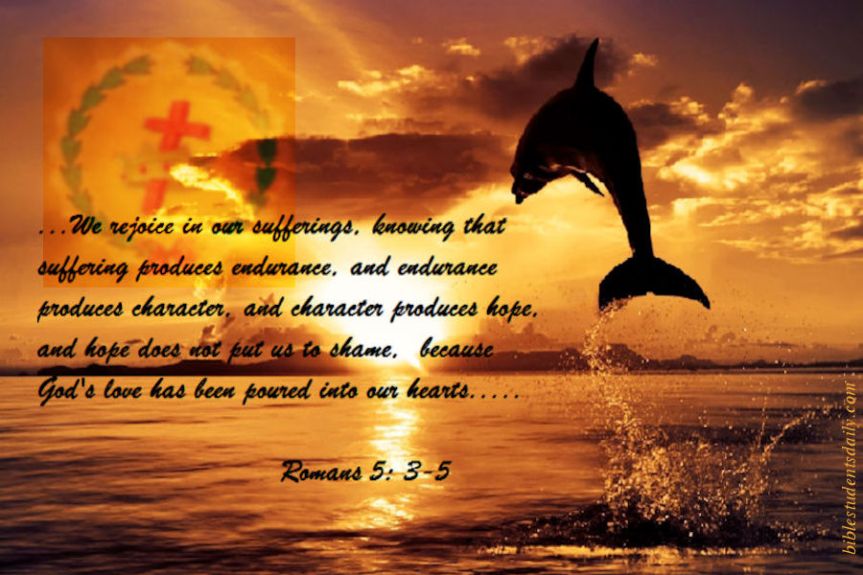
How Can we Handle Our Sufferings in Christ, in a Jesus Way?

Romans-5-3-5-_-suffering - with addres.jpg

Let us begin with a zap of JOY … that Jesus kind of joy that a child of God can feel from the words of Hebrews 12:11, which provide great reassurance that any painful experience allowed by God (which may include the pain endured from the sufferings in Christ), will actually NOT HARM the New Creature in Christ begotten within us, but rather, it will work out something wonderfully beneficial to the Old Mind (i.e. it will destroy it even more) and to the New Mind it will actually be a stepping stone to maturity and growth in Christ.

So here are the apostle Paul’s edifying words to us from Hebrew 12:11:

For the moment all discipline seems painful rather than pleasant, but later it yields the peaceful fruit of righteousness to those who have been trained by it.”

How positively encouraging!

Do we suffer for preaching about Christ’s Gospel?

Are we ridiculed at work for speaking up for the Truth?

Perhaps we have lost our job because of it?

Do we fear standing up for Jesus?

Do we fear being ridiculed by what others think of our interpretation of Bible Scriptures, hence we remain the quiet ones to keep in a comfort zone?

Are we embarrassed to be seen by all as Christ’s representatives?

Are we laughed at and labelled as “crazy” or “brainwashed” or “unbalanced” when we speak of the Gospel of Christ?

Or perhaps we are labelled by names from our past failures which we later recognized, grew from and changed our course of behaviour?

Do we fear being passionate about the Truth because of feeling we won’t cope when told we are going overboard or that we spend too much time on studying the Bible?

Do we too, not experience attacks from the Adversary? 

Do we not all experience the works of ignorance. Because of our imperfections of the flesh, we are not able to perfectly understand nor perfectly be understood.

Would you all not agree, that if we could read the hearts of each other, much unkind judgment would be prevented.

Since we cannot read the heart, it is good to err on the side of love between our brethren and pray (even more perhaps than use words) about the details which only the Heavenly Father perfectly understand and will never distort.

God is the perfect judge as we are not perfect yet in the full sense of the word “perfect;” only “reckoned” as righteous through Christ’s robe of imputed righteousness (Romans 4:22, 23).

Often the scripture is quoted “you will recognize them by their fruit” (Matthew 7:16), but have you experienced a situation where we in all sincerity of heart, give a testimony about the Gospel of Christ, yet it would seem that one, perhaps in an ecclesia meeting cannot see the fruits of God’s character in us and we are told to stop speaking?

If we prayerfully and patiently endure with a sincere purity of heart intention, in seeking for righteous communication and to share the joys of the gospel, then GOD OPENS A DOOR OF BLESSINGS TOO NUMEROUS TO COUNT, (even if the flesh does experience sufferings for righteousness sake) from which the new mind in Christ rejoices in, thanking the Heavenly Father for each test of our faith, obedience and loyalty to Him.

In Hebrews 5:7-10 we read,

In the days of his flesh, Jesus offered up prayers and supplications, with loud cries and tears, to him who was able to save him from death, and he was heard because of his reverence. Although he was a son, he learned obedience through what he suffered. And being made perfect, he became the source of eternal salvation to all who obey him, 10 being designated by God a high priest after the order of Melchizedek.”

Let us not think that the comments of others are to intentionally harm us.

It is good to remember that WE HAVE ALL SINNED (Romans 3:23) and to remove first the plank in our own eyes before we try to remove it in our brothers.

“If we say we have no sin, we deceive ourselves, and the truth is not in us” (1 John 1:8).

“Surely there is not a righteous man on earth who does good and never sins” (Ecclesiastes 7:20).

If we feel wronged by our brother’s words, let us not retaliate with words of defense, but after taking it to our Heavenly Father in prayer, silently watch our Heavenly Father work things out PERFECTLY, praying for their victory and ours, in Christ—since we each have professed to belong ONLY to Christ, and wish ONLY THE BEST towards all our brethren in Christ, knowing that each of our beloved brethren struggle in their own unique ways to more than overcome the flesh, the world, and the adversary.

GOD is our best defender who can read the hearts of all, and allows each experience to work out perfectly what He so desires, in us.

The apostle Paul encourages our thoughts to be on “whatever is TRUE, whatever is HONORABLE, whatever is JUST, whatever is PURE, whatever is LOVELY, whatever is COMMENDABLE, on that which is EXCELLENT and on anything WORTHY OF PRAISE” (Philippians 4:8).

The above verse is a wonderfully perfect tool to remember using to clean out our minds from any negative thoughts!

Something about Fault-Finders

Are we fault finders?

In Titus 1:15,16 we are given a description of such.

“Unto the pure all things are pure; but unto them that are defiled and unfaithful is nothing pure; but both their mind and conscience are defiled. They profess to have known God, but by their works they renounce Him, being abominable and disobedient, and to every good work worthless” (Titus 1:15,16).

The “pure” can see the true, pure hearts of God’s sincere “little ones,” in spite of the weaknesses of the fallen flesh. They can see righteousness in the Divine law and arrangement. While “the defiled” may identify with the cause of God, but whose doctrines and manner of life are in conflict with the gospel because they are fault-finders and unbelieving — “and unfaithful” (Diaglott).

Can we ever fall into a fault-finder category and be labelled as unfaithful too?

We sure can, IF our consciences become perverted, where we end up being unable to see anything or anybody in a proper light. This leads to losing the spirit of love which thinketh no evil!

In Reprint 5746 of “The Original Watchtower and Herald of Christ’s Presence,” Brother Charles Taze Russell describes these fault-finders in the following words:

They could find fault with everything–nobody could do anything just right, no doctrines were right. We have all met people of this character—people who see nothing pure, nothing good, anywhere, and who are denouncing others all the time and this is how their consciences become defiled. At first the conscience of such would to some extent reprove them. But gradually, if they yield to this wrong heart attitude, their consciences become corrupt and hardened, so that they do not realize that they are prevaricating, misjudging, do not see how unjust, impure and blind they have become. “They profess to have known God,” says the Apostle—knowing something in an intellectual way about His Plan and Word—”but by their works they deny Him.” Their works are contrary to God’s Word, which instructs that all should seek to do all the good they can, to see all the good they can, and to give generous judgment to others.

The Apostle is not saying here that such have necessarily become immoral and vile in that they have become delvers into all kinds of sin and vice. We are not to read into his words anything that is not there. But he does say that so far as any good work is concerned they will defile it, injure it. Better would it be that they keep away from the Lord’s work entirely. They have allowed the bitter spirit to work in them until everything takes on the color of their own minds. They do not recognize to what an extent they are unjust, unrighteous, in their thoughts, their words, their conduct. They are injurious to every good work.

There are lessons of warning here for all of us, lest we should be led astray by the spirit of the Wicked One and become mere fault-finders, accusers of the brethren—not giving our time, our hands, our feet, our tongues, to doing good, to blessing and UPBUILDING the brethren, but rather to tearing down. In proportion as any one does this, he is worthless, yea, worse than worthless, to the Lord and to His Cause!”

The above words by Pastor Charles Russell are truly a GREAT WAKE UP CALL to every true Christian. They are humbling thoughts and truths to apply to each of us as we ALL fall into the trap at one time or another with thoughts that should rather be positive towards all our brethren in Christ, but which the flesh often prefers to ignore.

Here is also a lovely verse about our beloved Elders in Christ :-

“Let the elders who rule well be considered worthy of double honor, especially those who labour in preaching and teaching(1 Timothy 5:17).

Here are a list of suggestions in preventing and overcoming the evil surrounding fault-finding:

1. Thank our Heavenly Father for the experience as it is the “fiery trials” that test our loyalty to God best and develop AGAPE love most. (See text for “Songs in the Night,” March 12th.)

2. Focus on the Christ-like qualities we see in our brethren, just like we would wish others to focus on the Christ-likeness they see in us (Philippians 2:3; 4:8).

3. ListenJesus also remained silent when Pilate questioned him (Matthew 26:63).

4. Continually ask God for His help (Psalm 121).

5. Wait for God. Trust in God to deliver and bring justice (Exodus 14:14; 2 Chronicles 20:17).

6. If God inspires the conscience to do so, reply using gentle, kind words (Isaiah 30:21).

“Speak evil of no one, to avoid quarreling, to be gentle, and to show perfect courtesy toward all people” (Titus 3:2).

A beneficial reply to criticism:

“Thank you Sister/ Brother. Please pray for me.”

This statement shows not only our appreciation for our fellow brethren in Christ communicating their best interests for our highest spiritual welfare, it also reflects our faith in God’s power through prayer as well our joy and gratefulness in the sacrificial offerings of our fellow yoke-bearers in Christ, keeping them also in our fervent prayer (1 Peter 3:17).

7. Let us ask ourselves what would bring our Heavenly Father grandest JOY? What words and what actions would best represent our Head–the Captain of our Salvation? (Hebrews 12:2).

8. Saturate our mind with spiritually edifying and positive Scriptures, which are filled with the precious promises of God so that we continuously seek the highest welfare of our co-laborers in the Vineyard of our Master and Head, our Lord Jesus. Some wonderfully beneficial Holy Scriptures to meditate upon, include:

  • “Love your neighbour as yourself” (Mark 12:31).
  • “Think of others as better than yourself” (Philippians 2:3).
  • “Let no one seek his own good, but the good of his neighbor” (1 Corinthians 10:24).
  • “Pray for those who persecute you” (Matthew 5:44).

9. Consider our Brethren in Christ as are “our joy”, “our crown” and “our hope” as did the apostle Paul (1 Thessalonians 2:19).

10. Realize our own shortcomings (Matthew 7:1-5), and copy the forgiveness that our Lord, Jesus Christ had towards all (Ephesians 4:32).

We “ALL fall short of the glory of God” (Romans 3:23).

May we rest in the assurance that if we do our very best to keep a pure conscience before God and seek to only do what is righteous and pure and loving and just, GOD will deliver us in due time.

It is far better to boast about one’s own weaknesses (2 Corinthians 11:30) and make the strengths in our brethren shine out gloriously if in their presence.

With kind and gentle words, prayers, patience and even at times silence towards those who may attack us for Truth sake, let our confidence be in our trust in the LORD’s strength which HE DOES gives us, and let us defend the Truth where it warrants this, just like Christ Jesus did.

May we not let our hearts turn bitter or cold.

“A soft [gentle] answer turns away wrath, but a harsh word stirs up anger” (Proverbs 15:1).

The fallen angels know if they cannot harm us by using those in the world, they surely will try to plant discord amongst our closest within the Church. Our prayers for each other is so important.

Having agape love towards all our brethren in Christ is necessary to be of the body of Christ. Our Lord Jesus is the best example of this, laying down his life as a ransom for ALL; being crucified by the ignorant actions of his very own (John 1:11).

We all need encouragement from each other.

“Therefore encourage one another and build one another up, just as you are doing” (1 Thessalonians 5:11).

By asking God to daily show us His will, we may be lead to glorious faith-building and faith strengthening experiences. Here are some examples of how we may edify each other:

  • Share Scriptures from the Word of God with those in your own home;
  • Send an email or card sharing some of the precious promises of God in it from Scripture;
  • Volunteer your time in the gospel witnessing work;
  • Write a poem and share it at the next Testimony Meeting in your ecclesia to edify those present;
  • Go to the local supermarket and hand out some tracts or booklets sharing the Good News about the Kingdom and God’s divine plan for mankind;
  • Be a Daniel. Dare to stand alone. Dare to start a project and finish it which would be spiritually edifying those who have a listening ear to the Word of God.

All for Jesus! The time is short!

The more tests that are overcome now, the grander the shine! To become the shiniest diamonds in character then the tests of character development in Christ are to be passed in often unfavourable conditions for the flesh. The members of the high calling are in training to be kings and priests who belong to their head—Christ Jesus, and they will help the world of mankind up the highway of holiness so each lesson learned now and each experience that is overcome now, is a lesson that will be most beneficial for the future.

May our presence have a most pleasantly refreshing, calm, soothing effect on all in Christ who would be in our midst so that Jesus’ presence may be what is felt by all.

Suffering – Learning from our Savior

Since Christ suffered for us (1 Peter 2:18-25), the saints are also exhorted to suffer and accept trials with the same spirit as did Jesus. Our Lord, who committed no sin, was in all respects perfectly holy. He was entirely innocent and suffered without having committed any crime. As Jesus suffered unjustly, his body members should regard it as being no strange thing when they too undergo similar sufferings and persecutions.

The scriptures tell us that there was no guile, deceit, hypocrisy or insincerity found in Jesus’ mouth, for he was in all respects what he professed to be. Though he was condemned as an impostor, that charge was wholly untrue. Jesus was reviled and spoken of as a deceiver, charged with being in league with Beelzebub, “the prince of devils,” and accused as a blasphemer against God (Luke 11:15). Although he was falsely accused by his malefactors, Jesus did not revile those who reproached him.

Jesus seldom used harsh language and showed no anger. He calmly stood and bore it all, for he came to endure all kinds of sufferings in order that he might set an example for us and make an atonement for our sins. Such should be our course as well when faced with similar attacks.

The words in 1 Peter 2:25“Ye were as sheep going astray,” alludes us to the words in Isaiah 53:6, “All we like sheep have gone astray; we have turned everyone to his own way; and the LORD hath laid on him the iniquity of us all.” This thought in a broader sense expresses the condition of the human race before God recovers them through the plan of salvation. A flock wandering without a shepherd or guide is in a pathetic condition, and so was it for the prospective body of Christ before being sought out and brought into the true fold by accepting the value of the shed blood of the Good Shepherd.
In 1 Peter 4:12-17, the apostle warned his readers about the coming of a more intense period of persecution, stressing the importance of patience and mental readiness.

Peter intimates that the Church should not regard it as being strange or unusual for the people of God to suffer as did Christ, because later they will be glorified together with him in God’s coming kingdom. He also admonishes the Church not to become perturbed concerning matters unrelated to Christ, but to rejoice in their afflictions, knowing they will be counted as a blessing.

The people of God should always place their lives completely in God’s hand, believing that because God is their Creator, He will be their preserver.

God withholds no good thing from those who love Him and walk uprightly. He who is employed in God’s service will always have God’s protection.

This post’s URL: https://biblestudentsdaily.com/2016/05/30/how-do-we-handle-sufferings-in-christ-in-a-jesus-way/

TIS SO SWEET TO TRUST IN JESUS

Enter your email address to subscribe to this blog and receive notifications of new posts by email.

Save

Save

Bible Student Links and Bible Resources

(a) Here is a great list of BIBLE STUDENTS’ WEBSITES :-

Australia

America

Africa

Brazil

Bulgaria

Canada

China

Croatia

England

France

Germany

India

Italy

Moldovia

Philippines

Poland/Polish

Romania

Russia

Spain/Spanish

Swedish

*******

(b) Here are some wonderful, spiritually edifying BIBLE STUDENTS MAGAZINES & PERIODICALS :-

THE HERALD OF CHRIST’S KINGDOM  — monthly magazine. The Herald of Christ’s Kingdom is the official publication of the Pastoral Bible Institute, and has been published since 1918.

THE DAWN BIBLE STUDENTS ASSOCIATION — monthly magazine & literature/articles published on Christian living, doctrine, and current events. The “Frank and Ernest” radio program continue to be aired by the Dawn as does “The Bible Answers” TV program.

BEAUTIES OF THE TRUTH — a beautifully insightful regularly published (every 3 months) publication which shares scriptural viewpoints thought to be harmonious with God’s Plan of the Ages. This magazine is a hidden gem for the serious Truth Seeker, Ambassador of CHRIST and Bible student and scholar!

THE PEOPLE’S PAPER — a 12 page (A4 size) periodical published four times each year (January, April, July, October) by the Berean Bible Institution Inc., Australia.

BIBLE STUDENTS DAILY — Here on BIBLE Students DAILY, new posts are shared regularly, with the Home Page displaying the most recent post shared with Readers.

*******

(c) Here is a great list of BIBLE STUDY RESOURCE LITERATURE :-

WHAT PASTOR RUSSELL SAID — This book consists of hundreds of questions and answers by Pastor Charles T. Russell only, covering about twelve years of the Convention Reports and several years of the Watch Tower. Wherever a question is from the Watch Tower the letter (Z) follows the year. Otherwise it is from a Convention Report.

STUDIES IN THE SCRIPTURES & PHOTODRAMA OF CREATION — In 31 different languages.

OVERLAND MONTHLY, PASTOR RUSSELL’S SERMONS & OTHERS RESOURCES — Web books containing: Berean Studies, Exceeding Great & Precious Promises, Expanded Biblical Comments, Hymns & Poems, Manna, Overland Monthly, Question Book, Sermon Book, Songs in the Night, Topic Index for Studies in the Scriptures and other helps.

TIME & PROPHECY — A Harmony of Time Prophecy with history and Archaeology. July, 1995, by David Rice.

THE STREAM OF TIME — Bible Chronology & Time Prophecy. August 2002, this edition January 2004 by David Rice.
THE APPROACHING END OF THE HARVEST — 6000 Years from Adam; Closing at the End of the Harvest; Anticipated with the year 2043 — Additional Evidence; Structure and Design; Concerns Addressed; February 2016, Faithbuilders Fellowship (DavRice@aol.com).

PILGRIM ECHOES — Web book by Benjamin Barton.

ZECHARIAH — The following exposition comprised a series of articles from 1968-1970 in the journal titled “The Bible Study Monthly” by Albert O. Hudson, of Milborne Port England, who was a faithful Christian, Bible Student and Scholar of the twentieth century. He was born in 1899 and died in 2000 at 101 years of age.
OUR WILDERNESS WANDERINGS — Anton Frey: lessons from Israel in the wilderness.
THE LAST WEEK OF OUR LORD’S MINISTRY — With scriptures and reprint articles for each day fully printed out.
ECHOES OF THE PAST — Web book by Norman Woodworth.
THE GARDEN OF EDEN — An examination of the story of Adam and Eve. Albert O. Hudson, England written 1959-1960.

THE STORY OF THE DELUGE — Biblical, geological and historical account of Noah, the ark and the deluge. Albert O. Hudson, England written 1974-1976.

AFTER THE FLOOD — History, archaeology and symbolism upon entering the new world. Albert O. Hudson, England written 1984-1986.

KING DAVID OF ISRAEL — The life and times of a man after God’s own heart and a fitting symbol of a greater throne. Albert O. Hudson, England written 1982-1984.

THE KEYS OF REVELATION — A verse-by-verse explanation of the Book of Revelation by Frank Shallieu.

EZEKIEL’S VISION OF A NEW TEMPLE — An examination of various features of the vision and how it beautifully portrays the establishment of God’s kingdom on earth. By Edmund Jezuit.

HARVEST TRUTH DATA BASE — This website contains:

  • 6 Volumes written by Pastor Charles Taze Russell;
  • 12 Volumes of Reprints of the Original Watchtower and Herald of Christ’s Presence;
  • Expanded Biblical Comments;
  • Hymns of Millennial Dawn;
  • Question Book;
  • Photodrama of Creation Book;
  • Daily Devotional Books (as featured in detail on this website).

THE BIBLE RESOURCE APP: Go to your APP STORE to download the “BIBLE RESOURCES” APP:

12399051_10153464419502585_1129086215_n


The Bible Resources App contains daily devotional material, bible resources and hundreds and hundreds of discourses by brethren world wide.


BIBLE STUDY LIBRARY CD

235328191


This Bible Students’ CD Program is A GOLD MINE! It can be purchased from The Herald of Christ’s Kingdom Bookstore and it allows access to a huge variety of Bible Study literature to all the Books of the Bible. The search allows you to type in any topic, Scripture or word(s) and it will direct you to the source of literature you are searching for.


RVIC – THE REVISED VERSION (AMERICAN EDITION) IMPROVED & CORRECTED BIBLE — from manuscripts discovered and published to AD 1999. The most accurate up to date English version of the Holy Scriptures available.

STRONG’S CONCORDANCE WITH HEBREW & GREEK LEXICON

THE EMPHATIC DIAGLOTT

GOD SOLE CREATOR – Web book.

READ ABOUT THE FIRST VERSION OF THE BIBLE : http://www.codexsinaiticus.org/en/

power-point-how-we-got-the-bible-23-638

The first time all of these materials from the Old Testament and New Testament were assembled between two covers, was in the time of the Roman emperor Constantine (reigned 313 -337 AD).  This formidable project was a gift to the church from Constantine and each word in Greek was copied by hand in the best penmanship available on costly parchment.   This Holy Bible still exists today and is called the Sinaitic Codex.

For ease of study and cross reference, bound pages (technically called a “codex”) were used comprising of animal skin (parchment), rather than employing scrolls.  Translations of the books in the Holy Bible into every language spoken by Christians have continued from that day to the present.

Physically, Codex Sinaiticus is located in four places: the 43 original sheets in Leipzig; a few remnants forgotten in the Russian National Library; the majority of the text in the British Library; and approximately a dozen sheets that were later discovered after an earthquake at St. Catherine’s. But the digital age has brought the entire manuscript back together in a virtual online museum at www.codexsinaiticus.org/en/.

It was in 1844, that Constantin (von) Tischendorf (18 January 1815 – 7 December 1874)—a world leading biblical scholar in his time—discovered the world’s oldest and most complete disputed Bible dating from 325 with the complete New Testament not discovered before. This Bible is called Codex Sinaiticus, after the St. Catherine’s Monastery at Mt. Sinai, in the city of Saint Catherine, Egypt, where Tischendorf discovered it.

Learn more about the controversy surrounding Constantine Tischendorf and his removal of Codex Sinaiticus by reading “Hero or Thief? Constantine Tischendorf Turns Two Hundred” by Stanley Porter in the September/October 2015 issue of Biblical Archaeology Review.

codexsinai_lg.jpg


This post’s URL:

Bible Student Links and Bible Resources

Enter your email address to subscribe to this blog and receive notifications of new posts by email.

Save