

Hope In Christ – Hymns of Dawn No. 15
Lyrics
1.
Ask ye what great thing I know
That delights and stirs me so?
What the high reward I win?
Whose the name I glory in?
Jesus Christ the Crucified.
2.
What is faith’s foundation strong?
What awakes my lips to song?
He who bore my sinful load,
Purchased for me peace with God,
Jesus Christ the Crucified.
3.
Who defeats my fiercest foes?
Who consoles my saddest woes?
Who revives my fainting heart,
Healing all its hidden smart?
Jesus Christ the Crucified.
4.
Who is life in life to me?
Who the death of death will be?
Who will place me on his right,
With the countless hosts of light?
Jesus Christ the Crucified.
5.
This is that great thing I know;
This delights and stirs me so:
Faith in him who died to save,
Him who triumphed o’er the grave,
Jesus Christ the Crucified.
Bible Scriptures Associated With This Hymn
- 1 Peter 3:15 (Rotherham) — “But, the Lord Christ, hallow ye in your hearts, ready always for a defence, unto every one that is asking you a reason concerning, the hope within you,—nevertheless, with meekness and reverence:”
- 1 Corinthians 2:2 (NAS) — “For I determined to know nothing among you except Jesus Christ, and Him crucified.”
- Galatians 6:14 (Weymouth) — “But as for me, God forbid that I should glory in anything except the Cross of our Lord Jesus Christ, upon which the world is crucified to me, and I am crucified to the world.”
The History Of This Hymn
Author — Johann C. Schwedler (1672-1730). This hymn was translated into English by Benjamin H. Kennedy (1804-1889) in 1863.
Composer — Cesar Malan (1787 – 1864); harm. by Lowell Mason (1841).
*******
“THIS ONE THING I DO”
(An article from “Reprints of the Original Watchtower and Herald of Christ’s Presence,” R5044 – R5046)
“I determined not to know anything among you, save Jesus Christ and Him crucified” (1 Corinthians 2:2).
THE TALENTED APOSTLE PAUL gives in another place his testimony as to the wisdom of shaking off some of our plans and arrangements and of relaxing our efforts in various directions in order to concentrate our energies upon those things which we can best bring to perfection, saying, “This one thing I do” (Phil. 3:13). The Apostle’s one business in life was to be, so far as he was able, acceptable to the Lord, personally, and to do with his might what he could to assist others into the same condition.
In harmony with this, the thought of our text seems to be that whatever the Apostle knew respecting other matters prominent in his day—customs of the Age, scientific questions, etc.—he would ignore. He would be a specialist. He would confine his thoughts, words and teachings along this one line; for he thought it was worthy. He had been at Corinth as an ambassador of Christ. He was not there to air his knowledge, but to tell the message of the Kingdom. He would make preaching the Gospel his one business, to accomplish which he felt that all of his knowledge and energy were too little.
The Apostle did not determine to ignore all of his knowledge without having a good reason, or purpose therefore. It was because he wished to concentrate all of his attention and influence upon one great subject. That subject was Jesus Christ, Jesus the Anointed; Jesus the Messiah was the main thought of all his preaching. He realized that the great Messiah was a part of the Divine Program which had been promised—the “Seed” which was to bless all the families of the earth; that Jesus was that great Messiah, and that all men should recognize Him, should flock to His standard.
But St. Paul would preach, not only that Jesus was the Messiah, but that He was the crucified Messiah, for he would not be ashamed of the Divine teaching. He would preach that God sent forth His Son; and that the Son had left the glory He had with the Father, had lived on the earth, and had “died, the Just for the unjust,” for this very purpose—that He might manifest His obedience to the Divine arrangement. In thus preaching Christ and His crucifixion, the Apostle was not ignoring the fact that there was to be a Church; Jesus was the Anointed Head over His Body, the Church. Hence, in preaching Jesus the Anointed One, St. Paul was showing how the Divine Plan was being outworked under Divine supervision, and what the glorious results would be. To these things he had determined that all his time and attention should go.
How evident it is that today many ministers have lost something possessed by the Apostle, who thus recognized the importance of the Gospel of Christ! This loss very largely accounts for the various peculiar topics advertised for religious meetings; sometimes the topic is politics; sometimes temperance; sometimes woman-suffrage. The reason for this change from the old-time style of preaching is that during the Dark Ages the Gospel became perverted, misrepresented; and that now people are ashamed of what was formerly preached—”Be good and go to heaven; be bad and go to hell!” It is not a great message. We cannot wonder that an astute mind grasps the whole thing in a few minutes. We are rather glad, indeed, that ministers are ashamed to preach what their creeds profess, and that, therefore, their creeds must be kept in the background.
“NOT ASHAMED OF THE GOSPEL OF CHRIST”
For us, however, who see the importance of the Gospel, the case is different. We know that this Gospel of the Kingdom, of which the Apostle was not ashamed, teaches that the elect Church is to be the Bride of Christ; that Messiah is to bless the whole world; that Jesus is the Messiah; that He was crucified, dead, buried, raised from the dead by His Father; that His crucifixion was a part of the great Divine Plan, and that without this very arrangement no salvation could be effected, either for the Church, or for the world in the future.
Therefore, as the Apostle did, we are preaching Jesus, the Crucified One, who died for our sins, who rose again for our justification, and who, coming in glory with His Church, is the great Messiah, to bless the world through natural Israel.
Because we have found the Truth we, like St. Paul, feel constrained to preach nothing but this Message. The same truth that influenced Him should influence us. If, therefore, any of the brethren feel disposed to go out after the manner of Babylon and preach something else, here is the reproof—“Not… anything save Jesus Christ and Him crucified.” This is the only subject. St. Paul would be as though he knew nothing else. This subject would be the one thing to which he would give his time and attention. Let it be so with us!
Beloved, as you value the glorious hope set before you, we beseech you that you give no heed to seducing spirits and doctrines of devils, as the Apostle terms them (1 Tim. 4:1); but that with fixedness of purpose you apply yourselves to the one thing to which you are called, and which as prospective heirs of Messiah’s Kingdom you are privileged to do. Let us not forget that we are a “peculiar people,” separate from the great body of nominal Christians, as well as from the world, having higher hopes, aims and ambitions, and favored with a clearer insight into the deep things of God, having been called out of our former darkness into His marvelous light.
Thus separate from the world and from Christians who partake largely of the spirit of the world, what wonder if we find them all out of harmony with us, and either ignoring or opposing us!
We expect such opposition; and we know that it will continue until our course has been finished in death. If we endure hardness as good soldiers for the Truth’s sake, no matter how that hardness may come, in our efforts to do the Lord’s will and to advance the interests of His Kingdom, then we are presenting our bodies as living sacrifices in the Divine service. To be really in His service includes both the careful and continual study of God’s Plan, and the imbibing of its spirit, leading to an enthusiastic zeal for its accomplishment, and to activity to the extent of ability in its service, whatever the cost or sacrifice it may require.
If faithful in this service we have neither time nor disposition to give heed to other themes having no bearing on the one thing to which we have solemnly dedicated our lives. If we have consecrated all to God our time is not our own; and consequently we have none to spare for the investigation of theories built upon any other foundation than that laid down in the Bible. Nor have we time to devote to the ideas and pursuits which engross the world’s attention, many of which are harmless or even elevating in themselves, but which would be harmful and degrading to us if we allow them to occupy consecrated time and to divert our attention from the one thing we ought to be doing.
The Apostle warns us to “Shun profane and vain babblings; for they will increase unto more ungodliness”; but counsels, “Study to show thyself approved unto God, a workman that needeth not to be ashamed, rightly dividing the Word of Truth“; “Teach no other doctrine, neither give heed to fables and endless genealogies, which minister questions rather than godly edifying which is in faith.”—2 Tim. 2:16,15; 1 Tim. 1:3,4.
HOW NARROW THIS WAY!
Is not this a very narrow way? Yes, so narrow that our Lord foretold respecting it, “Strait [difficult] is the gate and narrow is the way which leadeth unto [the] life, and few there be that find it!” (Matt. 7:14.) It is so narrow that it is wide enough to admit only the Lord’s Plan and those who are willing to discard all other plans, projects and questionings, and to devote themselves fully to its service; and who are quite willing to bear any reproach it may bring.
→ Are you endeavoring from day to day to vindicate the Divine character and to make known God’s righteous ways?
→ Are you diligently studying to make yourself thoroughly familiar with the Truth, so that you may indeed be a living epistle known and read of all men within the circle of your influence?
→ Are you indeed a workman that need not be ashamed (2 Tim. 2:15)?
→ Are you of those who have really given themselves to the Lord, saying truthfully to Him:
“Take myself—I will to be
Ever, only, all for Thee“?
If so, you are just narrow minded enough to say, “This one thing I do; and I make everything else bend to this one thing of showing forth God’s praises and of helping others into His marvelous light; and to this end I cultivate and use what talents I possess as a wise steward of my Heavenly Father.”
Dearly beloved, we impose neither vows nor bondage upon each other, but the call has its own limitations; the Master has directed us to teach all nations (for the Gospel is no longer confined to the Jewish nation), not astronomy nor geology nor any of the vain philosophies about which the world speculate, but—“Observe all things whatsoever I have commanded you.”—Matt. 28:20.
This is what the Apostle Paul did. Hear him in his zeal for this one thing to which he had devoted his life:
“And I, brethren, when I came unto you, came not with the excellency of speech or of wisdom, declaring unto you the mystery of God; for I determined not to know anything among you save Jesus Christ and Him crucified. [I riveted your attention on this one thing! I kept this one thing continually before you.]…And my speech and my preaching were not with enticing words of man’s wisdom, but in demonstration of the Spirit and power [of the Truth], that your faith should not stand in the wisdom of men, but in the power of God.”—1 Cor. 2:1-5.
St. Paul was an outspoken, uncompromising teacher. When he knew that he had the Truth, he spoke it with confidence, and boldly declared that everything contrary to it is false doctrine. He also taught believers that it was not only their privilege, but their duty to be established in the faith, to know on the evidence of God’s Word, why they believed, and to be able to give to every man that inquired a reason for the hope that was in them.
Let it be so with us also. Each consecrated believer should ask himself, “How carefully have I studied that which I recognize as Divine Truth? How fully capable am I of handling the Sword of the Spirit?” Few indeed are those who can say they have fully digested and assimilated all they have received; and that they have let none of these things slip from memory; that they have so treasured it up in their hearts that it is their meditation by day and by night; that they have a ready answer—a “Thus saith the Lord”—for every man that asks them a reason for the hope that is in them, concerning any point of doctrine; that they can clearly and intelligently portray the Divine Plan, quote the Divine authority for each successive step of it, and, if need be, point out its place in the Divine system of types. To gain such proficiency in the Word is the work of a lifetime; but every day should see a closer approximation to that proficiency, and will if we are faithful students and faithful servants of the Truth.
If all the consecrated were thus busily engaged in putting on the armor of God, and in proving it by actual use in zealous endeavor to herald the Truth and to help others to stand, there would be no time left for even good temperance reform work, nor for work among the slums of the great cities, nor for the doctrine of healing, nor any such things.
We have no consecrated time for these matters, which are only side issues and not harmful in themselves, except as they divert attention and consume time which has been consecrated to another and higher use. All these works will be effectually accomplished in the “Times of Restitution” (Acts 3:19-22), now in the near future. Besides, there are others engaged in these works; we recognize and seek to accomplish the work set before us in the Divine Plan.
In all the history of the Church there has never been a time in which the great Adversary has been so active in diverting attention from the Truth by introducing unprofitable and irrelevant questions as at present. Just now, when the exaltation and glory of the Church are soon to be accomplished, and when the faithful are about to be received into the joy of their Lord, Satan is resorting to every device in order to beguile them of their reward and to frustrate this feature of the Divine Plan.
But really to frustrate any part of the Divine Plan is impossible.
God has purposed to take out from among men a “little flock,” “a people for His name”; and such a company is assuredly being gathered. Yet whether all those now in the race for the prize will surely be of that company, is still an open question. Take heed, beloved, that no man take thy crown (Rev. 3:11). If any come short of their privileges and prove unworthy of the rich inheritance, there are others who will quickly fill their places.
Our observation of those consecrated ones who have permitted other themes than this “Gospel of the Kingdom” to engross time and attention, leads us to advise such to be very jealous in husbanding time and talent for the ministry of the Gospel, leaving all subjects outside of this, however interesting they may be, to those who prefer to devote time to them now; and to the future life for ourselves, when all knowledge shall be ours. We have invariably observed that those who, for any avoidable cause, have turned aside from the true and only Gospel, are quickly turned out of the way or greatly hindered in their course toward the “prize” of our “high calling.”
May we, dear brethren, be able truthfully to express our position in the words of the Apostle: “This one thing I do; forgetting those things which are behind, and reaching forth unto those things which are before, I press toward the mark for the prize of the high calling of God in Christ Jesus”; “I determined not to know anything among you, save Jesus Christ, and Him crucified.”—Phil. 3:13,14; 1 Cor. 2:2.
*******
“My Saviour” — Christ Jesus
Here are some free online articles in relation to the Heavenly Father — Jehovah, and his Son — Christ Jesus — “a ransom FOR ALL … to be testified in due time” (1 Timothy 2:6), as well as, about the holy Spirit (the invisible power and influence of God) with clear explanations about why the anti-Christ teaching of “the trinity” — introduced by the Roman Catholic Church system (the “Beast” in the Book of Revelation) — is not what the Bible teaches. The Bible Student Movement does not support the teaching of purgatory nor does it support the Roman Catholic System’s teaching about people being sent to a place where they burn up forever, which certainly does not reflect the perfect love of God — the Almighty Creator of all things.
Hence, for the interested Reader, we urge you to consider the following articles and posts:
The Doctrine of the Trinity – Mystery or Confusion by Br. David Rice.
http://www.heraldmag.org/1999/99nd_3.htm
The Origin of the Trinity – From Paganism To Constantine by Sr. Cher-El L. Hagensick.
http://www.heraldmag.org/olb/Contents/doctrine/The%20Origin%20of%20the%20Trinity.htm
Facts About the Trinity
http://www.heraldmag.org/olb/contents/doctrine/FACTS%20ABOUT%20THE%20TRINITY.htm
God and the Trinities
http://www.heraldmag.org/literature/doc_42.htm
Development of the “Trinity Doctrine” by Br. Tom Gilbert.
http://www.beautiesofthetruth.org/Archive/Library/Doctrine/Mags/Bot/90s/2010d.pdf
Understanding John 1:1 by Br. Richard Doctor.
http://www.beautiesofthetruth.org/Archive/Library/Doctrine/Mags/Bot/90s/2010d.pdf
Father, Son and Holy Spirit
https://biblestudentsdaily.com/2016/06/23/father-son-and-holy-spirit/
What Is the Heavenly Father’s Name
https://biblestudentsdaily.com/2017/06/27/gods-name-what-is-the-heavenly-fathers-name-that-we-are-to-hallow-and-why/
Jesus – The Name
https://biblestudentsdaily.com/2017/07/05/jesus-the-name/
The Doctrine of Christ – Booklet
http://www.biblestudents.com/docs/DoctrineChrist.pdf
Hymn Book Purchase
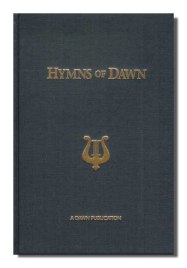
The Hymns Of Dawn (hymn book) can be purchased at:
The Chicago Bible Students Online Bookstore: https://chicagobible.org/product-category/books/page/4/
The Dawn Bible Students Association: http://www.dawnbible.com/dawnpub.htm
Acknowledgment & References
- Br. Charles Taze Russell

Br. Charles Russell—the founder of the Bible Students movement, who is the compiler of “Poems and Hymns of Millennial Dawn” which was published in Allegheny, Pa., in 1890. This Bible Students’ devotional originally contained a total of 151 poems and 333 hymns.

The following prefatory to the 1905 publication of Hymns of Millennial Dawn may be of historical interest to many of our readers.
We published in 1890, with several more recent editions, a volume entitled “Poems and Hymns of Millennial Dawn” without music. The same collection of hymns with the music is now urgently needed, and therefore appears in this volume. The poems, although highly prized, are omitted for greater convenience in size. We have preserved the same alphabetical order, because so many of our readers have the older book; and where a different tune is given from that originally suggested the latter is indicated by Alt. for alternative tune, with the number where that tune can be found.
Both words and music are credited to the same class to whom the work is dedicated—to the Lord and His faithful people, “the Saints.” The authors of many of the best of them are unknown to us, and, besides, slight changes have been made in the phraseology and sentiment of quite a number, which we could not be sure their original authors would approve, and to give personal credit to less than one half would seem invidious. To all of these dear “Saints” of all ages we therefore give united and hearty thanks for the blessings which they, as the Lord’s servants and handmaidens, have bestowed upon their fellow-members of “the Church of the Firstborn, whose names are written in Heaven.” Most of them died long ago: their abundant reward will be of the Lord in the resurrection.
That the collection is thoroughly undenominational, unsectarian, will be manifest to those recognizing the fact that it includes the choicest old hymns and tunes used by all denominations.
Although we have gathered far and near and winnowed carefully we cannot hope to have gotten all the golden grains, though we do hope that no chaff can be found. The collection is for the Church, for “believers” “reconciled,” and hence contains none of the “sinners” hymns, such as “Come, ye sinners poor and needy,” because willful sinners are in no sense members of the “Body” of Christ, nor are those who have not yet accepted the Lord as their Savior.
Those who will feel the deepest interest in this collection, and whose sentiments will be most fully voiced in its verses, will undoubtedly be those in fullest degree of sympathy with the divine plan of the ages, as set forth in the several volumes of Millennial Dawn – the eyes of whose understanding have been opened to the clearer, purer light now shining from our great Redeemer’s cross, showing the fulness and the completeness of his salvation.
In fact, this volume, while not numbered as one of the volumes of the Millennial Dawn series, is designed to be a companion volume, a melodious accompaniment to the “new song,” “the song of Moses and the Lamb” (the grand harmony of the Law and the Gospel), as presented in the regular Dawn series.
Let the music of God’s good and great plan ring through your hearts and lives, dear fellow-pilgrims and fellow members of the “royal priesthood,” so that every day and every hour shall be filled with joy and praise and thankfulness! And that this little volume may assist in deepening the work of grace in your hearts is our hope and prayer.
– Watch Tower Bible and Tract Society, July, 1905, Allegheny, PA, USA
——-
Later on, the hymns from this book formed a basis for the hymnal titled “Hymns of Dawn” which was published by the Dawn Bible Students Association in East Rutherford, New Jersey (USA) and the 1999 edition contains a total of 361 hymns.
- Harvest Truth Data Base
- Hymnary.org.
Suggested Further Reading
Worthy To Be Praised
https://biblestudentsdaily.com/2016/05/15/worthy-to-be-praised/
DANIEL 3:17 – Our God Whom We Serve Is Able To Deliver Us
https://biblestudentsdaily.com/2017/10/14/daniel-317-our-god-whom-we-serve-is-able-to-deliver-us/
The Lord Is My Shepherd, (R1396) — Reprints of the Original Watch Tower and Herald of Christ’s Presence.
The Lord Is My Shepherd, (R3268) — Reprints of the Original Watch Tower and Herald of Christ’s Presence.
The URL of this post:
https://biblestudentsdaily.com/2018/04/09/hope-in-christ-hymns-of-dawn-no-15/



 BIBLE Students DAILY