Always Rejoicing – Hymns of Dawn No. 27

Always Rejoicing – Hymns of Dawn No. 27

“(1) Come, let us shout joyfully to Jehovah! Let us shout in triumph to our Rock of salvation. (2) Let us come into his presence with thanksgiving; Let us sing and shout in triumph to him” (Psalm 95:1,2).

“My mouth shall praise Thee with joyful lips” (Psalm 63:5).

“Until the day break, and the shadows flee away, I will get me to the mountain of myrrh, and to the hill of frankincense (Song of Solomon 4:6).

Note: “ Myrrh is bitter experience and the wisdom gained through such experience. Frankincense represents praise and thanksgiving. Hymns of praise often include the Christian’s gratitude for deliverance from suffering that is beyond human endurance. Such help usually evokes praise and thanksgiving. Of course pleasant experiences also bring forth praise, but the type of praise that arises from suffering is on a higher level than praise from pleasure. Verse 6 alludes to praise that arises from suffering.

‘Until … the shadows flee away.’ The shadows of the nighttime experience of the Church will ‘flee away’ when the Church is complete. These are the shadows of the gospel night, the Passover night. Why is myrrh a ‘mountain’ and frankincense a ‘hill’? Two different Hebrew words are used. Our praise can never reach the mark of perfection. What Jesus offered at Calvary far transcends anything we can offer” (Br. F. Shallieu, Notes on the Song of Solomon, pages 37-38).

Here is a recording of Hymn No. 27 from the “Hymns of Dawn” to aid God’s people in singing and making melody in their hearts unto God.


Lyrics

1.
Children of the heav’nly King,
As we journey let us sing;
Sing our Saviour’s worthy praise,
Glorious in his works and ways.

2.
Abra’m’s favored seed be glad;
One with Christ ye shall be made;
He our human flesh assumed,
And our ruined souls redeemed.

3.
Lift your eyes, ye sons of light,
Zion’s city is in sight;
There our endless home shall be;
There our Lord we soon shall see.

4.
We are trav’ling home to God,
In the way our Saviour trod;
In the hour of trial we
Watch thy footprints, Lord, to see.

*******

The History Of This Hymn

Author — John Cennick  (1718-1755) wrote the original lyrics to this hymn in 1743. “A prolific and successful hymnwriter, was descended from a family of Quakers, but brought up in the Church of England. He assisted J. Wesley and then G. Whitefield in their labours for a time, and then passed over to, and died as a minister of, the Moravian Church” (https://hymnary.org/person/Cennick_J).

ComposerNo information.

*******


Bible Scriptures Associated With This Hymn

Psalm 84: 4, 5 (ESV) — “(4) Blessed are those who dwell in your house, ever singing your praise! Selah (5) Blessed are those whose strength is in you, in whose heart are the highways to Zion.”

Isaiah 35:10 & Isaiah 51:11 (ESV)“And the ransomed of the Lord shall return and come to Zion with singing; everlasting joy shall be upon their heads; they shall obtain gladness and joy, and sorrow and sighing shall flee away.”

Matthew 26:41 (NLT)“Keep watch and pray, so that you will not give in to temptation. For the spirit is willing, but the body is weak!”

Galatians 3:13 (KJV)“Christ hath redeemed us from the curse of the law, being made a curse for us: for it is written, Cursed is every one that hangeth on a tree.

Philippians 4:4 (KJV)Rejoice in the Lord always: and again I say, Rejoice.”

1 Peter 2:21 (ESV)“For to this you have been called, because Christ also suffered for you, leaving you an example, so that you might follow in his steps.

Revelation 21:2 (ESV)“And I saw the holy city, new Jerusalem, coming down out of heaven from God, prepared as a bride adorned for her husband.”


 *******

The words below are from Reprint No. 3127-3130, from the Original Watchtower and Herald of Christ’s Presence as documented on “Harvest Truth DataBase Version 9: http://www.htdb.one

“REJOICE IN THE LORD ALWAYS.” 

====================

PHILIPPIANS 4:1-13

THE EPISTLE to the Philippians is one of the most loving of all the Church letters written by the Apostle Paul… The Epistle to the Philippians contains no reproofs, no chidings, such as appear in others of the epistles, but rather it is full of approval, commendation and special love. Apparently, too, this little company of the Lord’s people loved the Apostle as fervently as he loved them. His afflictions on their account bound their hearts to him in lasting gratitude. We find that on at least four occasions they helped to sustain the Apostle; once while at Corinth (2 Cor. 11:9), twice while at Thessalonica (Phil. 4:16), and once while he was a prisoner at Rome. On this latter occasion they sent their gifts and expressions of love by a special messenger, Epaphroditus who, arriving at Rome in the malarial season, took dangerously ill—probably with what is termed the Pontine, or Roman fever. It was on the occasion of the recovery of Epaphroditus and his return to Philippi that the Apostle sent back with him this epistle.

A contemporary writer, referring to the practical manifestation of love by the Philippian brethren makes the following comment: “The people of Malta were the only others recorded who expressed their love in this way to Paul. The Ephesians wept over him, but there is nothing said of their expressing their feelings by aiding him. Perhaps they did.” Evidently the Apostle needed some such manifestation of affection and appreciation of his efforts on their behalf, for his own encouragement. It must have been hard, indeed, for him to love the Church at Corinth as he did—laying down his life on its behalf, as well as on behalf of the other Churches—while realizing keenly, as his epistles distinctly intimate, that he was but lightly esteemed in return.—1 Cor. 4:7-9; 2 Cor. 10:10.

In view of this close and dear relationship between the Apostle and the Church at Philippi, as between an under shepherd, or pastor and the flock, how full of meaning the first verse of our lesson! “My brethren, dearly beloved and longed for, my joy and my crown,—so stand fast in the Lord, my dearly beloved.” These words from the pen of a conscientious and sincere man, such as the Apostle was, are fragrant with the very essence of Christian love and fellowship. How much they must have been appreciated, and how much they must have been deserved!

But if there was nothing in the condition of the Philippians to reprove, they, nevertheless, needed the exhortation to stand fast. They had already, by the Lord’s favor, reached a considerable attainment in the graces of the spirit—they must needs be tested, however, to prove them, to try them; and for this ordeal, which every individual, as well as every congregation of the Lord’s people must expect, the Apostle wished to prepare them—to urge that they do not retreat from the advanced steps of love and obedience already taken—that they continue firm, not, however, trusting to their own strength, but, as he expresses it, that they should “stand fast in the Lord,” trusting in his power, in his grace, sufficient for every time of need.

Several of the sisters of this congregation appear to have been prominent helpers in the work, not only when the Apostle was with them, but subsequently. Two of these are mentioned by name (v. 2), and the exhortation that they be of the same mind in the Lord implies that in some respects at least these two were at variance. It is well that we note the Apostle’s language to them very carefully, for there is wisdom in it. He does not exhort them to be of one mind in everything; quite possibly realizing that because of very different temperaments and dispositions, habits of life, etc., this might be impossible; but he does urge them to be of the same mind in the Lord—to preserve a unity of heart and head in all things relating to the Lord and his cause.

It will be of advantage to all of the Lord’s people to pursue in such matters the course which the Apostle here advocates—not to attempt to “harmonize all earthly things” under present conditions;—to be content that each should have differences of opinion on various other subjects, and to insist only on oneness, fellowship, union, harmony in the Lord, in the truth, in the spirit of love, and toward all the members of the household of faith. Insistence on more than this—endeavoring to bring all to one view on social, financial and other questions—endeavoring to bring all to one view respecting dress and food, etc., has caused grievous strivings and estrangements between members of the household of faith; and all such endeavors should be recognized as contrary to the Lord’s instruction through the Apostle—contrary to the “spirit of a sound mind”—contrary to the wisdom that cometh from above,—which entreats and exhorts for unity only in the Lord and along the line of questions positively settled by the Lord in the Scriptures—which generously leaves with each full liberty to act and to judge on all questions not positively settled by the Scriptures. We urge that all of the Lord’s dear flock copy the wisdom of the Apostle in this matter, and heed his injunction, given to these two sisters, to let nothing come between them in the Lord.

In the third verse of our lesson “Yokefellow” apparently should be written with a capital, as the proper name of a brother in the Philippian Church—not only a Yokefellow in name, but as here declared, “a true Yokefellow,” and, as we might expect, therefore, one who would be ready to cooperate with and to assist others. In the Apostle’s judgment, some others were burdened, needing assistance. He specifies Clement and the two sisters already referred to, whose differences were burdening them. That the differences had not yet extended so as to injure them spiritually, the Apostle firmly believed, and hence he declares that he [R3128 : page 7] still recognizes them as fellow-laborers, still recognizes that their names are in the Book of Life. On this account they should seek harmony in the Lord, and Brother Yokefellow should fulfil toward them the true meaning of his name, by helping them over their difficulties; helping them to preserve the unity of the spirit in the bonds of peace in the Lord.

There is no room for any of us today to become apostles, for there were only twelve of them, and never will there be more. (Rev. 21:14.) There may not be opportunities for all of us to do great things in the Lord’s service in this harvest time, either; but there are opportunities for every one of us to be true yokefellowsto assist the dear brethren and sisters with their burdens;—not merely financial burdens, or burdens of illness, but sometimes to assist them over difficulties and burdens of the kind suggested in this lesson—burdens of different temperaments and dispositions. Let us each and all seek to be true yokefellows to the various members of the body of Christ. We may be sure that the Lord will highly esteem such service, and that thus we will be growing in that grace which he so highly commended when he said, “Blessed are the peacemakers; for they shall be called the children of God.”

Laying down certain general principles for godly living, healthful for New Creatures, the Apostle exhorts,—“Rejoice in the Lord always, and again I say, rejoice.” This, the Golden Text of the lesson, represents the very essence of Christian living. Under present conditions it is not supposable that outward circumstances will always be favorable to rejoicing, from the natural standpoint. He, therefore, who would rejoice always in the Lord must have faith in the Lord,—trust, hope, love. Without these he could not so appropriate to himself the gracious promises of the Word as to be able to rejoice in tribulation and suffering and under trials and difficulties, and when falsely accused and misrepresented, and when slandered and evilly entreated for the truth’s sake.

The only ones who can rejoice always are those who are living very near to the Lord, and who can feel always their oneness with him, and that his protection and care are over them, and that his promise is sure, that all things shall work together for their highest welfare, as New Creatures.

Others may rejoice today and be cast down tomorrow; only the faithful in Christ Jesus are privileged to rejoice always. The thought of the Lord’s favors, past, present and to come, makes all the trials and difficulties of such to appear very light afflictions, as but for a moment, not worthy to be compared with the glory, honor and immortality promised, and the blessed privileges of divine service, both here and hereafter. The Apostle emphasizes the matter by saying, “Again I say, Rejoice.” We cannot have too many rejoicing Christians, nor can they rejoice too much, if they rejoice in the Lord. This rejoicing is not necessarily boisterous, nor of necessity the reverse. It implies serenity, happiness, peace, pleasure of soul, however, and does not mean that noisy demonstration is essential, as some seem mistakenly to think.

The Apostle further exhorts that the faithful let their moderation, their forbearance, be manifested, not only toward the brethren, but toward all with whom they have to do. The Greek word here rendered “moderation” seems to carry with it the thought of reasonableness, and of not exacting our rights too rigorously. Mercy and leniency are certainly qualities required of all who would be members of the body of the Anointed. Faithfulness in the performance, as far as possible, of all that justice would require of us, and mercifulness in respect to all our requirements of justice from others should be our rule: so shall we be the children of our Father which is in heaven, for he is kind and merciful to the unthankful.

“The Lord is at hand!” The thought seems to be that we who are the Lord’s are not living for the present time. We are expecting great changes to be ushered in when our King shall take to himself his great power and begin his reign. We are not to be struggling for the last inch or the last penny, nor for the extreme of our own rights; but, rather, to be so full of rejoicing in the good things coming, and already ours by faith, that it will make us generous as respects the things of this present time in our dealings with the brethren and with others. We are not expecting justice from the Lord, for nothing that we have or done or could do would justly call for such exceeding great and precious things as he has promised us. And as we are expecting grace or bounty in so large measure we can well afford to be generous and liberal in our sentiments toward others—especially toward the household of faith, because they are our brethren and fellow-representatives of the Lord himself, from whom our bounty is to come; and toward the world without, because they have not the future prospects which we possess, and hence set their hearts upon the things of this present time; and we can well afford to accord them their full share of these or more, since we are so rich through our heavenly Father and our heavenly Bridegroom.

That the Apostle did not mean to be understood that the Lord’s second advent might be expected momentarily, nor before his death, is evident; for elsewhere in his epistles he clearly sets forth his expectation to die, and to wait for the reward, the crown of righteousness laid up for him; elsewhere also he clearly intimates that the day of the Lord could not come until after the great falling away mentioned in the prophecies, [R3128 : page 8] and the manifestation of the Man of Sin, etc. (2 Tim. 3:7,8; 2 Thess. 2:2-10.) Evidently, therefore, his only thought in this exhortation, “The Lord is at hand,” was, as already suggested—that we are living in the close of the reign of evil, that the dawning of the day of the Lord is not far distant, and that to the eye of faith it is so near that its influence should affect even the smallest affairs of the present life.

“Be careful for nothing” is the next exhortation; but since our English word careful has lost its original meaning, there is danger of error here. The word originally had the thought of being full of care—anxiety, trouble. The Apostle’s words correspond exactly to our Lord’s injunction, “Take no thought,” and signify, Be not anxious, burdened, full of care. It is proper that the Lord’s people should be careful, in the meaning of the word careful as used today. We should not be careless, indifferent, loose in our conduct or words, but be circumspect.

Anxiety and burdens are unavoidable to those who are depending on themselves, their own wisdom, their own strength, their own skill; but the members of the body of Christ, accepted in the Beloved, adopted into the divine family, sons of God, are assured over and over again in the Word that if they abide faithful all things shall work together for their highest welfare. Why should they be burdened? Why should they feel anxious? He who guards their interests slumbers not. When Christians find themselves anxious, fearful, burdened, the evidence is that they are lacking in faith, and the probability is that they have either never grown to the point of having the proper faith in the Lord, or that they have allowed “earth-born clouds” and cares of this life to come between them and the Lord, so that they no longer have confidence that they are abiding in his love and in his care. All in such condition should go at once to the throne of heavenly grace, and to the divine promises, and obtaining mercy at the former, and feeding upon the latter, they should grow strong in the Lord and in confidence in him, and their corroding cares will give place to faith, confidence, peace of heart, whatever the outward conditions.

Such is the counsel of the Apostle—that instead of continuing in the anxious condition, we should lay all of our affairs before the Lord, supplicating his promised providential care, acknowledging our own lack of wisdom;—and gladly accepting his wisdom and the provisions of his love, we should make every request in a spirit of thanksgiving. This spirit of thanksgiving implies a recognition that the circumstances and conditions in which we are, have been supervised of the Lord, and that we are appreciative of his care and trust it for the future. Thanksgiving for what we have, and a full appreciation of the Lord’s leadings hitherto and now, will preclude any anxiety for the future; for the thankful heart will conclude that he who favored us and redeemed us while we were yet sinners will much more favor and do for us now that we are his through the adoption that is in Christ Jesus.

The question may arise, Why will not God give us the things which he sees us to need without our making petition to him and claiming his promises? Undoubtedly because we need previously to come into the proper attitude of heart to receive his favors and to be advantaged by them. Even as it is, we may be sure that we do not sufficiently appreciate the divine care bestowed upon us hitherto and now. Even in the attitude of prayer and thanksgiving we probably do not discern one-half of our causes for gratitude, as we shall see them by and by, when we shall know even as we are known. It is the same with natural hunger. Unless we were so constituted that the gnawings of hunger would show us our need of food we would probably appreciate it less, even if we ate as much and with the same regularity.

If we have the foregoing described spirit of rejoicing and trust in the Lord, and make all of our requests, so far as we are able to discern, in harmony with his promise, and accept with gratitude and thanksgiving, whatever his providence may send us, then the Apostle assures us, “The peace of God which passeth all understanding shall guard your hearts and your minds in Christ Jesus.” The thought here is distinct. It is not our own peace that is referred to. We may by nature be more or less indisposed to peace, restless, dissatisfied, discontented, fearful, foreboding or quarrelsome; but, following the [R3129 : page 8] course outlined above, we learn to trust God in all of our affairs, and it is the peace of Godthe peace which comes to us from a realization of God’s power and goodness and willingness to hold us by his right hand as his children—that comes in, to keep us from worry, from anxiety, etc. The thought is that this peace stands guard continually, as a sentinel, to challenge every hostile or worrying thought or fear. It keeps the Christian’s mind, so that he at heart has peace with the Lord, fellowship, communion;—and it guards his mind also, his reasoning faculties, instructing him and assuring him respecting the divine power and wisdom and love. But it does not assure him of anything respecting his own perfection or worthiness of acceptance before God. This proper peace merely assures us of our standing in divine favor through Christ Jesus,—his worthiness, his sacrifice, his aid.

Now we come to the Apostle’s grand summing up of the way in which the Christian is to set his affections—fix them, fasten them, hold them upon profitable things; that he may grow in grace as well as in knowledge and love of God. The Apostle points out that the will having been consecrated to the Lord, faith having been exercised in rejoicing and thanksgiving in all of the Lord’s providences, the peace of trust having come in, the further steps in the development of character will be through guarding our thoughts: and this means also the guarding of our words and acts, because it is out of the abundance of the heart that the mouth speaketh, and that the whole course of life is directed. What, then, should be the trend of the Christian’s thoughts after he has reached the grand development already outlined by the Apostle? It should be toward things that are true, having no sympathy with anything that is false or even exaggerated. Whoever sympathizes with falsehood or exaggeration is more or less defiling himself. Whoever cleanses his thoughts, and avoids exaggeration, etc., is in that degree purifying his mind and his entire character, and coming the more into touch and sympathy with the Lord himself, who is “the Truth.”

Nor is it sufficient that we are sure of the truth of matters. We are to test them further, and discern to what extent they are honorable, noble; for although the Lord has accepted us, ignoble and imperfect, and has covered the ignoble features of our characters, and proposes to cover them to the end with his own merit, nevertheless, we cannot be in sympathy with the ignoble features of our fallen condition, but on the contrary must desire true nobility, and the highest standards of honor in our hearts, in our thoughts, in all of our dealings with our God and with our fellows. The test of honor is therefore to be applied after the test of the truth. The thing might be true, but Is it honorable to think about it or tell about it? is another question.

Another test we are to apply is, Are the things just? We are not to allow our minds to run along lines that would be unjust, and we are to learn to apply this test of justice to every thought and word and act of ours, while learning at the same time to view the conduct of others from a different standpoint;—so far as reason will permit, from the standpoint of mercy, forbearance, pity, helpfulness. But we cannot be too careful how we criticize every thought we entertain, every plan we mature, that the lines of justice shall in no sense of the word be infringed by us with our hearts’ approval.

Purity is another quality to be esteemed by us. We are to love and cultivate that which is pure to such an extent that that which is impure will become painful to us, distressing, and we will desire to drop it from memory, and this will only be accomplished by continually thinking upon those things that are pure, and avoiding the giving of thought to the things that are impure. We are to recognize true loveliness, and to esteem it. From our standpoint the impure, the unjust, the untrue, the dishonorable things, cannot appear lovely, desirable, worthy of emulation. When we would think on the purest of things we must of necessity lift our mental vision to as high a point as possible, and, as nearly as we may be able, discern the loveliness of the perfect character of our God and of our Lord Jesus Christ, and proportionately the loveliness manifested in one or another of the followers of Jesus, who walk closely in his footsteps. The mind that frequently calls up the lovely perfections of the Lord and the truth, and is well filled by these, is guarded greatly against intrusions of unlovely and unholy things, contrary to the spirit of the Lord. The Apostle concludes the list, by referring to all things of good repute: things of any virtue or value, things in any degree praiseworthy—the noble words or noble deeds or noble sentiments of anybody, we may safely meditate upon, and as a consequence find ourselves growing toward these ideals upon which our minds, our new natures, thus feed. We will become more and more transformed by the renewing of our minds, and approach nearer and nearer to the glorious likeness of our Lord and Master, being changed from glory to glory, inch by inch, step by step, little by little, during the present life; and our thoughts being in this attitude and our union with the Lord maintained, we shall have part in the First Resurrection, which will perfect us forever in the Lord’s image and likeness.

How many (how few!) can say what the Apostle says in vs. 9 ? “The things which ye both learned and received and heard and saw in me, these things do!” This should be the standard of every Christian, because they each and all are representatives of the Lord, ambassadors for him; hence, so far as in them lieth, their conduct and words should be such as would be living epistles, read by the brethren and by the world to profit. No wonder the Apostle adds that, doing thus, “the God of peace shall be with you.” So surely as he was with the Apostle he will be with all others similarly walking in the footsteps of Jesus.

“I rejoice in the Lord greatly that now at length ye have revived your thought for me.” These words seem to imply that their thoughtfulness for the Apostle, and earnestness to improve opportunities to serve him, had to some extent relaxed for a time and been revived. Then, as though fearful that his words might be understood as a reproof, he adds, “Ye did indeed take thought, but ye lacked opportunity.” How careful was this man of God not unnecessarily to wound the feelings of the brethren, and how careful we all should likewise be to let the love of God extend, not only to the degree of giving us liberal sentiments toward the brethren, but also to the extent of influencing our tongues and pens not to wound unnecessarily even the least of them.

The Apostle hastens to point out that he is not complaining of want. He had learned to put into practice himself the lesson which he was just communicating to them, regarding rejoicing in the Lord,—to cast aside anxious thought and to approach the Lord in prayer and supplication in thanksgiving, and he possessed the resultant peace. In this condition of heart, however many may have been his necessities, he was not in want, for he was satisfied that the Father would provide the things which he really needed—and more he did not want; for, as he explains, he had learned the lesson, “In whatsoever state I am, therewith to be content.” We are not to be contented after the manner of the tramp or the indolent and shiftless, who would prefer to “live by faith,” at the expense of others who “labor, working with their hands.” We are not to be content to allow the opportunities and talents and privileges which the Lord has given us to lie idly by, unused; but while using these talents and opportunities to the very best of our ability and intelligence, and while seeking in prayer and supplication, rejoicing and thanksgiving, to use them all as would please the Lord, we should be content with the result of such efforts.

We should conclude that our heavenly Father who feeds the sparrows and who clothes the fields with verdure is quite able to supply our needs in the manner and to the degree that would be for our highest welfare; and so, after having done our part to the best of our ability, we are to be thoroughly contented with the results—even if the results should be the barest necessities of life. But we are not to be contented with the barest necessities unless these are the best results obtainable from a reasonable and judicious use of opportunities and talents which the Lord has given us, consistent with our consecration to his service. “Be content with such things as ye have” does not ignore our talents and opportunities, for these are part of the things which we have,—the things which, as stewards, we are bound to use to the best of our judgments.

Surely the Lord was fitting the Apostle for a grand place in the heavenly Kingdom, when he gave him such a variety of experiences as are detailed in the 12th verse. Surely, as the Lord was touched with the feeling of our infirmities, that he might be a faithful High-Priest for the Millennial Kingdom (as well as to us now), so the Apostle, by his experiences, evidently was being fitted and prepared for a very honorable and prominent place in the Royal Priesthood of the same Kingdom. And so with us: if we find our experiences in life very checkered we may conclude that the Lord sees that we need both the heights and depths of prosperity and adversity to properly instruct us and qualify us for the position he designs for us in the future. Let us, then, as the Apostle did, learn how to abound, not allowing the abundance of earthly good things to swerve us from our consecration vows; and learn also how to be in want (need) and yet not to want anything beyond what the Lord’s wisdom and providence sees best to give,—to be content.

The secret of the Apostle’s success is stated in the last verse of the lesson. It was his close relationship to the Lord, his intimate union with him, his reliance [R3130 : page 10] upon him: he was abiding as a branch in the Vine, and was strengthened by the same spirit, and thus was enabled to do all these things and to pass through all these experiences with gratitude, with thankfulness, with rejoicing. Let us all thus learn to “Rejoice in the Lord always.”

====================

Our Saviour — Christ Jesus

Here are some free online articles in relation to the Heavenly Father — Jehovah, and his Son — Christ Jesus — “a ransom FOR ALL … to be testified in due time” (1 Timothy 2:6), as well as, about the holy Spirit (the invisible power and influence of God) with clear explanations about why the anti-Christ teaching of “the trinity” — introduced by the Roman Catholic Church system (the “Beast” in the Book of Revelation) — is not what the Bible teaches. The Bible Student Movement does not support the teaching of purgatory nor does it support the Roman Catholic System’s teaching about people being sent to a place where they burn up forever, which certainly does not reflect the perfect love of God — the Almighty Creator of all things.

Hence, for the interested Reader, we urge you to consider the following articles and posts:

The Doctrine of the Trinity – Mystery or Confusion by Br. David Rice.
http://www.heraldmag.org/1999/99nd_3.htm

The Origin of the Trinity – From Paganism To Constantine by Sr. Cher-El L. Hagensick.
http://www.heraldmag.org/olb/Contents/doctrine/The%20Origin%20of%20the%20Trinity.htm

Facts About the Trinity
http://www.heraldmag.org/olb/contents/doctrine/FACTS%20ABOUT%20THE%20TRINITY.htm

God and the Trinities
http://www.heraldmag.org/literature/doc_42.htm

Development of the “Trinity Doctrine” by Br. Tom Gilbert.
http://www.beautiesofthetruth.org/Archive/Library/Doctrine/Mags/Bot/90s/2010d.pdf

Understanding John 1:1 by Br. Richard Doctor.
http://www.beautiesofthetruth.org/Archive/Library/Doctrine/Mags/Bot/90s/2010d.pdf

Father, Son and Holy Spirit
https://biblestudentsdaily.com/2016/06/23/father-son-and-holy-spirit/

What Is the Heavenly Father’s Name
https://biblestudentsdaily.com/2017/06/27/gods-name-what-is-the-heavenly-fathers-name-that-we-are-to-hallow-and-why/

Jesus – The Name
https://biblestudentsdaily.com/2017/07/05/jesus-the-name/

The Doctrine of Christ – Booklet
http://www.biblestudents.com/docs/DoctrineChrist.pdf

Hymn Book Purchase

The Hymns Of Dawn (hymn book) can be purchased at:

The Chicago Bible Students Online Bookstore: https://chicagobible.org/product-category/books/page/4/

The Dawn Bible Students Association: http://www.dawnbible.com/dawnpub.htm

Acknowledgment & References
2

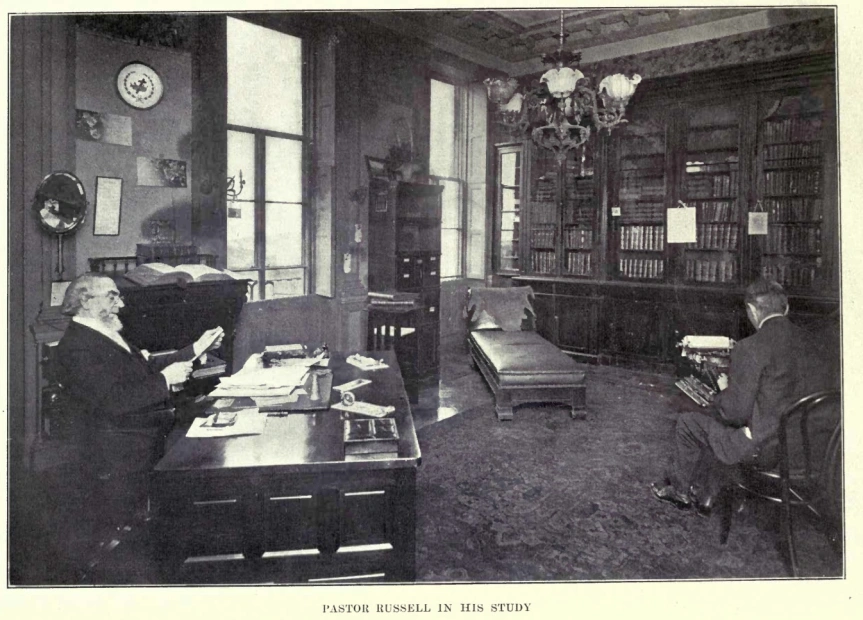
Br. Charles Russell—the founder of the Bible Students movement, who is the compiler of “Poems and Hymns of Millennial Dawn” which was published in Allegheny, Pa., in 1890. This Bible Students’ devotional originally contained a total of 151 poems and 333 hymns.

POEMS-AND-HYMNS-OF-MILLENNIAL-DAWN

The following prefatory to the 1905 publication of Hymns of Millennial Dawn may be of historical interest to many of our readers.

We published in 1890, with several more recent editions, a volume entitled “Poems and Hymns of Millennial Dawn” without music. The same collection of hymns with the music is now urgently needed, and therefore appears in this volume. The poems, although highly prized, are omitted for greater convenience in size. We have preserved the same alphabetical order, because so many of our readers have the older book; and where a different tune is given from that originally suggested the latter is indicated by Alt. for alternative tune, with the number where that tune can be found.

Both words and music are credited to the same class to whom the work is dedicated-to the Lord and His faithful people, “the Saints.” The authors of many of the best of them are unknown to us, and, besides, slight changes have been made in the phraseology and sentiment of quite a number, which we could not be sure their original authors would approve, and to give personal credit to less than one half would seem invidious. To all of these dear “Saints” of all ages we therefore give united and hearty thanks for the blessings which they, as the Lord’s servants and handmaidens, have bestowed upon their fellow-members of “the Church of the Firstborn, whose names are written in Heaven.” Most of them died long ago: their abundant reward will be of the Lord in the resurrection.

That the collection is thoroughly undenominational, unsectarian, will be manifest to those recognizing the fact that it includes the choicest old hymns and tunes used by all denominations.

Although we have gathered far and near and winnowed carefully we cannot hope to have gotten all the golden grains, though we do hope that no chaff can be found. The collection is for the Church, for “believers” “reconciled,” and hence contains none of the “sinners” hymns, such as “Come, ye sinners poor and needy,” because willful sinners are in no sense members of the “Body” of Christ, nor are those who have not yet accepted the Lord as their Savior.

Those who will feel the deepest interest in this collection, and whose sentiments will be most fully voiced in its verses, will undoubtedly be those in fullest degree of sympathy with the divine plan of the ages, as set forth in the several volumes of Millennial Dawn—the eyes of whose understanding have been opened to the clearer, purer light now shining from our great Redeemer’s cross, showing the fulness and the completeness of his salvation.

In fact, this volume, while not numbered as one of the volumes of the Millennial Dawn series, is designed to be a companion volume, a melodious accompaniment to the “new song,” “the song of Moses and the Lamb” (the grand harmony of the Law and the Gospel), as presented in the regular Dawn series.

Let the music of God’s good and great plan ring through your hearts and lives, dear fellow-pilgrims and fellow members of the “royal priesthood,” so that every day and every hour shall be filled with joy and praise and thankfulness! And that this little volume may assist in deepening the work of grace in your hearts is our hope and prayer.

– Watch Tower Bible and Tract Society, July, 1905, Allegheny, PA, USA

——-

Later on, the hymns from this book formed a basis for the hymnal titled “Hymns of Dawn” which was published by the Dawn Bible Students Association in East Rutherford, New Jersey (USA) and the 1999 edition contains a total of 361 hymns.
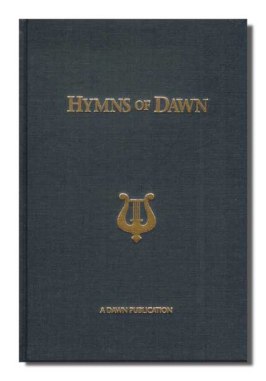
Hymns of Dawn.jpg


Suggested Further Reading

A Special Calling by Br. David Rice. The Herald of Christ’s Kingdom. July /August 2016.
https://herald-magazine.com/2016/07/01/the-bride-class/

The Bride and the Bridegroom by Br. Carl Hagensick. A Verse-by-verse Study of Psalm 45. The Herald of Christ’s Kingdom. July/August 2004.
http://www.heraldmag.org/2004/04ja_4.htm

A Chaste VirginThe Herald of Christ’s Kingdom.
http://www.heraldmag.org/literature/chliv_38.htm

Christ and His Bride. BIBLE Students DAILY.
https://biblestudentsdaily.com/2017/06/25/christ-and-his-bride/

THE BIBLE — The World’s Best Model. Here is Why.

THE BIBLE – The World’s Best Novel. Here Is Why.

NEHEMIAH 8:10 — The Joy In The Lord Is Your Strength

NEHEMIAH 8:10 – The Joy of the Lord is Your Strength

MATTHEW 14:22-33 — How To Walk On Water

Matthew 14:22-33 – How To Walk On Water

His Loving Kindness – Hymns of Dawn No. 19

His Loving Kindness – Hymns of Dawn No. 19

Awake My Soul — Hymns of Dawn No. 20

Awake My Soul – Hymns of Dawn No. 20

The Sacrifice

The Sacrifice

Give Thanks In All Circumstances

1 THESSALONIANS 5:18 – Give Thanks In All Circumstances

The Truth About Hell. A Dawn Bible Association Publication. http://www.dawnbible.com/booklets/hell.htm

Hope Beyond the Grave. A Dawn Bible Association Publication. http://www.dawnbible.com/booklets/grave.htm

Who We Are. BIBLE Students DAILY – https://biblestudentsdaily.com/category/who-we-are/

Our Beliefs — What Does the Bible Teach Us?
https://biblestudentsdaily.com/category/beliefs/

Bible Students’ Links and Bible Study Resources
https://biblestudentsdaily.com/category/links/


This post’s URL:

Always Rejoicing – Hymns of Dawn No. 27


Enter your email address to subscribe to this blog and receive notifications of new posts by email.


LUKE 22:17-20 – The Two Cups

MATTHEW 26, 27-29, NASB.jpg

The Two Cups

Introduction

The Memorial is a special time of the year, a time when we refocus on the basis for our Christian existence and hope; by remembering the sacrifice Jesus made for us and thereby reconciled us to God.

On the night he was betrayed, at the beginning of the 14th of Nisan, Jesus instituted the emblems of the bread and wine after the last supper he had with his disciples. He gave us both to partake of, which simply but powerfully reminds us that only in him we have true life through forgiveness of sins.

That each Gospel account gives us additional details of the events, and from a slightly different perspective and approach, suggests that all of the accounts need to be taken together as a whole in order to get the most complete picture of those final moments of our Redeemer’s life. The Apostle Matthew arranges his Gospel more thematically whereas Luke arranges the events more chronologically.

Here we will focus on clarifying what the cup Jesus instituted means.

The Gospel of Matthew Account

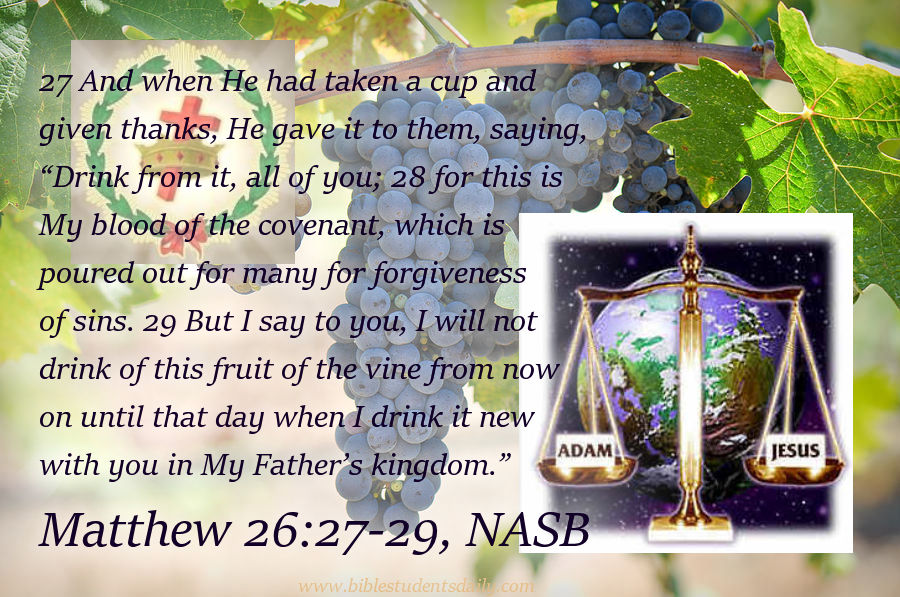
Matthew 26:27–29 (ESV) And he took a cup, and when he had given thanks he gave it to them, saying, “Drink of it, all of you, 28 for this is my blood of the covenant, which is poured out for many for the forgiveness of sins. 29 I tell you I will not drink again of this fruit of the vine until that day when I drink it new with you in my Father’s kingdom.”

In the Matthew account in Chapter 26 verses 27–29, it appears that there is one cup, and that Jesus refers to it both as “my blood of the covenant, which is poured out for many for the forgiveness of sins” in verse 28 and as “this fruit of the vine” in verse 29. If we just take Matthew’s account as the basis for Jesus’ institution of the memorial cup emblem, we might get the impression that not only there was one cup, but that Jesus did drink of this cup – for he says according to the ESV in verse 29 “I will not drink again,” suggesting that he had already drank of it. And some suggest that this therefore shows that the disciples – and by implication all consecrated believers, share with Jesus in his sufferings – after all, like Jesus, we are told to present ourselves a living sacrifice in Romans 12:1.

If Jesus did drink of the memorial cup, what Jesus described as “this fruit of the vine” would seemingly and straightforwardly refer to wine consumed during a supper. The “vine” referring to a grapevine and its fruit as consumed and referred to at the time meant wine, i.e. fermented grape juice – for this was a way of preserving it. Grape juice would of course be an acceptable substitute for those inclined to do so. That Jesus does not refer to the contents according to the normal, commonly used ancient Greek word for wine, oinos, may be significant.

But if the cup was also “my blood of the covenant, which is poured out for many for the forgiveness of sins” – as Jesus states, and if Jesus also drank of it, then we are left with the uncomfortable suggestion that Jesus needed forgiveness of sins provided by his own sacrifice – which of course does not make sense as Jesus was sinless, and no sinner can redeem their own sin.

One solution to this problem seems to be that Jesus did not in fact drink of this cup. And this does seem to be supported by the questionable translation of the Greek preposition “apo” and adverb “arti” in the ESV as “again” in some Bibles. These two ancient Greek words literally mean “from now.” About 10 Bibles translate them as “again”, but at least 15 translate them as “from now” or “henceforth”, and the RVIC2016 as well as Wilson’s Diaglott translate them as “henceforth.” Importantly, the better translations of “henceforth” and “from now” are ambiguous in indicating whether Jesus did in fact drink of the cup or not.

The Gospel of Matthew Account

The Gospel of Mark account is much more succinct in general and here in regards to the institution of the memorial cup, is very similar to Matthew’s.

Luke 1:3 (ESV) “it seemed good to me also, having followed all things closely for some time past, to write an orderly account for you, most excellent Theophilus.”

The Gospel of Luke account of these events is however fuller, and as mentioned, Luke the physician, paid particularly attention to the sequence of events, and he states so in Luke 1:3, he says “having followed all things closely for some time past, to write an orderly account for you, most excellent Theophilus.” When he addresses the reader as “Theophilus” he means “lover of God”, which is what the word means in ancient Greek. That Luke wrote his account with particular attention to the sequence of events is important for us.

Luke 22:17–20 (ESV) And he took a cup, and when he had given thanks he said, “Take this, and divide it among yourselves. 18 For I tell you that from now on I will not drink of the fruit of the vine until the kingdom of God comes.” 19 And he took bread, and when he had given thanks, he broke it and gave it to them, saying, “This is my body, which is given for you. Do this in remembrance of me.” 20 And likewise the cup after they had eaten, saying, “This cup that is poured out for you is the new covenant in my blood.

Luke distinguishes between the cup of “the fruit of the vine” and the cup “that is poured out for you is the new covenant in my blood,” as partaking of the bread emblem occurred in between.

Two cups:

  • The “fruit of the vine” cup
  • The “new covenant in my blood, for the forgiveness of sins, poured out for you” cup

This is important information, for it tells us that there were, in fact, two cups – not one; firstly, the “fruit of the vine” cup and secondly – combining the Matthew and Luke accounts, of “the new covenant in my blood, for the forgiveness of sins, poured out for you.”

1 Corinthians 11:25 (ESV) In the same way also he took the cup, after supper, saying, “This cup is the new covenant in my blood. Do this, as often as you drink it, in remembrance of me.”

The first cup was seemingly partaken of during the last supper, as the second cup, the memorial cup was instituted by Jesus after supper – as the Apostle Paul tells us in 1 Corinthians 11:25.

An important question to ask at this point is, is this important? – one, two cups, what is the difference?

If they are the same cup and if Jesus did partake of it does affect what the cup means, and also what our relationship to Jesus in regards to the cup actually is. As mentioned, some suggest that by drinking of the cup shows that we share in “the sufferings of Christ” with Jesus. So, the implications of whether there are one or two cups is not insignificant.

The “Fruit of the Vine” Cup

If there are two cups, they are different. Does that mean that they signify different things, or anything at all beyond the literal contents of wine?

It seems that that both signify different things.

Both cups literally contained “fruit of the vine” – almost certainly wine. That the 2nd cup, the memorial cup meant more than the literal wine it contained may suggest that Jesus also meant more than the literal wine in the first cup. This seems to be supported by Jesus’ use of the unusual phrase “fruit of the vine” for the wine, as this phrase is only found 3 times in the New Testament and only in the Gospel accounts in relation to the memorial cup. No where else in the Scriptures is the phrase “fruit of the vine” used to refer to wine. The normal word for wine, oinos, is however widely and commonly used in the New Testament, some 34 times.

Luke 7:33–34 (NKJV) For John the Baptist came neither eating bread nor drinking wine, and you say, ‘He has a demon.’ 34 The Son of Man has come eating and drinking, and you say, ‘Look, a glutton and a winebibber, a friend of tax collectors and sinners!’

As an example, in Luke 7:33–34 we have the word oinos used twice in relation to John the Baptist and Jesus when the Pharisees criticized both – John for not eating bread and drinking wine saying he had a demon, and Jesus for eating bread and drinking wine saying he was a glutton and drunkard. If therefore the word for wine, oinos was commonly used, but that Jesus did not use it for the contents of the first cup but instead used the unusual phrase “fruit of the vine” suggests Jesus may have had a deeper meaning in mind.

John 6:48 (ESV) I am the bread of life.

John 15:5 (ESV) I am the vine; you are the branches. Whoever abides in me and I in him, he it is that bears much fruit, for apart from me you can do nothing.

Just as the memorial emblem of the bread that they all ate of indicates that Jesus “is the bread of life” – as Jesus explicitly states in John 6:48, the “fruit of the vine” reference may point to Jesus’ statement in John 15:5 that he is “the vine” and that his disciples are the branches – just as all consecrated Christians are. But if it is not literal, what is the metaphorical “fruit of the vine?” This would seem to be the fruits of the spirit that all those in Christ develop. And the full fruitage of the vine will not be evident till the body of Christ is completed at the end of the harvest period when the kingdom of God is established.

Galatians 5:22–23 (ESV) But the fruit of the Spirit is love, joy, peace, patience, kindness, goodness, faithfulness, 23 gentleness, self-control; against such things there is no law.

Here the “fruit of the vine” therefore seems to refer to the fruits of the holy spirit evident in all true consecrated believers in Jesus – love, joy, peace, patience, kindness, goodness, faithfulness, gentleness, and self-control. This would be consistent with Jesus’ statement that he would not drink of this 1st cup till the kingdom of God comes, or in other words that the full fruitage of the vine would not be evident till the kingdom.

What does it mean then if Jesus drank of this cup? If Jesus did drink of this cup, because he also received the holy spirit, he would also be a first fruit of the holy spirit – and so appropriately drink of the same cup.

Luke 22:16 (ESV) For I tell you I will not eat it until it is fulfilled in the kingdom of God.”

This would also seem to be consistent with Jesus’ statement that he would not eat of the Passover till it is fulfilled in the kingdom of God. This statement is also somewhat enigmatic and unlikely to be fulfilled literally in the future, but it does show that the antitype of the Passover is also still not fulfilled. When we examine the details of the Passover, we understand that Israel as a nation was a type for the world in general. The Passover ultimately led to the liberation from the Pharaoh and Egypt, but in the antitype, this has not occurred yet – the world in general has not yet been liberated from the Adversary and his kingdom. In the same way, the “fruitage of the vine” will not be completed and will not be able to be drank of by Jesus and his consecrated followers, till the church is complete and the marriage of the Lamb occurs.

The “New Covenant in My blood, for the forgiveness of sins, poured out for you” Cup

What then, does the second cup mean and indicate? This seems more self-explanatory – for Jesus actually tells us. Jesus says that the cup depicts “the new covenant in my blood, poured out for you, for the forgiveness of sins.” Jesus’s words seem plain and straightforward enough. Some have suggested that they do not apply to us [believers in the Gospel Age], and that the new covenant will only be inaugurated in the kingdom period. That Jesus says that his “blood, [is] poured out for you,” seems to unequivocally apply it to his consecrated followers now during the Gospel Age, not the kingdom age. When Jesus says “for you,” he means his disciples, and by extension us consecrated believers also.

1 Corinthians 15:19 (ESV) If in Christ we have hope in this life only, we are of all people most to be pitied.

Moreover, that Jesus’ blood provides forgiveness of sins – the prime requirement for reconciliation with God means that if we do not have forgiveness of sins in Christ, then we are still in our sins and most pitiable of men. Let us be clear, if the new covenant, which is the only means by which we can receive forgiveness of sins is not in operation, then how can we be reconciled to God by our faith?

That Jesus did not drink of this 2nd memorial cup, because it is a different cup, makes much better sense – for to partake of it would suggest that he needed forgiveness of sins; which of course he did not – for he was sinless.

That only all of the disciples did drink of this cup, showed that they were the recipients of the benefits of his sacrifice – for the forgiveness of their sins. We note what Jesus said when he gave them [and by extension us] to drink of the cup, he said “Drink of it, all of you” – he did not say let “us” drink of this cup.

Partaking of the cup did not indicate a sharing in the sufferings of Christ. Not that we do not partake in the sufferings of Christ – for the scriptures indicate that we do, but the memorial cup does not indicate this. It indicates that we together have in common that we are all dependent on the sacrifice of Jesus for our reconciliation with God through forgiveness of sins.

The Common Union of the Blood of Christ

1 Corinthians 10:16 (NKJV) The cup of blessing which we bless, is it not the communion of the blood of Christ? The bread which we break, is it not the communion of the body of Christ?

But what about 1 Corinthians 10:16, does this not indicate that we share in the sufferings of Christ, when the apostle Paul says “is not the cup we bless the communion in the blood of Christ?” It has been assumed that the common union in the blood of Christ here is a common union with Jesus, but the context and the grammatical usage here of “koinonia” [translated communion] indicate that the common union is with one another – a common participation of the blood of Jesus showing that we all receive forgiveness of sins through Jesus’ sacrifice.

Here in 1 Corinthians Chapter 10, the Apostle Paul outlines that “the cup we bless” – the memorial cup we ask a blessing for, is not an empty ritual but shows that we are eating at the table of the Lord – we are appropriating the merit of Jesus’ sacrifice to ourselves. And that eating at the table of the Lord is incompatible with eating at the table of demons – which eating of the sacrifices to idols then essentially was. The Apostle warns us to flee from idolatry. There is no suggestion here that we contribute to the food at the table of the Lord. The idolatry we face is much more subtle; it can be the pursuit of wealth, fame, respect, or even a sense of belonging at the expense of the truth but also includes anything that supplants the authority of God’s word.

John 6:54 (NKJV) Whoever eats My flesh and drinks My blood has eternal life, and I will raise him up at the last day.

Jeremiah 31:33–34 (NKJV) But this is the covenant that I will make with the house of Israel after those days, says the LORD: 1) I will put My law in their minds, and write it on their hearts; and I will be their God, and they shall be My people. 34 2) No more shall every man teach his neighbor, and every man his brother, saying, ‘Know the LORD,’ for they all shall know Me, from the least of them to the greatest of them, says the LORD. For 1) I will forgive their iniquity, and their sin I will remember no more.”

Jesus said, whoever drinks of my blood has eternal life…as John 6:54 says.

Faith in Jesus provides us with 1) forgiveness of sins, and thereby reconciliation with God, in order that we may, through baptism, receive of His holy spirit and be developed as new creatures, as 2) the holy spirit teaches us all things of God [rather than any man], even the deep things, and it writes 3) His royal law of agape love on our hearts – these are all functions of the holy spirit through the new covenant as outlined in Jeremiah 31; that we may be born on the spirit plane in the image of Jesus – when we will see the Passover fulfilled, when the fruit of the vine is complete through commonly with one another, partaking of the blood of Jesus shown in the memorial cup Jesus instituted – if we patiently endure to the end.

In Conclusion

In conclusion, it seems then that when Matthew talks about the cup of “the fruit of the vine” and the cup of Jesus’ “blood of the new covenant, for the forgiveness of sins, poured out for you” that they are in fact two separate cups – according to the Gospel of Luke. Jesus may have drank of the former – as the “fruit of the vine” seems to refer to the first fruits of the holy spirit – and which will not be evident till the marriage of the lamb, the seed of blessing is complete. The second cup is separate, a cup that Jesus did not drink of – but of which Jesus said they should all drink of, indicating their, and by extension, our dependence on the sacrifice of Jesus for forgiveness of sins and reconciliation to God. Without it God could not give us of His holy spirit in order to develop us as new creatures and be born on the spirit plane in the likeness of Jesus.

Hallelujah, O what a prospect! Praise be to our Heavenly Father and to His son Jesus.

Suggested Further Reading:

Eating at the Table of the Lord


ROMANS 8, 18 - ad..jpg

Sea-of-Galilee-Mount-of-Beatitudes.jpg

Suggested Further Reading

“Are We Actual Or Reckoned New Creatures?” The Reprints (No. 5325) of the Original Watch Tower and Herald of Christ Second Presence.

“The Ransom.” by Br. David Rice. Faithbuilders Fellowship Journal.
http://www.2043ad.com/journal/2007/02_ma_07.pdf

“Bread and Cup” by Br. James Parkinson. The Herald of Christ’s Kingdom Magazine, March-April 2018.

“Jesus The Name.”
https://biblestudentsdaily.com/2017/07/05/jesus-the-name/

“Who Is the World’s Ransom and Why?”
https://biblestudentsdaily.com/2016/03/29/who-is-the-worlds-ransom-and-why/?share=press-this&nb=1

“Nehemiah 8:10 — The Joy of the Lord Is Your Strength.”
https://biblestudentsdaily.com/2016/12/20/nehemiah-810-the-joy-of-the-lord-is-your-strength/


This post’s URL:
https://biblestudentsdaily.com/2018/03/19/matthew-2627-29-drinking-from-christs-one-cup/

Enter your email address to subscribe to this blog and receive notifications of new posts by email.


All The Way My Saviour Leads Me – Hymns of Dawn No. 12

All The Way My Saviour Leads Me – Hymns of Dawn No. 12

Bible Scriptures Associated With This Hymn

  • “The LORD alone guided him, And there was no foreign god with him” (Deuteronomy 32:12, NAS).
  • “He restores my soul. He leads me in paths of righteousness for his name’s sake” (Psalm 23:3, ESV). 

“The path marked out by the Word of the Lord as one of meekness, faith, patience, love, etc” (R1646:5 — Reprints of the Original Watch Tower and Herald of Christ’s Presence).

  • “For if we live, we live to the Lord, and if we die, we die to the Lord. So then, whether we live or whether we die, we are the Lord’s” (Romans 14:8, ESV).
  • “For the Lamb in the midst of the throne will be their shepherd, and he will guide them to springs of living water, and God will wipe away every tear from their eyes” (Revelation 7:17, ESV).
  • “But if we walk in the light, as he is in the light, we have fellowship with one another, and the blood of Jesus his Son cleanses us from all sin” (1 John 1:7, ESV).
  • “(16) Now may our Lord Jesus Christ himself, and God our Father, who loved us and gave us eternal comfort and good hope through grace (17) comfort your hearts and establish them in every good work and word” (2 Thessalonians 2:16-17, ESV).
  • “and you belong to Christ; and Christ belongs to God” (1 Corinthians 3:23, NAS).
  • To them who by patient continuance in well doing seek for glory and honour and immortality, eternal life” (Romans 2:7, KJV).
  • “And we know that all things work together for good to them that love God, to them who are the called according to his purpose” (Romans 8:28, KJV).
  • “For thou, Lord, art good, and ready to forgive; and plenteous in mercy unto all them that call upon thee” (Psalm 86:5, KJV).

Lyric

1.
All the way my Saviour leads me;
What have I to ask beside?
Can I doubt his tender mercy,
Who through life has been my guide?
Heav’nly peace, divinest comfort,
Here by faith in him to dwell!

Chorus
For I know whate’er befall me,
Jesus doeth all things well,
For I know, whate’er befall me,
Jesus doeth all things well.

2.
All the way my Saviour leads me;
Cheers each winding path I tread;
Gives me grace for ev’ry trial,
Feeds me with the living bread;
Though my weary steps may falter,
And my soul athirst may be,

Chorus
Gushing from the Rock before me,
Lo! a spring of joy I see.
Gushing from the Rock before me,
Lo! a spring of joy I see.

3.
All the way my Saviour leads me;
Oh, the fulness of his love!
Perfect rest to me is promised
In my Father’s house above;
When my spirit, clothed immortal,
Wings its flight to realms of day,

Chorus
This my song through endless ages—
Jesus led me all the way.
This my song through endless ages—
Jesus led me all the way.

The History Of This Hymn

Author Frances Jane van Alstyne (perhaps best known as “Fanny Jane Crosby,” 1820-1915). At 6 weeks old, she lost her sight due to a traveling doctor instructing her parents to apply hot mustard poultices to treat an eye infection, which burnt her corneas.

Just a year after she was blinded, her father caught a chill while working in the cold November rain, and died soon after. Twenty-one-year-old Mercy Crosby (her mother) was left to provide for herself and her daughter. This she did by seeking employment as a maid. Fanny’s grandmother (Eunice Crosby) cared for her during the day, and the two became very close.

Around the age of 15 years, she entered the New York City Institution for the Blind. On completing her training she became a teacher therein from 1847 to 1858. In 1858 she married (one of her students) Alexander Van Alstyne, a musician, eleven years her junior, who was also blind. Her first poem was published in 1831.

Fanny Crosby.jpg

Fanny loved her work, and was happy in it. It is contentment that Fanny Crosby said “has been the motto of my life,” she says. Amongst her earliest composition (aged eight) she wrote:


“O what a happy soul am I!
Although I cannot see,
I am resolved that in this world
Contented I will be;”


She maintained this positive outlook all her life and considered her blindness a blessing, not the curse many would be tempted to call it. As she once stated:


“It seemed intended by the blessed providence of God that I should be blind all my life, and I thank him for the dispensation. If perfect earthly sight were offered me tomorrow I would not accept it. I might not have sung hymns to the praise of God if I had been distracted by the beautiful and interesting things about me.”


Her grandparents spent many hours reading the Bible to Fanny and teaching her the importance of prayer and a close relationship with God. They quickly discovered that Fanny had an amazing capacity for memorization and encouraged her to learn large passages of scripture by heart, which Fanny did — memorizing several chapters each week and she could quote the Gospels, Proverbs, Song of Solomon, and many of the Psalms.

When Fanny was five, her mother got another job far away and they were forced to say goodbye to her grandparents.


“Whatever your affliction is, you can bear it cheerfully. That’s because God is using it to lead you to something even better.” ~ Grandmother Eunice Crosby


Fanny Crosby began her hymn writing (of around 9,000 hymns) in her forties. Publisher and hymn writer William B. Bradbury hired her to write hymns for his company, telling her, “While I have a publishing house, you will always have work!” Fanny knew she needed God’s help in this new endeavor, and once described her hymn writing process this way:


“It may seem a little old-fashioned, always to begin one’s work with prayer, but I never undertake a hymn without first asking the good Lord to be my inspiration.” 


Some of Crosby’s best-known songs are found in the Bible Students’ Hymnal “Hymns of Dawn,” which include: “Blessed Assurance” (Hymns of Dawn — No. 342), and “To God Be the Glory” (Hymns of Dawn — No. 360). Some publishers were hesitant to have so many hymns by one person in their hymnals, so Crosby used nearly 200 different pseudonyms during her career.

One day in the fall of 1874, Fanny did not have enough money to pay the rent and no way to get it. As was her custom, she prayed in earnest that God would supply her need. Not long after she finished praying, there was a knock at the door. There at the door stood a complete stranger who spoke not a word, but handed Fanny a folded piece of paper, and then turned and left. It was the five dollars needed for the rent, the exact amount needed to stay in her flat for another month.


“I have no way of accounting for this,” she later said, “except to believe that God put into the heart of this good man to bring the money. My first thought was that it is so wonderful the way that the Lord leads me. I immediately wrote the poem, and Dr. Robert Lowry set it to music” and it is this very hymn — “ALL THE WAY MY SAVIOR LEADS ME.” ~ Fanny Crosby


Although Fanny was only paid a dollar or two for each of her hymns, she and Van could have lived comfortably on this income yet Fanny’s priority was to give away anything that was not necessary to their daily survival. Hence, the Van Alstines lived in a small, cramped apartment in Manhattan’s Lower East Side, near one of Manhattan’s worst slums, just a few blocks from the notorious Bowery, a well-known “haunt for hopeless alcoholics and the main artery of a thriving red light district and pornographic center.” Because of her proximity to this needy area, Fanny became zealous in her efforts to help the people around her. She became a great fan of Jerry McAuley, a former convict who was converted after hearing the testimony of a friend. Jerry founded the Water Street Mission, America’s first rescue mission, to minister to those enslaved to alcohol and violence as he once had been. She often mingled with McAuley’s audiences, conversing and counseling with those she met. She did not believe in pointing out people’s faults to them.


“You can’t save a man by telling him of his sins. He knows them already. Tell him there is pardon and love waiting for him. Win his confidence and make him understand that you believe in him, and never give him up!” ~ Fanny Crosby


Fanny Crosby refused to let the trials and tribulations of life get her down.


“One of the easiest resolves that I formed in my young and joyous heart was to leave all care to yesterday and to believe that the morning would bring forth its own peculiar joy. ~ Fanny Crosby


The life of Fanny Crosby is an excellent example of how God uses trials and tribulations to refine us, to teach us to depend on Him, and to equip us for the calling He has placed on our lives.


Slide13


Composer – Robert Lowry (March 12, 1826 – November 25, 1899) was an American professor of literature, a Baptist minister and composer of gospel hymns.


He was responsible for around 500 compositions, including “Nothing But the Blood,”Follow On (with William O. Cushing), “Shall We Gather At The River?” andHow Can I Keep From Singing? He also wrote the music and refrain for “Marching to Zion” (words by Isaac Watts).


*******


The words below, are from the Reprints (R5653) of the Original Watch Tower and Herald of Christ’s Presence, with the insertion of words in brackets from R3268


“JEHOVAH IS MY SHEPHERD” 

Psalm 23:1


IT IS safe to say that no other collection of poems has accomplished as much good as the Book of Psalms. Its sentiments seem to touch the soul at every turn — in joy, in sorrow…

THE GREAT SHEPHERD AND HIS FLOCK

All the features of the Psalm are applicable to our Redeemer Himself as well as to His followers, whom He styles the sheep of His flock. To His Church He is the Representative of the Father, so fully, so completely, that He could say truthfully, “He that hath seen Me hath seen the Father.” No human being could see the Heavenly Father and live, as the Scriptures declare; and those who saw and understood Jesus to be the Son of God, caught the best possible glimpse of the Heavenly Father.


And so we all see Jesus as the Representative of the Father, the Son of the great King, the Son of the great Shepherd, Jehovah.


Jesus and His Church are more particularly the sheep of Jehovah’s flock than were the Israelites of the Jewish Age; for the relationship of the Jews was through Moses, while the relationship of the Church is through Christ and the superior Covenant which centers in Him… Jesus declared that there is only one way of entering the sheepfold; namely, through the door. And He declared Himself to be the Door.

HOW TO BECOME A TRUE SHEEP

By nature we are sinners under Jehovah’s sentence of death, and not His sheep. He has purposed a great Plan for the world in general, which will begin to operate as soon as Messiah’s Kingdom is established. However, in the interim He is receiving special sheep — during this Gospel Age; and Jesus tells how, saying, “If any man will come after Me [be My disciple, My follower, My sheep], let him deny himself, and take up his cross and follow Me.”

Self-denial is the first step — self-renunciation, giving up of the will to God. The Covenant reads, “Gather My saints together unto Me; those who have made a Covenant with Me by sacrifice.” All who would be the Lord’s sheep must make this Covenant of Sacrifice; it is the condition under which they may be accepted.

Moreover, as the Jews could come only through their appointed mediator, Moses, so we can come into this higher sheepfold only under the antitypical, greater Moses, Christ. There is none other name given. Once having taken this step, once having come into the sheepfold by the Door — in the approved manner — we have the Message of God, saying, “All things are yours; for ye are Christ’s and Christ is God’s.” What this means is described in this Psalm (1 Corinthians 3:22,23).

ALL WANTS ABUNDANTLY SUPPLIED

The Lord’s sheep, abiding in perfection of relationship with Him, will lack nothing. Their every need will be supplied. This may not mean greater earthly wealth or name or fame or luxury.


The Lord’s sheep are New Creatures, spirit beings, who are temporarily dwelling in the flesh like other people, but who really are waiting for their change, to be completed by a share in the First Resurrection.


The Lord’s blessings to Natural Israel were earthly blessings, supplying their every earthly need; but His blessings to Spiritual Israel are spiritual favors. “No good thing will He withhold” from these — yea, even chastisements and sorrowful experiences that may be necessary for their spiritual development.

Green Pastures

The Psalm assures us that, as the Lord’s sheep, we shall be provided with green pastures and the cool, refreshing waters of Truth. Moreover, while thus being spiritually fed and refreshed, we shall have the peace of God, as is implied in the suggestion that the sheep will lie down in the green pastures — to such an extent that the Lord’s sheep may truthfully say that they have “the peace of God which passeth all understanding” ruling in their hearts, notwithstanding outward trials, difficulties, perplexities and adversities.

[“Which of the Lord’s sheep has not found such green pasturage of spiritual refreshment in his private devotions and studies of divine things? Which of them has not experienced similar refreshment and rest and nourishment from the Master’s provision that his sheep shall not forsake the assembling of themselves together as the manner of some is — for the study of the Word, for prayer, for testimonies of the Lord’s goodness and mercy? All these opportunities and privileges, whether personally experienced or whether they are yet only in the mind through the medium of the printed page, are provisions made for the sheep by the great Shepherd. Those sheep which find no enjoyment in such privileges and blessings and refreshments have reason to question their faithfulness in following the lead of the Shepherd. And those sheep which, finding such opportunities, decline to use them, thus give evidence of lack of harmony with the Shepherd’s gracious intentions and wisdom (R3268).”]


They [the Lord’s people] in their hearts rejoice in the sentiment expressed by the poet, “Jesus has satisfied, Jesus is mine” (Matthew 6:32).


But alas! Not all of the sheep have full confidence in the Shepherd and are fully resigned to have no will but His. Some are continually getting into difficulty, because they neglect the green pastures and cool, refreshing waters of Truth found in the Word of God — because, goat-like, they sometimes wander off into the desert, straying far from the Shepherd and attempting to feed themselves on the indigestible things of the present life, on which no spiritual nature can thrive.

Rod and Staff

Yet even such straying sheep the Shepherd will not leave, if they have become truly His. He goes after them, as the Psalm represents. His rod and His staff are their comfort; [it is a rod of help, defense and chastisement].

  • With the rod —he beats off their enemies, the wolves that would injure;
  • With the crook of His staff — He wisely and carefully assists the entangled sheep out of its difficulties — out from amongst the cares of this life, the entanglements and deceitfulness of riches, and the besetments of sin and of Satan.

Many of the sheep of the Lord’s flock thus can sing, “He restoreth my soul”

  • He brings me back to Himself;
  • He makes me again to know, to appreciate, to enjoy His provision for me and to see how much better it is than anything I could have provided for myself.

[“The prophet does not refer to a restoration of body or of physical health, but a restoration of soul, being. Some of the Lord’s most precious saints have been weary and faint and troubled—even the dear Redeemer fainted under his cross, and was neither kept whole or made whole miraculously on the occasion. The application of the Prophet’s words to the Christian experience would make these experiences, called restoring of soul or being, to correspond with our justification to life. All our lives were forfeited under the divine sentence, and by faith a complete restitution or restoration of soul is granted to the believer, that he might have something to offer in sacrifice to the Lord, “holy, acceptable” (Rom. 12:1), and that in this sacrifice service he may walk in the footsteps of the great Shepherd who lay down his life for the sheep. Thus are the true sheep led in right paths, in proper paths, advantageous to their spiritual development, though frequently trying and difficult to them according to the flesh. This favor and blessing and opportunity comes to them not for their own sakes or worthiness but through the Lord’s grace — ‘for his name’s sake’” (R3268)].

A further experience is next brought to our view — the Shepherd’s leading.

“He leadeth me in the paths of righteousness.” He causes me, even by my own stumblings and difficulties, to learn to appreciate the desirableness of His ways and the undesirableness of every other way. All His ways are perfect, are righteous. He leads us not contrary to our wills, but in harmony therewith, to prove what is the good, next the acceptable, and finally the perfect will of God (Romans 12:2).

THE VALLEY OF DEATH’S SHADOW

All of our lives we have been in the shadow of this great Valley of Death. Only father Adam was ever on the mountain-tops of life. He lost his footing there, and descended gradually the slopes into this Valley of the Shadow of Death. We, his children, were all born here. We are dying daily; we are surrounded by dying conditions. We have merely the hope that the Lord will lead His sheep back to the heights of life.

He is now leading His sheep of this Gospel Age — the Church, the Body of Christ.

By and by He will lead the world, during His Millennial Kingdom; as He declared, “Other sheep I have, that are not of this fold; them also must I bring,… and there shall be one fold and one Shepherd” (John 10:16).


 “Oh, sometimes the shadows are deep,
And rough seems the path to the goal!”


mountaintop-and-valley-biblestudentsdaily.com

The end of this Valley of Shadow is near, not merely in the sense that we shall soon reach the end of life’s journey, but especially in the sense that the New Day is about to dawn, of which the Lord, our Shepherd, declared the result: “The Sun of Righteousness shall arise with healing in His beams” (Malachi 4:2). The final result will be that there shall be no more sighing, no more crying, no more dying; but the whole world will begin to emerge from the Valley of the Shadow of Death. For a thousand years they will be rising again to the glorious heights of human perfection from which Adam fell, and the right to return to which is secured for all by the death of Jesus, “the Just for the unjust.”

[“The sheep of the little flock fear no evil because of the Lord’s favor, because he is with them, on their side, and has shown his favor in the redemption price already paid. He is with them, too, in his word of promise his assurance that death shall not mean extinction of life, but merely, until the resurrection, an undisturbed sleep in Jesus. What wonder that these can walk through the valley of the shadow of death singing and making melody in their hearts to the Lord, calling upon their souls with all that is within them to praise and laud and magnify his great and holy name, who loved us and bought us with his precious blood, and has called us to joint-heirship with our dear Redeemer (R 3268).]

THE CHURCH’S BETTER TABLE

The Lord’s people of the present time have an especially prepared table, where they may partake even in the presence of their enemies. That will not be true in the future; for no enemies nor anything to hurt or injure shall then be permitted (Isaiah 11:9.)

The Lord’s consecrated people, even when misunderstood, misrepresented, defamed and opposed, are still privileged to feast at the Lord’s Table!

The table — represents God’s provision for their needs — the promises of God, the assurances of His favor, etc.

Another evidence that the Psalm belongs especially to the Church of this Age is the statement, “Thou anointest my Head with oil.” Jesus, the Head of the Church, was anointed with the oil of gladness above His fellows. That holy anointing oil used on the priests and kings of Israel typified the Holy Spirit, which came upon the Church representatively in Jesus. And this same anointing oil has come down over all the members of the Church, which is the Body of Christ, as we read in Psalm 133:2.

THE CUP BOTH SWEET AND BITTER

“My cup runneth over.” The word cup is used in the Scriptures to represent a draft, sometimes sweet, sometimes bitter, sometimes both. The intimation is that the Lord’s Cup signifies bitter experiences and trials in the present time; as Jesus said, “The Cup which My Father hath poured for Me, shall I not drink it?” And this was the Cup — His Cup—which He offered to His disciples and which we, in becoming His disciples, propose to share with Him, and which is symbolically represented in the Communion Cup (1 Corinthians 10:15-17).


It is sweet and precious, in many senses of the word to be privileged to participate in the sufferings of Christ, in any sacrifices or services for the Lord and His Cause.


The sweet mingles freely with the bitter. But the Lord promises that in the future the Cup of new wine in the Kingdom shall more than compensate for any bitterness of the present time.


Our Cup is full,

but we would not wish it one drop less.


[“He who would partake of the joys of the Lord must also partake of his cup of suffering; we must suffer with him if we would reign with him. But we count the sufferings of this present time as not worthy to be compared with the glories that shall be revealed in us, and hence we are enabled to rejoice in tribulation, so that as the tribulations will overflow the rejoicing likewise overflows, and with the Apostle we can say, Rejoice, and again I say rejoice!” (R3268)]


“Surely goodness and mercy shall follow me all the days of my life.”


How precious the thought — God’s goodness, God’s mercy, with all those who are truly His in Christ — following us day by day, moment by moment, and according to the Scriptures making all things work together for our good! Then the grand finale is signified, “I shall dwell in the House of the Lord forever” — in the Heavenly House, of which the Redeemer said, “In My Father’s House are many mansions;…I go to prepare a place for you,” and “I will come again and receive you unto Myself.” Then, at His Second Coming, with our glorious change, we shall enter the Father’s House in the fullest sense of the word, on the spirit plane, which flesh and blood does not inherit.

Slide13

 This shall be the everlasting portion of God’s Elect — the Church. The great blessings subsequently to come to the world — earthly blessings — will in no sense interfere with, but enhance, the glory of the Church; for she will be engaged with her Lord in dispensing blessings to the earthly sheep (Galatians 3:29).

*******


“My Saviour” — Christ Jesus


Here are some free online articles in relation to the Heavenly Father — Jehovah, and his Son — Christ Jesus — “a ransom FOR ALL … to be testified in due time” (1 Timothy 2:6), as well as, about the holy Spirit (the invisible power and influence of God) with clear explanations about why the anti-Christ teaching of “the trinity” — introduced by the Roman Catholic Church system (the “Beast” in the Book of Revelation) — is not what the Bible teaches. The Bible Student Movement does not support the teaching of purgatory nor does it support the Roman Catholic System’s teaching about people being sent to a place where they burn up forever, which certainly does not reflect the perfect love of God — the Almighty Creator of all things.

Hence, for the interested Reader, we urge you to consider the following articles and posts:

The Doctrine of the Trinity – Mystery or Confusion by Br. David Rice.
http://www.heraldmag.org/1999/99nd_3.htm

The Origin of the Trinity – From Paganism To Constantine by Sr. Cher-El L. Hagensick.
http://www.heraldmag.org/olb/Contents/doctrine/The%20Origin%20of%20the%20Trinity.htm

Facts About the Trinity
http://www.heraldmag.org/olb/contents/doctrine/FACTS%20ABOUT%20THE%20TRINITY.htm

God and the Trinities
http://www.heraldmag.org/literature/doc_42.htm

Development of the “Trinity Doctrine” by Br. Tom Gilbert.
http://www.beautiesofthetruth.org/Archive/Library/Doctrine/Mags/Bot/90s/2010d.pdf

Understanding John 1:1 by Br. Richard Doctor.
http://www.beautiesofthetruth.org/Archive/Library/Doctrine/Mags/Bot/90s/2010d.pdf

Father, Son and Holy Spirit
https://biblestudentsdaily.com/2016/06/23/father-son-and-holy-spirit/

What Is the Heavenly Father’s Name
https://biblestudentsdaily.com/2017/06/27/gods-name-what-is-the-heavenly-fathers-name-that-we-are-to-hallow-and-why/

Jesus – The Name
https://biblestudentsdaily.com/2017/07/05/jesus-the-name/

The Doctrine of Christ – Booklet
http://www.biblestudents.com/docs/DoctrineChrist.pdf

Hymn Book Purchase

The Hymns Of Dawn (hymn book) can be purchased at:
The Chicago Bible Students Online Bookstore: https://chicagobible.org/product-category/books/page/4/
The Dawn Bible Students Association: http://www.dawnbible.com/dawnpub.htm

Acknowledgment & References

  • Br. Charles Taze Russell

pastor-russell-in-his-study.jpg

Br. Charles Russell—the founder of the Bible Students movement, who is the compiler of “Poems and Hymns of Millennial Dawn” which was published in Allegheny, Pa., in 1890. This Bible Students’ devotional originally contained a total of 151 poems and 333 hymns.

POEMS-AND-HYMNS-OF-MILLENNIAL-DAWN

Later on, the hymns from this book formed a basis for the hymnal titled “Hymns of Dawn” which was published by the Dawn Bible Students Association in East Rutherford, New Jersey (USA) and the 1999 edition contains a total of 361 hymns.

Hymns of Dawn.jpg

Further Reading

Worthy To Be Praised
https://biblestudentsdaily.com/2016/05/15/worthy-to-be-praised/

DANIEL 3:17 — Our God Whom We Serve Is Able To Deliver Us
https://biblestudentsdaily.com/2017/10/14/daniel-317-our-god-whom-we-serve-is-able-to-deliver-us/

The Lord Is My Shepherd, (R.1396) — Reprints of the Original Watch Tower and Herald of Christ’s Presence.

The Lord Is My Shepherd, (R.3268) — Reprints of the Original Watch Tower and Herald of Christ’s Presence.


The URL of this post:
https://biblestudentsdaily.com/2018/02/18/all-the-way-my-saviour-leads-me-hymns-of-dawn-no-12/

Enter your email address to subscribe to this blog and receive notifications of new posts by email.