“Until the Full Number of the Gentiles Has Come In”

Romans 11:25 reads: “I do not want you to be ignorant of this mystery, brothers and sisters, so that you may not be conceited: Israel has experienced a hardening in part until the full number of the Gentiles has come in…”

Many Bible Students believe this means that the Jews will open their hearts to God once the 144,000 Bride of Christ are complete beyond the vail, and have made their “calling and election sure” (2 Peter 1:10) and when the 1000-year Millennial Age begins. But then what about those of Jewish faith in the Gospel Age who have consecrate their lives to follow Jesus? Hence, can Romans 11:25 relate to the Gospel Age now and how?

“And so all Israel will be saved, as it is written: “The Deliverer will come out of Zion, And He will turn away ungodliness from Jacob” (Romans 11:26).

Moreover, the next verse refers to “all Israel” being saved. Much has been written about what these two verses mean.

Two Traditional Interpretations of “All Israel”

Traditionally there have been two views concerning what “all Israel” means.

The first interpretation says, with variations, that the Apostle Paul is speaking prophetically of a corporate salvation of the Jewish people (natural Israel) at the end of the Gospel age – this is sometimes called the Dispensational view and this was taught by Pastor Charles Russell.

The second interpretation, again with variations, says that the Apostle Paul is speaking of the salvation of all of God’s people of faith (spiritual Israel) during this Gospel age, whether they are of Jewish or Gentile background.

The first interpretation seems clearly incorrect, as it is based on a faulty understanding/translation of “kai hautos” in Romans 11:26 (discussed further below), moreover it is inconsistent with the immediate context of Romans Chapter 11 and the larger context of the unfolding lessons in the epistle of Romans.

The second interpretation seems closer to the correct view in that it pertains to the call of the faithful during the Gospel Age; which is consistent with the context, but is not fully correct as it does not explain the Apostle Paul’s immediate point and warning to the Roman Gentiles of their “conceit” (Romans 11:25). Also, it does not take into account the Apostle Paul’s aim of saving some (more) of his fellow Jews (Romans 11:14) who can be grafted back in again if they continue not in unbelief (Romans 11:23). The Roman Gentile believers became conceited as they thought all Jews were forever cast away from the call of God to be of the Abrahamic seed of blessing. Paul’s immediate argument is that this is not correct because they can be grafted back in again by God if they continue not in unbelief. The “blindness in part” of natural Israel (Romans 11:25) was not irrevocable, and some would be grafted back in so that “all” of the [believing] remnant of natural Israel would be saved.

“All Israel”

Here it is suggested that “all Israel” actually refers to the total remnant of believing natural Jews – the “fulness” of Israel (Romans 11:12). And this total remnant has two parts:

  1. The initial believing Jews (like the Apostles, and the other disciples) when the call was exclusive to natural Israel.

“God, having raised up his servant, sent him to you first, to bless you by turning every one of you from your wickedness” (Acts 3:26).

2. The later believing Jews that would be “provoked to jealousy” (Romans 11:14) once the “fullness” of the Gentiles believers came in, resulting in them being grafted back in again (Romans 11:23).

“if by any means I may provoke to jealousy those who are my flesh and save some of them” (Romans 11:14).

“And they also, if they do not continue in unbelief, will be grafted in, for God is able to graft them in again” (Romans 11:23).

It may seem odd to suggest that the “all” does not refer to all of natural Israel, but rather to all of Israel that find salvation through justification by faith in Jesus during the present Gospel Age – the remnant that the Apostle Paul talks about in Romans 9:27 and Romans 11:5.

“For if their rejection means the reconciliation of the world, what will their acceptance mean but life from the dead?” Romans 11:15

We note how this “all” of the believing remnant of Israel is consistent with the way the Apostle refers to the Gentile world in Romans 11:15, where he says “For if their [Israel as a nation] rejection means the reconciliation of the world” – clearly, he does not mean reconciliation of all Gentiles but only those of faith.

Both references to “Israel” in Romans 11:25-26 indicate natural Israel [although not all Israelites].

Romans 11:30–31 – “Just as (1) you were once disobedient to God but have now received mercy because of (2) their disobedience, 31 so they have now been disobedient in order that, by the mercy shown to you, (3) they too may now receive mercy.”

(1) = Gentile believers

(2) = natural Israel as a nation

(3) = the later part of the remnant of believing Jews

Romans 11:32 – “For God has consigned all to disobedience, that he may have mercy on all (Gentile believers and Jewish believers [initial + later]”).

Initially small number of Jews “came in” who believed first in Jesus and turned from their sins (Acts 3:26) – i.e. the Apostles, and the other disciples when the call was exclusive to natural Israel. Then, when the nation of Israel as a whole rejected Jesus and the call went to the Gentiles, the “fullness” of Gentiles came in. Once the “fullness” of Gentiles came in (and were grafted in) more natural Jews were “provoked to jealousy” and come to believe in Jesus and were thereby grafted back in again, and also be saved.

Important considerations:

In order to explain Romans 11:25-26 correctly and coherently, it seems important to consider the following:

i) The Apostle Paul’s immediate points concerning the “conceit” of some of the Gentile brethren in the Roman church (Romans 11:25).

In Romans 11:25 the Apostle Paul says that they [the Roman brethren – largely Gentile believers] should not be conceited [“wise in your own opinion”] and be not ignorant of this mystery [something previously unknown or hidden] viz blindness (unbelief) has happened in part to natural Israel until the “fullness” of the Gentiles come in, then by implication the rest of the believing remnant would have its blindness lifted [having been provoked to jealousy] resulting in Israel’s “fulness” (Romans 11:12) of the Abrahamic promise [like the fulness of the Gentiles in Romans 11:25].

ii) The Apostle Paul’s immediate aim to save some (more) of his fellow Jews (Romans 11:14) by “provoked them to jealousy” (Romans 11:11,14) and being grafted back into the Abrahamic Olive tree of promise (Romans 11:23).

iii) The immediate context of Romans Chapter 11.

The immediately preceding verses tell us how unbelieving Jews were broken off from the Israelite Abrahamic olive tree of promise and believing wild olive (Gentile) branches were grafted in. But the Apostle Paul’s main point is that the engrafted Gentile branches should not “boast” (Romans 11:18) and not to be “haughty” (Romans 11:20) because if the broken off natural branches (unbelieving Jews) continue not in unbelief they can be grafted back in again by God (Romans 11:23.) This is a continuation of the Apostle’s main aim stated in Romans11:11,14; that despite his commission to the Gentiles, he is seeking by any means to “provoke to jealousy” his fellow Jews and save some [more] of them.

iv) The wider context of the Apostle Paul’s logical and unfolding message in the epistle of Romans:

Especially that the inheritance of the eagerly sought Abrahamic promise [to be his seed that will bless all the families of the earth] is based solely on faith in Jesus – whether of Jewish background or Gentile background (Romans 4:16).

v) The underlying ancient Greek:

26 καὶ οὕτως πᾶς Ἰσραὴλ σωθήσεται, καθὼς γέγραπται… NA27

“kai hautos” at the beginning of Romans 11:26 does not mean “and then” in terms of time; it means “in this way.” Unfortunately, “kai hautos” has been mistranslated in Wilson’s Diaglott [which Pastor Russell based his understanding on] as “and then”  – and this mistranslation suggests that something new in time happens after the call of the seed is complete – it does not.

“In this way” all Israel (the initial and later parts of the believing remnant of natural Israel) would be saved – meaning that more natural Jews would come to believe, having been “provoked to jealousy” by faithful Gentiles and be grafted back into the Abrahamic olive tree of promise [the seed].

“kai hautos” – “In this way” refers to what Paul has said before, in verse 25. And therefore, what is said in Romans 11:25 shows how all Israel (the whole believing remnant of natural Israel – the initial and the later parts = the fulness of Israel [Romans 11:12]) gains salvation.

This explains the Apostle Paul’s warning of conceit to the Roman Gentile brethren in Romans 11:25 – some more Jews would be provoked to jealousy and believe and thereby be grafted back in. Just as God showed mercy to the Gentiles through Israel’s disobedience, mercy would be shown to Israel thereby there would be a “fulness of Israel” (Romans 11:12) also.

What Does “The Deliverer will Come out of Zion, and Banish Ungodliness from Jacob” Mean and When Did This Begin?

“And so all Israel will be saved, as it is written: “The Deliverer will come out of Zion, And He will turn away ungodliness from Jacob” (Romans 11:26).  

In Romans 11:26, the Apostle Paul refers to a prophetic quote to substantiate his point. He quotes from Isaiah 59:20, 21

“‘The Redeemer will come to Zion, And to those who turn from transgression in Jacob,’ Says the Lord” (Isaiah 59:20).

We note that the Isaiah verse says the Deliverer will come to Zion, not from Zion as in Romans 11:26. This means that the Apostle Paul has changed it – and probably for good reason.

“To you first, God, having raised up His Servant Jesus, sent Him to bless you, in turning away every one of you from your iniquities” (Acts 3:26).

“’The Redeemer will come to Zion, to those in Jacob who repent of their sins,’ declares the LORD” (Isaiah 59:20).

Also, Isaiah 59 gives us more information about what “banishing ungodliness from Jacob” actually means – the Deliverer comes to those (of Jacob – natural Israel) that turn from their transgression (sins). Now we outlined above (in the Acts 3 verses) that there were only a few [the initial part of the believing remnant] Jews who believed and turned away from their sins, and when they did, they had their sins forgiven. This all began to occur at and shortly after Pentecost not at the end of the Gospel Age.

That it is talking about the initial part of the believing remnant of natural Israel is shown in Acts 3 when it says “to you first” i.e. before the call went to the Gentiles – before the later part of the believing remnant of natural Israel would be provoked to jealousy and believe in Jesus.

Also, this time point tells us why the Apostle Paul changed the quote to “the Deliverer shall come from Zion” rather than to Zion,” as in Isaiah 59:20. And this is because in a typical way, Jesus had already come to Zion. When he came to Jerusalem on a foal triumphantly and hailed as king, the first thing he did was to go to the temple (which was situated on Mt Zion in Jerusalem) and overturned the money changers table – which showed in a literal way that he had already come to Zion and began the process of banishing ungodliness from Jacob, so that now [when the Apostle Paul was writing] after having come to Zion he came from Zion to (after His sacrifice) give to those few believing Jews that turned from the sins permanent and true forgiveness of sins.

“4 As you come to him, a living stone rejected by men but in the sight of God chosen and precious, 5 you yourselves like living stones are being built up as a spiritual house, to be a holy priesthood, to offer spiritual sacrifices acceptable to God through Jesus Christ. For it stands in Scripture: “Behold, I am laying in Zion a stone, a cornerstone chosen and precious, and whoever believes in him will not be put to shame” (1 Peter 2:4–6).

“God, having raised up his servant, sent him to you first, to bless you by turning every one of you from your wickedness” (Acts 3:26)

That Jesus came to Zion and laid the cornerstone on which the Church (the temple of God) would be built, occurred at his first Advent is made clear in 1 Peter 2: 4-6. The Church is being built now during the Gospel age. When Jesus laid that cornerstone, he was able to then first go to the house of Israel and begin banishing ungodliness from Jacob (the initial part of the remnant) Romans 11:26, Acts 3:26.

All of the (Natural) Israelite Remnant

“Isaiah cries out concerning Israel: ‘Though the number of the Israelites be like the sand by the sea, only the remnant will be saved’” (Romans 9:27).

That “all Israel” refers to all the remnant of natural Israel should not come as a surprise, for in Romans 9:27 the Apostle Paul has made it clear that only a remnant of Israel would be saved.

“Again I ask: Did they stumble so as to fall beyond recovery? Not at all! Rather, because of their transgression, salvation has come to the Gentiles to make Israel envious”  (Romans 11:11).

This “restricted” sense of the salvation of all of the natural Israel remnant also should not be surprising, since this is the same sense used in regards to the Apostle’s phrase “salvation has come to the Gentiles” in Romans 11:11. Salvation did not come to all Gentiles – only to some, and only to those of faith. Moreover, in the same verse it is very likely that not all Israel became envious — again suggesting that “to make Israel envious” means “to make some of Israel envious”.

Another reason for believing that “all Israel” means “all” of the [believing] remnant of natural Israel is that the Old Testament promise in Isaiah 59:20 in regards to the deliverer banishing ungodliness from Jacob, was made to natural Israel. The context of the promise in Isaiah suggests that we would expect a fulfilment in regards to natural Israel. These verses pointed to a time when ungodliness would be banished from natural Israel despite their stubbornness and faithlessness to God. But the added information from the Isaiah verse shows the Deliverer would only come to those that “repent of their sins.” Importantly this already occurred at the first advent of Jesus. Moreover, this suggests that the “all Israel” will be restricted to those that “repent of their sins (Isaiah 59:20).

“This is he who was spoken of through the prophet Isaiah: A voice of one calling in the wilderness, ‘Prepare the way for the Lord, make straight paths for him’”  (Matthew 3:3).

John the Baptist prepared the way for the Lord, he preached a Baptism of repentance from sins and thus made it easier for Jesus to identify those ready for faith in him. Importantly it is restricted to only those of natural Israel that repented of their sins and were therefore ready for faith in Jesus.

“For this reason Christ is the mediator of a new covenant, that those who are called may receive the promised eternal inheritance—now that he has died as a ransom to set them free from the sins committed under the first covenant.” Hebrews 9:15

This was a work which started at the beginning of the Gospel Age not at its end. Those of the remnant of Israel were set on the path to life by faith in Jesus. Only through deliverance from Adamic sins could they become the promised children of Abraham and inherit the eternal promise and eternal life. Through this new arrangement faithful Jews were able to be set free from the sins made manifest by the previous law covenant.

“If you belong to Christ, then you are Abraham’s seed, and heirs according to the promise” (Galatians 3:29).

For it is only those that belong to Christ that are the true seed of Abraham and heirs according to the promise (Galatians 3:29).

“You are sons of the prophets, and of the covenant which God made with our fathers, saying to Abraham, ‘And in your seed all the families of the earth shall be blessed.’ 26 To you first, God, having raised up His Servant Jesus, sent Him to bless you, in turning away every one of you from your iniquities.” Acts 3:25,26

In the same way the promise of the seed which would “bless all the families of the earth (Genesis 28:14)” had its first [partial] fulfilment at the first advent. Here the seed was Jesus. He was sent first to the house of Israel to bless them by turning them from their sins.

Subsequently, the blessing, in this restrictive sense went to the Gentiles, i.e. the rest of the nations of the earth. But again, we note that every person was not blessed – only those that turned from sin and looked to Jesus by faith would be blessed.

“If you belong to Christ, then you are Abraham’s seed, and heirs according to the promise” (Galatians 3:29).

But the ultimate [full] fulfilment, with which we are most familiar, will occur in the Millennium Age – the 1000-year Kingdom of God. Here the seed will be Jesus and his 144,000 body members. Note that this is not an extension of the same fulfilment. In the first, Jesus is the seed that blesses the prospective body members. These in turn with Jesus become the seed that will bless all the nations in the kingdom – making it a separate fulfilment.

We also note that because of the grammatical structure in relation to houtos and kathos, “all Israel will be saved” is correlative to “The deliverer will come from Zion; he will turn godlessness away from Jacob.” This means the “salvation of all Israel” occurs because the Deliverer shall banish ungodliness. The Deliverer banishing of ungodliness to those that repent of their sins in Jacob, makes clear that “all Israel will be saved” and it means deliverance from Adamic sin and eternal life rather than just a lifting of blindness, and this began to be fulfilled at the beginning of the Gospel Age, not when it ends.

Amen.

This post’s URL is: https://biblestudentsdaily.com/2024/11/18/until-the-full-number-of-the-gentiles-has-come-in/

ROMANS 12:1 – What Does Being CONSECRATED TO THE LORD mean?

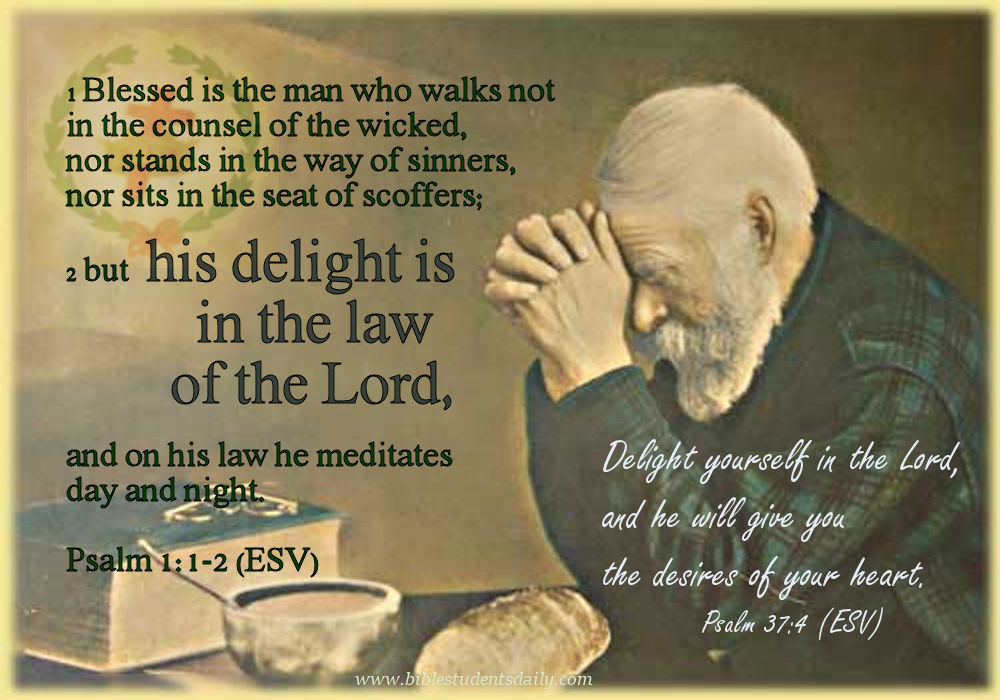
Psalm 1,1-2.jpg

“I beseech you therefore, brethren, by the mercies of God, that ye present your bodies a living sacrifice, holy, acceptable to God, which is your reasonable service” (Romans 12:1).

Dear fellow Brethren and friends in CHRIST,

“Are you consecrated to the LORD?” 

What is your first reaction to this question?

Is it a question you have been asked before or perhaps you have asked others?

Which word in that question stands out the most?

If your answer is “consecration” … then stay tuned! If not, stay tuned anyway as we wish all who read this post to God willing, receive a spiritual blessing.

What does the word consecration really mean in relation to a Christian’s calling?

Is consecration a means of escaping horrible punishment in the afterlife, where just a simple profession of faith, and reasonably moral conduct are enough to avoid the jeopardy and secure a place in heaven?

Of course not.

God is not merely saving a few before He destroys (or worse) the vast majority…

Rather, God is selecting from among men and women of faith an “elect” class (Matthew 24:24, Romans 8:33, 2 Peter 1:10) for a special honour during the coming 1000 year reign of Christ with his “Bride” (consisting of 144,000 members — the more than overcomers from the Gospel Age) — who with Christ, their “Head”, will be the spiritual rulers of the world. They will help lead mankind — that is all the human  race from Adam who will be resurrected — up the “Highway of Holiness”, teaching them godliness and truth, so that righteousness will flourish through the Universe and the eradication of evil and the evil ones will lead to everlasting joy and pain-less-ness and sin-less-ness! (Isaiah 35:8)

What a MARVELLOUS PLAN!

What an incredibly unfathomable Creator of ALL we have!

God’s timing is perfectly precise to work out everything for the ultimate purpose of bringing everlasting JOY to all and in all for eternal eternities (Habakkuk 2:3, Galatians 4:4-5, Romans 5:6, Psalm 27:14, Ecclesiastes 3:11, Romans 11:25, Genesis 18:14).

Romans 5, 6-8.jpg

Can you imagine what glorious harmony and unity in all things will occur amongst every soul that lives once Christ and his saints lead the world into obedience and understanding?! WOW! It will be like ONE MIND made up of trillions of bodies united in thought, action and purpose bring the Heavenly Father JOY in all things (Revelation 20:1-3, 6).

How High are God’s Standards?

By understanding the high honour associated with the saintly class called by God during this Gospel Age as his “royal priesthood” training as the under-priests of a heavenly government soon to commence—then we can better appreciate the high standards which are expected of them by God.

These standards may be considered in four parts:

(1) Godly conduct, (2) Character Development, (3) Study of the Truth, (4) Service and Sacrifice.

  1. Godly Conduct

Paul clearly explains in 1 Corinthians 6:10 in Corinth, Greece, he knew some of them had practiced the darker sins of the world. He listed these in 1 Corinthians 6:9-11 (ESV) what our conduct MUST BE:

“9 Or do you not know that the unrighteous will not inherit the kingdom of God? Do not be deceived: neither the sexually immoral, nor idolaters, nor adulterers, nor men who practice homosexuality, 10 nor thieves, nor the greedy, nor drunkards, nor revilers, nor swindlers will inherit the kingdom of God. 11 And such were some of you. But you were washed, you were sanctified, you were justified in the name of the Lord Jesus Christ and by the Spirit of our God.”

We learn from these words of the Apostle Paul to the “called of God” in the church of Corinth in Greece, that once we have been washed,” we are not to return to any immoral ways of conduct of the past.

What then, do you think is the pre-requisite for consecration?

It is REPENTANCE.

Repentance means turning completely 160 degrees away from past ways of living for the flesh to now living to feed the New Creation—the New Mind in Christ.

It means COMPLETELY being DEAD to sin and ALIVE IN CHRIST.

It means soaring like an eagle towards the SUN…

isaiah-40-31

Who does the sun represent in the Bible?

It represents JESUS. Yes, our Lord and Saviour who’s wings are of healing soon to come to all the nations of the earth!

By focusing on JESUS… and by being considered a FOOL IN CHRIST by many if not most, we will not be caught in the VISIBLE spider web spun by the most evil one of all in this dark world — the one who is described in 1 Peter 5:8 as “a roaring lion seeking whom he may devour.”

He wants most to deceive “the best of the best”! Watch out and BE ON THE ALERT!

Is a spider web visible in the day?:-

NO — if you are rushing around and careless…

YES — if you tread with CAUTION and are FOCUSED ON WHAT IS AHEAD—a mind fixed on Jesus.

By inquiring “What is your will Father? Please show me” we are at a “safe speed” of zealous action moving forward with Christ who has promised to never leave us nor forsake us (Hebrews 13:5).

—– LET US PRAY FOR EACH OTHER AND BE ON THE ALERT. —–

DO NOT SLUMBER even for a moment away from spiritual alertness of the New Mind in CHRIST!

Let our thoughts be on Jesus and the faithful ones of the Bible — the Apostles and the Ancient Worthies — our “cloud of witnesses” talked about by the Apostle Paul in the Book of Hebrews, and the prophets of the Old Testament.

May we be HOT (not lukewarm) for the Truth (Revelation 3:16)… because if we are not careful of GROWTH and PROGRESS in the School of Christ, slipping towards the gates of perhaps no return… means slipping towards second death! To be by these “gates” is emptiness in the fullest sense and a loneliness and rejection and loss of …

EVERYTHING!

Jesus explains to us what should characterize a Christian’s character in his words spoken in his Sermon on the Mount:

“Blessed are the poor in spirit, for theirs is the kingdom of heaven.

“Blessed are those who mourn, for they shall be comforted.

“Blessed are the meek, for they shall inherit the earth.

“Blessed are those who hunger and thirst for righteousness, for they shall be satisfied.

“Blessed are the merciful, for they shall receive mercy.

“Blessed are the pure in heart, for they shall see God.

“Blessed are the peacemakers, for they shall be called sons[a] of God.

10 “Blessed are those who are persecuted for righteousness’ sake, for theirs is the kingdom of heaven.

11 “Blessed are you when others revile you and persecute you and utter all kinds of evil against you falsely on my account.

12 Rejoice and be glad, for your reward is great in heaven, for so they persecuted the prophets who were before you (Matthew 5:3-11, ESV).

  1. Character Development

Actions are a result of thoughts. Likewise, one’s outward conduct is the result of one’s inward character. Our character is like a mirror that reflects hidden within principles and qualities that are in our heart and mind (Proverbs 23:7, Proverbs 4:23).

How reassuring it is though, that God knows the intent of our heart even when our conduct does not express our intents, or when our conduct is misunderstood or misrepresented by others. “Man looks on the outward appearance, but the LORD looks on the heart” (1 Samuel 16:7).

How do we live in this world but not be of the world? (John 17:16)

How do we not become friends of this world and thus enemies of God? (James 4:4):-

  • By feasting on the Words of God.
  • By prayer.
  • By disciplining the flesh.
  • By feeding the spiritual mind.
  • By going AGAINST the tide of the world — STARVING the fleshly minds and FEEDING the spiritual mind.
  • Literally saturating the mind with Divine Beauties of Truth and thus feasting on the Word of God and communing with the Heavenly Father moment by moment (Romans 12:1).

The result of these actions is a clear conscience before God which is the only way to righteous peace… a peace unlike that which the world knows… It is a peace that knows only JOY in the spirit for the flesh is counted as dead as one lives in newness of life feeding that which is spiritual — the embryonic New Creature within (Psalm 97:11).

Christian character can be defined by “the fruits of the Spirit” which the Apostle Paul so brilliantly explains in Galatians 5:22-23.

Galatians 5, 22.jpg

Another list of Christian character is given to us by Apostle Peter in 2 Peter 1:5-12:

5Make every effort to supplement your faith with virtue, and virtue with knowledge, and knowledge with self-control, and self-control with steadfastness, and steadfastness with godliness, and godliness with brotherly affection, and brotherly affection with love. For if these qualities are yours and are increasing, they keep you from being ineffective or unfruitful in the knowledge of our Lord Jesus Christ. For whoever lacks these qualities is so nearsighted that he is blind, having forgotten that he was cleansed from his former sins. 10 Therefore, brothers, be all the more diligent to confirm your calling and election, for if you practice these qualities you will never fall. 11 For in this way there will be richly provided for you an entrance into the eternal kingdom of our Lord and Savior Jesus Christ. 12 Therefore I intend always to remind you of these qualities, though you know them and are established in the truth that you have.

Colossians 3, 2.jpg

  1. Study of the Truth

The Apostle Paul wrote to “the saints and faithful brothers in Christ at Colossae” including in this letter, the following words:

“from the day we heard, we have not ceased to pray for you, asking that you may be filled with the knowledge of his will in all spiritual wisdom and understanding, 10 so as to walk in a manner worthy of the Lord, fully pleasing to him: bearing fruit in every good work and increasing in the knowledge of God…”

To the Philippian brethren, the Apostle Paul wrote:

“And it is my prayer that your love may abound more and more, with knowledge and all discernment (Philippians 1:9).

Why is studying the Word of God in the Bible so important for the consecrated in the Lord?

Because by doing so, we can learn to understand the plans and purposes of God in part (1 Corinthians 13:9), so that we can be in harmony with Him, and work in sympathy with Him.

Some of the Jews in the Apostle Paul’s day had “a zeal for God, but not according to knowledge” (Romans 10:2). This was because the brethren back then were transiting from the old Jewish Age to the new Gospel Age and the labours of Apostle Paul were in this direction.

We should be zealous as they, but our zeal should be directed by an accurate knowledge of the Divine Plan. One method of reasoning upon Holy Scriptures which the Apostle Paul teaches us from his methods of reasoning, is to understand the types, or pictures, used in the Old Testament.

E.g. The Apostle Paul cited:

(1) the spiritual meaning of the wives of Abraham (Galatians 4:21-31),
(2) the meaning of Israel’s Day of Atonement (Hebrews 9:1-14, 10:1-10),
(3) the meaning of Melchizedek as a figure of Christ (Hebrews chapters 5 & 7).

Other methods of studying the Bible include: drawing lessons from the prophets (e.g. Romans 9:23-33), topical and chronological.

“No work is more noble and ennobling than the reverent study of the revealed purposes of God.”

(Studies in the Scriptures, Volume 1, page 13).

  1. Service and Sacrifice

Does our consecrated life include active service in the cause of Christ? It must.

Why?

Because this is a way of sacrificing our earthly interests for our spiritual work by using our time, strength, energy, talents, or any other means for the Lord’s cause.

A great way of seeking out opportunities in this way is to inquire of the Lord:

“Heavenly Father, please show me, what is your will for me today. Where do you wish I be sent? To whom do you wish me to minister unto? Who may I spiritually edify? Please use me to bring you joy so that your Holy Name may be glorified, and your Son Jesus may shine through into the hearts of whomever you wish requires this.”

Some examples of active service in the cause of Christ include:

  • Opening our home for fellowship with the brethren.
  • Attending meetings of the Lord’s people rather than spending time in pursuing hobbies and things of this world.
  • Preparing answers to Biblical questions asked by others or in preparation for Bible Studies.
  • Travelling to serve the brethren (Acts 15:25, 26).
  • Preach the Truth in favourable or non-favourable circumstances.
  • Visiting/assisting the sick, bereaved, widows, orphans.
  • Accepting physical and/or mental abuse and/or imprisonment. (Note: According to traditions and the Bible, eight of the Apostles died as martyrs. At least two of the Apostles, Peter and Andrew, were crucified.)

Even when on beds of sickness, one can lie in bed and when mentally alert, send prayers of petitions and supplications to the Heavenly father for others as well as for self. This is the GREATEST of gifts perhaps that one can give another!

The Apostle Paul wrote that he was “being poured out as a drink offering upon the sacrifice and service of” the faith of the Philippian brethren, which made him rejoice and be filled with joy. He urged the Philippian brethren to “rejoice in the same way and share your joy” with him. (Philippians 2:17).

In 1 Corinthians 16:15-16 the household of Stephanas is praised by the Apostle Paul because they “devoted themselves to the service of the saints”. Paul encourages the brethren in Corinth to be subject to such as these, and to every fellow worker and laborer.”

The Word “Consecration”

There are eight different Hebrew words in the Old Testament which are rendered consecrate, consecrated, consecration, or consecrations.

  1. “Nazar” (Strong’s Concordance #5144) means to set apart (for sacred purposes) and this word is in Numbers 6:12 – a text referring to the Nazarite vow, which is a picture of the consecration of Christians to God. (See Study 6 – The Levites). The worshipper taking this vow was to consecrate [nazar, set apart] unto Jehovah the days of his separation..

Are we continuously keeping our earthly life SET APART for the sacred purposes of devotion to God?

  1. “Nezer” (Strong’s # 5145) means something set apart and this word is found in Numbers 6:7 and also refers to the Nazarite vow:

“7 He shall not make himself unclean for his father, or for his mother, for his brother, or for his sister, when they die: because the consecration [separation] of his God is upon his head.”

  1. “Charam” (Strong’s #2763) means to seclude, by a ban, to devote to religious use and this word is found in Micah 4:13, “I will consecrate their gain unto the Lord.”

This refers to the wealth of gentile nations after the judgments of God. It is not directly relevant to our present study.

  1. “Godesh” (Strong’s 6944) means a sacred place or thing and this word is found in Joshua 6:19, “all the silver, and gold, and vessels of brass and iron are consecrated unto the Lord.”

This refers to the precious things of the gentile nations conquered by Joshua which would come into the treasury of Jehovah. These precious items of “silver and gold” taken from the world might represent the Church Class (the Elect of the Gospel Age).

[Note: Compare Haggai 2:7, 8, where God will “shake the nations,” and the silver and gold may here too represent the saints of God who will glorify God’s spiritual temple.

  1. “Qadash” (Strong’s # 6942) means to make, pronounce, or observe as clean. This is used three times of the priests. See: Exodus 28:3, 30:30; 2 Chronicles 26:18.
  1. The most frequent Hebrew term rendered consecrate is actually a pair of words used together, “mala” (Strong’s #4390) meaning to fill and “yad” (Strong’s #3027) meaning open hand.

To fill an open hand, in this context, means for the priests to be devoted to their sacred duty to God and ministering to others. In English there is an expression, “my hands are full,” meaning one is fully occupied. So it should be with those consecrated to God during this age. We should have our hands full in the sacred service which is our privilege.

  1. “Millu” (Strongs #4394) means a filling, or consecration.

In Exodus 29 and Leviticus 8 this word is used of the offerings by which the priests were consecrated to their office. In Leviticus 8:33 it is once used in reference to days of consecration of the priests.

In what way is this consecration in relation to the Priests, significant to us?

It is fitting to us since we are called to be priests of God to reconcile the world back to God during the Kingdom.

So actually, we should be consecrated to God even more deeply than the priests under the Old Law were.

In the New Testament, the term “consecration” is found in the following 2 places:

  • Hebrews 7:28 (ESV) – “For the law appoints men in their weakness as high priests, but the word of the oath, which came later than the law, appoints a Son who has been made perfect forever.”

Here it speaks of Jesus consecrated as a priest to serve God, and “the oath” refers to the oath given by God to King David in Psalms 110:4, “The LORD hath sworn, and will not repent, Thou art a priest for ever after the order of Melchizedek.” Prophetically, this refers to Jesus Christ, who was descended from the line of David.  Melchizedek was a king of Jerusalem who was also a priest (Genesis 14:18). Paul says Melchizedek was a picture of Jesus, who in heaven, after his glorification, is also a King and Priest. (See further words on Melchizedek in the post: Study 7 – The Priests.)

Jesus is now our high priest, but during the Millennium we will join with him as priests for the world (Revelation 20:6).

By being consecrated unto death now in the entire service of and for God, we will be, God willing, qualified, tested and proven worthy and ready to serve with him to uplift the world.

  • Hebrews 10:20 (KJV) — refers to the “new and living way which he [Christ] hath consecrated [inaugurated] for us, through the veil, that is to say, his flesh.”

Here the Apostle Paul reminds us about how remarkably, the thick veil in Solomon’s Temple was rent from top to bottom when Jesus died on the cross (Matthew 27:51).

The present heavenly calling of the Gospel Age to consecrate our lives to God, was never even extended to the righteous of past ages. This call is unique, and was opened up (inaugurated) through Christ’s death on the cross.

Those who consecrate their lives to God now receive the redemption provided by this ransom now, whereas the world will receive the redemption later, during the Millennial Age.

Are All Christians Consecrated?

We hope they will be as not all now are.

One may believe in God, believe in Jesus as their Saviour, appreciate what God has provide, strive to refrain from sin and evil as best one can, commit to works of kindness and charity, attend worship services but if there is no full personally commitment, then there is no valid consecration .

A step in the direction of full consecration involves showing by an outward sign of God’s invisible grace (the holy Spirit) one’s full commitment to their consecration vow through water baptism — a testimony to others.

If you have still not done so please take some time to thoughtfully consider consecrating your all to the Lord — the benefits in this life, far outweigh any other joy that any other person, thing and place can give!

What will it cost?

A good answer is in Luke 14:26-33. Jesus explains this best!

(See Post: “The Cost of Discipleship.”)

In the earlier verses Jesus spoke of humility (verse 11), and of giving without having any thought of getting back in return (verse 14). Jesus also gave a parable about a great supper prepared by a good man, who sent his servants to invite his guests. It represents God’s invitation through Christ to come into the spiritual kingdom of God. Since most of those invited declined, (giving one excuse or another), the man decided to open the invitation to any who would be interested for he insisted, “my house [will] be filled.” (verse 23).

Are you one of the interested? Are you ready to accept the blessings of “a gracious God [who is] merciful, slow to anger, and abounding in steadfast love?” (Jonah 4:2)

You know… the fastest way to happiness is BEING A GIVER and what better way than to give the Creator of ALL your ALL?

To the already consecrated brethren in Christ, are you rejoicing in your testing of patient continuance in well doing and seeking for glory and honour and immortality?

Acknowledgment:

We thank the author(s) of the article titled “Consecration”  in the publication “Faithbuilders Fellowship-Proclaiming Christ’s Parousia and the coming Millennial Kingdom,” February 2006 (www.2043ad.com) for content material used in creating this post.


This post’s URL:

ROMANS 12:1 – What Does Being CONSECRATED TO THE LORD mean?

Enter your email address to subscribe to this blog and receive notifications of new posts by email.

Save

Save

Save