


It is the brilliant, majestical, golden lampstand that illuminated the Holy of the Tabernacle allowing Aaron — the Israelites’ first High Priest — to perform the services of sacrifice to God-Jehovah on behalf of his chosen people, in an attempt to fulfill the Mosaic Law and its regulations.

Let us be reminded that the 3 pieces of stationary furniture in the “Holy” were: a “lampstand” (“candlestick” KJV), a “Table,” and an “Incense Altar,” and each represents something concerning the development of the saints during the Gospel age.
Design
The lampstand (“Menorah” in Hebrew) was created by combined forces, the talent of the earthly craftsmen (Exodus 31:2-11) together with Divine assistance. For success, man must work with his talent while God sends a blessing from above. As David wrote, “If God does not build this house, His workers have toiled in vain” (Psalm 127:1).
The lampstand and its seven branches were made of gold. “He made the lampstand of pure gold. He made the lampstand of hammered work, its base and its shaft; its cups, its bulbs and its flowers were of one piece with it” (Exodus 37:17, NASB). Perhaps the mention of “hammer” suggests the discipline that shapes the New Creature in Christ (2 Corinthians 5:17, Hebrews 12:4-12, Proverbs 3:11, 12, Psalm 119:75, Romans 8:18, Revelation 3:19).
The seven lamps as well as its wick trimmers and trays and all its accessories were to also be made from pure gold and all the gold used in relation to the lampstand and its operation was to equal one talent of pure gold which is around 35 kg (75 pounds) (Exodus 25:39). As of 5th November 2018, one talent of pure gold is worth about $1.9 million AUS and $1.4 million US.
The talent was an ancient unit of weight and value in Greece, Rome, and the Middle East and it was the heaviest or largest biblical unit of measurement for weight. In the Old Testament, a talent was a unit of measurement for weighing precious metals, usually gold and silver. In the New Testament, a talent was a value of money or coin (e.g. Matthew 18:21-35, Matthew 25:14-30). The talent was first mentioned in the book of Exodus within the inventory of materials used for the construction of the tabernacle: “All the gold that was used for the work, in all the construction of the sanctuary, the gold from the offering, was twenty-nine talents” (Exodus 38:24, ESV).
Another example of a talent weight we find in the golden crown placed on King David’s head. It “weighed a talent of gold, and it was set with precious stones“ (2 Samuel 12:30, NIV).
Revelation 16:21 (NKJV) says “great hail from heaven fell upon men, each hailstone about the weight of a talent.” We get a better picture of the crushing fierceness of God’s wrath when we realize these hailstones weighed about 35kg (75 pounds)!

According to the Jewish Midrash, the candlestick was the “height of an average man” (www.bible-light.com/BLON/STAR_V30-1_1998-02/feb98a52.htm). However, no measurements are given in Scripture as to its exact size, thus reflecting the thought that God’s light of Truth is immeasurable (Ephesians 1:19).
*******
Positioning and Description
The Golden lampstand or candlestick stood opposite the golden table, on the southern side of the “Holy” (Exodus 40:24-25).
South is the direction of earth (Ezekiel 47:1), as north is of heaven.
Perhaps specifying this direction for the lampstand indicates that the Church is still in the flesh while in the holy, holding forth the light of Truth. This is also indicated by the five copper sockets at the entrance to the holy, copper representing human nature, either just or justified.

A description of the lampstand for the Tabernacle in Exodus 25:31-39 is directly from God to Moses. This is God’s design. It is particularly detailed in relation to the beautiful almond blossom we see in spring.
Exodus 25:33 (KJV) — “Three cups made like almond blossoms in one branch, a calyx and a blossom bud; and three cups made like almond blossoms in the other branch, a calyx and a blossom bud — so for the six branches going out of the lampstand.”
[Note: The Douay-Rheims Bible says of each decoration, “as it were nuts … and a bowl withal, and a lily” (Exodus 25:33). Thus we understand that there were three elements per decoration.]
“There were three branches on either side of a central stem (i.e. shaft), with each of the seven extremities holding a lamp containing oil for burning. Each of the six branches was adorned with three sets of cups shaped like almond blossoms, with a knop (bud or bulb) and a flower; the centre stem was adorned with four of these.

Thus, there is a total of 22 such sets. These might represent the original 22 books of the Old Testament writings which graced the early church. The Hebrews associated the number of them with the 22 patriarchs from Adam through Jacob, and the 22 letters of the Hebrew alphabet.
“However, our Bible contains also the New Testament, and in later times the books have been divided into a total of 66. If the three identified elements — bowls, knops, flowers — are numbered separately, this would total 66 in the entire lampstand. The three branches on one side, together with the centre stem, would contain 39, and three remaining branches 27, which is the division of books in our Old and New Testaments.
“The five petals of the cups shaped like almond blossoms are a fitting number to represent the new creation [in Christ], later represented by the five wise virgins of Matthew 25. Almonds, it is said, produce flowers before leaves, and the Hebrew word for almond means ‘hasten,’ probably in observation of this early seasonal produce of the almond flowers. So with the church; they produce the lovely graces of the spirit before their leaves of profession and teaching will be observed by the world in the kingdom.
“This meaning of the name ‘almond’ explains Jeremiah 1:11-12, where the appearance of an almond rod, or branch, is a token from the Lord that ‘I will hasten my word to perform it.’ In this passage it may refer prophetically to the raising of the saints early in the harvest as the work preliminary to the judgments of the Lord which follow shortly thereafter. Aaron’s rod that budded (Numbers 17) to establish his Divine appointment to the priesthood, was also of the almond tree” (Br. David Rice, “The Holy” in The Herald of Christ’s Kingdom Magazine. Nov-Dec, 2002).
It may represent that the church is an elect class and reminds the antitypical underpriests of their privilege of service and the need to be fruitful in putting on the spiritual likeness of their forerunner, Christ Jesus “the author and finisher [perfecter] of our faith; who for the joy that was set before him endured the cross, despising the shame, and is set down at the right hand of the throne of God” (Hebrews 12:2).
More Antitypical Meanings
- The lampstand (menorah) as a whole — represents Christ and the entire Church of the Firstborn giving forth their light; the true light-bearers whose names are written in heaven; the Royal Priesthood (Hebrews 12:23; Charles T. Russell, “Tabernacle Shadows,” pages 115-116).
- The seven lamps (of the one lampstand) — may symbolize God’s Word.
The lampstand was the third furnishing that God instructed Moses to make during his 40 days and nights on Mount Sinai alone with God, and three signifies redemption which points to Christ who redeemed mankind from the sentence of death, “who gave himself a ransom for all to be testified in due time” (1 Timothy 2:6).
- The seven branches — represent the true, consecrated Church, depicted in the Book of Revelation Chapters 1, 2, and 3 at seven distinct lampstands, with Christ (as our high priest) walking among them, tending to them, to ensure their proper shining.
As with branches of the spiritual vine (John 15:5), so with these seven branches of the lampstand, we have no standing of ourselves, except as members of the body of Christ. Our support, our foundation is in Christ (1 Corinthians 3:11). Possibly the bending of some of the branches might represent the bending of our wills, against the propensities of the old nature, to reach upward in the direction of God. When we began our consecrated walk, our course may not have been very different from what it had been before. We may have followed many earthly things; but as we grew in grace and in the knowledge of the Truth, our course bent more and more upward until at last, if we are faithful, at the end of our course, we will be going upright, in the same direction as our blessed Master. Some of the branches were longer than others, but all held the same amount of oil in their lamps and all gave out the same light.
Another lesson we might find in the different lengths of the seven branches is that some have courses of training here longer than that of others. But the shorter can shine just as brightly as the longer, and can hold as much of the Lord’s Spirit. Also, the lengths of each of the periods of the seven Church periods were different lengths of time, but each period of the Church contained the ever shining brightness of God’s Truth so that the Gospel Age “Bride of Christ” is successful called, tested, and proven faithful at death, making up a completed 144,000 members by the end of the 6000 years of permission of evil.
- The oil and the wicks — The oil “represented the Holy Spirit, the wicks represented the mortal bodies through which the oil or Holy Spirit operates. The oil, passing through the wick, produced the illumination. So, the Holy Spirit, operating through these mortal bodies, or wicks, produces the holy illumination, by virtue of which we can see and appreciate the deep spiritual truths. As the High Priest trimmed the wick that it might produce a better light, so the Lord continually trims us by permitting us to have humiliating experiences, and by and by the wick will he entirely trimmed and our course will be finished” (1913 Bible Students Convention Report found in the Bible Study Library CD).
Purpose and Use
The Candlestick was the only light in the Holy which was to be kept burning “continually” (Leviticus 24:2). Perhaps this word “continually” rather means regularly and normally. We do not think the word “continually” meant that the flame was burning without ever the flame being extinguished, as presumably during the transportation of the Tabernacle from one place to another, and perhaps when the wicks required replacing, the flames may have been extinguished. Exodus 30:8 says that Aaron “must burn incense again when he lights the lamps at twilight.” If the lamps were lit at this time, perhaps this was a time of replenishing oil, and replacing wicks, incident to which the light may have been interrupted.
1 Samuel 3:3 indicates that the lamp did go out for some of the 24-hour period. Perhaps, however, that was a change of circumstance as the years passed. For Exodus 27:21, and Leviticus 24:3 indicate otherwise. “Command the children of Israel, that they bring unto thee pure oil olive beaten for the light, to cause the lamps to burn continually … in the tabernacle of the congregation, shall Aaron order it from the evening unto the morning before the LORD continually” (Leviticus 24:2,3).
Presuming that the door of the Tabernacle was ordinarily draped downward, visibility in the holy depended on the light of the lampstand. The light from the lamps would aid the Priests in their service of burning incense on the golden altar that stood nearby, morning and evening. “The candlestick also for the light … with the oil for the light” (Exodus 35:14).
The lesson to us is that our enlightenment comes as a result of using (burning) the holy Spirit (oil), which has been burning in each “called” member of the High Calling throughout the seven stages of the church. The antitypical “priesthood” during the Gospel Age — those who have entered into covenant relationship with God through consecration — have the Words of Divine Truth through the Holy Bible, to enlighten them. This enables them to carry out their covenant of sacrifice daily in a way pleasing to the Heavenly Father. It gives them “vision” (Habakkuk 2:3), and thus direction and hope through patient endurance, until death (Revelation 2:10). It aids their journey in the narrow way of Christ which leads to more than we can imagine of perfect, everlasting righteousness.
The light of God’s beauties of Truth from Scripture burns continuously and ever so bright in the darkness of this sin-infested, God-less world. It assists us who choose to suffer with Christ, so that we can reign with Christ in His future 1000 year kingdom, helping the world of mankind up the Highway of Holiness (2 Timothy 2:12, Isaiah 35:8).
The light emanating from the Word of God shines today as never before, because the Lord Jesus is present (since 1874). The Lord gave us the promised “meat in due season.” (Matthew 24:45, Luke 12:37), which we find specially in the six volumes of Studies in the Scriptures.
A continuous shining of the light from God’s word is talked about in these Scriptures: Psalm 119:89, Isaiah 40:8, 1 Peter 1:25. A continuous shining of our “light” (reflecting nine fruits of God’s Spirit, Galatians 5:22,23), is talked about in these Scriptures: Matthew 5:16 and Philippians 2:12-18.
The ultimate purpose of the shining the light is that God may be all in all, after mankind is restored to perfection following the little season at the end of the Millennial Kingdom. Then Christ and his Bride shall have restored mankind. After the destruction of all evil, the ages of eternal joy will follow and God’s pure love will govern the hearts and minds of all creation (1 Corinthians 15:28).
The light of Christ Jesus keeps us from the rocks of anxiety, rocks of destruction, rocks of perplexity, rocks of fear, rocks of the unknown, rocks of doubt — all of which could bring us down in a shipwreck of life. Let us bask in the light of the Truth of God and His teachings that bring release, joy, hope, peace, faith, and salvation.
Besides the fire by night, the cloud by day, and the Shekinah light in the Most Holy, the light from the Menorah was a constant reminder to the Israelites of God’s light leading them to the promised land. Likewise, Spiritual Israelites (true, consecrated Christians) are led by the light of the Word of God. The written word is in the Scriptures, but Jesus himself is the living word (Revelation 19:13). He is the logos, or word, of God — Christ Jesus, who has opened up a new and living way. “By one offering he hath perfected for ever them that are sanctified” (Hebrews 10:14). “To all who did receive him, who believed in his name, he gave the right to become children of God” (John 1:12). Jesus said, “I have come that you might have life, and have it more abundantly” (John 10:10). Truly the Messiah is light and life.
“Arise, shine: for thy light is come and the glory of the LORD is risen upon thee. For, behold, the darkness shall cover the earth, and gross darkness the people; but the LORD shall arise upon thee, and his glory shall be seen upon thee. And the Gentiles shall come to thy light, and kings to the brightness of thy rising” (Isaiah 60:1-3).
Those verses were addressed to Jerusalem, and apply to both ages of redemption. When the Gospel Age began, the message of the Gospel went out from Jerusalem, from Pentecost forward, expanding subsequently to the Gentiles. In the Millennial Age it will be similar, expanding from Jerusalem to bless the world in the earthly kingdom. But the application to the saints of the present time, who inhabit the Holy, is our focus here.
“The path of the just is as the shining Light, that shineth more and more unto the perfect day” (Proverbs 4:18). “The sun shall be no more thy light by day; neither for brightness shall the moon give light unto thee but the LORD shall be unto thee an everlasting light, and thy God thy glory” (Isaiah 60:19).
Other Candlestick Scriptures
Other passages of Scripture that mention of the tabernacle’s candlestick include:
Exodus 37:17‑24 — describes the actual making of the lampstand and lamps, basically a repetition of the Exodus 25 account yet two verses of words less.
Leviticus 24:1‑4 — describes the operation and maintenance of the candlestick.
1 Kings 7:49 — Speaks of the 10 lampstands in King Solomon’s Temple. Ten is a number for earthly completion (as 12 is for spiritual completion), so for the earthly kingdom 10 is an appropriate number.
Because there were 7 branches on each lampstand, the total would be 70, which also pertains to the Millennial Age on occasion. For example, during the Feast of Tabernacles, which pertains to the Kingdom (Zechariah 14:16), over the seven days of the feast there were 70 bullocks offered.
Solomon’s Temple represents the Church in its glorified condition and the things in the Tabernacle represent conditions pertaining to the present Gospel Age.
The Apostle Paul said to brethren of his day, “Know ye not that ye are [called to be] the temple [class] of God [in the future age], and that the Spirit of God dwelleth in you?” (1 Corinthians 3:16). And the Apostle Peter said, “Ye are a chosen generation, a royal priesthood, an holy nation, a peculiar people; that ye should show forth the praises of him who hath called you out of darkness into his marvellous light” (1 Peter 2:9). Through the Church presently are extended the truths of discipleship to others. But in the Millennial Kingdom, the overcoming saints will serve as priests with Christ to uplift the entire world of mankind (Revelation 20:6).
The 70 branches of the 10 lampstands in Solomon’s Temple could thus represent the light of God’s understanding shining into the hearts of mankind during the Millennial Kingdom, as reflected in the vastness of size of Solomon’s Temple as compared to the size of the tabernacle in which there was only one lampstand.
Zechariah 4 — The lampstand with an olive tree on either side supplying it with oil. These verses relate to the rebuilding of the Temple.
Revelation 1:12, 13, 20 — Here there are seven golden lampstands (not one, as in the Tabernacle). “I saw seven golden candlesticks; And in the midst of the seven candlesticks one like unto the Son of man, clothed with a garment down to the foot, and girt about the paps with a golden girdle. … the seven candlesticks which thou sawest are the seven churches” (Revelation 1:12, 13, 20, KJV).
Jesus being “in the midst” is the explanation of the miracle of the Church’s survival through twenty centuries, fulfilling the prophecy of Jesus that the gates of hell should not prevail against it.
“Have We Set Jesus in the Midst? If so, then we have set love in the midst. Unselfishness; thought, consideration, concern for others, manifested in self‑sacrificing service to the extent of our ability and opportunity. It means also intercessory prayer on behalf of others” (Br. A.D. Kirkwood, Scotland, “Jesus in the Midst” — The Graph of Love. The Herald of Christ’s Kingdom, June 1956). Self-sacrificing involves patience, gentleness, kindness, excusing others for their wrong/unkindnesses, not demanding, slowness to answer back. May the Lord’s timing burn up our sacrifice as it burns up ours and others’ sins and may we keep the flame of love burning towards those who are not easy to love, recognizing that Jesus died for all sinners before they were even born!
*** Some Extra Details about Candlestick(s) and Lamp(s) in the Bible ***
Seven Lamps, Seven Spirits
There is another Scripture we wish to mention that talks of “seven lamps” (no candlesticks).
Revelation 4:5 — “There were seven lamps of fire burning before the throne, which are the seven spirits of God.”
Here the Apostle John explains that the “seven lamps of fire” symbolize “the seven spirits of God,” rather than the Church of Christ, the seven Churches, that are represented by the “seven lampstands” of Revelation 1:12, 13, 20. John uses the Greek word luchnia for “lampstand,” but lampas for “lamps” (Revelation 4:5). The word lampas is used five times in the parable of the ten virgins (Matthew 25:1‑4, 7, 8), and also in Revelation 8:10.
The Church of Christ are the lampstands, but the lamps themselves represent the Spirit of God, depicted as seven spirits inasmuch as they minister to the seven stages of the Church. This seems apparent also in Revelation 1:4,5, “(4) John to the seven churches which are in Asia: Grace be unto you, and peace, from him which is, and which was, and which is to come [that is, will always be]; and from the seven Spirits which are before his throne; (5) And from Jesus Christ.” As grace and peace were sent to the Church through “the seven Spirits,” clearly these lamps, or spirits, are not the Church itself.
The holy Spirit of God comes to us through the Scriptures. Thus “The Psalmist says: ‘Thy word is a lamp unto my feet, and a light unto my path’ (Psalms 119:105). In the Proverbs we read: ‘For the commandment is a lamp’ (Proverbs 6:23). The word lamp in these texts is translated from the Hebrew word ner, which means ‘light, lamp’ according to Young’s Concordance. The word ner is also used to designate the lamps which were on the candlestick or lampstand of the Tabernacle. We read, for instance, in Exodus 25:36, 37: ‘The buds and branches shall all be of one piece with the lampstand [menorah], hammered out of pure gold. Then make its seven lamps [ner] and set them up on it'” (Br. A.D. Kirkwood, 1956).
The Word of God is precisely spirit and life. Our Lord Jesus said, “The words that I have spoken to you are spirit and life” (John 6:63, RSV). The Scriptures have been written by men who were guided by the holy Spirit. The Apostle Peter said, “No prophecy ever came by the impulse of men, but men moved by the Holy Spirit spoke from God” (2 Peter 1:21, RSV).
“It should be observed that the seven spirits are not exclusively the lamps of fire. They are also the seven eyes of the Lamb (Revelation 5:6). But even in this case, the seven spirits mean plenitude of Spirit. We remember that it is written in the prophecy of Zechariah, ‘These seven are the eyes of the Lord’ (Zechariah 4:10). Nothing can escape the eyes of the Lord and of the Lamb. The Lamb has the Spirit without measure (John 3:34). He has the seven spirits of God. We read in Revelation 3:1, ‘The words of him who has the seven spirits of God’ ” (Antoine Papajak, “Seven Lamps and Seven Spirits,” 1994).
The Number Seven
The number seven, in the “seven spirits of God” (Revelation 4:5), represents completeness, perfection; a complete and entire state. “The book of Revelation makes mention of seven lamps, seven spirits, seven churches, seven lampstands, seven seals, seven horns, seven eyes, seven trumpets, seven plagues, seven thunders, etc. In all these cases it designates completeness composed of seven parts, like the light, which is one and white, but when it passes through a drop of rain and is refracted, gives the seven fundamental colors. It is the same when the white light is decomposed by means of a prism. It produces the spectrum, the series of colored bands. Thus, it is spoken of seven churches, but they represent the only church of Christ; it is also spoken of seven candlesticks, but they stand for the only candlestick which was in the holy place of the tabernacle. In our text [Revelation 4:5] it is spoken of seven lamps, but they are representative of the lamp quoted in Psalm 119:105: ‘Thy word is a lamp unto my feet’ ” (Br. A.D. Kirkwood, 1956).
Throne, Fire
“We are now at the end of the Gospel age, when the seventh seal is broken and when, under the seventh trumpet, the mystery of God is to be accomplished (Revelation 10:7). The holy Scriptures are being understood more and more, and many prophecies, which were closed during long centuries, are now unsealed. The Scriptures should be entirely unsealed and understood during the second presence of our Lord, as our text [Revelation 4:5] suggests. Seven lamps of fire were burning before the throne. In other words the lamp, the Word of God, gives complete light in the days when the Lord is sitting on his throne and when fire, going before him, consumes his foes on every side (Psalms 97:1‑3)… in the time of trouble; they give their light, as never before, on the prophecies predicting the present time of trouble, of vengeance and of judgment of nations” (Br. A.D. Kirkwood, 1956).
“We find a similar text to some extent in Revelation 15:2. There was a sea of glass mingled with fire, and those who had been victorious over the beast and his image were standing on it and they were singing the song of Moses and the song of the Lamb with harps of God in their hands. The sea of glass mixed with fire represents the people in trouble, under the judgments of God. The overcomers are the elect, the members of Christ’s body. They had undoubtedly a great knowledge of the song of Moses and the song of the Lamb during the time of trouble” (Br. A.D. Kirkwood, 1956).
The lampstand is not mentioned in the throne scene of Revelation chapter four. This is appropriate, inasmuch as chapter four awaits the redemption indicated in chapter five (Revelation 5:6). Subsequently, the saints of the Church class, as lampstands, hold up the light of the Truth as best they are able, to others who will appreciate it. The light from the lamps represents holy enlightenment, from the Spirit of God, as shining through His Truth. The lamps will not burn if they do not have oil in them. Since oil symbolizes the holy Spirit, the seven spirits of God in Revelation 4:5 suggest to us the plenitude of God’s holy Spirit. Our Lord Jesus Christ has the Spirit of God fully, and he has a complete knowledge of the Word of God. Therefore our Lord may give His faithful ones a full knowledge of God’s Word. It is a gift of God for strengthening our faithfulness in these last days (2 Timothy 3:1).
Transportation of the Tabernacle’s Candlestick
When the camp moved from one site to another, all the vessels of the Tabernacle other than the Laver remained covered with a blue cloth that represents faithfulness without which it is impossible to please God (Hebrews 11:6). Surely, if we do not please Him, we cannot be found in the tabernacle arrangement. This cloth of blue was not visible while the covering skins were over it. Just so, the faithfulness of the saints, though recognized of God, is hidden from all those who see only our flesh.
Concerning the lampstand, we read, “(9) Then they shall take a blue cloth and cover the lampstand for the light, along with its lamps and its snuffers, and its trays, and all its oil vessels, by which they serve it; (10) and they shall put it and all its utensils in a covering of porpoise skin [or manatee skin], and shall put it on the carrying bars” (Numbers 4:9,10, NASB).
This is “as if to say, that as we journey through the world, our true position in the sight of God is quite different from that in which the world sees us. God sees our faith, he recognizes our obedience and sacrifice, and on their account, accounts unto us the divine nature, so well pictured in the golden vessels themselves. The world, can of course not see us so, for all it sees is our flesh. Those who by way of consecration and spirit‑begettal have been privileged to enter the Holy of the antitypical tabernacle, there to be enlightened by the golden candlestick, and to be fed from the golden table of the shewbread, and to offer up incense at the golden altar, are themselves also represented in these vessels” (Br. Anton Frey, Our Wilderness Wanderings).
The outer covering, perhaps of manatee skins, represents the flesh of the new creation through this age. That is what the world sees, missing entirely the beauty of the divine vessels of Truth and service that pertain to the saints.
Meanwhile the saints in the flesh continue to suffer, as Christ suffered, so that they with Christ can be raised in the Millennium to assist the world of mankind up the highway of holiness. In this process the world will be purged of their propensity for sin — which was the point of the sin offering sacrifices of the Tabernacle. The ransom removes the curse, but the sin offering allows the purging of the propensity for sin from the world during the Millennium.
“And has she not been baptized into Christ’s death? Does she not suffer with him that she may also reign with him? Is she not a joint‑sacrificer with her master? (Romans 6:3‑5, Galatians 3:27, Romans 8:17, 2 Timothy 2:11,12). … [The world] has seen the Christ suffer in the flesh, but it has not recognized it. Says Pastor Russell, “The world has seen [Christ], Head and Body, suffer as a sin‑offering during this age. Jesus manifested to the Jews in the flesh (as a sin‑offering), and as Paul says, so can all followers in his footsteps say, `Christ is manifest in our mortal flesh’ (2 Corinthians 4:11). As the whole Christ has thus been manifested and has suffered in the flesh, so they also shall be glorified together before the world” (T84).” (Br. Anton Frey, Our Wilderness Wanderings).
The Emblem of Israel
The lampstand has long been a symbol of the Jewish people. It speaks not only of Israel, but of Jerusalem and the temple. So, it is not surprising that in 1948 when the newly established State of Israel needed a national emblem, they chose the lampstand.
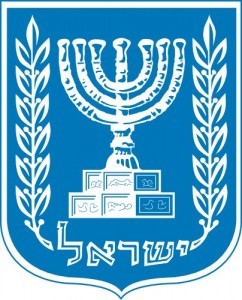
“The final menorah used for the emblem was based on one found on the Arch of Titus in, believe it or not, Rome. The relief on this arch shows Titus and his army returning to Rome with the spoils from Jerusalem after destroying it in 70 AD. In Rome, this picture symbolized defeat and humiliation for the Jewish people. But on the new national emblem of Israel, the same menorah stood for the rebirth and restoration of the Jewish nation. The emblem is widely used on official Israeli documents, government buildings, and, of course, on an Israeli passport” (http://www.jjtravelinisrael.com/almond-blossom-and-the-golden-lampstand/).
“In the same way, let your light shine before others, so that they may see your good works and give glory to your Father who is in heaven” (Matthew 5:16).
Acknowledgment and References
Br. David Rice (USA) — editing and content; “The Holy.” The Herald of Christ’s Kingdom Magazine. Nov‑Dec, 2002.
http://www.heraldmag.org/2002/02nd_4.htm
Br. Charles Taze Russell — “Tabernacle Shadows,” pages 115-116.
http://www.htdbv8.com/indext.html
Br. Anton Frey (USA) — “Our Wilderness Wanderings.”
Br. A.D. Kirkwood (Scotland), “Jesus in the Midst” — The Graph of Love. The Herald of Christ’s Kingdom Magazine, June, 1956.
http://www.heraldmag.org/archives/1956_6.htm#_Toc36355407
Br. Antoine Papajak (France) — “Seven Lamps and Seven Spirits.” The Beauties of the Truth Journal , August 1994, Volume 5, Number 3.
Websites Cited:
http://www.bible‑light.com/BLON/STAR_V30‑1_1998‑02/feb98a52.htm:
http://www.jjtravelinisrael.com/almond‑blossom‑and‑the‑golden‑lampstand/
Suggested Further Reading
STUDY 1: An Introduction To The Tabernacle And It’s Purpose
STUDY 2: The Pillar of Cloud By Day And The Pillar of Smoke By Night https://biblestudentsdaily.com/2016/09/09/study-2-the-pillar-of-cloud-by-day-and-the-pillar-of-smoke-by-night/
STUDY 3: The Tabernacle Construction: The Holy and The Most Holy https://biblestudentsdaily.com/2016/09/14/study-3-the-tabernacle-construction-the-holy-the-most-holy/
STUDY 4: The Court (“Holy Place”)
https://biblestudentsdaily.com/2016/09/20/study-4-the-court-holy-place/
STUDY 5: The Camp. The Israelites.
https://biblestudentsdaily.com/2016/10/28/study-5-the-camp-the-israelites/
STUDY 6: The Levites
https://biblestudentsdaily.com/2016/11/18/study-6-the-levites/
STUDY 7: The Priests. The Day of Atonement.
https://biblestudentsdaily.com/2016/12/10/study-7-the-priests-the-day-of-atonement/
STUDY 8: The Tabernacle Coverings
https://biblestudentsdaily.com/2017/01/02/study-8-the-tabernacle-coverings/
STUDY 9: The Gate. The Door. The Vail.
This post’s URL:
STUDY 10: The Furnishings in the Holy of the Tabernacle – THE LAMPSTAND.



 BIBLE Students DAILY