

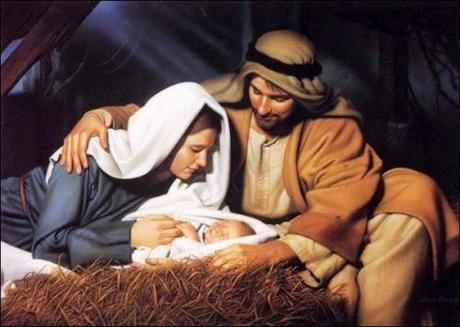
The Christmas season is the most enjoyable time of the year for many who think upon the events surrounding the gift of Jehovah to the world—his firstborn Son, our Lord Jesus as a special gift to the human family, but is the redemptive work of Jesus Christ, truly appreciated in its full sense?
You see, the true reason for Jesus’ birth was that he would give his life as a ransom price for the sins of every single human that has lived.
The apostle Paul wrote to Timothy, “I exhort therefore, that, first of all, supplications, prayers, intercessions, and giving of thanks, be made for all men; For kings, and for all that are in authority; that we may lead a quiet and peaceable life in all godliness and honesty. For this is good and acceptable in the sight of God our Saviour; Who will have all men to be saved, and to come unto the knowledge of the truth. For there is one God, and one mediator between God and men, the man Christ Jesus; Who gave himself a ransom for all, to be testified in due time” (1 Timothy 2:1-6).
In John 3:16 we read that “God so loved the world, that he gave his only begotten Son, that whosoever believeth in him should not perish, but have everlasting life.”
The Greatest Message of Joy
The angel in Luke 2:10-14 was announcing God’s greatest gift to his poor, sin-sick and dying human creation: A SAVIOR… The “ransom for ALL to be testified in due time” when Christ’s future kingdom of righteousness will soon be established on earth, and when “God’s sons” (the Bride of CHRIST—the 144,000, shall be all beyond the vail and “revealed.” (1 Timothy 2:6, Romans 8:19)
The birth of Jesus had been foretold by the Prophet Isaiah:
“Unto us a child is born, unto us a son is given: and the government shall be upon his shoulder: and his name shall be called Wonderful, Counsellor, The mighty God, The everlasting Father, The Prince of Peace. Of the increase of his government and peace there shall be no end, upon the throne of David, and upon his kingdom, to order it, and to establish it with judgment and with justice from henceforth even for ever. The zeal of the Lord of hosts will perform this” (Isaiah 9:6,7).
Isaiah’s prophecy speaks of Jesus as the antitypical King David, and that he would in due time assume the several and distinct offices of his yet future kingdom as outlined in the prophecy.
At that future time, our loving Heavenly Father would entrust the glorified Jesus to exercise the great power and authority that would be given him to bless all the families of the earth as promised to the true and faithful “seed” of Abraham (Genesis 22:15-18; Acts 17:31).
At Christmas when the world’s attention is drawn to the birth of our dear Lord Jesus, we must acknowledge that he left us with no instructions to celebrate his birth date.
However, Jesus did give us instructions to memorialize his death—inviting us to partake of the emblems and to remember his death. (Matthew 26:26-30; Mark 14:22-26, 1 Corinthians 11:17-34).
In the Book of Luke, Jesus’ words spoken to his followers at the last supper on Nisan 14th (the day of unleavened bread when the Passover lamb was to be sacrificed) are as follows:
“(17)And he took the cup, and gave thanks, and said, Take this, and divide it among yourselves: (18) For I say unto you, I will not drink of the fruit of the vine, until the kingdom of God shall come. (19) And he took bread, and gave thanks, and brake it, and gave unto them, saying, This is my body which is given for you: this do in remembrance of me. (20) Likewise also the cup after supper, saying, This cup is the new testament in my blood, which is shed for you” (Luke 22:17-19).
An Ancient Holiday Season
Although many Christian people continue to observe December 25th as the date of Jesus’ birth, there is no scriptural evidence for this date. Many students of the Bible have come to the conclusion that the blessed event took place around the beginning of October, as we have explained in the post titled Calculating the Date of Jesus’ Birth.
The Winter Solstice
Many ancient cultures chose the Winter Solstice as a special time for celebrating Christmas—which was the terminal point between the darkest days of the year, and the time when the sunlight would begin to increase. That is, when the path of the sun has reached its furthest southern position. The word “solstice” literally means “the sun stands still.”
The time of the Winter Solstice was determined using very primitive and imprecise methods—measuring the length of the shadow created by a stick or a standing stone, which in turn, was dependent on clear weather to create a shadow and to make their calculations as accurate as possible.
In pagan times, the Winter Solstice was seen as part of an annual cycle of the earth’s seasons known as “the wheel of the year.” They celebrated eight festivals including the spring, midsummer, fall, and Yule seasons. Four others were spaced midway between each of them. These festivals have origins in Germanic and Celtic pre-Christian feasts.
Yuletide Celebrations
The Yuletide festival was one of the ancient traditions that was observed in many areas of Europe, the British Isles, and elsewhere. The word Yule relates to the Christmas season and the time when the sun reverses its downward path and begins to shine longer each day.
The actual time may vary a few days over the course of years, but usually occurs sometime between December 21st – 23rd.
Fathers and sons would bring home large logs, which they would set on fire. The people would feast until the log burned out, which could take as many as 12 days. The Norse believed that each spark from the fire represented a new pig or calf that would be born during the coming year. The log was believed to bring good luck to the occupants of the dwelling. Ashes from the log were placed in wells to keep the water pure and they were also placed at the roots of fruit trees and vines to help them bear an abundant harvest during the following year.
The end of December was also when most cattle were slaughtered, thus, the only time of year when they had a supply of fresh meat and most wine and beer made during the year was finally fermented and ready for drinking.
In Germany, people honoured the pagan god Oden during the mid-winter holiday who they were terrified of, as they believed he made nocturnal flights through the sky to observe his people, and then decide who would prosper or perish. Because of his presence, many people chose to stay inside.
Saturnalia
In Rome, where winters were not as harsh as those in the far north, Saturnalia—a holiday in honour of Saturn, the god of agriculture—was celebrated. Beginning in the week leading up to the winter solstice and continuing for a full month, Saturnalia was a hedonistic time, when food and drink were plentiful, when slaves would become masters for this month and when peasants were in command of the city. Business and schools were closed so that everyone could partake of this pagan “fun.”
Mithraism
Another of the Winter Solstice festivals was the celebration of Mithra—annually observed by the people of ancient Persia in honour of the Persian god Mithra who was considered the deity of light, wisdom, and moral purity. For some Romans, Mithra’s birthday was the most sacred day of the year and celebrated on December 25th.
The celebration of Mithra was later introduced into Europe and other areas of Asia Minor after the conquests of Alexander the Great (in early 300 BC) but it began to lose much of its influence by the end of the fourth century. With the rise of Constantine the Great in the fourth century, Christianity was then elevated to the prominent position as the official religion of the Roman Empire. Therefore, the ancient traditions and various observances of the old pre-Christian era gave way to the new Christian religion and its festivals.
The Christian Era
Who Established the Christmas December 25th Date?
In the early years of Christianity, Easter was the main holiday; the birth of Jesus was not celebrated. During the early centuries of the Christian era, religious leaders wanted to establish a fixed date to celebrate the mass of Christ, which was called Christmas.
It is commonly believed that the church (that is, Pope Julius I—a bishop of Rome from AD 337 to his death in AD 352) chose this date in an effort to adopt and absorb the traditions of the pagan Saturnalia festival.
First called the Feast of the Nativity, the custom spread to Egypt by AD 432 and to England by the end of the sixth century. By the end of the eighth century, the celebration of Christmas had spread all the way to Scandinavia. Today, in the Greek and Russian orthodox churches, Christmas is celebrated 13 days after the 25th, which is also referred to as the Epiphany or Three Kings Day.
By holding Christmas at the same time as traditional winter solstice festivals, church leaders increased the chances that Christmas would be popularly embraced, but gave up the ability to dictate how it was celebrated.
By the Middle Ages, on Christmas believers attended church and afterwards celebrated raucously in a drunken, carnival-like atmosphere. Christmas became the time of year when the upper classes could repay their real or imagined “debt” to society by entertaining less fortunate citizens.
Christmas is Outlawed In the Early 17th Century
In 1645, Oliver Cromwell and his Puritan forces took over England and they vowed to rid England of decadence and, thus Christmas was cancelled through these efforts, even being known to be outlawed (from 1659-1681) in Boston. However, by popular demand, Charles II was restored to the throne and, with him, came the return of the popular holiday.
In fact, Christmas wasn’t declared a federal holiday until June 26, 1870.
The Christmas Tree – A Pagan Custom Brought to Christianity
Long before Christ, evergreen trees and plants have been used to celebrate winter festivals.
Early Romans used evergreens to decorate their temples at the New Year’s celebration of the Saturnalia festival, and exchanged branches and twigs of evergreens as a good luck blessing.
The ancient Egyptians used green palm rushes as part of their worship of the god Ra.
Pagans in Europe believed that because the evergreen tree stayed green throughout the year and could withstand the rigors of an extreme winter, they had magical abilities to ward off the life-threatening powers of darkness and cold. Thus they were considered to possess powers over evil spirits, which some ancient pagan civilizations of northern Europe believed stalked the eerie shadows of the wintertime forests.
During the winter months, evergreen wreaths and other forms of greenery were hung over doors and windows and brought inside the house to protect one from the darkness and evil spirits. The incense from burnt needles and cones as well as the scent from this greenery would freshen the dark and dismal dwellings from the otherwise stagnant odour of thresh and straw and was considered a means of blessing the occupants of the home.
The evergreens served as a reminder that the rigors of winter would pass, and that the land would once again be fruitful.
Many historians believe that the pagan people of Scandinavia were among the first to actually bring evergreen trees indoors, which served as a mid-winter symbol of the promise of the coming warmth of spring.
German Saxons are believed to have been the first to light their trees with candles, and to adorn them with decorations and trinkets for good fortune. The tradition of the indoor evergreen tree became popular in Germany, and it is believed that the first use of Christmas trees by Christians was developed in that part of Europe. Some historians have suggested that its origin may reach back as far as the eighth century.
In England, the first recorded Christmas tree was in 1841. At that time, Queen Victoria was married to Prince Albert of Germany, and he brought the tradition with him and set up the first Christmas tree in Windsor Castle.
German immigrants to America also brought the tradition with them and were celebrating Christmas with evergreen trees as early as the 1830s. The custom took several decades to catch on in the United States. During that period of time, most religious people correctly assumed that it had pagan origins. However, by the 1890s the indoor decorated Christmas tree had become popular in the majority of homes in America.
The Truth behind the Word “CHRISTMAS”
The word “CHRISTMAS” is based upon an impure doctrinal foundation: THE ROMAN CATHOLIC PAPAL SYSTEM—the ANTICHRIST of the Bible—was identified by the Reformers of the Early Church, such as Martin Luther.
The Papal system fit the description found in 2 Thessalonians 2:4:
“…who opposeth and exalteth himself above all that is called God, or that is worshipped; so that he as God sitteth in the temple of God, showing himself that he is God…”
The evidence to the Reformers in confirming the identity of Antichrist was the doctrine of the Mass. The ritual of the Mass claims to recreate and sacrifice over and over Christ’s actual flesh (bread) and blood (wine). Known as the Eucharist, it became a requirement that each believer must receive this fresh sacrifice of Christ to cover his daily sins. Daniel 11:31 refers to this as “the abomination that maketh desolate.”
The Mass makes desolate or negates the full merit of Christ’s blood which was “shed once for all.” (Hebrews 7:27; 10:10)
It is important to note that the Protestant Reformers were careful not to condemn any individual Catholic believer as Antichrist—recognizing that no man is The Antichrist. Popes, bishops, priests and others have been only parts of, and, possibly, innocent members of the corrupt Antichrist system.
Jesus Christ’s Commission On Earth
At the age of maturity (30 years), the perfect man Jesus presented himself to his Heavenly Father in total consecration and obedience to do his will.
Jesus fulfilled the words that the Psalmist David had written concerning him:
“Then said I, Lo, I come: in the volume of the book it is written of me, I delight to do thy will, O my God: yea, thy law is within my heart. I have preached righteousness in the great congregation: lo, I have not refrained my lips, O Lord, thou knowest. I have not hid thy righteousness within my heart; I have declared thy faithfulness and thy salvation: I have not concealed thy lovingkindness and thy truth from the great congregation. Withhold not thou thy tender mercies from me, O Lord: let thy lovingkindness and thy truth continually preserve me” (Psalm 40:7-11).
In Luke 4:18-19, Jesus explains to us his commission:
“The Spirit of the Lord is upon me, because he hath anointed me to preach the gospel to the poor; he hath sent me to heal the brokenhearted, to preach deliverance to the captives, and recovering of sight to the blind, to set at liberty them that are bruised, To preach the acceptable year of the Lord.”
“To the poor”—In his sermon on the mount, Jesus said, “Blessed are the poor in spirit: for theirs is the kingdom of heaven” (Matthew 5:3).
“Heal the brokenhearted”—Jesus was to heal the brokenhearted, and he said, “Come unto me, all ye that labour and are heavy laden, and I will give you rest” (Luke 11:28).
“Preach deliverance to the captives”—Isaiah’s account reads, “To proclaim liberty to the captives, and the opening of the prison to them that are bound” (Isaiah 61:1).
When Jesus quoted Isaiah’s prophecy, he used the word “bruised” which means to crush, as in death. The reference to “captives” points to the prison house of death. In his sermon on the resurrection of the dead, he said, “The hour is coming, and now is, when the dead shall hear the voice of the Son of God: and they that hear shall live” (John 5:25).
“To preach the acceptable year of the Lord”—speaks of the special invitation which has been extended to the called by God during this present Gospel Age who are laying their lives down in sacrifice which is acceptable to God (Romans 12:1,2).
What is our Commission?—see post titled Jesus’ Commission: Make Disciples. Baptize. Teach.
We, too, are commissioned to preach the Gospel to the poor, groaning creation. If we are faithful unto death, we will have the great privilege to share with our glorified Lord in his future kingdom of righteousness over all the people of earth. Let us renew our efforts to serve him as we approach another new year.
May we continue to give thanks to our loving Heavenly Father for his gift of Jesus, in whom the whole human family will be blessed under the provisions of his future kingdom of life and righteousness.
Should Christians Celebrate Christmas?
“Let us remember: Jesus did not tell his disciples to celebrate his birth. Therefore, it is not important when we choose to remember this wonderful event. Because love and appreciation for our Savior abound in people’s hearts on December 25th, we may join in their attitude of glad remembrance. And the habit of giving gifts to one another seems especially appropriate. God is the giver of every good and perfect gift. Certainly, amongst all His gifts, the one of greatest important to us is the gift of His Son to be our Redeemer” (Chicago Bible Students Website, Questions and Answers).
Reference:
The Dawn Magazine, December 2005, “The Birth of a Savior: Tidings of Great Joy.”
The Dawn Magazine, December 2011, “The Yuletide Traditions: and the Winter Solstice.”
The End Times, Fall 2005, Issue No. 34 – “Anti-Christ – the Counterfeit Heavens.”
Chicago Bible Students Website: Questions and Answers (www.chicagobible.org)
The URL for this post:
https://biblestudentsdaily.com/2016/12/23/where-does-christmas-originate-from/


 Above is a model of the Tabernacle in


 BIBLE Students DAILY